Thursdays With Oswald—The New Thinking Of Pentecost

This is a weekly series with things I’m reading and pondering from Oswald Chambers. You can read the original seed thought here, or type “Thursdays With Oswald” in the search box to read more entries.

The New Thinking Of Pentecost

     Everywhere the charge is made against Christian people, not only the generality of Christians, but really spiritual people, that they think in a very slovenly manner. Very few of us in this present dispensation live up to the privilege of thinking spiritually as we ought. This present dispensation is the dispensation of the Holy Spirit. The majority of us do not think according to the tremendous meaning of that; we think ante-Pentecostal thoughts, the Holy Spirit is not a living factor in our thinking; we have only a vague impression that He is here. Many Christian workers would question the statement that we should ask for the Holy Spirit (Luke 11:13). The note struck in the New Testament is not ‘Believe in the Holy Spirit,’ but ‘Receive the Holy Spirit.’ That does not mean the Holy Spirit is not here; it means He is here in all His power, for one purpose, that men who believe in Him might receive Him. So the first thing we have to face is the reception of the Holy Spirit in a practical conscious manner. …

     So as Christians we have to ask ourselves, does our faith stand ‘in demonstration of the Spirit and of power’? Have we linked ourselves up with the power of the Holy Spirit, and are we letting Him have His way in our thinking?

From Biblical Ethics

There are two dangerous extremes: (1) We can become so intellectual, that we never ask for the Holy Spirit’s help, or (2) We can become so “spiritual” that we ignore the development of our intellect.

I believe the proper balance is a both-and approach.

  • In the Old Testament, David asked for the Holy Spirit to search his heart and thoughts (Psalm 139:23-24).
  • Jesus said that the Holy Spirit would guide us into all truth (John 16:13), and that He would help us to recall the things we have heard from Christ (John 14:26).
  • The apostle Paul talked about the Holy Spirit searching our mind and revealing God’s mind to us (1 Corinthians 2:10-16).

(check out all of the above Scriptures by clicking here.)

All of these speak of a partnership. We have to do our part AND we have to listen to the Holy Spirit’s voice. And from personal experience, I’ve found that I think much more clearly and thoroughly when I listen to the Holy Spirit!

Here Comes Trouble!

Do you see it on the horizon? Storm clouds building, blowing in fast; wind picking up; something ominous in the air. Here comes trouble!

Jesus certainly did as He talked with His followers just before His arrest and crucifixion. Just before the storm hit, here’s what He said…

I have told you these things, so that in Me you may have peace. In this world you will have trouble. But take heart! I have overcome the world. (John 16:33)

I find something reassuring about Jesus telling me that I will have trouble. Not that trouble is enjoyable (at all!). But what is enjoyable is knowing that He knows. Nothing takes Jesus by surprise!

Jesus said that I would find my peace when I remain IN Him. When I see trouble coming, my natural tendency is to start doing things for myself. I start making plans, giving orders, gathering resources, hunkering down in my foxhole. In reality, all this does nothing but increase my level of anxiety!

Jesus has overcome. So when I stay IN Him, I overcome too.

Here’s what I’ve learned about how to stay IN Him…

  • Stay in the Word every day, but especially when I see trouble coming.
  • Stay in prayer; in fact, I should increase my prayer times.
  • Stay in worship because I don’t want to focus on the storm, but on the Overcomer.
  • Stay in contact with my friends and ask them to join me in prayer.

Check out this prayer David penned when he saw trouble coming. It’s still a great prayer for you and me today:

Keep me safe, O God, for IN You I take refuge. I said to the Lord, “You are my Lord; apart from You I have no good thing.” Therefore my heart is glad and my tongue rejoices; my body also will rest secure. You have made known to me the path of life; You will fill me with joy IN your presence, with eternal pleasures at Your right hand. (Psalm 16:1, 2, 9, 11)

Temptation

Have you ever thought, “Well, of course Jesus could say ‘no’ to temptation! After all, He is God.”

Yes, Jesus is fully God. But He is also fully Man. And it was as a Man that He defeated temptation.

“As a Man, without using any of His divine powers, Jesus defeated temptation in the same areas where Eve failed and where we fail. … By this He condemned sin in sinful man, that is, He showed we sin, not because we have to sin, but because we choose to sin and because we ignore the help available through the Word and the Spirit.” —Stanley Horton

We don’t have to sin, but we choose to sin.

Ouch!

“In His temptation, Jesus did not use His divine power to defeat the devil. Still identifying Himself with us as Spirit-filled human, He defeated satan by the same means that are available to us — the Word, anointed by the Spirit. Eve, tempted in exactly the same areas—the lust of the flesh (appetite), the lust of the eyes (desire), and the pride of life—failed (Genesis 3:6; 1 John 2:16). In these areas, which John says together comprise the things of the world or worldliness (1 John 2:15). Jesus won a complete victory for us. He has truly overcome the world (John 16:33). We can do the same by our faith (1 John 5:4).” —Stanley Horton

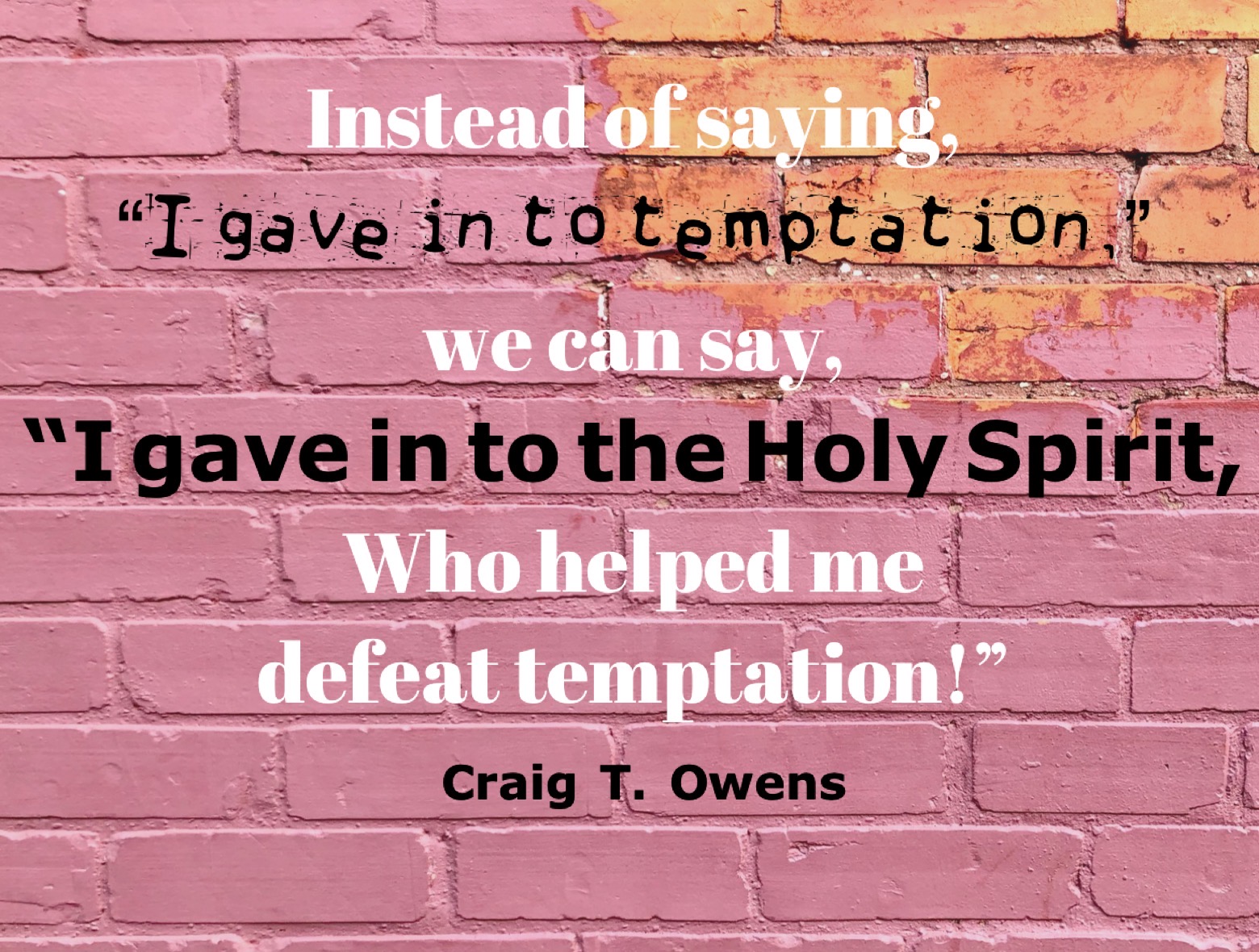
We can do the same thing. Instead of saying, “I gave in to temptation,” we can say, “I gave in to the Holy Spirit, Who helped me defeat temptation!”

The Means And The End

Jesus made a lot of amazing I AM statements. But there are two linked together in John 10 that I find fascinating. He said,

I am the gate … I am the good shepherd. (John 10:1-16)

The sheep have to get to the shepherd by passing through the gate.

Jesus is both the means and the end.

I come to Jesus by Him.

He draws me to Himself.

He creates the desire and He satisfies the desire.

He is the way and the goal.

He is the quest and the prize.

He is Savior (gate) and Lord (shepherd).

Jesus is the Answer for the world today
Above Him there’s no other
Jesus is the Way

He is the Answer and the Way to get to the answer!

If (Blank), Then (Blank)

Listen to the podcast of this post by clicking on the player below, and you can also subscribe on AppleSpotify, or Audible.

Let me set the stage. Jesus is explaining to some of His new followers about finding their identity in God, not in a man. He says to them,

If You hold to My teaching, you are really My disciples. Then you will know the truth, and the truth will set you free. (John 8:31-32)

Notice the order of the if-then: If you hold to my teaching, then you will know the truth.

You see, later on in this discussion Jesus says, “Do you want to know why you can’t hear what I am saying? It’s because you are not listening with an ear to obey” (see vv. 43-47).

In other words, their tendency—and ours too—is to say, “If I hear truth from You, then I will obey.”

But this attitude is pragmatic—it’s like saying, “It has to ring true with what I already know.” But the problem is, Jesus’ teachings are so counter-cultural and counterintuitive that they may never ring true with what you already know.

Instead, my attitude should be, “I will obey. No matter what You say to me, I will do it. Even if it sounds uncomfortable, I will do whatever You tell me.”

If you HOLD to my teaching, then you will KNOW the truth.

God will not speak a word I can hear and understand UNLESS I am committed to obeying every word He speaks. My attitude of obedience must come before His truth will be revealed. Let’s not get this mixed up with, “If You speak the truth, then I will obey.”

►► Would you please prayerfully consider supporting this ministry? My Patreon supporters get behind-the-scenes access to exclusive materials. ◀︎◀︎

The Danger Of Turning Back

Jesus never hesitated to speak the truth. After one such time, a sad verse appears: From this time many of His disciples turned back and no longer followed Him. (John 6:66)

The words of Jesus are so countercultural, so counterintuitive, that they might be shocking to our human ears. We get used to thinking along certain lines, and then Jesus says, “That’s not the way. I AM the only way.”

Why do these statements ruffle us so much? I think they remind us that He is Lord, and there is no other. We like to think that we have options … we think, “Surely He means this” … we convince ourselves that there is some wiggle room. But we are wrong.

Jesus says: I AM. His way is the only way.

Some people turn back when they hear this. That’s to say, they don’t deny Jesus is Savior, but they no longer want to do the hard work of being His disciple. “Turn back” means to separate; it’s the opposite of coming alongside or following Jesus.

No longer followed” in this verse is translated “walked no more” in the King James Version. They stood still. If we choose to stand still or to turn back, we miss out. Those who turned back missed out on the miracles, on the personal conversations, on the deeper intimacy with Jesus.

Those who turn back say believing in Jesus is enough, but they think discipleship is just too hard. Can they still have salvation that leads to eternal life? Yes, but it becomes harder and harder because they want to try to pursue it on their own.

I’d rather keep on walking, keep on learning, keep on maturing, keep on following.

On The Record

Listen to the podcast of this post by clicking on the player below, and you can also subscribe on AppleSpotify, or Audible. 

When Jesus is getting ready to feed the multitude that had gathered to hear Him speak, Jesus asked Philip a question: “Where shall we buy bread for these people to eat?” (John 6:5). It seems like a fair question, but the next verse gives us insight into Christ’s motivation behind the question:

Jesus asked this only to test him, for He already had in mind what He was going to do.

Jesus had something in mind, but He wanted to know what Philip had in mind. If Jesus had not asked Philip to be on the record up front, Jesus could have multiplied the loaves and fish, and then Philip could have said, “I knew You could do it! I knew it all the time!”

But to test us, Jesus needs to get us on the record. The word test means to know the value of something; to know its strength; to know what it’s capable of.

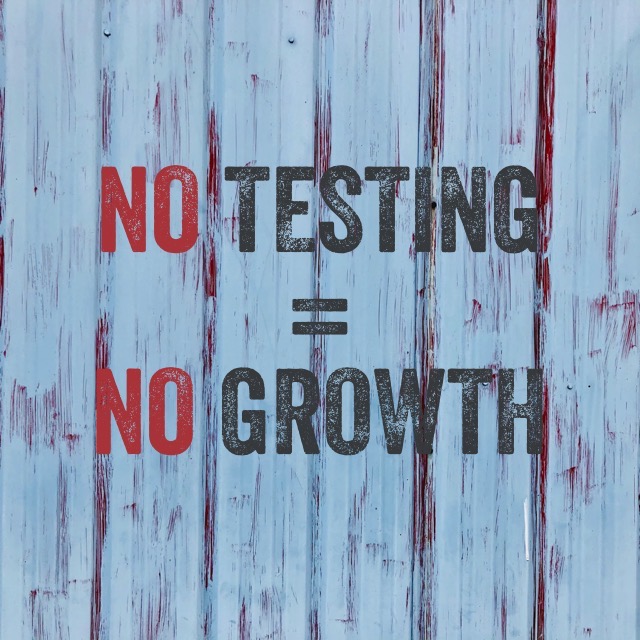
My faith cannot be grown if it’s not tested. It cannot be accurately tested if I’m not on the record first. Jesus knows what He’s going to do: Glorify the Father. I can say that’s what I wanted all along after the miracle is done, but then my faith hasn’t grown one iota.

I can only see my faith grow when I am on the record (as Philip was) in saying, “How in the world could we get enough money to fix this problem?” Especially when Jesus isn’t even going to use money to fix that problem!

Here’s the principle:

NO testing = NO growth

It’s only when I see that my faith is not as big as it should be that I can say, “Lord, I believe You, but help my unbelief.” He will bring me into a test so that I can grow, and the Father can be glorified. It’s scary being on the record, because only then can I see how much more growth I need!

►► Would you please prayerfully consider supporting this ministry? My Patreon supporters get behind-the-scenes access to exclusive materials. ◀︎◀︎

Listen To This!

There are a lot of voices out there. A lot! Facebook, Twitter, email, texts, news reports, conversations with friends, opinions of experts, sermons from pastors.

Jesus said,

I have come in My Father’s name, and you do not accept Me; but if someone else comes in his own name, you will accept him. (John 5:43)

How quickly I tune in to…

…that expert

…this esteemed pastor

…that doctor

…this teacher

…that specialist

…this author

…that friend

But all he or she can share is what he or she knows.

When Jesus speaks, it is with all the wisdom that is known, AND with all the wisdom that hasn’t even been discovered by man yet. He is all-knowing, all-wise, all loving. Jesus should always be my first and final authority.

Am I listening to His words? Or am I tuning in to someone else?

Every Sunday Is Easter

At most churches, Easter Sunday is the most well-attended service of the year. Perhaps this is appropriate, since the resurrection of Jesus is the cornerstone event of the Christian faith. Without Christ’s resurrection, what hope would we have?!

The first Christians were so convinced of the life-changing power of this singular event that they began to gather for worship on the first day of the week (Sunday), in honor of the resurrection. For them, every Sunday was resurrection Sunday.

What if we treated every Sunday like Easter?

Would we invite more people to church? I’m sure we would!

Of all the days of the week we could pick to gather together, why Sunday? Because Sunday reminds us of what happened 2000 years ago at a garden tomb in Jerusalem. Jesus arose from the dead!

When I look at the first followers of Jesus (see John 1:35-51), I see something amazingly simple in the lives of Andrew and Philip. It’s as simple as 1-2-3…

  1. They encountered Jesus.
  2. They immediately went to find a friend to tell them about this encounter.
  3. They invited their friend to “Come and see” Jesus for themselves.

Has Jesus changed your life? Then find a friend and say, “Come and see!” Don’t wait for Easter Sunday to invite someone to meet Jesus. Invite them to come this Sunday! (If you don’t have a church home, and you live in West Michigan, I invite you to come join me at Calvary Assembly of God.)

Who Are You?

This is another post especially for pastors (but I think others will find this helpful too).

John the Baptizer had no credentials, and yet people flocked to hear him speak.

He had no formal training, and yet people hung on his every word.

He had no authority from a sanctioning body, and yet he spoke with such power.

This perplexed the religious leadership. After all, they had credentials, training, and authority. So they came to John asking, “Who are you? What do you have to say about yourself?” (John 1:21-22).

If God has called you to the pastorate, He will equip you.

There’s nothing wrong with credentials, training, or sanctioning, per se. But when you think your call to preach has authority because of your title, your training, or your denominational appointment, you have missed the point! John had none of these, and yet Jesus said, “There’s never been a greater prophetic voice!”

So, pastor, who are you?

Are you the one who is credentialed, or trained, or sanctioned?

Or are you the one who has been called and equipped by God?

There’s a huge difference!

Who are you? I hope you can answer, “I am only a servant of the Most High, equipped by the Holy Spirit to make Jesus known in my city.”

UPDATE: I use John the Baptist as a prominent example in my book Shepherd Leadership: The Metrics That Really Matter.