Just as John was obedient to his calling, I need to be obedient to God’s calling as well.
John spoke God’s word clearly. He lived it out. He didn’t water down nor compromises his message. He didn’t let “ministry success” lead to pride. His whole life pointed everyone to Jesus.
This I must do too!
A mark of a godly leader is one who is humbly confident that God has a call on his life.
This is part 33 in my series on godly leadership. You can check out all of my posts in this series by clicking here.
Even if we have the right reason (singular, not plural) for being a pastor—namely, that God called us—we can still battle discouragement over what is or isn’t happening in our ministry. I am convinced that much of this discouragement comes from listening to the wrong applause.
John Chrysostom
John Chrysostom, a man very reluctant to answer God’s call on his life to enter the pastorate, wrote—
“Let, therefore, the man who undertakes the strain of teaching never give heed to the good opinion of the outside world, nor be dejected in soul on account of such persons; but laboring at his sermons so that he may please God, (For let this alone be his rule and determination, in discharging this best kind of workmanship, not acclamation, nor good opinions,) if, indeed, he be praised by men, let him not repudiate their applause, and when his hearers do not offer this, let him not seek it, let him not be grieved. For a sufficient consolation in his labors, and one greater than all, is when he is able to be conscious of arranging and ordering his teaching with a view to pleasing God.” (emphasis added)
Our view must always be to pleasing God. It matters little whether humans hands applaud us or not. We must live, and preach, and discharge our pastoral duties solely for the applause of nail-scarred hands. If our Master says, “Well done, good and faithful servant,” what does it matter what anyone else says?
Listen to the podcast of this post by clicking on the player below, and you can also subscribe on Apple, Spotify, or Audible.
If you grew up watching Sesame Street, you might remember one of the songs that went like this—
One of these things is not like the other things
One of these things just doesn’t belong
Can you guess which thing is not like the other thing
Before I finish my song
I sort of feel like that when I consider this list:
Melchizedek
Aaron
Jesus
Me
If you’re a pastor/priest to your congregation, perhaps you feel like you don’t belong on this list either. But consider this verse of Scripture—
No one takes this honor [of being a priest] upon himself; he must be called by God, just as Aaron was. (Hebrews 5:4)
God called Melchizedek. God called Aaron. God called Jesus. God called me. God called you, my fellow pastor. It’s an honor to be called by God to serve in this role!
We have the honor to represent the people to God, and to represent God to the people.
We have the honor to instruct people in the ways of God.
We have the honor of living our lives transparently before people, so they can see a living example of one who sins, confesses, repents, and receives forgiveness; one who is growing in his/her knowledge of Jesus Christ; one who is becoming more Christ-like.
We have the honor of offering up loud cries of petition and intercession for others (see Hebrews 5:7).
We have the honor of humbly and reverently submitting ourselves before God; of learning obedience through suffering (v. 8).
We have the honor of sharing Christ—THE best and perfect priest—with others. He alone is the source of eternal salvation for all who obey Him (v. 9), and we have the honor of telling others this amazing news!
My friend, if God has called you, you belong on that list. Discharge your priestly duties with all reverence and humility to God. It is your honor to serve God and others this way.
UPDATE: In my book Shepherd Leadership, I talk about using the phrase “God chose me” as a reminder of both the confidence and humility that we have in our calling as pastors.
This is another post especially for pastors (but I think others will find this helpful too).
John the Baptizer had no credentials, and yet people flocked to hear him speak.
He had no formal training, and yet people hung on his every word.
He had no authority from a sanctioning body, and yet he spoke with such power.
This perplexed the religious leadership. After all, they had credentials, training, and authority. So they came to John asking, “Who are you? What do you have to say about yourself?” (John 1:21-22).
If God has called you to the pastorate, He will equip you.
There’s nothing wrong with credentials, training, or sanctioning, per se. But when you think your call to preach has authority because of your title, your training, or your denominational appointment, you have missed the point! John had none of these, and yet Jesus said, “There’s never been a greater prophetic voice!”
So, pastor, who are you?
Are you the one who is credentialed, or trained, or sanctioned?
Or are you the one who has been called and equipped by God?
There’s a huge difference!
Who are you? I hope you can answer, “I am only a servant of the Most High, equipped by the Holy Spirit to make Jesus known in my city.”
This is a weekly series with things I’m reading and pondering from Oswald Chambers. You can read the original seed thought here, or type “Thursdays With Oswald” in the search box to read more entries.
Unconscious Blasphemy
For you to say, “Oh, I’m no saint,” is acceptable by human standards of pride, but it is unconscious blasphemy against God. You defy God to make you a saint, as if to say, “I am too weak and hopeless and outside the reach of the atonement by the Cross of Christ.” Why aren’t you a saint? It is either that you do not want to be a saint, or that you do not believe that God can make you into one.
To Him who is able to keep you from stumbling and to present you before His glorious presence without fault and with great joy—to the only God our Savior be glory, majesty, power and authority, through Jesus Christ our Lord, before all ages, now and forevermore! Amen. (Jude 1:24-25)
Hello, my name is Craig Owens and I’m a pastor. I wasn’t a PK (pastor’s kid). This isn’t the profession I chose for myself. I envisioned myself doing other things, but God had different plans for me.
He called, and I said “yes.” He called me to be a pastor and so He equipped me for the pastorate. I can relate to what the Apostle Paul wrote—
By God’s grace and mighty power, I have been given the privilege of serving Him by spreading this Good News. (Ephesians 3:7)
Paul, too, didn’t choose be a minister telling people about Jesus Christ. But God had different plans for him.
And so, since God has called me to do this, I must do it to the best of my ability. I don’t have the natural ability for it, I simply have God’s grace and mighty power. And to that grace and power I must add my best effort—
Studyandbe eager and do your utmost to present yourself to God approved (tested by trial), a workman who has no cause to be ashamed, correctly analyzing and accurately dividing [rightly handling and skillfully teaching] the Word of Truth. (2 Timothy 2:15, AMP)
I like the counsel of Charles Spurgeon:
“Again, the theme of a minister should be Christ Jesus in opposition to mere doctrine. Some of my good brothers are always preaching doctrine. Well, they are right in so doing, but I would not care myself to have as the characteristic of my preaching doctrine only. I would rather have it said, ‘He dwelled much upon the person of Christ and seemed best pleased when he began to tell about the atonement and sacrifice. He was not ashamed of the doctrines; he was not afraid of threatening. But he seemed as if he preached the threatening with tears in his eyes, and the doctrine solemnly as God’s own Word. But when he preached of Jesus, his tongue was loosened, and his heart was at liberty.’”
I didn’t choose this, but God chose me. And for that I am extremely humbled and grateful.



 There is no doubt about: John the Baptist was called by God.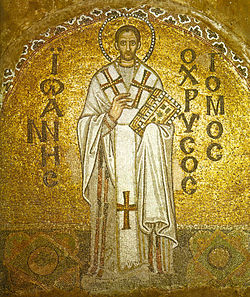








 Craig T. Owens