C.S. Lewis On Spiritual Feelings

Someone wrote to C.S. Lewis about the profound and moving spiritual experience they had just experienced, and wondered what Lewis thought about it. His reply is very insightful—

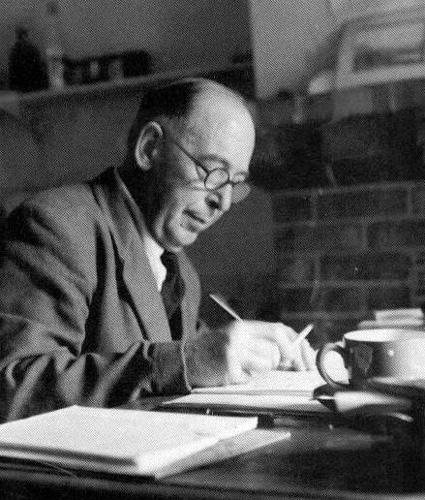
C.S. Lewis at his desk“It is quite right that you should feel that ‘something terrific’ has happened to you (it has) and be ‘all glowy.’ Accept these sensations with thankfulness as birthday cards from God, but remember that they are only greetings, not the real gift. I mean, it is not the sensations that are the real thing. The real thing is the gift of the Holy Spirit which can’t usually be—perhaps not ever—experienced as a sensation or emotion. The sensations are merely the response of your nervous system. Don’t depend on them. Otherwise when they go and you are once more emotionally flat (as you certainly will be quite soon), you might think that the real thing had gone too. But it won’t. It will be there when you can’t feel it. May even be most operative when you can feel it least.” —C.S. Lewis (emphasis added)

The spiritual experiences are great, but let them use you to turn to the Bible to find the facts behind your experience. Lewis is quite right that feelings come and go, but the Holy Spirit never does.

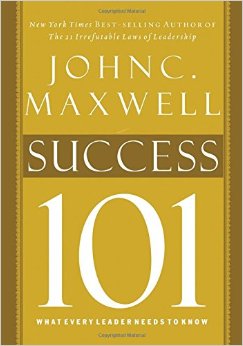
11 Quotes From John Maxwell In “Success 101”

Susscess 101John Maxwell’s 101-series of books are a great introduction to some of his other more in-depth books. As I like to explain it, the 101-level introduces you to the topic, and the 301- and 401-level classes/books take you deeper.

I am in the process of reading The Complete 101 Collection (I’ll post my review of this shortly). In the meantime, here are some quotes from Success 101 which I found thought-provoking.

“You cannot achieve what you have not defined. The problem for most people who want to be successful is not that they can’t achieve success. The main obstacle for them is that they misunderstand success.”

“What does it take to be a success? Two things are required: The right picture of success and the right principles for getting there.”

“Success is a journey rather than a destination. No matter how long you live or what you decide to do in your life, you will never exhaust your capacity to grow toward your potential or run out of opportunities to help others.” 

“Without a dream, we may struggle to see potential in ourselves because we don’t look beyond our current circumstances. But with a dream, we begin to see ourselves in a new light, as having greater potential and being capable of stretching and growing to reach it.”

“The bottom line in managing your emotions is that you should put others—not yourself—first in how you handle and process them. Whether you delay or display your emotions should not be for your own gratification. You should ask yourself, What does the team need? not, What will make me feel better?

“The greatest enemy of good thinking is busyness.”

“Successful people face the danger of contentment with the status quo. After all, if a successful person already possesses influence and has achieved a level of respect, why should he keep growing? The answer is simple: your growth determines who you are; who you are determines who you attract; who you attract determines the success of your organization. If you want to grow your organization, you have to remain teachable.”

“Few things gain the appreciation of a top leader more quickly than an employee with a whatever-it-takes attitude. That is what successful people must have. They must be willing and able to think outside of their job description, to be willing to tackle the kinds of jobs that others are too proud or too frightened to take on. These things are what often elevate successful people above their peers.”

“Good leaders…find a way to succeed with people who are hard to work with.” 

“Successful people admit faults but never make excuses.”

“If you are successful where you are, I believe you will be given an opportunity to succeed at a higher level. … Leadership is a journey that starts where you are, not where you want to be.”

C.S. Lewis On The Holy Spirit

I have been studying for my series on the Holy Spirit, and I came across this gem from C.S. Lewis.

C.S. Lewis“It is quite right that you should feel that ‘something terrific’ has happened to you (it has) and be ‘all glowy.’ Accept these sensations with thankfulness as birthday cards from God, but remember that they are only greetings, not the real gift. I mean, it is not the sensations that are the real thing. The real thing is the gift of the Holy Spirit which can’t usually be—perhaps not ever—experienced as a sensation or emotion. The sensations are merely the response of your nervous system. Don’t depend on them. Otherwise when they go and you are once more emotionally flat (as you certainly will be quite soon), you might think that the real thing had gone too. But it won’t. It will be there when you can’t feel it. May even be most operative when you can feel it least.” —C.S. Lewis

...Ever be filled and stimulated with the Holy Spirit. (Ephesians 5:18, AMP).

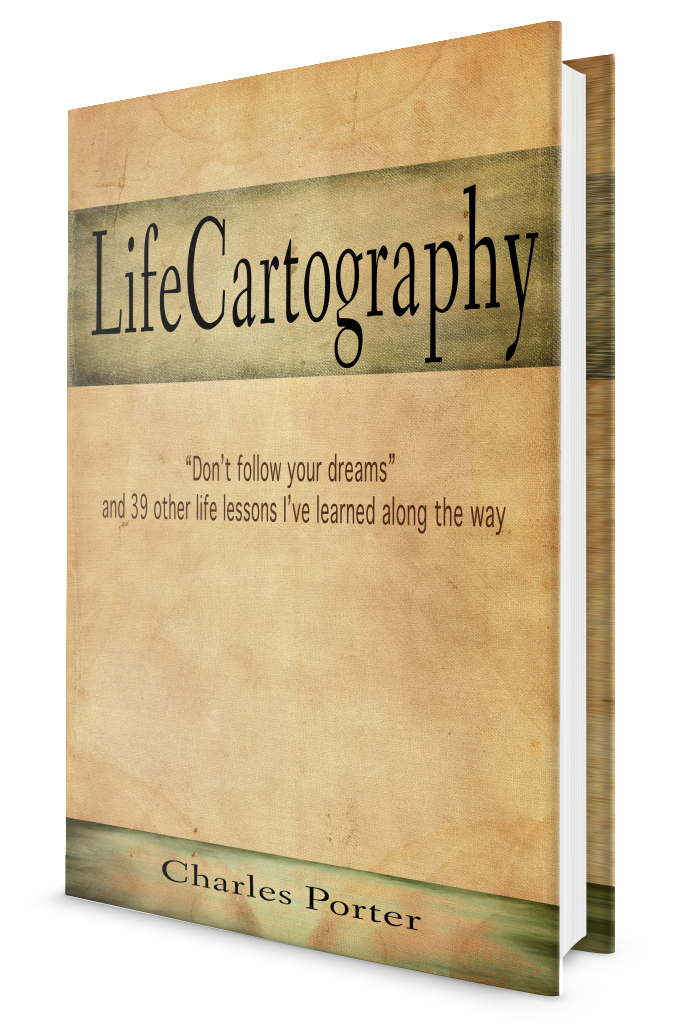
8 Quotes From “Life Cartography”

Life CartographyCharles Porter wrote a thought-provoking book for young people just starting out on life’s journey. You can read my full book review by clicking here. Below are some of the quotes I highlighted as I read.

“Everyone has baggage. Emotional hurts. Dysfunctions. Strange and broken ideas about the world. Some are small. Some are massive. The people who develop beautiful lives, that I’ve seen at least, learn early how to unload that baggage somewhere and not pick it back up. The emotional catharsis of unloading is easy. The mental, physical and spiritual disciplines of not picking it back up—that’s the hard part.”

“Good intentions don’t make up for bad thinking. You can’t be anything you want to be. But there is something, some unique place, where you can be you, and where your life will have meaning and purpose. The key is discovering what and where that is. Those who discover that early multiply their life satisfaction exponentially.”

“Emotions are real but not necessarily true. … I’ve ruined very few relationships when I was calm. But when I’ve been angry, I’ve done serious damage. … The flip side is that relationships come with an ebb and flow of feelings. Denying emotions is just as dangerous. Suppressed anger becomes depression. Feelings of rejection lead to private humiliation. Telling someone not to feel is like telling spring not to come.”

“We all tell our stories from our own perspectives. We see the world through our lenses. An editor can help us bring some balance, some clarity, and sometimes help us tell those stories in a way that others understand. The tough part is that editors usually aren’t popular. They challenge us. They forced us to rewrite, rethink, and reconsider. They generally don’t fall for the lies we sometimes tell ourselves.”

“When I start with the idea that everyone is interesting, questions become conversations.”

“Developing character is the most important, life-long process you’ll ever engage in. … Character is the product of a life sent through the fire of circumstances.”

“Sometimes, standing on the sidelines is an endorsement. By not taking a stand, you’re allowing things you wouldn’t endorse to take root and flourish.” 

“Have you ever met people who won’t take ‘no’ for an answer? I’ll bet they get things done. I’ll bet they succeed. And I’ll bet they leave a wake of relational destruction in their pads. ‘I never take “no” for an answer.’ That, my friends, doesn’t make you consistent. It makes you a bully.”

Links & Quotes

link quote

Some good reading from today…

“The whole lesson of my life has been that no ‘methods of stimulation’ are of any lasting use. They are indeed like drugs—a stronger dose is needed each time and soon no possible dose is effective. We must not bother about thrills at all. Do the present duty—bear the present pain—enjoy the present pleasure—and leave emotions and ‘experiences’ to look after themselves.” —C.S. Lewis

“Hear not those that deny that the invisible God works visible miracles…. Wherefore God that made heaven and earth (both miracles) scorns not as yet to work miracles in heaven and earth, to draw men’s souls that yet desire visibilities, unto the worship of His invisible essence. But where and when He will do this, His unchangeable will only can declare; at whose disposing all time has been, and all to come is. He moves all things in time, but time moves not Him, nor knows future effects otherwise than as present.” —Augustine

4 Quotes About Emotional Health In “Stand Strong”

Stand StrongIn Stand Strong, Nick Vujicic shares the hard-won strategies he learned to overcome bullies. You can read my full review of Stand Strong by clicking here.

I already shared some of Nick’s quotes from this book, but I wanted a separate post to highlighted a key issue in bullying. One of the biggest tolls on a person being bullied is in their emotional health. One of the chapters I highlighted the most had to do with this important area, so below are a few good reminders.

“I encourage you to keep this phrase in your mind when faced with bullying: You can say terrible things to me, but you can’t touch who I am inside. You can’t make me feel badly about myself. I know who I am, and I stand on my own.”

“We have emotions for a reason. They don’t just come over us by chance, even though it sometimes may seem that way. Asking where your emotions come from and assessing why you feel the way you feel are critical parts of creating self-awareness and asserting self-control over your actions. It’s important to know what triggers your emotions so you can better control your responses in ways that benefit you over the long term. Managing negative emotions is an important part of your bully defense system, and it is also a key to living a more successful life. People who let their negative emotions control their actions tend to feel out of control, insecure, and unhappy. Those who act based on a thoughtful process for monitoring and managing such emotions tend to be more successful, more confident, and happier.”

“Emotions are natural and you feel what you feel. But the quality of your life is greatly affected by the choices you make in responding to your feelings. You see, a space, a time interval, and an opportunity between the point at which you feel something and the point at which you act on that feeling. This space is a gift. … Psychologists say people who learn to use this space wisely are generally much more successful in life than those who either ignore it or don’t use it well. This is the space where you can take control, make smart decisions, and put yourself in a position to determine your own destiny. … When you use the space to think about your response and to decide what is best for you over the long term, you are practicing self-awareness and self-control. This is called ‘response flexibility,’ and it is a sign of emotional intelligence.”

“Here’s something to consider: your negative emotions can be like bullies inside you. They try to provoke a response from you that may not be in your best interest. So if you simply do what those bad feelings stir you to do, you are just giving in to another bully in your life.”

Stand Strong (book review)

Stand StrongNick Vujicic was born without arms or legs, as a result, he said he grew up being a “bully’s dream.” But Nick is an overcomer! He conquered his bullies, and in his book Stand Strong he wants to help students learn to conquer their bullies too.

Nick explains, “Your bully’s motives don’t matter. You do. Your safety and your happiness are more important to me and everyone else who loves and cares about you; so instead of focusing on why a bully is picking on you, let’s focus on helping you feel secure and happy again. … I will help you build your antibully antibodies.”

Using his own life as an example, Nick shares the raw emotions he felt when he was picked on by bullies. He is also transparent enough to share all the wrong ways he tried to avoid being bullied, and ultimately how he discovered the pattern for successfully navigating the bullies that come along all our paths. As Nick wraps up the book he observes, “Seriously, here is the idea I’m asking you to consider: what if you could find ways to learn and grow from being bullied? What if you took a bully’s hurtful actions and turn them into lessons learned so that you became stronger, wiser, and more confident?”

I found the steps in Nick’s Antibullying system to be steps that can be immediately applied. They are very do-able! And they will indeed make students stronger, wiser, and more confident.

This is a book I would recommend to not only school-aged students, but also parents, teachers, and school principals. If everyone could get together on the same program, the results would lead to a completely new environment in our schools.

I am a Waterbook book reviewer.

Thursdays With Oswald—Sixth Sense

This is a weekly series with things I’m reading and pondering from Oswald Chambers. You can read the original seed thought here, or type “Thursdays With Oswald” in the search box to read more entries.

Oswald Chambers

Sixth Sense 

     The life of faith is the life of a soul who has given over every other life but the life of faith. Faith is not an action of the mind, nor of the heart, nor of the will, nor of the sentiment, it is the centering of the entire man in God. 

     … The faith of the saints is, as it were, a God-given sixth sense which takes hold on the spiritual facts that are revealed in the Bible. 

From Christian Disciplines 

When we look at the “hall of fame” of faith in Hebrews 11, we see the repeated phrase by faith. These amazing lives were lives not by a belief in a principle, but by belief in a Person. Faith-filled people haven’t worked themselves up into faith, but have centered themselves in the rock-solid assurance that the God of the Bible is their God.

When Christians live this way, we don’t always have “logical” rationale for why we feel a certain way, but we do have, as Chambers put it, a sixth sense. The Holy Spirit in us bears witness with our mind, and heart, and will, and sentiment that we are following God’s way.

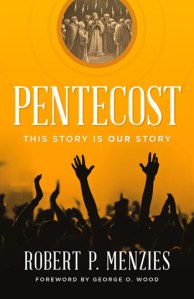
14 Quotes From “Pentecost”

Pentecost

I thoroughly enjoyed reading Pentecost by Robert P. Menzies, and learned quite a bit. You can read my full book review by clicking here. Here are a few quotes that stood out to me.

“It’s because Pentecostals fuse the biblical and contemporary horizons that we link baptism in the Holy Spirit with speaking in tongues, since that’s what Acts 2 does. It’s why we associate Spirit-baptism with empowerment for mission rather than with spiritual regeneration. And it’s why we expect God to perform ‘signs and wonders’ and to manifest spiritual gifts in worship services. All these things happened in the first Pentecostal community, and their story is our story.” 

“At its heart, the Pentecostal movement is not Spirit-centered but Christ-centered. The work of the Spirit, as Pentecostals understand it, centers on exalting and bearing witness to the Lordship of Christ.”

“Pentecostals are ‘people of the Book.’ Although Pentecostals certainly encourage spiritual experience, they do so with a constant eye to Scripture.”

“So, the stories of Acts are our stories, and we read them with expectation and eagerness: stories of the Holy Spirit’s power, enabling ordinary disciples to do extraordinary things for God. … The hermeneutic of the typical Pentecostal believer is straightforward and simple: the stories in Acts are my stories—stories that were written to serve as models for shaping my life and experience.”

“In Luke’s view, every member of the church is called (Luke 24:45–49; Acts 1:4–8/Isaiah 49:6) and empowered (Acts 2:17–21; cf. 4:31) to be a prophet. Far from being unique and unrepeatable, Luke emphasizes that the prophetic enabling experienced by the disciples at Pentecost is available to all of God’s people. … Through his two-volume work, Luke declares that the church, by virtue of its reception of the Pentecostal gift, is nothing less than a community of prophets. It matters not whether we are young or old, male or female, rich or poor, black or white; the Spirit of Pentecost comes to enable every member of the church, each one of us, to fulfill our prophetic call to be a light to the nations.” 

“Not long ago a Chinese house church leader commented, ‘When Western Christians read the book of Acts, they see in it inspiring stories; when Chinese believers read the book of Acts, we see in it our lives.’”

“Luke’s theology of the Spirit is different from that of Paul. Unlike Paul, who frequently speaks of the soteriological dimension of the Spirit’s work, Luke consistently portrays the Spirit as a charismatic or, more precisely, a prophetic gift, the source of power for service.” 

“Luke crafts his narrative so that the parallels between Jesus’ experience of the Spirit (Luke 3–4) and that of the disciples on the day of Pentecost (Acts 1–2) cannot be missed. Both accounts: 1. Are placed at the outset of Luke’s Gospel on the one hand, and the book of Acts on the other; 2. Associate the reception of the Spirit with prayer; 3. Record visible and audible manifestations; 4. Offer explanations of the event in the form of a sermon that alludes to the fulfillment of Old Testament prophecy.”

“Luke’s understanding of baptism in the Holy Spirit, I have argued, is different from that of Paul. It is missiological rather than soteriological in nature. … The tendency in Protestant churches has been to read Luke in the light of Paul. Paul addresses pastoral concerns in the church; Luke writes a missionary manifesto.” 

“Bold witness for Jesus is recognized as our primary calling and the central purpose of our experience of the Spirit’s power. Missions is woven into the fabric of our DNA.”

“I do not wish to minimize in any way the significance of the great doctrinal truths of Paul’s writings. I merely point out that since Paul was, for the most part, addressing specific needs in various churches, his writings tend to feature the inner life of the Christian community. His writings, with some significant exceptions, do not focus on the mission of the church to the world. … It is probably fair to say that while Paul features the ‘interior’ work of the Spirit (e.g., the fruit of the Spirit, Gal. 5:22–23); Luke features His ‘expressive’ work (Acts 1:8). Thus, by appropriating in a unique way the significant contributions of Luke-Acts, Pentecostals have developed a piety with a uniquely outward or missiological thrust.”

“The clarity of the Pentecostal message flows from the simple, straightforward manner in which we read the Bible. As I have noted, Pentecostals love the stories of the Bible. We identify with the stories that fill the pages of the Gospels and Acts, and the lessons gleaned from these stories are easily grasped and applied in our lives. For Pentecostals, the New Testament presents models that are to be emulated and guidelines that are to be followed. It should be noted that our approach to doing theology is not dependent on mastering a particular set of writings, say, the works of Luther; or coming to terms with a highly complex theological system. Pentecostals also do not worry much about cultural distance or theological diversity within the canon. We do not lose sleep over how we should understand the miracle stories of the Bible or how we might resolve apparent contradictions in the Bible. Our commitment to the Bible as the Word of God enables us to face these questions with a sense of confidence.”

“We must remember that whatever we do, God is measuring the work we do for Him in a qualitative, not quantitative way. … Only the work which is done by the power of the Holy Spirit can be acceptable in the Kingdom of God.” —David Yonggi Cho

“Some will still remain skeptical. They will ask: Is not this approach to church life, with its emphasis on ecstatic experience, emotional response, and spiritual power, filled with inherent dangers? Might it not encourage us to feature emotionally manipulative methods and to focus on superficial matters? Yes, undoubtedly, there are dangers. However, there is more danger in an approach that fails to make room for the full range of human experience, including the emotions, in our encounter with God.”

A Grateful Heart Is A Strong Heart

A Grateful Heart [web]As we approach Thanksgiving Day, many people begin to get their thanks on! They will start rehearsing for their family gathering when someone might ask them, “What are you thankful for this year?”

But I want to make the case for practicing gratitude all year long!

There are emotional, physical, psychological and relational benefits to being a thanks-filled person. Truly those with grateful hearts have strong, healthy hearts … both physically and emotionally.

“Gratitude unlocks the fullness of life. It turns what we have into enough, and more. It turns denial into acceptance, chaos into order, confusion into clarity. It can turn a meal into a feast, a house into a home, a stranger into a friend. Gratitude makes sense out of our past, brings peace for today, and create a vision for tomorrow.” —John Maxwell 

Please join me the next two Sundays at Calvary Assembly of God as I share some of the medical research and biblical truths that will reveal the year-round, whole-person benefits of being grateful.