Names Of God In The Old Testament

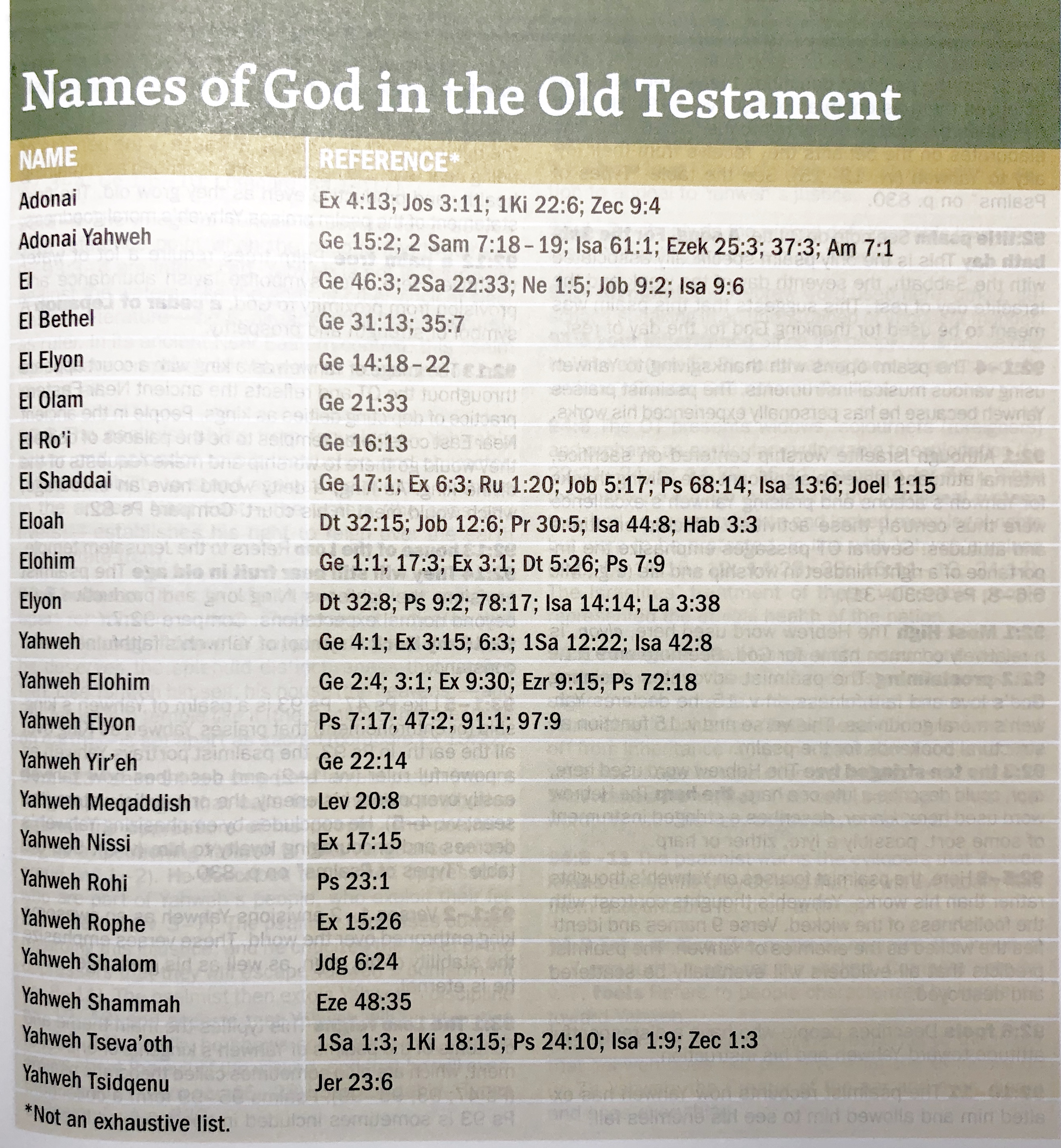
I love my Faithlife Illustrated Study Bible! I found this gem while reading in the Psalms.
יהוה (yhwh)

The name יהוה (yhwh) is known as the Tetragrammaton, and was probably pronounced as Yahweh. In the Old Testament, it is the proper name of God and is the most common term used to refer to Him (e.g., Gen 4:1). Exodus 3:13–15 connects this name with the verb הָיָה (hayah) “to be”; in this passage, God uses two related names for Himself that are not used elsewhere in the Bible: אֶהְיֶה אֲשֶׁר אֶהְיֶה (ehyeh asher ehyeh, “I am who I am”) and the abbreviated אֶהְיֶה (ehyeh, “I am”), and declares that יהוה (yhwh) is His name. By the time that the Septuagint version of the Torah was translated in the third century bc, Jews avoided pronouncing the Tetragrammaton to avoid committing blasphemy; in reading the Scriptures, the name אֲדֹנָי (adonay, “Lord”) was substituted, and the Septuagint translated this with the Greek word κύριος (kyrios, “Lord”). In English translations of the Bible, יהוה (yhwh) is usually represented as “the Lord,” using capital or small-capital letters to distinguish it from “Lord” as a translation for other Hebrew words. The English representation of this name as “Jehovah” is based on a misunderstanding of a scribal convention that combined the consonants of יהוה (yhwh) with the vowels of אֲדֹנָי(adonay) to remind the reader to pronounce Adonai in place of the Tetragrammaton.

For further details, see these articles: YHWH; Tetragrammaton; Tetragrammaton in the New Testament; Jehovah; I Am Who I Am.

Compound names with יהוה (yhwh)

Sometimes the name יהוה (yhwh) was combined with other terms characterizing God to produce a compound name. The most important of these is יְהוָה צְבָאוֹת (yhwh tseva’oth, “YHWH of Hosts”; e.g., 1 Sam 1:11), which expresses God’s position as the leader of the armies of heaven. Some compound names involving יהוה (yhwh) are translated in the King James Version or in other English translations using the erroneous representation “Jehovah.”

For further details, see these articles: Lord of Hosts; Jehovah-Jireh; Jehovah-Tsidkenu; Jehovah-Nissi.

אֱלֹהִים (elohim) and Related Words

Hebrew אֱלֹהִים (elohim) is by far the most common member of a small group of Hebrew and Aramaic words used to refer to God and other deities. This word is plural in form, but is most often used with singular meaning as a name for the one God of Israel; in this meaning, it occurs with singular verbs (e.g., Gen 1:1). It can also be used with plural meaning to refer to deities of polytheistic belief; in this case, any verbs and adjectives that go with it are plural (e.g., Deut 13:13).

The other words in this family also refer either to the one God or to a polytheistic deity. These are Hebrew אֵל (el, “god”; e.g., Num 12:13; Deut 32:12), Hebrew אֱלוֹהַּ (eloha, “god”; e.g., Job 11:7; Dan 11:38), and Aramaic אֱלָהּ (elah, “god”; e.g., Ezra 6:3; Dan 6:7).

For further details, see these articles: Elohim; Eloah.

Compound Names with El

Hebrew El (“God”) sometimes occurs with other terms in compound names for God. These compound names differ from one another in several ways. For example, the name אֵל שַׁדַּי (el shadday) combines El with the word שַׁדַּי (shadday), which also occurs by itself as a name for God—often translated “Almighty.” The compound name El Shaddai is not frequent, but does occur in several passages (e.g., Gen 17:1; Ezek 10:5). By contrast, the name אֵל רֳאִי (el ro’iy) “God of seeing, God who sees me” occurs only in Gen 16:13, and רֳאִי (ro’iy) does not occur independently as a name of God.

For further details, see these articles: El Roi; El Elohe Israel; El Shaddai; El Elyon.

אָדוֹן (adon) and אֲדֹנָי (adonay)

The Hebrew word אָדוֹן (adon, “master, lord”) is not specifically a divine title. It can be used of humans, indicating a person who has authority (e.g., Judg 19:11; Gen 45:8). It is sometimes used to describe God, emphasizing His authority (e.g., Josh 3:13).

The divine title אֲדֹנָי (adonay) is related to אָדוֹן (adon) and is used only of God (e.g., Psa 2:4). Its form is very close to and may be derived from אֲדֹנַי (adonay, “my lords”), which is simply the plural of אָדוֹן(adon) followed by a first-person singular suffix (e.g., Gen 19:2); but it has a short a vowel in the suffix while the divine title אֲדֹנָי (adonay) has a long a vowel. The divine title may have originated as a respectful title used to address God (e.g., Exod 4:10), using a plural form to express extra respect. However, in the Old Testament it is used not merely to address God, but also to talk about Him (e.g., 2 Kgs 7:6).

For further details, see this article: Adonai.

שַׁדַּי (shadday)

The origin of the name שַׁדַּי (shadday) is uncertain, but it is used as a title for God, especially in the book of Job (e.g., Job 13:3). Its original meaning is debated, but it is often translated “Almighty.” It is sometimes combined with אֵל (el, “god”) in the compound name אֵל שַׁדַּי (el shadday) (e.g., Gen 17:1), but more often occurs alone.

For further details, see these articles: Shaddai; El Shaddai.

עֶלְיוֹן (elyon)

The word עֶלְיוֹן (elyon) means “high, highest”; as a title for God, it is commonly translated “Most High.” It most often occurs alone (e.g., Psa 91:1), but also occurs in compounds with other names of God, including El(e.g., Gen 14:18–22), YHWH (e.g., Psa 7:17), and Elohim (e.g., Psa 57:2).

For further details, see this article: El Elyon.

Other Names

A variety of other names and titles are used for God. A few examples include צוּר (tsur, “Rock”; e.g., Isa 17:10), רֹעֵה (ro’eh) (“Shepherd“; e.g., Gen 49:24), and בּוֹרֵא (bore’, “Creator”; e.g., Isa 40:28). In Psalm 68:4, the Masoretic Text refers to him as “Rider through the Desert”; this is sometimes taken to be a modification of an expression “Rider on the Clouds” which was applied to Ba’al in Ugaritic. In Hosea 2:16, God declares that Israel will no longer call Him בַּעֲלִי (ba’aliy) “my master, my Ba’al” but will instead call him אִישִׁי (ishiy, “my husband”); these names are not used elsewhere in the Old Testament.

Please check out my review of the Faithlife Illustrated Study Bible and pick up a copy for yourself.

Truth Is The Source Of Freedom

“The university has traditionally been a unified place (Latin unum) where faculty and students gather in order to discover truth (Latin veritas). A generation ago, college was expected to be a place of freedom, particularly for expression of and engagement with different—even disagreeable—ideas. Sadly, recent events and numerous statistical surveys reveal that such days may be over. Today, many on university campuses expect to be protected or shielded from speech and ideas that could be deemed offensive, even if the free speech rights of others—as well as the pursuit of truth—are sacrificed in the process.

“The current climate, in which people are forcibly prevented from sharing ideas, has arisen because the Culture of Confusion has mistaken autonomy for freedom. In a post-truth culture, where preferences and opinions are elevated over facts and truth, anything that challenges our preferences, even if a challenge is laced with facts, is deemed offensive and oppressive. The Western contemporary concept of freedom is all about the ability to do, feel, and say whatever one wants, as long as it doesn’t hurt someone else. But this isn’t freedom—it’s autonomy (which literally means being a law unto one’s self). Freedom operates at its best within the confines of truth. The pursuit of autonomy is the root of the post-truth mindset that fuels the current Culture of Confusion. If each of our personal preferences is celebrated without truth as our guide, if we are all ‘laws unto ourselves,’ confusion is inevitable in at least three important ways.

“First, the culture seems to have lost its ability to reason—to think and act clearly and wisely. When feelings are vaunted over facts in the quest for autonomy, reason dies in the process. If the facts get in the way of unrestrained autonomy, then the facts will have to be ignored and any opposition will be silenced.

“Second, the Culture of Confusion has lost its moral accountability. If it’s true that ‘man is the measure of all things,’ as Protagoras proclaimed centuries ago, then we make the rules, not God. If there is no God to help us, then we have to help ourselves. There are atheists who claim that the ‘better angels of our nature’ will result in us reaching a rough agreement about moral values. But history has shown us that it’s only a short leap from secular humanism to self-worship and supreme authority. Moral clarity shows us the objective truth beyond our preferences. And we have to mold our desires and preferences to the truth’s boundaries. Because we don’t want to conform, moral clarity has become the vice of the day, and moral confusion the virtue.

“Third, in striving to go from bearing the Imago Dei (with accountability to God) to Deus Homo (with accountability to no one), we have lost what it means to be human and to value other human beings. When we become the measure of all things, then we determine which humans are valuable and which ones are not, meaning our sense of objective human value is lost in the process.

“There is a fundamental difference between limitless individual autonomy and true freedom. The Bible opposes the former and champions the latter (James 1:25; 2:12). The book of Judges demonstrates this well. Each time the people’s thirst for autonomy landed them in trouble, God sent a judge—a person who took his authority from God—to guide the people. But they rejected God’s authority time and again in favor of their personal sovereignty until the resultant chaos became too much. When we jettison truth as our guide, we will end up with autonomy and then chaos, but not freedom. Each one of us, individually in our hearts, needs to search for the source of freedom—truth.” —Abdu Murray, Saving Truth

Is That In The Bible?

A meme that makes me chuckle every time I see it is a “quote” attributed to Abraham Lincoln in which he says, “The problem with quotes found on the internet is that they are often not true.” 

(Not to spoil the joke for you, but unless Lincoln knew how to time travel to the future, I don’t think he knew about the modern internet! 😂) 

I love this meme because it captures something that so many people fall into: a quick acceptance of a statement without verifying its source or thinking through the implications of the statement’s truthfulness. 

Some insightful comments sound Shakespearean, but William never wrote them. 

Some pieces of wisdom sound Socratic, but Socrates never taught them. 

Some religious maxims sound godly, but the Bible never recorded them. 

I would like to invite you to join me in a new series we are beginning this Sunday called Is That In The Bible? I think you may be surprised to discover just how many phrases we call biblical aren’t, and how many phrases there are that we never realized are actually in the Bible. 

By the way, if you have a phrase that you would like to have us explore in this series, please leave it in a comment below. 

In this installment of this series, we asked: Is this in the Bible…

A Chronology Of The Life Of Paul

The Apostle Paul is a fascinating figure that looms so large across the New Testament and beyond.

I recently came across these amazingly helpful study tools to put the life of Paul into perspective. These are both from the Faithlife Illustrated Study Bible, which I highly recommend to you for adding a new depth to your Bible study time.

This is an illustrated timeline of the key dates and events of Paul’s life. Click on the graphic to view it better, or check it out on the Biblia website.

If you would like to research both the biblical texts and the attestations of Paul’s ministry outside of the New Testament, you may want to download this PDF chart → Apostle Paul Chronology ←

And it’s worth repeating: get a copy of the Faithlife Illustrated Study Bible for yourself as soon as you can!

Thursdays With Spurgeon—A Firm Doctrine

This is a weekly series with things I’m reading and pondering from Charles Spurgeon. You can read the original seed thought here, or type “Thursdays With Spurgeon” in the search box to read more entries.

A Firm Doctrine

     If a tree has to be taken up two or three times a year, you will not need to build a very large loft in which to store the apples. When people are always shifting their doctrinal principles, they are not likely to bring forth much fruit to the glory of God. It is good for young believers to begin with a firm hold upon those great fundamental doctrines that the Lord has taught in His Word.

From The Autobiography Of Charles Spurgeon 

This is true of any endeavor—can you imagine constantly shifting the way you learn math, or biology, or cooking, or anything else? There’s always a “learning curve” in every new endeavor that brings a momentary setback before there are new gains.

Thankfully, the Bible has a consistent message from Genesis to Revelation. Getting into the Word regularly and attending a Bible-preaching church will help you immensely. 

There is no “right way” to read the Bible. In fact, Spurgeon had a great response to a man who told him that he “read my Bible on my knees.” Spurgeon said—

“I think you read the Bible in a very uncomfortable posture, and if you had read it in your easy chair, you would have been more likely to understand it. Pray, by all means, and the more, the better, but it is a piece of superstition to think there is anything in the posture in which a man puts himself for reading.”

The point is not in what posture you read the Bible, or in what translation, or at what time of day, but the point is that you are regularly reading God’s Word. Get into the Word, and let the Holy Spirit get the Word into you. 

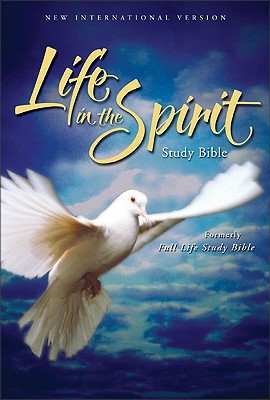
Life In The Spirit Study Bible (book review)

I love to read, averaging about 30 books per year. In addition to books, I have a lot of news feeds that I check daily. But hands down, everything else comes in a distant second place to my number-one read: the Bible. 

I read the Bible for myself. I read the Bible to prepare my Sunday messages. I read the Bible to teach classes. I read the Bible to confirm or refute what I am reading in other books and news feeds. And with all that Bible reading, I have also gravitated toward my favorite study Bible—The Life In The Spirit Study Bible. 

At one time people referred to this Bible as “the fire Bible” because of the graphic on the front cover depicting the fire that fell on praying Christians at the Pentecost celebration immediately following Christ’s ascension into heaven. That fire still falls in my heart every time I read God’s Word!

The study notes in this Bible are fantastic! But don’t be deceived by the name: these are not study notes that focus on the Holy Spirit out of proportion; rather, the role of the Spirit is merely noted where others have ignored it. Far too many people don’t ponder very much about the Holy Spirit’s involvement, except for perhaps the Book of Acts and maybe Paul’s instruction on the operational gifts of the Spirit in 1 Corinthians. The Life In The Spirit Study Bible simply seeks to make us aware of the Spirit’s involvement. 

In addition to the short commentary notes at the bottom of each page, there are several insightful and scholarly articles throughout this whole book that will make the Scripture come alive in new ways. 

This is my “preaching Bible” that I take with me for every sermon I deliver, which means it is the Bible I am diving deep into each day as I study. I cannot recommend this Bible to you highly enough. 

Poetry Saturday—If

If you can keep your head when all about you   
    Are losing theirs and blaming it on you,   
If you can trust yourself when all men doubt you,
    But make allowance for their doubting too;   
If you can wait and not be tired by waiting,
    Or being lied about, don’t deal in lies,
Or being hated, don’t give way to hating,
    And yet don’t look too good, nor talk too wise:

If you can dream—and not make dreams your master;   
    If you can think—and not make thoughts your aim;   
If you can meet with Triumph and Disaster
    And treat those two impostors just the same;   
If you can bear to hear the truth you’ve spoken
    Twisted by knaves to make a trap for fools,
Or watch the things you gave your life to, broken,
    And stoop and build ’em up with worn-out tools:

If you can make one heap of all your winnings
    And risk it on one turn of pitch-and-toss,
And lose, and start again at your beginnings
    And never breathe a word about your loss;
If you can force your heart and nerve and sinew
    To serve your turn long after they are gone,   
And so hold on when there is nothing in you
    Except the Will which says to them: ‘Hold on!’

If you can talk with crowds and keep your virtue,   
    Or walk with Kings—nor lose the common touch,
If neither foes nor loving friends can hurt you,
    If all men count with you, but none too much;
If you can fill the unforgiving minute
    With sixty seconds’ worth of distance run,   
Yours is the Earth and everything that’s in it,   
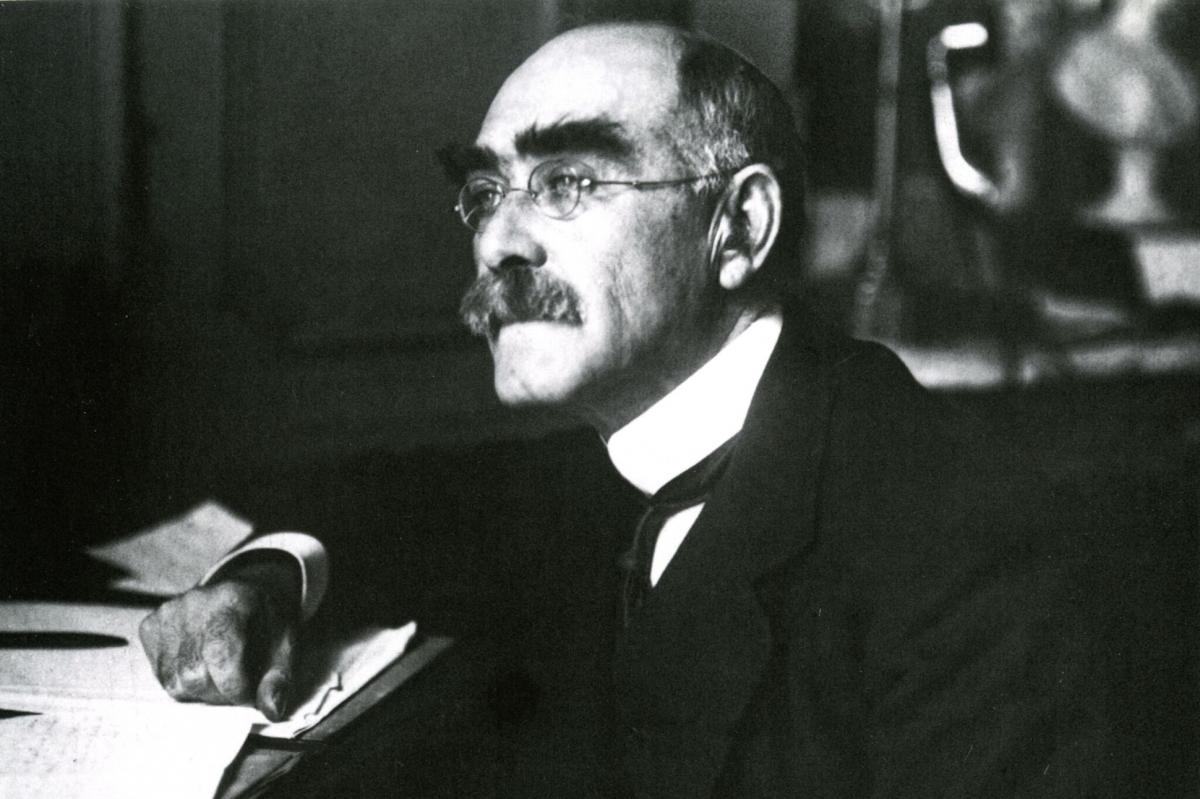
    And—which is more—you’ll be a Man, my son! —Rudyard Kipling

Expository Thoughts On The Gospels (book review)

J.C. Ryle was an Evangelical Anglican bishop who lived in England in the latter half of the 19th century. When Ryle’s words—written over 100 years ago—still resound with truth today, I would call that “a classic”! That is exactly what we find in his Expository Thoughts On The Gospels. 

The Gospels obviously focus on the life and teaching of Jesus Christ. Ryle takes how Jesus lived and taught and pulls out of them practical applications for Christians in his day, which still have perfect application for Christians today. I think what keeps his words so relevant is how closely he sticks with the biblical texts, seldom straying into his own opinion, but simply saying to us, “Did you see that?” 

His thoughts are presented to us section-by-section, not verse-by-verse as many biblical commentators do. This method has two distinct advantages for us: (1) It’s easier to get a “big picture” view of what Jesus was doing and teaching, and (2) It’s more manageable to use this book as a complement to a personal or group Bible study. 

In fact, Ryle himself suggested that the design of his commentary was with family devotions in mind. Purposely, he doesn’t delve into deep doctrine so that the youngest or most novice of Christians can gain much insight. But don’t confuse that statement with this being “light reading.” On the contrary, even the most tenured Christian will find ample thoughts to challenge his mind. 

I highly recommend this series of commentaries to those who want a deeper Bible study time.  

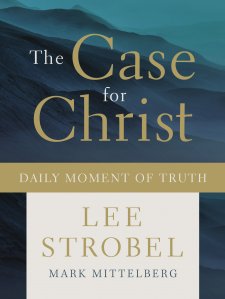
The Case For Christ Daily Moment Of Truth (book review)

This is a fantastic study guide from Lee Strobel and Mark Mittelberg. It was originally published with the title Today’s Moment Of Truth. 

Most Christians will tell you they love God “with all my heart.” That’s a good start, but according to Jesus, there needs to be more. Jesus told us to love God with all our heart, soul, mind, and strength. It’s especially these last two areas that concerned Strobel and Mittelberg enough to put together a wonderful book: The Case For Christ Daily Moment Of Truth.

Strobel and Mittelberg were concerned (and rightly so) that Christians were engaging their heart and soul in their Christian witness, but not developing their mind and strength to the same extent. As a result, when someone challenges them to explain why they believe what they believe, many Christians struggle to answer convincingly.

Lee Strobel and Mark Mittelberg are both top-notch Christian apologists. They don’t just present solid evidence for the Christian faith, but they do so in a winsome, inoffensive way. And through 180 different lessons, they train all who read The Case For Christ Daily Moment Of Truth to do the same.

Each day you will read a quote from a notable atheist or Christian skeptic, and then be trained in solid apologetics to refute their claims. You will be given Scripture verses, proofs from all disciplines of science, and some good old-fashioned common sense. This book will expand your spiritual muscles and your mental muscles. Each day’s reading will only take a couple of minutes, but you will be well-prepared for any challenges to your faith. A must-read for all Christians!

I am a Zondervan book reviewer.

Saturday In The Proverbs—Lifelong Learning (Proverbs 30)

[Each chapter in the Book of Proverbs contains thoughts that fit into a theme; they are not just random thoughts gathered together. In this “Saturday In The Proverbs” series, I will share a theme that I see in each chapter. But the cool thing about God’s Word is that you may see an entirely different theme. That’s great! If you do, I would love for you to share it in the comments below.]

Surely I am more stupid than any man… (Proverbs 30:2).

That’s what he said, and then Agur records some incredibly wise words for us! I think Agur is a man who is continually learning, and realizing how little he knew before he learned something new. 

He’s learning things like…

…how vast, and powerful, and wise God is (vv. 3-6).

…how frail and dependent on God he is (vv. 7-9). 

…how disrespectful people undermine their own success and happiness (vv. 10-14, 17).

…how destructive greed is (vv. 15, 16).

…how wonderfully God has made things (vv. 18, 19).

…how sin deceives (vv. 20-23). 

…how observing even the littlest of things can teach big lessons ( vv. 24-28).

…how boastful proud people are (vv. 29-33). 

What lessons are you learning? 

When was the last time you learned something new?