Untamed (book review)

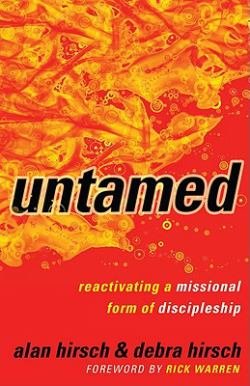
A friend introduced me to the writings of Alan Hirsch, and I’m so glad he did! Co-written with his wife Debra, Untamed resonated with me on so many levels.

Untamed is about discipleship the way it should be; not the way those in Christendom have made it. It’s about viewing our lives as an integrated whole; not the part-Christian, part-other roles in which we tend to operate. It’s about seeing the Church operate as a living, breathing, loving organism; not as an only-meets-once-a-week organization.

There were parts of this book that made me say, “Yes! That’s what I want to be a part of.” There were other parts that made me pause and say, “Hmmm, I never thought of it like that before.” And there were still other parts (honestly) that I said, “That’s a bit too radical for me to try right now.”

If you’re tired of clichéd “Christians” or the same-old-same-old “church,” Untamed will probably resonate with you. At the end of each chapter are some great discussion questions, which will help you begin to see discipleship in a new light.

If, however, you think the church and Christendom are doing just fine, then stay far away from Untamed, because you just might begin to think otherwise!

As for me, I loved this book!

How The Mighty Fall (book review)

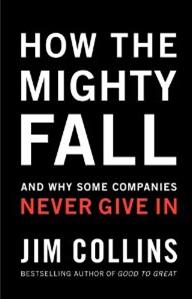
This is the third in the series of books from Dr. Jim Collins: Built To Last, Good To Great, and now How The Mighty Fall. This is a book that Dr. Collins wished he didn’t have to write, as he uncovers the markers that contributed to the failure of once-great companies.

If you are a frequent reader of my blog, you’re probably wondering why I’m reading/reviewing a business book. The answer is simple: the principles Jim Collins uncovers in his books are rock-solid principles of success and failure, regardless of the organization in which they are practiced or ignored. In all three of his books, I have mined so many great truths to apply to my personal life, as well as the organizations I lead.

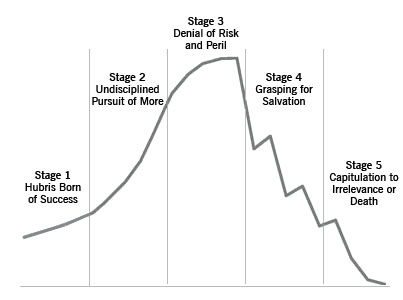
In How The Mighty Fall we learn about the five stages of decline for once-great organizations. Working backward from his evidence, Dr. Collins then gives us “markers” to look for in our own organizations that would tip us off to the stages of decline.

Why study this? Because I want to lead a great church! This quote from the book especially resonates with me:

“The point of struggle is not just to survive, but to build an enterprise that makes such a distinctive impact on the world it touches, and does so with such superior performance, that it would leave a gaping hole — a hole that could not be easily filled by any other institution—if it ceased to exist.” (emphasis added)

If you are involved in the leadership of any organization (whether for-profit or non-profit), I would encourage you to devour all three of Jim Collins’ books.

Books I Read In 2010

The Right Person For The Job

Employers and pastors both have the important task of putting people into positions of responsibility. Employers do so to make their businesses more profitable; pastors do so to expand the Kingdom of God.

But employers do something that pastors often miss: They hire the right person for the job.

Check out this verse:

Kenaniah the head Levite was in charge of the singing; that was his responsibility because he was skillful at it.

Simply put: Kenaniah was in charge of the singing because he could sing; he could carry a tune; he had skill; his singing was pleasant to the worshippers in the tabernacle. This word skillful also implies that he knew how to teach others too.

You give someone the job because they are skillful at it. Not because their feelings would be hurt if you gave the job to someone else, not because you hope giving them the job will boost their self-esteem. This is just as true in the church as it is in the business world.

The way I read the Bible, everyone has a talent. One of the roles of a shepherd leader is to find the right place for every person’s talent. Pastors do a disservice to both the individual and to the whole church body when they give someone a job for which they do not have the God-given talent.

Less Giving = Less Good News

We just finished talking about what the Bible says about tithes and offerings at Calvary Assembly of God. Right on the heels of this, I noticed this article in the Grand Rapids Press: “Study reveals church giving at lowest point since Great Depression.”

Here are some of the sad findings:

  • Regular church attendees aren’t even tithing. The average giving is only 2.4% of the attendees’ income.
  • While giving to churches is down, giving to other faith-based organizations is up.
  • The study’s authors noted a “long-term turning inward of congregations.” In other words, of the money that is given to churches, less and less of it is going to needs outside of the church’s walls.
  • Church’s spending on benevolence has dropped 47% since 1968, and now stands at just 0.35% of attendees’ income.
  • “Fewer people are seeing churches as the primary conduit for meeting the larger (charitable and evangelistic) need.”

Paul wrote to the church in Corinth about the overflowing joy of giving to help the needs of others. He commended those with rich generosity, and encouraged the church to excel in this grace of giving.

Here’s the sad fact: The less we give, the less the Good News about God’s love is shared.

God wants us to give because we want to give. Paul even said I am not commanding you to give, but instead…

Each of you must make up your own mind about how much to give. But don’t feel sorry that you must give and don’t feel that you are forced to give. God loves people who love to give. (2 Corinthians 9:7)

Let’s change this around. Let’s buck the nationwide trend. Remember…

MORE GIVING = MORE GOOD NEWS

!

Your Most Important Ministry

These thoughts are especially targeted at pastors. If you are a pastor, tighten your chinstrap because this may hit you a little hard. If you aren’t a pastor, perhaps you could help your pastor in this vital ministry.

Pastor, what is your most important ministry?

Think about it. Get it clear in your mind: what is the most vital ministry you have every week?

Let me give you a little hint: if your “most important” ministry has anything to do with your church, you chose poorly. Your most important ministry is at your home with your family.

I hate to burst your bubble, but someone else can pastor your church. As much as you might think, “These ministries won’t get done if I don’t do them,” trust me, they will get done with or without you.

But, my dear friend, you are the only one who can be your mate’s spouse, you are the only one who can be your kids’ Dad or Mom.

I love studying the life of David. There is so much to learn from him: his passion for God, his military strategies, his prayer life, and other important things pertaining to leadership. But we need to also learn from David’s failures. For all of David’s success as a king, he was an abysmal failure as a husband and father. He spent so much time “at the office” that he neglected his family.

I don’t mean to condemn anyone, but I know that when things are right at home, things will go well at church. Too many people in our churches are getting short-changed because their pastor works so hard on ministering to them and doesn’t work hard enough on ministering to his family. Just like with David, this will come back to bite you. So here are the tough questions:

  • Do you spend more time thinking about how to grow your church than you do thinking about how to grow your marriage?
  • Do you read more books about church growth than you do about marital communication?
  • Do you put more effort into discipling new believers than you do discipling your kids?
  • Are you more attentive in keeping appointments with church members than you are in keeping family time protected?
  • Do you know more about the struggles of the people in your church than you do about the struggles your spouse and kids are facing?

If you answered “yes” to any of these questions, it’s time to refocus. EFFECTIVE MINISTRY BEGINS AT HOME WITH YOUR FAMILY!!! Do you want to grow your church? Start at home. Do you want to be a more effective pastor? Be a more effective spouse and parent.

Did I step on anyone’s toes? Good, ‘cause I just stepped on my own too. Now, let’s get to work on our most vital ministry.

Blessed Man

My church family surprised me yesterday for pastor appreciation Sunday. I got a yummy cake, and a new iPod to replace the one that was stolen.

I absolutely my church family! Even if I wasn’t the pastor, this is still the church I would attend. Hey, if you live in the Cedar Springs area, stop by and see what makes this such a great group.

I’m a blessed man!

Quitting Church (book review)

It’s true: people are leaving churches in record numbers. Who is leaving? Why are they leaving? Is there anything churches can do to stem the tide? These are the questions that drove Julia Duin to research and write Quitting Church.

Since I pastor a church, these sorts of questions intrigue me too. Unfortunately, this book left me flat.

The research in this book consists largely of: (a) snippets quoted from other researchers; (b) Julia’s conversations with her friends who have stopped attending church; and (c) Julia’s observations on what “connected” for her at the various churches she has attended. In other words, this book doesn’t present a whole lot of original information. Even the subtitle—why the faithful are fleeing and what to do about it—is misleading, in that I read very little about how to keep the departing from fleeing.

Save your money; take a pass on this book.

Tribes (book review)

Seth Godin’s work is always thought-provoking. I know that he is mainly writing for a business audience, but I find his comments applicable to the church world (not to mention my personal world) as well.

I “read” Tribes in the audiobook format over a period of several weeks of drive time. I found myself frequently hitting the button which backs up the recording for 30 seconds. After I would replay a section, I would often press “pause” to reflect on the insights Seth had just read to me.

Instead of my usual book review format, I thought I’d just share with you some of the quotes which have been rolling around in my mind:

“Leaders don’t have things happen to them; leaders do things.”

“Faith is critical to all innovation. Without faith, it’s suicidal to be a leader. Religion, on the other hand, represents a strict set of rules that our fellow humans have overlaid on top of our faith. Religion supports the status quo and encourages us to fit in, not to stand out.”

“The best time to change your business [or church] model is when you still have momentum.”

“The tactics of leadership are easy; the art of leadership is hard.”

“Leaders challenge the status quo. Leaders create a culture around their goal, and involve others in that culture. Leaders have an extraordinary amount of curiosity about the world they’re trying to change. Leaders use charisma in a variety of forms to attract and motivate followers. Leaders communicate their vision of the future. Leaders commit to a vision and make decisions based on that commitment. Leaders connect their followers to one another.”

“You can’t manage without knowledge; you can’t lead without imagination.”

Permission To Speak Freely (book review)

I was first introduced to Anne Jackson’s writings through her blog. Something about the raw honesty in the way she wrote was instantly both compelling and confronting. When Mad Church Disease came out, I devoured it in a couple of days. With Permission To Speak Freely, I couldn’t put it down, finishing it the first day I received it.

I say that Anne’s writing is both compelling and confronting. Compelling because her words create in me a desire to want to be the kind of Christian that loves people and embraces them just as they are, just as Jesus showed us. And confronting because I know I am so far away from this.

Permission To Speak Freely addresses a real problem in the church: we don’t let people speak freely. At least, not people with “problems.” People who appear to have their act together, who know how to quote Scripture left and right, who never have a bad day, who always say and do the right things, those are the kind of people that can speak up in our churches. But those who are asking the tough questions, those who are hurting, those who aren’t sure Jesus is for them, those who don’t know how to “behave” in church, those are the kind of people who need to keep quiet. Tough words, I know; but sadly, they are true more times than not.

Anne goes first. She steps out from behind the I’ve-got-it-all-together façade and tells us what sort of struggles she had and has. She gives us “the Gift Of Going Second.” She breaks the ice, she pulls down the churchy barriers so that the rest of us can say, “Yeah, that’s me too.”

Part of this book reads like Anne’s memoirs. But then there’s the poetry, and the artwork, and the handwritten postcards with real people confessing real hurts and real questions. This book grabbed my heart and made me take a hard look at how I expect people to act in church. My kids are PK’s (preacher’s kids) just as Anne was, so I had to take a look at my expectations for them. I confronted my expectations for the families and individuals in our congregation.

I believe that is what this book will do most for you: cause you to confront the way you’ve always believed people should act in church. I looked at myself, and I found myself needing to extend more grace. Thanks, Anne, for being transparent enough to get me to take an honest look at my own life.

I highly, highly recommend this book to you.

I am a Thomas Nelson book reviewer.