There Is A God (book review)

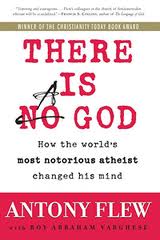
There Is A GodIt’s a mark of a strong, confident person that can admit, “I was wrong. I made a mistake.” Anthony Flew is just such a strong man. His book is called There Is A God: How the world’s most notorious atheist changed his mind.

The one sentence summary of this book could be: Anthony Flew was a noted philosopher who concluded there was no God, but then was persuaded to rethink his position and came to a complete reversal. But that would sell his story short.

The real meat-and-potatoes of the book are the arguments which helped change Anthony Flew’s mind. This, I must warn you, is no easy reading. The arguments are so nuanced and metaphysical at times, that it really requires a careful reading. This was not a book I could speed read, because the chain of logic in the arguments was simply too good to miss anything.

I throughly appreciated the candor with which Flew shared his metamorphosis from atheist to Theist. The book also includes two appendices which address the current state of modern atheism, and an interview with N.T. Wright on Jesus being God Incarnate.

If you are ready to study some of the atheistic and theistic arguments that the brightest apologists for both viewpoints are presenting today, then this is the book for you! I thought the journey of discovery was fantastic and mind-expanding!

12 Quotes From “Tactics

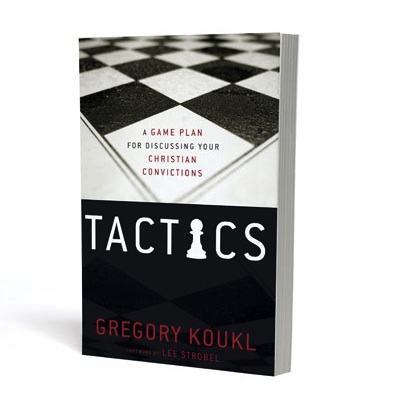
TacticsIn Tactics Greg Koukl gives Christians more how than what/why in defending the Biblical faith. It is an outstanding read that I recommend to all Christians (young or old). You can read my full book review by clicking here. Below are just a few of the quotes I highlighted in this empowering book.

“First, Christ’s ambassadors need the basic knowledge necessary for the task. They must know the central message of God’s kingdom and something about how to respond to the obstacles they’ll encounter on their diplomatic mission. … However, it is not enough for followers of Jesus to have an accurately informed mind. Our knowledge must be tempered with the kind of wisdom that makes our message clear and persuasive. This requires the tools of a diplomat, not the weapons of a warrior, tactical skill rather than brute force. Finally, our character can make or break our mission. Knowledge and wisdom are packaged in a person, so to speak. If that person does not embody the virtues of the kingdom he serves, he will undermine his message and handicap his efforts.” 

“The tactical approach requires as much careful listening as thoughtful response.”

“It is not the Christian life to wound, embarrass, or play one-upmanship with colleagues, friends, or even opponents, but it’s a common vice that anyone can easily fall into.” — Hugh Hewitt 

“Always make it a goal to keep your conversations cordial. Sometimes that will not be possible. If a principled, charitable expression of your ideas makes someone mad, there’s little you can do about it. Jesus’ teaching made some people furious. Just make sure it’s your ideas that offend and not you, that your beliefs cause the dispute and not your behavior.”

“The ability to argue well is vital for clear thinking. That’s why arguments are good things. Arguing is a virtue because it helps us determine what is true and discard what is false. … Paul warns against wrangling about words and quarreling about foolish speculations (2 Timothy 2:14, 23). But he also commands us to be diligent workmen, handling the word of truth accurately (2 Timothy 2:15). And, because some disputes are vitally important, Paul solemnly charges us to reprove, rebuke, and exhort when necessary (2 Timothy 4:112). This cannot be done without some confrontation, but disagreement need not threaten genuine unity.”

“If you want skeptics to believe in the Bible, don’t get into a tug-of-war with them about inspiration. Instead, invite them to listen—to engage Jesus’ words firsthand—then let the Spirit do the heavy lifting for you.”

“You have to know why Jesus is the only way before it is helpful to tell people that He is the only way.” 

“There are three specific things you can do to ‘ready’ yourself to respond. You can anticipate beforehand what might come up. You can reflect afterward on what took place. And in both cases you can practice the responses you think of during these reflective moments so you will be prepared for the next opportunity.”

“Knowing when to step back requires the ability to separate the hogs and the dogs from the lost sheep looking for a shepherd. But how do you know when someone has crossed the line? When do we have an obligation to speak, and when should we save our pearls for another time? Part of the answer can be found in Jesus’ next words in Matthew 7:6: ‘…lest they trample [the pearls] under their feet, and turn and tear you to pieces.’ Be generous with the truth except with someone who shows utter contempt for the precious gift being offered him. He will simply trample it in the mud and then viciously turn on you. … There is an exception to this principle, however. I have learned from my radio show that sometimes my real audience is not the person I’m talking to, but the people who are listening in, eavesdropping on the conversation. … Lee Strobel calls this ‘ricochet evangelism.’” 

“When I face an aggressive challenger, I often give him the last word. Not only is this gracious, it’s also powerful, conveying a deep sense of confidence in one’s own view. Instead of fighting for the final say-so, give it away. Make your concluding point clearly and succinctly, and then say, “I’ll let you have the last word.” But don’t break this promise. Grant him his parting shot, and then let it rest.”

“Know the truth. Know your Bible well enough to give an accurate answer. Tactics are not a substitute for knowledge. Cleverness without truth is manipulation.”

“Culture is most profoundly changed not by the efforts of huge institutions, but by individual people.” —Chuck Colson


Tactics (book review)

TacticsI am a big fan of Christian apologetics: defending what I believe as a Christian. But until reading Tactics by Greg Koukl, I have found very few books which discuss how to present what I believe.

Tactics isn’t about parlor tricks, or playing games with words. It is truly a mindset to keep a conversation going with someone who wants to know (or challenge) what you believe. When we make a statement, the conversation comes to a screeching halt or explodes into an intense argument. But if we continue to ask questions, a dialogue can continue.

Greg Koukl uses some insights from TV detective Columbo to give Christians some strategies for productive conversations. Peter Falk’s character was an intuitive detective who got his information by asking people to clarify what they were saying, and getting them to open up and talk more. In similar fashion, Greg gives us some ideas of how to find out not only what the other person believes, but why they believe it, by asking some strategic questions.

From the moment I began reading this book, I have been able to immediately use the tactics Greg outlines. I have recommended this book to a couple of other people, and they are also reporting back to me that they are experiencing similar results. So I wholeheartedly recommend this book to any Christian who wants to have more meaningful conversations with others about their faith.

15 Quotes From “I Like Giving”

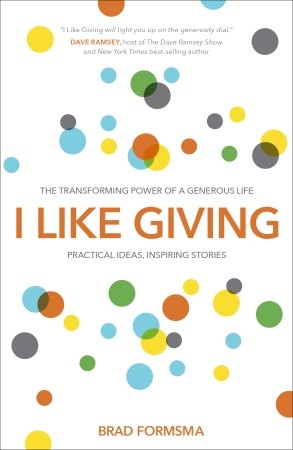
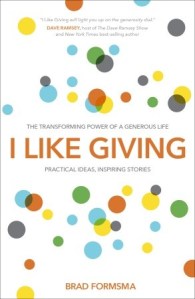
I Like GivingI Like Giving by Brad Formsma is a unique look at how to impact our communities. You can read my full book review by clicking here, but I strongly encourage anyone who wants to see their world changed to pick up a copy of this book. Below are some quotes I found thought-provoking in this book.

“Living generously is about giving your life to other people so that everything you do—whether it is your work, your charitable giving, or your contribution to your neighborhood—becomes both a gift to others and rewarding for yourself.” 

“Don’t make giving too big a project. Sometimes your best and most perfect gift might be as simple as a smile or a compliment. Maybe it’s paying for a stranger’s lunch.”

“Watch out for these nasty four-letter words: debt, fear, and busy. They steal the joy with the greatest of ease. Be aware of them as they compete with the nudge to do for others.” 

“The good news is that it’s never too late to give. If an opportunity comes your way and you don’t seize it, don’t get stuck in the downward spiral of regret. Smile, tell yourself all is well, and then ask for another one. If there are people around you, there will be more opportunities to give.”

“No matter how successful you are, it is giving your life away to others that makes you happy. … The right response, though, is not to shun success but to replace selfish ambition with other ambitions—doing things for others.” 

“Give daily, in small ways, and you will be happier. Give and you will be healthier. Give, and you will even live longer. … Giving protects overall health twice as much as aspirin protects against heart disease.” —Dr. Stephen Post

“Don’t let the occasional person who abuses the goodwill of others ruin your giving and deter you.”

“Compassion doesn’t mean giving every time, but when I give, I do it knowing that I’ve loved a fellow human being right where that person is, whether the money will be wasted or not.”

“One thing I’ve learned through the process is that I can’t force generosity. I can’t lead my family unless I’m going there myself. Simply keeping my eyes open for opportunities to give and ways to include the whole family sparks the idea in my kids. Kids are too young and innocent to believe they can’t be generous if they see adults living that way. … I never want to underestimate the example I am setting. My kids are watching how I live, and the choices I make have rippling effects down through the generations. I can choose to do nothing and let my children be swept up in the current of empty materialism that is rampant in our culture, or I can choose to live a different way by living generously.” 

“I don’t think we can ever overestimate just how profound the effects of giving can be. You can give without loving, but you can’t love without giving. The reality is that other people are watching how we live our lives, and what we do can have extraordinary effects in our communities. Generosity is for all of us. It is available to all of us, even when the cultural tide is moving in the opposite direction. Why not be brave and live differently?”

“Is weakness really that bad? Could it be that our specific weaknesses allow other people’s strengths to shine? Could it be that life sometimes throws us a curve that creates a need in our own lives? Once you experience the joy of giving, you realize that other people feel the same way when they give to you. Receiving might be harder than giving, but if you think about the joy the givers are receiving when they give to you, that will help you open up to receiving. You know that refusing the gift would deny them that joy.” 

“Focusing on what you don’t have or the bad hand you were dealt can actually make your life worse. What you think about affects who you become. It affects your relationships and the people you attract into your life. Keeping your focus on what you do have, what you have been given, and the good things in your life will make you happier and more grateful and will empower you to become a generous person yourself.”

“Often when we see someone in a bad situation, our natural response is to say, ‘Hey, if you need anything, let me know.’ Please don’t say that. Unknowingly you have put an added burden on the person. For some people the pressure is just too great, so they freeze and never respond. It’s a dangerous comment that produces a false sense of doing good. I encourage you to assess the situation and make something happen.”

“There are a lot of problems in the world. Sitting around talking about them or waiting for a large organization to do something about them doesn’t work. Finding opportunities to help others and change the world around us does work. We just have to take that scary step of actually doing something. We don’t need to overthink what we do. Sometimes we just know this is our opportunity to help. When we recognize an opportunity and dive in, amazing things happen! … So the question then becomes, are we willing? Will we decide to live generously and then be open to the opportunities that come our way?”

“You don’t have to make massive life changes, move to another city, or start your own nonprofit to become a gift to other people. You can start with who you are, right where you are, right now. In fact, you probably are already a gift to many people in many ways, but you might not always be aware of it.” 


13 Quotes From “The Solomon Seduction”

Solomon SeductionThe Solomon Seduction is a biography on King Solomon, a Bible study, a book for men to overcome temptation, a leadership book, and a great discussion starter for a men’s group. In other words, there are lots of reasons for guys to read this book! You can read my full book review by clicking here, and below are some of the quotes I highlighted from this book.

“Moderation can be a great thing. But the idea that anything is okay as long as it’s done in moderation has given rise to some of the wackiest notions known to man. … One of the big problems with using moderation as a justification for whatever you want to do is that it’s almost impossible to take just a bite when you’re really hungry.” 

“Are you just a guy who goes to church, or are you serious about growing spiritually and acquiring discernment? satan’s chances of seducing you will rise or fall on your answers to these questions.”

“Solomon is the perfect example of the fact that you can have your cranium crammed full of discernment and still end up embarrassing yourself. Keep in mind, he not only knew the book of Proverbs, he wrote the vast majority of it! And then ended up doing many of the very things he himself said were foolish!” 

“All of satan’s various attempts at seducing believers must include an attempt to undermine Scripture.”

“What we have here is a case not of ignorance or confusion or misinterpretation, but of satan subtly and artfully manipulating Solomon’s thinking to the point where he felt the commands of God seemed out of touch with his real-world experience.”

“satan doesn’t try to get you to forsake your good priorities. He just encourages you to mix in a few lesser priorities that will compete with those good priorities.”

“Mark it down. When the word I starts replacing the word we in your speech, something ugly is happening in your heart. Your ego is swelling.” 

“Big-ego people almost never back up and take another look at their actions. Why should they? They’re convinced that everything they do is right. It never occurs to them that they might be on the wrong track. They’re so infatuated with themselves that they can see nothing but that beautiful image in the mirror.”

‘What’s the big deal?’ If ever a question spoke to the attitude of our generation towards sin, that one does. We shrug off sin as though it’s just a little harmless fun. You know, boys will be boys. Everybody sows some wild oats, right? Or, if we don’t play the what’s-the-big-deal card, we claim that the sin we are indulging in is actually necessary.” 

“Instead of repenting, instead of exterminating, illuminating, or correcting their bad behavior, [sin managers] try to manage it. They believe that if they can keep the behavior from getting out of hand, keep people from being hurt or offended, keep the status quo from being upset, keep the ugliness under wraps and out of sight, they can hang on to their sin and everything will be fine. … This is typical of sin managers. Instead of seeing sin as the problem, they see the awkwardness the sin creates as the problem and believe, therefore, that if they can find an answer for the awkwardness, they will have solved the problem.”

“In the category of cold, hard truths, this is a doozy: God doesn’t share the throne of your heart with anybody or anything. You either give it to Him wholly and completely, or He vacates it. You can tell yourself that God comes first and that the sin you’re harboring is just a little something you need to work on, but if you choose a lifestyle of sin management over repentance, you’ve pledged your allegiance to your sin, not to God.”

“Repentance is not what saves us; grace is. But repentance is a response to grace that makes what we are after having received grace different from what we were before. … Repentance concerns itself with how things are while sin management only worries about how things look. Think of a messy closet. Repentance cleans out the closet. Sin management straightens up the closet. Repentance throws away the junk. Sin management rearranges the junk. Repentance gives you a better closet. Sin management only gives you a better-looking closet.”

“When we see Solomon at the height of his idolatrous lifestyle, marrying and buying and indulging like an out-of-control sailor on a weekend pass, what does he say over and over again? ‘I said to myself…’ (Ecclesiastes 1:16, 2:1, 2:15, 3:17, 7:23). Solomon was talking to himself about a lot of things he should have been discussing with God. Who can argue that the reason why he was seduced and eventually reduced to an object of scorn and pity was because he excluded God from so many areas of his life?” 


I Like Giving (book review)

I Like GivingWhen you read a title like I Like Giving you might immediately think, “This is a book telling me to tithe, or give bigger offerings to my church, or support my local charity.” And you would be dead wrong. Brad Formsma’s book isn’t really about giving money away, it’s about giving yourself away.

Brad writes, “When we choose to give, we change, and the people around us change. When we move from awareness to action, miracles happen. When we allow giving to be our idea, a world of possibilities opens up before us, and we discover new levels of joy.”

Indeed, Brad weaves together his own personal stories, with stories from other givers, and even a healthy dose of medical and psychological research data to show us just how life-transforming and joy-producing it is when we are giving people. Not only are the gift receivers benefitted, but so are the gift givers.

Let me state it again: this book isn’t about giving your money to a charitable organization or a church; it’s about you seeing a need and finding a way to take care of that need. If everyone took on this mindset, just imagine how our communities would change!

One final thought from author Brad Formsma—“I don’t think we can ever overestimate just how profound the effects of giving can be. You can give without loving, but you can’t love without giving. The reality is that other people are watching how we live our lives, and what we do can have extraordinary effects in our communities. Generosity is for all of us. It is available to all of us, even when the cultural tide is moving in the opposite direction. Why not be brave and live differently?” (emphasis added)

Let I Like Giving be a springboard for you to live differently and to make a difference where you live!

I am a Waterbrook book reviewer.

The Solomon Seduction (book review)

Solomon SeductionI love Bible character studies that read like a biography, and in The Solomon Seduction by Mark Atteberry, that’s exactly what I got. Not only that, but this book is an excellent discussion book for men and a pretty good leadership lesson as well.

Pastor Atteberry uses the life and writings of King Solomon to show us that even someone called the wisest man can be reduced to a fool. Solomon was given a gift of wisdom unequaled in any other man, but his gift was misused and mismanaged by Solomon, and led to his downfall.

This is a timely book for men today. Atteberry wrote early on in the book—

“Simply put, Solomon was better equipped to see through satan’s deceptions than any man who has ever lived, other than Jesus. But in the end, he became just as blind to them as everyone else. This, of course, is quite a tribute to satan’s cleverness. If he were an author, his blockbuster best seller would be How I Made A Fool Out Of The Wisest Man Who Ever Lived (And Why The Program Still Works). And it does still work.”

It’s true: satan’s seductions still work today, and Atteberry gives us ten seductions that worked on wise King Solomon, and will work on men today if we don’t pay attention to them.

I hope men not only read The Solomon Seduction, but that they use it as a springboard for discussion with other men too. This is a needed book for our time.

I am a Thomas Nelson book reviewer.

7 Final Quotes From “The Ministry Of God’s Word”

The Ministry Of God's WordI’ve been sharing some of the many quotes I highlighted in Watchman Nee’s book The Ministry Of God’s Word. You can read previous quotes by clicking here, here, here, here, and here. This is a book that I have called a must read for pastors, and you can read my full book review by clicking here.

“A minister of the Word ought to be attentive to how he speaks. The words he speaks must come through discipline, since God creates the words for us through His disciplining us. … How much you can speak depends upon how much you have learned inwardly. … It is more than your preaching His Word; you as a person must be so chiseled and tested by Him that the word which comes out of you is God’s Word.” 

“Let us realize that the minister of the Word must be tried first. Without any trial there can be no word. If other brothers and sisters should enter into trial before you, you have nothing to help them. Even if you should try to say something, it falls as an empty word. What use is an empty word? Word is formed in fire. … Hence the ministers of the Word are those who are chosen by God to be dealt with first, to be tried first, and to know the Lord first, so that they may minister Christ to God’s children. … If we expect to have a big ministry we should be ready to receive more dealings.”

“The Word of God is full of emotion. It should not be recited verbatim in a mechanical way. It ought to be pressed out through deep feeling. … One’s emotion must be so refined that he can rejoice when God’s Word is joyful and wail when the Word of God is sorrowful. His feeling follows the Word of God closely. This is not performance. Please never learn to perform. … The more spiritual a man is, the richer his feeling. … The more lessons one learns before God the more enriched his feeling will be.” 

“A minister of the Word should know that God is building up his ministry through each trial and difficulty. Do not be so foolish as to deem it best to flee from trial. If no thorn, then no grace, hence no power and little ministry. You may speak the Word but you do not possess the strength of the spirit to push it out. You need the Word; you also need a usable spirit.”

“In preaching the gospel, if you make men a little bigger, you make the gospel somewhat smaller. … Spiritual humility comes through our being enlightened by God to a real knowledge of our self, where as soulish self-abasement is the result of looking at man, comparing ourselves with others, and being afraid of men.” 

“We need to take good care of our mind that it may be usable when God wants it.”

“He who desires to minister the Word must learn how to speak simply. … Always remember that God’s Word is for men to understand, not for them to become confused about. … Hence a very important point in ministering the Word is to climb high before God. The higher we climb the more God’s Word is released. God rejects low thought, low-quality persuasion, cheap metaphors or words. Reach high and yet be clear.” 


11 Quotes From “Holy Fire”

Holy FireHoly Fire by R.T. Kendall is an excellent book for dyed-in-the-wool Pentecostals, and for those who believed the operational gifts of the Holy Spirit have ceased. You can read my book review by clicking here. Below are a few quotes I highlighted in this book.

“So if you feel threatened by the Holy Spirit, is it because you are happily in your comfort zone? Are you afraid of what the Holy Spirit might do to you? What He would require of you? What He might ask you to do? Do you think you will lose something if you make yourself vulnerable and totally open to Him? Are you afraid He will embarrass you? Do you think you will lose your identity? Do you think you might have to change?”

“The canon of Holy Scripture is closed. It is final. Absolute. Incontrovertible. It is God’s complete and final revelation. No word that will come in the future will be equal to the Bible in level of inspiration. This means that any leading, prophetic word, word of knowledge, or vision one may have today must cohere with Holy Scripture. If it doesn’t, it must be rejected.”

“The Holy Spirit is our best and only reliable Teacher. In fact, He is the only Teacher who matters. Whatever teaching you hear or read (including this book)—whoever the preacher or teacher, if the Spirit does not apply it and witness it to your heart (which He is most capable of doing), you should learn to hold that teaching in abeyance—if not dismiss it.” 

“The Spirit ‘guides’ us into truth—showing what is there but what cannot be seen without Him opening our eyes. It is humbling for prideful people to admit to the need of the Holy Spirit. The cost? Our pride being shattered. But once we are broken and enabled to see our stubbornness, the Spirit will show us amazing things—in Scripture.”

“The Holy Spirit leads us to praise the Lord Jesus as He deserves.” 

“Don’t come short of discovering how real God is because some well-meaning person says this kind of relationship with God is not possible today.”

“Unbelief is doubt that degenerates to a conscious act of the will. … But when we consciously decide that God did not say what He did—and we can do it better; or that He is not going to keep His word—or manifest Himself, and then put ourselves above His Word, we cross over a line. This is dangerous stuff.” 

“Do you know the context of Hebrews 13:8? Verses 7 and 9 point to one thing: sound teaching. … Whereas we have a perfect right to apply Hebrews 13:8 against cessationist teaching, the immediate context refers to doctrine. Sound theology. The writer wanted the teaching of Jesus to remain the same yesterday and today and forever. Knowing His Word and His ways.”

“What if God in some cases keeps some skeptics from seeing the miraculous even though it actually takes place? What if miracles are largely for those believers in God’s family who have accepted the stigma of being ‘outside the camp’ (Hebrews 13:13)? After all, why didn’t the resurrected Christ appear to everybody on Easter Sunday? One might choose to argue that this would have been a reasonable thing to do if God truly wanted everybody to believe on His Son. Why did Jesus reveal Himself only to a few? Why didn’t Jesus knock on Pontius Pilate’s door on Easter morning and say, ‘Surprise!’? Why didn’t Jesus go straight from the empty tomb to Herod’s palace and say, ‘Bet you weren’t expecting Me!’ He appeared only to a few—those who were His faithful followers. I also suspect that God sometimes allows just a little bit of doubt when it comes to the objective proof of the miraculous. This keeps us humbled. And sobered.” 

“The Holy Spirit can therefore be quenched by a doctrine that does not allow for Him to show up. … It also seems to me that one of the more serious fallouts of being a cessationist is that it can eliminate any expectancy for God to work powerfully in our hearts and lives. One may become too content with his or her sheer intellectual grasp of the gospel. The consequence is that we don’t even consider—much less expect—that God will manifest His power in our lives.”

“This to me is serious—and a very precarious position to take, namely, ruling out categorically the possibility of God manifesting His glory in signs and wonders today and deleting a great portion of the Bible for today. Consider how much the Bible has to say about God’s power. Healing. Signs and wonders. Revelation of truth by the Holy Spirit. Consider what is left in Holy Scripture when you rule out the miraculous or the gifts of the Holy Spirit.”

Holy Fire (book review)

Holy FireI believe the subtitle of R.T. Kendall’s book Holy Fire is the most apt description of this work: A Balanced, Biblical Look at the Holy Spirit’s Work in Our Lives. Truly this book is both biblical and balanced.

“I am writing this book (1) to introduce the Holy Spirit as if you did not know very much about Him, (2) to show the inconsistency of the teaching of some evangelicals, but (3) also to warn you of strange fire that is about,” says Dr. Kendall.

It seems lately there is a great deal of UNbalance when discussing the Holy Spirit, and much “theology” being preached which doesn’t have a firm biblical foundation. Some want to emphasize the Spirit’s role so much that they almost exclude God the Father and God the Son. Others want to so downplay the role of the Holy Spirit in our lives today that they have almost become binitarians. Kendall stated, “The Holy Spirit does not belong to you. Are you Charismatic? He is bigger than your signs and wonders event. Are you Reformed? He will not be limited by your theology.”

Sticking close to the words of Scripture, R.T. Kendall walks us through the various roles of the Holy Spirit in our lives. He brings in the insights of other notable thinkers from Martin Luther, to John Calvin, to Jonathan Edwards, to George Whitefield, and Dr. Martyn Lloyd-Jones. Even for someone like me who grew up in the Pentecostal tradition, I learned so much from this book!

Holy Fire is not written in a scholarly tone, but in a conversational style that made me feel I was talking with R.T. Kendall. This allowed me to drink in what Rev. Kendall was saying, process it, compare it with Scripture, and reach my own conclusions.

An excellent book that is very timely for the Christian era in which we currently live. Whether your background is Pentecostal or Reformed, there is so much to be learned from Holy Fire.