A-to-Z Love

You probably have heard that Psalm 119 is the longest chapter in the Bible (176 verses). The anonymous author clearly loved God’s Word—everything about it from aleph to taw (that’s Hebrew for “from A to Z”).

The psalm’s 176 verses are divided into 22 sections, with eight verses in each section (the Hebrew alphabet has 22 letters). All of the verses except three mention God’s Word in some way (law, statutes, commands, etc.). In other words, this author loved God’s Word from start to finish, and everything in-between!

How about if we continue the A-to-Z love?

I love that God’s Word is…

A—An attitude adjustor

B—Bright hope

C—Comforting

D—Direction for life

E—Educational

F—Fulfilling my deepest longings

G—Good and good for me

H—Historically accurate

I—Illuminating

J—Just what I need, when I need it

K—Keeping me from sin’s grip

L—Liberating me from anxiety

M—Making me the God-fearing man I should be

N—Never condemning, always encouraging

O—Opening my understanding

P—Purifying my motives

Q—Quality time

R—Revealing God’s love for me

S—Strength for today

T—Temptation defeater

U—Unfailing truth

V—Visionary

W—Worth more than all my other books

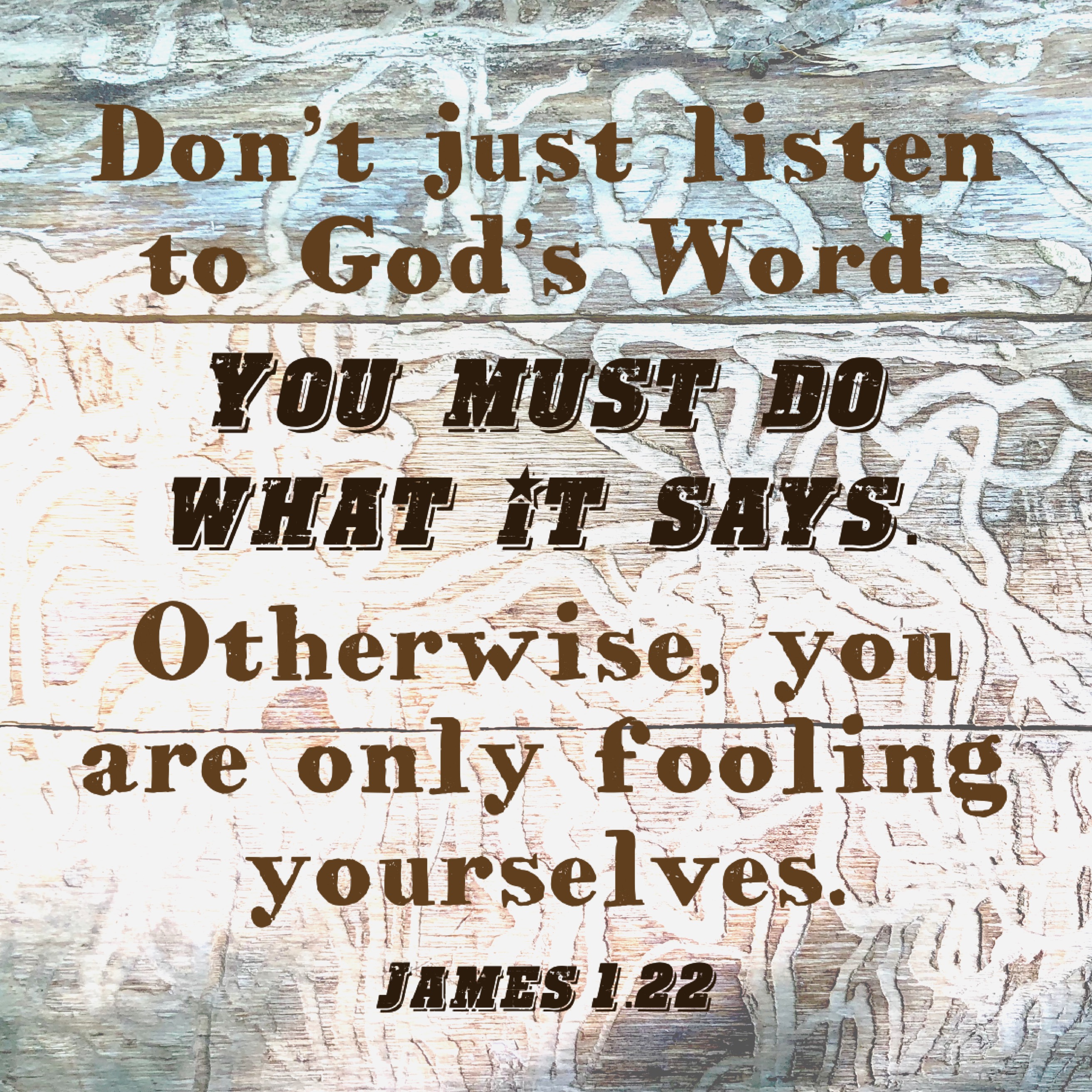
X—Xenografted into my heart (James 1:21)

Y—Yahweh’s love letter to me

Z—Zoe (1 John 1:1)

Go ahead and add your A-to-Z love of God’s Word in the comments…

I also shared a series of 22 messages looking at each of the sections of Psalm 119. You can find the complete list of those messages by clicking here.

Anger That Crosses The Line

Last night in our Bible study we looked at some words that David penned when he was angry. He was on the run from his son Absalom, and it seemed like everywhere he turned people were after him, or slandering him, or just doing their best to make him miserable. Yet in two back-to-back Psalms David says, “I lay down every evening and get a great night of rest.”

His sweet sleep comes from a moment of reflection before dozing off. He says:

In your anger do not sin; when you are on your beds, search your hearts and be silent. Selah.

  • Did my anger today cross the line into sin?
  • Am I allowing the time for the Holy Spirit to search my heart?
  • When the Holy Spirit points out where my anger crossed the line, do I justify my anger, or am I silent?

How do we know if our anger has not crossed that line and become sin?

Aristotle wrote, “Anybody can become angry—that is easy; but to be angry with the right person, and to the right degree, and at the right time, and for the right purpose, and in the right way—that is not within everybody’s power and is not easy.”

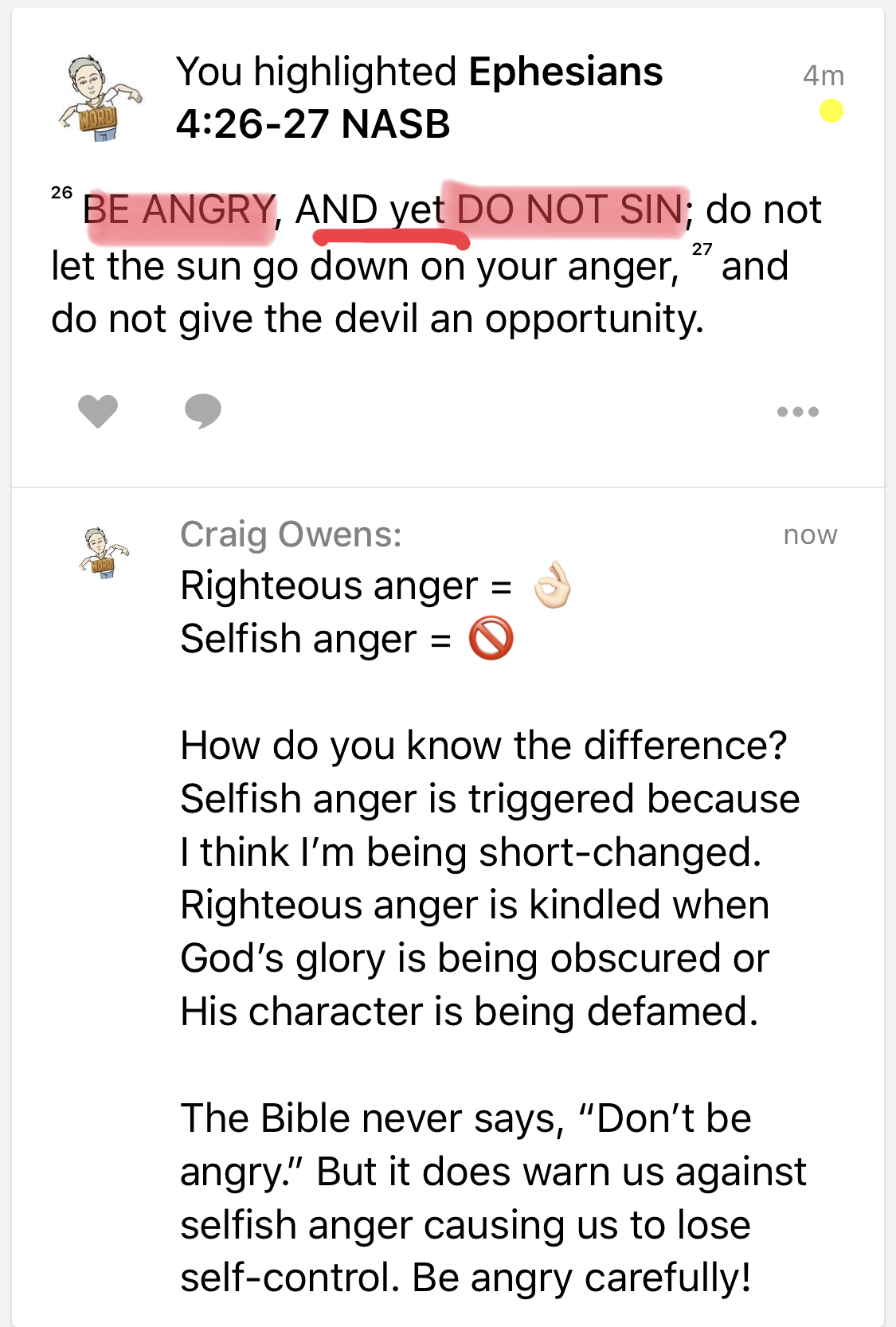
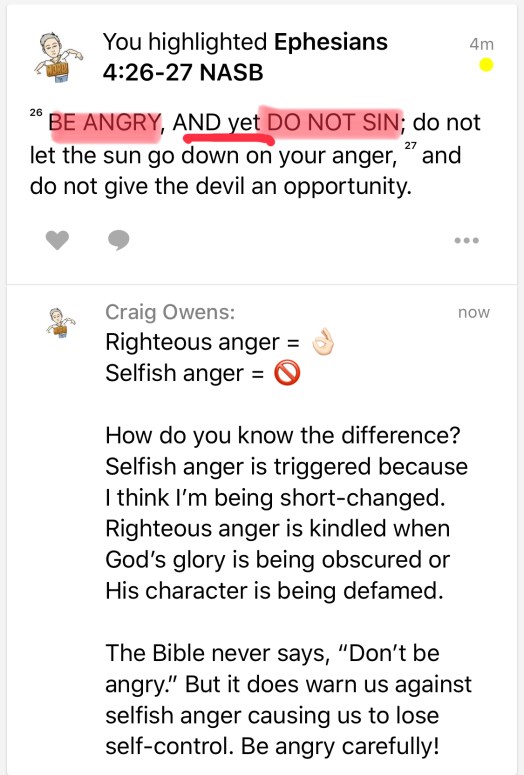
Being angry is not the issue. David said it (and Paul quoted it in Ephesians 4:26): “Be angry; just don’t sin.” God gets angry, but He does not sin. Jesus, in His public ministry, got angry, but He did not sin. We need to search our hearts to make sure our anger has not crossed the line to sin. We have to be angry in a godly way.

I see at least four ways to become angry without crossing the line into sin:

1.  Selfless Anger = anger at sin, but not angry at the sinner.

Love is not rude, it is not self-seeking, it is not easily angered, it keeps no record of wrongs. Love does not delight in evil but rejoices with the truth. (1 Corinthians 13:5, 6)

2.  Slow Anger = lengthen your fuse a bit.

Do not be quickly provoked in your spirit, for anger resides in the lap of fools. (Ecclesiastes 7:9)

My dear brothers, take note of this: Everyone should be quick to listen, slow to speak and slow to become angry, for man’s anger does not bring about the righteous life that God desires. (James 1:19, 20)

Good advice from Thomas Jefferson: “When angry, count to ten before you speak; if very angry, a hundred.”

3.  Protective Anger = when sinners entice others to join them in their sin. God is sad when people leave Him; He is angry at them when they take others with them.

But they put God to the test and rebelled against the Most High; they did not keep His statutes. Like their fathers they were disloyal and faithless, as unreliable as a faulty bow. They angered Him with their high places; they aroused His jealousy with their idols. When God heard them, He was very angry; He rejected Israel completely. (Psalm 78:56-59)

4.  Righteous Anger = against those who are keeping others from coming closer to God.

For I endure scorn for Your sake, and shame covers my face. I am a stranger to my brothers, an alien to my own mother’s sons; for zeal for Your house consumes me, and the insults of those who insult You fall on me. (Psalm 69:7-9)

This verse was recalled by Jesus’ disciples when they saw Him get angry and clear out the Temple in Jerusalem. Jesus was angry because of the religious clutter that was keeping God’s house from being a house of prayer for all nations.

I think everyone is familiar with the acrostic WWJD = What Would Jesus Do?

I’d like to propose something similar: WGGA = Would God Get Angry?

This is a great question to ask to make sure our anger does not cross that line into sin. Get angry—in a godly way—and do not sin.

The Christian Atheist (book review)

Every time I read a Craig Groeschel book, I know I’m going to read words that cut right across all of my excuses for not changing. And I was not disappointed to find this pattern continued with his latest book The Christian Atheist.

If the title sounds like an oxymoron (you can read the definition of this funny-sounding word here), that’s because it is. Or is it? The subtitle of the book gives the right-on-target definition of a Christian atheist: believing in God but living as if He doesn’t exist.

So every chapter is titled, “When you believe in God, but…

  • …you don’t really know Him.”
  • …you are ashamed of your past.”
  • …you aren’t sure He loves you.”
  • …you don’t think you can change.”
  • …you don’t share your faith.”
  • and many more!

It reminds me of what James wrote in his letter to the church, where he called them out for being Christian atheists: “You believe in God? Good for you! Even the demons believe in Him. But you’re not living like you believe in Him.”

Brennan Manning wrote,

“The greatest single cause of atheism in the world today are Christians who acknowledge Jesus with their lips and walk out the door and deny Him by their lifestyle. That is what an unbelieving world simply finds unbelievable.”

But Craig doesn’t just identify the symptoms, he gives his readers the prescriptions too. In easy-to-apply concepts, Craig tells those who believe in God how they can make the changes that won’t deny God by their atheistic lifestyle.

I highly recommend this book to you.

I am a Zondervan book reviewer.

Is Today Your Last Day With Us?

Okay, this seems a bit bizarre: God tells Moses, “Get Aaron and his son Eleazar and bring them with you up to Mount Hor. I want you to transfer the office of high priest from Aaron to Eleazer. And then Aaron is going to die on the mountain.”

Seriously!

Anyone reading this post knows their birth date, but none of us knows his or her death date.

Aaron did.

What do you think he did with his last few hours?

  • Did he need to apologize to someone? Ask their forgiveness?
  • Did he need to make amends?
  • Pass along some vital information to Eleazer?
  • Say “I love you” to someone dear to him?
  • Give one last kiss? One last embrace?

James wrote, “How do you know what your life will be like tomorrow? Your life is like the morning fog—it’s here a little while, then it’s gone” (James 4:14).

You and I don’t know what our death date will be, so our best bet is to live today like it’s our last day. What do you need to do with your last few hours?

  • Are you ready to meet God?
  • Do you need to ask Christ to forgive your sins?
  • Is there someone who needs your forgiveness?
  • Do you need to make something right somewhere?
  • Is there vital information you need to share?
  • Does someone need to hear “I love you”?
  • Who do you need to hug or kiss?

Don’t wait for tomorrow, because tomorrow may never arrive. Live today like it’s your last day. Because it may very well be your last day with us.

What If…

…for just one day you and I only said what God told us to say?

“Everything?” you ask, “Is that even possible?”

Yes! Jesus did it. Look:

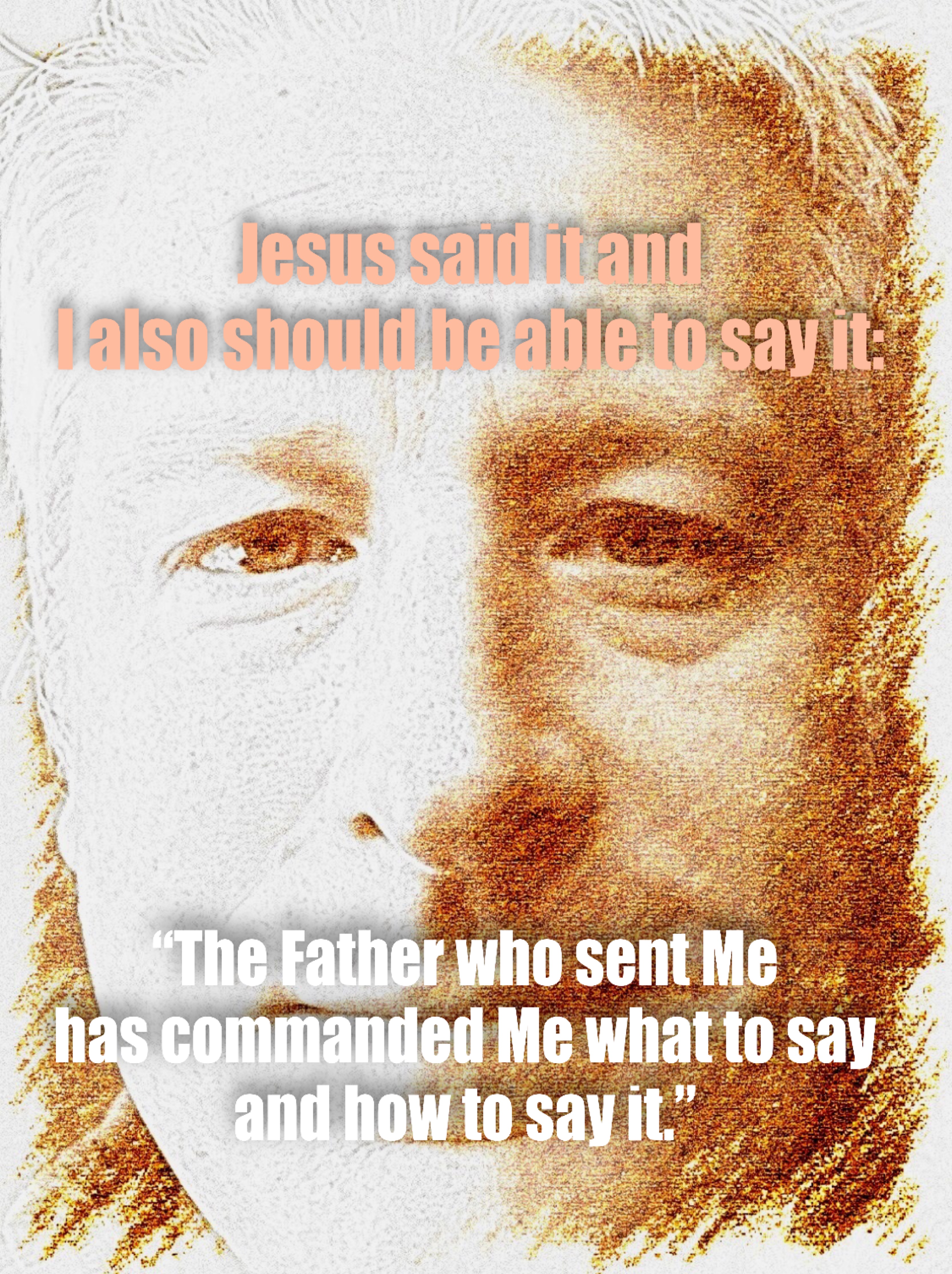
I don’t speak on My own authority. The Father who sent Me has commanded Me what to say and how to say it.

Everything Jesus said was directed by His Father. Yes, everything.

Want to try it today? First, we have to spend more time in God’s presence to hear His words. Then here’s a simple gauge to use (as given to us by James). Are my words…

  • true?
  • pure?
  • peace-promoting?
  • considerate?
  • courteous?
  • gentle?
  • sincere?
  • merciful?

Are you ready to give it a try?

Apathy Is Not An Option

The old joke goes like this—

Q: What’s the difference between ignorance and apathy?

A: I don’t know and I don’t care.

Corny, I know, but it does make a point.

For followers of Jesus Christ, sometimes ignorance of a situation is acceptable, but apathy is never an option. In other words, you may not know what’s happening around you, but once you know, you’re on the hook. You cannot do nothing. Especially when people need help.

Nowhere in Scripture will you ever see something like this:

  • “If you feel like helping the poor, go for it. If you don’t feel like it, that’s okay.”
  • “It’s okay to look away from the hurting.”
  • “If you’re too busy to get involved, God will understand.”
  • “If it makes you uncomfortable to see that, just pretend you didn’t see it.”

Nope. I cannot do that and call myself a follower of Jesus.

Anyone, then, who knows the good he ought to do and doesn’t do it, sins. (James 4:17)

The consistently righteous man knows and cares for the rights of the poor…. (Proverbs 29:7 AMP)

The godly care about the rights of the poor; the wicked don’t care at all. (Proverbs 29:7 CEV)

Get informed and then get involved.

The Power Of Touch

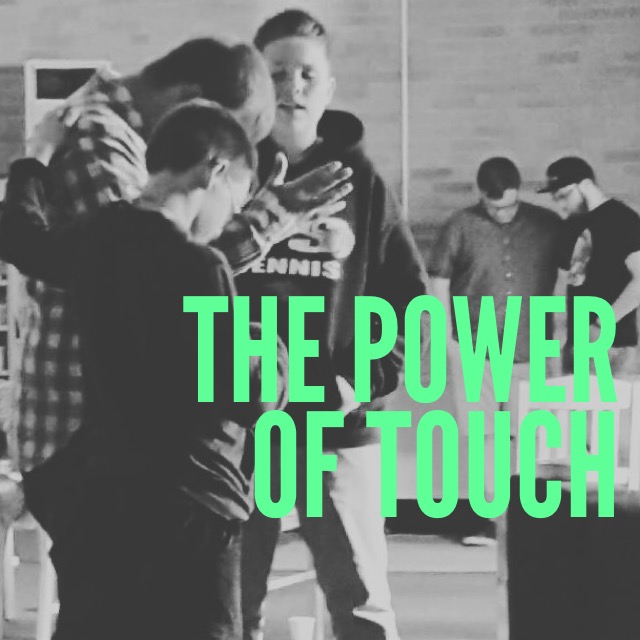
I grew up in a church that believed in the literal “laying on of hands” while praying for someone. I still like to pray that way because I believe there is a power in the human touch.

Science has proven that human-to-human touch helps people feel better faster, lowers blood pressure, and stimulates cognitive development in newborns.

We shake hands with people when we meet them as a sign of acceptance.

We lay our hand on a friend’s arm or shoulder to show we empathize with their pain.

We embrace or kiss a loved one to show affection.

Dr. Paul Brand, a renowned surgeon who worked with leprosy patients in India, said that his hands were his most delicate and most accurate diagnostic tool.

How devastating when we withhold our touch! How crushing when the only time we touch is when we are angry!

  • Think about how much more meaningful our prayers with someone would be if we would just lay our hands on them.
  • Think about how much warmer the greeting would be if we gave someone the two-handed handshake.
  • Think about how much greater our bond with a hurting friend if we simply put our arm around their slumping shoulders.
  • Think about how much deeper the connection with your spouse and children if you held hands more often.

Touch someone today. When you do, you’ll be touching much more than their hand; you’ll be touching their heart. Your touch could make a world of difference to someone today.

Knowing What To Look For

On Sunday afternoon Betsy left our house to meet with our KidZone team. She had only been gone for a few minutes when she called me. “I just had to pull over to the side of the road,” she said. “It sounds like something is dragging underneath my van.”

I quickly threw my coat on and drove to meet her. Sure enough, as I pulled up behind her van I could see something hanging down. I laid down next to the van to look underneath and discovered that the band which holds up the gas tank was missing a bolt. I’m not a mechanic, but even I know that’s not a good thing!

I called a friend at church who’s got a lot of hands-on experience with cars. He said, “I’ll be right there.” He arrived quickly with a metal coat hanger, which he used to take the place of the missing bolt.

We turned around to head back to my house. Jeff was in front of me and had only driven about 150 feet when he jammed on his brakes, pulled to the side of the road, and leaped out of his car. I then watched as he ran across the road, bent down, and picked up the missing bolt!

When we got back to my house I said, “You must have the eye of an eagle to spot a rusty bolt on wet pavement.”

“No,” he said, “I just knew what to look for.”

In Genesis 45, Joseph reveals himself to his brothers. Twice he tells them, “Don’t be afraid. God sent me here.”

“Wait a minute,” you might protest, “God sent him to Egypt?! I thought his brothers sold him as a slave. God put Joseph in the position as prime minister of Egypt?! I thought his special dream-interpreting skills did that.”

Joseph went from a prince in Jacob’s family, to a slave in Egypt, to comptroller of Potiphar’s affairs, to a falsely-accused rapist, to a prisoner, to a prison trustee, to a forgotten man, to Pharaoh’s dream interpreter, to Egypt’s prime minister.

Joseph knew what to look for along the way. He knew God had given him a direction for his life, so he was constantly looking for it.

Prayer does this for me, too. I may know verses like

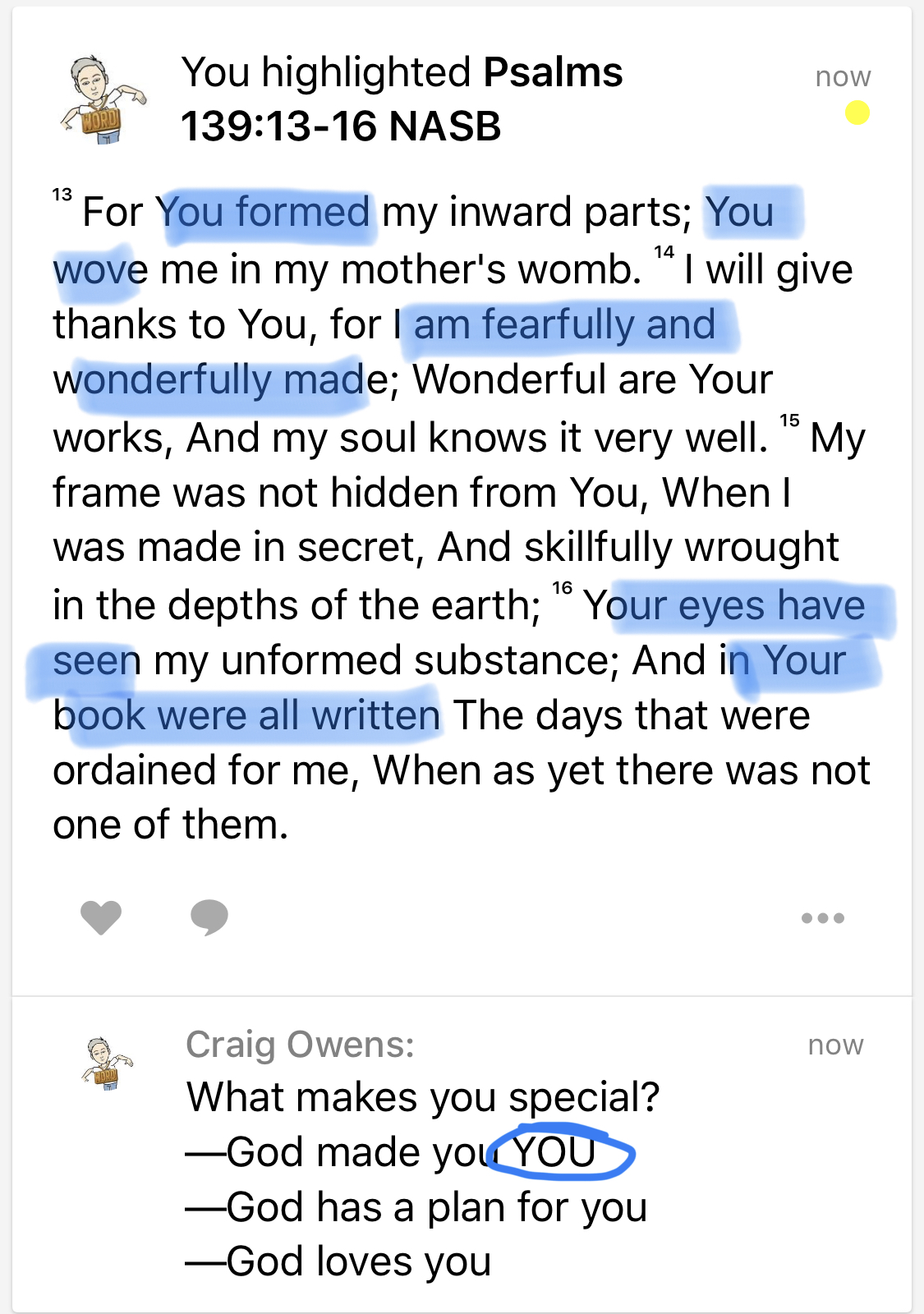
  • I am fearfully and wonderfully made.
  • Before I was born, God knew me.
  • All things are working together for good for me because I love God and called me for a purpose.
  • I should rejoice in my trials because God is developing something in me.

but it’s only when I’m praying these verses that the Holy Spirit trains my eyes to know what to look for.

God was placing Joseph and preparing Joseph to be just where he needed to be, at just the right time, and with just the right skills.

God is doing something with me: He’s preparing me and placing me in His perfect timing to fulfill His perfect plan. When it seems my life has become derailed, I need to know what to look for. Prayer does this: Prayer trains my heart and my mind and my eyes to know what to look for.

I can also assuredly tell you that God is doing something with YOU: He’s preparing YOU and placing YOU in His perfect timing to fulfill His perfect plan. Prayer will help you know what to look for too.

The Big Ask

Tonight in our Impact! Youth service we are wrapping up a great series called Bigger Than Me. We’ve been challenging our youth to look out from themselves and see the big world around them. This has been an amazing series and I’ve been so excited to see so many students step out in a big way. You can read more here and here.

But tonight is the big ask. Tonight I’m going to challenge our students to make a commitment that’s going to hit them in a really sensitive area—their wallets. We’re going to present the opportunity to confront a real need in a very practical way: by giving money. Not just once, but every month.

Here’s the way the apostle James laid it on the line:

Dear friends, do you think you’ll get anywhere in this if you learn all the right words but never do anything? Does merely talking about faith indicate that a person really has it? For instance, you come upon an old friend dressed in rags and half-starved and say, “Good morning, friend! Be clothed in Christ! Be filled with the Holy Spirit!” and walk off without providing so much as a coat or a cup of soup—where does that get you? Isn’t it obvious that God-talk without God-acts is outrageous nonsense?

Here’s how you can be involved:

  1. Pray for me that I can present the big ask in a compelling way.
  2. Pray for our students that they’ll be moved to respond.
  3. Check out my blog tomorrow for an update on tonight’s response, and to see how you can help too.

I can hardly wait!

A Silly Dream World Or The Real Deal?

“What is ‘real’? How do you define ‘real’? If real is what you can feel, smell, taste, and see, then ‘real’ is simply electrical signals interpreted by your brain. … Have you ever had a dream, Neo, that you were so sure was real? What if you were unable to wake from that dream? How would you know the difference between the dream world and the real world?” —“Morpheus” in The Matrix

We are created in God’s image. God is eternal and unrestricted, yet we are contained in finite bodies and constrained to the time-space dimension of our universe. That hardly seems “real.” Yet our souls—the “real” part of us—were made to be timeless and unbound. It seems like a dream, and yet sounds real.

To help humanity navigate the dream-real state in which we find ourselves, God gave us incredible insights into His Word: the Bible. The answers to our dream-real questions are there if we’re willing to search for them.

C.S. Lewis wrote, “What we see when we think we are looking into the depths of Scripture may sometimes be only the reflection of our own silly faces.” The Apostle James talks about God’s Word as a mirror in his letter to the church (1:22-25). In this, I see three people.

(1) One who never looks in the mirror; one who simply accepts what’s presented to him. Again “Morpheus” comes close: “You have the look of a man who accepts what he sees because he is expecting to wake up.” James says this is a man who attends church regularly, but never applies what he hears. In fact, he probably never even hears anything other than what he thinks the pastor said. That man is silly, shallow, and stunted in his spiritual growth (if there is even any growth at all!).

(2) One who looks in the mirror but doesn’t do anything about what he sees. He hears the Word of God at church and perhaps even reads his Bible often at home; he knows all the stories and how everything should be. But he, too, never makes any changes in his spiritual “appearance.” He is content with where he is. If he ever feels the pull of desire that there could be more real to his dream-real world, he quickly explains it away. He is at the same spiritual maturity level today as he was years ago.

(3) One who looks into the mirror, recognizes that he is silly-looking, and then does something about it. It’s hard work and often this man feels like he’s not growing because he continues to see his silly face reflected back to him. As Albert Einstein noted, “As a sphere of light increases, so does the circumference of darkness around it.”

James says only this third man has been freed from his dream-real constraints and is called blessed by God. Only he is beginning to understand how to make the dream real.

In which category are you? Are you brave enough to look into the depths of God’s Word and see your silly face? Are you willing to make the changes the Bible shows you to free your soul?