Here are some of the quotes I shared this morning…
“Men may go toward Heaven, yet come short; and they may go to Hell with a good reputation.” —Matthew Henry
“If I take care of my character, my reputation will take care of itself.” —D.L. Moody
Here are some of the quotes I shared this morning…
“Men may go toward Heaven, yet come short; and they may go to Hell with a good reputation.” —Matthew Henry
“If I take care of my character, my reputation will take care of itself.” —D.L. Moody
He shall save His people from their sins. (Matthew 1:21)
Lord, save me from my sins. By the name of Jesus I am encouraged thus to pray.
Save me from my past sins, that the habit of them may not hold me captive.
Save me from my constitutional sins, that I may not be the slave of my own weaknesses.
Save me from the sins which are continually under my eye that I may not lose my horror of them.
Save me from secret sins; sins unperceived by me from my want of light.
Save me from sudden and surprising sins: let me not be carried off my feet by a rush of temptation.
Save me, Lord, from every sin. Let not any iniquity have dominion over me. —Charles Spurgeon
I love this prayer that Bishop Daniel Payne (1811-1853) prayed for himself. Pastor, do you think you could pray this? Could you pray to become invisible so that only Jesus Christ is seen and heard?
“Lord, Thou knowest my weakness—be Thou my strength. Thou knowest my ignorance—be Thou my wisdom. Teach me, that I may not be a blind leader of the blind, but a scribe well instructed unto the Kingdom of Heaven. O, let not the people see me; let them see You in Your vesture dipped in blood. Let them not hear me; let them hear You in Your voice of saving truth!”
Lord, may I be able to live this out in my pastoral ministry!
This is a weekly series with things I’m reading and pondering from Oswald Chambers. You can read the original seed thought here, or type “Thursdays With Oswald” in the search box to read more entries.
The Purpose Of Prayer
The purpose of prayer is the maintenance of fitness in an ideal relationship with God amid conditions which ought not to be merely ideal but really actual….
So in the better and new way of breathing spiritually in prayer, we shall be conscious of forming the habit, but it will soon pass into normal spiritual health, and it must never be worshipped as a conscious process.
From Christian Disciplines
Chambers is saying that prayer ought to be as natural to us as breathing. In order to get to this place, we must develop the habit of prayer, which mean disciplining ourselves to return to prayer when we might normally revert to another natural response.
But in forming the habit of prayer, we must not become like the Pharisees who worshipped their spiritual activities. They thought they were spiritual because of what they did, so they kept track of all they were doing, and they pointed to how many times each day and each week they had prayed. In essence, they worshipped prayer more than they worshipped the God they were supposed to be addressing in prayer.
The habit of prayer does take discipline (as the title of this Oswald Chambers book suggests), but it leads us to a life fully engaged in God’s presence. It’s a habit that is well worth the disciplined effort!
Sometimes life is hard, and God is walking right alongside me. Sometimes life is hard, and God is the One creating my difficulties.
Why? Because He loves me too much to allow me to head down a dangerous path.
Once a man named Balaam was heading to a meeting that he shouldn’t have been going to. As he trotted along on the back of his donkey, suddenly the donkey pulled up, dug on her hooves and would not move. Balaam beat her and still she wouldn’t budge. This next part is amazing to me: the donkey turned and talked to Balaam! She said, “Why are you beating me? Haven’t I always been faithful to take you where you needed to go?”
But Balaam was so intent on getting to his ill-advised meeting that the fact that his donkey was talking didn’t even phase him! What did get his attention, though, is when he saw what his donkey had seen all along. Jesus was standing in the middle of the road with a drawn sword.
Jesus said to Balaam, “I have come here to oppose you because your path is a reckless one before Me” (Numbers 22:32).
You and I should count it as a blessing when God opposes us—when He makes our path difficult—because we are heading somewhere reckless.
When life is hard, when things aren’t going as you had hoped, when your donkey suddenly stops carrying you along, you should ask a question: Why is this happening? Sometimes it just may be that life is hard, but God is still with you. Or it just might be that God is opposing you because your path is a reckless one. Don’t keep beating trying to get your donkey to move, but pause and ask why your donkey has stopped.
God’s opposition to your reckless path is a blessing!
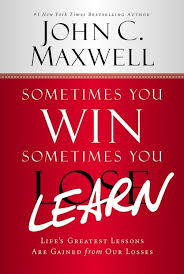
As I mentioned in my book review (which you can read by clicking here), John Maxwell always expands my horizons with his writings. I appreciate his ability to use his own life experiences as well as historical and contemporary examples and writings. So some of my favorite quotes from Sometimes You Win, Sometimes You Learn are from Dr. Maxwell, and some are from others that he quotes. Enjoy!
“I sometimes react to making a mistake as if I have betrayed myself. My fear of making a mistake seems to be based on the hidden assumption that I am potentially perfect and that if I can just be very careful, I will not fall from heaven. But a mistake is a declaration of the way I am, a jolt to the way I intend, a reminder that I am not dealing with facts. When I have listened to my mistakes, I have grown.” —Hugh Prather
“Those who profit from adversity possess a spirit of humility and are therefore inclined to make the necessary changes needed to learn from their mistakes, failures, and losses. … When we are focused too much on ourselves, we lose perspective. Humility allows us to regain perspective and see the big picture. … Humility allows us to let go of perfection and keep trying.” —John Maxwell
“Most people spend their entire lives in a fantasy Island called ‘Someday I’ll.’” —Denis Waitley
“An idealist believes the short-run doesn’t count. A cynic believes the long run doesn’t matter. A realist believes that what is done or left undone in the short-run determines the long run.” —Sydney J. Harris
“Those things that hurt, instruct.” —Benjamin Franklin
“You can’t grow and learn if your focus is on finding someone else to blame instead of looking at your own shortcomings.” —John Maxwell
“The highest reward for our toil is not what we get for it but what we become by it. … Mistakes are not failures. They are proof that we are making an effort. When we understand that, we can more easily move out of our comfort zone, try something new, and improve. … Improvement demands a commitment to grow long after the mood in which it was made has passed.” —John Maxwell
“Success in most things comes not from some gigantic stroke of fate, but from simple, incremental progress.” —Andrew Wood
“The main trouble with despair is that it is self-fulfilling. People who fear the worst tend to invite it. Heads that are down can’t scan the horizon for new openings. Bursts of energy do not spring from a spirit of defeat. Ultimately, helplessness leads to hopelessness.” —Norman Cousins
“Positive thinking must be followed by positive doing.” —John Maxwell
“When you are influential and highly respected, people tend to tell you what you want to hear, not what you need to hear. They are seeking your approval, or they flatter you. Unfortunately, this creates a gap between what you hear and reality. If you find yourself in that situation, you will need to work extra hard to get the people close to you to speak honestly into your life. And you will have to become highly intentional in observing and listening.” —John Maxwell
“Wisdom is the reward you get for a lifetime of listening when you would have preferred to talk.” —Doug Larson
“Circumstances are the rulers of the weak; but they are the instruments of the wise.” —Samuel Lover
“Mistakes are painful when they happen, but years later a collection of mistakes is what is called experience.” —Denis Waitley
“Ninety percent of those who fail are not actually defeated; they simply quit. … As you face bad experiences, it’s important for you to remember that you can rarely see the benefits while you’re in the midst of them. You usually gain perspective on the other side of it.” —John Maxwell
“Most people would rather change their circumstances to improve their lives when instead they need to change themselves to improve their circumstances. They put in just enough effort to distance themselves from their problems without ever trying to go after the root, which can often be found in themselves. Because they don’t try to change the source of their problems, their problems keep coming back at them.” —John Maxwell
“To grow, you must be willing to let your present and future be totally unlike your past. Your history is not your destiny.” —Alan Cohen
“If I had my life to live over again, I’d make the same mistakes, only sooner.” —Tallulah Bankhead
“Maturity is doing what you are supposed to be doing, when you’re supposed to be doing it, no matter how you feel.” —Dom Capers
“Have you not succeeded? Continue! Have you succeeded? Continue!” —Fridtjof Nansen, Nobel Peace Prize winner
“How we think when we lose determines how long it will be until we win.” —G.K. Chesterton
Jesus takes the church of Thyatira to task because they are tolerating someone with a Jezebel spirit to remain in a position of leadership and influence (Revelation 2:18-29). This is still a message to the church today!
However, for some reason Christians have made “confrontation” a dirty word. We don’t confront people in error, especially those who are in leadership positions within their church. Perhaps equally as wrong: when we do confront, we do it in a way that is destructive.
In Revelation 2, Jesus gives us five steps toward healthy, biblical, God-honoring confrontation:
Not one human is infallible, but Jezebel not only claims infallibility, but also demands blind allegiance to her teachings. But it is just as wrong to tolerate Jezebel as it is to confront her unbiblically; Jesus opposed both.
One way for us to always avoid these two extremes: Try to out-serve one another, just as Jesus directed us—
“You know that the rulers of the Gentiles lord it over them, and their high officials exercise authority over them. Not so with you. Instead, whoever wants to become great among you must be your servant, and whoever wants to be first must be your slave—just as the Son of Man did not come to be served, but to serve, and to give His life as a ransom for many.” (Matthew 20:25-28)
If you are near Cedar Springs next Sunday, please join me as we continue our series on The 7-Star Church.
Check out this clip about confrontation—
Sadly, I talk to far too many pastors who tell me their sermon topics have been selected by others. They don’t say this exactly in those words, but they talk about needing to prompt someone to do something differently, or of a parent who thinks the youth need some correction, or a board member who says the giving needs to be increased.
Sometimes it’s the opposite: pastors will say they won’t preach on a certain topic because it’s too sensitive, or it might make some people upset, or it might be offensive to some with an opposing viewpoint.
Whatever happened to preaching the Word as the Holy Spirit directs?
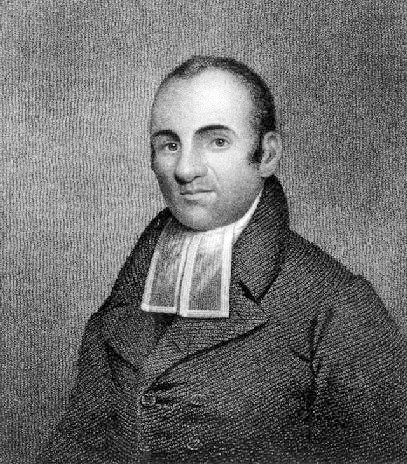
“A minister who watches for souls as one who expects to give account will have none to please but God. When he studies his sermons, this will not be the enquiry, ‘How shall I form my discourse so as to please and gratify the humors of men and get their applause?’ but ‘How shall I preach so as to do honor to God and meet with the approbation of my Judge?’” —Lemuel Haynes (emphasis added)
This is a weekly series with things I’m reading and pondering from Oswald Chambers. You can read the original seed thought here, or type “Thursdays With Oswald” in the search box to read more entries.
Confident Access
It is not our earnestness that brings us into touch with God, nor our devotedness, nor our times of prayer, but our Lord Jesus Christ’s vitalizing death; and our times of prayer are evidences of reaction on the reality of Redemption, so we have confidence and boldness of access into the holiest.
What an unspeakable joy it is to know that we each have the right of approach to God in confidence, that the place of the Ark is our place, “Having therefore, brethren, boldness.” What an awe and what a wonder of privilege, “to enter into the holiest,” in the perfectness of the Atonement, “by the blood of Jesus.”
From Christian Disciplines
It’s not what I do that gives me access to God, but what Jesus already did! He paid the price that was beyond my reach so that I can now come directly into God’s presence in full confidence that He will receive me.
Amazing love!