In Name Only

Brennan ManningPhiladelphia, as most people know is “The City of Brotherly Love.” The original Philadelphia in Asia Minor was founded in the second century BC by a man named Attalus who, quite the contrary to cultural norms, kept his brother in a position of power and influence alongside him.

Where many leaders were suspicious of anyone who could make a claim on the throne, Attalus loved (the Greek word is phileo) his brother (Greek adelphos meaning “from the same womb”), so the city took on this name and attitude as well. After the city was leveled by an earthquake in 17 AD, Emperor Tiberius sent the funds needed to rebuild. Out of gratitude to the emperor’s generosity there was a movement to rename the city Neocaesarea in his honor. But the people liked being known for their brotherly kindness, so the name Philadelphia stuck.

At least it stuck in name only. As the first century progressed, Philadelphians bowed more and more to Rome’s influence and this city once known for kindness to all began to persecute Christians.

This reminds me of the United States of America today. Our pledge of allegiance still includes “one nation under God,” and “in God we trust” is still on our currency, and we haven’t repealed the First Amendment which gives us freedom of religion. It appears that we are a “Christian nation,” but in name only.

Many cast the blame far and wide, but as Jesus addressed the people in the first city of Philadelphia (see Revelation 3:7-13), we see the blame is on those self-professing Christians who didn’t live Christ-like lives. They were Christians in name only.

For those who “have kept My Word and not denied My name” Jesus promises a list of rewards longer than the list for any of the other seven churches addressed in the book of Revelation! Those promises are still in effect for those who will not deny Christ. More specifically for those who by their words and their lifestyle hold true to Jesus Christ.

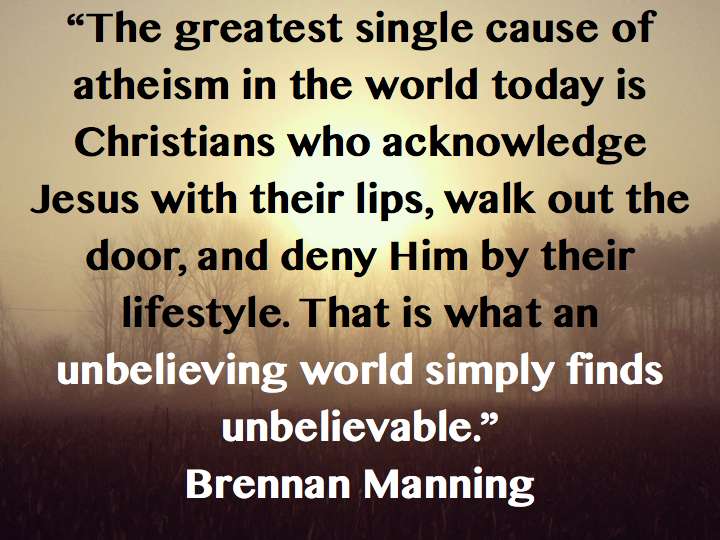
Brennan Manning was exactly right when he said, “The greatest single cause of atheism in the world today is Christians: who acknowledge Jesus with their lips, walk out the door, and deny Him by their lifestyle. That is what an unbelieving world simply finds unbelievable.”

My prayer is that Christians everywhere would be known not just by the name Christian, but by the way they hold true to Christ and His Word!

Please join me next Sunday as we look at the last of the churches in our series The 7-Star Church.
More Spirit-Filled Leaders

Listen to the podcast of this post by clicking on the player below, and you can also subscribe on AppleSpotify, or Audible.

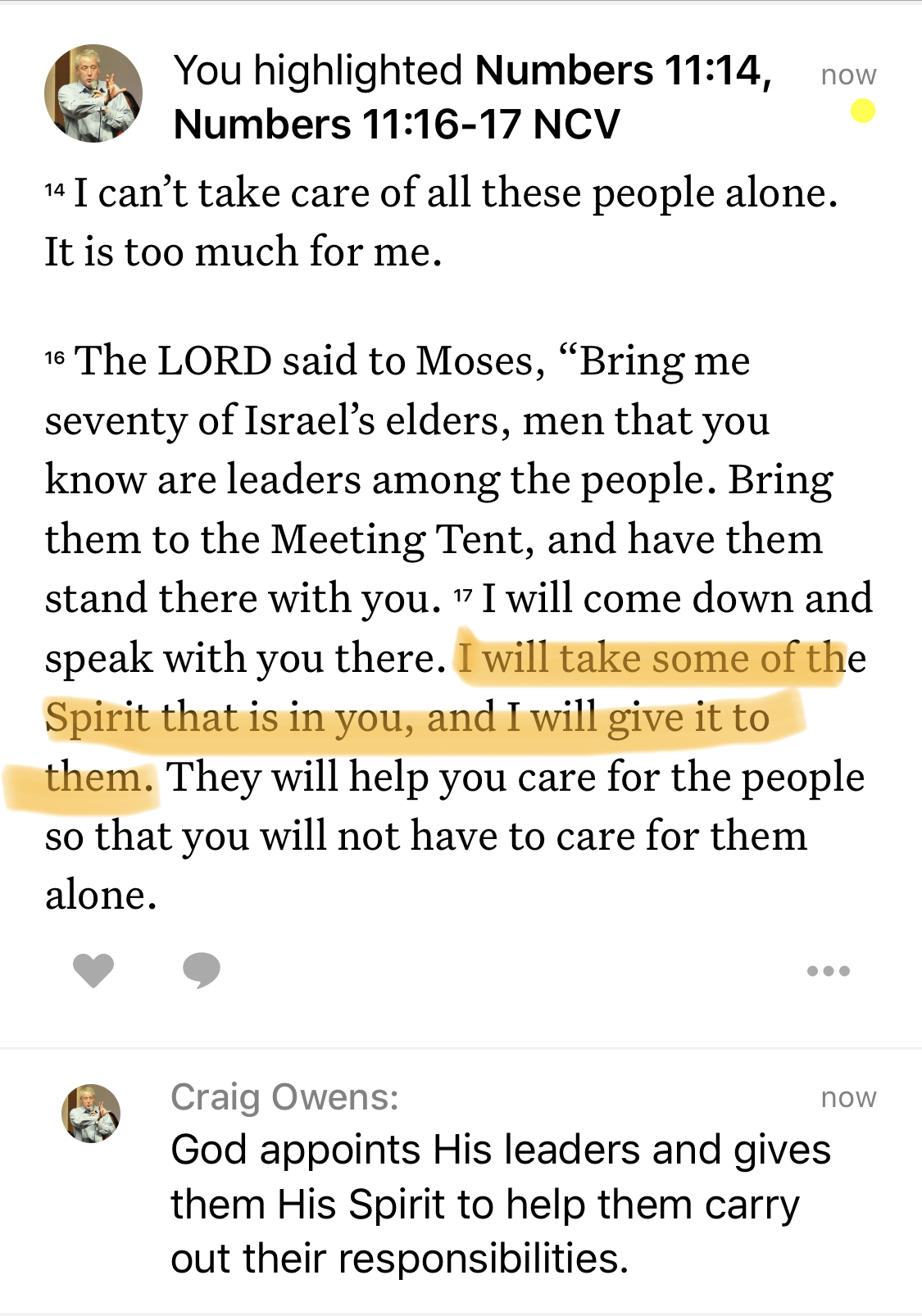
Moses was so right on the mark when he cried out, “I cannot carry all these people by myself; the burden is too heavy for me!” (Numbers 11:14)

It takes a confidently humble man to ask for help (Numbers 12:3). But God gives more grace to that humble person, while He stands aloof from those know-it-alls and those I-can-do-it-all-by-myselfs.

God anointed leaders to assist Moses. He took the same Spirit that was on Moses and imparted it to those 70 leaders. But—note this carefully—the Spirit on Moses was not at all diminished!

Moses’ responsibility was to pick the 70 “who are known to you as leaders” and then the Lord placed His Spirit on them. There were 70 who prophesied but Moses correctly desired “that all the Lord’s people were prophets and that the Lord would put His Spirit on them” (Numbers 11:16-17, 25, 29).

Leadership is necessary, and it is meant to be shared. From the senior leader, this requires:

  1. Humility
  2. Responsibility
  3. Willingness

Oh Lord, raise up more Spirit-empowered leaders!

►► Would you please prayerfully consider supporting this ministry? My Patreon supporters get behind-the-scenes access to exclusive materials. ◀︎◀︎

Thursdays With Oswald—Strength For Others

This is a weekly series with things I’m reading and pondering from Oswald Chambers. You can read the original seed thought here, or type “Thursdays With Oswald” in the search box to read more entries.

Oswald Chambers

Strength For Others 

     The real reason for prayer is intimacy of relationship with our Father. 

We kneel, how weak, we rise full of power.
Why therefore should we do ourselves this wrong
For others that we are not always strong,
That we are ever overcome with care
That we should ever weak or heartless be
Anxious or troubled, when with us is Prayer
And joy and strength and courage are with Thee?

From Christian Disciplines 

It’s a pretty simple principle: I cannot give to others what I do not possess.

Jesus rose early in the morning to find a place of private prayer (see Mark 1:35) so that He would be filled with His Father’s presence and able to meet the pressing needs of people that day. Why, oh why, don’t I follow my Lord’s example more?

People all around me need encouragement, light, hope, love. I cannot give what I do not possess. But I can possess these things in abundance if I will make use of prayer to tap into that intimate relationship with my Heavenly Father.

Prayer provides the strength I need for the day, so that I can provide the strength that others need for the day. Without prayer, I not only rob myself of God’s help, I rob others as well.

See God Bigger

See God BiggerGlorify the Lord with me; let us exalt His name together. (Psalm 34:3)

“I am positively sure after many years of observation and prayer that the basis of all of our trouble today, in religious circles, is that our God is too small. When David says magnify the Lord, he doesn’t mean that you are to make God big, but you are to see Him big. When we take a telescope and look at a star, we don’t make the star bigger, we only see it big. Likewise you cannot make God bigger, but you are only to see Him bigger. … My brethren, God calls us to magnify Him, to see Him big. A meeting is not big because a lot of people are present. A meeting is big because a number of people see a big God in the meeting. And the bigger God is seen, the greater the meeting. A friend of mine has a little saying, ‘I would rather have a big, little meeting than a little, big meeting.’ There are a lot of big meetings that are little because the God in them is a small God. And there are a lot of little meetings that are big because God is big in the midst of them. … That is the first thing—magnify God. Your ministry will be little, and you will live and die little unless you have a bigger God.” —A.W. Tozer

If Thou Wilt Be Perfect (book review)

If Thou Wilt Be PerfectOswald Chambers points out something very interesting in his book If Thou Wilt Be Perfect: discipleship with Jesus is optional.

Chambers writes: “Whenever our Lord speaks of discipleship He prefaces what He says with an ‘IF.’ ‘If any man come after Me….’” So this book focuses on the IFs of discipleship, reminding us that is optional for us to step into this deeper relationship with Jesus.

Each chapter was originally a lecture that Chambers gave at the Bible Training College in 1912, and they clearly reveal the mindset that drives him. Most of the chapters/lectures are entitled “The Philosophy Of …” so you will gain a deeper insight into how Oswald Chambers reads the Bible and applies the truths there to the Christian walk.

As I have said before, there are few authors who challenge me to go deeper in Christ than Oswald Chambers. All of the chapters are meaty, but well worth your time and attention.

Making A Name For Yourself

D.L. MoodyIt’s a focus of far too many people: “I’ve got to make a name for myself.” It’s nothing new but has been going on as long as men have been on earth.

In Revelation 3, Jesus is addressing the church in Sardis about their pursuit of a reputation. Jesus tells them, “You have definitely made a name for yourself. People know you are making things happen, and you have a reputation of being successful.” Sounds good, right? Except Jesus goes on to say, “But I’m not concerned about your reputation; I’m more interested in your character.”

Jesus uses the same Greek word four times in just six short verses to show the progression He is looking for to go from a popular reputation to godly character:

  • You have tried to make a name for yourself, but your focus is wrong (Rev. 3:1).
  • The name you should focus on is My name—you should be glorifying Me, not yourself (v. 4).
  • If you glorify Me, I will make sure your name is never erased from the Book of Life (v. 5a).
  • Not only that, if you glorify Me, I will personally introduce you to My Father. I will say, “This one is Mine!” (v. 5b)

Wow! 

Contrast that with people who say, “Jesus, didn’t we do some pretty amazing things in Your name? Did you check us out?!?” And Jesus will reply to them, “I never knew you because you were only using Me to make yourself look good” (see Matthew 7:21-23; Revelation 3:2).

I am not living for the applause of men, but only for the applause of nail-scarred Hands.

I don’t want the headlines here, but I want to hear my Lord say, “Well done, good and faithful servant!”

I don’t want a reputation here, but I want a godly character in Heaven.

That’s the name I want!! 

If you are near Cedar Springs this weekend, please join us for part six of this series The 7-Star Church.

Character Over Reputation

Matthew HenryHere are some of the quotes I shared this morning…

The circumstances amid which you live determine your reputation …
   the truth you believe determines your character.…
Reputation is what you are supposed to be;
   character is what you are.…
Reputation is the photograph;
   character is the face.…
Reputation comes over one from without;
   character grows up from within.…
Reputation is what you have when you come to a new community;
   character is what you have when you go away.
Your reputation is made in a moment;
   your character is built in a lifetime.…
Your reputation is learned in an hour;
   your character does not come to light for a year.…
Reputation grows like a mushroom;
   character lasts like eternity.…
Reputation makes you rich or makes you poor;
   character makes you happy or makes you miserable.…
Reputation is what men say about you on your tombstone;
   character is what the angels say about you before the throne of God. —William Hersey Davis

“Men may go toward Heaven, yet come short; and they may go to Hell with a good reputation.” —Matthew Henry

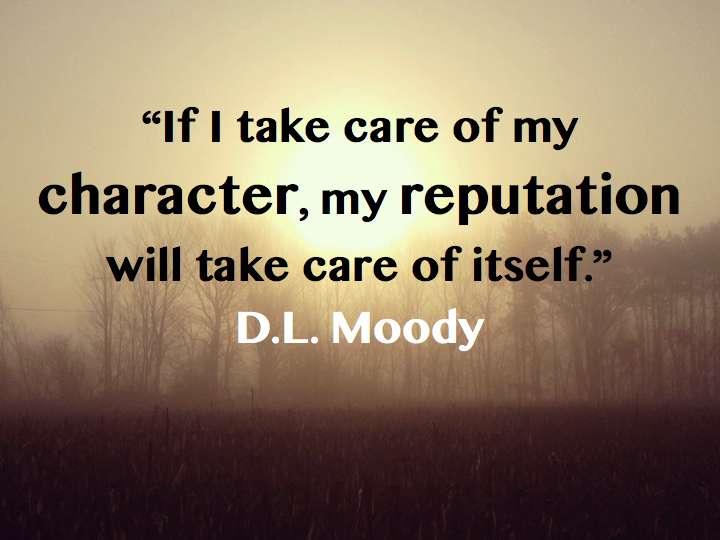
“If I take care of my character, my reputation will take care of itself.” —D.L. Moody

Lord, Save Me

He shall save His people from their sins. (Matthew 1:21)

C.H. SpurgeonLord, save me from my sins. By the name of Jesus I am encouraged thus to pray. 

Save me from my past sins, that the habit of them may not hold me captive. 

Save me from my constitutional sins, that I may not be the slave of my own weaknesses. 

Save me from the sins which are continually under my eye that I may not lose my horror of them. 

Save me from secret sins; sins unperceived by me from my want of light. 

Save me from sudden and surprising sins: let me not be carried off my feet by a rush of temptation. 

Save me, Lord, from every sin. Let not any iniquity have dominion over me. —Charles Spurgeon

A Pastoral Prayer

Daniel Payne

Daniel Payne

I love this prayer that Bishop Daniel Payne (1811-1853) prayed for himself. Pastor, do you think you could pray this? Could you pray to become invisible so that only Jesus Christ is seen and heard?

“Lord, Thou knowest my weakness—be Thou my strength. Thou knowest my ignorance—be Thou my wisdom. Teach me, that I may not be a blind leader of the blind, but a scribe well instructed unto the Kingdom of Heaven. O, let not the people see me; let them see You in Your vesture dipped in blood. Let them not hear me; let them hear You in Your voice of saving truth!

Lord, may I be able to live this out in my pastoral ministry!

Thursdays With Oswald—The Purpose Of Prayer

This is a weekly series with things I’m reading and pondering from Oswald Chambers. You can read the original seed thought here, or type “Thursdays With Oswald” in the search box to read more entries.

Oswald Chambers

The Purpose Of Prayer

     The purpose of prayer is the maintenance of fitness in an ideal relationship with God amid conditions which ought not to be merely ideal but really actual….

     So in the better and new way of breathing spiritually in prayer, we shall be conscious of forming the habit, but it will soon pass into normal spiritual health, and it must never be worshipped as a conscious process. 

From Christian Disciplines

Chambers is saying that prayer ought to be as natural to us as breathing. In order to get to this place, we must develop the habit of prayer, which mean disciplining ourselves to return to prayer when we might normally revert to another natural response.

But in forming the habit of prayer, we must not become like the Pharisees who worshipped their spiritual activities. They thought they were spiritual because of what they did, so they kept track of all they were doing, and they pointed to how many times each day and each week they had prayed. In essence, they worshipped prayer more than they worshipped the God they were supposed to be addressing in prayer.

The habit of prayer does take discipline (as the title of this Oswald Chambers book suggests), but it leads us to a life fully engaged in God’s presence. It’s a habit that is well worth the disciplined effort!