Selah

The word Selah appears nearly 70 times in the Bible, almost exclusively in the Psalms. Although it is primarily a musical term, it applies beautifully to our summer series. 

Selah can mean…

  • a pause from the noise to reflect;
  • a preparation for an exciting accent; or 
  • a reflective time of consideration

Throughout the Psalms, Selah appears at the end of a verse, at the end of the psalm, or sometimes even mid-sentence. But each one of them is perfectly placed by the Spirit-inspired authors to get us to take a breath and deeply contemplate what we just read or sang. 

Summertime is typically a time for us to pause from our regular routine. Perhaps it’s a vacation, time with friends and family, driving around with the windows down and the music blasting, or just a quiet walk through woods or along a beach. In any case, whether we realize it or not, we’re actually doing Selah in these break-from-the-routine activities. 

Join me this Sunday as we continue our summertime look at each of the Psalms that ask us to Selah. I think you will find that this Sunday summertime pause will be both refreshing and encouraging. You can join me either in person or on Facebook Live. 

Since this is a continuation of our summer series, you can check out the Selahs we discussed in 2018 by clicking here, and the messages from the summer of 2019 are here.

The messages for this summer are:

7 Quotes From David Livingstone

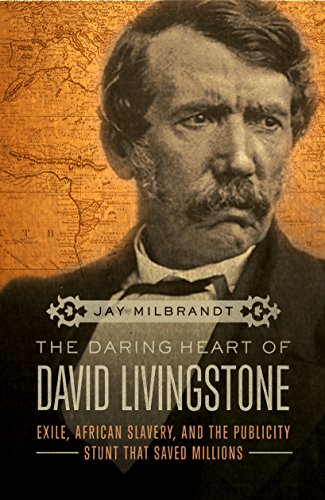
The Daring Heart Of David Livingstone by Jay Milbrandt is an amazing account of this man’s heroic and history-altering life. Check out my full book review by clicking here. Below are a few quotes that Milbrandt shared in his biography. 

“It is something to be a follower, however feeble, in the wake of the great Teacher and only model missionary that ever appeared among men.” —David Livingstone 

“People talk of the sacrifice I have made in spending so much of my life in Africa. Can that be called a sacrifice which is simply paid back as a small part of a great debt owing to our God, which we can never repay? Is that a sacrifice which brings its own blest reward in healthful activity, the consciousness of doing good, peace of mind, and a bright hope of a glorious destiny hereafter? Away with the word in such a view and with such a thought! It is emphatically no sacrifice. Say rather it is a privilege. Anxiety, sickness, suffering, or danger now and then with a foregoing of the common conveniences and charities of this life, may make us pause and cause the spirit to waver and the soul to sink; but let this only be for a moment. All these are nothing when compared with the glory which shall be revealed in and for us. I never made a sacrifice.” —David Livingstone 

“I shall hold myself in readiness to go anywhere, provided it be forward. … Our duty is to go forward … I have observed that people who have sat long waiting have sat long enough before they saw any indication to go.” —David Livingstone 

“As they are experts with the spear I don’t know how it missed, except that he was too sure of his aim and the good hand of God was upon me.” —David Livingstone, after surviving two spears thrown at him during an ambush 

“The Gospels reveal Jesus, the manifestation of the blessed God over all as minute in His care of all. He exercises a vigilance more constant, complete, and comprehensive, every hour and every minute, over each of His people than their utmost selflove could ever attain. His tender love is more exquisite than a mother’s heart can feel.” —David Livingstone 

“If the good Lord permits me to put a stop to the enormous evils of the inland slave-trade, I shall not grudge my hunger and toils. I shall bless His name with all my heart. The Nile sources are valuable to me only as a means of enabling me to open my mouth with power among men. It is this power I hope to apply to remedy an enormous evil [in the East African slave trade]. Men may think I covet fame, but I make it a rule never to read aught written in my praise.” —David Livingstone 

“I am a missionary, heart and soul. God had an only Son, and He was a missionary and a physician. A poor, poor imitation I am or wish to be. In this service I hope to live, in it I wish to die.” —David Livingstone 

The Daring Heart Of David Livingstone (book review)

I’ll be honest: I only knew one small story about David Livingstone prior to reading The Daring Heart Of David Livingstone by Jay Milbrandt, and now I’m kicking myself that I didn’t learn more about this amazing man much earlier! 

Dr. Livingstone was a missionary, a world-renown explorer, and an avid abolitionist. Very rarely have I come across a biography that reads like a novel, but this book is just that! Milbrandt is a brilliant storyteller, and he makes the biography of Livingstone so intriguing that I could scarcely put it down. I love how many of Livingstone’s personal letters and diary entries are included in this book, as it almost makes it feel more like a memoir or autobiography. 

Dr. Livingstone first went to Africa as a missionary but then gained fame as an explorer, becoming the first man to traversing Africa on foot—from the Atlantic coast to the Indian Ocean. He wrote a book about these travels (including the people he met, the animal and plant life he observed, and the stories of the dangers he faced), which gave him celebrity status in England. So much so that when he wanted to return to Africa, both the London Missionary Society and the Royal Geographical Society wanted to be his sending agency. 

Livingstone desperately wanted to see the end of slavery on the African continent, and returned to Africa with that sole focus burning in his heart. Along the way, he met with massive struggles—some self-imposed and some unavoidable in the harsh environment of interior Africa. Yet through all of these hardships, Livingstone repulsed at the idea that anything he ever went through could be called a sacrifice, stating emphatically: “I never made a sacrifice!” 

Milbrandt writes, “Livingstone died perhaps believing he had failed in every aspect. Yet, in the few short years after his death, everything Livingstone had worked for had come to fruition.” Including the complete eradication of the foul slave trade across the African continent. 

What an amazing example for leaders to aspire to follow today! 

(Tomorrow I will share some quotes from David Livingstone that you won’t want to miss!) 

Feelings, Facts, and Faith

Confusing times become more stressful—and more confusing!—when the response of people seems to throw more fuel on the fire. Frustration boils up into anger. Confusion gives way to fear. Uncertainty about what to believe or what to do becomes anxiety over what might be coming next. 

You might think I’m describing current events in our country right now. But in times like these we need to remember that there have always been times like these. When I talk about frustration, anger, confusion, fear, uncertainty, and anxiety, I am actually thinking about events that took place over 2000 years ago. 

Like when the residents of Ephesus became Christians and stopped buying idols of Artemis, a huge backlash broke out. “Soon the whole city was in an uproar. … The assembly was in confusion: Some were shouting one thing, some another. Most of the people did not even know why they were there” (Acts 19:29-32). 

Or when some Jews thought Paul had taken some non-Jews into the part of temple restricted to Jews only. “Jews from the province of Asia saw Paul at the temple. They stirred up the whole crowd and seized him, shouting, ‘Fellow Israelites, help us! This is the man who teaches everyone everywhere against our people and our law and this place. And besides, he has brought Greeks into the temple and defiled this holy place.’ (They had previously seen Trophimus the Ephesian in the city with Paul and assumed that Paul had brought him into the temple.) The whole city was aroused, and the people came running from all directions. Seizing Paul, they dragged him from the temple. … Some in the crowd shouted one thing and some another, and the commander could not get at the truth because of the uproar…” (Acts 21:27-34). 

There are three Fs at work here: feelings, facts, and faith. 

Have you heard it said, “Feelings are not facts”? Feeling are a fact to the one experiencing those feelings, so feelings can indeed be facts: subjective facts that are factual to me. 

Facts are not necessarily better than feelings because our facts might come from faulty sources. For example, Trophimos was with Paul, but Paul did not bring him into the restricted area. 

Whether feelings or facts, we need faith in God’s sovereignty. We need to remember: God has a plan, He is in control, nothing takes Him by surprise, nothing derails His purpose, He is intimately aware of everything that is happening. 

The Holy Spirit helps us evaluate both feelings and facts through the filter of truth found in God’s Word. Then the Spirit also gives us faith to stand firm despite the feelings and the facts. 

The Holy Spirit not only helps us pray through these confusing times (Romans 8:27), but He helps us know what’s really behind the confusing times, as well as how we can communicate that truth to others (1 Corinthians 2:10, 13 AMP). 

Probably my favorite promise (which I especially like in the Old English of the King James Version) is this: Ye have an unction from the Holy One, and ye know all things (1 John 2:20).

So I want to encourage you again: Don’t stop at salvation—be baptized in the Holy Spirit and have that unction that will help you with all your feelings and all the facts that are thrown at you. 

If you have missed any messages in this series on Pentecostal Christians, you can find the full list by clicking here. 

Poetry Saturday—Meet A Smile

Do not look for wrong and evil,
   You will find them if you do;
As you measure for your neighbor
   He will measure back to you.
Look for goodness, look for gladness,
   You will meet them all the while;
If you bring a smiling visage
   To the glass, you meet a smile. —Alice Cary

Thursdays With Spurgeon—Are You Gazing Or Going?

This is a weekly series with things I’m reading and pondering from Charles Spurgeon. You can read the original seed thought here, or type “Thursdays With Spurgeon” in the search box to read more entries.

Are You Gazing Or Going?

     The resurrection of Christ is the morning star of our future glory! Equally delightful is the remembrance of His ascension. …

They were looking intently up into the sky as he was going, when suddenly two men dressed in white stood beside them. “Men of Galilee,” they said, “why do you stand here looking into the sky? This same Jesus, who has been taken from you into heaven, will come back in the same way you have seen Him go into heaven.” (Acts 1:10-11) 

     It is not the Lord’s will that [His disciples] should long remain inactive—the reverie is interrupted. They might have stood there till wonder saddened into fear. As it was, they remained long enough, for the angel’s words may be accurately rendered, ‘Why do you stand gazing up into heaven’? … 

     As they had once said to the women, ‘Why do you seek the living among the dead? He is not here, but is risen!’ (Luke 24:5-6), so did they now say, ‘Men of Galilee, why do you stand gazing up into heaven? This same Jesus who is taken up from you into heaven, will so come in like manner as you saw Him go into heaven.’ …

     They do not need twice telling, but hasten to Jerusalem. The vision of angels has singularly enough brought them back into the world of actual life again, and they obey the command, ‘Tarry in the city of Jerusalem’ (Luke 24:49). They seem to say, ‘The taking up of our Master is not a thing to weep about. He has gone to His throne and to His glory, and He said it was expedient for us that He should go away. He will now send us the promise of the Father….

From The Ascension And The Second Advent Practically Considered

Jesus was incarnated in human flesh so that we could know the way to Heaven. 

Jesus died on a Cross so that we could have our sins forgiven and go to Heaven. 

Jesus ascended into Heaven so that He could go to prepare a place for us. 

Jesus wants us to be empowered by the Holy Spirit so that we can take others to Heaven with us. 

Let us not imitate the disciples’ first reaction and simply gaze into Heaven hopefully and longingly after the ascended Jesus. Instead, let us imitate their next reactions: Waiting for the empowerment of the Holy Spirit on the Day of Pentecost so that we can take the Good News of salvation everywhere we can!

The Servant Of God

…Joshua, son of Nun, the servant of the Lord… (Joshua 24:29). 

There are not many people in the Bible called “the servant of the Lord”:

  1. Moses
  2. Joshua
  3. David (in the introduction to Psalms 18 and 36)
  4. Jesus (in Isaiah 42 and 49)

In Joshua’s final address to the Israelites, I believe he shares some common themes for anyone who wants to be called a servant of the Lord:

  • A firsthand, personal encounter of God’s miracles (Joshua 23:3; 24:7)
  • Constant recall of God’s provision (23:4; 24:7)
  • Awareness that my doing is only possible because of God’s doing (23:5, 10; 24:12)
  • Obedience to God’s Word (23:6; 24:21)
  • Wholehearted love for God (23:11; 24:23)
  • Reverent fear of God (23:12-13; 24:14, 19-20)
  • Based on what God has already done, trust in His future grace (23:14; 24:24)
  • Choosing to do all of the above every single day (24:15, 18)

All of these principles were fulfilled in the Ultimate Servant of the Lord: Jesus of Nazareth. And that Servant told us that His Spirit would empower us to live like He lived. It’s not impossible to live like this, but the Holy Spirit wants to empower us to live this out. The question is: will we let Him?

Sadly, the were no other leaders that came immediately after Joshua who were called “servant of the Lord.” Israel failed primarily because they violated the the very first principle—they had no first-hand, personal experience of God’s miracles. They lived off the miracles of their parents’ age: it was for them “the Lord your God” and never “the Lord my God” (see Joshua 24:31; Judges 21:25).

May our prayer today be: Heavenly Father, I want to be a legacy leader. Jesus, I want to be a servant of God just like You were. Holy Spirit, I invite you into my life to empower me to live this servant lifestyle every single day. 

Personalizing The Prayers Of The Bible

Much of the Bible is given to us in a conversational format, and many of those conversations are between humans and God.

My desire is that we wouldn’t just read through the Bible, but we would learn to pray through the Bible. The Scripture is full of prayers people have already prayed. We have the benefit of seeing the setting that led to the prayer, the prayer itself, and then the outcome of the prayer. 

The Holy Spirit can help us make each prayer in the Bible our own prayer. They can become personalized to the situations we face. 

In this 5-minute video, I demonstrate how I turned Psalm 27 into a prayer. Below the video is the text of this psalm so you can see how I began the prayer. After watching this video, I encourage you to begin to use God’s Word as a launching point for your prayers for your situations. 

The Lord is my light and my salvation—whom shall I fear? The Lord is the stronghold of my life—of whom shall I be afraid?

When the wicked advance against me to devour me, it is my enemies and my foes who will stumble and fall.

Though an army besiege me, my heart will not fear; though war break out against me, even then I will be confident.

One thing I ask from the Lord, this only do I seek: that I may dwell in the house of the Lord all the days of my life, to gaze on the beauty of the Lord and to seek Him in His temple.

For in the day of trouble He will keep me safe in His dwelling; He will hide me in the shelter of His sacred tent and set me high upon a rock.

Then my head will be exalted above the enemies who surround me; at His sacred tent I will sacrifice with shouts of joy; I will sing and make music to the Lord.

Hear my voice when I call, Lord; be merciful to me and answer me.

My heart says of You, “Seek His face!” Your face, Lord, I will seek.

Do not hide Your face from me, do not turn Your servant away in anger; You have been my helper. Do not reject me or forsake me, God my Savior.

Though my father and mother forsake me, the Lord will receive me.

Teach me Your way, Lord; lead me in a straight path because of my oppressors.

Do not turn me over to the desire of my foes, for false witnesses rise up against me, spouting malicious accusations.

I remain confident of this: I will see the goodness of the Lord in the land of the living.

Wait for the Lord; be strong and take heart and wait for the Lord.

Impossible To Empowered

In the Sermon on the Mount, Jesus outlined a “game plan” for His followers. He showed us how to correctly apply the Scripture to our daily lives with this repeated pattern: “You have heard it said [God’s Word], but I tell you [real-life application].”  Smack-dab in the middle of this sermon Jesus drops this on us, “Be perfect, therefore, as your heavenly Father is perfect” (Matthew 5:48). 

You might say, “But ‘perfect’ doesn’t really mean perfect, does it?” 

Actually, it does. The Greek word telios means the end goal of being complete in various applications of labor, growth, mental and moral character. In other words: complete in body, soul, mind, spirit—just like Jesus. 

Think about it: Jesus never misspoke, He never waited too long to act, He never acted too quickly, He never overstepped God’s boundaries, He never needed to apologize. 

Again, you might push back with, “Yes, but He is Jesus. He is God!” 

You are absolutely correct, but—miracle of miracles!—Jesus chose not to use His deity while He was on earth (Hebrews 2:17; Philippians 2:6-7). He lived a perfect life as a human, not playing His “God card,” to show us that it was possible. Jesus demonstrated that He needed to rely on the Holy Spirit (Luke 3:21-22, 4:1, 14; John 5:19-20, 12:49-50). 

This is what Jesus wants for us as well, which is why He told His disciples to wait for the empowerment that came with the baptism in the Holy Spirit. On our own, perfection is impossible. But when we baptized in the Holy Spirit, we are empowered to live perfectly. 

Remember the definition I gave for perfect (telios): complete in body, soul, mind, spirit. That’s exactly how Dr. Luke described Jesus, and it’s also how Jesus described our perfect love of God (Luke 2:52, 10:27). 

On our own: this is impossible. But with the baptism in the Holy Spirit: we are empowered for perfection. 

Don’t stop at salvation—press on to be baptized in the Holy Spirit. If Jesus was so reliant on the Holy Spirit, what would make us think we could live with anything less?! 

If you missed any of the other posts in this series, you can find them all listed here. 

Poetry Saturday—A Man With An Aim

Give me a man with an aim,
   Whatever that aim may be,
Whether it’s wealth or whether it’s fame,
   It matters not to me.
Let him walk in the path of right,
   And keep his aim in sight,
And work and pray in faith alway,
   With his eyes on the glittering height.

Give me a man who says,
   “I will do something well,
And make the fleeing days
   A story of labor to tell.”
Though the aim he has be small,
   It is better than none at all;
With something to do the whole year through,
   He will not stumble and fall.

But satan weaves a snare
   For the feet of those who stray,
With never a thought or care
   Where the path may lead away.
The man who hath no aim
   Not only leaves no name
When life’s done, but ten to one
   He leaves a record of shame. 

Give me a man whose heart
   Is filled with ambition’s fire;
Who sets his mark in the start,
   And keeps moving it higher and higher.
Better to die in the strife,
   The hands with labor rife,
Than to glide with the stream in an idle dream
   And lead a purposeless life. 

Better to strive and climb
   And never reach the goal,
Than to drift along with time
   An aimless, worthless soul.
Ay, better to climb and fall,
   Or sow, though the yield be small,
Than to throw away day after day,
   And never to strive at all. —Anonymous