Links & Quotes

I thought this was brilliant insight from the weekly Cultural Translator newsletter from Axis—

In the Q&A portion of one of his lectures, Jordan Peterson was asked about his thoughts on abortion. At one point he said, “The discussion regarding the legality of abortion is nested inside a larger discussion about the morality of abortion, and that’s nested inside a larger discussion about the proper place of sexuality in human behavior. And to me, that’s the level at which the problem needs to be addressed.” Although he doesn’t offer specific prescriptions about how to do that, it’s a helpful way to position the conversation.

In many people’s minds, sex is appropriate whenever the parties involved consent to it. In this view, sexual activity outside of marriage becomes a foregone conclusion. Abortion is then regarded as a necessary adaptation for this new undeniable sexual ethic. In that same Q&A, Peterson says, “Let’s say you are in a position where you are inclined to seek an abortion. The question is: how did you get there?” The literal answer for 99% of pregnant women is via voluntary sexual intercourse—but when our culture frames “sexual expression” as an inevitability, it can seem hard to envision other safe paths forward apart from abortion.

For some, it’s too late to think proactively. Along those lines, one of the primary pro-choice arguments has been that having children too soon will plunge parents into permanent poverty. But when the church is at its best, it has rallied together to provide for those who could not provide for themselves. Acts 2:44-45 says about the early church, “All the believers were together and had everything in common. They sold property and possessions to give to anyone who had need.” Other ancient sources record that the early church was known for saving and protecting unwanted children, who were sometimes left outside to die.

Although some may frame “celebrating the Supreme Court’s decision” and “thinking about how to be more holistically pro-life” as somehow in tension, the early church models both a care for babies and for their mothers. May God give us grace to do the same.

The 1440 Daily Digest had an interesting article for the July 4th weekend entitled “Happy Birthday, America.” 

Congratulations, America—Monday marks the 246th commemoration of the day the Declaration of Independence was adopted by the Second Continental Congress. The Congress actually voted to separate from Great Britain two days earlier, and possibly didn’t sign the document until August. Some argue the US didn’t really become a country until we began operating under the Constitution in 1789.

Still, since then, the country has grown from 13 colonies with about 2.5 million people to 50 states and 14 territories with a population of more than 330 million. The economy has swelled to roughly $24T. Advances in public health—public sanitation, the germ theory of disease, and more—have cut the child mortality rate from more than 45% to under 1%, and our citizens live 35 years longer on average.

We’ve built almost 4 million miles of paved roads and more than 5,000 public airports. More than 2.7 million miles of power lines electrify the country, with about 85% of households having access to broadband internet and 92% having at least one computer. In 1800, 95% of the population lived in rural areas, and now about 83% live in urban areas. The US has also been responsible for more than 800 human visits to space—the most of any other country with a space agency.

While there will always be challenges to face and improvements to make, we’ve come a long way since the beginning. So grab a hot dog and your drink of choice—here’s to the next 246 years.

“The measure of a country’s greatness is its ability to retain compassion in times of crisis.” —Thurgood Marshall

This is a good way of looking at the blessings we have in America: 24 charts that show we’re (mostly) living better than our parents

“Never give up, for that is just the place and time that the tide will turn.” —Harriet Beecher Stowe

“I have reason to praise Him for my trials, for, most probably, I should have been ruined without them.” —John Newton

Go Deep—Teaching And Exhortation

According to Romans 12, all Christians have been given a unique gift package by God. We are to use these motivational gifts to make God’s Kingdom more visible and more desirable. 

This week we discuss the gifts of teaching and exhortation. You may download the participant’s notes and the gifts assessment I use in this lesson:

If you missed any of the lessons in this class, you can find them all here.

If you would like to join us in person for this class, here is where you can find us.

Thursdays With Spurgeon—God Means What He Says

This is a weekly series with things I’m reading and pondering from Charles Spurgeon. You can read the original seed thought here, or type “Thursdays With Spurgeon” in the search box to read more entries.

Listen to the podcast of this post by clicking on the player below, and you can also subscribe on AppleSpotify, or Audible. 

God Means What He Says

…For the mouth of the Lord has spoken (Isaiah 1:20).

     You talk about God as being ‘love,’ and if you mean by this that He is not severe in the punishment of sin, I ask you what you make of the destruction of Jerusalem? Remember that the Jews were His chosen nation and that the city of Jerusalem was the place where His temple had been glorified with His presence. Brethren, if you roam from Edom to Zion and from Zion to Sidon and from Sidon to Moab, you will find, amid ruined cities, the tokens that God’s words of judgment are sure. Depend on it, then, when Jesus says, ‘These will go away into everlasting punishment’ (Matthew 25:46), it will be so. When He says, ‘If you do not believe that I am He, you will die in your sins’ (John 8:24), it will be so. … 

     It is of no avail to sit down and draw inferences from the nature of God and to argue, ‘God is love, and therefore He will not execute the sentence upon the impenitent.’ He knows what He will do better than you can infer. He has not left us to inferences, for He has spoken pointedly and plainly. He says, ‘He that believes not shall be damned’ (Mark 16:16), and it will be so, ‘for the mouth of the Lord has spoken.’ Infer what you like from His nature. But if you draw an inference contrary to what He has spoken, you have inferred a lie and you will find it so. …

     I know why you do not believe in the terrible threats. It is because you want to be easy in your sins. … Yet if you do not believe its loving warnings nor regard its just sentences, they are true all the same. If you dare its thunders, if you trample on its promises, and even if you burn it in your rage, the Holy Book still stands unaltered and unalterable. ‘The mouth of the Lord has spoken.’ Therefore, I pray you, treat the sacred Scriptures with respect and remember that ‘these are written that you may believe that Jesus is the Christ, the Son of God, and that believing you might have life through His name’ (John 20:31).

From The Infallibility Of Scripture

Spurgeon delivered this sermon on March 11, 1888. Nearly 2000 years earlier, Asaph delivered a similar message from God—

“Call upon Me in the day of trouble; I will deliver you, and you shall glorify Me.” But to the wicked God says: “What right have you to declare My statutes, or take My covenant in your mouth, seeing you hate instruction and cast My words behind you? When you saw a thief, you consented with him, and have been a partaker with adulterers. You give your mouth to evil, and your tongue frames deceit. You sit and speak against your brother; you slander your own mother’s son. These things you have done, and I kept silent; you thought that I was altogether like you; but I will rebuke you, and set them in order before your eyes. Now consider this, you who forget God, lest I tear you in pieces, and there be none to deliver: Whoever offers praise glorifies Me; and to him who orders his conduct aright I will show the salvation of God.” (Psalm 50:15-23) 

Commenting on this passage from Psalm 50, T.M. Moore wrote, “Surely, this is the most fundamental error of thinking humans ever make: To think of God, spiritual things, worship, human life, the world, and everything else from our vantage point rather than His. … Asaph could see what was happening. And even though the nation was safe, strong, and surfeited with wealth, he knew that, spiritually, things were going awry. The people had persuaded themselves that God was just like them, that He thought like they did, and so was agreeable to their doing things their own way, indulging all their base desires, and pursuing their schemes for success—all the while continuing an outward show of faith.”

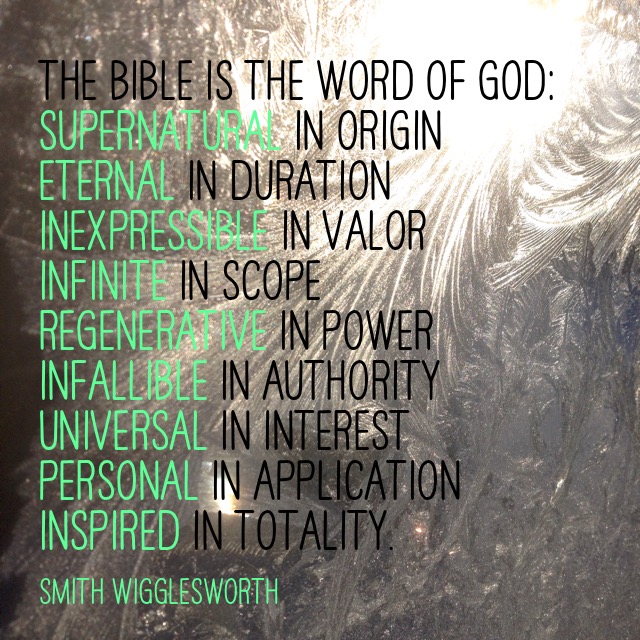
Let us take the Bible as what it truly is: Words the mouth of God has spoken. Let us not play games with them, changing the message to words we like. But if the Word of the Lord makes us uncomfortable, let us repent and return to Him. It is those who accept God’s Word as His Word, and obey it, that will see the salvation of God.

►► Would you please prayerfully consider supporting this ministry? My Patreon supporters get behind-the-scenes access to exclusive materials. ◀︎◀︎

Responsibility And Accountability

Listen to the podcast of this post by clicking on the player below, and you can also subscribe on AppleSpotify, or Audible. 

God had a rather simple message for Ezekiel, “The word of the Lord came to me: ‘Son of man, speak to your people’” (Ezekiel 33:1–2). 

I find that pronoun “your“ intriguing because you would think that God would say, “My people.” They are indeed God’s people, but God had set Ezekiel apart as His watchman (vv. 7–20), so Ezekiel had to take personal responsibility for the people. They were to be treated and spoken to as though they were indeed his people. 

This idea of responsibility gets a little tricky for some leaders because, with the responsibility to their people, they usually feel they are accountable to their people as well. 

But in the next few verses, God makes it clear that Ezekiel must be accountable to God alone.

Responsible to his people. Accountable to his God. 

When we start feeling we are accountable to people, we can get distracted, discouraged, or derailed by their unpleasant responses. 

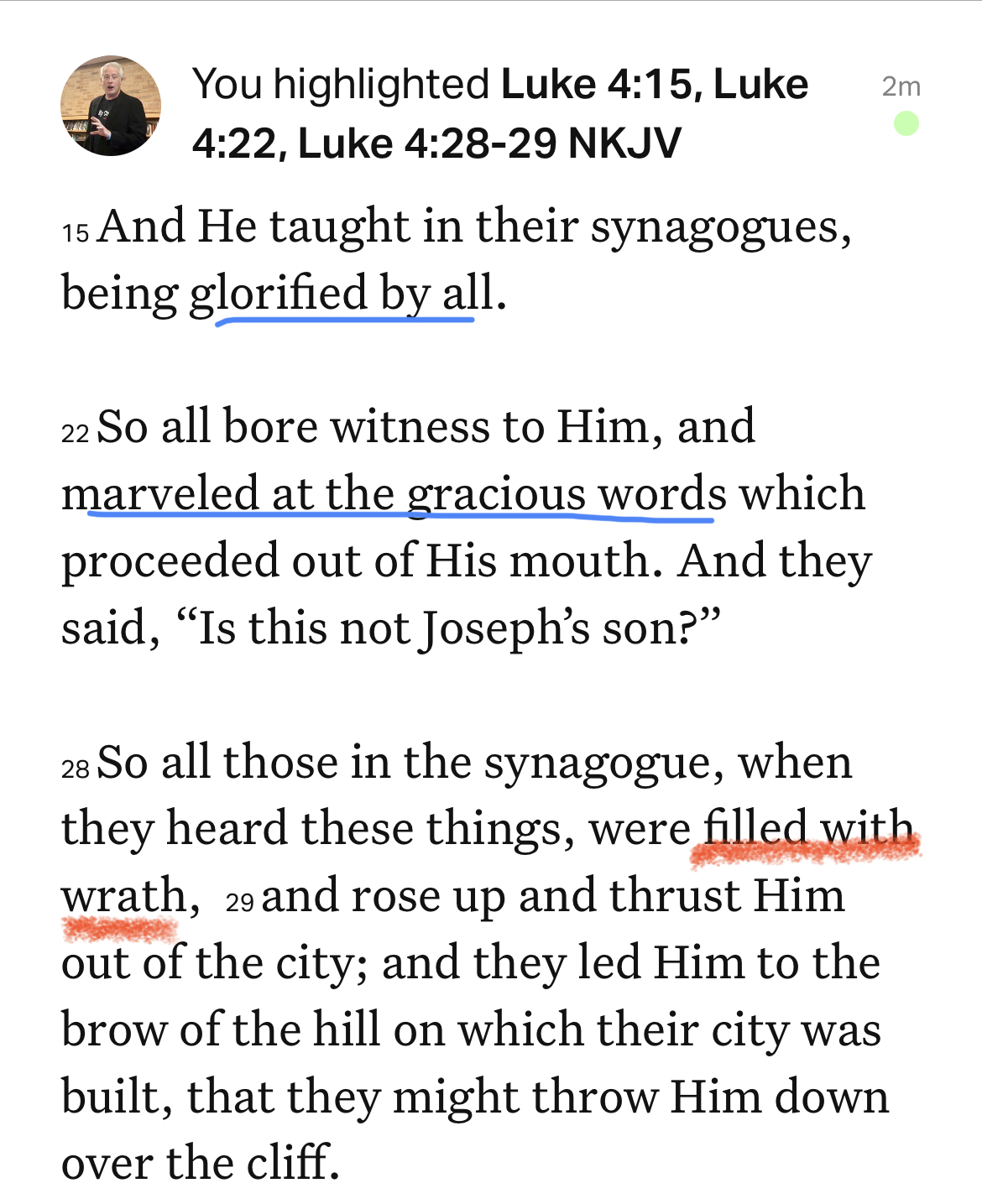
Notice that when Jesus spoke pleasing words to people, everyone spoke well of Him. But when He pointed out to them the words of God they were ignoring, they were ready to kill Him. 

People are fickle—they sing praises when they hear those words they like, and they are ready to attack the messenger when the words are upsetting. 

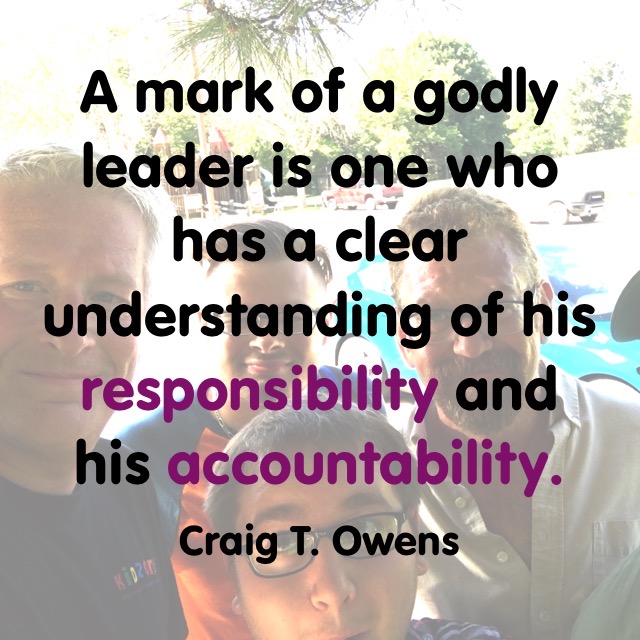
A mark of a godly leader is one who has a clear understanding of his responsibility and his accountability.

When you are God’s leader, He will entrust people to your care and He will entrust His message for those people to you. You are now responsible to deliver His message to your people. You are then accountable to God alone for delivering His message. Be responsible to people, accountable to God, and be careful not to mix the two. 

This is part 66 in my series on godly leadership. You can check out all of my posts in this series by clicking here.

►► Would you please prayerfully consider supporting this ministry? My Patreon supporters get behind-the-scenes access to exclusive materials. ◀︎◀︎

The Craig And Greg Show: Live An Honor-Filled Life

Listen to the audio-only version of this podcast by clicking on the player below, or scroll down to watch the video.

On this episode of “The Craig And Greg Show” we talk about: 

  • [0:45] Honor should be an everyday practice
  • [2:05] Greg’s pet peeve for leaders
  • [2:45] Advice from my grandpa
  • [3:20] Leaders look for ways to honor those around them
  • [3:48] Can you honor too much?
  • [4:29] How can we honor our parents and grandparents?
  • [5:13] Greg has a book releasing soon called Sage Advice 
  • [9:44] Greg explains that application is the real compliment
  • [10:36] Honor starts with noticing others and then expressing what was noticed
  • [11:49] Honoring calls out great potential in others
  • [12:32] What does it mean to “trust the person with a limp”?
  • [14:15] Honor is for people who gave, not for people who received
  • [15:28] Why is hard for leaders to acknowledge the success of others?
  • [16:27] Leaders need to looking around for opportunities to honor others
  • [17:11] Hand out compliments publicly for maximum effect
  • [17:55] Leaders receive honor by first honoring others
  • [19:45] Our leadership challenge to you 

Check out this episode and subscribe on YouTube so you can watch all of the upcoming episodes. You can also listen to our podcast on Spotify and Apple.

Intersecting Lives

Listen to the podcast of this post by clicking on the player below, and you can also subscribe on AppleSpotify, or Audible. 

I had a great time teaching some emerging ministry interns. I shared with them part of my autobiography. There was a time when I heard God’s voice as clearly as I had ever heard it telling me to pursue a career in the medical field. Before I completed that degree, I just as clearly heard God’s voice telling me that medicine wasn’t going to be the career for me.

For a number of years, I struggled with this because I thought I had missed God’s voice the first time. “Perhaps,” I thought to myself, “I didn’t hear God clearly.” 

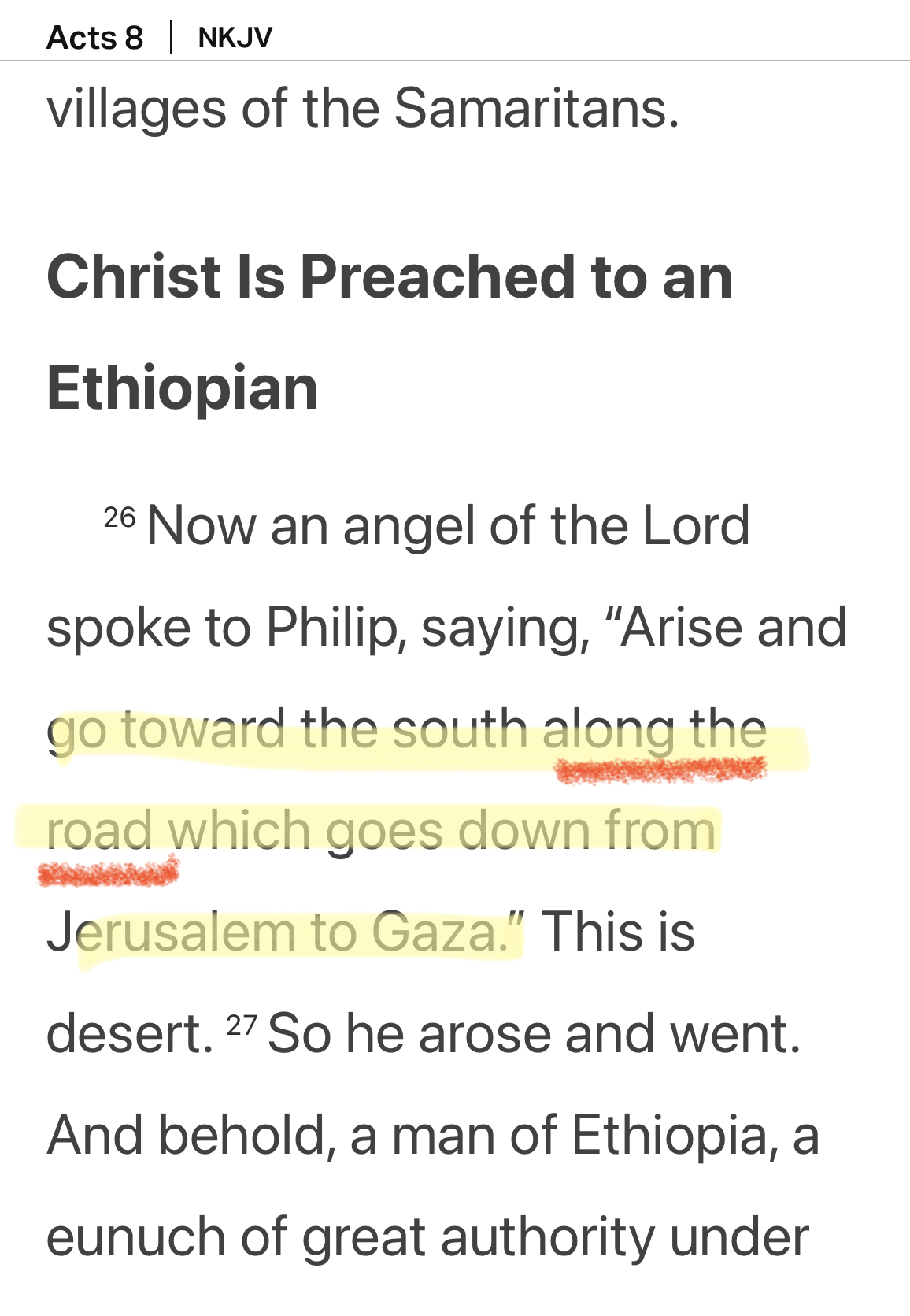
But then the Holy Spirit opened my eyes to a story in the Book of Acts that I had completely missed before. The principles in this story helped me realize that God had put me on a particular path in order for my life to intersect with other people and places. 

Here’s how I explained my story and the principles I learned from the life of Philip:

My friend, your journey may be different from mine, but we still share something so vital in common: God is using everything in your life to accomplish His plan. As you follow Jesus, you will intersect with the lives of others, and your life is making a difference in them.

►► Would you please prayerfully consider supporting this ministry? My Patreon supporters get behind-the-scenes access to exclusive materials. ◀︎◀︎

God Bless America?

Listen to the podcast of this post by clicking on the player below, and you can also subscribe on AppleSpotify, or Audible. 

On this 4th of July weekend, is it right for us to pray for God’s blessing on America? I have blogged before about being careful with our terms that are biblical, unbiblical, or non-biblical. Clearly, the phrase “God bless America” is non-biblical—that is, this phrase doesn’t explicitly appear in the Scripture. But are there principles in the Bible that can make that phrase biblical? 

Yes, I believe so IF we recognize why we have been blessed by God. 

In God’s perfect timing, the next psalm in our series looking at the Selahs in the Psalms is one that addresses this topic. 

Notice the very first word in Psalm 87 is the personal pronoun “He.” There is an assumption the sons of Korah make that their readers will know that “He” is The Creator and Sustainer of the Universe. In fact, they see God as the Prime Mover in this psalm, putting His words at the very middle of the psalm (v. 4). 

Just before these quotation marks, we are invited to Selah—pause and carefully listen to God. He announces heavenly citizenship for age-old enemies of Israel: Rehab, Babylon, Philistia, Tyre, Cush. Peoples from all of these nations are identified as: “those who acknowledge Me” and three times He says they are “born in Zion” (vv. 4-6). 

God desires that none should perish. He wants people from every nation, tribe, and language to enjoy His presence forever in the eternal Zion. 

The sons of Korah remind us of just how blessed Zion truly is (vv. 1-3) and how God establishes all who have Zion citizenship (v. 5). God does this so that all people will see God’s blessing on those people who acknowledge Him as their Lord and King. 

So let’s return to my earlier question: Is it right and biblical for Christians to pray for God to bless America? 

Let me ask it another way: Has God blessed America? I believe He has and we should be eternally grateful. I believe this nation was founded on biblical principles, and recognized as a place where people could have the freedom to worship God.

Will God continue to bless America? Psalm 87 says the blessing will last only as long as we Americans acknowledge, “All my fountains are in You” (v. 7). This is a call for us to continually recognize God as our Foundation and Source. We also have to remember that the blessing is only to us so that it can flow through us to all peoples, languages, and tribes. 

The blessing stops when we dig our own wells, or we try to hoard the blessing. 

There are two phrases in this psalm that stand out to me as prophetic. 

  1. Selah (listen to this) and then “I will record” (vv. 3-4) 
  2. The Lord will write in the register” (stop to celebrate) Selah (v. 6)

God keeps perfect records of those who are citizens of Zion because they have acknowledged Jesus as the One who paid the price for their sins to be forgiven. So when John gives us a glimpse of the eternal Zion, he tells us about the rejoicing over those who are there “from every tribe and language and people and nation” (Revelation 5:9-10, 7:9-10, 21:22-27). 

Just as Revelation records spontaneous praise to God, the sons of Korah build in those Selah pauses to worship too:

  • Glorious things are said of God—praise Him! 
  • He has blessed us by His presence in our midst—praise Him! 
  • People from all tribes are entering Zion—praise Him! 

May God continue to bless America so that we can use those blessings to tell the world about His love as we invite them into a personal relationship with Jesus! 

If you’ve missed any of the messages in our Selah series, you can find the full list by clicking here.

►► Would you please prayerfully consider supporting this ministry? My Patreon supporters get behind-the-scenes access to exclusive materials. ◀︎◀︎

Poetry Saturday—All People That On Earth Do Dwell

Listen to the podcast of this post by clicking on the player below, and you can also subscribe on AppleSpotify, or Audible.

All people that on earth do dwell,
sing to the Lord with cheerful voice;
Him serve with fear, His praise forth tell,
come ye before Him and rejoice.

The Lord ye know is God indeed;
without our aid He did us make;
we are His folk, He doth us feed,
and for His sheep He doth us take.

O enter then His gates with praise,
approach with joy His courts unto;
praise, laud, and bless His name always,
for it is seemly so to do.

For why? The Lord our God is good,
His mercy is forever sure;
His truth at all times firmly stood,
and shall from age to age endure. —William Kethe

►► Would you please prayerfully consider supporting this ministry? My Patreon supporters get behind-the-scenes access to exclusive materials. ◀︎◀︎

Go Deep—Prophecy And Serving

According to Romans 12, all Christians have been given a unique gift package by God. We are to use these motivational gifts to make God’s Kingdom more visible and more desirable. 

This week we discuss the gifts of prophecy and serving. You may download the participant’s notes and the gifts assessment I use in this lesson:

If you missed any of the lessons in this class, you can find them all here.

If you would like to join us in person for this class, here is where you can find us.