11 Quotes From “The Greatest Thing In The World”

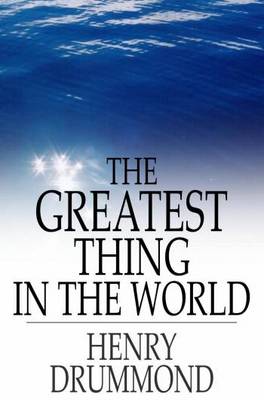
I loved the depth of insight about love from Henry Drummond’s short book The Greatest Thing In The World. This book dives into the definition of love that the Apostle Paul gives us in 1 Corinthians 13. To read my full review, and find the links for a free download of this book, please click here.

These are 11 of my favorite quotes from this book.

“Charity is only a little bit of love, one of the innumerable avenues of love, and there may even be, and there is, a great deal of charity without love. It is a very easy thing to toss a copper to a beggar on the street; it is generally an easier thing than not to do it. Yet love is just as often in the withholding. We purchase relief from the sympathetic feelings roused by the spectacle of misery, at the copper’s cost. It is too cheap—too cheap for us, and often too dear for the beggar. If we really loved him we would either do more for him, or less.”

“We hear much of love to God; Christ spoke much of love to man. We make a great deal of peace with heaven; Christ made much of peace on earth.”

“[Patience] is the normal attitude of love; love passive, love waiting to begin; not in a hurry; calm; ready to do its work when the summons comes”

“Love waives even self-satisfaction.” 

“Politeness has been defined as love in trifles. Courtesy is said to be love in little things.”

“The peculiarity of ill temper is that it is the vice of the virtuous. …No form of vice, not worldliness, not greed of gold, not drunkenness itself, does more to unchristianize society than evil temper. For embittering life, for breaking up communities, for destroying the most sacred relationships, for devastating homes, for withering up men and women, for taking the bloom of childhood, in short, for sheer gratuitous misery-producing power this influence stands alone.”

“Souls are made sweet not by taking the acid fluids out but by putting something in—a great love, a new spirit, the Spirit of Christ. Christ, the Spirit of Christ, interpenetrating ours, sweetens, purifies, transforms all.”

“Willpower does not change men. Time does not change men. Christ does.”

“What we are stretches past what we do, beyond what we possess.”

“Never offer men a thimbleful of gospel. Do not offer them merely joy, or merely peace, or merely rest, or merely safety; tell them how Christ came to give men a more abundant life than they have, a life abundant in love, and therefore abundant in salvation for themselves, and large in enterprise for the alleviation and redemption of the world. Then only can the gospel take hold of the whole of a man, body, soul and spirit, and give to each part of his nature its exercise and reward. … Only a fuller love can compete with the love of the world.” 

“No worse fate can befall a man in this world than to live and grow old alone, unloving and unloved.”
Counsel From Billy Graham

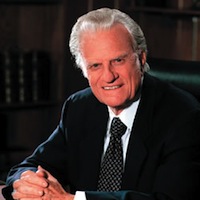
There are very few people who bring to mind such a picture of ministry success, passion for lost souls, and total integrity like Billy Graham.

So for my pastor friends, here are a few quotes from this renowned preacher about study habits, sermon preparation, and message delivery.

“The sword of the Spirit—the Bible—is the weapon God has provided for us to use in this battle between truth and deception. Make it a priority to wield that sword skillfully.”

“If I stick to the Bible and preach the principles and the teachings of the Bible, and quote the Bible, it has an impact of its own.”

“The fact that God is infinite makes the study of His Word a lifetime occupation.”

“A seminary professor I once knew told his students, ‘Never preach about hell without tears in your eyes.’”

“Our preaching emerges out of what we are.”

“Sometimes I’m asked to list the most important steps in preparing for an evangelistic mission, and my reply is always the same: prayer . . . prayer . . . prayer.”

“Preach with authority. The authority for us is the Word of God. Preach with simplicity . . . Preach with urgency . . . Heaven and Hell are at stake. Preach for a decision.”

“Proclaiming ‘the whole will of God’ should be the goal—and the joy— of every church and every preacher.”

“When we preach or teach the Scripture, we open the door for the Holy Spirit to do His work. God has not promised to bless oratory or clever preaching. He has promised to bless His Word.”

“It is vitally important for local church leaders to keep in touch with the spiritual state of their members, to discuss their level of biblical knowledge, and to teach them how to study God’s Word and pray.”

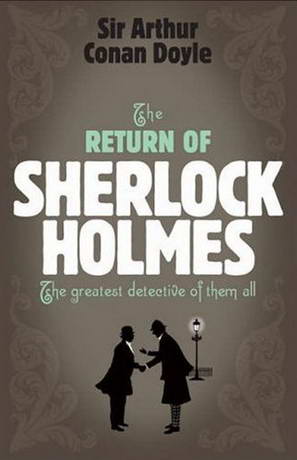
The Return Of Sherlock Holmes (book review)

I don’t read very many fiction books, but I am a huge fan of Sir Arthur Conan Doyle’s character Sherlock Holmes! So I just finished a wonderful collection of short adventures called The Return Of Sherlock Holmes.

Without being as wordy as some authors, Doyle paints such descriptive pictures of Dr. Watson, Holmes, his clients, his villains, and the crime scenes. I can “see” exactly how the characters look and “hear” how they talk, and can feel the emotions they are feeling. And the crime scenes are also painted in such vivid detail by Doyle, that I can catch all of the same details the Sherlock Holmes is taking in.

I cannot stand how some detective story authors “uncover” some hidden details at the very end that magically helps their protagonist solve the crime. The “magic” of Sherlock Holmes’ solutions is that Doyle allowed you to see everything Holmes saw. The real art is in the way Holmes uses his gift of deductive reasoning to solve the clues.

These mysteries are not always crimes. Often times they are simply perplexing problems. I’ve never been called upon to solve a crime before, but I certainly am called upon to find solutions to thorny problems. In that regard, I owe a debt to Sir Arthur Conan Doyle for helping me learn from Sherlock Holmes how to deduce the most logical solution to my mysterious situations.

These are also great stories to read aloud, especially to your kids.

Thursdays With Oswald—Mirror

This is a weekly series with things I’m reading and pondering from Oswald Chambers. You can read the original seed thought here, or type “Thursdays With Oswald” in the search box to read more entries.

Mirror

    It is a wonderful thing that God can cleanse and purify the thinking of our hearts. That is why our Lord says, “Of the abundance of the heart his mouth speaketh” (Luke 6:45). The Bible says that words are born in the heart, not in the head. …

     Jesus Christ said He always spoke as His Father wished Him to. Did His Father write out the words and tell Him to learn them by heart? No, the mainspring of the heart of Jesus Christ was the mainspring of the heart of God the Father, consequently the words Jesus Christ spoke were the exact expression of God’s thoughts. In our Lord the tongue was in its right place; He never spoke from His head, but always from His heart. 

From Biblical Psychology

Have you ever noticed how friends begin to talk like each other? They laugh at the punchline without the joke being told any longer, because they know it so well.

Or how about married couples who can finish each other’s sentences, because they are so in tune with each other.

Biblical scholars have pointed out the similarity of the writing styles of Luke and the Apostle Paul, probably due to the huge amount of time they spent with each other.

We begin to mirror those with whom we spend the most time.

Jesus Christ had His heart filled with God’s presence, so His words mirrored the thoughts of His Father (John 12:49).

What about me? Whom do I mirror? My vocabulary will tell me who fascinates me most, who has my attention, and who has my heart.

I pray that more and more my words reveal that I mirror my Savior Jesus Christ. May my heart be fascinated and attentive to Him, and then may I never speak from my head, but always from my heart.

Through My Eyes (book review)

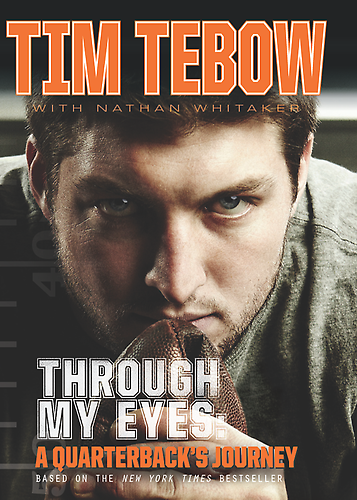
Tebowmania has spread beyond the University of Florida, and even beyond the NFL, as Tim Tebow has captured the attention of so many around the world. Like me, you’ve probably heard way too many “talking heads” on TV or radio, or read countless reporters and bloggers, explain what makes Tebow tick. Here’s a better way to find out: Read Tim Tebow’s own words in Through My Eyes.

I’m a Tim Tebow fan, so I realize my opinion of his book might be slightly biased. I love this man’s work ethic, competitive fire, leadership abilities, and Christian testimony. But the question is: where did all of this come from?

In reading Through My Eyes you will learn about his tight-knit family who gave Tim a great foundation upon which to grow. You’ll see the inborn competitive spirit become more and more laser-focused on helping Tim accomplish what he believes is God’s plan for his life. You’ll relive the build up to the big games, the behind the scenes struggles and challenges, and how Tim responded to the wins and the losses.

Instead of letting others tell you what they think makes Tebow tick, find out for yourself as you see this outstanding athlete’s world through his eyes.

By the way, my 12-year-old son and I read this book together, and I found it to be a great conversation-starter for many of the issues he will face in his future. I could envision this book being used in a men’s Bible study or small group discussion, or even in a mentoring role.

An excellent memoir that was very well written.

Could You Be A Missionary?

When I say missionary, what images come to your mind?

  • …a remote wilderness?
  • …a third-world country?
  • …asking churches and friends to support you financially?
  • …packing up to leave your home for years at a time?
  • …learning a new language?

Yes, many of our missionaries do all of these things. But if this is your only concept of missions, you’ve missed something important.

When Jesus told His followers that they would go out as witnesses (missionaries) for Him, He began with—

…you will be My witnesses in Jerusalem… (Acts 1:8)

The first place He sent them was to Jerusalem.

  • This was a missions opportunity right in their neighborhood.
  • They already knew the culture.
  • They already knew the language.
  • They didn’t have to pack up and leave their family behind.

Missions is not always far away. Sometimes it’s in your own neighborhood!

In Cedar Springs, I love the partnerships that the Cedar Springs Ministerial Association has helped foster, and the opportunities for local missions work that have been presented. One of our ongoing projects is providing weekend food for students who may be struggling to have enough over the weekend. It is a program called Hand2Hand. We are always looking for volunteers (missionaries!) who can work, collect food, or donate funds to help.

Organizational Health

I’m still working through the pages of notes I took during the Willow Creek Leadership Summit a couple of weeks ago. Another speak whom I really appreciated was Patrick Lencioni. I’ve read many of his books, and I think he has such a knack for explaining business principles in a way that seem so easy to process and apply.

Patrick talked about the two needed ingredients for organizational success: things that are smart and things that are healthy. He said that most of the time we cannot do the smart things because we are not healthy enough to do them.

So, how do we make our organization healthy? Here are four disciplines he encouraged us to pursue:

1.  Build and maintain a cohesive team at the top. [This is behavioral alignment.]

2.  Create clarity by asking these questions:

  • Why do we exist? [core purpose]
  • How do we behave? [core values]

These need to be core values, not our aspirational values.

There should only be one or two endemic values.

Core values are those that we will stick to even if we don’t get rewarded for it.

  • What do we actually do?
  • How will we succeed? [strategy]

These are the myriad of intentional decisions we make that help us be successful.

As an example, consider the three strategic anchors for Southwest Airlines: (1) make the customer happy; (2) keep the plane on time; (3) keep fares low.

  • What is most important in our organization right now?
  • Who must do what?

3.  Over-communicate the answer to the above six questions. I love this: Patrick said, “If your people cannot do a good impression of you, you’re not communicating enough.”

4.  Reinforce the system through creative ideas.

The bottom line: “Organizational health provides significant advantages for organizational success.”

I’m working on the application of these thoughts for the organizations I help lead, and I’m really excited to encourage some conversations around these great thoughts from Patrick Lencioni.

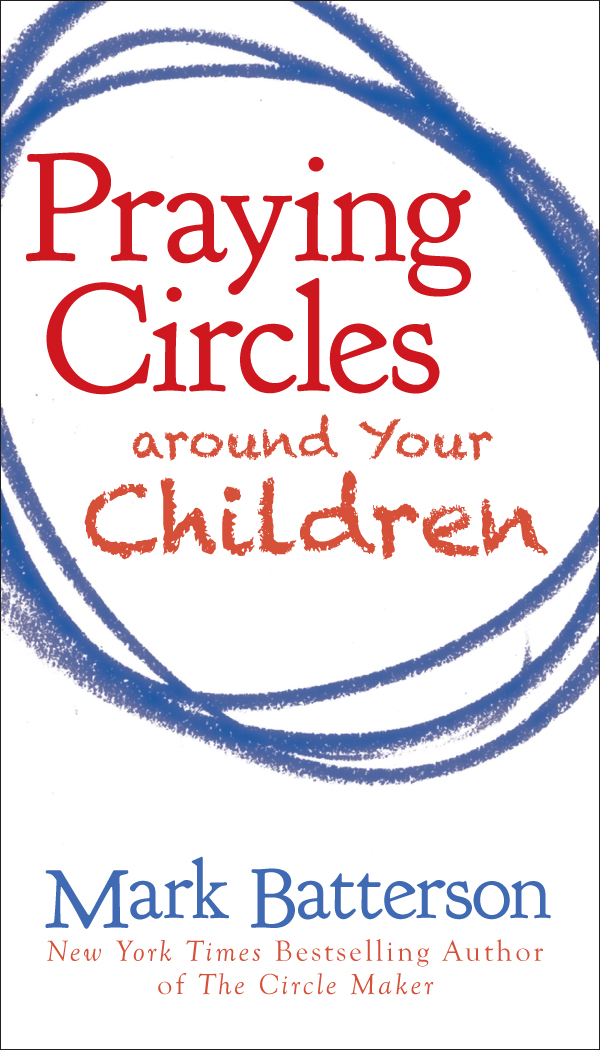
9 Quotes From “Praying Circles Around Your Children”

Attention parents and grandparents: You need to read Praying Circles Around Your Children! To help whet your appetite, here are nine quotes from this outstanding book by Mark Batterson (you can read my full review here) that caught my heart:

“Make sure your heavenly Father hears about your kids daily!”

“You’ll never be a perfect parent, but you can be a praying parent. Prayer is your highest privilege as a parent. …Prayer turns ordinary parents into prophets who shape the destinies of their children, grandchildren, and every generation that follows. …Your prayers for your children are the greatest legacy you can leave.” 

“We instinctively attach an ASAP to every prayer and ask God to answer as soon as possible. We need a paradigm shift. We need to start praying ALAT prayers—as long as it takes.”

“Please listen to me, parents: you are prophets to your children. Jewish philosophers did not believe the prophetic gift was reserved for a few select individuals. They believed that becoming a prophetic was the crowning point of mental and spiritual development. It was the natural by-product of spiritual development. It was the natural by-product of spiritual development. The more one grows in grace, the more prophetic one becomes. This doesn’t mean you will start predicting the future. It means you’ll start creating it. How? Through your prayers! Prayer is the way we write the future. It’s the difference between letting things happen and making things happen.” 

“One of your chief responsibilities as a parent is to be a student of your child.”

“Pray about what to pray about. …The purpose of prayer is not to outline our agenda for God; the purpose is to get into the presence of God and get God’s agenda for us.”

“One of our primary responsibilities as parents is helping our children identify their life themes. We need to help them find the sweet spot where their God-given gifts and God-ordained passions overlap.”

“Great parenting doesn’t just mean teaching your kids; it also means learning from them. Think of it as reverse mentoring.” 

“Your prayers will shape the destiny of your family for generations to come.”

Counterculture

[koun-ter-kuhl-cher] noun the lifestyle of those people who reject or oppose the dominant values and behavior of society.

In Ephesians 4:17 Paul tells his audience “you must no longer live as the Gentiles do.” Okay, but his audience was made up of, um, Gentiles! Paul was not telling them to change their heredity, but to change their mindset.

He was asking them to live counterculture. 

If the Apostle Paul was writing to us in America today, no doubt he would tell us: you must no longer live as the Americans do.

Here is the Christian Counterculture:

  • Speak only what’s true
  • Deal with your anger quickly and productively
  • Have a strong work ethic
  • Only speak wholesome words
  • Please the Holy Spirit in all you do
  • Get rid of unbecoming behaviors
  • Be kind to everyone
  • Be compassionate toward everyone
  • Be forgiving of everyone
  • Imitate Christ
  • Remain sexually pure
  • Don’t be greedy
  • Don’t use obscenities
  • Be perpetually thankful

(You can find all of these in Ephesians 4:24-5:4.)

That’s a lot to work on! But as a Christian I want to exhibit a lifestyle that rejects the dominant values and behavior of American society.

With God’s help, I want to live counterculture.

Praying Circles Around Your Children (book review)

Launching off his excellent book on prayer—The Circle Maker—Mark Batterson shares with parents and grandparents the incredible blessing of taking the initiative to pray for our children in Praying Circle Around Your Children.

Mark opens the book with these words:

“Make sure the heavenly Father hears about your kids daily! … You’ll never be a perfect parent, but you can be a praying parent. Prayer is your highest privilege as a parent.”

Just as The Circle Maker opened my eyes to new insights on prayer (you can read my review by clicking here), Praying Circles Around Your Children challenged me to step up into my privilege of being a prayerful Dad.

I loved the simple straightforward message in this book: Keep on praying for your kids.

  • Do you feel like you don’t know what to pray? Use the Scripture to help you find biblical promises to pray over your kids.
  • Do you feel like your prayers for your kids have been unanswered? Recommit to pray for them as long as it takes.
  • Do you feel like your prayers lack power? Find ways to pray with your kids where you keep them close, even laying your hands on them.
  • Do you feel like it’s too late to pray for your grown children or grandchildren? It’s never too late to talk to God about your (grand)kids.

This is a short book that you can easily read in one sitting, but the concepts you learn can be applied for the rest of your life.

I loved this book so much that I’m going to buy a copy for every family in my church. If you are a parent or grandparent, I cannot urge you strongly enough to pick up a copy of Praying Circles Around Your Children.

I am a Zondervan book reviewer.