Thursdays With Oswald—Spill Your Guts

This is a weekly series with things I’m reading and pondering from Oswald Chambers. You can read the original seed thought here, or type “Thursdays With Oswald” in the search box to read more entries.

Oswald Chambers

Spill Your Guts!

     Perhaps to be able to explain suffering is the clearest indication of never having suffered. Sin, suffering, and sanctification are not problems of the mind, but facts of life—mysteries that awaken other mysteries until the heart rests in God, and waiting patiently knows “He does all things well.”

     Oh, the unspeakable joy of knowing that God reigns! That He is our Father, and that the clouds are but “the dust of His feet”! Religious life is based and built up and matured on primal implicit trust, transfigured by Love; the explicit statement of that life can only be made by the spectator, never by the saint.

From Christian Disciplines

C.S. Lewis wrote in one of his most profound books, The Problem Of Pain, “God whispers to us in our pleasures, speaks in our conscience, but shouts in our pains: it is His megaphone to rouse a deaf world.”

Suffering has a way of getting us to what matters most by filtering out the things that were clamoring for our attention before. God speaks in our pain because God stepped into our pain. Jesus was called a Man of sorrows because He experienced every pain you and I will ever experience; in fact, He experienced it with even greater intensity that you and I can ever experience!

Are you in pain? Are you suffering? No one can know what is really in your heart, except the One who knows you better than even your closest friend. Spill your guts, don’t hold back, tell Him all that’s on your mind. He already knows your thoughts, so let loose in His presence, and feel how close your Comforter is to you.

God’s Workmanship (book review)

God's WorkmanshipWhether in a lecture, a sermon, a book, or a magazine article, Oswald Chambers challenges me like few other authors do. God’s Workmanship is a collection of lectures and articles which were odds-and-ends until his wife compiled them just prior to her death.

Many people know Chambers through his highly popular devotional My Utmost For His Highest. In that devotional book, Chambers shares a short thought, usually centered around a single passage of Scripture. In God’s Workmanship, the feel is very much the same. Each of the nearly 50 pieces which comprise this book are based around a single verse or a short passage from the Bible, but Chambers has more “space” to elaborate on his themes than he did in his devotional book.

The topics are varied, but rich. Themes such as grace, redemption, truth, possessions, personal relationships, the Bible, personal devotions, God’s holiness, sin, blessings, and suffering are covered so succinctly, eloquently, and biblically. Next to My Utmost, God’s Workmanship is a great introduction to the breadth of Oswald Chambers’ godly wisdom.

God Takes The Burden Of Suffering

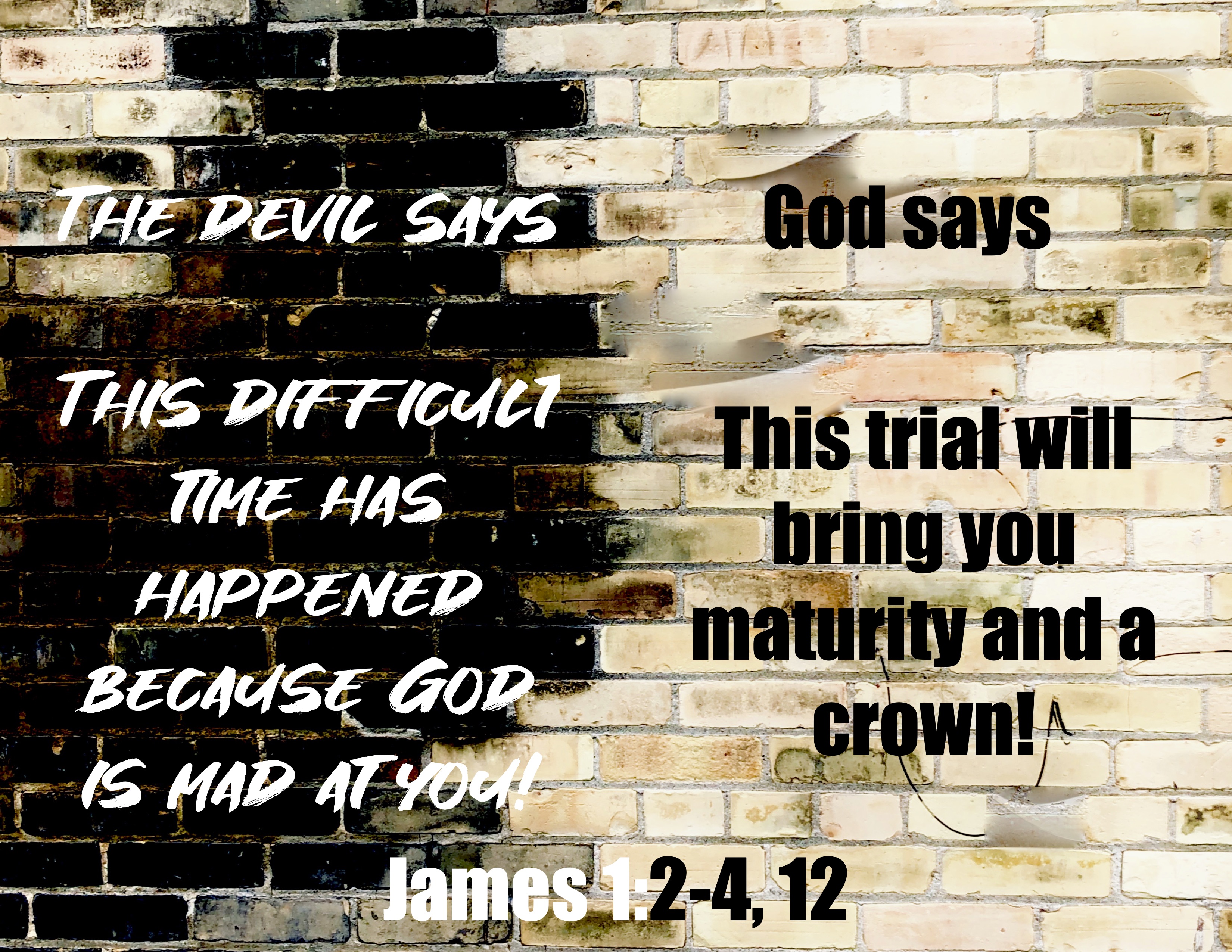
It’s always been a difficult verse for me. Consider it pure joy, my brothers, whenever you face trials of many kinds (James 1:2).

I am still wrestling with this verse and probably will be for as long as there is suffering. But I trust God. I believe He is working out something which will bring Him full glory. I know, as the apostle Paul said, that I only see through a dim glass now. But what I see of God’s love and goodness is more than enough for me to continue to trust Him.

This video is an amazing story of how suffering and disability actually brought a family to Christ—and they brought glory to God.

My Mediator

If anyone ever felt his pain was undeserved, it was Job! His life is so invaluable for us to be able to answer the question, “Where’s God in the midst of my dark times?”

Job tried to makes sense of what was happening to him. Sometimes he thought God was so awesome and so powerful that He was completely unknowable. God was a faceless, unapproachable Being. At other times Job thought God was so righteous that He would have nothing to do with him. So in the depth of his despair he called out for someone to be his mediator (see Job 9:33-35).

An effective mediator has to be someone who can understand and relate to both parties. He cannot be partial to one side, nor unsympathetic to one side. He has to be able to relate to both parties. In this case, he would have to be able to relate to both God and man—he would have to be able to be able to understand this Indefinable Power and this Supreme Morality and man’s struggle to come to grips with both of these views of God. Jesus is that Mediator.

[Jesus] gave up His divine privileges; He took the humble position of a slave and was born as a human being. (Philippians 2:7)

God Himself chose to step into all of our pain!!

The Bible describes Jesus as a Man of sorrows, One familiar with suffering, One acquainted with grief.

Jesus knows your pain even more acutely than you know it yourself. He wants to take all of your pain, and bear it for you. Jesus is not some faceless, unknowable Entity; He’s not aloof, He’s not unapproachable, He’s not unmoved by your pain. Will you let Him carry your pain?

He wants you to know Him as your Mediator:

Jesus understands every weakness of ours, because He was tempted in every way that we are. But He did not sin! So whenever we are in need, we should come bravely before the throne of our merciful God. There we will be treated with undeserved kindness, and we will find help. (Hebrews 4:15-16)

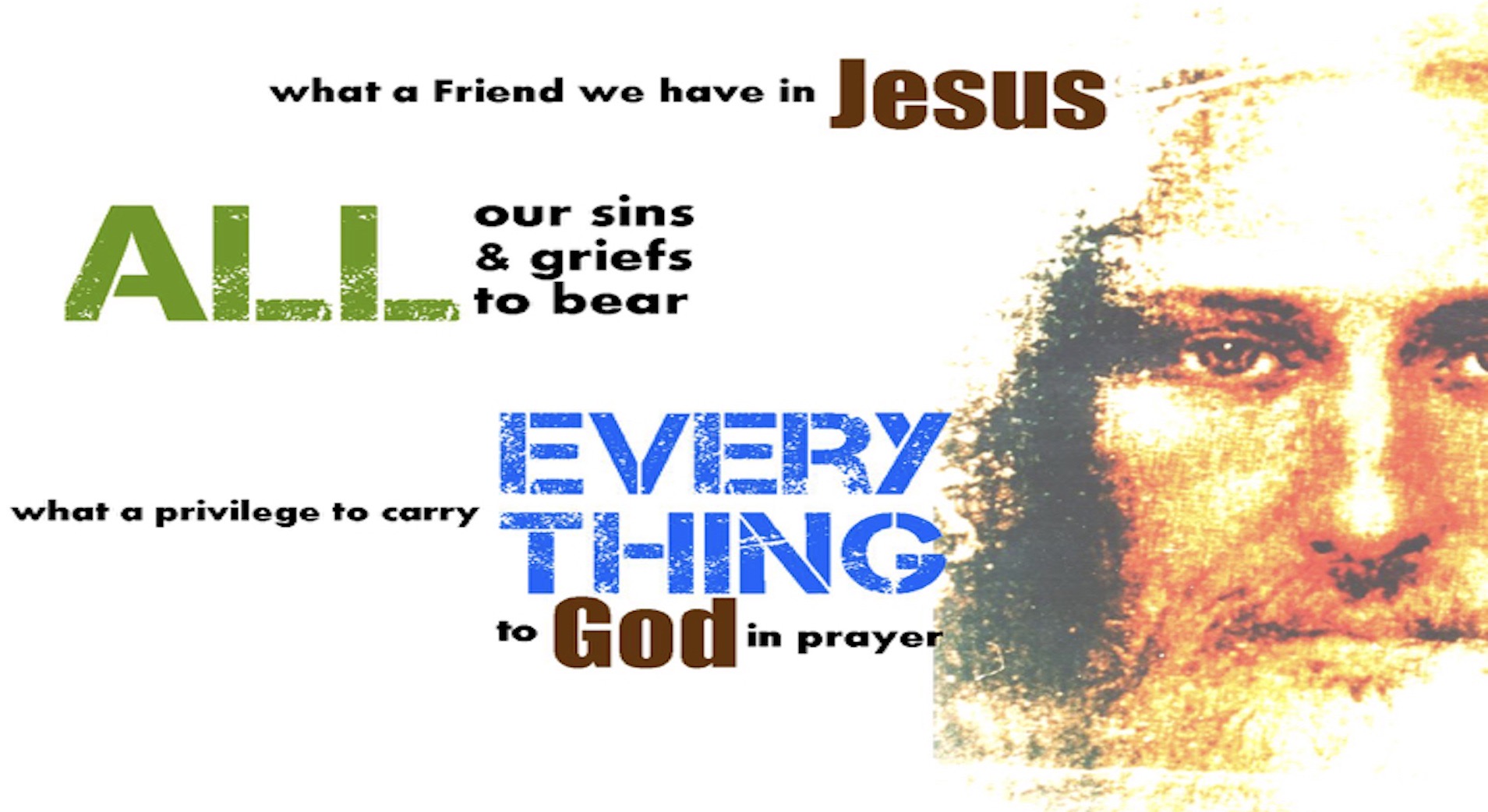
What a Friend we have in Jesus

All our sins and griefs to bear

What a privilege to carry

Everything to God in prayer

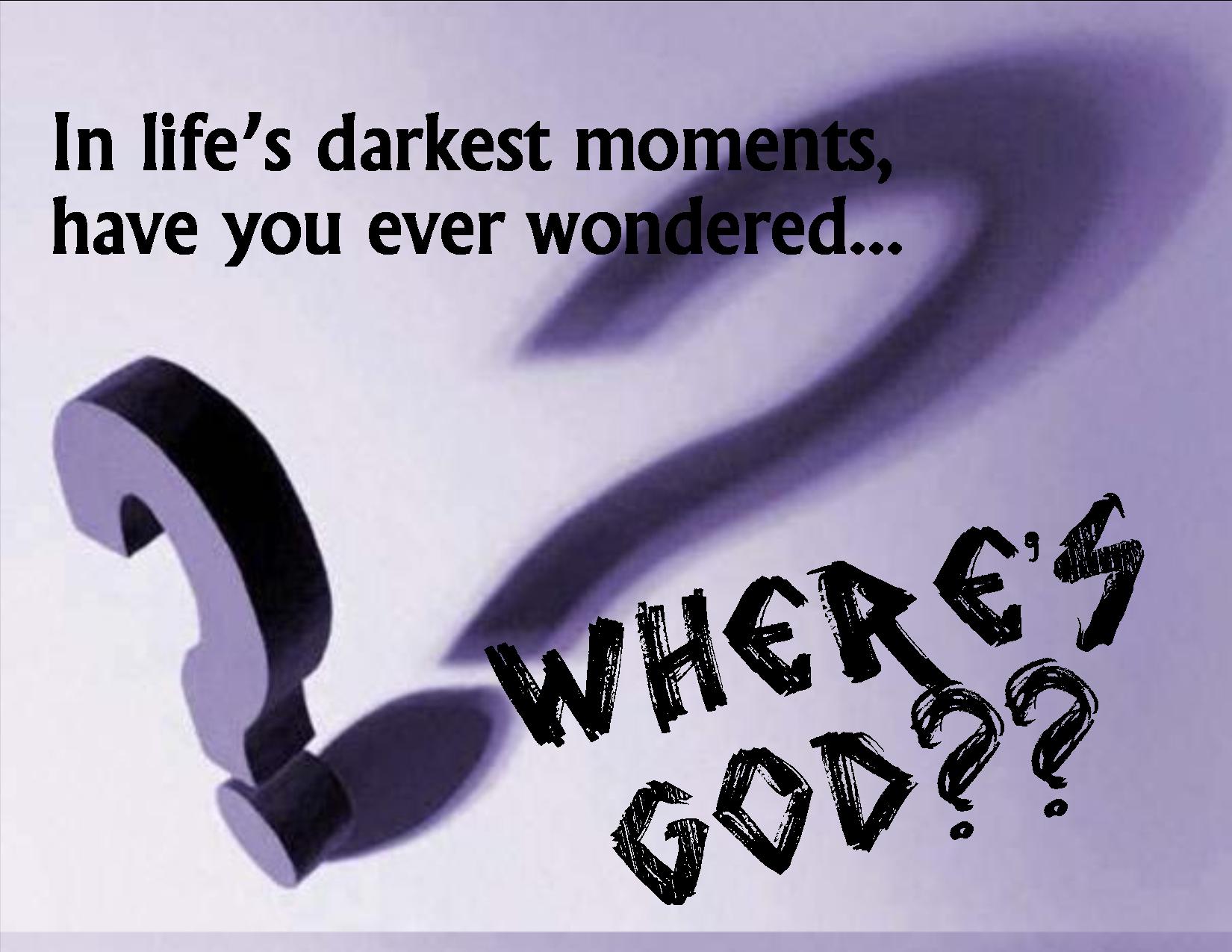
Where’s God?

It is one of the most painful, gut-wrenching cries in all of history. Hanging on the Cross, suspended between Heaven and earth, Jesus Christ cries out, “My God! My God! Why have You forsaken Me?!”

Ever been there?

Ever been in such a dark, painful place that you wonder if God has abandoned you?

You are not alone.

We’ve all been there. And best of all, Jesus Himself has been there. The Bible tells us that because Jesus has been there—where your pain is so intense, and the darkness is pitch-black—that He is the best One to help you.

Next Sunday we are kicking off a brand new series called Where’s God? In the darkest moments of our lives, where is God? what is He doing? how can anything good come from this? Please come join us.

If you’ve missed any of the messages in this series, check them our here:

What Good Is God? (book review)

Philip Yancey always makes me think. He explores the edges of Christian faith, not content just to walk down the safe paths of well-worn, traditional preaching. Just the title of his latest book—What Good Is God?—tells you that this book will be no exception.

This book is laid out in ten sections, each with two chapters. The first chapter in each section gives you the setting, the second chapter is a speech that Yancey gave in that setting. And, wow, what tough settings they are! Every setting is one that makes you wonder, “Where was God in that?!?”

What Good Is God? will take you to settings like…

  • The campus of Virginia Tech after a gunman opened fire on faculty and students.
  • The secret house churches in Communist China.
  • The post-apartheid South Africa where wounds of hate are still healing.
  • The volatile Middle East where religious beliefs violently collide.
  • The middle of a terrorist attack in Mumbai, India.

In every section, Philip Yancey masterfully and empathetically takes us on a journey of discovery that shows that God is still God and that He is good. He does this through personal example, Biblical references, and always with a heart that seems to know his audience.

It’s a challenging read, but well worth your time.

I am a Faith Words book reviewer.

My Injured Thumb

I sliced my thumb open yesterday. Okay, maybe “sliced” is a little too dramatic. But I did cut my thumb, and it did bleed. True, it didn’t gush blood—more like oozed blood—but blood was escaping my body. It was a small cut; perhaps a ¼-inch long.

I pressed a tissue on it until it stopped bleeding. I washed my thumb thoroughly with antibacterial soap and water. I applied some Neosporin ointment. And I wrapped the injury in a fresh Band-aid.

All of this care and concern for a small cut on my thumb.

Do you realize how much one uses their thumb in the course of a day?

  • Trying to rinse dishes in the sink I couldn’t hold the plate or the dish scrubber without my thumb being involved
  • My thumb was involved when I turned the doorknob of the front door
  • When I was opening a package of fruit snacks for my son, my thumb was needed for either the holding or the ripping
  • Ditto when I attempted to open the lid of the 2-liter bottle

That small cut on the thumb on my non-dominant hand was affecting my entire day. One little cut and my entire body was adversely affected!

A friend called me the other day. His heart was ripped open. Okay, maybe “ripped” is a little too dramatic. But he was emotionally damaged. True, he didn’t need a trip to the emergency room and he probably won’t have to start taking anti-depressants, but emotional “blood” was escaping his heart.

He called me, and I responded. One little wound in my friend’s heart and I was affected! Do you realize how much one’s emotions are involved in the course of a day?

Dr. Paul Brand was a renowned hand surgeon and missionary who worked with leprosy patients in India for years. He learned that leprosy doesn’t mangle a person’s foot or hand, but their lack of ability to feel pain does. They don’t feel the cut on their pinky toe or left thumb, and so they never attend to it. The injury becomes infected, and still no pain registers to tell them to take care of it. Eventually serious, irreversible damage is done.

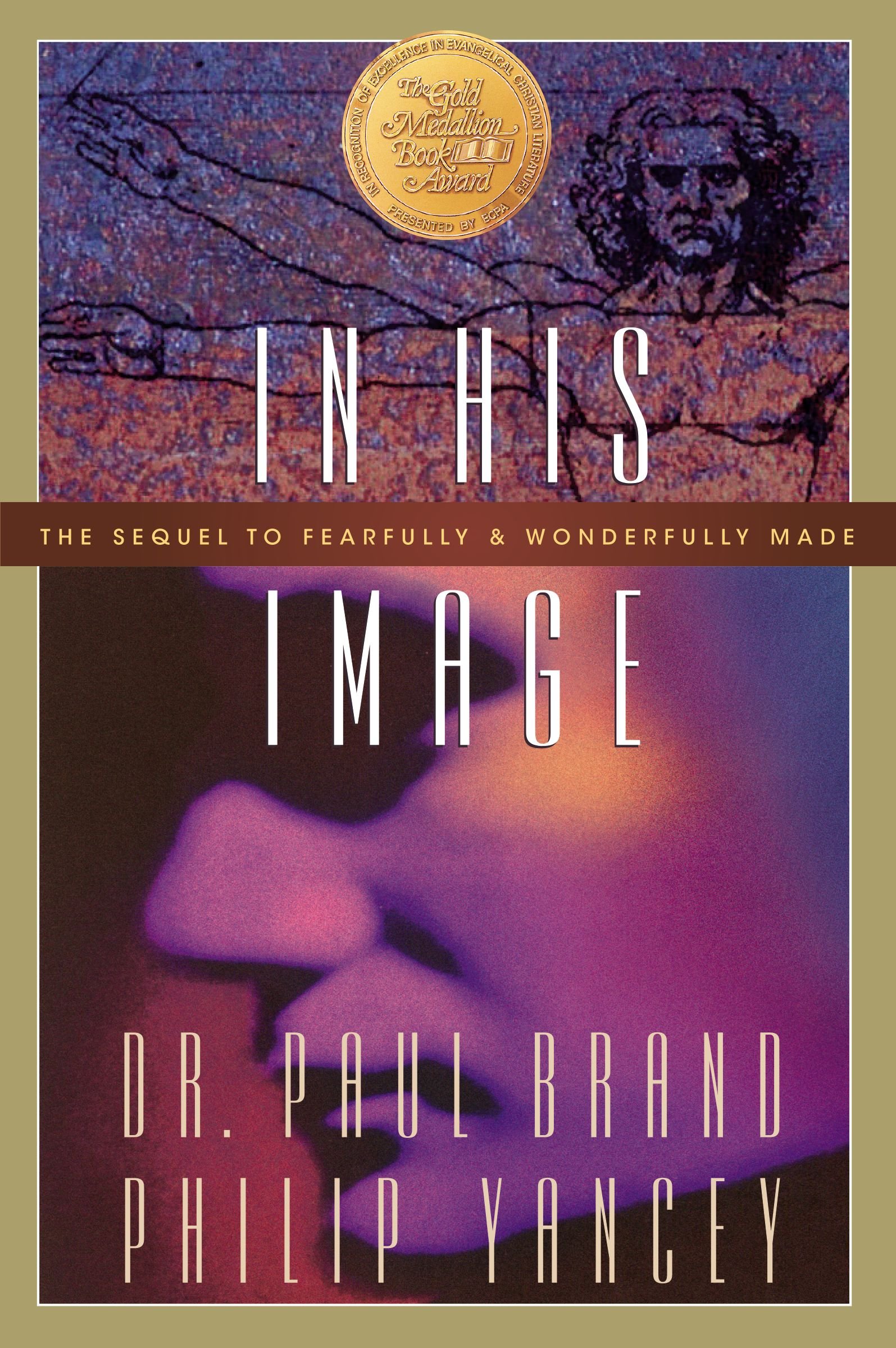
Listen to what Dr. Brand wrote in his book In His Image

“A body only possesses unity to the degree that it possess pain…. We must develop a lower threshold of pain by listening, truly listening, to those who suffer. The word compassion itself comes from Latin words cum and pati; together meaning ‘to suffer with.’ … The body protects poorly what it does not feel.”

“Management of pain requires a delicate balance between proper sensitivity, to determine its cause and mobilize a response, and enough inner strength to keep the pain from dominating the whole person. For the Body of Christ, the balance is every bit as delicate and as imperative.”

We must develop a lower threshold of pain by listening, truly listening. … The body protects poorly what it does not feel. Are you listening, truly listening to those who are hurting around you today? You are connected to them. If one person hurts, we all hurt.

Truly listen. If they are hurting, it does affect you … and me. Let’s find them, bandage them, apply ointment to their wounds, and protect them from further injury. Let’s feel their pain so we can protect them from further pain.

The Passion Of Pessimism

I’m reading Oswald Chambers’ challenging book Baffled To Fight Better. In this book, Chambers is commenting on the life of Job as portrayed in the Bible. His thesis is that we can fight better when we‘re totally baffled on how to fight on our own—when we‘re baffled, we can only turn to God.

Today I read Chambers‘ statement, “Real suffering comes when a man‘s statement of his belief in God is divorced from his personal relationship to God.”

This reminded me of what this important principle: “The man with an experience is never at the mercy of the man with an argument.” Or I would paraphrase this, “The man with an intimate relationship with Jesus is never baffled when things don‘t turn out as he planned.”

I‘ve been going through some baffling times—circumstances aren‘t coming together the way I would have planned them. But during this trying time, my relationship with Jesus is growing more and more precious to me.

Where pessimism could reign I am finding greater passion.

What have you discovered in your baffling times?

UPDATE: One of the things that came out of this baffling time I mentioned here was the healed scars that became the basis for my book When Sheep BitePlease check this out!