


When the Bible calls Christians to be strong, it is really calling them to be stronger and more courageous than they were previously. This requires a workout plan for our spiritual muscles!

Links & Quotes
August 2, 2025 — Craig T. Owens Leaders must resist trying to rush in “to save the day.” We need to let our teammates learn how to rescue themselves through a time of productive struggle. Check out the full conversation Greg and I had in our episode “The struggle is real (but necessary).”
I have a lot of new video content on my YouTube channel every week. Please check it out and subscribe so you don’t miss anything.
I have had an ongoing series of posts and videos called “Is that in the Bible?” Many times we discover that a phrase we think is biblical isn’t found in the Scripture or it is being used out of context. John Stonestreet addresses this same concern. He writes, “Selective proof-texting points to how widespread and deep biblical illiteracy is. In addition to an ignorance of the actual content of the Bible, there is ignorance about what the Bible even is, and how Christians throughout the ages have used it. It’s bad when this ignorance shows up in politics. It’s sad when it shows up in our churches and Christian subcultures.”
“Strength does not come from winning. Your struggles develop your strengths.” —Arnold Schwarzenegger
Marcus Buckingham shared something fascinating: “I studied 3000 Disney housekeepers. Eight of them told me what they loved about their work. One vacuums herself out of every room to make perfect carpet lines. Another lies on every bed to test the ceiling fan because dust falling means guests think the room is dirty. A third arranges kids’ toys in elaborate scenes—Mickey with the TV remote, Minnie with french fries. All breaking Disney’s rules. All excellent for completely different reasons. Stop building competency models for leaders. The best leaders are super different from each other. Average is homogenous. Excellence is idiosyncratic.”
The Maturing Steward
January 28, 2025 — Craig T. OwensListen to the podcast of this post by clicking on the player below, and you can also subscribe on Apple, Spotify, or Audible.
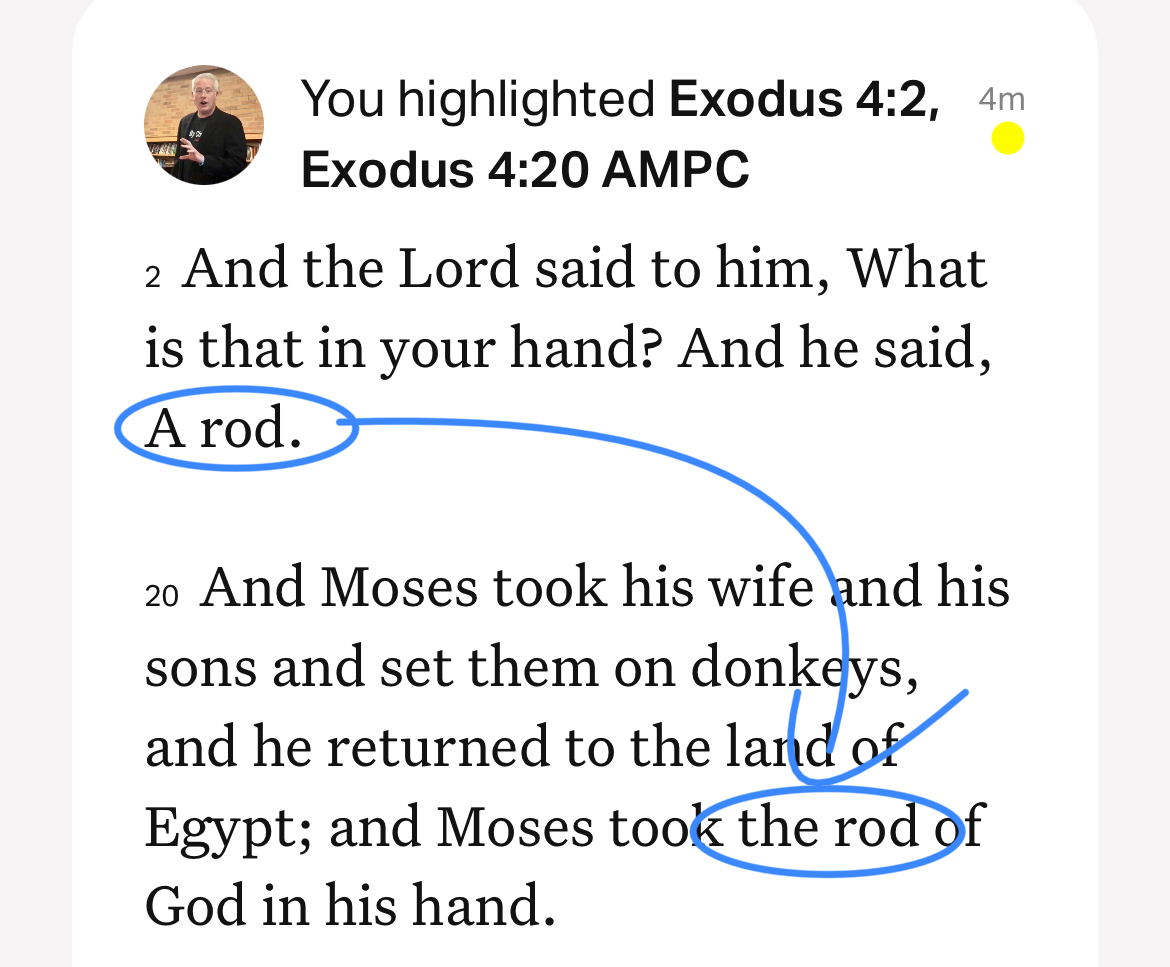 And the Lord said to [Moses], “What is that in your hand?” And he said, “A rod.” … And Moses took his wife and his sons and set them on donkeys, and he returned to the land of Egypt; and Moses took the rod of God in his hand. (Exodus 4:2, 20 AMPC)
What Moses originally called merely “a rod” he later called “the rod of God.” He recognized that what he thought was his was in actuality what God had given him to use.
When we recognize that what’s in our hands isn’t our creation, but a God-given talent, it marks a defining moment in both our maturity and our humility. Or to borrow a phrase I elaborate on in my book Shepherd Leadership, this helps us view our God-given talents or positions with confident humility (or, if you like, humble confidence).
With this shift in Moses’ understanding and language in mind, this is how we should treat every strength God has given us:
• It’s not mine, but God’s
• I am only a steward of this talent
• I must use this God-given strength only for God’s glory
• I will have to give an account to God for how I invested or squandered what He entrusted to me
When we realize that we are not self-made men or women, but that any talents, abilities, or opportunities we have are God-appointed, we show a marked maturity in our understanding of our stewardship of God’s gifts. As our maturity grows, our confidence and our humility will grow proportionately. And as we become more confidently humbled in the way we steward God’s gifts, our leadership cannot help but exhibit more of God’s blessing on it.
All of this growth starts with just the simple recognition that what’s in my hands is there only because God placed it there.
►► Would you please prayerfully consider supporting this ministry? My Patreon supporters get behind-the-scenes access to exclusive materials. ◀︎◀︎
Stewarding Your Gifts Into Strengths
October 21, 2024 — Craig T. OwensListen to the podcast of this post by clicking on the player below, and you can also subscribe on Apple, Spotify, or Audible.
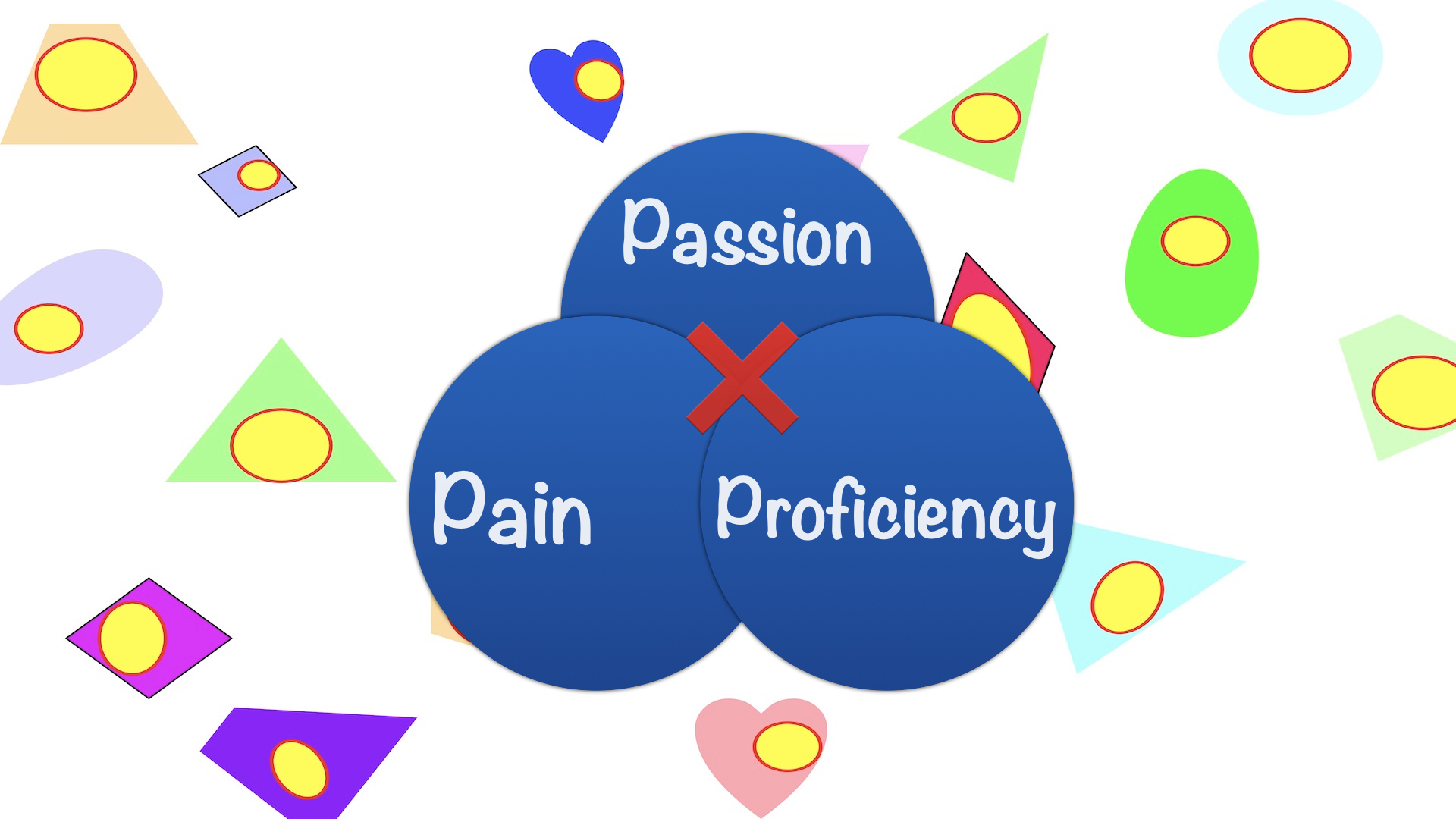 We have been learning about how God gifts us so that He can use us to build His kingdom. Discovering these gifts and then living in this gift zone is going to require us to stretch out of our comfort zone. So far, we’ve looked at two factors:
As you look back, the things that thrill you and kill you have probably remained consistent through your life. You may recall moments where implementing your gifts went very well and times when it didn’t go so well. The former makes us ready to try again and maybe expand a little further, but the latter tempts us to shrink back into our comfort zone. The key is to find out how we can be more consistent in using our gifts productively.
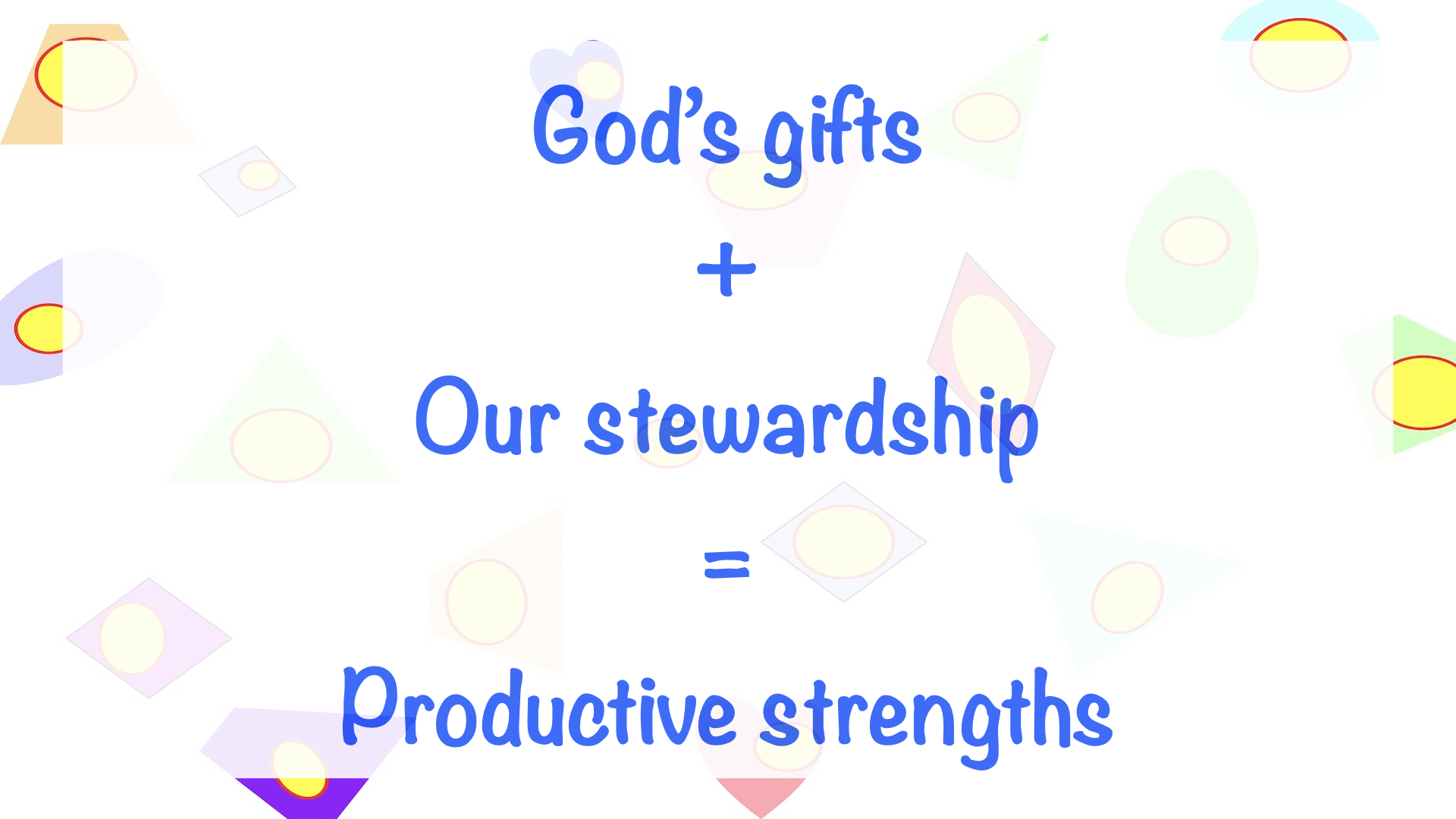
It looks like this: God’s gifts + Our stewardship = Productive strengths.
God gives the gifts as only He knows best (Psalm 139:16; Romans 12:6; 1 Corinthians 12:11) and then we steward these gifts into productive strengths.
(Check out all of the Scriptures in this post by clicking here.)
What does stewardship mean?
- The dictionary defines it as the responsible overseeing and protection of something considered worth caring for and preserving.
- The Bible always portrays a steward as the one in charge of the precious things in a household—in our case, the Church.
Jesus makes the role of a steward very clear in his parable found in Matthew 25:14-27. Notice three important things:
- The master gave gifts to everyone of his servants, but he gave “each according to his ability” (vv. 14-15).
- The wise servants stewarded the master’s gift by that way they “put his money to work” (vv. 16-18)
- The master demanded accountability of all of his servants. Two servants acknowledged “you entrusted me” with these gifts (vv. 19-23), while one said, “I was afraid” (vv. 24-27).
God created each of us on purpose and for a purpose. He gave us the gifts we need to accomplish that purpose. We will only find our fulfillment in life in stewarding those God-given gifts and opportunities in ways that glorify Him. Not only fulfillment here, but then eternal satisfaction when we hear our Savior say, “Well done, good and faithful servant! Enter into your Master’s happiness!”
The only servants that heard the “well done” from their master were those who realized it was “your money…entrusted” to me. I like how Eugene Peterson brings this out in his paraphrase:
Make a careful exploration of who you are and the work you have been given, and then sink yourself into that. Don’t be impressed with yourself. Don’t compare yourself with others. Each of you must take responsibility for doing the creative best you can with your own life. (Galatians 6:4-5 MSG)
So let’s add one more circle to the passion and pain circles, and that is the circle of proficiency. This is what fulfills us because we can do it so well; it feels so natural for us to be doing this. Proficiency is what really brings together the passion and the pain, and it helps us find the sweet spot.
Let me give you a couple of examples—one from the Old Testament and one from the New Testament.
Nehemiah was killed that Jerusalem was in shambles and the people were disgraced (Nehemiah 1:3-4)—that’s what killed him. Nehemiah didn’t go to wall-building school, but he effortlessly strategized, cast vision, organized, planned, procured, and adapted—that’s his proficiency. The wall was built in 52 days, Israel’s enemies were disgraced, and the people had a place to worship again (Nehemiah 6:15-16, 9:1-3)—that’s what thrilled him.
The apostles and the first deacons in the New Testament church saw that some of the widows were being overlooked in the food distribution (Acts 6:1)—this is what killed them. These new leaders didn’t go to food-distribution school, but they effectively strategized, cast vision, organized, planned, procured, and adapted (v. 3)—this is their proficiency. The widows were cared for, the Word of God spread, and more people became Christians (v. 7)—that’s what thrilled them.
God gives gifts—we feel that in what thrills us and what kills us. We steward those gifts into productive strengths—we stick with what we fulfilled in doing. Our productive strengths then glorify God as we strengthen and grow the Body of Christ.
 Let me give you four things to consider about your area of proficiency:
- What comes easily to me?
- Where do I see both the steps and the completion before others do?
- Where do I experience the greatest ROI of my time and efforts?
- What do I do that thrills me because I ran to because it was killing me, and now it fulfills me to keep doing it?
With all three of these circles, please take some time to ponder what your sweet spot is. And if you’ve missed any of the messages in this series, you can find them all here.
►► Would you please prayerfully consider supporting this ministry? My Patreon supporters get behind-the-scenes access to exclusive materials. ◀︎◀︎
Determined And Empowered To Do God’s Will
July 29, 2024 — Craig T. Owens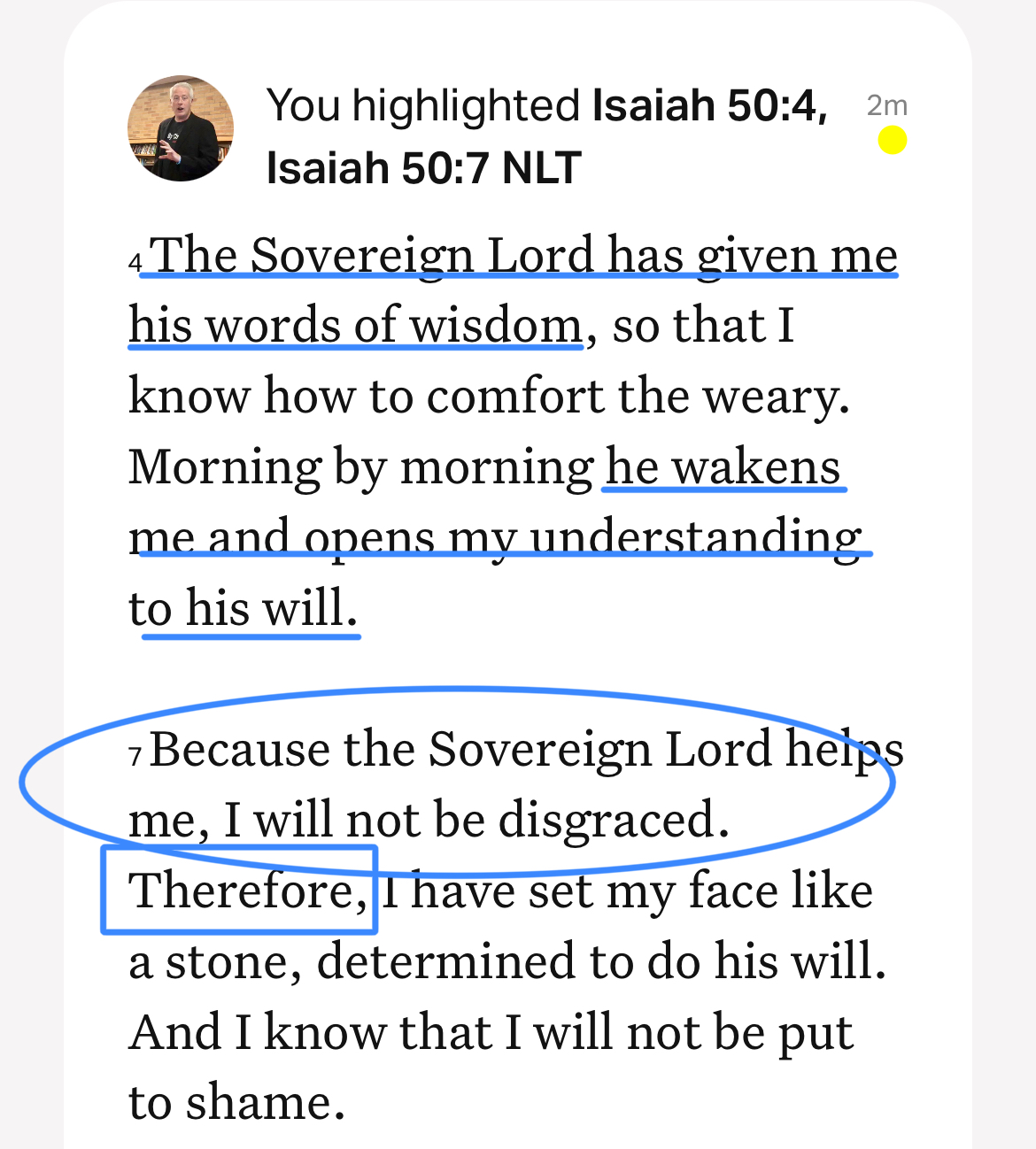 The Sovereign Lord has given me His words of wisdom, so that I know how to comfort the weary. Morning by morning He wakens me and opens my understanding to His will. … Because the Sovereign Lord helps me, I will not be disgraced. Therefore, I have set my face like a stone, determined to do His will. And I know that I will not be put to shame. (Isaiah 50:4, 7 NLT)
God’s words give me wisdom and strength. It doesn’t matter what others say when I live and speak the way God wants me to because God sees my obedience and He will reward me in the end. I don’t live for the applause of men, but only for the applause from nail-scarred hands.
Check out two related blog posts:
I also spend quite a bit of time unpacking this idea of what really matters to God in my book Shepherd Leadership: The Metrics That Really Matter.
Poetry Saturday—A Nation’s Strength
July 3, 2021 — Craig T. OwensListen to the podcast of this post by clicking on the player below, and you can also subscribe on Apple, Spotify, or Audible.
 What makes a nation’s pillars high
And its foundations strong?
What makes it mighty to defy
The foes that round it throng?
It is not gold. Its kingdoms grand
Go down in battle shock;
Its shafts are laid on sinking sand,
Not on abiding rock.
Is it the sword? Ask the red dust
Of empires passed away;
The blood has turned their stones to rust,
Their glory to decay.
And is it pride? Ah, that bright crown
Has seemed to nations sweet;
But God has struck its luster down
In ashes at His feet.
Not gold but only men can make
A people great and strong;
Men who for truth and honor’s sake
Stand fast and suffer long.
Brave men who work while others sleep,
Who dare while others fly…
They build a nation’s pillars deep
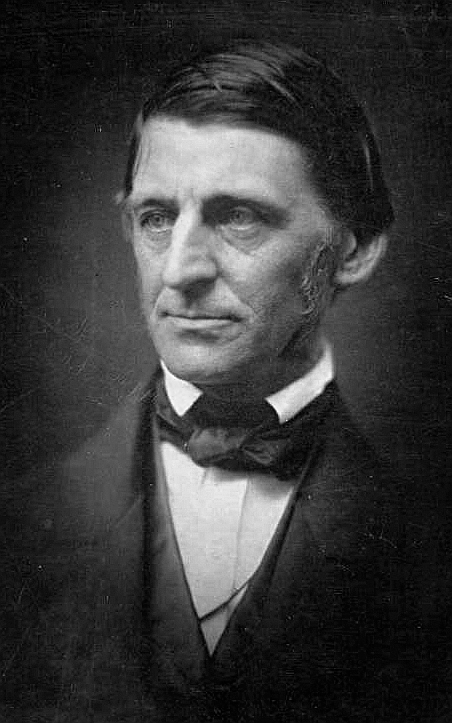
And lift them to the sky. —Ralph Waldo Emerson
►► Would you please prayerfully consider supporting this ministry? ◀︎◀︎
Poetry Saturday—The Nativity
December 26, 2020 — Craig T. Owens Among the oxen (like an ox I’m slow)
I see a glory in the stable grow
Which, with the ox’s dullness might at length
Give me an ox’s strength.
Among the asses (stubborn I as they)
I see my Savior where I looked for hay;
So may my beastlike folly learn at least
The patience of a beast.
Among the sheep (I like a sheep have strayed)
I watch the manger where my Lord is laid;
Oh that my baa-ing nature would win thence
Some wooly innocence! —C.S. Lewis
10 Quotes From “As A Man Thinketh”
November 6, 2019 — Craig T. Owens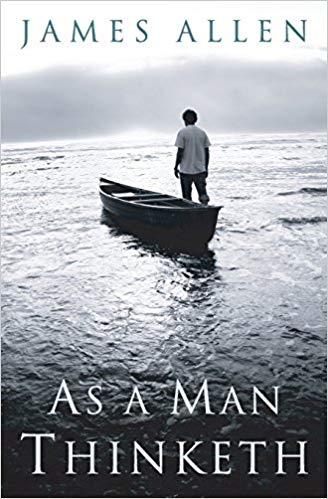 As A Man Thinketh feels a lot like the biblical book of Proverbs, stimulating us to think about our habitual thought patterns. Check out my full book review by clicking here.
“As the plant springs from, and could not be without, the seed, so every act of a man springs from the hidden seeds of thought, and could not have appeared without them.”
“Man is made or unmade by himself; in the armory of thought he forges the weapons by which he destroys himself; he also fashions the tools with which he builds for himself heavenly mansions of joy and strength and peace.”
“The soul attracts that which it secretly harbors; that which it loves, and also that which it fears; it reaches the height of its cherished aspirations; it falls to the level of its unchastened desires.”
“Good thoughts and actions can never produce bad results; bad thoughts and actions can never produce good results. This is but saying that nothing can come from corn but corn, nothing from nettles but nettles. Men understand this law in the natural world, and work with it; but few understand it in the mental and moral world (though its operation there is just as simple and undeviating), and they, therefore, do not co-operate with it.”
“Blessedness, not material possessions, is the measure of right thought; wretchedness, not lack of material possessions, is the measure of wrong thought.”
“A man only begins to be a man when he ceases to whine and revile.”
“Men imagine that thought can be kept secret, but it cannot; it rapidly crystallizes into habit, and habit solidifies into circumstance.”
“They who have no central purpose in their life fall an easy prey to petty worries, fears, troubles, and self-pityings.”
“This is the royal road to self-control and true concentration of thought. Even if he fails again and again to accomplish his purpose (as he necessarily must until weakness is overcome), the strength of character gained will be the measure of his true success, and this will form a new starting-point for future power and triumph.”
“The oak sleeps in the acorn; the bird waits in the egg; and in the highest vision of the soul a waking angel stirs. Dreams are the seedlings of realities. Your circumstances may be uncongenial, but they shall not long remain so if you but perceive an Ideal and strive to reach it. You cannot travel within and stand still without.”
12 Quotes From “The Art Of War”
October 23, 2019 — Craig T. Owens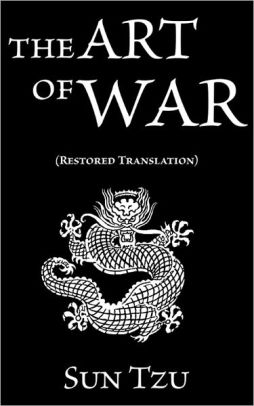 Sun Tzu wrote in China in the fifth century BC to help military leaders hone their warcraft, but you might be surprised at the truths you can apply to your life today. Check out my full book review by clicking here.
“Hence to fight and conquer in all your battles is not supreme excellence; supreme excellence consists in breaking the enemy’s resistance without fighting.”
“Thus we may know that there are five essentials for victory: (1) He will win who knows when to fight and when not to fight. (2) He will win who knows how to handle both superior and inferior forces. (3) He will win whose army is animated by the same spirit throughout all its ranks. (4) He will win who, prepared himself, waits to take the enemy unprepared. (5) He will win who has military capacity and is not interfered with by the sovereign.”
“Hence the saying: If you know the enemy and know yourself, you need not fear the result of a hundred battles. If you know yourself but not the enemy, for every victory gained you will also suffer a defeat. If you know neither the enemy nor yourself, you will succumb in every battle.”
“The good fighters of old first put themselves beyond the possibility of defeat, and then waited for an opportunity of defeating the enemy. To secure ourselves against defeat lies in our own hands, but the opportunity of defeating the enemy is provided by the enemy himself.”
“That general is skillful in attack whose opponent does not know what to defend; and he is skillful in defense whose opponent does not know what to attack.”
“Disciplined and calm, to await the appearance of disorder and hubbub amongst the enemy—this is the art of retaining self-possession. To be near the goal while the enemy is still far from it, to wait at ease while the enemy is toiling and struggling, to be well-fed while the enemy is famished—this is the art of husbanding one’s strength.”
“Do not linger in dangerously isolated positions. … If, on the other hand, in the midst of difficulties we are always ready to seize an advantage, we may extricate ourselves from misfortune.”
“The art of war teaches us to rely not on the likelihood of the enemy’s not coming, but on our own readiness to receive him; not on the chance of his not attacking, but rather on the fact that we have made our position unassailable. There are five dangerous faults which may affect a general: (1) Recklessness, which leads to destruction; (2) cowardice, which leads to capture; (3) a hasty temper, which can be provoked by insults; (4) a delicacy of honor which is sensitive to shame; (5) over-solicitude for his men, which exposes him to worry and trouble.”
“He who exercises no forethought but makes light of his opponents is sure to be captured by them.”
“Regard your soldiers as your children, and they will follow you into the deepest valleys; look upon them as your own beloved sons, and they will stand by you even unto death. … If, however, you are indulgent, but unable to make your authority felt; kind-hearted, but unable to enforce your commands; and incapable, moreover, of quelling disorder: then your soldiers must be likened to spoilt children; they are useless for any practical purpose.”
“Carefully study the well-being of your men, and do not overtax them. Concentrate your energy and hoard your strength.”
“Keep your army continually on the move.”
I Must Protect This House
March 6, 2019 — Craig T. Owens…a house divided against itself will fall (Luke 11:17).
 A divided house is an unstable house. It is a house doomed to fall.
A divided house may occur actively or passively.
Some evil person may actively try to bring the house to division and ruin. The enemy of our souls is like a roaring lion—seeking to devour, steal, kill, destroy. He will use whatever means he can find to bring a Christian house to ruin.
Some really nice people may actually cause or allow division to happen through their passivity. They may be inattentive, unarmed, or apathetic. In this case, the devil’s returned to the house will be more aggressive (see Luke 11:24-26).
Blessed are those who hear the word of God and keep it (v. 28).
Being ready to protect my house requires:
- Actively arming myself with the armor of God
- Daily hearing and practicing the Word of God—this is how the sword of the Spirit is sharpened
- Allowing the Holy Spirit to change me and use me to unify the house
- Being alert to the subtle temptations that would cause disunity in the house
These are the only steps to a strong house that will withstand the onslaught—both boisterous and subtle—of the enemy to divide and conquer my house.
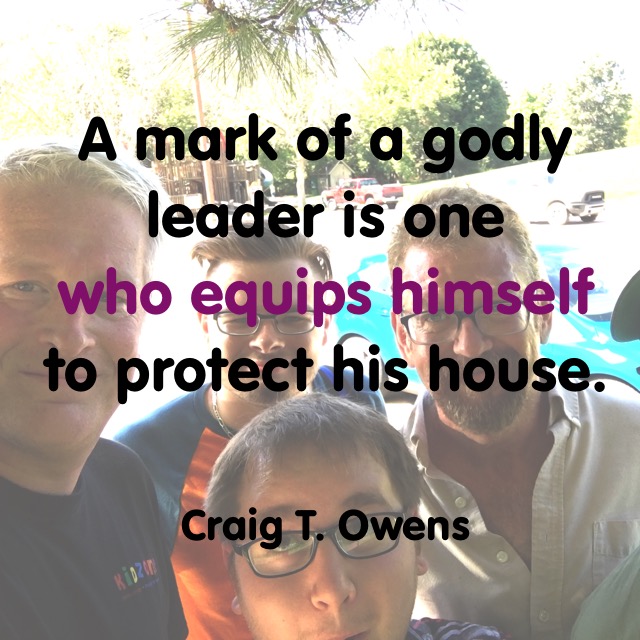
A mark of a godly leader is one who equips himself to protect his house.
This is part 34 in my series on godly leadership. You can check out all of my posts in this series by clicking here.
My most-viewed posts


 Craig T. Owens