Even the well-known hymn The Solid Rock has the line that says, “When all around my soul gives way.”
Isaiah 40:27-30 gives us a helpful example from the eagle of how we can handle life’s storms.
Eagles have huge wingspans and can travel up to 125 miles in a single flight. When they see storms coming, they lock their wings in place and stop flapping on their own. Instead, they sense the warm currents of air and rides those up and over the storm.
So Tom gave us these steps:
Disengage from our own efforts—don’t try to handle the storm on our own.
Perceive the warmth of God’s promises.
Trust the everlasting God (Isaiah 40:28). “Everlasting” means that God is infinite, vigorous, strong, faithful, and capable.
Ride up and over the storm in God. When God says we mount up on wings like eagles (Isaiah 40:31), it means we are braided together with God.
Live in the renewed strength that only God can give us.
Jesus went through the most unimaginable life storm that any human has ever had to endure, and He said, “Father, into Your hands I commit My spirit” (Luke 23:46). We need to trust our Heavenly Father just like Jesus did when we face storms!
Listen to the podcast of this post by clicking on the player below, and you can also subscribe on Apple, Spotify, or Audible.
Previously I shared with you that according to the Anxiety & Depression Association of America, nearly 1-of-5 adults in the United States age 18 and older battle some form of anxiety disorder. That means there’s a good chance that either you or someone close to you will be in this battle sometime during their life.
We also learned from David that being anxious or afraid is not a sin. He said, “When[not ‘if’] I am afraid, I put my trust in You” (Psalm 56:3). But we can grieve God’s heart if we don’t train ourselves to turn to Him as our trustworthy First Source of help.
We also saw in Mark 4:35-39 how the disciples of Jesus were caught in a raging storm, trying everything in their own power to rescue themselves, and yet Jesus was right there with them. He arose and said, “Quiet. Be still,” and “THEN the wind died down and it was completely calm.” From this we learned that only His peace can X-out the noise of the storm and bring us to a place of quiet rest.
We see another aspect of anxiety here: “Anxiety weighs down the heart” (Proverbs 12:25). That word for “anxiety” means carefulness, but not in the idea of being cautious. It literally means someone who is full of cares. This state leads to a heaviness of heart, as the KJV of that same verse says, “Heaviness in the heart of a man maketh it stoop.”
I don’t think anyone wakes up one day and says, “I’m going to take all of the cares of the world on my shoulders today.” Instead, we pick up just one thing. “This is just a small thing,” we tell ourselves. Then we wake up the next morning with just that one little thing, and we pick up one more little thing. And then we do it again the next day, and the next day, and the next day. Until before we know it we are bowed down because we are full of cares. This heaviness makes us stoop, makes us unsteady on our feet, and magnifies even the smallest of concerns into a huge crisis.
We are clinging to our load of cares—our care-fullness—but our loving Heavenly Father desires us to cling to something else. He wants us to cling to Him!
Moses told the Israelites: Serve only the Lord your God and fear Him alone. Obey His commands, listen to His voice, and cling to Him. (Deuteronomy 13:4 NLT)
David declared: I cling to You; Your right hand upholds me. (Psalm 63:8)
We see a beautiful example of Paul clinging to the promises of God during his multiple trials in and around Jerusalem and then during his journey to Rome to stand trial yet again. While he was still in prison in Jerusalem, Jesus appeared to him and said, “Take courage! As you have testified about Me in Jerusalem, so you must also testify in Rome” (Acts 23:11).
Paul knew he was going to arrive in Rome. But during the horrendous storm at sea on his way there, Paul received an added assurance. He told his shipmates—
“But now I urge you to keep up your courage, because not one of you will be lost; only the ship will be destroyed. Last night an angel of the God to whom I belong and whom I serve stood beside me and said, ‘Do not be afraid, Paul. You must stand trial before Caesar; and God has graciously given you the lives of all who sail with you.’ So keep up your courage, men, for I have faith in God that it will happen just as He told me.” (Acts 27:22-25)
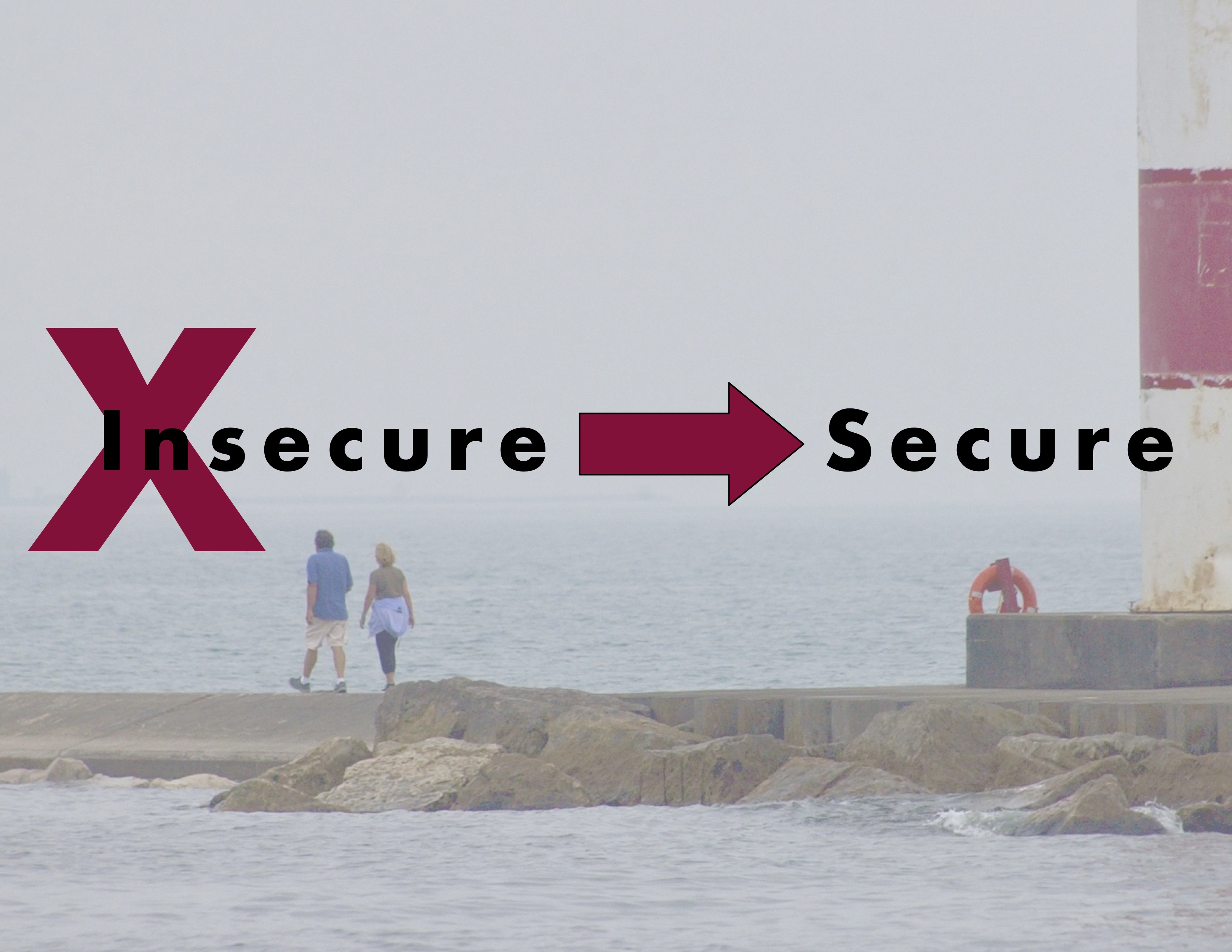
Jesus tells all of us to cling to Him and His secure promises (Matthew 11:28-30). When we cling to Him, we no longer cling to the cares of this world. We move from from full-of-cares to care-less. We go from insecurity over our future to the security that only Jesus can give us!
Paul clung to those promises of Jesus: I will rescue you … You must testify about Me in Rome … I have given you all who sail with you. Likewise, we need to arm ourselves with the promises of God and tenaciously cling to them. I’ve shared just a few promises in the comments below, but feel free to reach out to me if I can help you find a promise in the Bible that you can cling to through your stormy times.
Listen to the podcast of this post by clicking on the player below, and you can also subscribe on Apple or Spotify.
Have you ever read the children’s book Alexander and the Terrible, Horrible, No Good, Very Bad Day? Poor Alexander, his day just seemed to get worse—nothing was going right. He wakes up with gum in his hair, trips on his skateboard, and drops his favorite sweater in the sink filled with water. Breakfast doesn’t get any better, things go sideways at school, his least-favorite food is served for dinner, his nightlight burns out. And if all that’s not bad enough, the cat decides to sleep with his brother instead of with him.
Can you relate to Alexander?
Doesn’t it seem like when one thing goes wrong, everything goes wrong? And if things go wrong for too many days in a row, it seems like the bad times are lasting forever! All of us have a tendency to exaggerate during the dark days.
A psalmist named Asaph seemed to be having a terrible, horrible, no good, very bad day of his own. Listen to some of his words, including the exaggerations of how bad he thought everything was:
Why have You rejected us forever, O God? … Your foes roared in the place where You met us… They said in their hearts, “We will crush them completely!” They burned everyplace where God was worshiped in the land. … How long will the enemy mock you, O God? Will the foe revile Your name forever? Why do You hold back Your hand? (Psalm 74:1, 4, 8, 10, 11)
In the middle of the storm, we tend to not only exaggerate how bad things are but we also seem to lose our bearings and we can even lose sight of God. I think that’s what was happening to Asaph in the first half of his lament. But then we come to the middle verse of this psalm and we notice the beginning of a change in perspective: “But You, O God, are my King from of old; You bring salvation upon the earth” (v. 12).
Aha! In the middle of his terrible, horrible, no good, very bad day, Asaph stopped looking at all the bad things around him and turned his gaze upward. “Look,” he tells himself, “there is God still reigning as the Supreme King!” Asaph begins to recount all that God has done, using the phrase “It was You” who did these miraculous things five times in the next five verses.
In the middle of the storm, Asaph has to remind himself…
God existed before time began
He is still the sovereign ruler in this present moment
He gets the final and decisive word at the end
He never forgets His covenant of love with His people
He defends His cause and His people
His desires can never be thwarted or even delayed a single moment
He is the only One who exists as the Eternal I AM
His love and His power are unmatched and unrivaled anywhere in the universe
He will rise up to save me
My friend, I implore you to remember these words of Asaph. Commit them to your memory now, so that when your terrible, horrible, no good, very bad day happens—when it seems like everything is going to go wrong forever—that you can spot those lying exaggerations, you can turn your gaze upward, and you can find hope in knowing your God not only has all power to save you in the storm, but He has unlimited love that wants to save you through the storm.
Look up, look up, look up and see your God reigning supremely over even the worst terrible, horrible, no good, very bad day.
This is a weekly series with things I’m reading and pondering from Charles Spurgeon. You can read the original seed thought here, or type “Thursdays With Spurgeon” in the search box to read more entries.
God Directs His Wind
At the present moment, I am not able to enter fully into the subject of the new birth. I am very weary, both in body and mind, and cannot attempt that great and mysterious theme. To everything there is a season and a time for every purpose under heaven, and it is not the time to preach upon regeneration when the head is aching, or to discourse upon the new nature when the mind is distracted.
From The Holy Spirit Compared To The Wind
Charles Spurgeon had a sermon in mind, but a headache and a distracted mind caused a course change. Can God use a headache to accomplish what He wants done? Of course He can! God knew exactly what that audience needed to hear that evening, and He arranged for His servant Charles Spurgeon to preach that needed message.
The apostle Paul was on his way to Rome, where God had said that Paul would speak before Caesar. But on their way, such a strong wind came up against their ship that they were blown off course. The wind ultimately caused them to shipwreck on the island of Malta. It was on Malta that Paul was able to show the power of God in a couple of miraculous ways. Can God use a storm at sea to get someone where He needs him? Of course He can!
So too with your life. You may have some plans or desires that a wind is tossing around. Don’t fight the wind and don’t curse the wind. Can God use this adversity to get you exactly where you need to be? Of course He can! He is using this wind to put you exactly where He needs you.
And in all we were two hundred and seventy-six persons on the ship … they all escaped safely to land (Acts 27:37, 44).
Paul knew he would be spared dying at sea because God had already told him that he would testify in Rome (23:11). But no one else on that tempest-tossed ship had that same assurance. Luke (who was on the ship with Paul) even wrote, “All hope that we would be saved was finally given up” (27:20).
Luke wrote those words only three days into the storm. Little did he know that the storm would rage for another 11 days!!
On the storm’s fourteenth day, Paul called everyone together with good news: “An angel from God visited me. He assured me that the ship will be wrecked, but all of you will be saved. The only condition is you must stay on the ship with me. Therefore, take heart, men, for I believe God that it will be just as it was told me” (vv. 22-26).
Just as Paul told them, the ship ran aground and all 276 people on board made it safely to the shores of Malta!
When God gives a promise, hold fast to it. Don’t let the storms—no matter how many days they may rage on—cause you to give up hope.
And when God graciously gives you a word for others, be quick to be the message of encouragement to your storm-tossed, hope-lost companions who so desperately need something to cling to.
God’s word never fails. God’s word is never lost at sea or in any other calamity. Hold on … be encouraged … and give hope and courage to others too.
When winds are raging o’er the upper ocean, And billows wild contend with angry roar, ‘Tis said, far down beneath the wild commotion, That peaceful stillness reigneth evermore.
Far, far beneath, the noise of tempest dieth, And silver waves chime ever peacefully, And no rude storm, how fierce soe’er it flieth, Disturbs the Sabbath of that deeper sea.
So to the heart that knows Thy love, O Purest, There is a temple sacred evermore, And all the babble of life’s angry voices Dies in hushed silence at its peaceful door.
Far, far away, the roar of passion dieth, And loving thoughts rise calm and peacefully, And no rude storm, how fierce soe’er it flieth, Disturbs the soul that dwells, O Lord, in Thee. —Harriet Beecher Stowe
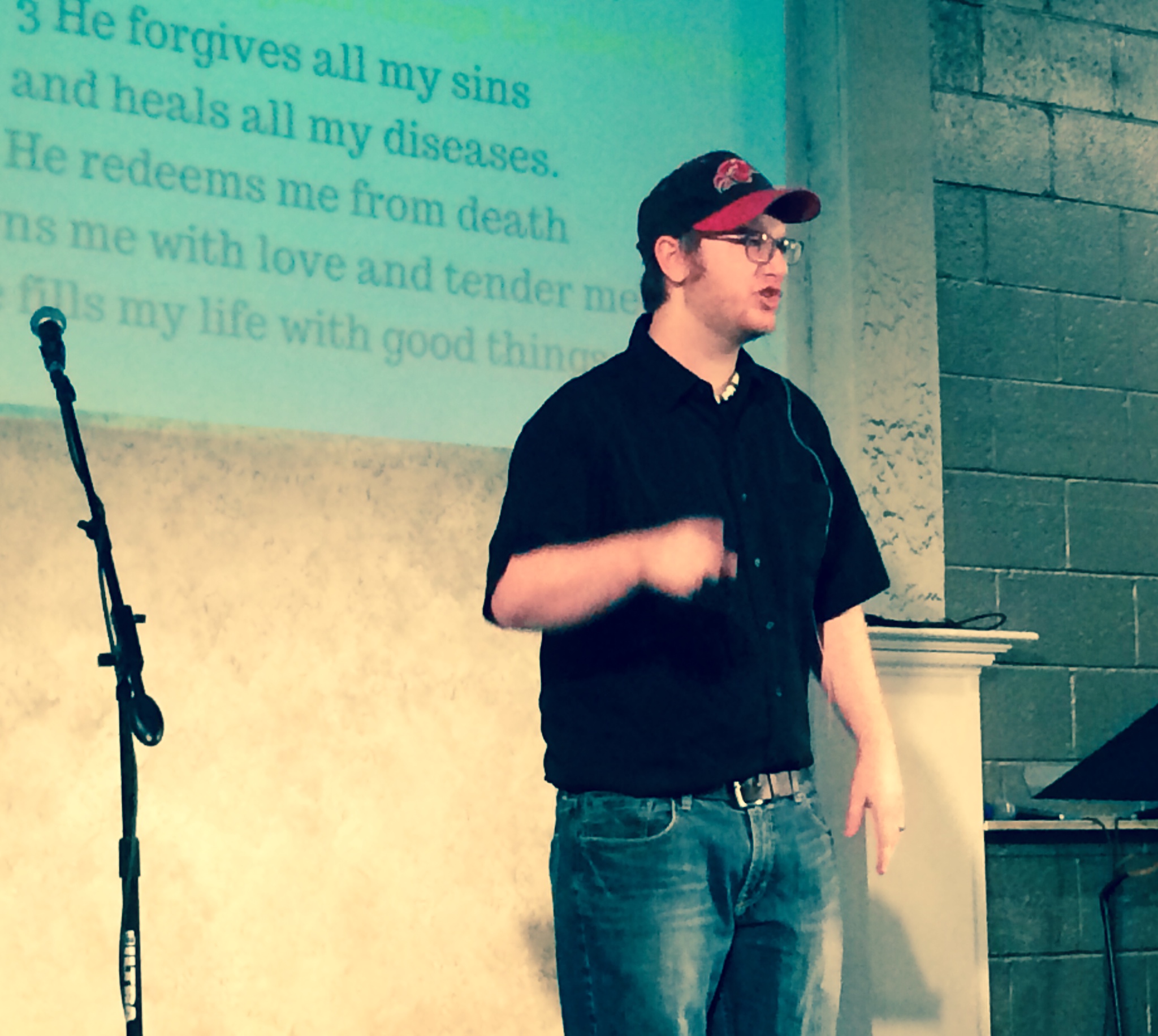
Pastor Josh continued the Boating Lessons series yesterday, which Pastor Tom began last week. What a great word Josh brought us! Here are my “raw notes” just as I took them during his message.
How many of us have been in a storm where we felt out of control or distant from God? When we are in the midst of that storm, we must remember Who’s in the boat with us.
Jesus challenged the disciples, “Have you forgotten Who I am?” They had seen Him heal leprosy (8:1-4), heal paralysis (8:5-13), raise up the sick and set the demon-possessed free (8:14-17). But now they were more focused on the situation than on the Savior.
One symptom of forgetting Who God is: complaining (the disciples asked Jesus, “Don’t You care about us?!” [Mark 4:38]).
The storm is part of God’s process to change us and to bring glory to God—Be strong, courageous, and firm; fear not nor be in terror before them, for it is the Lord your God Who goes with you; He will not fail you or forsake you (Deuteronomy 31:6).
Don’t forget Who’s in the boat … He never leaves us. The most important thing is not the storm rocking the boat but Who is in the boat with me!
I might feel like I have no control, but I must remember that Jesus is in the boat with me and He has all control!
Storms may come “without warning” to me (Matthew 8:24), but remember God Who is in my boat is All-Knowing and He’s never taken by surprise.
Pastor Josh closed his message the same way I’d like to close this post: in prayer. If you are in the midst of a storm—or if you feel like God is distant—this is the best time to cry out to Him in prayer. The Holy Spirit can remind you of Who is in the boat with You. He will never leave you nor forsake you!
Listen to the podcast of this post by clicking on the player below, and you can also subscribe on Apple, Spotify, or Audible.
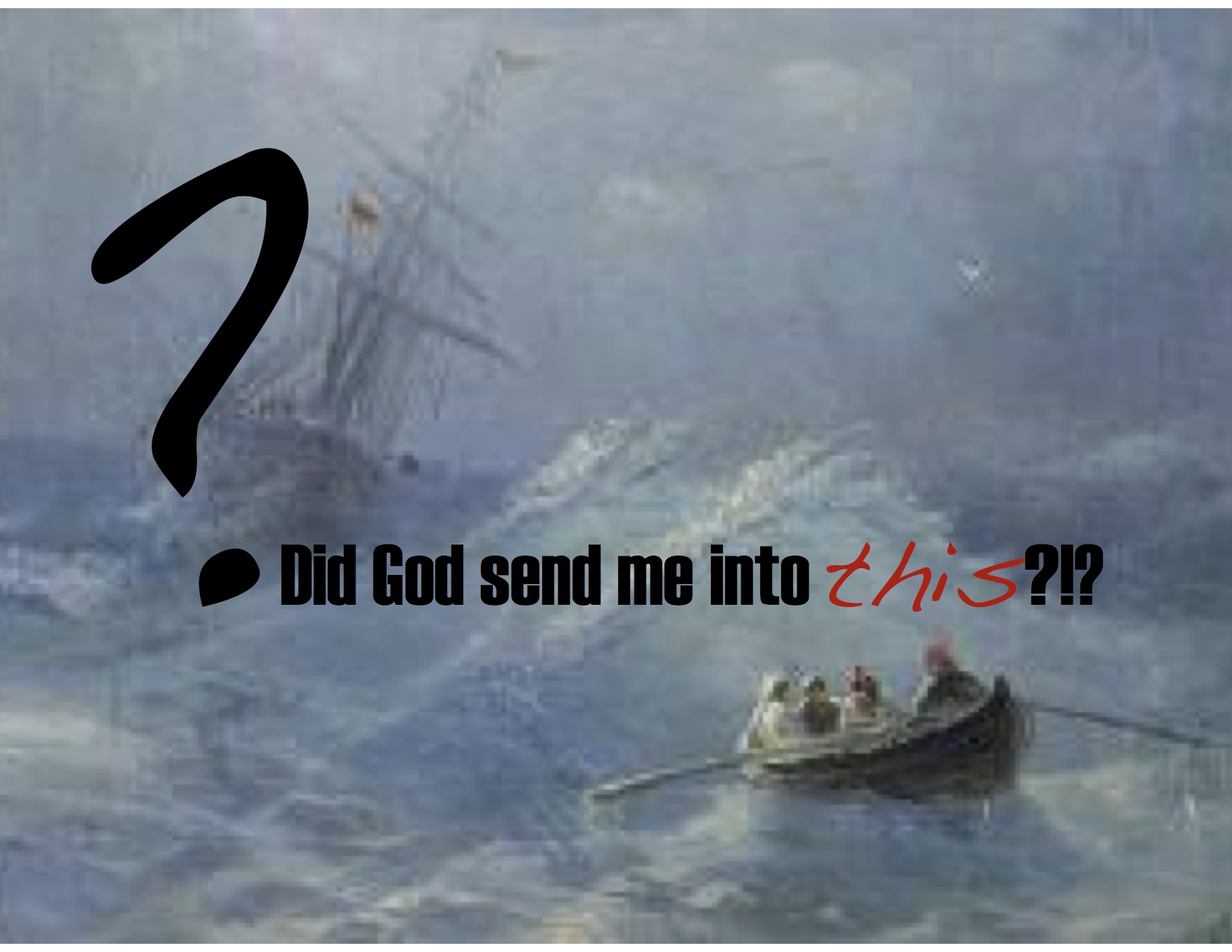
Have you ever experienced this? You are certain that God has spoken to you. You’ve launched out in obedience, things are sailing along smoothly, and then <wham!> a storm threatens to swamp you. And you begin to second-guess what you thought God said to you. You begin to wonder if perhaps you misunderstood the directions God spoke: “Did God send me into this?!”
Ever been there?
The disciples of Jesus must have felt that way. Jesus says, “Let’s get into the boat and head over to the other side of the lake.” The disciples obeyed Jesus only to have a huge storm come crashing down on them, to the point that their boat was about to be swamped (see Luke 8:22-25).
What were they thinking then? What would you have been thinking? Perhaps you might have thought, “Did I miss something God said?”
I love this thought from Oswald Chambers—
You say, “If I had not obeyed Jesus I should not have got into this complication.” Exactly. The problems in our walk with God are to be accounted for along this line, and the temptation is to say, “God could have never told me to go there, if He had done so this would not have happened.” We discover then whether we are going to trust God’s integrity or listen to our own expressed skepticism.
God knows what He’s doing. He knows what He needs to accomplish.
Too many times I get focused on the destination, while God is focusing on the process. I often will learn more about my faith, and about the power and faithfulness and love of my God, during these storms than I will in an incident-free journey.
If you are on a journey on which God sent you and your boat’s rocking, don’t second-guess what God said. Keep your eyes on Jesus, and watch to see what He’s developing in you during your stormy trip.










 Craig T. Owens