Benefit Package

See if you can spot the common theme in Proverbs 10:

The Lord will not let the godly go hungry (v. 3)

The godly are showered with blessings (v. 6)

We have happy memories of the godly (v. 7)

The words of the godly are a life-giving fountain (v. 11)

The earnings of the godly enhance their lives (v. 16)

The words of the godly are like sterling silver (v. 20)

The words of the godly encourage many (v. 21)

The hopes of the godly will be granted (v. 24)

The godly have a lasting foundation (v. 25)

The hopes of the godly result in happiness (v. 28)

The godly will never be disturbed (v. 30)

The mouth of the godly person gives wise advice (v. 31)

The lips of the godly speak helpful words (v. 32)

I may not be a genius, but it seems like living a God-pleasing life has quite a few desirable benefits. What do you say we give it a try?

(For another look at Proverbs 10, check out this post.)

Coasting

When I was in the 6th grade my school was at the end of a dead-end street, which was at the top of a not-too-steep hill. Coming home from school we would try to see how far we could coast on our bikes before we had to start pedaling. We’d pedal really hard across the parking lot, and then start coasting as we hit the top of the hill. I think my record was nearly four blocks!

Coasting is so much fun! It’s easy and exciting, and involves no work at all. Your legs are never tired at the end of a long coasting spree.

But you can only coast downhill. (Well, okay, I guess you might be able to coast for a short distance on level ground, but not nearly as far.)

Downhill might be fun on a bike, but it’s a lousy way to live. Solomon wrote:

The path of life leads upward for the wise to keep him from going down to the grave. (Proverbs 15:24)

Coasting is easy, but it’s taking you in the wrong direction.

Coasting doesn’t cause any muscle pain, but it doesn’t build any muscle strength either.

Coasting is fun for awhile, but the longer you coast, the harder the journey back.

Save coasting for your bike rides, but in your life be very cautious of coasting too long.

Instead…

  • Keep learning new things
  • Keep reading challenging things
  • Keep growing in new areas
  • Keep setting stretching goals
  • Keep forgiving
  • Keep strengthening relationships
  • Keep climbing higher and higher

It may be work to climb to the top, but the view is incredible!

What Are You Whispering?

Wise King Solomon gave us this advice:

Never say anything that isn’t true. Have nothing to do with lies and misleading words. (Proverbs 4:24)

Most decent people don’t have an issue with this one. We would never dream of whispering to someone we care about things like…

  • …you’re a loser.
  • …you can’t seem to do anything right.
  • …hey, stupid, nice job. Not!

But the verse just before says this:

Be careful how you think; your life is shaped by your thoughts. (v. 23)

I wonder how many times we whisper words like loser, failure, or stupid to ourselves. The things we’d never say to someone else, we seem all too ready to say to ourselves!

What are you whispering to yourself? Listen closely. Are you whispering things to yourself that you would never whisper to someone else? Then it’s time to start whispering something new.

Solomon preceded this with these words of affection that seem to come right from our Heavenly Father’s mouth:

My child, pay attention to what I say. Listen to my words. Never let them get away from you. Remember them and keep them in your heart. (vv. 20-21)

God’s Spirit will never, ever, EVER speak cutting, hurtful, unkind, or untrue words to you. God loves you as if you were the only person on earth to love! He loves you so much that He sent His Son to rescue you.

Listen closely because He’s saying it right now, “I love you!

Yeah, whisper that to yourself instead!

Sharp Enough?

Long before Stephen Covey wrote about Habit 7: Sharpening The Saw, Solomon saw the value of taking time to sharpen the saw.

Using a dull ax requires great strength, so sharpen the blade. That’s the value of wisdom; it helps you succeed. (Ecclesiastes 10:10)

What are you doing TODAY to gain wisdom?

J. Wilbur Chapman asked F.B. Meyer, “What is the matter with me? So many times I fail, so many times I am powerless.”

Dr. Meyer responded, “Have you ever tried breathing out three times without breathing in once?”

What are you doing TODAY to breathe in?

Look at the mower in the summer’s day, with so much to cut down ere the sun sets. He pauses in his labor—is he a sluggard? He looks for his stone, and begins to draw it up and down his scythe, with rink-atink, rink-atink, rink-atink. Is that idle music—is he wasting precious moments? How much he might have mowed while he has been ringing out those notes on his scythe! But he is sharpening his tool. And he will do far more when once again he gives his strength to those long sweeps which lay the grass prostrate in rows before him. —Charles Spurgeon

What are you doing TODAY to sharpen yourself?

Seeing Only The Best In Your Spouse

Researchers have found that the biological responses of your body and brain to being “in love” only last two years. So guess when most newlyweds begin experiencing problems in their marriage? Yep, you guessed it: about two years into marriage.

After the in love buzz wears off, what can you do to maintain a happy, fulfilling marriage? Quite simply you have to choose to see only the best in your spouse.

Solomon was so wise to write to us that our spouse should be the only one who captivates us … the only one who satisfies us … the only one who keeps making our hearts go pitter-pat! When we choose to see the best in our mate, we can keep that in love buzz going for the life of the marriage.

Check out this excerpt from a WebMD article (you can read the full article here)—

Most often, self-assessments are grounded in reality, the researchers write. The way we see ourselves is fairly accurate. The way we see others, they continue, is often shaped by hope. With that in mind, they took one partner’s self-assessment at face value and compared it to the other partner’s assessment, as well as that partner’s description of his/her ideal partner.

For example, John’s ideal mate is funny and warm. And that is how he chooses to see Jane, who he has just married, despite the fact that Jane describes herself as moody and distant. Will John change his tune over time and come to regret his marriage to Jane? Or will his positive—if skewed—view of his wife help maintain his happiness?

Fortunately for John, the researchers found the latter to be true. In tallying the data, they discovered that those who did not idealize their partners when they got married tended to be more dissatisfied with their marriage by the end of the study compared to those who had an unrealistically idealistic view of their partner. Those in the “idealistic” group tended to be happier and more satisfied with their marriage.

In other words: you will bring out of your spouse what you see in your spouse.

Do you want a fun-loving wife? See her as your favorite playmate.

Do you want a confident husband? See him as a strong, self-assured provider for your home.

I like how the Apostle Paul states this (especially in the Amplified Bible)—

However, let each man of you without exception love his wife as being in a sense his very own self; and let the wife see that she respects and reverences her husband—that she notices him, regards him, honors him, prefers him, venerates, and esteems him; and that she defers to him, praises him, and loves and admires him exceedingly.

Just as God sees the best in you and loves you for who He sees you becoming, love your spouse and see only the best in him/her.

Stay Farther Away

The little boy was all dressed up in his brand new clothes for Easter Sunday. He was pretty excited to be sporting his new duds on this special day. And what a beautiful day it was! A rain shower the night before had given way to brilliant sunshine on this Resurrection Sunday morning. The birds were singing, the flowers were so fragrant, and the puddles were shimmering like diamonds. A picture-perfect morning!

While waiting for the rest of his family to finish getting dressed for church, the little boy ran outside into the sunshine. He breathed deeply of the fresh spring air, closed his eyes as he turned his face upward to feel the warmth of the sunshine on his freshly-washed face. Ahhh!

He opened his eyes again and saw those shimmering puddles. He just had to get a closer look!

He ran over to the edge of a puddle and poked a stick into the water. Then he spotted some pebbles and picked up a handful to throw in the water and watch the splash. Cool! He looked for something bigger to throw in the water, when he saw a really big rock in the garden. He ran over, grabbed it, sprinted back to the puddle, wound up to make his biggest throw yet, swung his arm forward with the rock, and as his foot slipped on the wet pavement, he and the rock sprawled right in the middle of the puddle. His new Sunday-best clothes were ruined for Easter Sunday!

It doesn’t seem that hard of a concept: To avoid falling into something, stay far away from it.

Parents lecture their kids on this all the time. And our Heavenly Father warns us about this too:

Let your way in life be far from [the seductress], and come not near the door of her house [avoid the very scenes of temptation].

I have people tell me all the time, “I slipped up,” after they have said or done something wrong. Yes, they slipped and sprawled and ruined something beautiful, but if they hadn’t been so close to their puddle in the first place, they probably wouldn’t have slipped.

Solomon wisely said don’t even get close to the danger zone … stay as far away as you can.

That’s the way to live in true freedom!

Baaaa!

Listen to the podcast of this post by clicking on the player below, and you can also subscribe on AppleSpotify, or Audible.

Of all the things God could have used as a picture of our relationship with Him, He used an animal. And, no, it wasn’t an animal that seems particularly powerful or smart or noble.

He picked a sheep.

A fuzzy, sometimes dimwitted, needs-a-lot-of-help animal.

I’m a sheep. Baaaa!

But then I have the great picture of God as my loving Shepherd. How wonderful to know that the Lord is my Shepherd, I shall not be in want!

As a pastor I am called to be the shepherd to God’s flock of sheep under my watchful eye. Jesus set the example for me:

But the one who enters through the gate is the shepherd of the sheep. The gatekeeper opens the gate for him, and the sheep recognize his voice and come to him. He calls his own sheep by name and leads them out. After he has gathered his own flock, he walks ahead of them, and they follow him because they know his voice.

And Solomon said:

Be sure you know the condition of your flocks, give careful attention to your herds.

Pastors, here are the questions I’m asking of myself, and I invite you to ask them of yourself too:

  • Do my sheep recognize my voice? Or am I trying to sound like someone else?
  • Do I know all my sheep by name?
  • Are my sheep following me as I follow Jesus?
  • Am I willing to go first?
  • Do I find fresh pastures and clean water for my sheep? Or is it recycled food I’m serving them?
  • Am I spending enough time with my sheep to know the condition of each one?
  • Do my sheep get my undivided attention?

What a privilege to be a pastor! What a responsibility! What a joy to know my sheep and to be known by them!

Baaaa!

UPDATE: This post was one of the seed thoughts that went into fashioning my book Shepherd Leadership: The Metrics That Really Matter.

►► Would you please prayerfully consider supporting this ministry? ◀︎◀︎

No Ear = No Heart

Israel’s early history goes something like this: King David firmly established Israel’s boundaries, King Solomon built on David’s success, then King Rehoboam split the country in half.

As Rehoboam became king the people asked him to reconsider the working conditions that existed under his father Solomon. Rehoboam consulted with his father’s counselors, who advised him to listen to the people. Then he consulted with his friends, who told him to make the working conditions even harsher. Unfortunately, Rehoboam listened to his friends’ advice.

Here’s what happened:

When all Israel saw that the king refused to listen to them, they answered the king: “What share do we have in David, what part in Jesse’s son? To your tents, Israel! Look after your own house, David!” So all the Israelites went home.

The people didn’t rebel because they didn’t get the answer they wanted; they rebelled because their leader didn’t listen to them. This word for listen means:

  • pay attention
  • carefully consider
  • empathize

The people felt rejected because Rehoboam didn’t listen. In essence, they said,

“We don’t have your ear, so you won’t get our heart!”

A leader doesn’t have to give in, nor does he have to give the people everything they ask for. But he does have to listen—truly listen. He has to put himself in their place and feel what they feel.

People will never give a leader their buy-in or support if they don’t feel they have his ear.

No ear of the leader = No heart of the people

Hey, leaders, are you listening?

Downhill

I was riding my bike back from volunteering at the Red Flannel 5k Race in Cedar Springs on Saturday, and there’s one stretch I really enjoy: it’s a nice downhill run. Downhill is so much fun! I get to zip along with very minimal effort.

King Solomon wrote a letter to another king and talked about his downhill run:

But now the Lord my God has given me rest on every side, and there is no adversary or disaster.

Downhill is a breeze, but there are some problems with it…

  • I build only minimal muscle going downhill
  • My stamina is not stretched at all
  • Aerobic exercise is almost non-existent
  • It’s harder to stop

Downhill is fun, but I need some uphill climbs too:

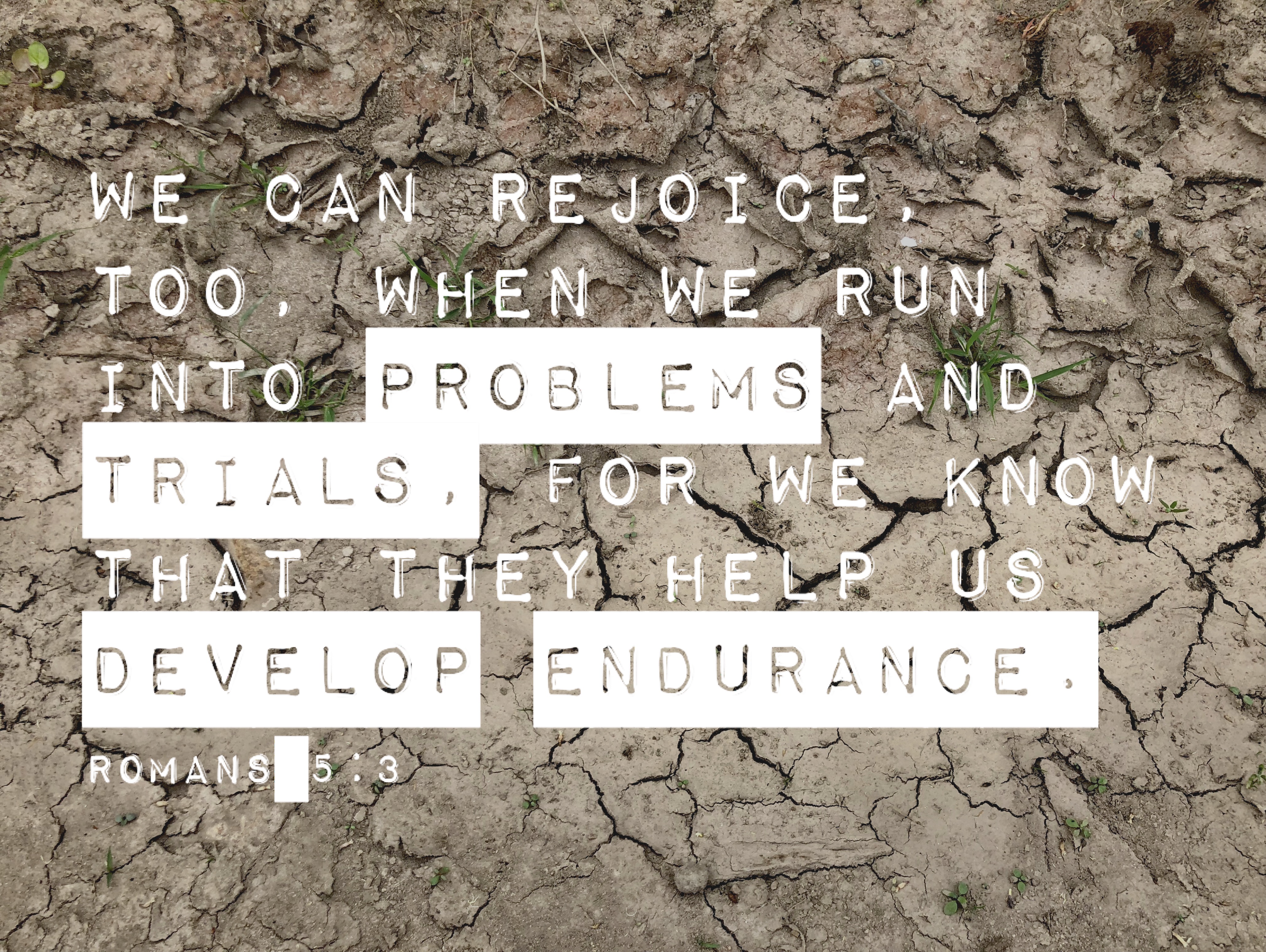
We can rejoice, too, when we run into problems and trials [some uphill climbs], for we know that they help us develop endurance. And endurance develops strength of character, and character strengthens our confident hope of salvation. And this hope will not lead to disappointment.

Manufactured Success

Listen to the podcast of this post by clicking on the player below, and you can also subscribe on AppleSpotify, or Audible.

Does success come from hard work, or does it have another origin? We can certainly manufacture success by doing some public relations, some spin, some creative promotion. And from the outside, it can look very successful. Someone may even do such a good job manufacturing their success that they begin to believe their own press releases.

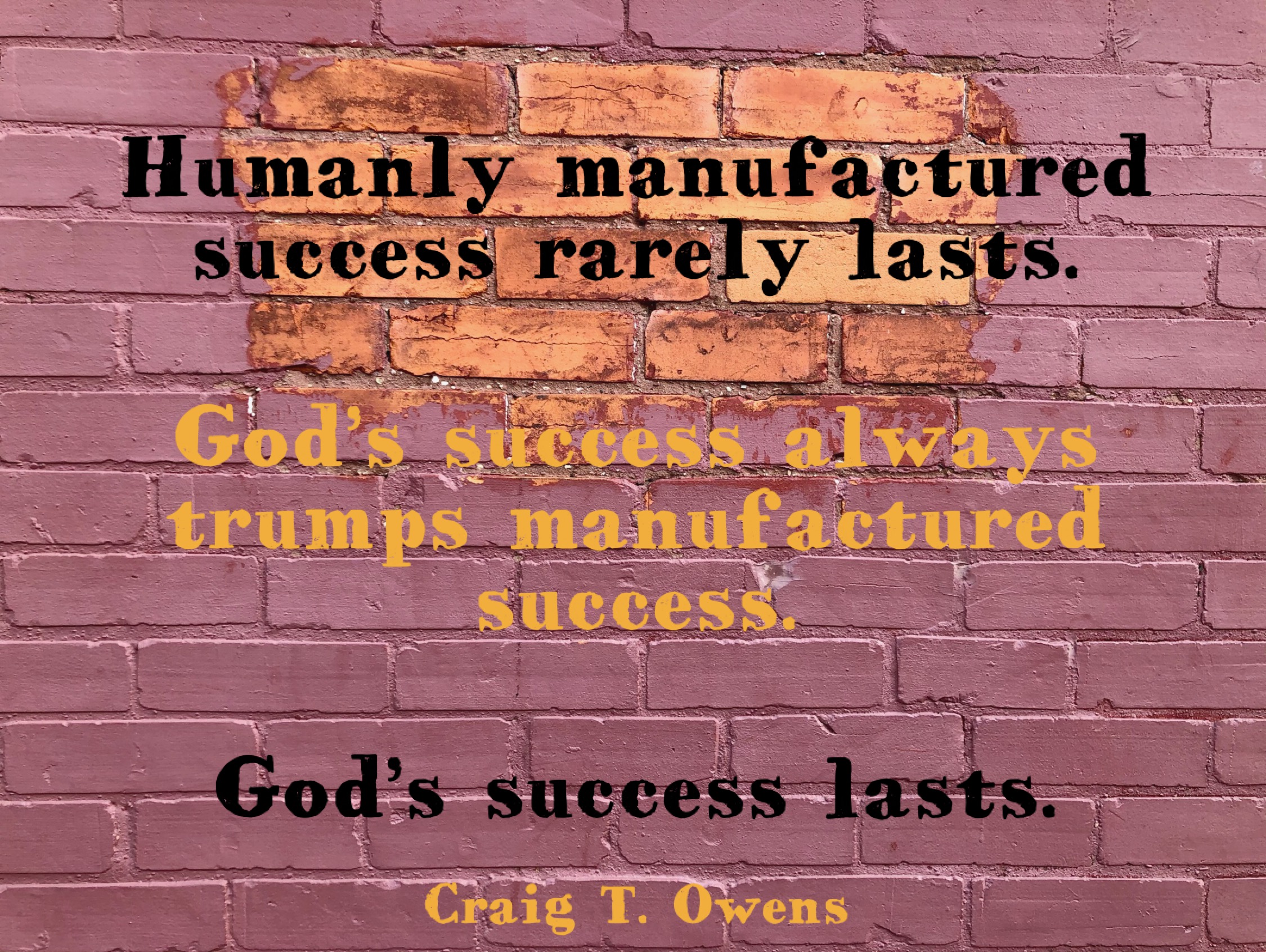
But humanly manufactured success rarely lasts.

Consider the case of a man named Adonijah. He was the heir-apparent in Israel. As the oldest living son of the famed King David, Adonijah was the odds-on favorite to be the next king. And so Adonijah began to manufacture a successful transfer of power for himself. He invited all the right people and ignored those who he knew wouldn’t go along with his plan. He set up everything just the way a prince ascending the throne should have it. His followers joined him for a party and began to raise their glasses in a toast: Long live King Adonijah!

Except God—and King David—had other plans. Just as God directed, David had his son Solomon anointed king. When the few followers that were toasting Adonijah heard this, they all bailed on him and ran away. Even Adonijah recognized that something else can trump manufactured success. Here’s what he said:

“As you know,  the kingdom was mine. All Israel looked to me as their king. But things changed, and the kingdom has gone to my brother; for it has come to him from the LORD.” (1 Kings 2:15)

Success has come to him from the Lord.God’s success always trumps humanly manufactured success.

Manufactured success leads to pride (the kingdom was mine). And pride over-exaggerates our self-worth and obscures reality (all Israel looked to me as their king). God’s success comes to the humble who recognize His lordship and their place in His Kingdom. God’s success lasts.

Although Adonijah eventually recognized this, he didn’t learn from it. In the next scene, he is again trying to manufacture a way to ascend to the throne. And this time he not only loses his position but his life as well.

Here’s what Jesus says: For whoever exalts himself will be humbled [manufactured success], and whoever humbles himself will be exalted [God’s success].

►► Would you please prayerfully consider supporting this ministry? My Patreon supporters get behind-the-scenes access to exclusive materials, like this recent Bible study tip from the Book of Ecclesiastes. ◀︎◀︎