Make A Holy Rest

Sabbath = do somethingWe are an on-the-go-all-the-time society. It seems to be a status symbol to be always “on.” If not a status symbol, maybe there’s a fear of what we might miss, “If I don’t keep up on the latest TV shows [sports team, books, music, Dancing With The Stars], I’ll feel out of place when my friends are talking about it.”

Even when we do slow down, often what we call a “rest” really isn’t. (Have you ever needed a vacation to recover from your vacation?)

This all-go, never-stop lifestyle is not only unsustainable and unhealthy, it’s also displeasing to God. In His love for us, God says we need to take a Sabbath rest (see Exodus 20:8 and Deuteronomy 5:12). The problem is: we think “Sabbath” means doing nothing, and we feel guilty for doing nothing when there is still so much to do.

Here’s the good news: Sabbath ≠ doing nothing.

Take a look at the origin of the Sabbath—And on the seventh day God ended His work which He had made; and He rested on the seventh day from all His work which He had made. (Genesis 2:2 KJV)

That’s an unusual phrase—His work which He had made—which is repeated twice, so let’s dig into two specific words: work and made.

The verb tense for work is imperfect, which means God still had work to do. But the verb tense for made is perfect. So instead of trying to find more time in His week, God made His “To Do” list fit the timeframe. Then far from doing nothing on the Sabbath day, God reviewed His work, appreciated the beauty of Creation, and celebrated all that had been made.

This is what He calls us to do as well. Genesis 2:3, Exodus 20:8 and Deuteronomy 5:12 all tell us the Sabbath is to be holy = special, withdrawn from the usual … unique. God doesn’t want us to do nothing on the Sabbath, but to do what we don’t normally have the time to do the rest of the week.

Our modern cliché says, “You never appreciate what you have until it’s gone.” But the Sabbath says, “Stop, appreciate God’s blessings, and celebrate them while you can still enjoy them.”

God doesn’t ask you to take a rest. Instead He asks you to make your “To Do” list fit into six days, so that there can be a unique day of appreciation and celebration.

So … how are you doing on making a Sabbath?

If you have missed any of the messages in our series The Love In The Law, you can find them all by clicking here.
Smashing Idols

Puny idolsWhen looking at God’s commandments, we must look at them through a lens of love. If God—the Lawgiver—is love, then all of His laws must be saturated in His love.

So what happens when we look at the Second Commandment through this lens? The wording is simple: “You shall not make for yourself an idol…” (Exodus 20:4-6). If the First Commandment says, “I love you so much that I want to be the One and Only God you have a relationship with” then the Second Commandment says, “Because of this loving relationship, don’t try to make Me smaller to fit your worldview, but let Me by fully Me!”

This idolatry starts in our minds, long before we ever create anything with our hands. Idolatry is a mental state that says, “I can define the Creator. I can figure out all of His dimensions. I can predict what He’s going to do. God operates just as I expect Him to.”

But God says, “My thoughts are nothing like your thoughts. And My ways are far beyond anything you could imagine” (Isaiah 55:8).

The Apostle Paul warned us of exchanging God’s uncontainable glory and majesty for something that we can neatly contain in our box: …they exchanged the glory of the immortal God for images … they exchanged the truth of God for a lie, and worshiped and served created things rather than the Creator… (Romans 1:21-25).

William Barclay offers this commentary about the flimsiness of idols: “In Greek the word idol has in it the sense of unreality. Plato used it for the illusions of this world as opposed to the unchangeable realities of eternity.” Our puny thoughts about God can create the idols that keep us from the reality of God. 

So how do we avoid this idolatry? Quite simply: we smash every mental idol!

…We refute arguments and theories and reasonings and every proud and lofty thing that sets itself up against the true knowledge of God; and we lead every thought and purpose away captive into the obedience of Christ… (2 Corinthians 10:5).

So… what idols do you need to smash?

If you have missed any of the messages in our series The Love In The Law, you can find them all by clicking here.
Loving Obedience

Love and obeySuppose you had to do a secret project on a remote island. In fact, the island is so remote that it doesn’t even have a name or show up on a map. I am your only point of contact, and the only one with the latitude and longitude coordinates to come get you. You have a satellite phone to use. If I truly cared about you, I would give you the precise sequence of digits to reach me. If I didn’t care about you, I’d let you call any number you wanted to call: perhaps you would eventually reach someone who could help you.

The most loving thing I could do for you is to make sure you knew the one number to call in order to get the help you needed. 

This is exactly how God starts the Ten Commandments—And God spoke all these words: “I am the LORD your God, who brought you out of Egypt, out of the land of slavery. You shall have no other gods before Me.”

How confusing and utterly unloving it would be if God said, “Call any number you want to see if you can find the help you need.” Instead, in His great love for us God says, “I am the only One you will ever need!”

Notice the wording here: “…I am the LORD your God…”

  • I AM—all that you need.
  • the—not one among many, but the One and Only.
  • LORD—God’s covenant name: Jehovah, His name of personal relationship.
  • your—this is a you-Me relationship, not a you-it relationship.
  • God—the All-Powerful, All-Loving One.

This First Commandment is the orientating commandment. When we see all of God’s commandments are rooted in His love (by the way, God uses the phrase the LORD your God five times in the Ten Commandments), everything else in our lives and attitudes is properly aligned.

Jesus demonstrated this for us. He said He loved His Father and therefore obeyed all of His commands (John 14:31). Christ’s obedience was motivated and aligned by love. The Apostle John said this loving obedience is to be the distinguishing characteristic for us too:

This is love for God: to keep His commands. And His commands are not burdensome. (1 John 5:3)

We honor God and obey the First Commandment best when we know He is the One Who loves us enough to say, “I am the only One you need. Don’t look to anyone or anything else, but just come to Me!”

If you have missed any of the messages in our series The Love In The Law, you can find them all by clicking here.

Guardrails

GuardrailWe need a different way of thinking about God’s laws. We can’t think of them as a bunch of Thou-shalt-nots, because—as I blogged last week—that would mean we would have to look at The Lawgiver in an unbiblical way.

So let’s try this…

Suppose you are out for a drive on a crisp fall afternoon in a brand new sports car. You are really excited to see what this car can do! I’ll bet as you drive along the straight stretches of road, you will see very few guardrails along the sides. The guardrails you do see on the straight stretches usually protect us from things like rivers, roads passing underneath us, or perhaps a steep drop-off.

When you come into a tight turn, in addition to seeing a curved-arrow sign and perhaps a sign cautioning you to reduce speed, you are very likely to see guardrails along the turns.

Do those guardrails make you feel ripped off? Do they rob you of driving enjoyment? Have you ever felt like, “I really wish those guardrails were gone, because I’d love to get a couple of my tires off the side of the road”? Of course not!

We all know that those guardrails are there to protect us. In fact, the guardrails actually increase our driving enjoyment, because the dangerous places have been identified, and the metal guardrails will keep us from going somewhere that could be fatal.

This is a good way to think of God’s laws.

Abundant lifeJesus told us that He had come not to remove the guardrails, but to fulfill them through His life, death and resurrection (see Matthew 5:17-20 and Luke 22:20). Jesus didn’t come to rob us of life!

So if the Son sets you free, you will be free indeed. (John 8:36)

I am come that they might have life, and that they might have it more abundantly. (John 10:10).

Far from ripping us off and saying “No!” to us, Jesus came to show us that God’s laws were rooted in God’s love. He came for us to see that God’s laws are His guardrails to keep us away from the places that are dangerous, and perhaps even fatal.

If God didn’t love us, He would let us do whatever we wanted to do. But He does love us, and so He gives us His guardrails to keep us safe. Instead of looking at His laws as something which is robbing you of life, see them as protections that are giving you more abundant life!

If you have missed any of the messages in our series The Love In The Law, you can find them all by clicking here.
The Love In The Law

Love In The LawWhen I say “Law” what sort of words come to your mind. Do you think of words like: restrictive? killjoy? barriers? hindrances? no fun?

If you’re a Christian, perhaps the same descriptive words come to mind when you think of biblical commandments. Maybe you think, “Don’t do that” (or for those of you who think in King James English: Thou shalt not).

But if we think of the law/commandments that way, that also means we have to think of the Lawgiver that way. In other words, God becomes a Policeman. He is closely watching to see who will break His laws so that He can dispense the appropriate punishment. After all, if the laws are a bunch of no-nos, then Someone has to be watching for law-breakers and handing out the penalties.

If that’s the case, what do we do with the Bible’s description of God that says “God is love”? If the Lawgiver is Love, how does that change our view of the laws themselves?

It must mean that God’s laws are an expression of His love. It must mean that His love is in the laws He has given us.

It must mean that God’s laws are NOT no-nos, BUT yes-yeses. 

Join us this Sunday at Calvary Assembly of God as we talk about The Love In The Law. We’ll be working our way through the Ten Commandments, especially looking at God’s love that make each commandment a giant YES for our lives. Prayerfully, this series will completely change how we view God’s laws and commands.

If you have missed any of the messages in this series, check them out here:

Spirit-led

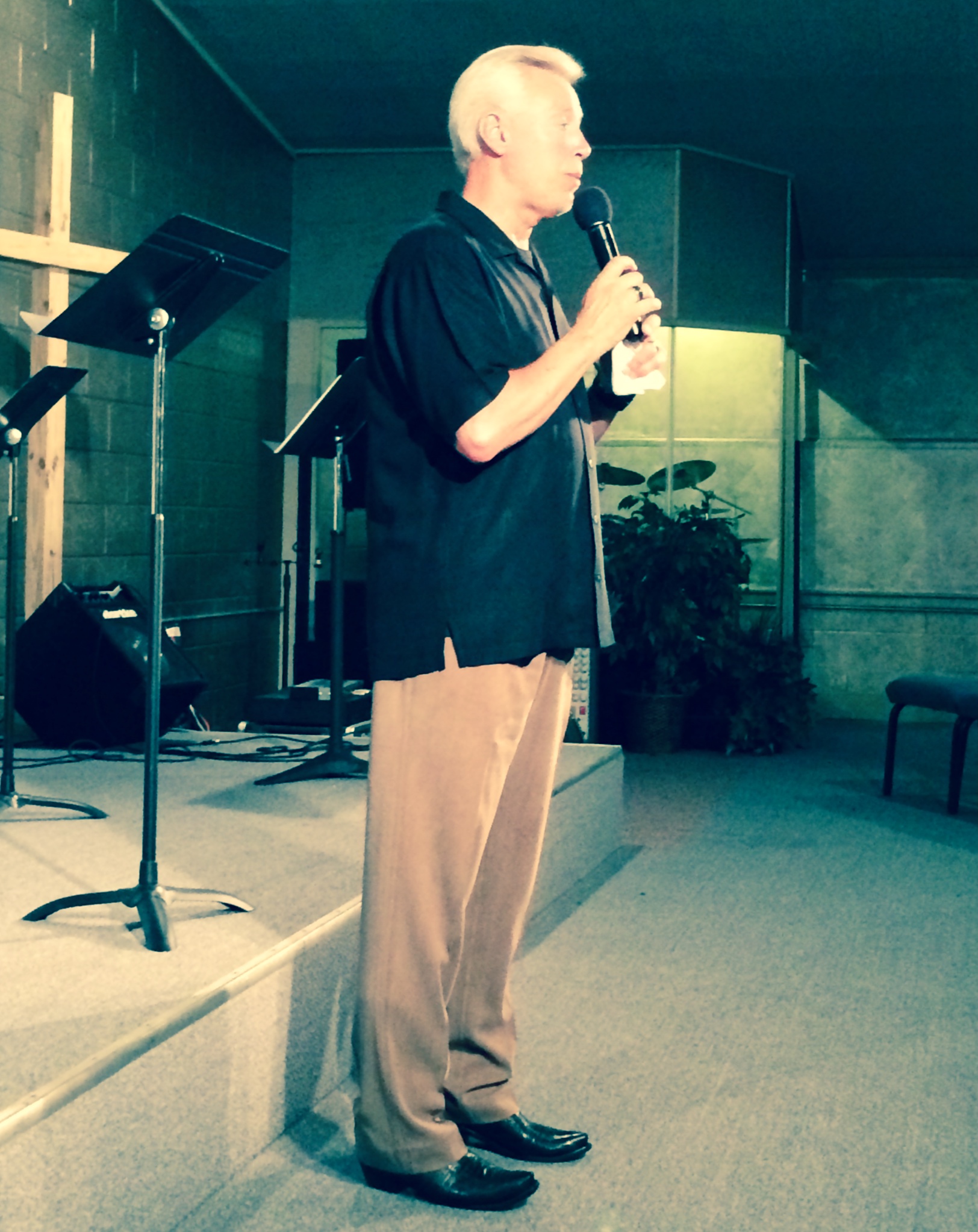
John GunnI love when this happens.

I love when the Holy Spirit takes over, and throws our agenda out the window.

I love when we let the Holy Spirit have His way.

Our special guest, John Gunn, came to Calvary A/G today with a word to share with us. But as the service progressed, and as our missionary guest shared some words she felt were specific to us, Pastor Gunn yielded to the Spirit’s prompting.

I love when a man of God says, “I had a message prepared for today, but I’m not going to share it. God has given me something else to share.”

It was a timely, anointed, powerful word. It was exactly what I needed to hear.

Thank you, John, for being sensitive to the Holy Spirit.

Thank You, Holy Spirit, for speaking to us through Your servants.

The Strength & The Story In Unity

© Lori Oxford Photography

© Lori Oxford Photography

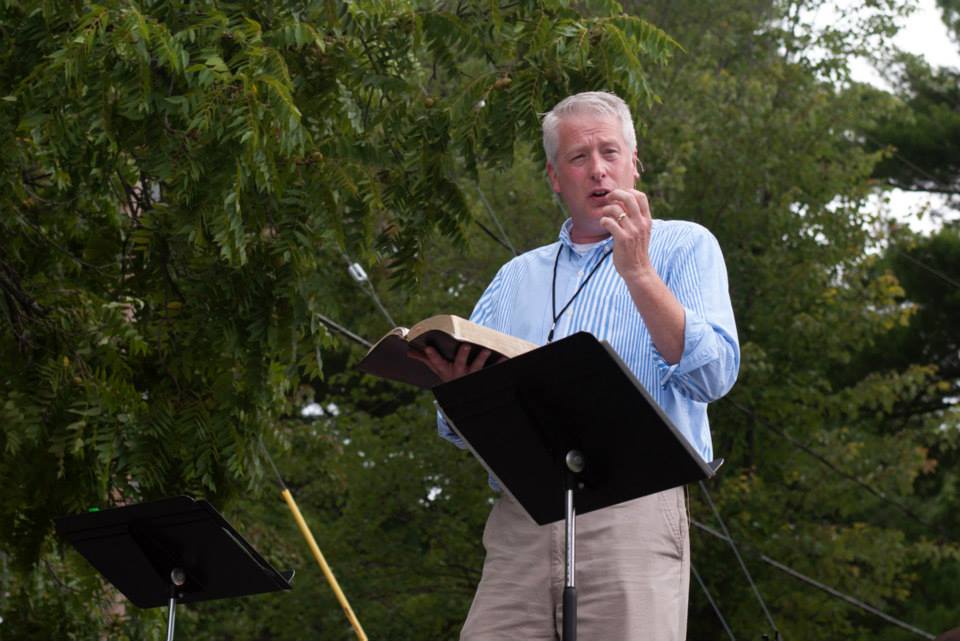
Yesterday I had the honor of speaking at our annual United service in Cedar Springs. I shared something I noticed about the New Testament church: These Christians spent a lot of time together, and that togetherness became a source of strength and told a story to the those watching the Christians.

In passages like Acts 2:42-47 and Acts 4:32-35, we see Christians not only worshiping together, but actively involved in living out their faith. Luke, the writer of the Book of Acts, captures something that Eugene Peterson would summarize this way—

“Christians are a community of people who are visible together at worship but who remain in relationship through the week in witness and service.” 

This was not just Christians helping Christians, but Christians helping all the people in their communities. It was Christians who formed the first:

  • Blind asylums
  • Medical dispensaries
  • Hospitals
  • Orphanages
  • Elderly care home
  • Feeding programs for the poor

And this caught the notice of everyone. Aristides wrote to Emperor Hadrian about the Christians—

“They help those who offend them, making friends of them; do good to their enemies. They don’t adore idols; they are kind, good, modest, sincere, they love one another; don’t despise widows; protect the orphans; those who have much give without grumbling to those in need. When they meet strangers, they invite them to their homes with joy, for they recognize them as true brothers…. When a poor man dies, if they become aware, they contribute according to their means for his funeral; if they come to know that some people are persecuted or sent to prison or condemned for the sake of Christ’s name, they put their alms together and send them to those in need. If they can do it, they try to obtain their release. When a slave or a beggar is in need of help, they fast two or three days, and give him the food they had prepared for themselves, because they think that he too should be joyful….”

The Apostle Paul challenges followers of Jesus to constantly be growing in the outward demonstrations of our faith: to live our lives worthy of God’s calling, to get along with others, and to be making every effort to keep the bond on unity (see Ephesians 4:1-3).

With this in mind I have to ask myself: Am I doing this in my home town? Is there a strength and a story of Christ’s love that is told in my unity with other Christians? Am I helping to address the needs in Cedar Springs? What are people saying about Jesus because of my unity and service with other Christians?

Links & Quotes

link quote

Some good reading from today…

“Nothing stirs God’s heart more than a humble heart and a merciful spirit. God responds to mercy, because it is through compassion that we fully come to know Him. This is the defining quality of a true follower of Christ. We are never closer to the heart of God than when we are forgiving someone. And we are never farther from it than when we are holding a grudge.” —Nicky Cruz

“God’s Majesty can never delight in that which polluteth man’s dignity.” —Augustine

“If God takes away from us the old, wrinkled, beat-up dollar bill we have clutched so desperately, it is only because He wants to exchange it for the whole Federal mint, the entire treasury! He is saying to us, ‘I have in store for you all the resources of heaven. Help yourself.’” —A.W. Tozer

“From many modern sermons would you know that there was a Holy Spirit? If it were not for the benediction or the doxology you might go in and out of many churches and meeting-houses by the year together, and scarcely know that there was such a Person as that blessed, blessed giver of all good, the Holy Spirit. Sometimes we hear a little about His influences, as if the Holy Spirit were not as truly a Person as even Jesus Christ Himself, Who in flesh and blood trod this earth. Oh, dear friends, I fear the first danger, that of running wild with whimsies and fancies about inner lights and new revelations; but I equally dread this last, this going forth to work with the sword, forgetting that it is the sword of the Spirit, and only mighty as the Holy Spirit makes it mighty ‘to the pulling down of strongholds.’” —Charles Spurgeon

5 Things Christians Should Know About Depression & Anxiety

“I reject a heaven that I must enter by shutting my eyes to the sufferings of my fellow men. I choose a broken heart rather than any happiness that ignores the tragedy of human life and human death. Though I, through the grace of God in Christ, no longer lie under Adam’s sin, I would still feel a bond of compassion for all of Adam’s tragic race, and I am determined that I shall go down to the grave or up into God’s heaven mourning for the lost and the perishing.” —A.W. Tozer

Ask & Act

Pastor Josh and Pastor Tom kicked off a 3-week series yesterday with Pastor Tom sharing part one in Boating Lessons. I loved his message! Here are my “raw notes” just as I took them during Pastor Tom’s message.

Boating Lessons—part 1 (Matthew 14:22-33)

When Jesus spoke to the disciples in the boat He literally said, “Don’t be afraid. I AM” (Matthew 14:27; also see Exodus 3:14, 6:12).

Peter replies, “If You are the I AM, command me to come out on the water to You” (v. 28). Peter counts on the Word of God and experiences the supernatural.

The 11 other disciples in the boat didn’t have Jesus speak directly to them at all. They were content with their boat, so He let them have their boat.

Ask & ActAll 12 could have walked on water. The two differences:

(1) ASK—Peter asked for it.

(2) ACT—Peter obeyed when Jesus said, “Come.” [The word ‘come’ used here only occurs in the Greek in the present imperfect tense … Peter has to complete the action now.]

The supernatural with Jesus wasn’t just for Peter; it can be for me as well…

Very truly I tell you, WHOEVER believes in Me will do the works I have been doing, and they will do even greater things than these, because I am going to the Father. And I will do WHATEVER you ask in My name, so that the Father may be glorified in the Son. You may ask Me for ANYTHING in My name, and I will do it. (John 14:12-14)

“Christians are more afraid of messing up than they are of missing out.” —Mark Batterson

I don’t want to miss out on what God has for me! So I am going to ask Jesus to let me be used for Him, and I am going to be quickly obedient when He says, “Come.”

Join us next Sunday as Pastor Josh continues this series.

D.L. Moody’s Word To Pastors About The Word

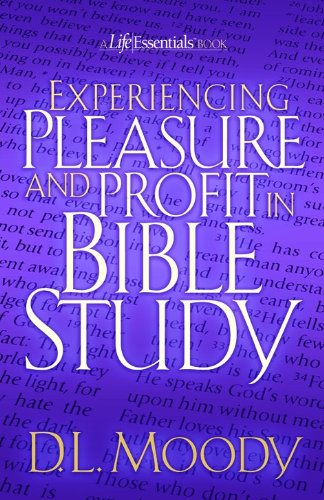
Pleasure & ProfitAs I read D.L. Moody’s book Pleasure & Profit In Bible Study, I noticed several of his comments were directed to pastors.

In my humble opinion, the pastor needs to be the “Bible Student In Chief” of his or her congregation. The pastor’s love for God’s Word will create a hunger in the congregation to study this amazing Book!

You can read my full book review of Pleasure & Profit by clicking here. Below are some of the words to us pastors from this book.

“Oh! let every minister tell the truth, though he preach himself out of his pulpit. … If the Bible only has a chance to speak for itself, it will interest the people.” 

“Give the people the Word of God. Some men only use the Bible as a text book. They get a text and away they go. They go up in a balloon and talk about astronomy, and then go down and give you a little geology, and next Sunday they go on in the same way, and then they wonder why it is people do not read their Bibles.”

“It a good thing for a minister to have the reputation of feeding his people. … People can get along without your theories and opinions, ‘Thus saith the Lord’—that is what we want.”

“Christ did not have a short-hand reporter to go around with Him to write out and print His sermons, and yet the people remembered them. Never mind about finished sentences and rounded periods, but give your attention to making your sermons clear so that they stick. Use bait that your hearers will like.”

“It is a thing to weep over that we have got thousands and thousands of church members who are good for nothing towards extending the Kingdom of God. They understand bazaars, and fairs, and sewing-circles; but when you ask them to sit down and show a man or woman the way into God’s kingdom, they say: ‘Oh, I am not able to do that. Let the deacons do it, or some one else.’ It is all wrong.” 

Pastor, how is your personal Bible study time? Is it invigorating, or humdrum? We’ve got to get immersed in the Word so that we can encourage our congregations to do likewise.