Thursdays With Oswald—Revised Views Of God

This is a weekly series with things I’m reading and pondering from Oswald Chambers. You can read the original seed thought here, or type “Thursdays With Oswald” in the search box to read more entries.

Revised Views Of God

     The sign of dishonesty in a man’s creed is that he finds out defects in everyone save himself. … Trouble always arises when men will not revise their views of God. … It is a most painful thing for a man to find that his stated views of God are not adequate….

     The man who rests in a creed is apt to be a coward and refuse to come into a personal relationship with God. The whole point of vital Christianity is not the refusal to face things, but a matter of personal relationship.

From Baffled To Fight Better

Every time I read God’s Word I should be confronted with the reality that I don’t know it all. I don’t have it figured out. That’s because the Word is perfect, and I’m not. So the Holy Spirit uses the Word of God to point out flaws in my creeds and theology that need to change.

For the word of God is living and active. Sharper than any double-edged sword, it penetrates even to dividing soul and spirit, joints and marrow; it judges the thoughts and attitudes of the heart. (Hebrews 4:12)

I also need to remember that a creed is a cold, impersonal thing. But my relationship with Jesus Christ is vibrant and personal. Just as I continue to learn new things about my wife (even after 21 years of marriage), I continue to learn new things about my Savior (even after 40+ years of walking with Him).

Changing and revising my creeds is a sign of a mature, healthy relationship.

Land Of Smoke

Guest Blogger: Dick Brogden

Greetings From the Land of Smoke,

A Christian handed a Bible to a Northern Sudanese Muslim Arab who declined to receive it saying, “I have a smoking problem. If I take the Bible, I will just rip out the pages, make cigarettes, and smoke them.”

Thanks be to God, the distributor did not stand on niceties and responded, “No problem, go ahead and rip the pages out to make your cigarettes. But before you roll them, make sure to read the page you ripped out.”

The Muslim man agreed, took the Bible and began to contemplatively smoke his way through the Gospels. Daily he would rip out a page, peruse it, then roll it into a cigarette and puff away. Matthew, Mark, and Luke all were read and then immolated. By the time the smoker had inhaled his way into John, the Holy Spirit had begun to draw as well. John 3:16 was the clincher—it was after smoking that chapter and verse that this Muslim man gave his heart to Jesus.

I guess it goes to prove that where there’s smoke, there is fire!

Dick Brogden and his family have served as missionaries in Sudan for 15 years.

Thursdays With Oswald—The Word Of God

This is a weekly series with things I’m reading and pondering from Oswald Chambers. You can read the original seed thought here, or type “Thursdays With Oswald” in the search box to read more entries.

The Word Of God

       The Bible nowhere says we have to believe it is the Word of God before we can be Christians. The Bible is not the Word of God to me unless I come at it through what Jesus Christ says, it is of no use to me unless I know Him. The key to my understanding of the Bible is not my intelligence, but my personal relationship to Jesus Christ. … You may believe the Bible is the Word of God from Genesis to Revelation and not be a Christian at all.

From Facing Reality

Do I just know the Word of God, or do I know the God of the Word? If I read and study the Bible just to gain knowledge, I will become a very religious person. But if I read the Bible to know Christ more, I will enter into a deeper relationship with Him.

…knowledge puffs up while love builds up… (1 Corinthians 8:1)

I want to read my Bible as a love letter, and fall more and more in love with the God who wrote it to me.

Do You Read The Bible Or Does The Bible Read You?

I’ve been studying the lives of the kings of Judah. The last God-fearing king before the fall of Jerusalem was a man named Josiah. He became king as an 8-year-old and really began looking for God as a teenager. Apparently, during all of this time, the book of the Law (the first five books of our current Bible) was hidden away and forgotten. As Josiah started seeking God, he gave orders that the temple in Jerusalem be repaired. During the clean-up work, the workers rediscovered the book of the Law and brought it to the palace. They began to read the Law to Josiah

When the king heard the words of the Law, he tore his robes.

Tearing of the robes is a sign of deep mourning. The words of Scripture cut Josiah like a dagger to the heart because he knew he and his people weren’t living according to God’s standards. He started telling everyone the Scriptural standards that they needed to honor, and had the words of the Law read aloud for everyone to hear. Then in the presence of everyone, Josiah reaffirmed his commitment to be a man who lived by the words of God’s Word.

This got me thinking:

  • Do I have an emotional response when I read the Bible? Or is it just a mental exercise? Or worse yet, just a meaningless daily habit?
  • Am I truly sorry when I read in the Bible where I’ve fallen short of what God desires? Or do I make excuses?
  • Do I ask the Holy Spirit to help me live out what I’ve read in the Word? Or do I convince myself that those parts don’t pertain to me?
  • Do I share with others what’s been revealed to me? Or do I keep it to myself?
  • Am I willing to be accountable to others about the changes I need to make? Or am I trying to be a lone ranger saint?

Do I just read the Bible? Or do I allow the Bible to read me?

Creativity

Even being “Boring” can make the message memorable!

God is Creator, which means His creativity knows no limits. One of the ways I love seeing His creativity on display is in the ways His love story is communicated to humanity. The prophets used some highly creative and sometimes startling ways to get God’s message across. But I especially like how Jesus communicated the message of the Kingdom of God to His audience.

He used…

  • Seeds and sheep
  • Farmers and friends who needed a late-night snack
  • Lost coins and lost sons
  • Grapes and goats
  • Pearls and prodigals
  • Stuffy judges and smart bride’s maids
  • Bridegrooms and buildings
  • Banquets and bread
  • Servants and silver coins

He told people who had gotten locked into an inaccurate interpretation of Scripture, “You have heard it said…but I tell you” just to get their attention.

These simple, everyday, common items reminded people of the eternal message. The objects didn’t become the message, but just a way to remind and reinforce the biblical truth Jesus was sharing.

That’s why I use poker chips … Lego pieces … plastic eggs … bookmarkers … flip-flop key chains … aluminum tabs from pop cans … glow sticks … and even name tags to creatively tell the Creator’s love story in a memorable way.

How are you using God’s creativity to tell His story?

A-to-Z Love

You probably have heard that Psalm 119 is the longest chapter in the Bible (176 verses). The anonymous author clearly loved God’s Word—everything about it from aleph to taw (that’s Hebrew for “from A to Z”).

The psalm’s 176 verses are divided into 22 sections, with eight verses in each section (the Hebrew alphabet has 22 letters). All of the verses except three mention God’s Word in some way (law, statutes, commands, etc.). In other words, this author loved God’s Word from start to finish, and everything in-between!

How about if we continue the A-to-Z love?

I love that God’s Word is…

A—An attitude adjustor

B—Bright hope

C—Comforting

D—Direction for life

E—Educational

F—Fulfilling my deepest longings

G—Good and good for me

H—Historically accurate

I—Illuminating

J—Just what I need, when I need it

K—Keeping me from sin’s grip

L—Liberating me from anxiety

M—Making me the God-fearing man I should be

N—Never condemning, always encouraging

O—Opening my understanding

P—Purifying my motives

Q—Quality time

R—Revealing God’s love for me

S—Strength for today

T—Temptation defeater

U—Unfailing truth

V—Visionary

W—Worth more than all my other books

X—Xenografted into my heart (James 1:21)

Y—Yahweh’s love letter to me

Z—Zoe (1 John 1:1)

Go ahead and add your A-to-Z love of God’s Word in the comments…

I also shared a series of 22 messages looking at each of the sections of Psalm 119. You can find the complete list of those messages by clicking here.

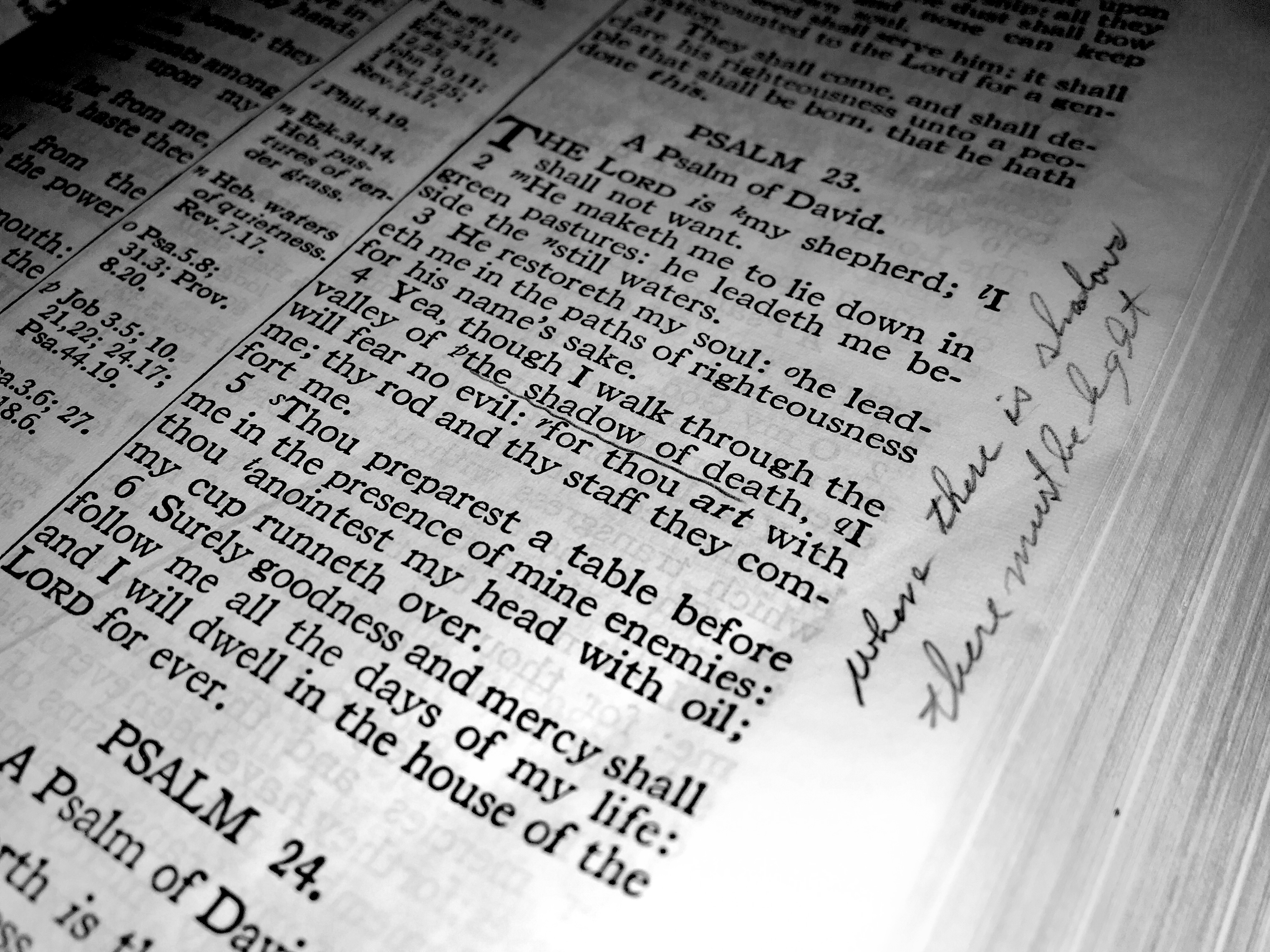
How Do You Study?

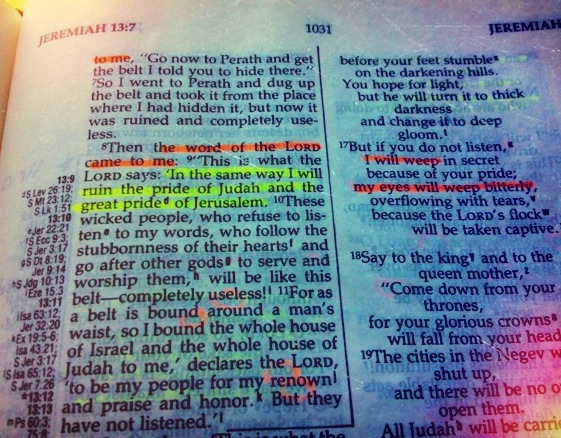
In our Impact youth service, we’re exploring the study of the Bible. To help me with a little “sermon prep,” can you please comment below to tell me how do you study your Bible:

  • Do you highlight?
  • Underline?
  • Write notes?
  • Read a chapter at a time?
  • Systematically go through the Bible?
  • Read from the same translation every time?
  • Write in a journal?
  • Memorize verses?

Anything you would like to share would be very helpful.

A Silly Dream World Or The Real Deal?

“What is ‘real’? How do you define ‘real’? If real is what you can feel, smell, taste, and see, then ‘real’ is simply electrical signals interpreted by your brain. … Have you ever had a dream, Neo, that you were so sure was real? What if you were unable to wake from that dream? How would you know the difference between the dream world and the real world?” —“Morpheus” in The Matrix

We are created in God’s image. God is eternal and unrestricted, yet we are contained in finite bodies and constrained to the time-space dimension of our universe. That hardly seems “real.” Yet our souls—the “real” part of us—were made to be timeless and unbound. It seems like a dream, and yet sounds real.

To help humanity navigate the dream-real state in which we find ourselves, God gave us incredible insights into His Word: the Bible. The answers to our dream-real questions are there if we’re willing to search for them.

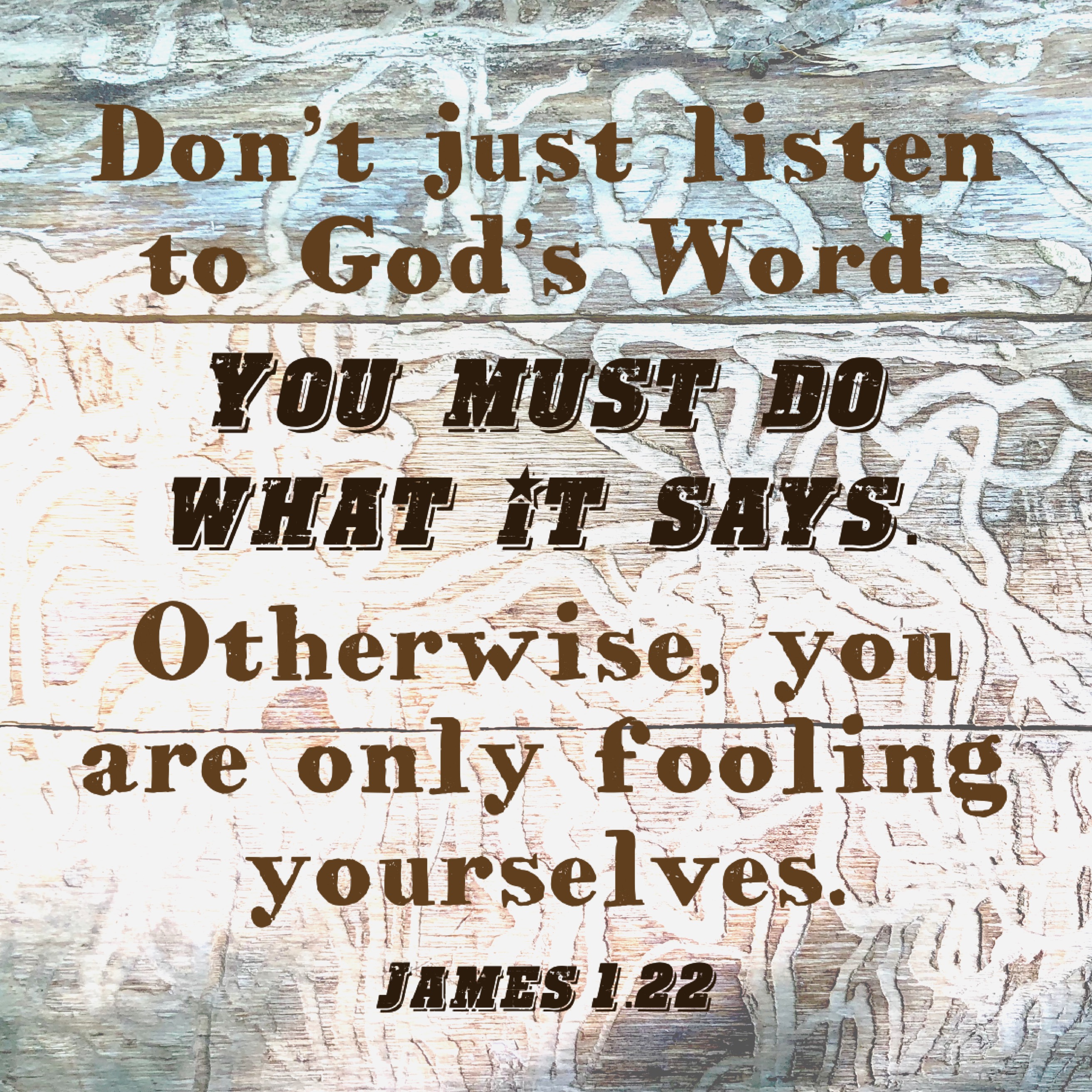
C.S. Lewis wrote, “What we see when we think we are looking into the depths of Scripture may sometimes be only the reflection of our own silly faces.” The Apostle James talks about God’s Word as a mirror in his letter to the church (1:22-25). In this, I see three people.

(1) One who never looks in the mirror; one who simply accepts what’s presented to him. Again “Morpheus” comes close: “You have the look of a man who accepts what he sees because he is expecting to wake up.” James says this is a man who attends church regularly, but never applies what he hears. In fact, he probably never even hears anything other than what he thinks the pastor said. That man is silly, shallow, and stunted in his spiritual growth (if there is even any growth at all!).

(2) One who looks in the mirror but doesn’t do anything about what he sees. He hears the Word of God at church and perhaps even reads his Bible often at home; he knows all the stories and how everything should be. But he, too, never makes any changes in his spiritual “appearance.” He is content with where he is. If he ever feels the pull of desire that there could be more real to his dream-real world, he quickly explains it away. He is at the same spiritual maturity level today as he was years ago.

(3) One who looks into the mirror, recognizes that he is silly-looking, and then does something about it. It’s hard work and often this man feels like he’s not growing because he continues to see his silly face reflected back to him. As Albert Einstein noted, “As a sphere of light increases, so does the circumference of darkness around it.”

James says only this third man has been freed from his dream-real constraints and is called blessed by God. Only he is beginning to understand how to make the dream real.

In which category are you? Are you brave enough to look into the depths of God’s Word and see your silly face? Are you willing to make the changes the Bible shows you to free your soul?

I’ll Make You An Offer You Can’t Refuse (Book Review)

I'll Make You An Offer You Can't RefuseOkay, I’ll be honest with you, the title of Michael Franzese’s latest book sounds like a cliché—I’ll Make You An Offer You Can’t Refuse. Sounds like a line right out of “The Godfather” or “Goodfellas,” right? But if you’re involved in the world of business, Mr. Franzese’s book is exactly that: an offer (book) you can’t refuse. From how to craft a business plan, to picking the right people, to learning how to negotiate the best deals, Mr. Franzese uses his years of wiseguy street-smarts to give you an advantage.

From the very first page, this book engaged me because I felt like I was having a conversation with the author. His style is very relaxed, and his stories about his business successes and failures are compelling. It’s not often that a business book reads like a novel, but I’ll Make You An Offer does just that.

Throughout all of his lessons, Mr. Franzese makes the contrast between the principles spelled out in the mobster’s bible (The Prince by Machiavelli) and principles articulated in the Holy Bible (specifically the writings of Solomon). Although he learned his strategies from his years in La Cosa Nostra (“this thing of ours” or the mob life), he makes a strong case his strategies will work in the legit life. The difference is the motivation that drives the strategies: Machiavellian or biblical.

“A dictionary definition of success says it’s ‘the favorable or prosperous termination of attempts or endeavors.’ … But dictionary definitions are like sausage casings. It all depends on what you stuff inside” (quote from page 144).

Whether you are just getting started in a new business venture, or whether you are not satisfied with the results of your current business venture, you will find invaluable strategies here to help you. This former mob boss truly does make you an offer you can’t refuse.

The Thinking Book

“The book to read is not the one which thinks for you, but the one which makes you think. No book in the world equals the Bible for that.” —James McCosh

My kids recently returned from a PK (Pastor’s Kids) Retreat weekend. Our Michigan Assembly of God District Youth Director Jeff Kennedy coordinates this weekend every year. A fun part of their time together is a take-off of Jeff Foxworthy’s “You might be a redneck if…” routine. It’s called “You might be a PK if….” Here are a couple of my favorites—

  • You might be a PK if you’ve used the church sound system as your personal stereo.
  • You might be a PK if National Take Your Kid To Work Day is any day you don’t have school.
  • You might be a PK if you’ve ever taken a bath in the baptismal tank.
  • You might be a PK if you occasionally take Sunday afternoon naps on a church pew.
  • You might be a PK if every answer your Dad gives you comes from the Bible.

Cute! And, for the most part, dead-on accurate!

But that last one got me thinking: do I do this? I sincerely hope (not just because I’m a pastor) that the answer is always “yes.”

I agree with James McCosh that no other book in the world compares to the Bible for challenging me to think. In the King James Version of the Bible, there is a phrase that James uses about God’s Word: he says that we should “receive with meekness the engrafted Word” (James 1:21).

The more I read the Bible, the more its principles become engrafted into my thought patterns. The more I think about the Bible, the more my attitude about life conforms to God’s attitude. And the more my attitude conforms to God, the more my actions and words align with the Bible.

You don’t have to read much every day for God’s Word to make a difference in your life. If you are honest with the Holy Spirit as He illuminates a passage of Scripture to you, you will see how God’s Word can be applied to your life today.

“The Bible is…a chart by which the Christian sails to eternity, the map by which he daily walks; the sundial by which he sets his life; the balance in which he weighs his actions.” —Thomas Watson

To be successful make sure you are looking often at the chart, the map, the sundial, and the balance of God’s Word.