Thursdays With Oswald—Strength For Others

This is a weekly series with things I’m reading and pondering from Oswald Chambers. You can read the original seed thought here, or type “Thursdays With Oswald” in the search box to read more entries.

Oswald Chambers

Strength For Others 

     The real reason for prayer is intimacy of relationship with our Father. 

We kneel, how weak, we rise full of power.
Why therefore should we do ourselves this wrong
For others that we are not always strong,
That we are ever overcome with care
That we should ever weak or heartless be
Anxious or troubled, when with us is Prayer
And joy and strength and courage are with Thee?

From Christian Disciplines 

It’s a pretty simple principle: I cannot give to others what I do not possess.

Jesus rose early in the morning to find a place of private prayer (see Mark 1:35) so that He would be filled with His Father’s presence and able to meet the pressing needs of people that day. Why, oh why, don’t I follow my Lord’s example more?

People all around me need encouragement, light, hope, love. I cannot give what I do not possess. But I can possess these things in abundance if I will make use of prayer to tap into that intimate relationship with my Heavenly Father.

Prayer provides the strength I need for the day, so that I can provide the strength that others need for the day. Without prayer, I not only rob myself of God’s help, I rob others as well.

Thursdays With Oswald—The Purpose Of Prayer

This is a weekly series with things I’m reading and pondering from Oswald Chambers. You can read the original seed thought here, or type “Thursdays With Oswald” in the search box to read more entries.

Oswald Chambers

The Purpose Of Prayer

     The purpose of prayer is the maintenance of fitness in an ideal relationship with God amid conditions which ought not to be merely ideal but really actual….

     So in the better and new way of breathing spiritually in prayer, we shall be conscious of forming the habit, but it will soon pass into normal spiritual health, and it must never be worshipped as a conscious process. 

From Christian Disciplines

Chambers is saying that prayer ought to be as natural to us as breathing. In order to get to this place, we must develop the habit of prayer, which mean disciplining ourselves to return to prayer when we might normally revert to another natural response.

But in forming the habit of prayer, we must not become like the Pharisees who worshipped their spiritual activities. They thought they were spiritual because of what they did, so they kept track of all they were doing, and they pointed to how many times each day and each week they had prayed. In essence, they worshipped prayer more than they worshipped the God they were supposed to be addressing in prayer.

The habit of prayer does take discipline (as the title of this Oswald Chambers book suggests), but it leads us to a life fully engaged in God’s presence. It’s a habit that is well worth the disciplined effort!

Thursdays With Oswald—The Vocation Of A Saint

This is a weekly series with things I’m reading and pondering from Oswald Chambers. You can read the original seed thought here, or type “Thursdays With Oswald” in the search box to read more entries.

Oswald Chambers

The Vocation Of A Saint 

     The vocation of a saint is to be in the thick of it “for His sake.” Whenever Jesus Christ refers to discipleship or to suffering, it is always, “for My sake.” The deep relationship of a saint is a personal one, and the reason a saint can be radiant is that he has lost interest in his own individuality and has become absolutely devoted to the Person of the Lord Jesus Christ.

From Christian Disciplines

As the Westminster Catechism states: The chief end of man is to glorify God and to enjoy Him forever.

It is in this glorifying of God and the enjoyment of Him that the saint becomes radiant. And this radiance continues even through suffering or persecution. Am I willing to step into this discipleship relationship, and stay in it? YES!!

Thursdays With Oswald—Not Possessed By Possessions

This is a weekly series with things I’m reading and pondering from Oswald Chambers. You can read the original seed thought here, or type “Thursdays With Oswald” in the search box to read more entries.

Oswald Chambers

Not Possessed By Possessions 

     For you know the grace of our Lord Jesus Christ, that though He was rich, yet for your sake He became poor, so that you through His poverty might become rich. (2 Corinthians 8:9) 

     Rich in what? Not in possessions, but in personal identity. Our Lord Jesus Christ became poor, not as an example, but to give us the secret of His religion. The religion of Jesus Christ is a religion of personal relationship to God and has nothing to do with possessions. … The disciple realizes that his life does not consist in the abundance of things he possess, because what we possess often possesses us—we are possessed by possessions. 

From Bringing Sons Unto Glory 

I can’t stand seeing so-called “prosperity preachers” twisting Scripture to make it sound like God is some sort of cosmic slot machine, and if you pull His lever just right financial rewards will pour down on you. Rubbish!! 

Chambers said it succinctly and perfectly: The religion of Jesus Christ is a religion of personal relationship to God and has nothing to do with possessions.

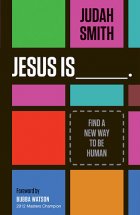
11 Quotes From “Jesus Is _____”

Jesus Is _____Judah Smith has a fresh, clear way for us to view Jesus and His love for us. You can read my full review of Jesus Is _____ by clicking here. Below are 11 quotes from this book that got me thinking—

“The Pharisees were zealous for the law, but they didn’t understand the love of God. They imposed judgment without mercy, punishment without love, criticism without understanding. In the name of hating sin, the Pharisees ended up hating sinners. Perhaps worst of all, they concluded that their aloofness from sinners was what made them holy. The measuring stick of their goodness was the badness of the people they rejected. …Before we get too furious at the Pharisees, though, realize that inside each of us is a Pharisee trying to get out. It’s happened to me. No sooner do I conquer a bad habit than I become the biggest critic of anyone who still does what I just stopped doing. I find that righteous indignation comes a lot easier than humility and compassion. Mentally chastising the bad deeds of other people is more comfortable than dealing with my own.”

“Rather than rejecting people out of a false sense of superiority, rather than judging and condemning those whose lives don’t measure up to my standard of holiness, I need to remember that I am still desperately in need of Jesus’ grace.”

“Besides writing off bad people, we too quickly write off ourselves. We swing from the self-righteous side of the pendulum (That filthy sinner deserves to go to hell!) to the self-condemning side (I’m a filthy sinner who deserves to go to hell!). Both extremes come from focusing on rules rather than on a relationship with Jesus.”

“I think if Jesus had one shot at fixing us, He’d tell us how much He loves us. …Jesus loves us right now, just as we are. He isn’t standing aloof, yelling at us to climb out of our pits and clean ourselves up so we can be worthy of Him. He is wading waist-deep into the muck of life, weeping with the broken, rescuing the lost, and healing the sick.”

“When we realize that grace is a Person, not a principle, abusing grace is no longer an option. It’s easy to abuse a principle, to manipulate a system, or to excuse away a doctrine. But it’s much harder to abuse a person or violate a relationship.”

“Rules are not bad, but they can’t save anyone. The best a rule or a law can do is set a boundary and threaten punishment for crossing that boundary. People still decide to obey the rule or not. …Rules are meant to lead us to relationship, not to replace relationship. …Focusing too much on rules and too little on grace tells children that what they do is more important than who they are. …These principles aren’t just for parenting. This is how our relationship with God works. For God, it’s more about relationship than about rules. Far more.”

“When we make up rules because we are afraid people will sin, we end up doing an end run around faith. It’s not fear that saves us—it’s faith. Fear of failure has a sneaky way of becoming a self-fulfilling prophesy. …Make rules and follow rules as needed, but don’t focus on rules. Focus on faith. Focus on grace. Focus on Jesus. …Here’s the bottom line: everything that rules can do, grace can do better, and more besides.”

“Rules address behavior, but they don’t deal with the heart. They don’t adjust attitudes. They don’t heal the inconsistencies and fractures deep in our souls that could destroy us in the end. Grace, on the other hand, is internal. It works on a heart level. Where rules attempt to force us to do the opposite of what we want, grace actually changes what we want. It creates internal consistency and integrity. Doing what is right becomes much easier. …When we focus on Jesus instead of a code of conduct, when grace changes our desires so we are internally motivated and not just externally restrained, we become a lot more fun to be around.”

“Grace wasn’t free for Jesus. It cost Him everything. That is precisely why we should receive it freely. The most insulting thing we could do is reject this costly gift and say, ‘No thanks, God, I got this.’ Please don’t tell me Jesus was beaten and mutilated and tortured so we could try to save ourselves through our paltry good deeds. Don’t cheapen Jesus’ sacrifice by trying to pay Him back.”

“The point isn’t to quit thinking about sin. It’s to quit thinking about self and to think about Jesus. It’s to become God-conscious, not me-conscious. Do you know what law does? Law makes us self-conscious. When we are self-conscious, we become sin-conscious. We take our eyes off Jesus, and we focus on our failures, our weaknesses, our shortcomings. And we end up sinning even more because that’s all we can think about. But grace makes us God-conscious. When we live by grace, we are continually amazed by the love, goodness, and holiness of God. When we think about Him, that motivates us to act like Him. Are you struggling with sin? You don’t need more willpower. You need more of Jesus. Loving Jesus, not avoiding sin, is the focal point of our lives.”

“Holiness results in happiness, and happiness is an expression of holiness. The two go together. I am happier because I am holy, and it’s easier to be holier because I am happy. Because of the good news, because of Jesus, I can be both holy and happy—what a concept!”

Beautiful

Plumb beautifulLove is not an emotion. Real love is a commitment. Real love discovers beauty in another that they couldn’t even see themselves.

Guys, this song from Plumb is written from a woman’s perspective; it’s what she wants you to see in her. Valentine’s Day is a great day to start discovering, appreciating and celebrating the beauty in her… but don’t let it stop there. Let it become more beautiful every day!

Inside Out

Listen to the podcast of this post by clicking on the player below, and you can also subscribe on AppleSpotify, or Audible.

Relationships can only grow from the inside out. Consider this passage from the book of Hebrews—

The blood of goats and bulls and the ashes of a heifer sprinkled on those who are ceremonially unclean sanctify them so that they are outwardly clean. How much more, then, will the blood of Christ, Who through the eternal Spirit offered Himself unblemished to God, cleanse our consciences from acts that lead to death, so that we may serve the living God! (Hebrews 9:13-14)

Religion is concerned about the outside—how does it look?

Relationship with Jesus is concerned about the inside—how does it work?

Religion seeks to work outside in.

Relationship works inside out.

Religion is the starting point.

Relationship is the goal.

When I first met my wife Betsy, I was attracted initially by the outward things—her physical beauty, her actions, her words. But if I only stayed at the outward level, everything would be focused on keeping up appearances. I would be worshiping the idol of physical beauty. Then as soon as I saw someone whom I perceived to have more physical beauty, I would abandon Betsy for the next attractive thing.

But Betsy’s outside was only the starting point; it drew me deeper inside into a relationship. As I got to know the real Betsy, I fell more and more in love. The inner beauty far exceeded the outward beauty. But then something amazing happened: the inner beauty enhanced her outward beauty.

The outside (religion) is only finite. The inside (relationship) is infinite.

The old religion started on the outside; Jesus Christ works from the inside. He doesn’t ask me to clean up the outside, but He cleanses my conscience so I can clean up the inside. This inner cleansing will eventually show up outside. The inner relationship beautifies and makes more meaningful the outer religion. The inner life (infinite, eternal) overwhelms the outer life (finite, temporal).

Don’t throw out religion and religious practices, but don’t use those as the only means of coming to Christ. Allow Jesus to work inside on your relationship with Him, and then the outside will become more beautiful and even more meaningful.

►► Would you please prayerfully consider supporting this ministry? My Patreon supporters get behind-the-scenes access to exclusive materials. Like this video where I explain what the Bible means when we “examine” our lives. ◀︎◀︎

Thursdays With Oswald—Mirror

This is a weekly series with things I’m reading and pondering from Oswald Chambers. You can read the original seed thought here, or type “Thursdays With Oswald” in the search box to read more entries.

Mirror

    It is a wonderful thing that God can cleanse and purify the thinking of our hearts. That is why our Lord says, “Of the abundance of the heart his mouth speaketh” (Luke 6:45). The Bible says that words are born in the heart, not in the head. …

     Jesus Christ said He always spoke as His Father wished Him to. Did His Father write out the words and tell Him to learn them by heart? No, the mainspring of the heart of Jesus Christ was the mainspring of the heart of God the Father, consequently the words Jesus Christ spoke were the exact expression of God’s thoughts. In our Lord the tongue was in its right place; He never spoke from His head, but always from His heart. 

From Biblical Psychology

Have you ever noticed how friends begin to talk like each other? They laugh at the punchline without the joke being told any longer, because they know it so well.

Or how about married couples who can finish each other’s sentences, because they are so in tune with each other.

Biblical scholars have pointed out the similarity of the writing styles of Luke and the Apostle Paul, probably due to the huge amount of time they spent with each other.

We begin to mirror those with whom we spend the most time.

Jesus Christ had His heart filled with God’s presence, so His words mirrored the thoughts of His Father (John 12:49).

What about me? Whom do I mirror? My vocabulary will tell me who fascinates me most, who has my attention, and who has my heart.

I pray that more and more my words reveal that I mirror my Savior Jesus Christ. May my heart be fascinated and attentive to Him, and then may I never speak from my head, but always from my heart.

God Is For You!

I cross paths with far too many people who think God is unapproachable, distant, or—perhaps worst of all—angry with them.

But listen to this good news: God is for you! 

God created you to be in relationship with Him.

When Paul writes in Romans 8:31, “If God is for us, who can be against us,” it’s not a wondering, uncertain “if” (as in, “I wonder if this is true?”). No! What Paul is saying is, “If you already know that God is for you, why are you wondering about who or what is against you?”

Here are the facts (all from Romans 8):

  • The Holy Spirit is interceding for you (vv. 26, 27)
  • God is working out all things for your good (v. 28)
  • God justifies you (vv. 30, 33)
  • God will give you everything He gave Jesus (v. 32)
  • Jesus is interceding for you (v. 34)
  • Nothing and no one can ever separate you from God’s love (vv. 35-39)

Let me state it again—

God is for you!

Nothing can stand between you and God!

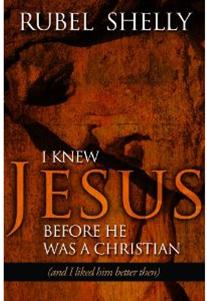
I Knew Jesus Before He Was A Christian (book review)

You know the cliché: “Never judge a book by its cover.” But with Rubel Shelly’s book, it’s really hard not to give in to this! The complete title is I Knew Jesus Before He Was A Christian… And I Liked Him Better Then. Provocative, huh?

His idea is that the Jesus that is presented in the Bible—which is also the Jesus that is presented to someone who doesn’t have a personal relationship with Him—is different from the Jesus people see in the organized church and in professing Christians. The Jesus in the Bible (or before someone becomes a Christian) is seen in freedom and abundant life. But the Jesus in the church (or after someone becomes a Christian) is a rule-keeping killjoy.

Honestly, I expected this book to be a church-bashing book. I excepted Rubel Shelly to come out blasting away on the rephrase I-love-Jesus-but-I-can’t-stand-His-followers! So I was more than pleasantly surprised right from the first chapter—appropriately titled “Pro-Jesus and Pro-Church”—that this book was not taking that track. Instead, Shelly makes the distinction between “institutionalized religiosity” and a vibrant personalized relationship between God and mankind. Then out of the overflow of this personalized relationship with God, a Christian’s outward lifestyle toward others should be notably more Christ-like.

This book is not targeted at any one segment. There are parts that every pastor would do well to heed. Then there are other parts that anyone who calls themselves Christian should read. And there are even parts that those not involved in a church or a relationship with Christ should take note of.

If, by the title, you were expecting to see the church get beat up, you will be sadly disappointed. However, if you feel like the Church has no room for improvement, you will not only be disappointed, but probably a bit angered too! On the other hand, those who love Christ and love His Bride (the Church), and want to see the Church operating more as she should, you will find much to process in this book.

I am an ACU Press book reviewer.