Doing Virtuous Business (book review)

The quote on the front cover of Doing Virtuous Business by Theodore Roosevelt Malloch says it well: “Every CEO should read this book.” I agree!

It seems that our mainstream media has become more and more anti-capitalism and anti-private business. It seems a small — but very vocal — group would prefer that our government oversee every business enterprise. According to Theodore Malloch, nothing could be farther from the biblical way of thinking about business.

By using both real-time examples of virtuous businesses and the wisdom of Scripture, Mr. Malloch makes the strong case that businesses operating on biblical virtues become spiritual enterprises that can benefit all of society. As a former business owner myself, I couldn’t agree more.

A few quotes from the book to whet your appetite—

By creating wealth, we use God’s gifts responsibly, and provided that we work toward that goal in a spirit of humility and gratitude, we benefit all those with whom we deal long the way.

When people join together in an enterprise, they create a new person, the firm itself, which is something greater than the sum of its parts. It, too, has a soul, and if its members honor God, then it, too, honors God.

Profitability comes last among the principles: it is not the primary goal of the company, but the consequence of doing business in the right way, so as to honor God.

A company guided by faith will possess the virtues that I have described in this book: it will have the courage and perseverance to pursue its goals and also the humility, compassion, and forgiveness to guard against arrogance and offensiveness.

This is the first book I have read in quite awhile that deals head-on with the weak arguments the anti-capitalists use. And it does so winsomely, kindly, and quite persuasively. I repeat it again: every CEO should read this book!

I am a Thomas Nelson book reviewer.

Winner Or Whiner?

This morning on John Maxwell’s “Minute With Maxwell” he said: “Winners know they have to do the right thing and then they’ll feel good. Whiners want to feel good before they do the right thing.

I have learned this is true in my life. If I wait until I feel like do something, I’ll make all kinds of excuses to avoid doing it. But if I do what I know I’m supposed to do I’ll feel good that I did it.

Good feelings follow good actions.

Winners do right to feel good.

Whiners wait to feel right before they do anything.

Behavioral psychologist William James wrote: “Action seems to follow feeling, but really action and feeling go together; and by regulating the action, which is under the more direct control of the will, we can indirectly regulate the feeling, which is not. Thus the sovereign voluntary path to cheerfulness, if our cheerfulness be lost, is to sit up cheerfully and to act and speak as if cheerfulness were already there.” (emphasis mine)

So let me ask you: Are you going to be a winner or a whiner today?

You Were Born For This (book review)

I love the way Bruce Wilkinson makes biblical truths so exciting and live-able. You Were Born For This is no exception.

The idea behind this book is that God does miracles every day, but He usually calls on people to deliver those miracles. That’s what we were born to do. Bruce writes:

“You see, God did not place you on this earth to notice Him at work only once or twice in your whole life. He did not create you to consistently miss out on the wonder of His presence and power. The truth is, you were born to live a supernatural life doing God’s work by God’s power. You were born to walk out your door each morning believing that God will use you to deliver a necessary miracle today.”

Using a powerful combination of scriptural and personal examples, Bruce makes the case that God wants to use everyone of us as His delivery agents. He shows us that the Holy Spirit is nudging us to see the needs right in front of us. And then Bruce shows us how we can be a part of the delivery process.

One more quote from the book:

“When you and I purposely ask God to send us to do His work on earth, we take on a completely different role in our day. We are now people sent from God, His delivery agents. We walk out the door knowing that He could have a miracle (a delivery through us) for anyone we meet. Why? Because, from God’s point of view, everyone, everywhere, at all times is in need. God knows about every need, and He cares about each one. That’s why He loves to send servants who are passionate about delivering visible proofs of His goodness and glory.

As always when I finish a Bruce Wilkinson book, I’m seeing the world differently now. I’m ready to be God’s miracle delivery agent. If you are ready to see God’s miracles happen around you time and time again, I highly recommend this book as a great place to start.

Three For Pastors (book reviews)

I consider it such an awesome privilege—and a heavy responsibility—to be called to be a pastor. Despite the challenges, I love doing what I’m doing! And although I don’t want this message to become diminished by over-use, I truly do mean it: I My Church!

Because I want to be the best pastor I can be, I frequently study the lives of historical pastors, and I try to keep current on thoughts from my contemporaries as well. So, if you are a pastor (or if you want to better support your pastor), here are three books I recently read which I would highly recommend to you.

The Heart Of A Great Pastor by H.B. London and Neil B. Wiseman emphasizes how pastors need to take personal responsibility to make sure they are continually giving their best. From revisiting the call of God on their lives, to maintaining a vibrant private prayer and devotional life, to organizing ministries in the church, pastors can never coast. I love this insight from the authors:

“The God-initiated summons takes us [pastors] into life’s main arena where people wrestle with ultimate issues such as birth, life, death, sickness, broken relationships, health and hope, as well as ambiguities and apprehension. This partnership with God takes us to private and public places and to sorrowful and cheerful places. It is our lifetime ticket to represent Jesus at weddings, hospital waiting rooms, grave sites, baptisms, Holy Communion and life-shaping questions that good people have reason to ask, such as ‘Where is God now?’”

Elite Prayer Warriors by Dave Williams is a renewed call to prayer. I grew up with a cliché ringing in my ears and my heart: The church moves forward on her knees.  If this is true for the church (and I firmly believe it is), it is even more true for pastors who serves the church as her under-shepherd. Elite Prayer Warriors encourages pastors  to raise up a team of people who will commit to the spiritual battle of praying for their pastor.

Then Pastor Dave Williams addresses an area that can derail a church in Toxic Committees And Venomous Boards. I’ll let the cat out of the bag right up front: Pastor Williams states unequivocally that committees are unscriptural. After showing the biblical basis for his claim, he then makes the case for a scriptural form of pastoral support: teams. He says, “Committees meet; teams score!”

I also like this quote in the book from Rick Warren:

“Committees discuss it, but ministries do it. Committees argue, ministries act. Committees maintain, ministries minister. Committees talk and consider, ministries serve and care. Committees discuss needs, ministries meet needs.”

Three outstanding books to help you be the best pastor that God has called you to be.

I am a Decapolis book reviewer.

Thursdays With Oswald—Pseudo-evangelism

This is a weekly series with things I’m reading and pondering from Oswald Chambers. You can read the original seed thought here, or type “Thursdays With Oswald” in the search box to read more entries.

Pseudo-evangelism

It was this form of pseudo-evangelism, so unlike the New Testament evangelism, that made [Thomas] Huxley say—“I object to Christians: they know too much about God.” … God is the only Being who can afford to be misunderstood; we cannot not, Job could not, but God can. If we are misunderstood we “get about” the man as soon as we can. St. Augustine prayed, “O Lord, deliver me from this lust of always vindicating myself.” God never vindicates Himself, He deliberately stands aside and lets all sorts of slanders heap on Him, yet He is not in any hurry.

From Baffled To Fight Better

I’m learning more and more that when people ask why God behaves in such-and-such a way that the best answer may be, “I don’t know why, but I still trust Him.” I trust Him even when I don’t have all of the answers, because I know He has all of the answers.

To try to answer for God—or, as is probably more likely, to try to defend my theology—is rightly called pseudo-evangelism. O Lord, deliver me from pseudo-evangelism!

Sharp Enough?

Long before Stephen Covey wrote about Habit 7: Sharpening The Saw, Solomon saw the value of taking time to sharpen the saw.

Using a dull ax requires great strength, so sharpen the blade. That’s the value of wisdom; it helps you succeed. (Ecclesiastes 10:10)

What are you doing TODAY to gain wisdom?

J. Wilbur Chapman asked F.B. Meyer, “What is the matter with me? So many times I fail, so many times I am powerless.”

Dr. Meyer responded, “Have you ever tried breathing out three times without breathing in once?”

What are you doing TODAY to breathe in?

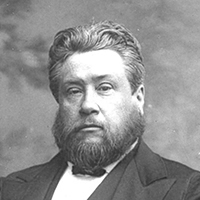
Look at the mower in the summer’s day, with so much to cut down ere the sun sets. He pauses in his labor—is he a sluggard? He looks for his stone, and begins to draw it up and down his scythe, with rink-atink, rink-atink, rink-atink. Is that idle music—is he wasting precious moments? How much he might have mowed while he has been ringing out those notes on his scythe! But he is sharpening his tool. And he will do far more when once again he gives his strength to those long sweeps which lay the grass prostrate in rows before him. —Charles Spurgeon

What are you doing TODAY to sharpen yourself?

What’s Your Excuse?

It’s so easy to make excuses, isn’t it?

  • I wasn’t feeling well
  • I don’t have enough training
  • The sun was in my eye
  • The other guy was supposed to….
  • I don’t have the right tools
  • If only….
  • I can’t because….

John Maxwell has started a new teaching series where he presents a one-minute lesson on one word every day. Today’s lesson was on excuses. Watch the clip here.

Here are some other quotes on excuses:

“Ninety-nine percent of failures come from people who have the habit of making excuses.” —George Washington Carver

“There’s a difference between interest and commitment. When you are interested in doing something, you do it only when it is convenient. When you are committed to something, you accept no excuses only results.” —Kenneth Blanchard

“Obstacles are not excuses for failure, they are opportunities for growth.” —Craig T. Owens

“People who are good at making excuses are seldom good at anything else.” —Benjamin Franklin

Let’s stop making excuses and start taking responsibility! 

Hmmm

Feats of thinking may create reputation, but habits of thinking create character. —A.W. Tozer

If this is true, then I’ve got some questions to ask myself:

  • How do I think?
  • How am I processing the world around me?
  • Do I see the hand of God in daily events?
  • Can I find His truth at work?
  • Am I learning from what I experience each day?
  • Do I think positively or negatively?
  • Do difficulties cause faith or fear?
  • Am I thinking long enough?
  • Do my thoughts produce a Christ-like attitude?
  • Do I take time to think about my thoughts?

Two more thinking quotes for today:

Life consists of what a man is thinking about all day. —Ralph Waldo Emerson

Summing it all up, friends, I’d say you’ll do best by filling your minds and meditating on things true, noble, reputable, authentic, compelling, gracious—the best, not the worst; the beautiful, not the ugly; things to praise, not things to curse.Philippians 4:8

Pray First, Then Preach

As I have mentioned in earlier posts, not only is this a week of prayer for our church, but I have also declared 2011 to be The Year Of Answered Prayer. As a result, I’m reading and studying more about prayer, and praying more too.

This post is mostly for my fellow pastors.

Pastors, I came across two quotes this morning to which we should pay careful attention. The first is from Augustine’s On Christian Teaching, and the second is from E.M. Bounds’ Power Through Prayer.

“He should be in no doubt that any ability he has and however much he has derives more from his devotion to prayer than his dedication to oratory; and so, by praying for himself and for those he is about to address, he must become a man of prayer before becoming a man of words. As the hour of his address approaches, before he opens his thrusting lips he should lift his thirsting soul to God so that he may utter what he has drunk in and pour out what has filled him.” —Augustine

The character of our praying will determine the character of our preaching. Light praying will make light preaching. … The preacher must be preeminently a man of prayer. His heart must graduate in the school of prayer. In the school of prayer only can the heart learn to preach.” —E.M. Bounds

Before you prepare it, pray it.

Before you preach it, pray it.

After you preach it, pray it some more.

Pastors, let’s be men and women of prayer before we’re men and women of words.

Thought Patrol

Have you ever found yourself in circumstances that weren’t exactly what you had planned or hoped for? You know, things are just not going your way? What do you do then? How do you handle this? I suggest the first place to start is by thinking about your thinking.

I know that may sound a little unusual, but I have often times had to stop to think about what I’m thinking about. To ask myself, “Why am I thinking that?”

I believe this is what the Bible is really saying when it tells us to take every thought captive. If we don’t, our negative thoughts can lead us to unplanned places and can keep us trapped there. But if we will take time to think about what we’re thinking about, we can discover the key to freedom from that undesirable place.

A few quotes to get us started:

“No man has ever succeeded who kept his mind on negative things… and no man ever rises above his thoughts of himself.” —C.M. Ward

“You are today where your thoughts have brought you. You will be tomorrow where your thoughts take you.” —James Allen, As A Man Thinketh

“They themselves are makers of themselves by virtue of the thoughts which they choose and encourage; that mind is the master-weaver, both of the inner garment of character and the outer garment of circumstance, and that, as they may have hitherto woven in ignorance and pain they may now weave in enlightenment and happiness.” —James Allen, As A Man Thinketh

“Only when you assume full accountability for your thoughts, feelings, actions, and results can you direct your own destiny; otherwise, someone or something else will.” —Roger Conners, Tom Smith & Craig Hickman, The Oz Principle

“Summing it all up, friends, I’d say you’ll do best by filling your minds and meditating on things true, noble, reputable, authentic, compelling, gracious—the best, not the worst; the beautiful, not the ugly; things to praise, not things to curse. Put into practice what you learned from me, what you heard and saw and realized. Do that, and God, who makes everything work together, will work you into his most excellent harmonies.” —Philippians 4:8, The Bible

Let’s all work on patrolling our thoughts today.