How Marriage Can Heal Hurts

“Why is your wife so sensitive to others’ opinions? Why does your husband have such a difficult time making decisions? Why does your wife find comfort by slipping off by herself and eating food she knows is disgusting? Why does your husband find comfort in electronic fantasy? Don’t just tell me what your spouse does. Tell me why, and then we can talk about the pathway of love and healing. If you don’t know the why, you’re just an accusing judge who knows nothing of love, only something of punishment. I am not excusing sinful or abhorrent behavior. I’m just asking you to have some empathy about the fact that we live in a cruel world, vicious in its treatment of the people we marry, as well as a positive vision for how profoundly a cherishing marriage can heal past hurts.” —Gary Thomas, in Cherish

Saturday In The Psalms—God’s Compelling Kindness

An oracle within my heart concerning the transgression of the wicked: There is no fear of God before his eyes (Psalm 36:1).

David believes that fear and reverence of Almighty God would deter the sinner from his sin. This is not a dread of punishment, but a fear of missing out on the wondrous, eternal depths of God’s love.

We are not asking sinners to give up something they enjoy for a better thing. We’re calling them to step into a Relationship that is more real, substantial, fulfilling, enlivening, and satisfying than anything they’ve ever experienced or even dreamed of!

How precious is God loving kindness. How trustworthy His provision. How abundantly satisfying is His fullness. How indescribable His pleasures. How endless is His love!

It is the kindness of God that leads men and women to His presence.

Heavenly Father, may I live in Your kindness and reflect it to all around me, inviting them to share in Your bounty for themselves. Amen.

What can equal in costliness the love of God! Its preciousness is measured by the gift it gave, and by the innumerable gifts contained in that One—life, pardon, salvation, peace, the glory to be revealed. In this love there are unsearchable riches—exceeding riches of grace. There are no riches to be compared to this great love of God. Having it we are rich indeed. Without it we are poor, life is blank, eternity is dark. …

“God’s character is then the basis of human confidence. …

“This love which so suits the sinner and calls forth his confidence is that which is exhibited in the Cross of Christ. That Cross is the revelation of God’s love as a righteous thing; and thus appeals both to man’s heart and his conscience. The love furnishes the ground for trust, and the Cross removes every reason for distrust. …

“These wings [of love] are broad, and large, and strong, fitted to shelter all the sons of Adam. And thus stretched out they themselves invite us. They contain their own invitation. They say, ‘Come and be safe, come and be blessed, come and be sheltered from present wrath and from the wrath to come. Come, for all things are ready; the love is ready, the deliverance is ready, the protection is ready.’” —Horatius Bonar (emphasis mine)

Ordering Your Private World (book review)

You can look all neat and tidy on the outside, you can talk a good game and even have some short-term success. But if you aren’t growing on the inside, all that good looking outside stuff will eventually come crashing down. This is exactly what Gordon MacDonald addresses in his revised and updated book Ordering Your Private World.

MacDonald shares a quote from Ezra Pound which captures the theme of this book: “If a (person) has not order within him, he cannot spread order about him.” Amen!

Here’s what I love about Gordon MacDonald’s heart. This book is a revised and updated version of his original work. The first edition sold more than a million copies! MacDonald could have sat back and collected his royalty checks, but instead, he has kept growing, kept learning, kept on ordering his own private world, and wasn’t content until he could share his ever-growing insights with a whole new generation.

MacDonald is quite candid about the collapse of his own inner world, and how he had to work to restore and rebuild that. Throughout this book you will read more of his personal stories, as well as accounts from historical people (both famous and relatively unknown), and you will learn from numerous biblical examples as well.

Ordering Your Private World will help you reassess your priorities, learn how to take control of your time, help you find the best supports for your inner world, see through a biblical lens, and learn what it truly means to take a rest.

This book will be beneficial for everyone who wants to ensure their inner world is strong enough to support their outer world, but I would especially recommend this book to those in leadership positions. Leaders tend to be much more hard-charging and results-oriented people, and as such may neglect their own inner world. But whoever you are, this book will be a valuable part of your life.

I am a Thomas Nelson book reviewer.

Is Jesus The Only Way?

“Sometimes people ask me ‘Is Jesus the only way?’ and of course the question alludes to a journey. It occurs to me that when attempting to be helpful in giving directions, some facts are more relevant than others. In this case, perhaps none more so than one: the question of destination. When asking ‘Is Jesus the only way?’ it begs at least one further question, which is ‘To what?’ or ‘To where?’

“In our society, it is not uncommon to hear the statement ‘All religions lead to God.’ Although it’s not a logical statement, I find the second part of it—the ‘lead to God’ bit—very interesting. There seems to be an awareness, however subconscious, however little thought through, that only God Himself is the appropriate destination. Where does this thought come from? …

“Don’t all religions lead to God? No, they don’t even claim to.

“I have found it helpful at times to ask, ‘What is the destination you are aiming for? What is the destination you hope would be true?’ It seems to me that in the search for truth and meaning, many of us are not primarily or only looking for logical answers, but for a response to the existential longing for true life.

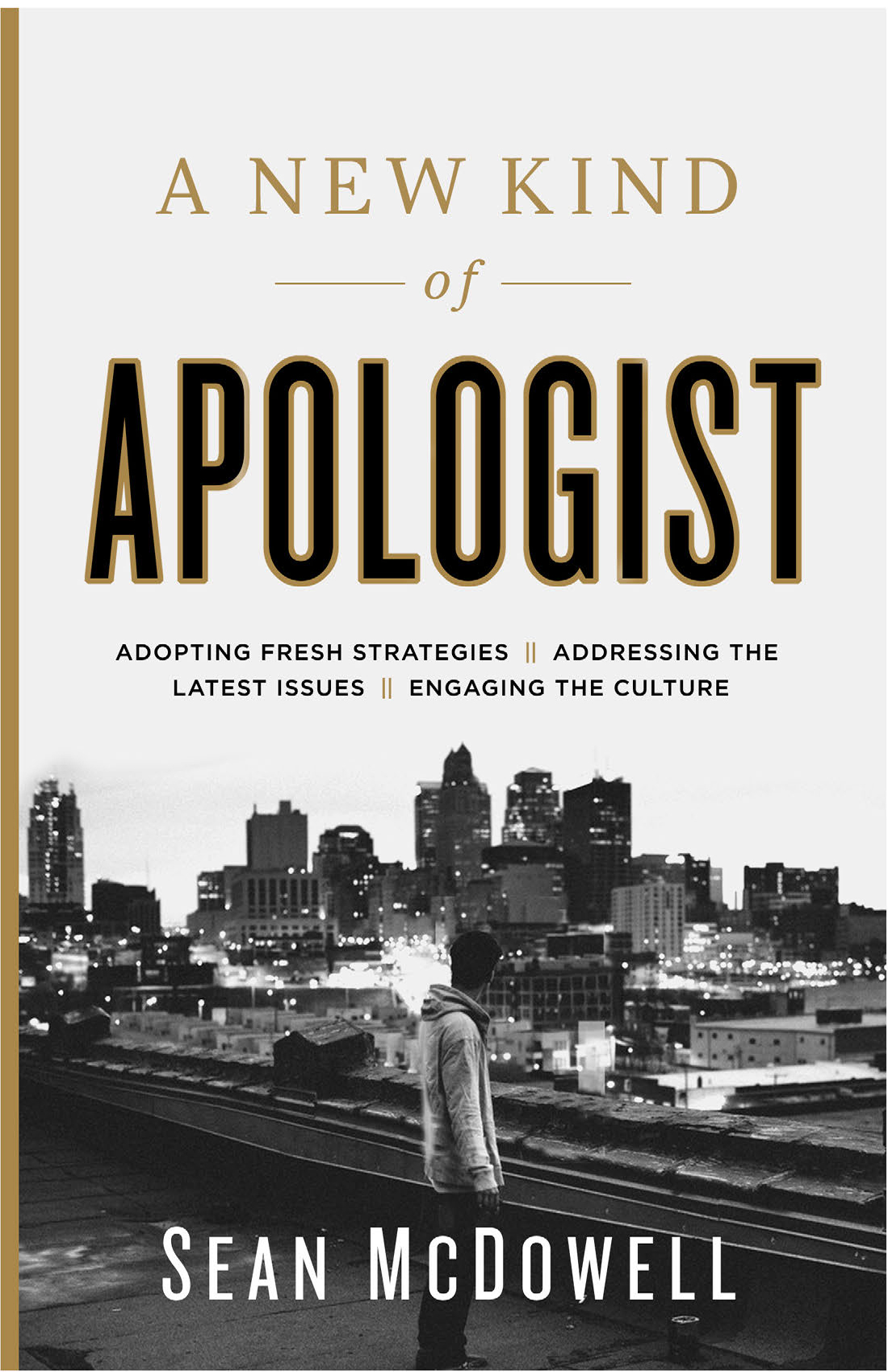
“Jesus says that He has come so that we might have life and life in all its fullness—life abundantly. The Message translation puts it as ‘real and eternal life, more and better life than [you] ever dreamed of’ (John 10:10). But what I find so intriguing about this is that Jesus tells us not just that He will give us life, not just that He will change and transform our lives, not just that He will show us the way to life, but that He Himself is the life (John 14:6). In other words, He is the destination. There is one faith that does claim to lead to God: Jesus stands unique across the ages. He is not simply the means through which we might get to some other destination. He is not a means to an end. Relationship with Jesus is the end.” —Tanya Walker, in A New Kind Of Apologist

Jesus Doesn’t Need Salesmanship Techniques

“Evangelical Christians commonly offered Christ to mankind as a nostrum to cure their ills, a way out of their troubles, a quick and easy means to the achievement of personal ends. They use the right words, but their emphasis is awry. The message is so presented as to leave the hearer with the impression that he is being asked to give up much to gain more. And that is not good, however well intentioned it may be.

“What we do is precisely what a good salesman does when he presents the excellence of his product as compared with that of his closest competitor. The customer chooses the better of the two, as who would not? But the weakness of the whole salesmanship technique is apparent: the idea of selfish gain is presented in the whole transaction. …

“In those early Galilean days Christ’s followers heard His call, forsook the old life, attached themselves to Him, began to obey His teachings and joined themselves to His band of disciples. This total commitment was their confirmation of faith. Nothing less will do. And it is not different today. He calls us to leave the old life and to begin the new. There must never be any vacuum, never any place of neutrality where the world cannot identify us.” —A.W. Tozer, Man—The Dwelling Place Of God

A Leader’s Grace And Power

None of them could stand against the wisdom and the Spirit with which Stephen spoke. (Acts 6:10)

Here’s a truth we can all stand on: The man with an experience is never at the mercy of a man with an argument.

A large group of people wanted to debate with Stephen about his belief in Jesus Christ. I’m sure that these debaters had some excellent points. But they couldn’t win the debate with Stephen because he had something they didn’t have: grace and power from God that was irrefutable!

Stephen’s words were backed up and verified by a lifestyle that was undeniable—

Stephen, a man full of God’s grace and power, performed amazing miracles and signs among the people. But one day some men from the Synagogue of Freed Slaves, as it was called, started to debate with him. They were Jews from Cyrene, Alexandria, Cilicia, and the province of Asia. None of them could stand against the wisdom and the Spirit with which Stephen spoke. (Acts 6:8-10)

“Knowing that we have God’s ability in us, should give us the confidence to lead well when others don’t approve of or appreciate our leadership.” —Liz Sarno

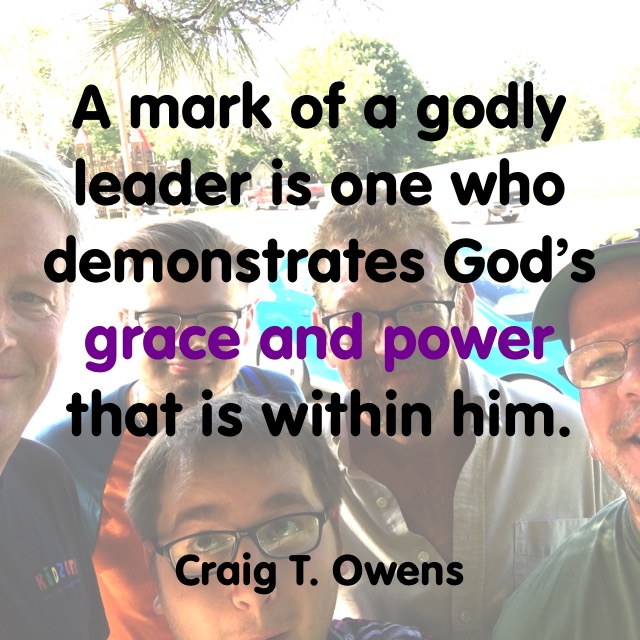
A mark of a godly leader is one who demonstrates God’s grace and power that is within him.

This is Part 8 in my series on godly leadership. To read my other posts, please click here.

Jesus Our Healer

“It’s clear from the Gospels that Jesus was a healer. We don’t know the exact number of people He healed, but it was certainly in the thousands, as on many occasions the Gospel writers tell us He healed ‘multitudes.’ We don’t know all the afflictions people suffered from, but they included leprosy, a deformed hand, swollen limbs, hemorrhaging, blindness, deafness, lameness, paralysis, seizures, a severed ear, and even death.

“It’s tempting to believe that all these people were healed by their faith, but we don’t know that for sure. We do know, however, that they were all healed by Jesus.

“I’m not just playing with words here.

“There are about forty different descriptions of healings in the four Gospels (some are described in more than one place), but faith is said to play an explicit part in only a little more than one-third of them. And in most of those healings, the faith of another person, not the afflicted, is stated. Faith is not even mentioned in the majority of Jesus’ recorded healings. Only twice did Jesus remark about someone (the centurion in Matthew 8:10 and the Gentile mother in Matthew 15:28) having great faith before He healed that person’s loved one.

“The common factor in all Jesus’ recorded healing miracles was Jesus Himself—not the faith of the sick people or their loved ones.” —Lynn Eib, in Peace In The Face Of Cancer

“What Is Meant By Following Jesus?”

Charles Sheldon wrote an eye-opening, heart-challenging book in 1896 entitled In His Steps. From this book came the well-known phrase “What would Jesus do?”

In this book, Pastor Henry Maxwell challenges his congregation to ask this question regarding everything they do throughout their day. One skeptical man asked this pointed question: what is meant by following Jesus?

“I’ve tramped through this city for three days trying to find a job; and in all that time I’ve not had a word of sympathy or comfort except from your minister here, who said he was sorry for me and hoped I would find a job somewhere. 

“Of course, I understand you can’t all go out of your way to hunt up jobs for other people like me. I’m not asking you to; but what is meant by following Jesus? Do you mean that you are suffering and denying yourselves and trying to save lost, suffering humanity just as I understand Jesus did? What do you mean by it? 

“I see the ragged edge of things a good deal. My wife died four months ago. I’m glad she is out of trouble. My little girl is staying with a printer’s family until I find a job. Somehow I get puzzled when I see so many Christians living in luxury and remember how my wife died in a tenement in New York City, gasping for air and asking God to take the little girl too. Of course I don’t expect you people can prevent everyone from dying of starvation, lack of proper nourishment, and tenement air, but what does following Jesus mean? A member of a church was the owner of the tenement where my wife died, and I have wondered if following Jesus all the way was true in his case. 

“It seems to me there’s an awful lot of trouble in the world that somehow wouldn’t exist if all the people who sing your songs went and lived them out. I suppose I don’t understand. But what would Jesus do? It seems to me sometimes as if the people in the big churches have good clothes and nice houses to live in, and money to spend for luxuries, while the people outside the churches, thousands of them, I mean, die in tenements, and walk the streets for jobs, and grow up in misery and drunkenness and sin.”

So for you, what does it mean if you say you are following Jesus?

How Our Faith Is Perfected

“God’s promises and His provision do not lift us from the world of common sense and everyday trials, for it is through these very things that our faith is perfected.” —Lettie Cowman, in Streams In The Desert

Now More Than Ever Christians Must Exalt The Cross

“Think for a moment what the power of the gospel accomplished in the early centuries. With no political base in the Roman government, without any majority in the culture, the gospel changed the spiritual and moral climate of the Roman Empire. Christianity competed with paganism and, for the most part, won the hearts and minds of the populace. Christians were radicals in the best sense of the word—radically committed to community in worship, radically committed to serving their pagan neighbors, and radically committed to living out the implications of their redemption.

“Without freedom of religion, without a media presence, and without the ability to redress the wrongs against them, the Christians discovered that the gospel had the power to change individuals, families, and the culture.” —Dr. Erwin Lutzer, in When A Nation Forgets God (emphasis added)

Please check out my review of When A Nation Forgets God by clicking here, and then get a copy for yourself. You can also read other quotes I have shared from this book by clicking here and here.