Knowing What To Look For

On Sunday afternoon Betsy left our house to meet with our KidZone team. She had only been gone for a few minutes when she called me. “I just had to pull over to the side of the road,” she said. “It sounds like something is dragging underneath my van.”

I quickly threw my coat on and drove to meet her. Sure enough, as I pulled up behind her van I could see something hanging down. I laid down next to the van to look underneath and discovered that the band which holds up the gas tank was missing a bolt. I’m not a mechanic, but even I know that’s not a good thing!

I called a friend at church who’s got a lot of hands-on experience with cars. He said, “I’ll be right there.” He arrived quickly with a metal coat hanger, which he used to take the place of the missing bolt.

We turned around to head back to my house. Jeff was in front of me and had only driven about 150 feet when he jammed on his brakes, pulled to the side of the road, and leaped out of his car. I then watched as he ran across the road, bent down, and picked up the missing bolt!

When we got back to my house I said, “You must have the eye of an eagle to spot a rusty bolt on wet pavement.”

“No,” he said, “I just knew what to look for.”

In Genesis 45, Joseph reveals himself to his brothers. Twice he tells them, “Don’t be afraid. God sent me here.”

“Wait a minute,” you might protest, “God sent him to Egypt?! I thought his brothers sold him as a slave. God put Joseph in the position as prime minister of Egypt?! I thought his special dream-interpreting skills did that.”

Joseph went from a prince in Jacob’s family, to a slave in Egypt, to comptroller of Potiphar’s affairs, to a falsely-accused rapist, to a prisoner, to a prison trustee, to a forgotten man, to Pharaoh’s dream interpreter, to Egypt’s prime minister.

Joseph knew what to look for along the way. He knew God had given him a direction for his life, so he was constantly looking for it.

Prayer does this for me, too. I may know verses like

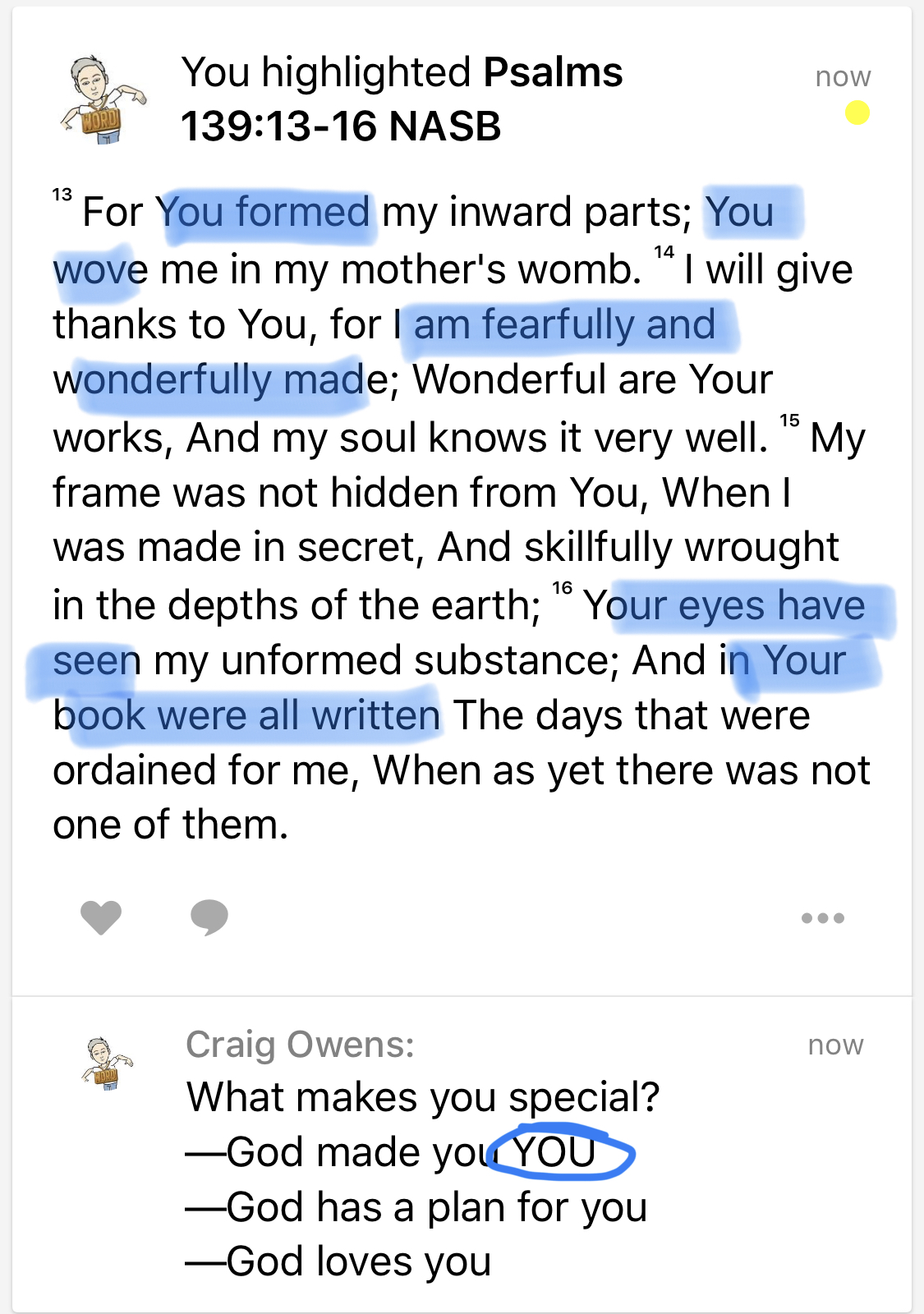
  • I am fearfully and wonderfully made.
  • Before I was born, God knew me.
  • All things are working together for good for me because I love God and called me for a purpose.
  • I should rejoice in my trials because God is developing something in me.

but it’s only when I’m praying these verses that the Holy Spirit trains my eyes to know what to look for.

God was placing Joseph and preparing Joseph to be just where he needed to be, at just the right time, and with just the right skills.

God is doing something with me: He’s preparing me and placing me in His perfect timing to fulfill His perfect plan. When it seems my life has become derailed, I need to know what to look for. Prayer does this: Prayer trains my heart and my mind and my eyes to know what to look for.

I can also assuredly tell you that God is doing something with YOU: He’s preparing YOU and placing YOU in His perfect timing to fulfill His perfect plan. Prayer will help you know what to look for too.
Rats In My Cellar

We started our Love To The Fourth Power series yesterday morning, looking at what it means to Love God with all your heart… and to love your neighbor the same way. As usual, I’m speaking more to myself than I am to our congregation. During my study time, the Holy Spirit usually does a number on me!

So here’s the recap from yesterday:

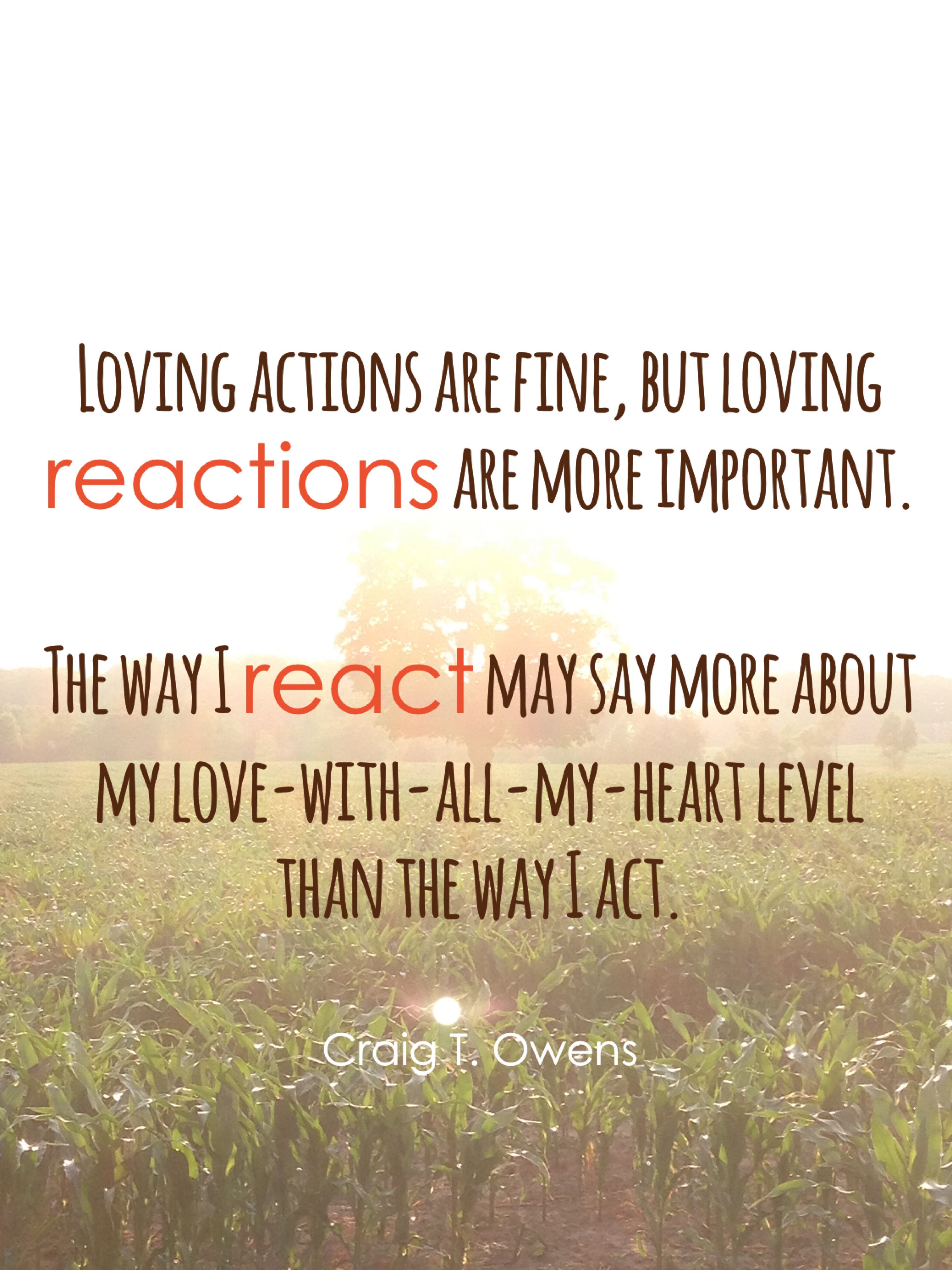
  • Loving actions are fine, but loving REactions are more important.
  • The way I REact may say more about my love-with-all-my-heart level than the way I act.
  • In order to know if my REaction is compassion, I have to take the time to reflect on my REactions.

I love this picturesque quote from C.S. Lewis:

“When I come to my evening prayers and try to reckon up the sins of the day, nine times out of ten the most obvious one is some sin against charity; I have sulked or snapped or sneered or snubbed or stormed. And the excuse that immediately springs to mind is that the provocation was so sudden or unexpected. I was caught off my guard, I had not time to collect myself…. Surely what a man does when he is taken off guard is the best evidence of what sort of man he is. Surely what pops out before the man has time to put on a disguise is the truth. If there are rats in the cellar you are most likely to see them if you go in very suddenly. But the suddenness did not create the rats; it only prevents them from hiding. In the same way, the suddenness of the provocation does not make me an ill-tempered man: it only shows what an ill-tempered man I am….”

I’m working on looking for the rats in my cellar without making any excuses for how they got there. I just want the Holy Spirit to reveal them and help me eliminate them.

I want my REaction to be compassion all the time.

The Power Of -Ing

Have you ever heard someone say something like:

  • “Wow, look at her. She arrived in style!”
  • “I think I’ve finally arrived.”

This is weird because arriving implies stopping. When I’m driving to the store and I arrive at the store, I don’t keep on driving; I stop at the store. That’s the whole reason I left my house in the first place.

So when we talk about people arriving, do we really mean that they are supposed to stop and park? Correct me on this, but I think the only time we stop in life is when life stops. In other words: We’re dead!

We don’t really want to arrive, do we? We want to hit goals and then keep on going. We want to keep on “ing”ing. Here’s how I’m trying to leverage the power of ing:

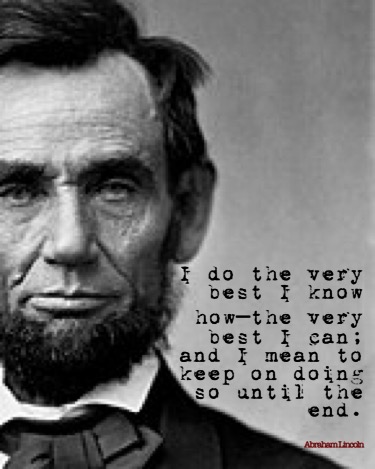
I love the words of Abraham Lincoln, who knew the power of ing:

“I do the very best I know how—the very best I can; and I mean to keep on doing so until the end.”

Don’t arrive. Don’t stop. Keep on “ing”ing the right things—God’s things—and see how God will bless your efforts. There is an incredible power in ing!

Not Mine But God’s

Have you ever wondered how Cain and Abel could end up so night-and-day different from each other? Think about it:

  • Same parents
  • Same home
  • No peer pressure
  • No real outside influences

Yet Cain became a farmer and the first murderer, and Abel became a shepherd and the first murder victim.

Yes, I know personality and temperament come into it. But so does the involvement of their parents. It’s interesting that Eve (not Adam) names their boys. There seems to be a little bit of “father absenteeism” that is involved here, but more telling is the commentary that Eve makes in naming her boys.

With Cain, she said, “I have gotten a man from the Lord.” Digging a little deeper in the Hebrew language, Cain means “a possession.” So Eve said, “This is mine. I did it.”

When Abel is born, there is no commentary. However, his name means “breath.” Something only God can give.

See the difference:

Cain = mine!

Abel = God’s!

As a result, Cain grew up wanting to do things to please himself, and Abel only wanted to please God.

As a parent, I always have to remember that my children are God’s. He loaned them to me to raise them up to serve and love Him. They are not mine, they are His.

Children are a gift from the Lord; they are a reward from Him. (Psalm 127:3)

Keep that in mind, Moms and Dads, when you’re interacting with God’s gifts and rewards.

“Gentleman, This Is A Football”

Listen to the podcast of this post by clicking on the player below, and you can also subscribe on AppleSpotify, or Audible.

After reading Mark Batterson’s book Primal, I started thinking quite a bit about the “stuff” that gets accumulated in our walk with Christ. Especially church traditions.

I find it amazing that neither Jesus nor Paul nor Peter nor any other biblical writer gave us a format for how we should “do” church. Over time we’ve just come to expect that a church service will have some songs, announcements, an offering time, some special music, and a sermon. But even changing the order of the service is so jarring to some people that they treat it like one of the Ten Commandments has been broken.

We can’t just keep doing church the way we’ve always done church. Sometimes we need to step back to ask, “Why do we do what we do?

So I’ve been spending some time reading through the Book of Psalms. I want to get back to the essence of worship.

  • What is it?
  • Is it just singing songs? If so, what songs?
  • Is there a style that is more God-honoring?
  • What instruments should we use? Should we even use instruments at all?
  • Do we sing hymns? Choruses? Both? Neither?
  • Does music only come at the beginning and the ending of a service?

Since I love sports, I frequently go back to sports analogies. Several years ago I read David Maraniss’ excellent biography on Vince Lombardi. Every year the Green Bay Packers coach went into pre-season drills with a stronger and stronger passion to win. Here’s how Maraniss describes it:

“He began a tradition of starting from scratch, assuming that the players were blank slates who carried over no knowledge from the year before. He reviewed the fundamentals of blocking and tackling, the basic plays, how to study the playbook. He began with the most elemental statement of all. ’Gentleman,’ he said, holding a pigskin in his right hand, ’this is a football.’”

“Folks, this is worship…” 

  • I know it can involve instruments, but it can also be acapella.
  • I know it can be loud shouts, but it can also be quiet whispers.
  • I know it can be hymns written 150 years ago, but it can also be spontaneously composed.
  • I know it can open a service, but it can also be throughout a service, or even at the close of a service.
  • I know it can be in a church building, but it can also be in a grocery store.

I know it is highly personal.

I know it is based on what attributes of God I have experienced firsthand.

I know God loves it when I worship Him.

As for the other details, well, I’m still wrestling with that.

►► Would you please prayerfully consider supporting this ministry? My Patreon supporters get behind-the-scenes access to exclusive materials. Like some exclusive quotes from a book I just reviewed. ◀︎◀︎

Treating People Like Pesticides

So I spent all day yesterday studying for my exam which is required in my new tentmaking position. I was reading all about pesticide laws, protective equipment, governmental oversight, properly-formatted labels, and the like. I’m trying to remember it all for my exam with the Department of Agriculture in a couple of weeks.

I was deeply engrossed in the chapter on “Pesticides and the Environment,” sorting out all of the terms I needed to keep in mind…

  • Solubility
  • Adsorption
  • Persistence
  • Degradation
  • Volatility
  • Vapor drift
  • Toxicity
  • Particle drift
  • Permeability

…and all of sudden it hit me how specifically each pesticide is treated. When you take into account the active and inactive ingredients, the concentrations, the particle sizes, the atmospheric conditions at the time of application, along with all of the factors I just listed above, it’s almost as though each pesticide application is unique.

We consider all of these factors for a chemical, yet we are so quick to put people into well-defined boxes with nice, neat labels:

  • “Well, you know, his parents were…”
  • “Of course she’s a…”
  • “I wouldn’t trust him because he…”
  • “Didn’t you know? She once was a…”

Neat labels that keep people in their place. Yet God says every person is unique. What if we took enough time to get to know people—I mean really get to know them. I think the more we know about others, the less likely it is we’ll put them in one of our convenient boxes.

Here’s what I’m thinking about today: Do I want others to neatly label me? Or do I want to be treated as a unique individual? What if I treated people as carefully and with as much attention to the fine details as I must with my pesticides? Hmm, treating people like pesticides: not a bad idea.

Tick, Tock! Drip, Drop!

Tick, Tock! “There just is never enough time in my day!”

Tick, Tock! “Wow, this day has just flown by and I got nothing done!”

Tick, Tock! “Why do I always have so much To Do List left at the end of my week?”

May I suggest that instead of Tick, Tock! you focus on Drip, Drop!

(The data compiling website Flowing Data has a fascinating look at how men and women of all ages spend their time throughout the day.)

I’ve gotten some great insight on time usage from Paul Meyer. Check it out:

“Most time is wasted, not in hours, but in minutes. A bucket with a small hole in the bottom gets just as empty as a bucket that is deliberately emptied.”

Usually our time doesn’t just Tick! by, it Drips! by. In other words, it’s really easy to spot the huge time-wasters; it’s much more difficult to find the time-leakers. But they can be found and plugged. Listen to more good advice from Dr. Meyer:

“Time is usually wasted in the same way every day.”

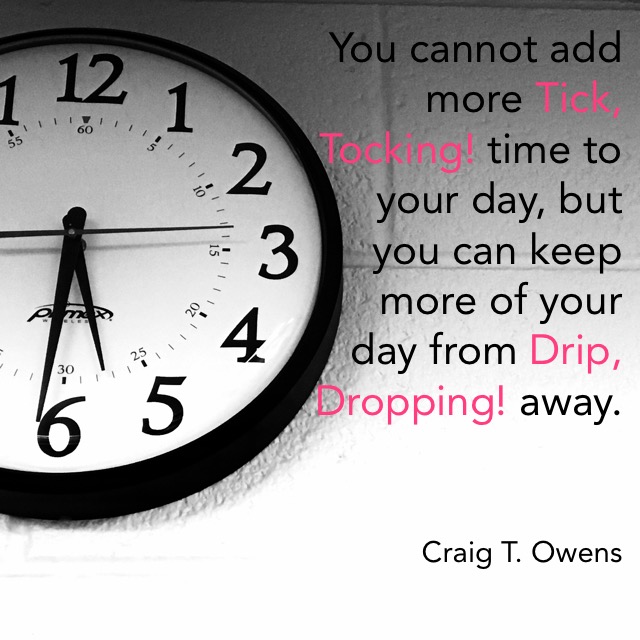
You cannot add more Tick, Tocking! time to your day, but you can keep more of your day from Drip, Dropping! away. Here are two things I’ve done which have really helped me:

  1. For one week (7 full days) I kept a log of how I spent every 15-minute increment. This might sound like a Drip, Drop! thing to do, but I was amazed at how many leaks I discovered after a week of doing this.
  2. Then I prayed the same prayer Moses prayed, “Give me wisdom to use my days the right way.”

If you can identify the time leaks, God can give you the wisdom to help you plug them. When you can control the Drip, Drop! you’ll get more out of your Tick, Tock! each day.

UPDATE: The thoughts in this chapter became a whole chapter in my book Shepherd Leadership. The chapter is called ‘Can’t, Won’t, or Don’t,’ and it addresses the three attitudes that hold us back from stewarding our time.

Living Sculptures

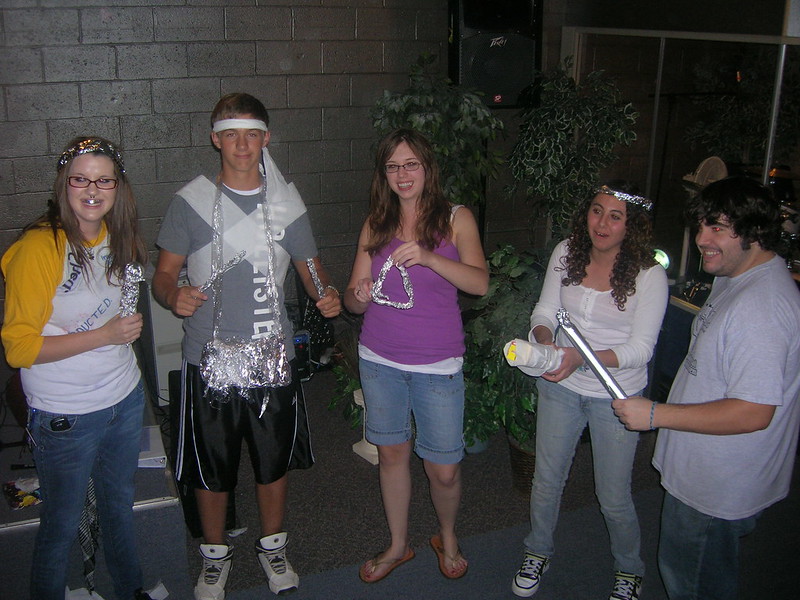
Last night in our Impact! youth service we played a fun game called “Living Sculptures” (pictures are here). It was a whole lot of fun watching the groups invent and then reinvent one another within their group.

Sculptures are works of art. A person or a point in history captured in solid three dimensions for all time. The sculpture doesn’t change. At least it doesn’t usually change in a positive, beautifying way. The sculpture may erode or be broken or crumble, but that’s not a good change. The sculpture ceases to be what the artist intended it to be.

However, our lives are living, breathing sculptures. We change, or rather The Artist changes us. And the change is good when we are in the hands of the right Artist: our Creator.

Michelangelo’s famous David sculpture came about because Michelangelo said he saw David in the marble and just released him. So too with God, the Artist of our lives: He sees what we can become and is in the process of releasing our beauty, our potential.

God began sculpting your life even before you were born

Oh yes, You shaped me first inside, then out;
You formed me in my mother’s womb.
I thank You, High God—You’re breathtaking!
Body and soul, I am marvelously made!
I worship in adoration—what a creation!
You know me inside and out,
You know every bone in my body;
You know exactly how I was made, bit by bit,
how I was sculpted from nothing into something.
Like an open book, You watched me grow from conception to birth;
all the stages of my life were spread out before You,
The days of my life all prepared
before I’d even lived one day.

…and He is continuing to form you into something beautiful

As the clay is in the potter’s hand, so are you in My hand.

…until you become the masterpiece that He saw in you all along…

For we are God’s masterpiece. He has created us anew in Christ Jesus, so we can do the good things He planned for us long ago.

God is the perfect Artist. Let Him work on you today to make you into His masterpiece: a one-of-a-kind creation that brings glory to the Artist.

Too Busy

Listen to the podcast of this post by clicking on the player below, and you can also subscribe on AppleSpotify, or Audible.

Life’s coming at me way too fast today!

Like a runaway commuter train.

I’ve got way too much to get done today!

Like a shorthanded deli owner at the peak of the lunch rush.

My To-Do list is longer than my To-Day’s hours.

What goes first?

What can wait until tomorrow?

What can I delegate to someone else?

Wait… listen to this odd counsel about busyness:

“Tomorrow I plan to work, work, from early until late. I have so much to do that I shall spend the first three hours in prayer.” —Martin Luther

The first hours praying?!?

Not responding to emails.

Not getting a head start on the piles of stuff.

Not folding laundry before the kids get up.

Not going to the office before the phones start ringing.

Yes, get up earlier to pray more!

God knows your schedule.

He knows your To-Do list.

He knows your To-Day’s hours.

He knows what’s important … really important.

God says, “Love Me. Love others. Serve the world.”

“You must love God with all your heart, all your soul, all your mind, and all your strength. And you must love your neighbor as yourself. Nothing else on your To-Do list is more important than these.”—Jesus

Too busy today?

Get up earlier tomorrow and talk to God about it.

“I direct the steps of those who seek Me. I delight in every detail of their lives.” —God

Get up and get praying.

►► Would you please prayerfully consider supporting this ministry? My Patreon supporters get behind-the-scenes access to exclusive materials. ◀︎◀︎

a

Slowing Down Fast Food

It’s named “fast” food because it is supposedly prepared quicker than you could fix it yourself at home. It’s also called “fast” because so many of us order it from our cars in the drive-thru lane, and then inhale our food as we speed down the road to our next appointment.

But have you noticed how fast people eat their fast food even when they sit down in the restaurant?

Have you noticed how fast we eat the food we prepare at home? Usually, it takes less time to eat it than it took to prepare it!

Have you noticed how fast we “eat” life?

The other day I took a break from my study time to eat a healthy breakfast bar. I munched on it while I continued to type notes on my computer. A couple minutes later I looked next to me and saw the empty wrapper but honestly couldn’t remember what flavor I just ate! What’s the point of flavor if I’m not even going to enjoy it?

The Psalmist said, “Taste and see that the Lord is good.”

Taste: That implies that I slow down to actually notice the taste.

How many blessings from the Creator do I treat as fast food every day?

  • I “see” yet don’t perceive the incredible pallet of colors in the flowers and trees and sunset.
  • I “hear” yet don’t appreciate the robin’s early morning song.
  • I “smell” yet don’t savor the newly-blossomed flowers on the bush outside my front door.
  • I “taste” yet don’t marvel at the golden beauty of the nectar-turned-to-honey for my tea.
  • I “touch” yet I’m unmoved by the silky black fur of my cat.

It’s time to slow down … savor … relish … bask … enjoy … marvel… appreciate … and then truly praise God for His incredible goodness.

Some ideas for us to try:

  • When you talk with your spouse or children today, look deep into their eyes. What color are they? I mean, really look. Don’t settle for saying “blue” or “green” or “brown.” Look at them like an artist would. “Crystal blue: like the color of my favorite lake early in the morning.”
  • When you sit down to eat, take a bite, put your fork down, chew slowly, try to identify each flavor. Take a drink before taking your next bite, so that each bite of food is like the first bite.
  • If you’re eating with others, don’t rush away from the table after the meal is eaten. Talk, ask questions, listen, learn something new.
  • Walk outside. Close your eyes and listen attentively. How many sounds can you hear? The birds singing, the bee buzzing, the leaves rustling, children laughing, sprinklers sprinkling, mowers mowing. Appreciate the sounds.

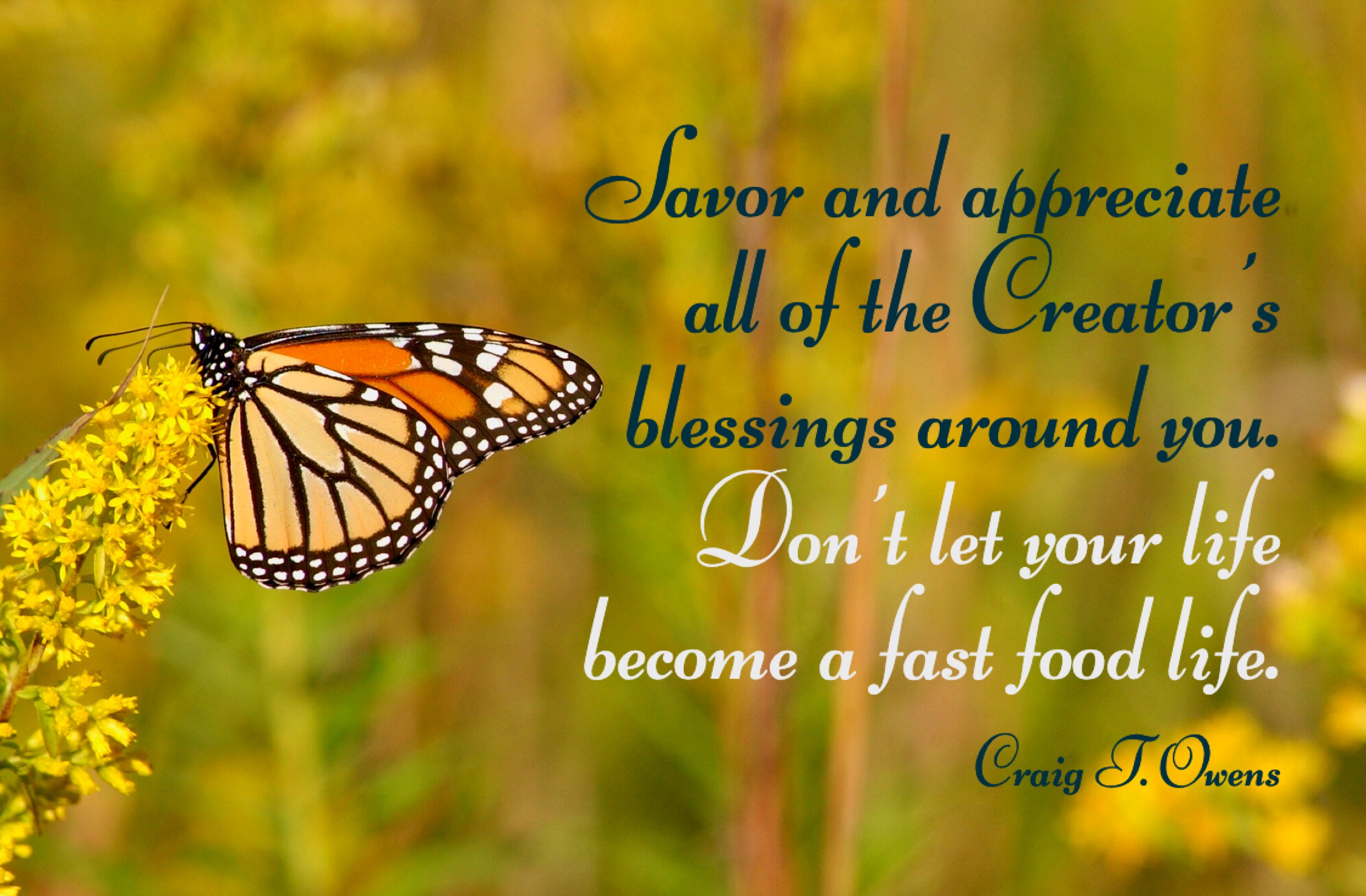
S-l-o-w  d-o-w-n. Taste—savor and appreciate—all of the Creator’s blessings around you. If you don’t, you’ll eat without tasting. Don’t let your life become a fast food life.