Poetry Saturday—The Church A Garden

Listen to the podcast of this post by clicking on the player below, and you can also subscribe on AppleSpotify, or Audible.

Christ hath a garden walled around,
A Paradise of fruitful ground,
Chosen by love and fenced by grace
From out the world’s wide wilderness.

Like trees of spice His servants stand,
There planted by His mighty hand;
By Eden’s gracious streams, that flow
To feed their beauty where they grow.

Awake, O wind of heav’n and bear
Their sweetest perfume through the air:
Stir up, O south, the boughs that bloom,
Till the beloved Master come:

That He may come, and linger yet
Among the trees that He hath set;
That He may evermore be seen
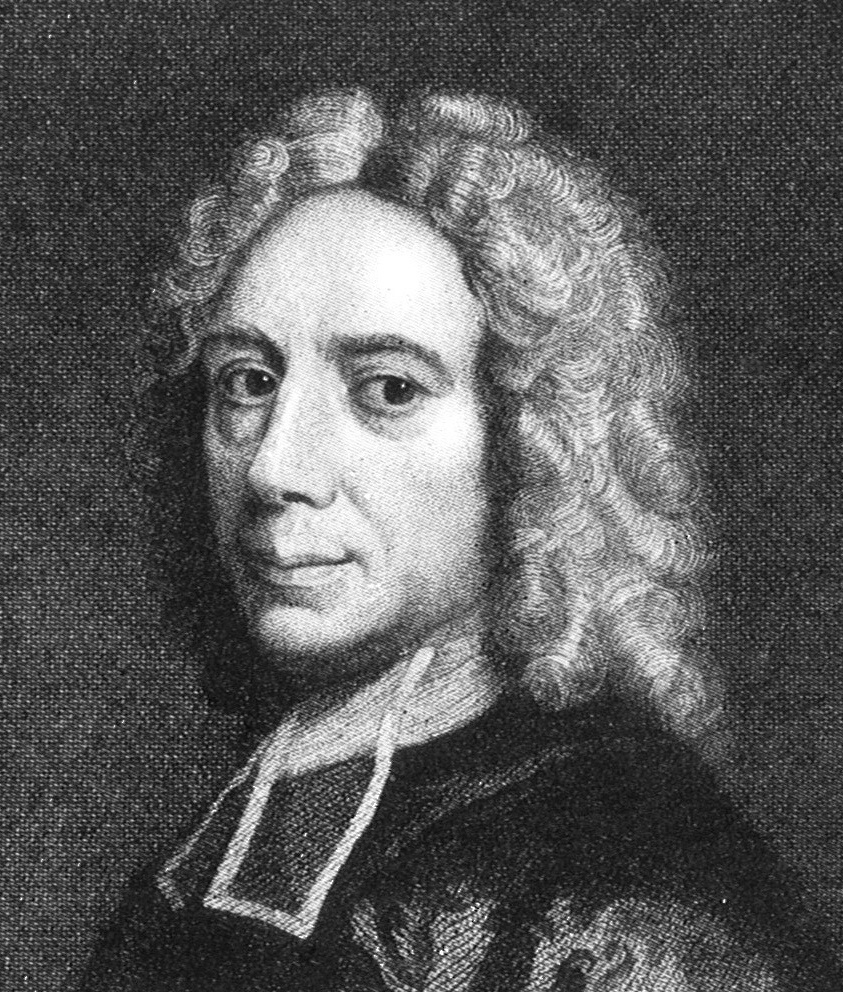
To walk amid the springing green. —Isaac Watts

►► Would you please prayerfully consider supporting this ministry? ◀︎◀︎

Poetry Saturday—Why Art Thou Weary?

Listen to the podcast of this post by clicking on the player below, and you can also subscribe on AppleSpotify, or Audible.

Sad heart, why art thou weary
With anxious strivings drear?
Thou hast no cause for sadness,
No cause for restless fear.
Thou longest for thy Master,
Then cease and be at rest;
For shall not He who made thee
Know what for thee is best? —Oswald Chambers

►► Would you please prayerfully consider supporting this ministry? ◀︎◀︎
Poetry Saturday—A Nation’s Strength

Listen to the podcast of this post by clicking on the player below, and you can also subscribe on AppleSpotify, or Audible. 

What makes a nation’s pillars high
And its foundations strong?
What makes it mighty to defy
The foes that round it throng?

It is not gold. Its kingdoms grand
Go down in battle shock;
Its shafts are laid on sinking sand,
Not on abiding rock.

Is it the sword? Ask the red dust
Of empires passed away;
The blood has turned their stones to rust,
Their glory to decay.

And is it pride? Ah, that bright crown
Has seemed to nations sweet;
But God has struck its luster down
In ashes at His feet.

Not gold but only men can make
A people great and strong;
Men who for truth and honor’s sake
Stand fast and suffer long.

Brave men who work while others sleep,
Who dare while others fly…
They build a nation’s pillars deep
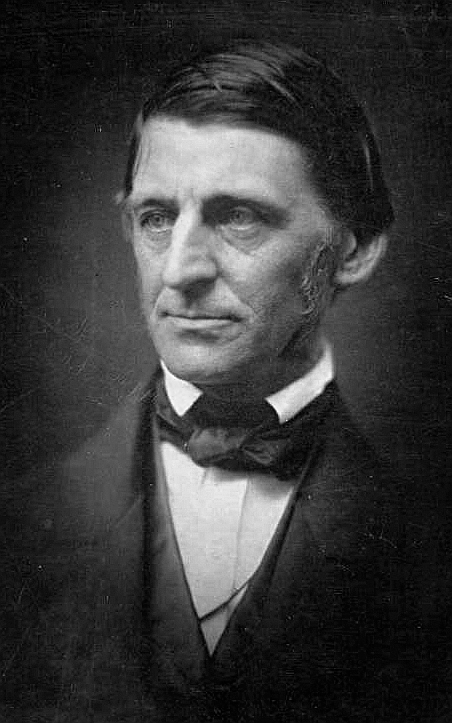
And lift them to the sky. —Ralph Waldo Emerson

►► Would you please prayerfully consider supporting this ministry? ◀︎◀︎
Poetry Saturday—Philomythus To Misomythus

Listen to the podcast of this post by clicking on the player below, and you can also subscribe on Apple or Spotify.

The heart of Man is not compound of lies,
but draws some wisdom from the only Wise,
and still recalls him. Though now long estranged,
Man is not wholly lost nor wholly changed.
Dis-graced he may be, yet is not dethroned,
and keeps the rags of lordship once he owned,
his world-dominion by creative act:
not his to worship the great Artefact,
Man, Sub-creator, the refracted light
through whom is splintered from a single White
to many hues, and endlessly combined
in living shapes that move from mind to mind.
Though all the crannies of the world we filled
with Elves and Goblins, though we dared to build
Gods and their houses out of dark and light,
and sowed the seed of dragons, ’twas our right
(used or misused). The right has not decayed.
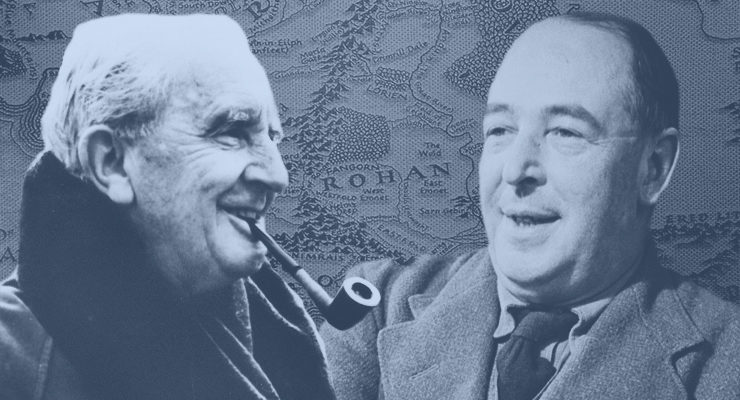
We make still by the law in which we’re made.—J.R.R. Tolkien, written to C.S. Lewis

►► Would you please prayerfully consider supporting this ministry? ◀︎◀︎

Poetry Saturday—Sunday Choice (Complaint #1)

Listen to the podcast of this post by clicking on the player below, and you can also subscribe on Apple or Spotify.

I’d shut down once the text is read,
and wish I’d just stayed home instead.
What do they teach these guys in school?
Must boredom be their guiding rule?
When insipid’s their claim
to weekly homiletic fame,
and sin can sit at ease, unfazed
with all the rest whose eyes are glazed,
while humor or some story take
the place of exposition—wake
me when it’s over, if you please.
The devil’s tools are such as these.
Before them lies the Word of Life:
It should dissect us like a knife
and cause our sin-sick souls to howl
to be exposed so dark and foul.
We should be ushered through the gate
of glory, crushed beneath its weight
and, listed by a skillful hand,
there made with joy to safely stand
before our Savior’s beaming face,
secure in His redeeming grace,
and all astounded to be seen
in His eyes loved, forgiven, clean,
and fitted to His bidding do.
Instead, we are subjected to
some moral exhortation in
the name of Him who died for sin,
which most accept too readily
since it requires no change, you see,
but serves to reassure them that
God’s fine with them right where they’re at.
The Church thus weekly sermonized
is steadily more marginalized.
The Kingdom’s coming waits until
those called to preach their calls fulfill
with courage and consistency,
to vaunt Christ, with humility. —T.M. Moore

►► Would you please prayerfully consider supporting this ministry? ◀︎◀︎

Poetry Saturday—Upon A Life I Have Not Lived

Listen to the podcast of this post by clicking on the player below, and you can also subscribe on Apple or Spotify.

Upon a Life I have not lived,
Upon a Death I did not die,
Another’s Life; Another’s Death,
I stake my whole eternity.

Not on the tears which I have shed,
Not on the sorrows I have known,
Another’s tears; Another’s griefs,
On these I rest, on these alone.

O Jesus, Son of God,
I build on what Thy Cross has done for me;
There both my death and life I read,
My guilt, and pardon there I see.

Lord, I believe; O deal with me,
As one who has Thy Word believed!
I take the gift, Lord, look on me,
As one who has Thy gift received. —Horatius Bonar

►► Would you please prayerfully consider supporting this ministry? ◀︎◀︎

Poetry Saturday—Affliction IV

Listen to the podcast of this post by clicking on the player below, and you can also subscribe on Apple or Spotify.

Broken in pieces all asunder,
                      Lord, hunt me not,
                     A thing forgot,
Once a poore creature, now a wonder,
               A wonder tortur’d in the space
               Betwixt this world and that of grace.

My thoughts are all a case of knives,
                     Wounding my heart
                     With scatter’d smart,
As watring pots give flowers their lives.
               Nothing their furie can controll,
               While they do wound and prick my soul.

All my attendants are at strife,
                     Quitting their place
                     Unto my face:
Nothing performs the task of life:
               The elements are let loose to fight,
               And while I live, trie out their right.

Oh help, my God! let not their plot
                     Kill them and me,
                     And also Thee,
Who art my life: dissolve the knot,
               As the sunne scatters by his light
               All the rebellions of the night.

Then shall those powers, which work for grief,
                     Enter Thy pay,
                     And day by day
Labour Thy praise, and my relief;
               With care and courage building me,
                Till I reach heav’n, and much more, Thee. —George Herbert (**spelling is 1663 English**)

►► Would you please prayerfully consider supporting this ministry? ◀︎◀︎
Seeing Beauty And Saying Beautifully (book review)

Listen to the podcast of this post by clicking on the player below, and you can also subscribe on Apple or Spotify.

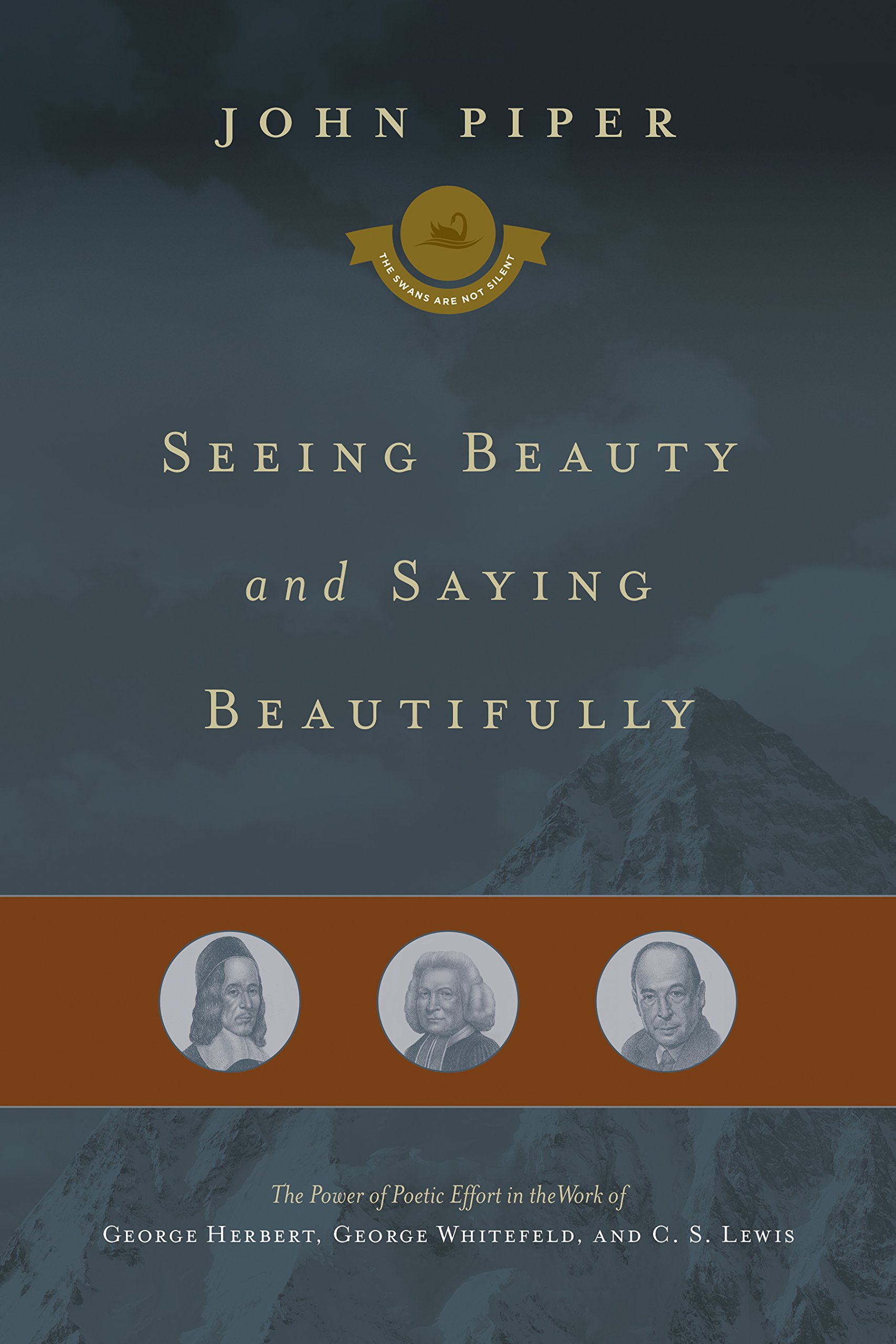
Seeing Beauty And Saying Beautifully is, in my mind, a grand slam! It features one of my favorite poets (George Herbert), possibly the most prolific evangelist of history (George Whitefield), my all-time favorite author (C.S. Lewis), all tied together by my go-to theologian (John Piper). Seeing Beauty And Saying Beautifully is part 6 in Piper’s series called “The Swans Are Not Silent.” 

George Herbert was a pastor of a small country church and a prolific poet who wrote almost all of his poems uniquely. “Of the 167 poems in The Temple, 116 are written with meters that are not repeated,” which even modern poets find astounding. George Whitefield spent more hours of his life preaching than he did sleeping, and he spoke with such a captivating style that he was quite possibly the first celebrity of the American colonies. C.S. Lewis wrote everything from history to fantasy, autobiography to poetry, theology to children’s novels. Peter Kreeft says of him, he “was not a man: he was a world.” 

John Piper finds in all three of these men a common thread: They all were able to not only see the beauty of God in everything, but they were able to express it in a beautiful way that drew in others to see the beauty of God for themselves. Pastor John calls this “poetic effort.” 

Pastor John also wrestles with how the profound creativity and eloquence of his three subjects meshes with the apostle Paul’s admonition that human eloquence could drain the Cross of Jesus of its power (see 1 Corinthians 1:17-2:5). He concludes that poetic effort for the sake of exalting the speaker or poet does turn people’s eyes to man and away from God. But that poet, evangelist, or author that uses the beauty in God’s creation to point people to the Creator is doing so in a way in which God is supremely exalted. This, Pastor John says, is exactly what Herbert, Whitefield, and Lewis have done, and done so well that their poetic efforts are still fruitful and God-glorifying long after their deaths. 

Seeing Beauty And Saying Beautifully is a wonderful book for those who enjoy biographies, theology, or the craft of skilled artisans. If you don’t know about the poems of George Herbert, the preaching of George Whitefield, or the vast library of literature of C.S. Lewis, let this book be your doorway to a rich new world of discovery, enjoyment, and God-glorification. 

►► Would you please prayerfully consider supporting this ministry? ◀︎◀︎

Poetry Saturday—By Night When Others Soundly Slept

Listen to the podcast of this post by clicking on the player below, and you can also subscribe on Apple or Spotify.

By night when others soundly slept
And hath at once both ease and Rest,
My waking eyes were open kept
And so to lie I found it best.

I sought Him whom my Soul did Love,
With tears I sought Him earnestly.
He bow’d His ear down from Above.
In vain I did not seek or cry.

My hungry Soul He fill’d with Good;
He in His Bottle put my tears,
My smarting wounds washt in His blood,
And banisht thence my Doubts and fears.

What to my Saviour shall I give
Who freely hath done this for me?
I’ll serve Him here whilst I shall live
And Love Him to Eternity. —Anne Bradstreet


Poetry Saturday—Peace

Listen to the podcast of this post by clicking on the player below, and you can also subscribe on Apple or Spotify.

Sweet Peace, where dost thou dwell? I humbly crave,
                                           Let me once know.
             I sought thee in a secret cave,
             And ask’d, if Peace were there.
A hollow winde did seem to answer, No:
                                           Go seek elsewhere.

I did; and going did a rainbow note:
                                           Surely, thought I,
             This is the lace of Peaces coat:
             I will search out the matter.
But while I lookt, the clouds immediately
                                           Did break and scatter.

Then went I to a garden, and did spy
                                           A gallant flower,
             The Crown Imperiall: sure, said I,
             Peace at the root must dwell.
But when I digg’d, I saw a worm devoure
                                           What show’d so well.

At length I met a rev’rend good old man,
                                           Whom when of Peace
             I did demand, he thus began:
             There was a Prince of old
At Salem dwelt, who liv’d with good increase
                                           Of flock and fold.

He sweetly liv’d; yet sweetnesse did not save
                                           His life from foes.
       But after death out of his grave
              There sprang twelve stalks of wheat:
Which many wondring at, got some of those
                                           To plant and set.

It prosper’d strangely, and did soon disperse
                                           Through all the earth:
        For they that taste it do rehearse,
             That vertue lies therein,
A secret vertue bringing peace and mirth
                                           By flight of sinne.

Take of this grain, which in my garden grows,
                                           And grows for you;
        Make bread of it: and that repose
             And peace, which ev’ry where
With so much earnestnesse you do pursue,
                                           Is onely there. —George Herbert **spelling is 1663 English**

►► Would you please prayerfully consider supporting this ministry? ◀︎◀︎