Listen to the podcast of this post by clicking on the player below, and you can also subscribe on Apple, Spotify, or Audible.
Waiting for God to answer doesn’t mean sitting still and doing nothing. Sometimes we have to work, and plan, and strategize while we are praying. Check out this example from Nehemiah.
Check out more thoughts about using the Bible as our prayer guide in our series Our Prayer Book.
Listen to the audio-only version of this podcast by clicking on the player below, or scroll down to watch the video.
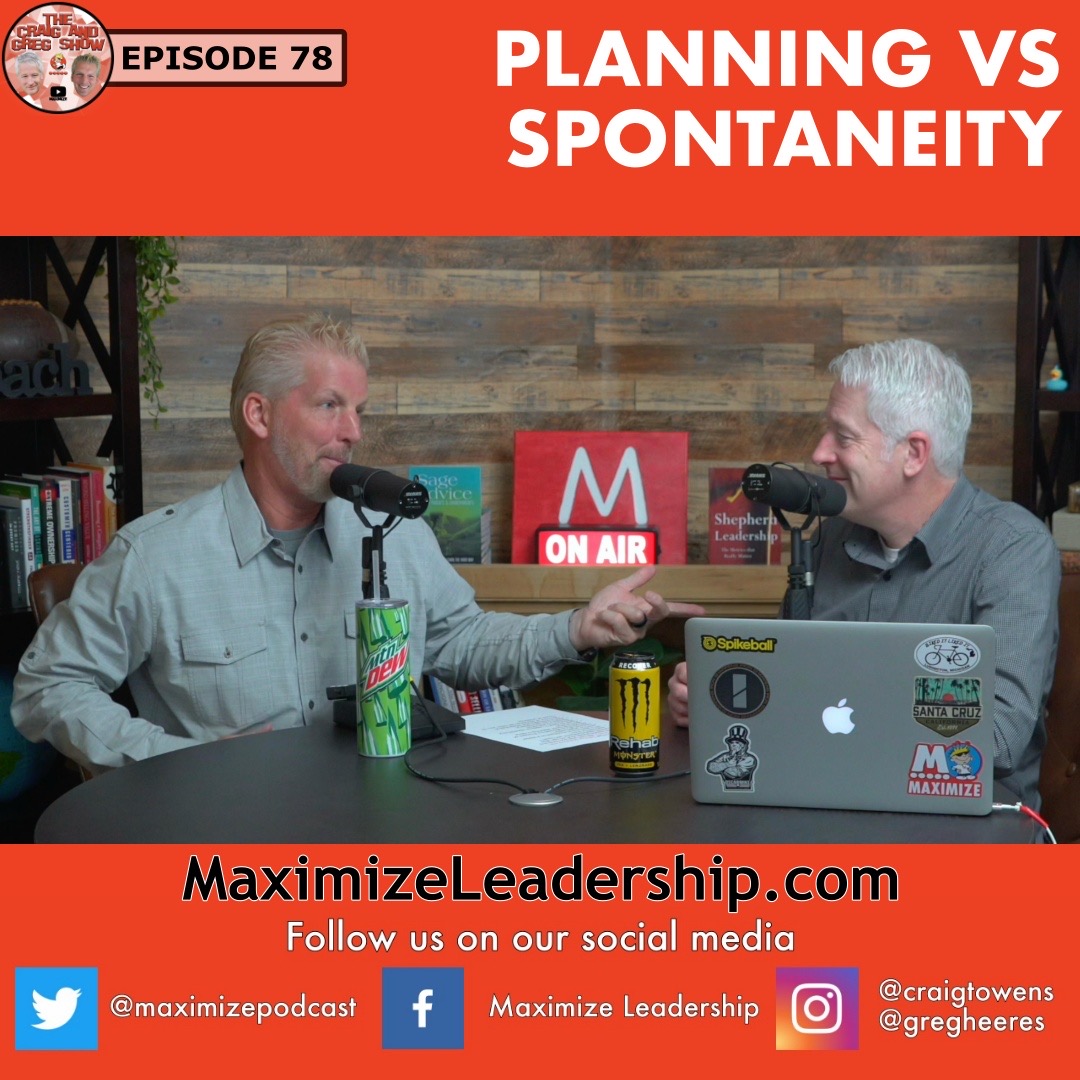
Are you a person that likes to meticulously plan every detail, or are you more comfortable planning as you go? In this episode, Greg and I say leaders should strive for both! Join us as we discuss the art and science of balancing planning and spontaneity to hit the golden mean of the two.
[0:25] Most leaders haven’t thought through the balance between planning and spontaneity.
[1:46] This balance is usually more art than science.
[3:27] For some people, planning and spontaneity can be like trying to mix oil and water.
[5:43] Leaders need to work on flexibility in every situation.
[6:36] We need to know the temperament of our teammates so that we can keep everyone appropriately engaged.
[9:13] Regardless of whether you tend more toward planning or being spontaneous, you can supplement the others who are opposite of you.
[11:32] We can use the diversity on our teams to do amazing things for everyone.
[13:00] Debriefing with our teams after a spontaneous event can help prepare everyone for the next opportunity.
[13:45] Leaders need to learn how to read their teammates and the setting.
[16:08] Leaders need to earn trust with our teammates. One huge component in earning trusting is openness to input.
[18:05] Do we know what our teammates think of our leadership style? Are we willing to address this and make changes?
[22:00] Some important leadership takeaways.
Check out this episode and subscribe on YouTube so you can watch all of the upcoming episodes. You can also listen to our podcast on Spotify and Apple.
Listen to the audio-only version of this podcast by clicking on the player below, or scroll down to watch the video.
As a leader, you have the great responsibility, and privilege, of setting the tone for your team. One of the biggest ways you set the tone for your organization is how you react to stressful situations. Remaining calm through adversity signals to your team that they can remain calm as well, and provides amazing stability to your organization. In this episode, Greg and I discuss this topic and give helpful tips that will enable you to better control your reactions.
[0:30] When the going gets tough, the tough get going. But what do leaders do during tough times?
[2:51] When a leader panics, the team cannot be calm.
[3:24] Greg has a great analogy for the world of nature that can help leaders.
[5:08] What happens if a leader’s anger erupts?
[7:53] Our teammates watch our responses closely in tense times and in our reflection times after the intense activity.
[10:15] Leaders have to learn how to control the emotional extremes.
[12:35] Insecure leaders tend to react a little too intensely, and their teams will learn to follow their example.
[13:28] Both pre-planning and reflection will help leaders avoid an over-the-top reaction.
[18:04] Reactions that are too quick usually create additional problems. Thoughtful responses are always healthier.
[20:22] Macro and micro situations require different responses from leaders, so leaders need to learn to quickly assess the situation.
[23:00] I suggest the most important thing for leaders to work on to avoid overreactions.
[25:16] Greg shares a quote with his own helpful modification.
Check out this episode and subscribe on YouTube so you can watch all of the upcoming episodes. You can also listen to our podcast on Spotify and Apple.
Listen to the podcast of this post by clicking on the player below, and you can also subscribe on Apple, Spotify, or Audible.
Perhaps you’ve heard the phrase, “The best laid plans of mice and men often go awry.”
This is a line from a poem written by Robert Burns in 1785 called To A Mouse. The story behind the poem is Burns had been plowing his field and destroyed a nest that a mouse had been working all day to build. His poem was written as an apology. The famous line from the Scottish poet actually is written like this—
The best laid schemes o’ Mice an’ Men
Gang aft agley,
An’ lea’e us nought but grief an’ pain,
For promis’d joy!
That phrase “gang aft agley” means often go awry.
Do you ever feel this way? Like your perfectly planned agenda got derailed before you even finished breakfast? Or that your To Do list never quite gets “To Done” by the end of the day?
I had a great time on the Thriving In Ministry podcast with Kyle Willis while his podcast partner Dace Clifton was on sabbatical. We had planned to discuss how to help pastors get some rest so they could be at their optimal health, but our best laid plans definitely “gang aft agley”! We had multiple technical issues before we could even start recording, and then just as we talked about how pastors could find a way to rest, well, this happened…
Ah yes! Plans gone awry, indeed!
But here is an important principle for all of us to remember. The Bible says this: We can make our plans, but the Lord determines our steps (Proverbs 16:9). That means the thing that I call “an interruption” may be something or someone God has sent my way.
I used to really struggle with this, saying things like, “My plans never work out.” Until one day I heard the distinct voice of the Holy Spirit ask me, “Whose plans?”
Now listen, you who say, “Today or tomorrow we will go to this or that city, spend a year there, carry on business and make money.” Why, you do not even know what will happen tomorrow. What is your life? You are a mist that appears for a little while and then vanishes. Instead, you ought to say, “If it is the Lord’s will, we will live and do this or that.” (James 4:13-15)
Pastor, look at the life of Jesus. He often tried to get away for a time of rest, but people with needs showed up. His well-laid plans appeared to go awry. But He had compassion on them because He viewed them “like sheep without a shepherd” (Matthew 9:36; Mark 6:34). Jesus then found time to sabbath later.
Don’t view people with needs as an interruption or as something that derails your plans, but thank God for sending them your way. Then listen to the Holy Spirit showing you how and when you can get the rest you need to be energized to accomplish the rest of the items on your agenda.
I’ll be sharing more clips from this Thriving In Ministry interview soon, so please stay tuned. Shepherd Leadership: The Metrics That Really Matter is available in print or ebook, and in audiobook through either Audible or Apple.
Check out this episode and subscribe on YouTube so you can watch all of the upcoming episodes. You can also listen to our podcast on Spotify and Apple.
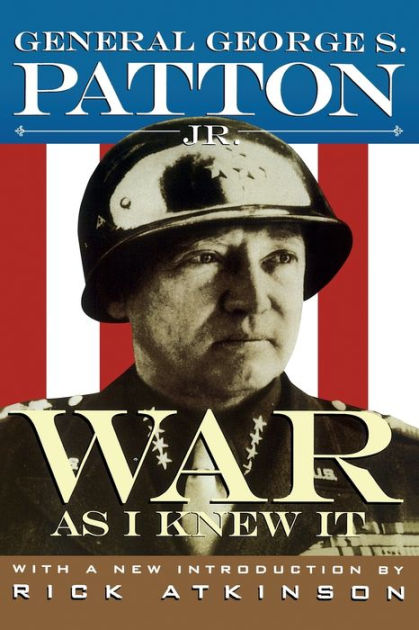
General George Patton gives us an insightful leadership look into how his army was able to accomplish so much during such a short time in World War II. Check out my full book review by clicking here.
“An ounce of sweat saves a gallon of blood.”
“This is another example of the many I’ve encountered in life where great disappointments have proven to be the road to future success.”
“Successful generals make plans to fit the circumstances, but do not try to create circumstances to fit plans.”
“The 8th of May, 1945, marked exactly two-and-a-half years since we had landed in Africa. During all that time we had been in practically continuous battle, and when not in battle had been under the strain of continuous criticism, which I believe is harder to bear.”
“It is unfortunate and to me a tragic fact, that in our attempts to prevent war we have taught our people to belittle the heroic qualities of the solider.”
“Wars are not won by defensive tactics. … The best armor and the best defense is a rapid and well-directed fire.”
“An army commander does what is necessary to accomplish his mission, and that nearly eighty percent of his mission is to arouse morale in his men.”
“Don’t delay. The best is the enemy of the good. By this, I mean that a good plan violently executed now is better than a perfect plan next week.”
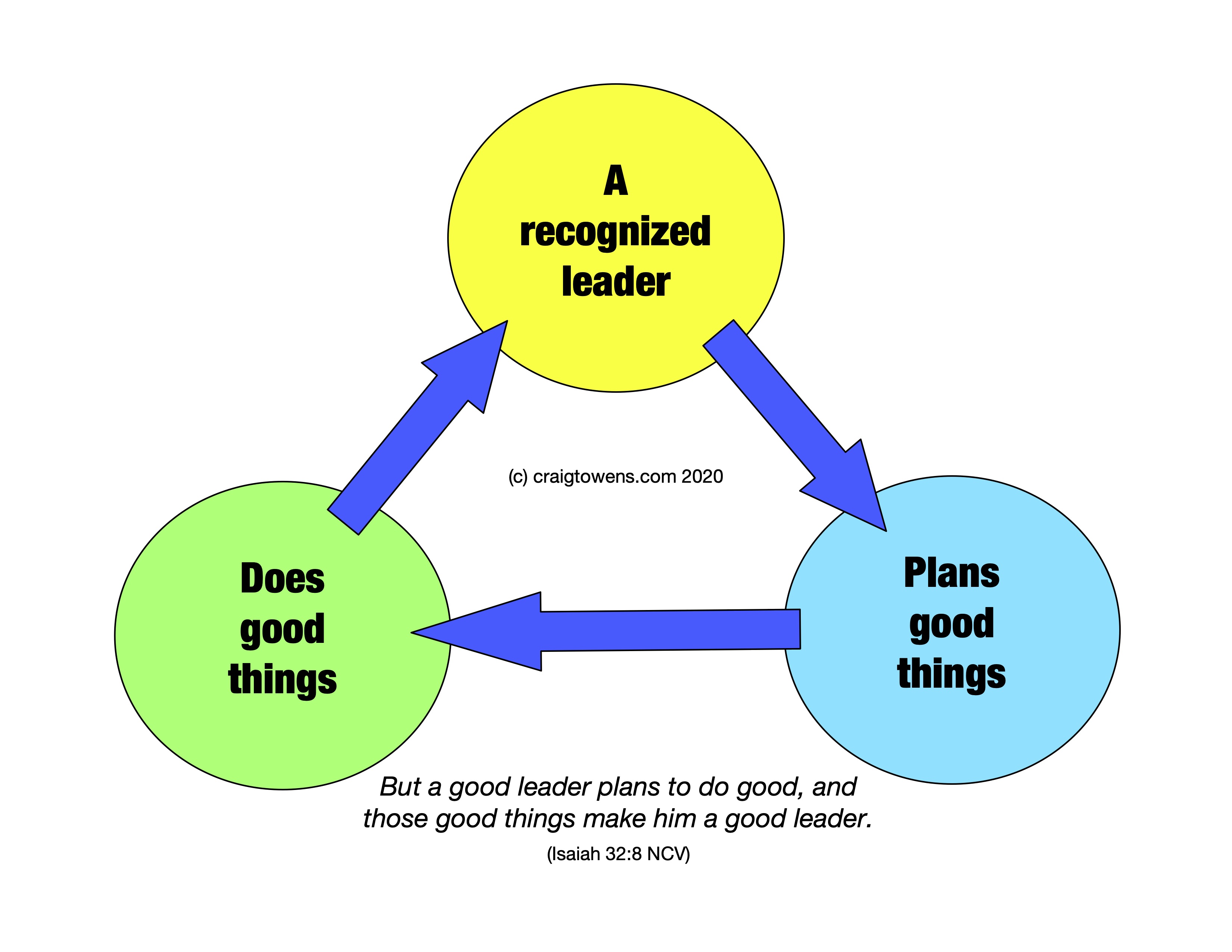
But a good leader plans to do good, and those good things make him a good leader. (Isaiah 32:8 NCV)
A recognized good leader → Plans good things → Does good things → which makes that leader more recognizable, and on and on it goes.
A good leader has to make good plans and has to followthrough on those good plans in a good way. The leader may have started off with just the title of “leader” but the good followthrough on good plans will help that leader be recognizedby others as a good leader.
That recognition of a leader by his/her teammates makes it that much easier the next time to make the good plans and then followthrough on them.
This is a virtuous cycle that pays dividends for everyone involved!
Paul had a desire to visit certain cities to share the Gospel, so he made his plans. But he was careful to add, “if the Lord permits.” He knew from personal experience that God knows best the where and the when.
In fact, the first time Paul came to Macedonia, it was only after he had been blocked from his original plans—
They tried to go to certain regions of Asia, but they were prevented by the Holy Spirit (Acts 16:6).
They headed toward Bythinia, but again the Spirit of Jesus did not allow them to go there (Acts 16:7).
While at Troas, Paul had a vision of a man from Macedonia, so they concluded that God was calling themto preach there (Acts 16:9-10).
We must know that we know that God has green-lighted an opportunity for us. Where God opens opportunities, satan is sure to attack (1 Corinthians 16:9). We don’t want to then assume that the attack means that we are in the wrong place at the wrong time, or even in the right place at the wrong time.
When God said, “Go!” Paul could endure any opposition because he was assured that God had called. And when God said, “No” Paul could rest peacefully because he was assured that God knew the best place at the best time.
The same principle is true for godly leaders today—
A mark of a godly leader is one who is interruptible without becoming discouraged.
This is part 39 in my series on godly leadership. You can check out all of my posts in this series by clicking here.
“… I pray…grant me mercy in the sight of this man [King Artaxerxes]…” (Nehemiah 1:11).
Nehemiah prayed this in the month of Chislev. Four months later—in the month of Nisan—we read Nehemiah’s words, “So I prayed to the God of heaven” (2:4).
It took four months before God began to answer Nehemiah’s prayer, but he definitely wasn’t idle during this time!
During these four months, Nehemiah did more than pray; he planned. In Nisan, the king asked Nehemiah why he seemed heartsick.
“This is nothing but sorrow of heart,” said the king. “What’s bothering you, Nehemiah?”
“My hometown is in ruins,” replied Nehemiah.
Then the king asked, “What would you like to do?”
“So I prayed to the God of heaven. And then I said to the king…” (vv. 2-5).
Nehemiah’s request to King Artaxerxes was very specific.
He told the king how long he would be gone
He told him the building supplies he would need
He requested a letter from the king granting him safe passage
He requested another letter authorizing him to have access to the forest for lumber
“And the king granted them to me according to the good hand of my God upon me” (v. 8). Not only that, but the King gave Nehemiah an armed escort back to Jerusalem!
Nehemiah prayed and planned, allowing God to determine the perfect timing. Nehemiah didn’t just pray and wait; he worked while he waited.
A mark of a godly leader is one who prayerfully plans his strategy.
My prayer—May all my plans be made with prayer to You for guidance. You know the best plans and the perfect timing, so I will pray and plan; plan and pray.
This is Part 4 in my series on godly leadership. To read my other posts, please click here.
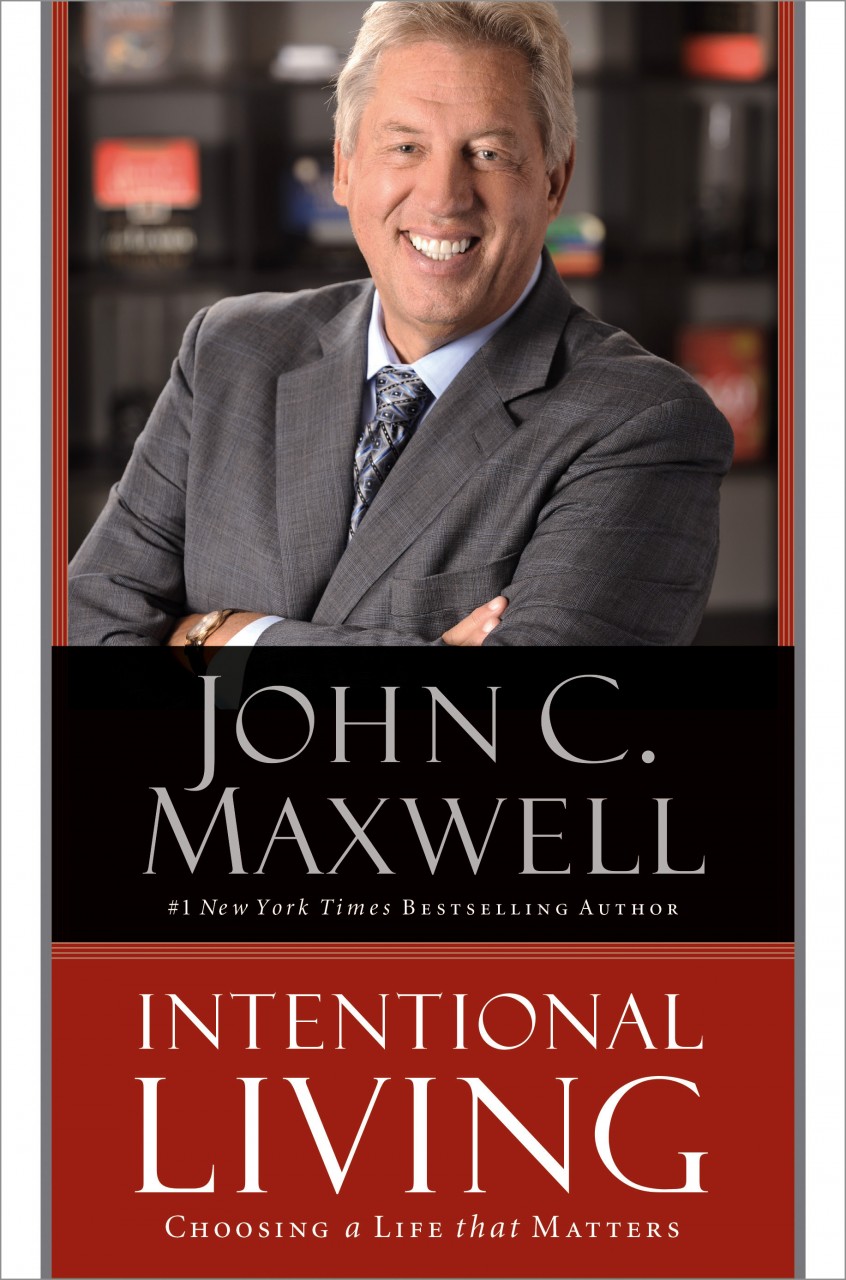
There’s always tons of great content in a John Maxwell book, and Intentional Living was no exception. Here’s the second set of quotes from Dr. Maxwell from this book.
“Self-centeredness and fulfillment cannot peacefully coexist. They’re incompatible.”
“As you start your day, are you wondering what you will reap, or are you wondering what you will sow? Are you waiting for others to do something for you, or are you busy looking for something to do for others?”
“If you only place a small value upon yourself, rest assured that the rest of the world will not raise the price. And as a result of your own low self-esteem and poor sense of self-worth, you will fail to make a positive difference in the lives of others because you’ll think you have little to offer.”
“History tells us that in every age there comes a time when leaders must come forth to meet the needs of the hour. Therefore, there is no potential leader who does not have an opportunity to better mankind.”
“Once you taste significance, success will never again satisfy you.”
“I know without a doubt that every day since I started asking God to bring me people who desired significance, He has been sending them into my life so that we could make a difference together. And God continues to send them.”
“Almost everything you and I want is on the other side of fear. How do you handle that? … I don’t believe God gives me a dream to frustrate me. He gives me a dream to be fulfilled. … Fear is the most prevalent reason why people stop. Faith is what makes people start. Fear is the key that locks the door to the resources. Faith is the key that opens that door. When your dream of significance is right, it should increase your faith. … Faith should help you see the invisible and do the impossible.”
“There are no great men or women. There are just great challenges that ordinary people like you and me are willing to tackle. … Nothing separates passionate people from passive people like a call to step up.”
“Dreams often come one size too big so that we can grow into them.”
“Most people miss opportunities in life, not because the opportunity wasn’t there, but because they didn’t have a clue what it looked like when it arrived. They never took the time to figure out what they were looking for. It’s all about intentionality. You have to know what you’re looking for if you want to find it.”
“When partnering with people, don’t choose based on what they say they can do, or based on what they did once. Choose based on their regular behaviors. That’s what tells you what their values are. Too often our choices are made by what we could or think we should do rather than what we usually do. We are all human, so we should give everyone the benefit of the doubt. But we also need to be realistic.”
“Plans rarely stay the same, and are scrapped or adjusted as needed. Vision is only refined by failure. It’s important to remain stubborn about your vision, but flexible with your plan.”
To read the first set of Maxwell quotes from Intentional Living, please click here.
To read some of the quotes that John Maxwell used in his book, please click here.







 Craig T. Owens