The Joy Of Serving

The joy of servingGod told the Levites, “I am giving you the service of the priesthood as a gift” (Numbers 18:7). So, pastor, a simple question: Does serving seem like a gift to you?

The service I get to do for God, and for my congregation, and for my city is a gift from God. May I never, ever feel it a burden, a task, or an obligation. It should always be a joy to serve!

In order to serve God and others in a manner that is God pleasing and God glorifying, I must keep fit spiritually, mentally, physically, and emotionally. “You must present as the Lord’s portion the best and holiest part of everything given to you” (Numbers 18:29).

A good prayer for pastors—

Search me, Holy Spirit, test my heart’s attitude on this: am I giving You the best and the holiest? Am I serving with joy or merely serving out of duty? You have given me this responsibility as a gift. May I accept this gift with overflowing joy!

Simplicity

Simplicity does not mean watered-down, nor does it mean dumbed-down. Simplicity means as clear as possible.

Sometimes I get so grieved when I hear a pastor trying to “simplify” the gospel message for people. That definition usually means that they are removing any of the parts which might cause people to feel uncomfortable. That is not simplicity, but it’s a sell-out!

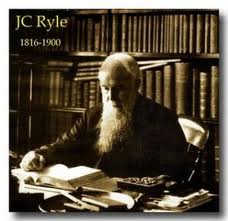
J.C. RyleHere’s how J.C. Ryle defined it—

“All the simplicity in the world can do no good, unless you preach the simple gospel of Jesus Christ so fully and clearly that everybody can understand it. If ‘Christ crucified’ has not His rightful place in your sermons, and sin is not exposed as it should be, and your people are not plainly told what they ought to believe, and be, and do—your preaching is of no use!” (emphasis added)

Pastor, by all means make the gospel clear, but make sure people do hear all of the gospel.

A Warning To The Itinerant Missionary

My cousin wrote this post mainly to himself, but it is an important reminder for everyone—missionary or pastor—who preaches the gospel.

Live DeadGuest Blogger: Dick Brogden 

Missionaries are given the immense privilege of representing God’s heart to both the nations and the church. When we return from our fields of obedience, we are invited into pulpits—grand and humble—to speak on behalf of both the lost and the Lord. We are feted and lauded, which can lead to pride. We observe shallowness and performance, which can lead to a critical spirit. The more we travel and speak, the more we must beware our own hearts. I sat down this weekend and wrote out some warnings to myself:

  • I do not deserve the pulpit; I have not “earned” it.
  • I am not better than the ones I preach to.
  • I cannot presume God’s favor or anointing.
  • I cannot live in sin and call others to holiness.
  • My life has to match my exhortations.
  • I can’t rely on old sermons. I am responsible to give God’s flock fresh bread. If a sermon is to be re-used, it must be fresh to my soul.
  • I cannot allow any whisper of entitlement into my heart. I am not owed praise, respect, attention, or any financial offering.
  • I cannot think my looks, height, posture, style, or natural ability is important, nor that natural gifts can in any way impart divine life to the hearer.
  • I cannot waste God’s time or money with half-hearted preparation, reflection, passion, or effort.The flock must see and feel that I love them, and more importantly that I love Jesus.
  • My spirit must be gentle even if my words are hard.
  • I must have true humility and lowliness. Nothing is as proud or as disgusting as false humility, whether to the individual or before the congregation.
  • I must care more about what God thinks than what man thinks and must obey His promptings and speak as His oracle.
  • If I do not ascend to the pulpit clothed and endued with the Holy Spirit, I am immediately exposed as naked and foolish before God, and it will not be long until I am exposed as a fraud before all men.
  • I must have a holy terror of speaking in my own strength or from my own wisdom. I must have a heavenly horror of speaking what is false, exaggerated, or misleading. I must be terrified of speaking one word without the covering and impetus of the Spirit.

I noted with sadness this weekend that even if all is said in the right spirit and under God’s authority, some ears remain deaf and others hear selectively. We cannot control our hearers, nor are we responsible for how they hear. We are responsible for what and how we speak. It is incumbent on us to speak the words of God in the way and in the spirit He requires. This is a fearful and awesome privilege. God help us. God watch over our hearts and lips.

** I encourage you to follow the Live Dead blog where Dick regularly posts.

12 Quotes From “10 People Every Christian Should Know”

10 People Every Christian Should KnowWarren Wiersbe’s book 10 People Every Christian Should Know was filled with lots of quotes by and about the notable historical figures he covered in his book. You can read my book review by clicking here, but these are some of the quotes I highlighted while I was reading.

“You have been asked to take notice of the sayings of dying men—this is mine: that a life spent in the service of God and communion with Him is the most pleasant life that anyone can live in this world.” —Matthew Henry, on his deathbed 

“I am greatly persuaded that the generality of preachers talk of an unknown, unfelt Christ. And the reason why congregations have been so dead is because dead men preach to them.” —George Whitefield

“To quicken the conscience by the holiness of God, to feed the mind with the truth of God, to purge the imagination by the beauty of God, to open up the heart to the love of God, to devote the will to the purpose of God.” —William Temple, giving his definition of worship

“There are men called by God to preach on the issues of the hour, and we need their ministry. But for permanent strengthening of the church, we also need preachers who will dig again the old wells and lead us intelligently down the old paths and who, renouncing cheap pulpit rhetoric, will focus the white light of revelation on the human heart and examine us in that light.” —Warren Wiersbe

“Want of trust is at the root of almost all our sins and all our weaknesses, and how shall we escape it but by looking to Him and observing His faithfulness. The man who holds God’s faithfulness will not be foolhardy or reckless, but he will be ready for every emergency.” —J. Hudson Taylor

“I’d rather be able to pray than to be a great preacher. Jesus Christ never taught His disciples how to preach, but only how to pray.” —D.L. Moody

“The work will never go deeper than we have gone ourselves” —Amy Carmichael

“My Vow: Whatsoever Thou sayest unto me, by Thy grace I will do it.
My Constraint: Thy love, O Christ, my Lord.
My Confidence: Thou art able to keep that which I have committed unto thee.
My Joy: To do Thy will, O God.
My Discipline: That which I would not choose, but which Thy love appoints.
My Prayer: Conform my will to Thine.
My Motto: Love to live—live to love.
My Portion: The Lord is the portion of mine inheritance.” —Amy Carmichael

“You can be much more for Him than ever you know by just being yourself and relying on Him…. Keep praying and playing and being yourself.” —Oswald Chambers 

“You can never give another person that which you have found, but you can make him homesick for what you have.” —Oswald Chambers

“Stop having a measuring rod for other people. There is always one fact more in every man’s case about which we know nothing.” —Oswald Chambers

“The best book is not one that informs merely, but one that stirs the reader up to inform himself.” —A.W. Tozer

More Spirit-Filled Leaders

Listen to the podcast of this post by clicking on the player below, and you can also subscribe on AppleSpotify, or Audible.

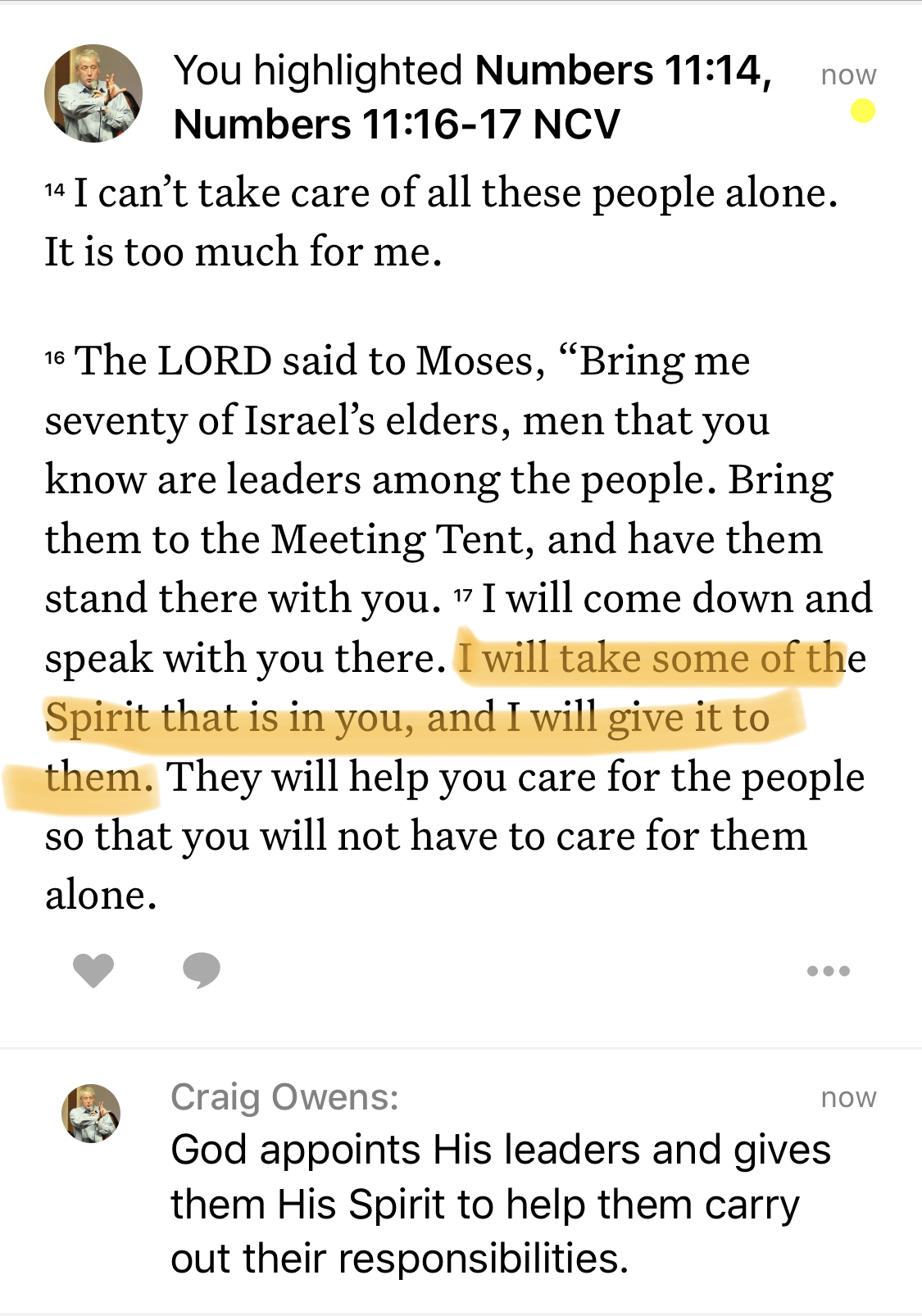
Moses was so right on the mark when he cried out, “I cannot carry all these people by myself; the burden is too heavy for me!” (Numbers 11:14)

It takes a confidently humble man to ask for help (Numbers 12:3). But God gives more grace to that humble person, while He stands aloof from those know-it-alls and those I-can-do-it-all-by-myselfs.

God anointed leaders to assist Moses. He took the same Spirit that was on Moses and imparted it to those 70 leaders. But—note this carefully—the Spirit on Moses was not at all diminished!

Moses’ responsibility was to pick the 70 “who are known to you as leaders” and then the Lord placed His Spirit on them. There were 70 who prophesied but Moses correctly desired “that all the Lord’s people were prophets and that the Lord would put His Spirit on them” (Numbers 11:16-17, 25, 29).

Leadership is necessary, and it is meant to be shared. From the senior leader, this requires:

  1. Humility
  2. Responsibility
  3. Willingness

Oh Lord, raise up more Spirit-empowered leaders!

►► Would you please prayerfully consider supporting this ministry? My Patreon supporters get behind-the-scenes access to exclusive materials. ◀︎◀︎

A Pastoral Prayer

Daniel Payne

Daniel Payne

I love this prayer that Bishop Daniel Payne (1811-1853) prayed for himself. Pastor, do you think you could pray this? Could you pray to become invisible so that only Jesus Christ is seen and heard?

“Lord, Thou knowest my weakness—be Thou my strength. Thou knowest my ignorance—be Thou my wisdom. Teach me, that I may not be a blind leader of the blind, but a scribe well instructed unto the Kingdom of Heaven. O, let not the people see me; let them see You in Your vesture dipped in blood. Let them not hear me; let them hear You in Your voice of saving truth!

Lord, may I be able to live this out in my pastoral ministry!

Bible-Taught Or Spirit-Taught

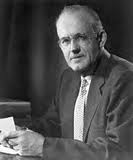
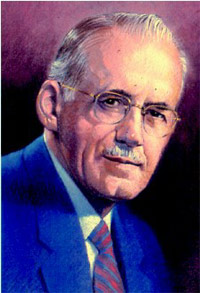
A.W. Tozer“We must be willing to obey if we would know the true inner meaning of the teachings of Christ and the apostles. I believe this view prevailed in every revival that ever came to the church during her long history. Indeed a revived church may be distinguished from a dead one by the attitude of its members toward the truth. The dead church holds to the shell of truth without surrendering the will to it, while the church that wills to do God’s will is immediately blessed with a visitation of spiritual powers. Theological facts are like the altar of Elijah on Carmel before the fire came, correct, properly laid out, but altogether cold. When the heart makes the ultimate surrender, the fire falls and true facts are transmuted into spiritual truth that transforms, enlightens, sanctifies. The church or the individual that is Bible taught without being Spirit taught (and there are many of them) has simply failed to see that truth lies deeper than the theological statement of it.” —A.W. Tozer

What do you think, pastor? Is your church Bible taught, or Spirit taught? Is there a difference? If so, how can you move your church into this deeper place?

Teach Compassion

Compassion means to not only feel what someone else is feeling, but then to make a move toward that person to help. In the life of Jesus you will often see the phrase “He was moved with compassion” and then Jesus taught or healed or acted to alleviate someone’s discomfort.

Pastors, we need to teach our congregations to be people of compassion: to feel the needs of those around them and then move to act in the love of Christ.

A.W. Tozer

A.W. Tozer

“The multitudes that were so dear to Christ shall not be less dear to me. If I cannot prevent their moral suicide, I shall at least baptize them with my human tears. I want no blessing that I cannot share. I seek no spirituality that I must win at the cost of forgetting that men and women are lost and without hope. If in spite of all I can do they will sin against light and bring upon themselves the displeasure of a holy God, then I must not let them go their sad way unwept. I scorn a happiness that I must purchase with ignorance. I reject a heaven that I must enter by shutting my eyes to the sufferings of my fellow men. I choose a broken heart rather than any happiness that ignores the tragedy of human life and human death. Though I, through the grace of God in Christ, no longer lie under Adam’s sin, I would still feel a bond of compassion for all of Adam’s tragic race, and I am determined that I shall go down to the grave or up into God’s heaven mourning for the lost and the perishing. —A.W. Tozer (emphasis added)

Organization In The Church

A.W. Tozer“The man who would oppose organization in the church must needs be ignorant of the facts of life. Art is organized beauty; music is organized sound; philosophy is organized thought; science is organized knowledge; government is merely society organized. And what is the true church of Christ but organized mystery? … Many church groups have perished from too much organization, even as others from too little. Wise church leaders will watch out for both extremes. A man may die as a result of having too low blood pressure as certainly as from having too high, and it matters little which takes him off. He is equally dead either way. The important thing in church organization is to discover the scriptural balance between two extremes and avoid both.” —A.W. Tozer (emphasis added)

Pastor, what do you think of Tozer’s thoughts of organization in the church? How do you balance against the extremes?

Pastor: Pray For Yourself

Augustine

Augustine

Pastor, what do you think of these words?

“By praying for himself and for those he is about to address, he [a pastor] must become a man of prayer before becoming a man of words. As the hour of his address approaches, before he opens his thrusting lips he should lift his thirsting soul to God so that he may utter what he has drunk in and pour out what has filled him.” —Augustine of Hippo