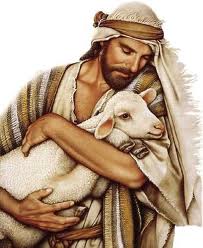
Living Sermon

Pastors, this is a timely word from Mark Batterson…

There is a world of difference between preaching a sermon and living a sermon.  No amount of study can compensate for deficiencies in your life. You can “study it” but if you aren’t “living it” it’ll ring hollow.  The opposite is true as well.  Jesus’ teaching was authoritative because it was backed up by his life.  You can’t back up your sermons with a seminary degree.  You’ve got to back it up with your life. My advice?  Don’t just get a sermon. Get a life.  Then you’ll get a sermon!

Let me be blunt: if your life is boring your sermons will be too.

If you have no life outside of church—no hobbies, no friends, no interests, no goals—your illustrations will feel canned, your applications will feel theoretical instead of practical, and your sermons will be lifeless instead of life-giving.

The greatest sermons are not fashioned in the study.  They are fleshed out in the laboratory of everyday life.  Now, please don’t misinterpret what I’m saying.  You need to study to show yourself approved and rightly divide the word.  So keep studying!  In fact, study more.  But you can’t just study the word.  You need to live it.  The most powerful sermons are well-studied and well-lived.

At the end of the day, God won’t say, “Well studied, good and faithful servant.”  He won’t say, “Well thought” or “Well said” either.  There is only one commendation: “Well done.”

Now let’s be brutally honest: most Christians are educated way beyond the level of their obedience already! We don’t need to know more, we need to do more.  That’s why I think sermons should focus on application more than interpretation.  Theological doesn’t mean theoretical.  In fact, as you get a life, your messages will be less theoretical and more experiential.  You won’t just preach your sermons. You’ll incarnate them!

7 Quotes From “Secret Power” Especially For Pastors

D.L. Moody’s book Secret Power is addressed to both individual Christians and church leaders (you can read my full book review by clicking here).

I posted some quotes for individual Christians to consider yesterday. Here are seven quotes especially for pastors and church leaders:

“The Gospel proclamation cannot be divorced from the Holy Spirit. Unless He attend the Word in power, vain will be the attempt in preaching it.”

“Skeptics and infidels may say they don’t believe in it. It is not our work to make them believe in it; that is the work of the Spirit. Our work is to give them the Word of God; not to preach our theories and our ideas about it, but just to deliver the message as God gives it to us.” 

“It is not the hard work breaks down ministers, but it is the toil of working without power. …If you ministers have not the Spirit of God, you had better not preach, and your people had better stay at home. I think I speak not too strongly when I say that a church in the land without the Spirit of God is rather a curse than a blessing. If you have not the Spirit of God, Christian worker, remember that you stand in somebody else’s way; you are as a tree bearing no fruit standing where another fruitful tree might grow.”

“Man cannot preach effectively of himself. He must have the Spirit of God to give ability, and study God’s Word in order to testify according to the mind of the Spirit.”

“Thousands and thousands are sitting in darkness, knowing not of this great Light, but when we begin to preach Christ honestly, faithfully, sincerely and truthfully; holding Him up, not ourselves; exalting Christ and not our theories; presenting Christ and not our opinions; advocating Christ and not some false doctrine; then the Holy Ghost will come and bear witness. He will testify that what we say is true. When He comes He will confirm the Word with signs following.”

“I believe the reason why God makes use of so few in the Church, is because there is not in them the power that God can use. He is not going to use our ideas, but we must have the Word of God hid in our hearts, and then, the Holy Spirit inflaming us, we will have the testimony which will be rich, and sweet, and fresh, and the Lord’s Word will vindicate itself in blessed results. God wants to use us; God wants to make us channels of blessing; but we are in such a condition He does not use us. That is the trouble; there are so many men who have no testimony for the Lord; if they speak, they speak without saying anything, and if they pray, their prayer is powerless; they do not plead in prayer; their prayer is just a few set phrases that you have heard too often. Now what we want, is to be so full of the Word, that the Spirit coming upon us shall bring to mind—bring to our remembrance—the words of the Lord Jesus.”

“I have lived long enough to know that if I cannot have the power of the Spirit of God on me to help me to work for Him, I would rather die, than live just for the sake of living.”

Pastoral Submission

What do you think of when you hear those words pastoral submission?

We may not be on the same page about this yet. I don’t mean people in a congregation submitting to a pastor. I mean something deeper than that.

Allow me to start with an unusual verse for this topic. Paul wrote,

When Peter came to Antioch, I opposed him to his face… (Galatians 2:11).

First of all, this is the proper way to handle an issue like this. Paul didn’t talk to others, nor run to the leaders in Jerusalem, but he went one-on-one with Peter.

Consider Paul’s relationship to Peter if there was a “corporate flowchart” for the First Century Church—Peter would have been Paul’s superior. Yet, Peter not only received this correction from Paul but continued to speak highly of Paul.

Beginning in the first chapter of Galatians we see Paul’s level of accountability. He answered to God, but he also submitted to other church leaders. Not only that, but this passage (Galatians 2:7-9) tells us that other church leaders submitted to Paul.

When I know God has called me, and I am doing my work for His approval alone, and when I know God has called others, and they too are ministering only for His approval then we can mutually submit to one another.

It’s not a top-down hierarchy in the church, except for Jesus being the Head and all others are below Him. All others (clergy and congregation) in the Body of Christ are on equal standing—no one is more important than any other. Therefore, as we submit to Christ’s Headship, we can also mutually submit to others in the Body.

What keeps us from doing this? Pride! We say, “What will others think of me if I submit?” Pastors think, “If I submitted to someone in my congregation, how could I ever lead this church? People will take advantage of me! No one will ever listen to me again!”

Not true!

When I am fully submitted to Christ, there is no stronger grounds for SERVANT leadership.

I don’t pastor to lead; I pastor to serve. 

I’m not building my church; I’m building Christ’s church. 

I’m not growing my followers; but followers of Jesus. 

Holy God, help me to know who I am in You. You have called me to pastor, so I am Your servant. Help me kill my pride! Help me serve and submit. Help me to build Your Church.

UPDATE: This post was one of the seed thoughts that went into fashioning my book Shepherd Leadership: The Metrics That Really Matter.

8 Quotes From “Secret Power”

D.L. Moody’s book Secret Power is addressed to both individual Christians and church leaders (you can read my full book review by clicking here).

Here are eight quotes for Christians to consider.

“Joy is love exulting; peace is love in repose; long suffering is love on trial; gentleness is love in society; goodness is love in action; faith is love on the battlefield; meekness is love at school; and temperance is love in training.”

“Before we pray that God would fill us, I believe we ought to pray Him to empty us.”

“The reason why the Church cannot overcome the enemy is, because she doesn’t know how to use the sword of the Spirit. People will get up and try to fight the devil with their experiences, but he doesn’t care for that, he will overcome them every time. People are trying to fight the devil with theories and pet ideas, but he will get the victory over them likewise. What we want is to draw the sword of the Spirit. It is that which cuts deeper than anything else. …The sword of the Spirit is the Word of God, and what we need specially is to be filled with the Spirit, so we shall know how to use the Word.”

“The fact is, we are leaky vessels, and we have to keep right under the fountain all the time to keep full of Christ, and so have a fresh supply.”

“The Holy Spirit tells a man of his faults in order to lead him to a better life. In John 16:8, we read: ‘He is to reprove the world of sin.’ Now, there are a class of people who don’t like this part of the Spirit’s work. Do you know why? Because He convicts them of sin; they don’t like that. What they want is some one to speak comforting words and make everything pleasant; keep everything all quiet; tell them there is peace when there is war; tell them it is light when it is dark, and tell them everything is growing better; that the world is getting on amazingly in goodness; that it is growing better all the time; that is the kind of preaching they seek for. …It is my work to preach and hold up the Cross and testify of Christ; but it is His work to convict men of sin and lead them to Christ.”

“I think there is no way so sure to win our families and our neighbors, and those about whom we are anxious, to Christ, than just to adorn the doctrine of Jesus Christ in our lives, and grow in all these graces. If we have peace and joy and love and gentleness and goodness and temperance; not only being temperate in what we drink, but in what we eat, and temperate in our language, guarded in our expressions; if we just live in our homes as the Lord would have us, an even Christian life day by day, we shall have a quiet and silent power proceeding from us, that will constrain them to believe on the Lord Jesus Christ. But an uneven life, hot today and cold tomorrow, will only repel. Many are watching God’s people.”

“Love will rebuke evil, but will not rejoice in it. Love will be impatient of sin, but patient with the sinner. To form the habit of finding fault constantly, is very damaging to spiritual life; it is about the lowest and meanest position that a man can take.”

“Oh, the privilege, the blessed privilege, to be used of God to win a soul to Christ, and to see a man or woman being led out of bondage by some act of ours toward them. To think that God should condescend to allow us to be co-workers with Him. It is the highest honor we can wear.”

(You may also be interested in quotes from this book that are especially for pastors and church leaders, which you can read by clicking here.)

Secret Power (book review)

Dwight L. Moody is my kind of pastor: he said exactly what was on his mind. He wasn’t worried about political correctness, or couching his words in comfortable words. He was a modern-day prophet of his day, clearly stating, “Thus says the Lord!” Thankfully for us in our day, D.L. Moody’s books sound just like his sermons. In Secret Power, Moody calls Christians and churches back to a fuller understanding of the role of the Holy Spirit in our lives.

Moody writes:

“How much we have dishonored Him [the Holy Spirit] in the past! How ignorant of His grace, and love and presence we have been? True, we have heard of Him and read of Him, but we have had little intelligent knowledge of His attributes, His offices and His relations to us. I fear He has not been to many professed Christians an actual existence, nor is He known to them as a personality of the Godhead.”

I am convinced that this is true. The Holy Spirit seems “spooky” or out-of-date or inapplicable in many churches. Moody explains this is the reason why our churches are not experiencing the same miracle-working power that was seen in the New Testament church.

As a result, individual Christians are lacking in power in their personal lives, too, because they are not being taught about the role of the Holy Spirit in their churches. As a result, Christians are not soul winners as were New Testament Christians.

A secondary title for this book is “The Secret Of Success In Christian Life And Work.” That success can be yours today if you will only allow God to operate in your life and church in all of His fullness. 

If you are thirsty for this sort of fuller relationship with the Holy Spirit, I encourage you to read this book! You may also want to check out some quotes I shared from this book here and here.

Pastoral Insights From “Golden Mouth”

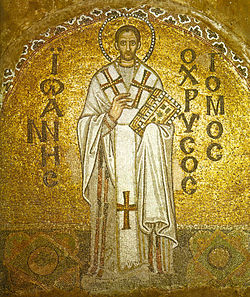
John Chrysostom was a reluctant pastor. It took him a while to surrender to the call of God on his life to serve as a priest. But once he stepped into that role, his God-given talents were used mightily. He was such an incredible speaker that his sermons often moved his audience to tears or applause. Thus, he was given the nickname “Golden Mouth.”

Here are some great pastoral insights from Golden Mouth which are just as applicable today…

“Thus then must the Priest behave towards those in his charge, as a father would behave to his very young children; and as such are not disturbed either by their insults or their blows, or their lamentations, nor even if they laugh and rejoice with us, do we take much account of it; so should we neither be puffed up by the promises of these persons nor cast down at their censure, when it comes from them unseasonably.”

“Let, therefore, the man who undertakes the strain of teaching never give heed to the good opinion of the outside world, nor be dejected in soul on account of such persons; but laboring at his sermons so that he may please God, (For let this alone be his rule and determination, in discharging this best kind of workmanship, not acclamation, nor good opinions,) if, indeed, he be praised by men, let him not repudiate their applause, and when his hearers do not offer this, let him not seek it, let him not be grieved. For a sufficient consolation in his labors, and one greater than all, is when he is able to be conscious of arranging and ordering his teaching with a view to pleasing God.” 

“For the soul of the Priest ought to be purer than the very sunbeams, in order that the Holy Spirit may not leave him desolate, in order that he may be able to say, ‘Now I live; and yet no longer I, but Christ liveth in me….’ For he has need of far greater purity than they; and whoever has need of greater purity, he too is subject to more pressing temptations than they, which are able to defile him, unless by using constant self-denial and much labor, he renders his soul inaccessible to them.”

Lord, I Need Your Anointing!

How miserable to try to preach a sermon if God’s anointing is not on it! The most gifted speaker’s words sound hollow without God’s help. The most educated theologian’s thoughts are mere babbling without the Holy Spirit’s aid. All your hours of pastoral study are utterly wasted unless the power of Christ is present.

Pastor, let these wise words soak in…

I know that it is dreadful work to be bound to preach when one is not conscious of the aid of the Spirit of God! It is like pouring water out of bottomless buckets, or feeding hungry souls out of empty baskets. A true sermon such as God will bless no man can preach of himself; he might as well try to sound the archangel’s trumpet.” ―Charles Spurgeon

“Keep yourself full to the brim in reading; but remember that the first great Resource is the Holy Ghost Who lays at your disposal the Word of God. The thing to prepare is not the sermon, but the preacher.” ―Oswald Chambers

“Apart from divine help, the enterprise of a Christian minister is only worthy of ridicule. Apart from the power of the Eternal Spirit, the things which the preacher has to do are as much beyond him as though he had to weld the sun and moon into one, light up new stars, or turn the Sahara into a garden of flowers. We have a work to do concerning which we often cry, ‘Who is sufficient for these things?’ and if we be put to this work but have not your prayers, and in consequence have not the supply of the Spirit, we are of all men the most miserable.” ―Charles Spurgeon

The character of our praying will determine the character of our preaching. Light praying will make light preaching. …The preacher must be preeminently a man of prayer. His heart must graduate in the school of prayer. In the school of prayer only can the heart learn to preach.” ―E.M. Bounds

“If you preachers lose your compassion, you can stop preaching, for it won’t be any good. You will only be successful as a preacher if you let your heart become filled with the compassion of Jesus. ―Smith Wigglesworth

Heaven Is Rejoicing!

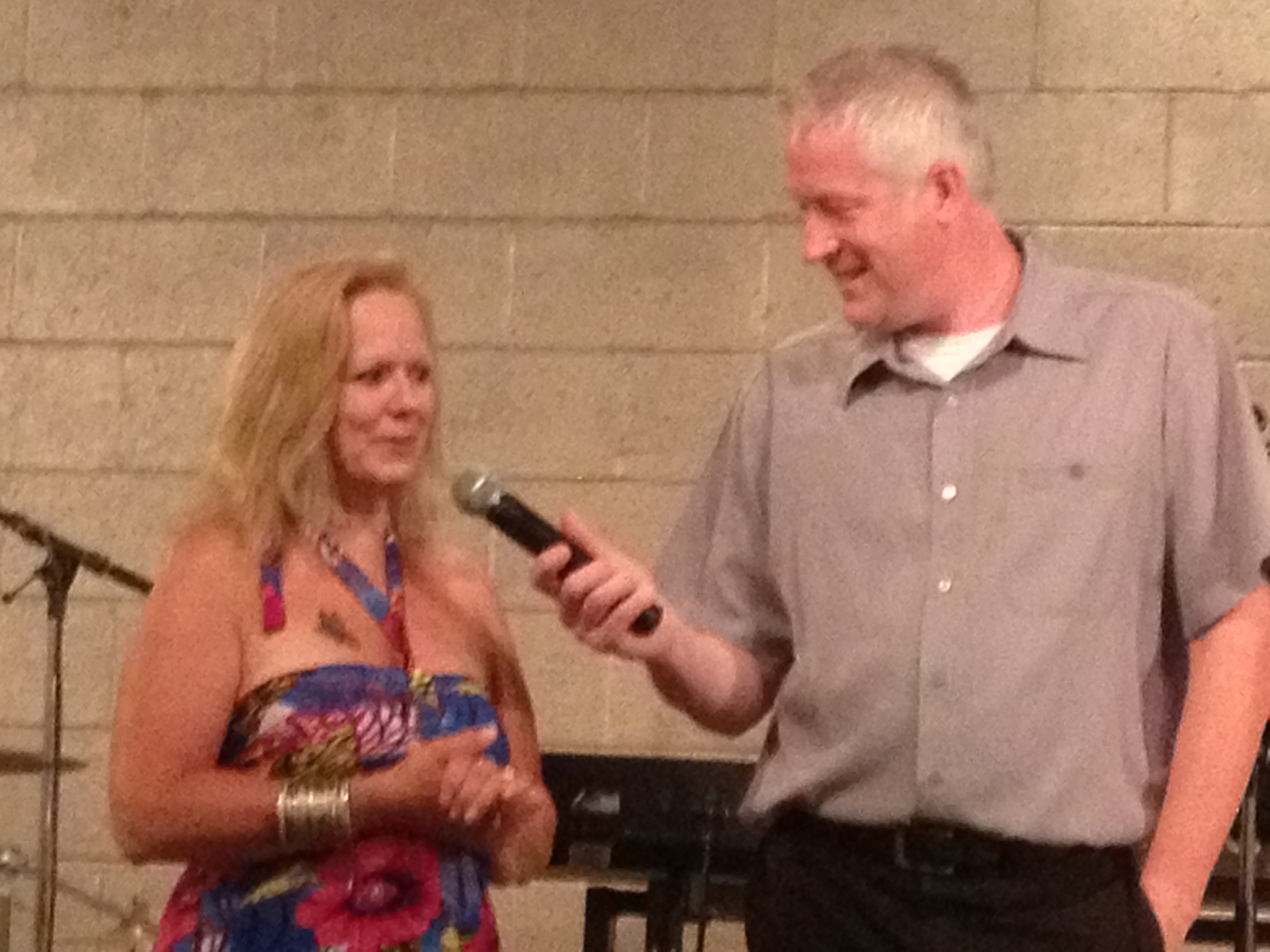
One of my all-time favorite things to do as a pastor is water baptism. I love hearing the stories of lives that have been completely transformed by Jesus Christ! This morning the Calvary Assembly of God family celebrated with Crystal as she made her public declaration that she is totally sold-out for God!

Gentle Correction

As a parent (and a pastor), delivering correction is one of my least favorite things to do. But it must be done.

The apostle Paul seemed to feel the same way. We get some insight into his heart in his letter to the Corinthians, where he reminds them of why he had to write such a stern letter of correction.

For I wrote to you out of great distress and anguish of heart and with many tears, not to grieve you but to let you know the depth of my love for you. (2 Corinthians 2:4)

The loving shepherd’s heart longs for the advancement, the betterment, of all the sheep under his care. He is hurt when his sheep are wounded. His approach to discipline is always gentle; not weak, but strength lovingly applied.

The loving shepherd looks at his own life first, before correcting the sheep, to address anything he may have done or failed to do which caused the sheep to stray.

The loving shepherd knows that discipline may be painful for a moment, but it is to bring greater life. Just as a parent will allow a child to suffer the momentary pain of an immunization injection, to spare that child the unbearable pain of a disease later on.

And the loving shepherd always approaches a time of correction with “confidence in all of you, that you would all share my joy” (v. 3). The shepherd doesn’t view them as “dumb sheep” that cannot improve; rather, he is confident and assured that they will receive loving correction and make the change that leads to joy for all.

UPDATE: If you want to dive deeper into the ideas of being a shepherd leader, please check out my book Shepherd Leadership: The Metrics That Really Matter.

Artificial Maturity (book review)

When I posted my review of Tim Elmore’s previous book Generation iY, I said that book earned a rare “must read” rating from me. Whether you read that book or not, Artificial Maturity has earned the coveted must-read rating again!

If Generation iY described who this current youth generation is, Artificial Maturity describes how to help these youth achieve genuine maturity. Here’s how Dr. Elmore sets the stage for this book from the very first page:

“…I believe in this generation like none before. I believe they have the potential to be the greatest generation—a population Warren Bennis calls the “Crucible Generation.” He and many others believe these young people may just be the ones who transform society globally and restore democracy and goodwill.

I believe this with one caveat. I predict all this is possible if we, the adults, will rethink the way we parent, lead, teach, coach, pastor, and manage them. It’s up to us what kinds of adults our kids will become. So far, many of them are a part of a leaderless generation. The adults have done more protecting than preparing. Some moms and dads want to be pals rather than parents. And many adults are just overwhelmed with the notion of leading kids today—and they surrender their role as leaders.”

So this is not a book that tells you how to change kids, but how we as adults must change.

With persuasive evidence, scientific studies, personal observations, and years of hands-on experience, Dr. Elmore so accurately details how we as parents have contributed to our kids becoming artificially mature. In other words, they know lots of things, but they don’t know how to effectively apply that knowledge to be productive at work, school, and in relationships. 

I, too, share Dr. Elmore’s optimism about this generation. But if I want to see my kids—and other young people with whom I interact—excel and mature, I have to look at myself in the mirror. This generation can’t succeed if we continue to parent, and teach, and pastor, and manage as we have been doing.

I cannot urge pastors, youth pastors, parents, teachers, principals, coaches, and employers to read Artificial Maturity right away! This generation needs us to help them soar!

I am a Jossey-Bass book reviewer.

UPDATE: Read some of my favorite quotes from Artificial Maturity by clicking here.