“Brethren, The Fault Is Ours…”

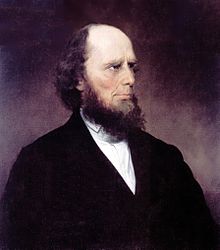
Pastor, these are incredible words spoken by the great Charles Finney nearly 140 years ago! I encourage you to take the time to hear these words with an open heart.

I believe it is a fact generally admitted that there is much less conscience manifested, by men and women, in nearly all the walks of life, than there was forty years ago. There is justly much complaint of this, and there seems to be but little prospect of reformation. The rings and frauds and villainies in high and low places, among all ranks of men, are most alarming, and one is almost compelled to ask: “Can nobody be safely trusted?” Now, what is the cause of this degeneracy? Doubtless there are many causes that contribute more or less directly to it; but I am persuaded that the fault is more in the ministry and public press than in any and all things else. It has been fashionable now for many years to ridicule and decry Puritanism. Ministers have ceased, in a great measure, to probe the consciences of men with the spiritual law of God. So far as my knowledge extends, there has been a great letting down and ignoring the searching claims of God’s law, as revealed in his Word. This law is the only standard of true morality. “By the law is the knowledge of sin.” The law is the quickener of the human conscience. Just in proportion as the spirituality of the law of God is kept out of view will there be manifest a decay of conscience. …The proper guardians of the public conscience have, I fear, very much neglected to expound and insist upon obedience to the moral law.

… The true Gospel is not preached where obedience to the moral law as the only rule of life is not insisted upon. Wherever there is a failure to do this in the instructions of any pulpit it will inevitably be seen that the hearers of such a mutilated Gospel will have very little conscience. …The universal literature of the present day shows conclusively that the moral sense of the people needs toning up, and some of our most fascinating preachers have become the favorites of infidels, skeptics of every grade, Universalists, and the most abandoned characters.

… My beloved brethren in the ministry, is there not a great want in the public inculcations of the pulpit upon this subject? We are set for the defense of the blessed Gospel and for the vindication of God’s holy law. I pray you let us probe the consciences of our hearers, let us thunder forth the law and Gospel of God until our voices reach the capital of this nation, through our representatives in Congress. It is now very common for the secular papers even to publish extracts of sermons. Let us give the reporters of the press such work to do as will make their ears and the ears of their readers tingle. Let our railroad rings, our stock gamblers, our officials of every grade hear from its pulpit, if they come within the sound, such wholesome Puritanical preaching as will arouse them to better thoughts and a better life. Away with this milk-and-water preaching of a love of Christ that has no holiness or moral discrimination in it. Away with preaching a love of God that is not angry with sinners every day. Away with preaching a Christ not crucified for sin.

… Brethren, our preaching will bear its legitimate fruits. If immorality prevails in the land, the fault is ours in a great degree. If there is a decay of conscience, the pulpit is responsible for it. If the public press lacks moral discrimination, the pulpit is responsible for it. If the church is degenerate and worldly, the pulpit is responsible for it. If the world loses its interest in religion, the pulpit is responsible for it. If satan rules in our halls of legislation, the pulpit is responsible for it. If our politics become so corrupt that the very foundations of our government are ready to fall away, the pulpit is responsible for it. Let us not ignore this fact, my dear brethren; but let us lay it to heart, and be thoroughly awake to our responsibility in respect to the morals of this nation. —Charles Finney (December 4, 1873)


The Present Of Presence

Listen to the podcast of this post by clicking on the player below, and you can also subscribe on AppleSpotify, or Audible.

The words Paul writes to Timothy (his young protege) are the wise counsel of a seasoned veteran to a young pastor. These are words of wisdom that pastors should be especially attentive to, but they also apply to anyone who is in a position of leadership (like a parent, teacher, coach, or employer).

After challenging Timothy to set an example by his lifestyle, Paul adds these words—

Be diligent in these matters; give yourself wholly to them, so that everyone may see your progress. Watch your life and doctrine closely. Persevere in them, because if you do, you will save both yourself and your hearers. (1 Timothy 4:15-16)

“So that everyone may see your progress.” Quite simply: you have to be present—you have to be around people so they can see what’s going on in your life. Your presence in their lives is your present to their lives!

I need to monitor what I’m doing and why I’m doing it; what I’m teaching and how I’m teaching; what I believe and why I believe it.

I need to have goals and benchmarks. I need to make my goals—and my successes and failures in hitting my goals—known to others.

I need to be in it for the long haul. It’s awfully difficult to be an example in the present if my eyes and thoughts are always on “the next thing” down the road.

Look at the blessings—the presents—of living this way: You will save both yourself and your hearers.

Not only is my presence a present to others, but having others present in my life is a present to me! The present of presence works both ways! 

Are you living so that everyone may see your progress? If not, start giving the present of your presence today!

►► Would you please prayerfully consider supporting this ministry? My Patreon supporters get behind-the-scenes access to exclusive materials. ◀︎◀︎

The Height Of Arrogance

Warning: this post may step on your toes.

Oswald Chambers wrote, “We have to find out God’s methods, not try to get God to approve our methods.”

Pastor, are you telling God what your church is going to do, and then asking God to bless your efforts?

Sadly, many churches innocently slide into this mode. But watch out: this is the height of arrogance!

Don’t fall into the trap of thinking you know how to reach your community, or organize your church, or even accurately select your next sermon. You can’t do it!

But God can!

He knows your community and your church better than you do. So try a better approach by starting with humility.

Don’t tell God what you’re going to do and then ask Him to bless your plans. Instead, ask God what He is already blessing, and then go do that.

Attaboy!

October has been designated as Clergy Appreciation Month. Some pastors live from “Attaboy!” to “Attaboy!” from their congregation, so October is like a feast for them!

But the apostle Paul has a slightly different perspective on this. More than getting an “Attaboy!” from a church congregation, he is joyful over the “Attaboy!” he hears from God.

For what is our hope, our joy, or the crown in which we will glory in the presence of our Lord Jesus when He comes? Is it not you? Indeed, you are our glory and joy.

For now we really live, since you are standing firm in the Lord. How can we thank God enough for you in return for all the joy we have in the presence of our God because of you? (1 Thessalonians 2:19-20; 3:8-9)

Paul’s goal is seeing people who have been changed because of their relationship with Jesus. And these changed lives are all the reward he desires!

YOU ARE OUR GLORY AND JOY! 

Pastor, it’s nice when you get the “Attaboys!” from your congregation. But what’s even better is to help your congregation enter into a deeper relationship with Christ, and then hear the “Attaboy!” from God Himself!

What an amazing joy that we get to play a small role in helping people stand firm in the Lord!

Worthy Of Imitation

I pray that my life is worthy of imitation. And, pastor, I pray yours is too!

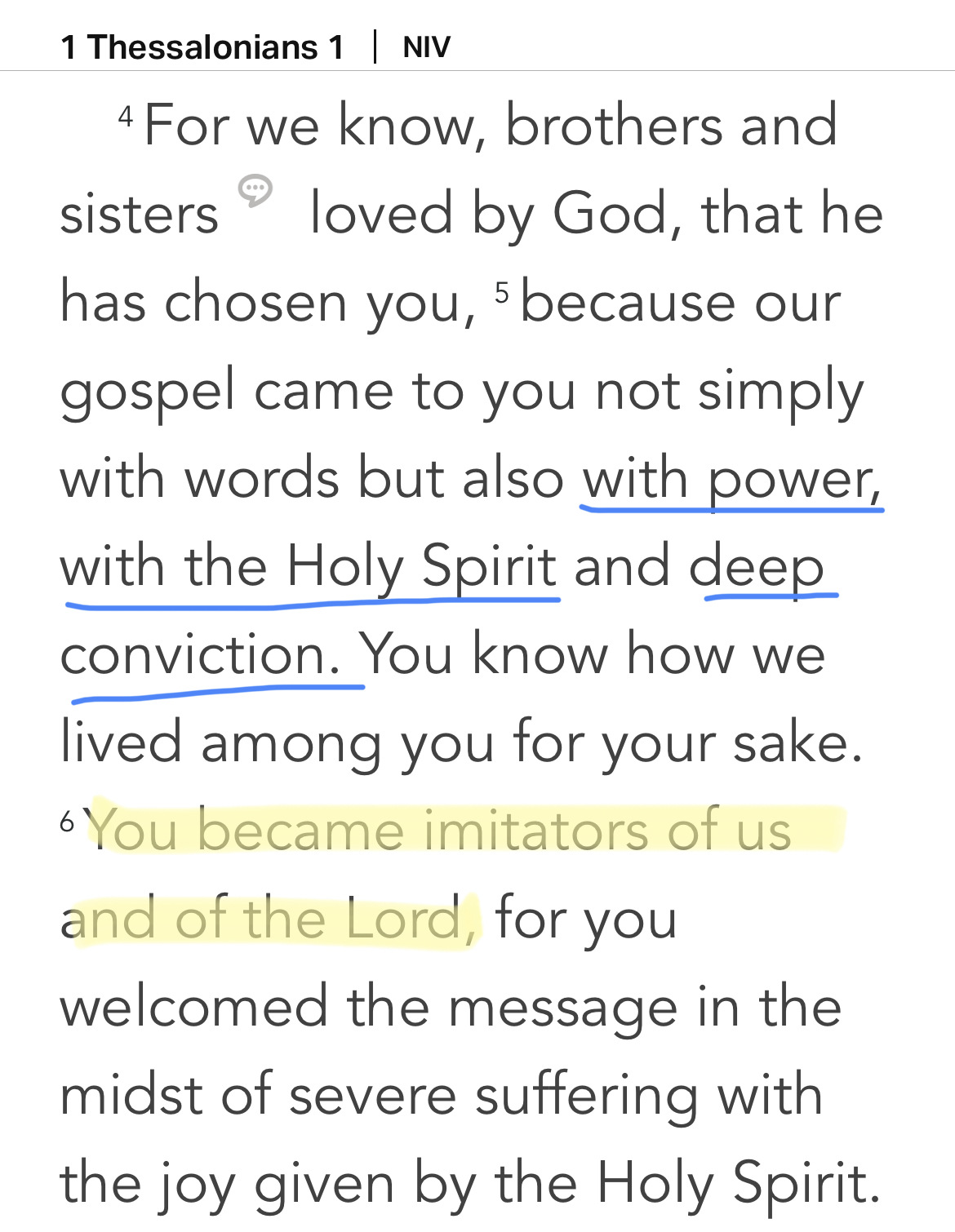
Here’s how to make sure it is an imitable life: I can’t just talk a good life. Paul wrote, Our gospel came to you not simply with words.” Words are important, but they shouldn’t be a replacement for a life that backs up those words. Paul continues his thought:

Our gospel came to you not simply with words, but also with power, with the Holy Spirit and with deep conviction…. (1 Thessalonians 1:5)

Their sermons were backed up by the help of the Holy Spirit, and the deep conviction that Paul, Silas, and Timothy lived by. This was all outwardly focused toward others. Look how Paul concludes this verse, …you know how we lived among you for your sake.

They never attempted to use the gospel or their calling to benefit themselves, but always for the benefit of others and for the glory of God.

The result (v. 6):

You became imitators of us and of the Lord. 

I pray that all of us can say this about our congregations!

Why I Didn’t Participate In Pulpit Freedom Sunday

In order to challenge the IRS regulation that non-profit 501(c)3 organizations (such as a church) not endorse a political candidate, a group called Pulpit Freedom encouraged pastors to publicly endorse a candidate in their Sunday sermons.

This is what I shared with my congregation this morning. We are not participating in the “pulpit freedom Sunday” for the following reasons—

  1. The IRS 501(c)3 regulations are not immoral. The Bill of Rights states that “Congress shall make no law respecting an establishment of religion, or prohibiting the free exercise thereof.” I don’t believe this is happening.
  2. The church should be apolitical. We don’t see any biblical writers endorsing candidates. Individuals serve in political office, and Paul often greets them. He never tells those individuals to leave their political posts, but neither does he instruct Christians on who they should support/endorse for an office.
  3. If I did what this group is asking, I feel I would doing it to make a statement, but not necessarily a statement that pleases or honors God. “For we speak as messengers approved by God to be entrusted with the Good News. Our purpose is to please God, not people. He alone examines the motives of our hearts” (1 Thessalonians 2:4). My statements must please God and not violate my conscience.
  4. I trust your intelligence. My role as a pastor is to equip people to know and apply biblical principles to every aspect of their lives; including how they make decisions to vote. My role as your pastor is not to tell you who to vote for.

THAT Kind Of Church

Listen to the podcast of this post by clicking on the player below, and you can also subscribe on AppleSpotify, or Audible.

The book of James is written to a bunch of Christians. James knew his audience was the Church (see James 1:1).

Keep that firmly in mind when you read these words from James 3:2—

We all stumble in many ways. (New International Version)

For we all often stumble and fall and offend in many things. (Amplified Bible)

Indeed, we all make many mistakes. (New Living Translation)

I hate to break the news to you, but that means:

  • Your pastor’s not perfect
  • Your church isn’t perfect
  • You’re not perfect

You attend a church with people who stumble, and offend, and mess it up. Your pastor stumbles, and offends, and messes up. And so do you!

Isn’t that wonderful?! We all make mistakes! So we all need to give and receive the same forgiveness. We all need to extend grace to others and receive grace from others. You need to help others back up when they stumble, and you need to admit when you’ve stumbled, and let others help you get back up.

Abraham Kuyper wrote—

“Sin is a destroyer that creeps in everywhere. Therefore we must expect an imperfect church. In fact, we church members carry the sin of the world with us into the church, too often hiding it under a veil of spirituality. If the church were not the Bride of His Son, surely God would in holy wrath destroy not first of all the church, but rather first of all the wretched sin-ridden church.”

To these beautifully imperfect Christians, James concludes his teaching with these words:

Confess your sins to each other and pray for each other so that you may be healed. The prayer of a righteous man is powerful and effective. … My brothers, if one of you should wander from the truth and someone should bring him back, remember this: Whoever turns a sinner from the error of his way will save him from death and cover over a multitude of sins. (James 5:16, 19-20)

Yeah, let’s be THAT kind of church!!

►► Would you please prayerfully consider supporting this ministry? My Patreon supporters get behind-the-scenes access to exclusive materials. ◀︎◀︎

Spiritual Sword Play

Pastor, consider these words from Charles Spurgeon—

“We pastors depend entirely upon the Spirit of God to produce actual effect from the gospel, and at this effect we must always aim. We do not stand up in our pulpits to display our skill in spiritual sword play, but we come to actual fighting: our object is to drive the sword of the Spirit through men’s hearts.”

In order to effectively drive the sword of the Spirit through men’s hearts we must be well-trained in spiritual warfare. That training takes place in the secret chamber alone with God. Eugene Peterson gives this warning to pastors—

“Three pastoral acts—praying, reading Scripture and giving spiritual direction—are so basic, so critical, that they determine the shape of everything else in ministry. Besides being basic, these three acts are quiet and done mostly out of the spotlight of public ministry. Because they do not call attention to themselves, they are so often neglected. …Because almost never does anyone notice whether we do these things or not, and only occasionally does someone ask if we do them, these real acts of ministry suffer widespread neglect.”

You cannot give to others what you do not possess yourself!

Pastor, get alone with God. Everyday. Sharpen your sword through private prayer and personal devotion. Everyday!

Pastor And People Interceding

Prayer is the lifeblood of any church.

Look in the New Testament letters and notice how often the apostles wrote out their prayers for their congregations. Such loving, heartfelt prayers! And notice as well how many times the apostles thanked the churches for their prayers, and even requested more prayers from them.

Robert Murray McCheyne wrote to a friend who was just being ordained as a pastor—

“Give yourself to prayer and the ministry of the Word. If you do not pray, God will probably lay you aside from your ministry, as He did me, to teach you to pray. Remember Luther’s maxim, ‘To have prayed well is to have studied well.’ Get your texts from God, your thoughts, your words. Carry the names of the little flock upon your breast like the High Priest. Wrestle for the unconverted.

And to the congregation which would be shepherded by this newly ordained pastor, McCheyne wrote—

“Pray for your pastor. Pray for his body, that he may be kept strong and spared for many years. Pray for his soul, that he may be kept humble and holy, a burning and shining light. Pray for his ministry, that it may be abundantly blessed, that he may be anointed to preach good tidings.”

Pastor, learn to pray for your congregation, and for your ministry to your flock. And then teach your congregation to pray for you. For the whole church will be strengthened when both pastor and people are interceding for each other.

Prayer Before Words, Prayer After Words

Pastor, as you are putting the finishing touches on your message for Sunday, even as you are getting ready to begin the service, consider this counsel from Augustine of Hippo—

“He should be in no doubt that any ability he has and however much he has derives more from his devotion to prayer than his dedication to oratory; and so, by praying for himself and for those he is about to address, he must become a man of prayer before becoming a man of words. As the hour of his address approaches, before he opens his thrusting lips he should lift his thirsting soul to God so that he may utter what he has drunk in and pour out what has filled him.”

Pray for yourself—that you would be a living example of what you preach.

Pray for your vocabulary—that the Holy Spirit would direct your words.

Pray for your ego—that you would not be puffed up nor brought down by the people’s response.

Pray for your congregation—that they would receive and apply the Word of God.

Pray for your community—that they would desire the life of Christ that is evident in you and your congregation.

And on Monday morning perhaps you will pray this prayer of commitment from Augustine—

Breathe in me, O Holy Spirit, that my thoughts may all be holy. 

Act in me, O Holy Spirit, that my work, too, may be holy. 

Draw my heart, O Holy Spirit, that I love but what is holy. 

Strengthen me, O Holy Spirit, to defend all that is holy. 

Guard me, then, O Holy Spirit, that I always may be holy. 

Amen.

I’m praying for you this weekend!