I Am Jehovah

Listen to the podcast of this post by clicking on the player below, and you can also subscribe on AppleSpotify, or Audible.

One of the misconceptions about Jesus is that He first appears on the scene in a manger in Bethlehem. Nothing could be further from the truth! Jesus appears in the opening words of the BibleIn the beginning God created—and in the last words of the BibleYes, I am coming soon. And He appears in every word in between!

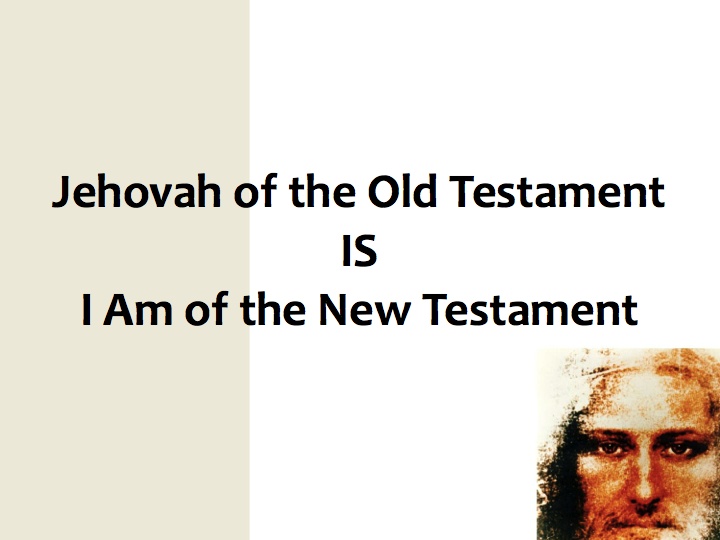
It was Christ’s claims of being one with the Father that enraged the Jewish religious leadership. When He proclaimed His “I Am” statements in the New Testament, they knew He was tying Himself to the “Jehovah” titles of the Old Testament.

B.B. Warfield has a great picture of the Old Testament being a mansion with richly-decorated, beautifully-ornate rooms, but which are dimly lit. So with just the Old Testament by itself, it is hard to appreciate the magnificent beauty that’s there. In Jesus, the light is turned on, and we can now appreciate the glory and majesty that was always there!

So notice how the “I Am” statements shine a bright light on the titles of “Jehovah”

  • Jehovah Jireh (I Am Your Provider) → I am the Bread of Life (John 6:35)
  • Jehovah Rapha (I Am Your Healing) → I am the Resurrection and the Life (John 11:25-26)
  • Jehovah Nissi (I Am Your Source) → I am the Vine (John 15:5)
  • Jehovah Shalom (I Am Your Peace) → I am the Light of the world (John 8:12)
  • Jehovah Raah (I Am Your Shepherd) → I am the Good Shepherd (John 10:11)
  • Jehovah Sabaoth (I Am Your Wall Of Protection) → I am the Gate (John 10:9)
  • Jehovah Tsid-kenu (I Am Your Righteousness) → I am the Way, Truth, and Life (John 14:6)
  • Jehovah Shammah (I Am Here) → I am the Alpha and Omega (Revelation 1:8; 22:13).

(Check out all of the above Scriptural references here.)

In essence Jesus is saying “I Am Jehovah in all His fullness.” So what are we to make of that? What are we to make of Jesus Christ? Here’s how C.S. Lewis addressed that very question:
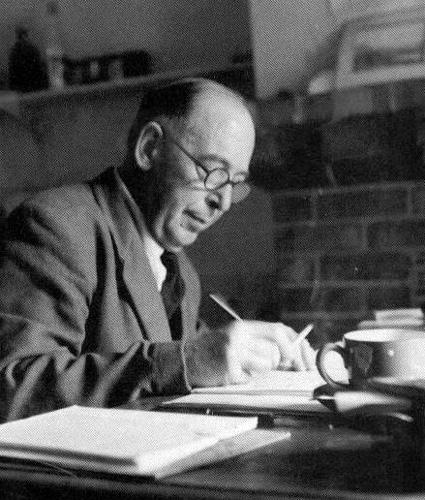
   “This is a question which has, in a sense, a frantically comic side. For the real question is not what are we to make of Christ, but what is He to make of us? The picture of a fly sitting deciding what it is going to make of an elephant has comic elements about it. But perhaps the questioner meant what are we to make of Him in the sense of ‘How are we to solve the historical problem set us by the recorded sayings of this Man?’ 

  “The problem is to reconcile two things. On the one hand you have got the almost generally admitted depth of sanity of His moral teaching, which is not very seriously questioned, even by those who are opposed to Christianity. In fact, I find when I am arguing with very anti-God people that they rather make a point of saying, ‘I am entirely in favor of the moral teaching of Christianity….’ 

  “On the one side clear, definite moral teaching. On the other, claims which, if not true, are those of a megalomaniac, compared with whom Hitler was the most sane and humble of men. There is no halfway house and there is no parallel in other religions. If you had gone to Buddha and asked him, ‘Are you the son of Bramah?’ he would have said, ‘My son, you are still in the vale of illusion.’ If you had gone to Socrates and asked, ‘Are you Zeus?’ he would have laughed at you. If you had gone to Mohammed and asked, ‘Are you Allah?’ he would first have rent his clothes and then cut your head off. If you had asked Confucius, ‘Are you Heaven?’ I think he would have probably replied, ‘Remarks which are not in accordance with Nature are in bad taste.’ 

  “The idea of a great moral teacher saying what Christ said is out of the question. In my opinion, the only person who can say that sort of thing is either God or a complete lunatic suffering from that form of delusion which undermines the whole mind of man.” (emphasis mine)

In this quote, C.S. Lewis gives us three choices about Jesus. We can either say (1) He is a liar, (2) He is a lunatic, or (3) He is who He says He is.

What do you say about Him?

(You may also be interested in my post and sermon about the divinity and humanity of Jesus.)

If you have missed any of the messages in this series called Who Is Jesus?, you can find them all here.

►► Would you please prayerfully consider supporting this ministry? My Patreon supporters get behind-the-scenes access to exclusive materials. ◀︎◀︎
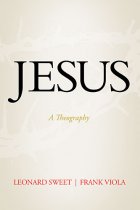
Jesus: A Theography (book review)

Jesus A TheographyVery rarely do I say what I’m going to say about Jesus: A Theography by Leonard Sweet and Frank Viola: This is a must-read!

Jesus does such an amazing job of showing Christ in all His fullness throughout the entire Bible, that I cannot recommend it highly enough. It’s a weighty read covering a weighty subject. At over 300 pages of text, 20+ pages of quotes from imminent theologians, and nearly 100 pages of end notes, this book gives you so much to contemplate. As much as I enjoy speed reading my books, this was a book that I had to read and digest slowly, as there was so much to process in each paragraph.

Far too many people think Jesus “showed up” in the New Testament. But Leonard Sweet and Frank Viola do a masterful job of weaving together the Old and New Testament texts (or, as the authors call them, the First and Second Testaments), to show Christ in all His fullness. If you are among those who have only seen Jesus in the New/Second Testament, you are about to have your paradigm totally rocked!

Let me restate my opening paragraph again—If you want to know more about Jesus Christ, Jesus: A Theography is a must-read!

I am a Thomas Nelson book reviewer.

Check out some quotes from this book here.

Thursdays With Oswald—Unblameable In The Sight Of God

This is a weekly series with things I’m reading and pondering from Oswald Chambers. You can read the original seed thought here, or type “Thursdays With Oswald” in the search box to read more entries.

Unblameable In The Sight Of God

     If the ‘Oughts’ of the Old Testament were difficult to obey, Our Lord’s teaching is unfathomably more difficult. … Jesus Christ does not simply say, ‘Thou shalt not do certain things’; He demands that we have such a condition of the heart that we never even think of doing them, every thought and imagination of heart and mind is to be unblameable in the sight of God.

     …The purity God demands is impossible unless we can be re-made from within, and that is what Jesus Christ undertakes to do through the Atonement. … It is not a question of applying Jesus Christ’s principles to our actual life first of all, but of applying them to our relationship to Himself, then as we keep our souls open in relation to Him our conscience will decide how we are to act of that relationship.

From Biblical Ethics

I want every part of my life to be unblameable in the sight of God. I have to keep the eyes of my heart fixed on Jesus.

Since, then, you have been raised with Christ, set your hearts on things above, where Christ is seated at the right hand of God. Set your minds on things above, not on earthly things. For you died, and your life is now hidden with Christ in God. When Christ, Who is your life, appears, then you also will appear with Him in glory. (Colossians 3:1-4)

How To Read The Bible (book review)

People who call themselves Christians should know how to read the Bible, right? Maybe, but many times I think we assume far too much. Fortunately How To Read Your Bible by A.J. Conyers can help.

  • Some people avoid the Old Testament, saying, “It’s too confusing!”
  • Some people simply flip their Bibles open to any passage and simply start reading.
  • Some people only open their Bibles when they’re at church.

All of these methods may work, but they’re not the best way to learn what God has to say to us in His Word. A.J. Conyers explains to his readers the art of reading the Bible, as well as the practice of reading the Bible. He gives enough background information to get you started in the right direction, and he gives you ample resources to continue digging into God’s Word more.

As you might have noticed, I love to read. But hands-down-without-question my favorite book is the Bible. Every time I open it up, I find something new to apply to my life. If you’re having difficulty getting started on a Bible study, this book may be just the thing to help get things rolling.

(I’m also a big fan of YouVersion: the Bible app for your smart phone. You can download it for your iPhone or Droid by clicking here.)

Jesus Tweets

Listen to the podcast of this post by clicking on the player below, and you can also subscribe on AppleSpotify, or Audible. 

I began using 𝕏 (formerly known as Twitter) in 2009. There is something challenging about conveying what I’m doing or thinking or encouraging others in 280 characters or less. I also love the bite-sized flow of comments from others that keep me informed and entertained.

As with anything I commit myself to, it always has to pass the “Would Jesus Do This” test. So, would Jesus use 𝕏? Would we be reading @JesusChrist tweets if He were on earth today?

I think so!

Just a quick survey of the Gospels will show you how many of His profound statements were in the 𝕏-ready 280-characters-or-less format…

In refuting the temptations of satan, all three Old Testament passages Jesus quoted are 𝕏-length.

  • Man does not live on bread alone, but on every word that comes from the mouth of God.
  • Do not put the Lord your God to the test.
  • Worship the Lord your God, and serve Him only.

In His famous Sermon on the Mount, all of the “blessed are” beatitudes are tweetable.

  • Blessed are the poor in spirit, for theirs is the kingdom of heaven.
  • Blessed are those who mourn, for they will be comforted.
  • Blessed are the meek, for they will inherit the earth.
  • Blessed are those who hunger and thirst for righteousness, for they will be filled.
  • Blessed are the merciful, for they will be shown mercy.
  • Blessed are the pure in heart, for they will see God.
  • Blessed are the peacemakers, for they will be called sons of God.
  • Blessed are those who are persecuted because of righteousness, for theirs is the kingdom of heaven.
  • Blessed are you when people insult you, persecute you and falsely say all kinds of evil against you because of Me.

Each sentence of Jesus’ model prayer fits in the 𝕏 dialogue box.

  • Our Father in heaven, hallowed be Your name, Your kingdom come, Your will be done on earth as it is in heaven.
  • Give us today our daily bread.
  • Forgive us our debts, as we also have forgiven our debtors.
  • And lead us not into temptation, but deliver us from the evil one.

All of Christ’s powerful “I AM” declarations in the Gospel of John are less than 140 characters.

  • I am the bread of life. He who comes to Me will never go hungry, and he who believes in Me will never be thirsty.
  • I am the light of the world. Whoever follows Me will never walk in darkness, but will have the light of life.
  • I am the gate; whoever enters through Me will be saved.
  • I am the good shepherd; I know My sheep and My sheep know Me.
  • I am the resurrection and the life. He who believes in Me will live, even though he dies.
  • I am the way and the truth and the life. No one comes to the Father except through Me.
  • I am the true vine, and My Father is the gardener.
  • I am the vine; you are the branches.

Even the most well-known verse of all fits into the 𝕏 dialogue box:

For God so loved the world that He gave His one and only Son, that whoever believes in Him shall not perish but have eternal life.

The words of Jesus are just as timely and relevant today as they were the day He first spoke them, so let’s use our social media platforms to rebroadcast (or retweet) these life-changing truths.

►► Would you please prayerfully consider supporting this ministry? My Patreon supporters get behind-the-scenes access to exclusive materials. ◀︎◀︎

Nothing Left But Ashes

In the “Your Gift To God” series at Calvary Assembly of God, we have been following the pattern of the gifts that the Magi gave to Jesus as a pattern for the gifts that we, too, should give to God.

First, the Magi gave gold. The king of metals for the King of kings. They acknowledged that this was the Eternal King. Gold is a gift for a king.

The second gift is a bit of a head-scratcher gift: frankincense. This type of incense was used in the Old Testament in worship and sacrifices in the Tent Of Meeting. Incense is a gift for a priest. But would the Magi give a priestly gift to a king?

Jesus came as both King, Priest, and Sacrifice. The frankincense was used as the high priest went from the Holy Place to the Most Holy Place to offer the sacrifice of atonement. But look what the Bible says about Jesus:

…Christ loved us and gave Himself up for us as a fragrant offering and sacrifice to God.

And because of what Jesus did for us:

And so, dear brothers and sisters, we can boldly enter heaven’s Most Holy Place because of the blood of Jesus.

When we offer a sacrifice of frankincense to Jesus our High Priest, we’re saying, “I trust You with this. I don’t want to carry this any longer. I give it to You completely.” That means what we offer to Him is completely consumed.

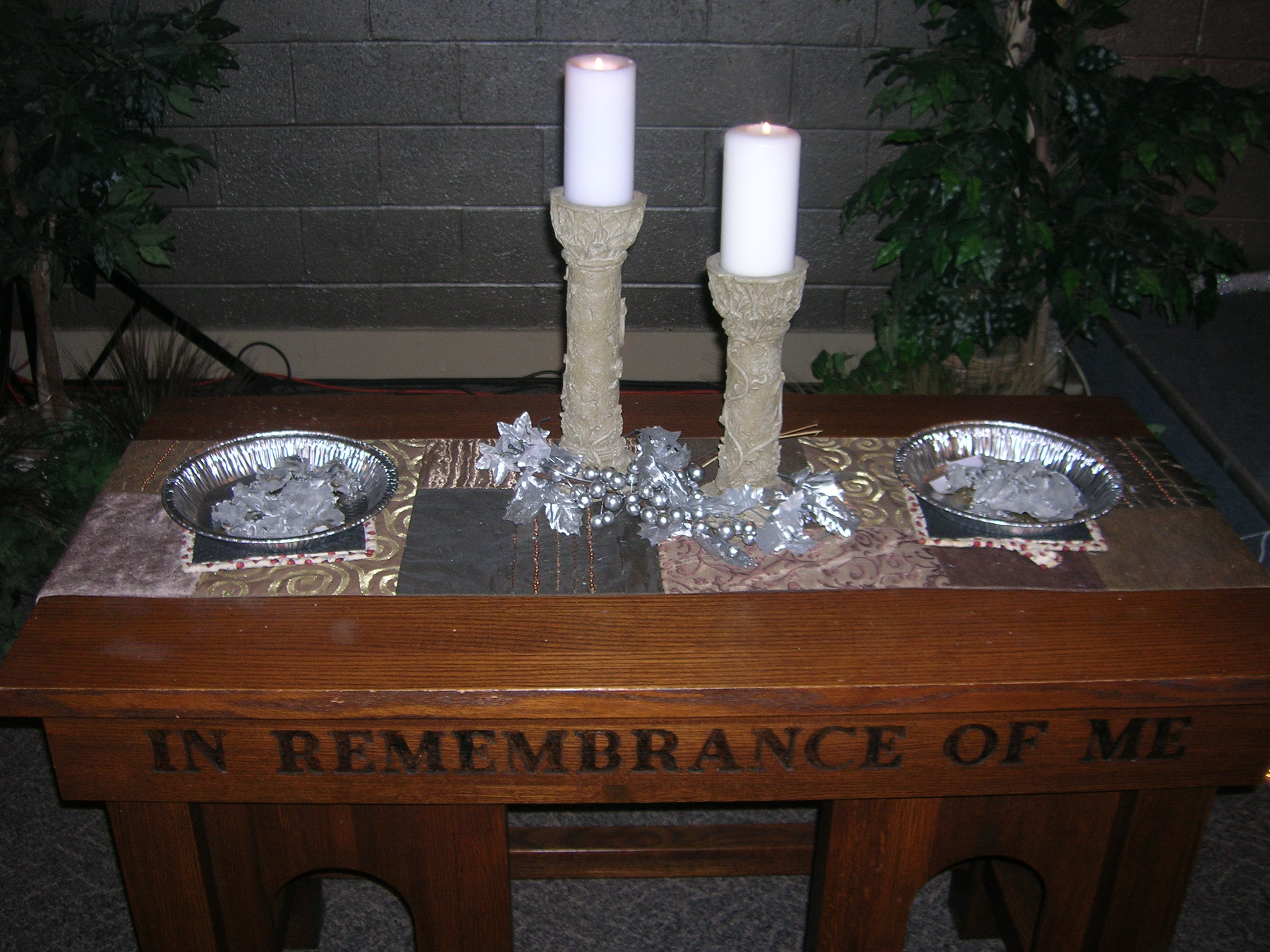
Yesterday our congregation wrote down their burdens and concerns and challenges on a slip of paper. Then we brought those concerns to Jesus and burned them up like frankincense in His presence. As I smelled the aroma, I could only imagine the incredible scent that Jesus detected.

All of the concerns people wrote down were reduced to ash yesterday morning!

I believe people were set free! The concerns were burned up like a sacrifice before our High Priest! No longer do they have to carry these heavy loads:

Casting the whole of your care [all your anxieties, all your worries, all your concerns, once and for all] on Him, for He cares for you affectionately and cares about you watchfully.

Your greatest gift to God could be all of the things that have burdened you for way too long. Give them to Him because He cares for you. Let them be consumed completely, and never pick them up again.

Live free!

Old And Valuable

During my freshman year of college, I was placed as a roommate with another freshman who was a theology major. Just so we’re all clear about this: theology is the study of God. And just so we’re all crystal clear about this: the study of God is typically based on the Bible.

I can hear some of you now, “Duh! Great insight!” But hang with me for a moment.

Near the start of our first semester together my roommate came into our dorm room very upset, slammed the door shut, and threw down his backpack. When I asked what was the matter he told me he had just come from a meeting with his academic advisor and was furious at his list of required classes. When I inquired what class he wasn’t allowed to take, he said, “No, it’s not what class I can’t take; it’s what classes I have to take!”

“So what classes are you upset that you have to take?” I asked, thinking maybe something like science or phys ed.

“Old Testament,” he responded. I was speechless, but he continued, “I mean, Old Testament! C’mon, that was stuff from a long time ago. We live under the new covenant now, so the old covenant has no purpose for us anymore!”

Although this is somewhat shocking to hear from a theology major, I’m afraid a lot of people feel this way.

Did you know…

  • The Old Testament (OT) is directly quoted by the New Testament (NT) writers nearly 700 times.
  • There are thousands of references to OT people, events, or principles in the NT.
  • Of the 27 books in the NT, only six don’t have direct OT quotations. But four of those six books refer back to OT people or passages.
  • Of the 39 books in the OT, all but nine of them are quoted in the NT.
  • Jesus Himself quoted from the five books of Moses (Genesis, Exodus, Leviticus, Numbers, Deuteronomy) nearly 60 times.

I love the Old Testament! There I read some great stories and meet some very colorful personalities. But I especially love reading the OT to see what was going to happen and then reading the NT to see both what did happen and what’s still going to happen.

Those 39 books of the Old Testament may be old, but they’re so rich, and so valuable, and so enlightening to the New Testament. If you haven’t made the OT a part of your Bible reading time, I encourage you to do so.

The Old Testament is not old, as in worn out, archaic, useless. It’s old, as in priceless, valuable, foundational.