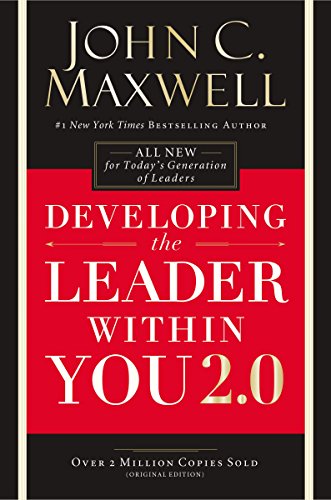
12 Quotes From “Developing The Leader Within You 2.0”

Whether you’re a novice or a veteran leader, there’s so much to learn from John Maxwell in his book Developing The Leader Within You 2.0! Check out my full book review by clicking here, and stay tuned for even more quotes coming soon. 

“Developing yourself to become the leader you have the potential to be will change everything for you. It will add to your effectiveness, subtract from your weaknesses, divide your workload, and multiply your impact.” 

“You have influence in this world, but realizing your potential as a leader is your responsibility. If you put effort into developing yourself as a leader, you have the potential to influence more people and to do so in more significant ways.” 

“When you say everything is a high priority, then nothing is a high priority. It really indicates that you’re unwilling or unable to make a decision, which means you won’t get anything done.” 

“Instead of filling every space in my calendar, what I needed to do was create some white space. If I didn’t, nobody else was going to. People who keep burning the candle at both ends aren’t as bright as they think they are.”

“People cannot climb beyond the limitations of their character. Leaders cannot succeed beyond the depth of their character.” 

“Instead of wanting to point to my breakthroughs, I want to direct people to the brokenness that has led to my breakthroughs.” 

“When it comes to character, I believe the best guardrails are the decisions you make before you face high-pressure situations.” 

“People do not naturally resist change; they resist being changed.” 

“If life is tough for individuals, its difficulty is multiplied for leaders. Individuals can think me, but leaders must think we. A leader’s life is not his or her own. Thinking we means other people are included, and that means their problems are also yours to deal with.” 

“You can’t solve problems for others. If you do, you’ll be forever solving their problems. You must solve problems with them—at least until they get the hang of it.” 

“Good leaders don’t just resolve the issue to get it off their plates quickly for the sake of their own comfort. They help create solutions that take their people and their organization forward and put them in a better position than they were in before they experienced the problem.” 

“As a leader, you need to see opportunities differently than most people. They are a chance for you to learn about yourself, your team, and your opportunities. They provide you a way to improve your own life, improve the lives of others, and gaining influence.”
Developing The Leader Within You 2.0 (book review)

I not only read John Maxwell’s Developing The Leader Within You for myself many years ago, but I have used the content from this book in numerous teaching settings. When I heard that a 25th-anniversary edition of the book was being published, I originally thought of young people to whom I could introduce this helpful book. 

But I was totally blown away to discover that although Dr. Maxwell had promised his publisher that he would revise 15 percent of the book, he actually revised 89 percent of the book! So not only am I excited to get this book in front of people who haven’t read it previously, I’m also encouraging those who read the first edition to get a copy of Developing The Leader Within You 2.0.

In leadership it’s quite simple—you cannot teach accurately what you haven’t internalized yourself, or else risk being called a hypocrite. So any leadership teaching must start with the leader being educated and expanded as a leader himself or herself. I can think of no better resource on the market than this book. 

In typical fashion, Dr. Maxwell masterfully weaves together leadership principles, supporting quotes, transparently personal stories of how he has—sometimes painfully—learned the principles he is teaching, historical and contemporary examples of those who followed or violated these principles, and up-to-date findings from researchers and other front-lines leaders. 

Bottom line: this is a book that is loaded with content but is also very easy to read and apply. At the end of each chapter, you will find some very helpful application ideas for each of the ten principles Dr. Maxwell presents in this book. 

If you’ve already read 1.0, I encourage you to get a copy of 2.0. John Maxwell has learned so much since the first edition and he liberally shares it with us here. 

And if you’re an emerging leader, or simply want to take your leadership to a higher level, this is an excellent foundational book for you to digest and apply.

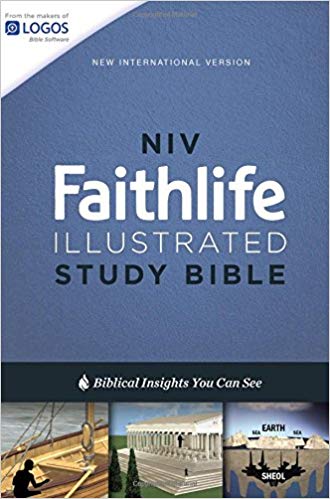
Faithlife Illustrated Study Bible (book review)

If you’ve ever looked at the list of books I’ve read and reviewed at the end of each year, you will quickly discover how much I enjoy reading! I read science, biographies, theological works, philosophy, financial resources, relationship helpers, and on and on. But hands-down, not-even-close to second place, I read the Bible more than anything else. Not only do I read the Bible extensively every day, I then read all of my other books through the lens of Scripture. 

So whenever I come across a resource that helps with Bible reading and study, I’m absolutely thrilled to share it with you. One such resource I’ve been so excited about is the Faithlife Illustrated Study Bible. 

I originally purchased this study Bible because of the “illustrated” part. I glanced through it and found several things that make the biblical accounts more understandable. Things like: 

  • timelines 
  • genealogical records
  • “blueprints” of notable buildings and structures
  • infographics 
  • maps and tables 

Then I was excited to discover the wealth of articles embedded in the notes section next to the biblical texts. 

But the happiest discovery I made was the ability to combine the written text with so much additional online content. Using the Faithlife Study Bible app on my iPhone, I can access all of the content in the print version in addition to more resources that have become available since this study Bible was published. My favorite way to do this is via the “reference scanner” in the app. I use my iPhone camera to take a picture of the part of the Bible I’m studying and then the app pulls up all of the resources associated with nearly everything on that page. Amazing! 

If you already love studying the Bible, this book/app combination will take you to a whole new level. Even if you’re just getting started in a Bible study, you will love how much fullness these resources quickly bring to your fingertips. 

Success From Failure

People are rarely successful the first time they try something. In fact, Thomas Edison once quipped, “I’ve had a lot of success with failure.” 

And you’ve probably heard the tried-and-true cliché—If at first you don’t succeed, try and try again. 

Here are five attitude-adjusting thoughts and one key question about failure and success from John Maxwell: 

  1. Failure is an attitude, not just an outcome.
  2. Success comes by going from failure to failure without losing enthusiasm.
  3. Failure isn’t failure unless you learn nothing from it.
  4. Failure is an opportunity to begin again, but more intelligently.
  5. Failure never leaves us the same: I’m either leaving the failure and giving excuses, or I’m learning from the failure and I’m growing. 

John then asks: “The key question on your bad day is: Are you going to give up or get up?” 

What are you going to do with failure?

If you want to read more, check out John Maxwell’s book Sometimes You Win, Sometimes You Learn, or some other Maxwell quotes here.

Luciano Pavarotti On Commitment

“When I was a boy, my father, a baker, introduced me to the wonders of song. He urged me to work very hard to develop my voice. Arrigo Pola, a professional tenor in my hometown of Modena, Italy, took me as a pupil. I also enrolled in a teachers college. On graduating, I asked my father, ‘Shall I be a teacher or a singer?’  

“‘Luciano,’ my father replied, ‘if you try to sit on two chairs, you will fall between them. For life, you must choose one chair.’  

“I chose one. It took seven years of study and frustration before I made my first professional appearance. It took another seven to reach the Metropolitan Opera. And now I think whether it’s laying bricks, writing a book—whatever we choose—we should give ourselves to it. Commitment, that’s the key. Choose one chair.” —Luciano Pavarotti (emphasis added)

Albert Einstein On The Library Of The Universe

“I’m not an atheist, and I don’t think I can call myself a pantheist. We are in the position of a little child entering a huge library filled with books in many languages. The child knows someone must have written those books. It does not know how. It does not understand the languages in which they are written. The child dimly suspects a mysterious order in the arrangement of the books but doesn’t know what it is. That, it seems to me, is the attitude of even the most intelligent human being toward God. We see the universe marvelously arranged and obeying certain laws but only dimly understand these laws. Our limited minds grasp the mysterious force that moves the constellations.” —Albert Einstein

A Leader’s Observations

When I consider Your heavens, the work of Your fingers… (Psalm 8:3).

David starts and ends this psalm with the same phrase: O Lord, our Lord, how excellent is Your name in all the earth! In the middle, David marvels at the diversity and beauty of God’s creation. David observes…

  • the blue skies
  • the wide-eyed wonder of children
  • the moon and stars
  • the marvel of man
  • the flocks and herds of the field
  • the birds in the air
  • the fish in the seas

David takes nothing for granted. He observes, he sees God, and then he worships God as Creator. David’s constant cycle is—observation and contemplation which leads to adoration.

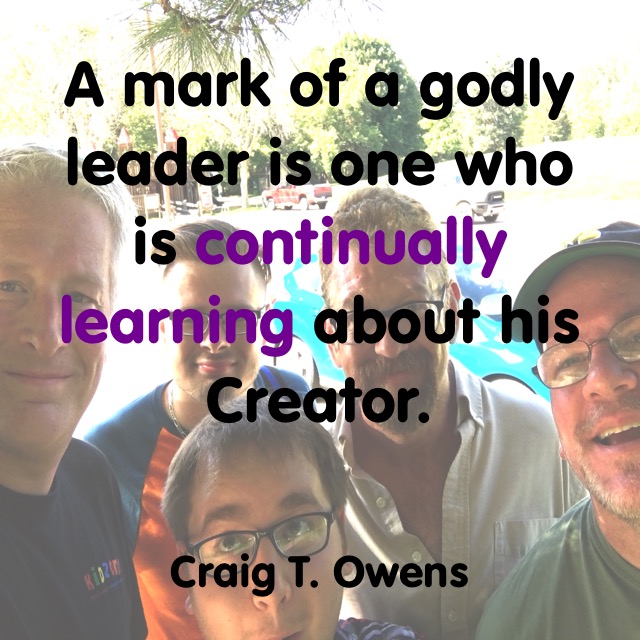
A mark of a godly leader is one who is continually learning about his Creator.

Don’t ever stop observing; don’t ever stop learning. Become a lifelong learner, and let your contemplation lead you to adoration of our excellent Lord and Creator!

This is Part 18 in my series on godly leadership. You can check out all of my posts on this topic by clicking here.

So Send I You (book review)

Jesus told His followers, “As the Father has sent Me, so send I you” (John 20:21). So Send I You by Oswald Chambers is a series of lectures to his students that were preparing to be missionaries. But, as Chambers makes perfectly clear, every Christian is a missionary.

Samuel M. Zwemer said about this book, “A preface or forward is scarcely needed to introduce the reader to this treasure-house of thought on missions. Those who have read other books by our friend, Oswald Chambers, know what to expect. A message not for superficial minds and hearts. Those who love to think on the kingdom and whose hearts the King has entered will not be disappointed as they read these pages.”

Truly this is not a book for superficial minds, as Chambers challenges Christians to look at life through the eyes of Jesus, to be on a mission just as Jesus was. His lectures are solidly founded on Scripture, showing us how Jesus intended His followers to conduct themselves.

If you are ready to be more used by God, then So Send I You is for you. You will be both challenged and encouraged and equipped to be a more effective disciple and missionary for Jesus Christ.

9 Quotes From Other Authors In “Marching Off The Map”

Tim Elmore’s books are always chockfull of the latest research and insights from multiple sources. Tim does an excellent job of synthesizing mountains of evidence to give parents and teachers actionable steps to help the students with whom they work. Here are just a few of the quotes he shared from other authors in his book Marching Off The Map.

“We all want to progress, but if you’re on the wrong road progress means doing an about-turn and walking back to the right road. In that case, the man who turns back the soonest is the one who is most progressive.” —C.S. Lewis

“Tell me a fact and I will learn. Tell me the truth and I will believe. Tell me a story, and it will live in my heart forever.” —Indian Proverb

“Start where people are before you try to take them where you want them to go.” —Jim Rohn

“Shooting above people’s heads doesn’t mean you have superior ammunition—it means you are a lousy shot.” —Oscar Handlin

“If you think our future will require better schools, you’re wrong. The future of education calls for entirely new learning environments. If you think we’ll need better teachers, you’re wrong. Tomorrow’s learners will need guides who take on fundamentally different roles.” —Dr. Wayne Hammond

“If we continue to develop our technology without wisdom or prudence, our servant may prove to be our executioner.” —Omar Bradley

“For the first time in human history, the majority of people in the developed world are being asked to make a living with their minds, rather than their muscles. For 3000 years, humankind had an economy based on farming: till the soil, plant the seed, harvest the crop. Hard to do, but fairly easy to learn. Then, for 300 years, we had an economy based on industry: mold the parts, turn the crank, assemble the product. Hard to do, but also fairly easy to learn. Now, we have an economy based on information: acquire the knowledge, apply the analytics, use your creativity. Hard to do, hard to learn, and even once you’ve mastered it, you’ll have to start learning all over again, pretty much every day.” —Michael Bloomberg

“He who has a why to live for can bear almost any how.” —Frederick Nietzsche

“Be the person you needed when you were young.” —Ayesha Saddiqi

Be sure to check out my review of Marching Off The Map by clicking here. You can also read some quotes and check out some infographics from Tim Elmore here, here, and here.

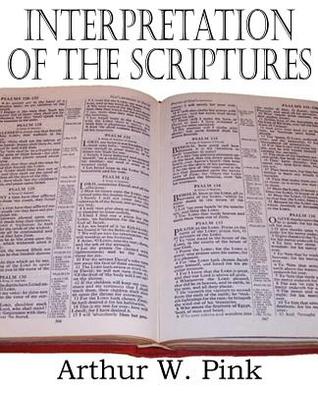
11 Quotes For Pastors From “Interpretation Of The Scriptures”

You don’t have to be a pastor to benefit from reading Interpretation Of The Scriptures by A.W. Pink, rather I think all students of the Bible will benefit from reading this classic book. However, the Apostle James did warn that “not many of you should presume to be teachers” because “we who teach will be judged more strictly” (James 3:1). In that light, A.W. Pink directs several of this comments in this book exclusively to those who teach/preach from the Bible. Here are a few of those quotes.

“The preacher’s task is both the most honorable and the most solemn of any calling, the most privileged and at the same time the most responsible one.”

“The ministry is no place for trifiers and idlers, but for those who are prepared to spend and be spent in the cause of Christ. The preacher ought to work harder than the miner, and to spend more hours per week in his study than does the man of business in his office.”

“Particularly does the minister need to attend unto this injunction ‘take heed unto thyself’ in his study of the Scriptures, reading them devotionally ere he does so professionally; that is, seeking their application and blessing to his own soul before searching for sermonic materials.”

“To ‘open’ the Scriptures helpfully to the saints requires something more than a few months’ training in a Bible institute, or a year or two in a seminary. None but those who have been personally taught of God in the hard school of experience are qualified so to ‘open’ the Word that Divine light is cast upon the spiritual problems of the believer, for while Scripture interprets experience, experience is often the best interpreter of Scripture.”

“The preacher should be with his time as the miser is with his gold—saving it with care, and spending it with caution.”

“Great care needs ever to be taken that we do not expound our own minds instead of God’s.”

“The preacher should be, above everything else, a man of the Book, thoroughly versed in the contents of God’s Word, one who is able to bring forth out of his treasure ‘things new and old’ (Matthew 13:52). The Bible is to be his sole text-book, and from its living waters he is to drink deeply and daily.”

“Commentaries we consult only after we have made a first-hand and exhaustive study of a passage.”

“It is at the feet of God that the preacher must take his place, learning from Him the meaning of His Word, waiting upon Him to open its mysteries, looking to Him for his message.” 

“To discourse upon the chemical properties of food will not feed a starving man, neither will tracing out the roots of the Hebrew and Greek words (necessary though that be in its proper place) the better enable Christ’s followers to fight the good fight of faith.”

“Scripture must be allowed to speak for itself, and it does so only so far as the preacher sets forth its genuine import. Not only is he to explain its terms, but also the nature of the ideas they express, otherwise he is apt to make use of scriptural terms and yet give them an unscriptural sense.”

To read the other quotes I shared from Interpretation Of The Scriptures, click here. You may also check out my full book review by clicking here.