Learning & Teaching

LamedhI’ve been leading my congregation through a spiritual workout from the 119th Psalm. This psalm is unique for a couple of reasons: (1) It’s the longest chapter in the Bible; (2) It’s divided into twenty-two 8-verse segments, with each segment beginning with its own Hebrew letter; and (3) All but four of the 176 verses directly mention God’s Word (using words like command, precept, statues, commands, etc.).

Something else that makes this psalm interesting to study is the Hebrew alphabet itself. In our western world, a letter is just a letter: an L is just an L. But in the Hebrew language, the letters have a name, a meaning, and even a numeric value. So the Hebrew equivalent to our English L is the letter/word lamedh.

Lamedh is the tallest of all the Hebrew letters, so that means it stands out. The section called lamedh in Psalm 119 is one of big proportions. Words like eternal, boundless, established, enduring, and forever are prominent in these eight verses. The psalmist is inviting us to climb up into God’s Word and get a bigger view, a higher vantage point of who God is.

When we are in difficult places, we tend to focus more on our problems, and less on God’s awesomeness. So lamedh is a call to shift our gaze.

But this letter/word also has a definition, and lamedh is a double-edged definition. This word can mean to learn. Indeed, as we gaze upon God’s majesty, we learn so much more about Him! But lamedh also means to teach.

I have found that as I go through difficult times and choose to change my focus from my situation to my Savior, that I learn more about His faithfulness. But at the same time, others are learning from that decision to switch my gaze to God.

So I’ve got one word of advice for you if you feel like your problem is too big and you’re thinking about throwing in the towel: DON’T!!

By focusing on God’s bigness instead of your circumstance, you will learn to grow in faith. And at the same times you will be teaching others to place their faith in God too.

Those who wait on God will soar to new heights!

If you have missed any of the messages in our P119 series, you can access them all by clicking here.

Sola

On October 31, 1517, a sea change in world history was begun. On that day Martin Luther nailed his 95 theses to the door of a church, challenging the traditions of organized religion which he believed had strayed far from the instructions in the Bible.

The Reformation had been launched.

I truly believe that we all must be students of history, partly because all of his story is His Story. When we study history, we can see how God is working out His Story.

Second, we also need to know our history because as George Santayana rightly said, “Those who do not learn from history are doomed to repeat it.”

A third reason to (re)learn the thoughts brought out during the Reformation is for doctrinal strength. It’s important to know not only what why believe but why we believe it. And there are some valuable doctrinal truths in the history of the Reformation.

Finally, I believe an important part of learning is unlearning. Sometimes we accept something just because it’s been handed down to us. That is in large part what Luther and other reformers were challenging, and calling us to unlearn tradition and relearn what the Bible has to say.

So beginning this Sunday we will be walking through the five Sola doctrinal statements the reformers taught. I am really looking forward to relearning and unlearning, and just outright learning the biblical truths of the five solas.

I hope you can join me at Calvary Assembly of God.

Here are the topics we covered in this series:

Don’t Become Illiterate

Wise King Solomon:

Intelligent people are always ready to learn. Their ears are open for knowledge. (Proverbs 18:15)

Futurist Alvin Toffler:

“The illiterate of the 21st century will not be those who cannot read and write, but those who cannot unlearn, learn, and relearn.”

Questions:

  1. What did you unlearn this week?
  2. What did you learn this week?
  3. What did you relearn this week?

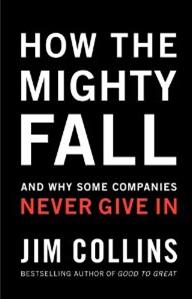
How The Mighty Fall (book review)

This is the third in the series of books from Dr. Jim Collins: Built To Last, Good To Great, and now How The Mighty Fall. This is a book that Dr. Collins wished he didn’t have to write, as he uncovers the markers that contributed to the failure of once-great companies.

If you are a frequent reader of my blog, you’re probably wondering why I’m reading/reviewing a business book. The answer is simple: the principles Jim Collins uncovers in his books are rock-solid principles of success and failure, regardless of the organization in which they are practiced or ignored. In all three of his books, I have mined so many great truths to apply to my personal life, as well as the organizations I lead.

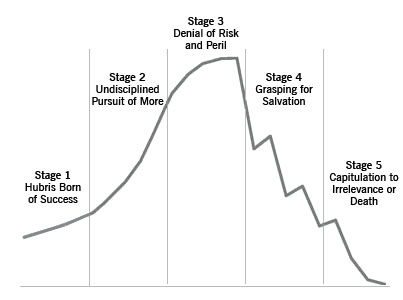
In How The Mighty Fall we learn about the five stages of decline for once-great organizations. Working backward from his evidence, Dr. Collins then gives us “markers” to look for in our own organizations that would tip us off to the stages of decline.

Why study this? Because I want to lead a great church! This quote from the book especially resonates with me:

“The point of struggle is not just to survive, but to build an enterprise that makes such a distinctive impact on the world it touches, and does so with such superior performance, that it would leave a gaping hole — a hole that could not be easily filled by any other institution—if it ceased to exist.” (emphasis added)

If you are involved in the leadership of any organization (whether for-profit or non-profit), I would encourage you to devour all three of Jim Collins’ books.

Thursdays With Oswald—Work-In-Progress

This is a weekly series with things I’m reading and pondering from Oswald Chambers. You can read the original seed thought here, or type “Thursdays With Oswald” in the search box to read more entries.

Work-In-Progress

     If you are a worker whom God has sent, and have learned to live under His shadow, you will find that scarcely a day goes by without your Father revealing the need of further chastening. If any child of God is free from the goads of God, he is not in the line of the succession of Jesus Christ.

From Approved Unto God

The writer of Hebrews said the same thing

And have you forgotten the encouraging words God spoke to you as His children? He said, “My child, don’t make light of the Lord’s discipline, and don’t give up when He corrects you. For the Lord disciplines those He loves, and He punishes each one He accepts as His child.”

It’s true: No pain, no gain. God will continue to work on you and me as His child.

Thinking About And

These are my “raw notes” from The And Conference. If anyone wants to add on, modify, or delete, please feel free.

Alan Hirsch

Cultural differences – imagine numbers 1-4 as barriers to even starting a conversation (m1-m4).

In western culture we’re pushing more toward m3 or m4. In fact, the gap between m0 and m1 is shrinking.

Our idea of church is 17 centuries old (tracing back to Constantine), so there is a HUGE assumption we’re making when we think “church.” From m0 to m1 is the church’s current domain. No cultural barriers have to be crossed. However, much of culture is in m3-m4.

If we act attractionally in a missional setting, we’ve extracted them from their “m” zone. New believers in 3-5 years after becoming a Christian will have no non-Christian friends. We’ve extracted them!

Most people feel good about God, Jesus, and spirituality. However, there are negative feelings about “church.” Most people remember or focus on only three things in their “perceived set.” Marketers try to get their product/service in that perceived set.

Jesus, yes; church, no. Kind of like iPhone, yes; AT&T, no. But now the Apple logo on the iPhone reminds people of AT&T.

The dechurched have been inoculated against the church.

Dream out-loud at high volume about what the church could be!

“As the Father sent Me, so I send you.” How did the Father send Jesus? He stepped into culture, He lived in the culture and spoke to people out of culture. Church should come out of mission, not mission out of church. Just like the Acts church didn’t require Gentile believers to adopt Jewish practices. So we don’t plant churches, we plant the Gospel and let the church grow out of that.

The Bible doesn’t know the difference between “clergy” & “laity.” Why do we persist in putting people in these categories?

————–

“Apostolic” is the Greek version of the Latin “missional.” We need an apostolic environment to take movements to a place of spontaneous expansion. The apostle is a catalyst to growth.

Paul starts churches which start churches = movement → expansion.

Paul then teaches. He is the custodian of the movement’s DNA. He is also the guardian of the purity of the DNA.

An “apostle” is not an apostle if it’s a top-down leadership. An apostle is a servant leader.

Ephesians 4

  • vv. 7-11  APEST = apostle, prophet, evangelist, shepherd, teacher.
  • vv. 12-16  maturity—cannot get to maturity without all of APEST. Most denominations focus just on S & T. “Shepherd” is only used once in the New Testament, and the New Testament says, “Not many of you should presume to be teachers.”

Leadership is a calling within a gifting. APEST gifts are given to everyone, but some are called to be leaders within their gifting.

APEST gifts carry more of a vocational weight. Gifts of the Spirit are more of empowerments for the moment. The gifts of Romans 12 are motivational/paradigmal gifts.

———-

Re-Jesus = a renewed focus on full Christology: most of our focus is on the Cross, resurrection & return. We need to include Incarnation & His life among humanity. We make Him Savior, but not Lord.

Re-mission = who God is must determine what the church does.

Re-organize = missional churches are responsive to the world around us. Our churches must be organized to be nimble.

Tim Stevens

Every new term that comes out tells us we’re doing church wrong. So Tim says “Missional schmissional!” and “Attractional schmactional!”

Most churches are defined as “Come to us.” But this only works for <40% of people. People are still “spiritual,” but they don’t like “church.”

Do we attract the unchurched 60% OR missionalize the churched 40%. How about BOTH-AND? We have to help the 40% reach their 60%.

We can still say “Come and see,” but emphasize “So that” = “Come and see what Jesus does so that you can tell others.”

There is no one-plan-for-all method for churches to do BOTH-AND. Each church must discover what works for them in their community.

Jason Miller

Linear thinking is how our brains process info. That’s why telling stories with a plot twist is so powerful. Like when Jesus said, “You have heard… but I tell you….” Twists get people’s attention.

People in the world have had their imaginations devastated by culture who says love is conditional. When we talk about God’s unconditional love, it’s a plot twist they never imagined.

We have a mandate to do something beautiful. Beauty awakens imaginations to see God’s love. Like sympathetic vibrations: God’s beauty begins to resonate and awaken imagination.

“The church is God’s imagination to the world.”

Dave Ferguson

What can we do for those who won’t come to church?

Missional people (micro level) + Multiplying churches (macro level) = Missional movement

How to create a missional culture: (1) Ordain every member; (2) Lead with a “Yes”; (3) Make heroes of everyday people.

Saying “Yes” doesn’t mean funding the project or even announcing the project. It just means giving people permission to reach out.

Business paradigm that makes money but not movements: say “No” to anything that you haven’t fully researched.

Matt Carter

We can’t have “professional Christians” that do ministry & those that only receive ministry.

Christianity today needs to look like what we see in Acts.

What if instead of attracting new people to church, we released current attendees to do ministry?

What if it wasn’t “come and see” but “go and do”?

Small group success = seeing & addressing a need in the community. “Nothing builds community better than mission. When we aim at community, we may get it. But when we aim at mission, we get that and community too.”

Need to share success stories and failure stories. This creates a culture that let’s everyone know that it’s okay to try.

Hugh Halter

We need to redefine “disciple” because now we define them as “church attendee.”

Two categories: missional and sojourners. Missional people prepare the way for sojourners to become missionals by making the Kingdom of God tangible.

A better definition of disciple is apprentice. An apprentice is learning by doing; they’re hands-on.

Second decision environment = people choose to get more involved. For example, Sunday morning attendance is a first decision; a small group is a second decision.

Barriers to discipleship: individualism, consumerism, materialism. To overcome these barriers, Jesus put people in a place of tension. This typically can’t take place in a first decision environment.

Other ways to address these barriers: modeling, confrontation, action/reflection.

Jesus wasn’t interested in followers, but in disciples.

Rob Wegner

“Every member is a minister.” —Mark Beeson

Attractional churches use centripetal force to bring people in. Missional churches use centrifugal force to send people out.

Attractional is embedded inside missional. Attractional is the seed for missional. As Hirsch said, it’s more “extractional.”

Attractional seeds → Missional community → Extractional movement

Do we have to see church as institution and church as movement as opposites? Or co-existing? Genius of BOTH-AND!

Am I Learning?

Listen to the podcast of this post by clicking on the player below, and you can also subscribe on AppleSpotify, or Audible. 

In the Old Testament, there’s a phrase that repeats at the end of the historical record of almost every king of Israel and Judah:

As for all the other events of his reign, and all he did, are they not written down in the annals of the kings of Israel [or] Judah?

This phrase is repeated again and again (almost 40 times!). To me, the question mark at the end of this key phrase is really more like this: These stories are all here for your benefit—are you reading them? are you learning from them?

“Those who do not learn from history are doomed to repeat it.” —George Santayana

But maybe we think, “Those things don’t pertain to me.” Or even, “C’mon, that’s as plain as the nose on your face! I don’t need to study that because everyone knows you shouldn’t act that way!” How about this…

These things happened to them as examples and were written down as warnings for us, on whom the fulfillment of the ages has come. So, if you think you are standing firm [if you think you know it all], be careful that you don’t fall! (1 Corinthians 10:11-12, my paraphrase)

In light of that, here are some questions that would serve us well:

  • Am I reading these examples?
  • Am I learning from them?
  • Am I reviewing my own personal history?
  • Am I learning from that?
  • Am I writing down my experiences (both failures and successes) so that others can learn from me?

And maybe the most important introspective question of all: When was the last time I learned something new from something old?

►► Would you please prayerfully consider supporting this ministry? My Patreon supporters get behind-the-scenes access to exclusive materials. ◀︎◀︎

They’re Both Dissin’

Check out these opening paragraphs from an article on WebMD (if you wish, you can read the full article here):

     People over 50 get a self-esteem boost when they read negative news about young adults, a study shows.

     Researchers also say young people, when given the choice, would rather read about people their own age and aren’t very interested in stories about their elders, whether the articles are positive or negative.

     “Our results reflect that the younger readers did not perceive older people as all that relevant,” study researcher Silvia Knobloch-Westerwick, PhD, of Ohio State University, tells WebMD by email. “They’re more concerned with figuring out who they are and where they stand, and those in the same age group appear to provide the relevant comparisons for that.”

Okay, this disturbs me on several areas. Basically, each age group is dissin’ the other age group.

The senior citizens are projecting a snickering, see-I-told-you, father-knows-best, condescending attitude on youth. Why would anyone who is willing to learn and grow want to be around that kind of person?!

Then our youth have an I’ve-got-it-all-figured-out, I-don’t-need-you, you’re-out-of-touch attitude toward the senior citizens. Why would anyone who is willing to mentor someone ever want to be that kind of person?!

I think both of these generational groups could learn from this wise advice:

Children, do what your parents tell you. This is only right. “Honor your father and mother” is the first commandment that has a promise attached to it, namely, “so you will live well and have a long life.” Fathers, don’t exasperate your children by coming down hard on them. Take them by the hand and lead them in the way of the Master.

Borrowed Brains

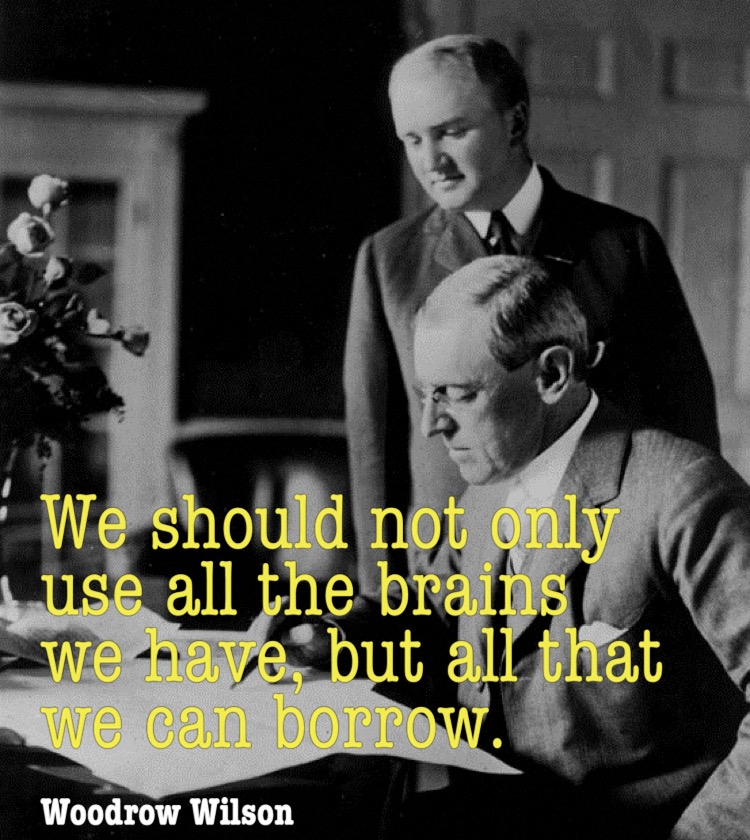
“We should not only use all the brains we have, but all that we can borrow.” —Woodrow Wilson

It’s so important to learn from others—to borrow their brains. I try to take something from other people’s brains every day.

  • Every morning I begin my day by studying the timeless truths found in the Bible.
  • Then I pray to ask God to give me the mind of Christ for my day.
  • Throughout my day I learn from the brains of other business and ministry leaders. People who have been-there-done-that and are willing to share are an invaluable source of wisdom.
  • I also consume a regular diet of biographies and autobiographies of past and present leaders. I try to put myself in their shoes to see why they made the decisions they made.
  • And I have some close friends that can give me their honest insight and critique.

One of the saddest things is to hear someone say, “I’m a self-made man” or “I’m a self-made woman.” Really?! That’s rather limited, isn’t it?

So whose brains are you borrowing? 

Don’t Be That Guy

I love studying leadership books and learning from the lives of great men and women of history. The leadership section of my library is only slightly larger than the biography section. One of the saddest things to see is a leader who self-destructs. I was just reviewing some of my notes about leadership failures when Tim Elmore’s latest e-newsletter arrived entitled Self-Destructive Leaders.

Check out a couple of blurbs from this excellent article:

Projecting their self-worth.
There are few things more unappetizing than a leader who has to constantly talk about how important they are. They name drop, they remind others of their busyness, accomplishments, authority, past positions, degrees, or pedigree. It’s like they’re lobbying for attention and affirmation. It’s a sad commentary when so much of a leader’s energy is spent doing this instead of helping their team reach their goals.

Possessing a controlling spirit.
Often, insecure leaders react to their inward desperation with control. They feel if they can control people, they’ll maintain absolute authority. … They resort to more regulations and policies to enforce compliance among staff instead of trusting them and earning their loyalty….

Comparing themselves to others obsessively.
When a leader has a low EQ [emotional intelligence quotient], they naturally tend to look around them; they look outward rather than inward (at their own natural strengths and style) or upward (to their Creator for their sense of identity).  They become consumed with comparing their own traits or achievements to those of other leaders. Soon, their team ceases to operate in a healthy way. They’re driven by comparing and competing with others instead of capitalizing on their own core competencies.

Possessing self-imposed blindness.
This one is huge. All leaders have blind spots. Like in a car, blind spots happen not so much because of stupidity but position. The driver can’t see certain things. Sadly, self-destructive leaders refuse help. They repel any input from colleagues and insist on living in a bubble that makes them feel good. All is well, or so they think. Their insecurity won’t let them face the facts. They prefer a perspective that’s limited, but comfortable. Their narrow view will eventually lead to an accident.

Here’s what wise King Solomon said about the self-destructive leader:

Arrogant know-it-alls stir up discord, but wise men and women listen to each other’s counsel. (Proverbs 13:10)

If you ignore criticism, you will end in poverty and disgrace; if you accept correction, you will be honored. (Proverbs 13:18)

The saddest part is this – the self-destructive leader will read this and then say to himself, “Nope, that’s not me. This is describing someone else.”

Don’t be that guy (or gal)!

  • Look in the mirror of Scripture.
  • Listen to the counsel of others.
  • Listen to the criticism of your teammates. (Hint: if your teammates aren’t telling you anything that you need to improve on, it’s not because you’re perfect. Either you have intimidated them into silence, or you’re deaf to what they’re telling you.)
  • Learn from the lives of great leaders from the past. Read their biographies and autobiographies.