Who Are You?

This is another post especially for pastors (but I think others will find this helpful too).

John the Baptizer had no credentials, and yet people flocked to hear him speak.

He had no formal training, and yet people hung on his every word.

He had no authority from a sanctioning body, and yet he spoke with such power.

This perplexed the religious leadership. After all, they had credentials, training, and authority. So they came to John asking, “Who are you? What do you have to say about yourself?” (John 1:21-22).

If God has called you to the pastorate, He will equip you.

There’s nothing wrong with credentials, training, or sanctioning, per se. But when you think your call to preach has authority because of your title, your training, or your denominational appointment, you have missed the point! John had none of these, and yet Jesus said, “There’s never been a greater prophetic voice!”

So, pastor, who are you?

Are you the one who is credentialed, or trained, or sanctioned?

Or are you the one who has been called and equipped by God?

There’s a huge difference!

Who are you? I hope you can answer, “I am only a servant of the Most High, equipped by the Holy Spirit to make Jesus known in my city.”

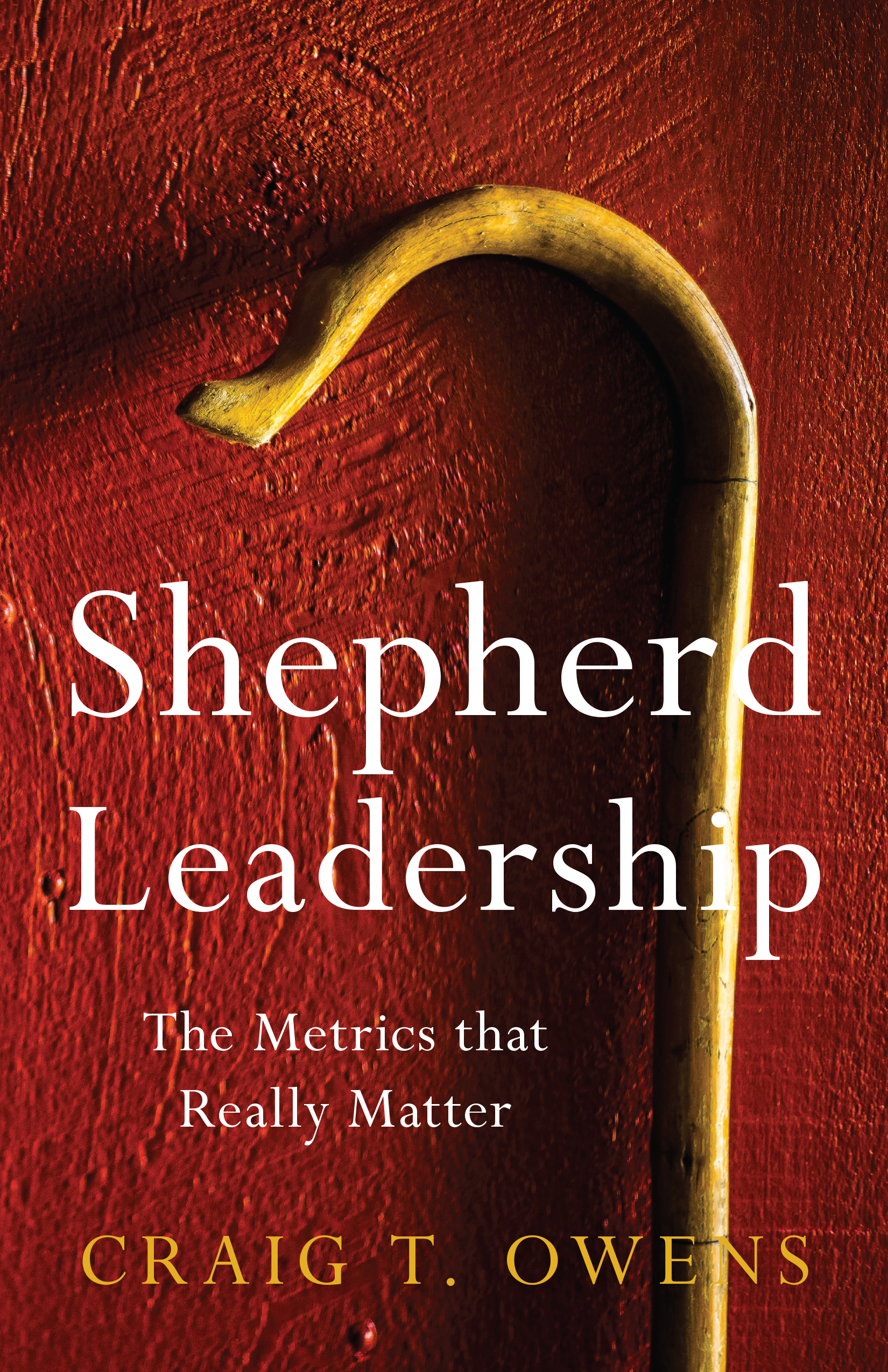
UPDATE: I use John the Baptist as a prominent example in my book Shepherd Leadership: The Metrics That Really Matter.

Preparing The Preacher

A friend of mine was preparing to preach his first sermon at a new church, and he was (as anyone might understand) nervous. He had all sorts of concerns: Is this the right word for this congregation? Will my thoughts make sense to them? Have I prepared enough for this message?

It was that last question that jogged my memory of a quote I had read from Oswald Chambers in his book Approved Unto God. The title of that book comes from a passage a Scripture in which preachers are told to correctly handle the Word of God as a worker that is approved unto God (2 Timothy 2:15).

Check out this pearl of wisdom:

“Keep yourself full to the brim in reading; but remember that the first great Resource is the Holy Spirit Who lays at your disposal the Word of God. The thing to prepare is not the sermon, but the preacher.” —Oswald Chambers (my emphasis)

God doesn’t need His Word prepared—it’s already perfect. But He does need to prepare me to deliver the message. He needs to remove my opinions, my preconceived ideas, my hang-ups with that particular passage, my hesitation to share it.

The Holy Spirit of God needs to prepare me. And I need to let Him do it.

It’s a heavy, awesome responsibility to be “the one” sharing God’s Word to a group of precious people. I dare not even attempt it unless I have let the Spirit prepare me first.

God Wants Deeper Growth

“After a soul has been converted by God, that soul is nurtured and caressed by the Spirit. Like a loving mother, God cares for and comforts the infant soul by feeding it spiritual milk. Such souls will find great delight in this stage. They will begin praying with great urgency and perseverance; they will engage in all kinds of religious activities because of the joy they experience in them. But there will come a time when God will bid them to grow deeper. He will remove the previous consolation from the soul in order to teach it virtue and prevent it from developing vice.” —John of the Cross

I-Have-To-Have-It Attitude

In our Live Dead series, we have been talking about different areas we need to allow to die, so that we might truly live for Christ as His disciples.

One of the things that often gets in the way of our pursuit of Christ is our cravings. This word—which the dictionary defines as a longing or an eager desire—has an interesting origin. The root word in both Latin and Old English means to lay claim to or to demand by right.

In other words, a craving is when something that was originally a want has now become a need in my mind. So I lay claim to it, saying that it’s something that is owed to me.

The Apostle Paul talks about cravings that we all had before we came to know Christ as Savior when he wrote, “All of us also lived among them at one time, gratifying the cravings of our sinful nature and following its desires and thoughts” (Ephesians 2:3).

This same Greek word shows up in Christ’s parable of the sower when He talks about the seed that falls among the weeds. These people, He explains, allow the worries of this life, the deceitfulness of wealth and the desires for other things come in and choke the Word (Mark 4:19).

Gratifying my cravings = Choking out the life of Christ in me

The problem is that this craving or desire for things other than Christ is often an unconscious habit. We have allowed them to become cravings—laying our claim to them as needs—without even realizing it.

The antidote: fasting. When we give up something, the Holy Spirit can show us if that thing has created an I-Have-To-Have-It attitude in our hearts. This spiritual discipline is hard because our bodies will rebel against having to give up “a right.” But when we press through with this discipline of fasting, God describes the results:

Then your light will break forth like the dawn, and your healing will quickly appear; then your righteousness will go before you, and the glory of the LORD will be your rear guard. Then you will call, and the LORD will answer; you will cry for help, and He will say: Here am I. (Isaiah 58:8-9)

That’s how I want to live! So I must live dead to my cravings. I can only do this when I allow a time of fasting to open my heart to hear the Holy Spirit point out all my I-Have-To-Have-It attitudes.

To check out all of the messages in our Live Dead series, please click here.

Thursdays With Oswald—Desperate For The Holy Spirit

This is a weekly series with things I’m reading and pondering from Oswald Chambers. You can read the original seed thought here, or type “Thursdays With Oswald” in the search box to read more entries.

Desperate For The Holy Spirit

     We have to learn to rely on the Holy Spirit because He alone give the Word of God life. All our efforts to pump up faith in the Word of God is without quickening, without illumination. …

     If you are without the control of the Spirit of God, devotional emotion and religious excitement always end in sensuality. …

    ‘Be filled with the Spirit’; it is as impossible to be filled with the Spirit and be free from emotion as it is for a man to be filled with wine and not show it. … Be ‘being filled with the Spirit,’ and as we walk in the light the life of God is worked out moment by moment—a life of glorious discipline and steady obedience.

From Biblical Ethics

Oh, how I need the Holy Spirit moment by moment!

Without His counsel, the Word of God doesn’t make any sense.

Without His anointing, I only speak meaningless words.

Without His discipline, my emotions are all over the place.

Without His instruction, my life is purposeless.

May I keep on being filled with You, Spirit of God!

Whose Plans?

Sometimes what needs to go on my To Do list seems logical. But logical to whom? If I’m not careful I can get so focused on doing the next logical thing, that I miss out on the Holy Spirit’s guidance.

Bruce Wilkinson said it this way—

“If we aren’t passionately and deliberately focused on carrying out God’s agenda with God’s heart, we’ll end up putting our own agenda first. We’ll increasingly look for the kind of missions we enjoy most. We’ll tend to ask God to bless our busyness for Him instead of asking Him to send us on the miracle mission of His choice.”

Ouch!

I don’t think the Bible is against To Do lists, but I need to make my lists the right way.

Instead, you ought to say, “If it is the Lord’s will, we will live and do this or that.” (James 4:15)

Your kingdom come, Your will be done on earth as it is in heaven. (Matthew 6:10)

With those verses in mind, this is what I’m praying:

Dear God, I want to decided right here and now that Your agenda is more important than mine. Not my “To Do” list be done, but Yours. I die to my plans so that I might live out your plans.

I am trying to Live Dead to my agenda this week.

If you’ve missed any messages in our series called Live Dead, you can find them all by clicking here.

Answer (Wo)Man

“Hey, pastor, I have a question for you….” As a pastor, do you feel like you need to have all the answers, all the time, to everyone’s questions? I’m not saying that as pastors we shouldn’t always be studying and learning and growing, but I think it’s a dangerous trap for us to feel like we need to have every answer.

Here’s what John Calvin wrote in The Institutes of the Christian Religion

“And since the Holy Spirit always instructs us in what is useful, but altogether omits, or only touches cursorily on matters which tend little to edification, of all such matters, it certainly is our duty to remain in willing ignorance.

“…Let us here remember that on the whole subject of religion one rule of modesty and soberness is to be observed, and it is this, in obscure matters not to speak or think, or even long to know, more than the Word of God has delivered. A second rule is, that in reading the Scriptures we should constantly direct our inquiries and meditations to those things which tend to edification, not indulge in curiosity, or in studying things of no use.

“…The duty of a Theologian, however, is not to tickle the ear, but confirm the conscience, by teaching what is true, certain, and useful.”

Study for edification, not curiosity. Teach what is true and helpful, not what is tickling ears. And don’t feel like you need to have all the answers.

Start It With Me

Pastors, I wrote earlier about the idea that you have to preach your message to yourself before you preach it you’re your congregation. But I want to back up a step to the motivation for that.

These words from William Law are challenging—

“The first business of a clergyman awakened by God into a sensibility and love of the truths of the Gospel, and of making them equally felt and loved by others, is to thankfully, joyfully, and calmly adhere to and give way to the increase of this new-risen light, and by true introversion of his heart to God, as the sole Author of it, humbly beg of Him that all that he feels a desire of doing to those under his care may be first truly and fully done in himself.”

God, if You want to do something in my congregation, start it with me. Right here, right now, in the privacy of my study, begin with me. When I come before my congregation this weekend, may my life be the example of the work You want to do in us all.

Thursdays With Oswald—Am I Anti-Christ?

This is a weekly series with things I’m reading and pondering from Oswald Chambers. You can read the original seed thought here, or type “Thursdays With Oswald” in the search box to read more entries.

Am I Being Anti-Christ?

     Christianity is not consistency to conscience or to convictions; Christianity is being true to Jesus Christ. Over and over again a man’s personal relationship to Jesus Christ gets into his convictions and splits them, like new wine put into old wine-skins, and if he sticks to his convictions before long he will become anti-Christ. The standard for my conscience and for the conscience of the whole human race is the Cross, and if I do not take care to rectify my individual conscience by the Cross I become ‘persnickety’ and end in criticizing God. The standard for the Christian is never—Is this thing right or wrong? but, is it related to the blood and passion and agony of the Cross of Christ?

From Biblical Ethics

Every time I read God’s Word, or the Holy Spirit challenges me on my paradigm, I have a choice to make: am I going to try to justify my position, or am I going to submit to His position?

It’s a tough word, but it is right on target. If I persist in sticking with what I know is right, and I disregard the voice of the Holy Spirit, I am becoming anti-Christ and pro-Me.

I must die to my own agenda, so that He may live fully in me.

A Sharper Sermon

It’s a lot of work preparing a sermon (and even that is a major understatement!). So if we pastors are going to put all of this effort in, isn’t it right to believe for a great return on that investment?

I’ve got good news and bad news for you—and they’re both the same. Pastor, after all of your hard work preparing your message, there is only one thing you can do: pray.

Sounds simple, right? But if it’s so simple, why are so many church attendees unmoved by the sermons they hear each Sunday (check out this Barna report)?

Here is some good counsel of how we should pray—

“Of what efficacy would be the exterior word of pastors, or even the Scriptures themselves, if we had not within the word of the Holy Spirit giving to the others all their vitality? The outward word, even of the Gospel, without the fecundating, vivifying, interior word would be but an empty sound. ‘It is the letter alone that kills (2 Corinthians 3:6), and the Spirit alone can give us life.’” —Francois Fenelon

“Does anyone of us desire to help the Church of Christ? Then let him pray for a great outpouring of the Spirit. Only the Holy Spirit can give edge to sermons, and point to advice, and power to rebukes, and can cast down the high walls of sinful hearts. It is not better preaching, and finer writing that is needed in this day—but more of the presence of the Holy Spirit.” —J.C. Ryle

If I can add my two cents’ worth to these eminent theologians:

  • Pray before you write your sermon
  • Pray while you’re writing your sermon
  • Pray before you deliver your sermon
  • Pray after you deliver your sermon

And then watch what the Holy Spirit does with your sermon!