Never Surrender (book review)

In my estimation Gen. William “Jerry” Boykin is a true American hero, and Never Surrender is a great motto for us all to adopt.

Never Surrender is an autobiographical account of how General Boykin served our country in some of the deadliest and harshest places on the planet. But woven throughout his life story is this unmistakable message: Know what you believe in, and never surrender to the adversaries who try to get you to back down.

General Boykin has had such a movie-like military career: getting selected to be in the first Delta Force unit ever created, hunting down terrorists and drug lords, rescuing hostages, and even battling the bureaucrats in Washington, D.C., and the talking heads of the mainstream media. It’s sad to read that a patriot as committed to the protection of America and democracy-loving people around the world would come under such much fire from fellow Americans because he was so vocal about his faith in Christ. It’s almost appalling to realize that this patriot’s most vocal critics were right here in the USA!

Despite the smear campaigns and half-truths, despite the garbage the media spewed out about Gen. Boykin, he never backed down and he never surrendered. In the end, he was completely exonerated. Oh yeah, along the way, Gen. Boykin and his Delta Force operatives kept us a whole lot safer. And for that we’re all indebted to this proud soldier.

This book reads like a military novel—it’s a real page-turner! I highly recommend it.

I am a Faith Words book reviewer.

The Cross: Cruel & Wondrous

   There was no more terrible death than death by crucifixion. Even the Romans themselves regarded it with a shudder of horror. Cicero declared that it was “the most cruel and horrifying death.” Tacitus said that it was a “despicable death.” It was originally a Persian method of execution. It may have been used because, to the Persians, the earth was sacred, and they wished to avoid defiling it with the body of an evil-doer. So they nailed him to a cross and left him to die there, looking to the vultures and the carrion crows to complete the work. The Carthaginians took over crucifixion from the Persians; and the Romans learned it from the Carthaginians.

Crucifixion was never used as a method of execution in the homeland, but only in the provinces, and there only in the case of slaves. It was unthinkable that a Roman citizen should die such a death. Cicero says: “It is a crime for a Roman citizen to be bound; it is a worse crime for him to be beaten; it is well nigh parricide for him to be killed; what am I to say if he be killed on a cross? A nefarious action such as that is incapable of description by any word, for there is none fit to describe it.” It was that death, the most dreaded in the ancient world, the death of slaves and criminals, that Jesus died.

The routine of crucifixion was always the same. When the case had been heard and the criminal condemned, the judge uttered the fateful sentence: Ibis ad crucem, “You will go to the cross.” The verdict was carried out there and then. The condemned man was placed in the centre of a quaternion, a company of four Roman soldiers. His own cross was placed upon his shoulders. Scourging always preceded crucifixion and it is to be remembered how terrible scourging was. Often the criminal had to be lashed and goaded along the road, to keep him on his feet, as he staggered to the place of crucifixion. Before him walked an officer with a placard on which was written the crime for which he was to die and he was led through as many streets as possible on the way to execution. There was a double reason for that. There was the grim reason that as many as possible should see and take warning from his fate. But there was a merciful reason. The placard was carried before the condemned man and the long route was chosen, so that if anyone could still bear witness in his favor, he might come forward and do so. In such a case, the procession was halted and the case retried. —William Barclay, Commentary on John

When I survey the wondrous Cross

On which the Prince of Glory died

My richest gain I count but loss

And pour contempt on all my pride.

—Isaac Watts

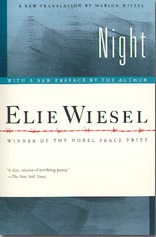
Night (book review)

Night by Elie Wiesel is not an easy read. But it is a vital read. In order to ensure that the evil perpetrated on the Jewish people by the Nazi regime never, ever happens to any other people group again, we must read what is not easy for us to read.

This book is the heart-wrenching account of the atrocities committed by the Nazis during the Holocaust. But it’s not simply a factual retelling of these horrendous events. Night takes you right into the utter despair felt by people who were completely dehumanized. People who were treated less humanely than animals. People who lived in the midst of pure Evil.

Elie Wiesel tells his firsthand account as a teenage boy forcibly removed from his home, separated from his mother and sisters, stripped of his dignity, treated in despicable ways, struggled with his anger toward God, and watched his father die right before his eyes. No one should have had to endure such things.

Elie Wiesel survived to tell his story, so that he could become the voice for the voiceless oppressed. What a great lesson for all of us to learn! We, too, should speak up for those who cannot. As Elie said in his Nobel Peace Prize acceptance speech:

We must take sides. Neutrality helps the oppressor, never the victim. Silence encourages the tormentor, never the tormented. Sometimes we must interfere. … Human suffering anywhere concerns men and women everywhere. … And action is the only remedy to indifference, the most insidious danger of all. … One person of integrity can make a difference, a difference of life and death.

Please read this book, and then be one person of integrity who makes a difference.

Books I Read In 2010

Am I Learning?

Listen to the podcast of this post by clicking on the player below, and you can also subscribe on AppleSpotify, or Audible. 

In the Old Testament, there’s a phrase that repeats at the end of the historical record of almost every king of Israel and Judah:

As for all the other events of his reign, and all he did, are they not written down in the annals of the kings of Israel [or] Judah?

This phrase is repeated again and again (almost 40 times!). To me, the question mark at the end of this key phrase is really more like this: These stories are all here for your benefit—are you reading them? are you learning from them?

“Those who do not learn from history are doomed to repeat it.” —George Santayana

But maybe we think, “Those things don’t pertain to me.” Or even, “C’mon, that’s as plain as the nose on your face! I don’t need to study that because everyone knows you shouldn’t act that way!” How about this…

These things happened to them as examples and were written down as warnings for us, on whom the fulfillment of the ages has come. So, if you think you are standing firm [if you think you know it all], be careful that you don’t fall! (1 Corinthians 10:11-12, my paraphrase)

In light of that, here are some questions that would serve us well:

  • Am I reading these examples?
  • Am I learning from them?
  • Am I reviewing my own personal history?
  • Am I learning from that?
  • Am I writing down my experiences (both failures and successes) so that others can learn from me?

And maybe the most important introspective question of all: When was the last time I learned something new from something old?

►► Would you please prayerfully consider supporting this ministry? My Patreon supporters get behind-the-scenes access to exclusive materials. ◀︎◀︎

How A Leader Should Bring Correction

Listen to the podcast of this post by clicking on the player below, and you can also subscribe on AppleSpotify, or Audible.

Bringing correction is one of the toughest jobs for those in leadership, but it’s a responsibility that cannot be delegated or ignored. In order for correction to be effective, it must not be too light or too heavy. Unfortunately, many of us have experienced far too many ineffective forms of leadership correction.

I read a great example of how to properly correct in the life of Samuel. In 1 Samuel 12, the people had gotten off track, and Samuel lovingly and effectively brought them back into line. Here’s what his example teaches us on how to correct followers:

1.  Shared history (v. 2). Samuel reminded them of what had happened in their history, and even what they had experienced together. “Newbie” leaders need to be cautious about bringing correction that violates an organization’s established culture.

2. Integrity (v. 3). Samuel’s words and lifestyle lined up. That doesn’t mean he never made a mistake, but it does mean that he was willing to acknowledge and repair his mistakes. Nothing is worse than a leader who says, “Do as I say, not as I do!”

3. Common ground (vv. 6-11). A leader needs to get everyone on the same page. Find something somewhere on which everyone can agree, and then move forward from there.

4. Just say it (vv. 12-13). Don’t beat around the bush; don’t try to bring correction through a parable; don’t soften the blow. Just say it: “This is where I believe you made a mistake.” Far too many leaders talk too much and leave their followers saying, “Huh?” If you are going to bring correction, make sure your followers know exactly what it is you are correcting.

5. Give the remedy (vv. 14-15, 20-21). Samuel pointed out the error, and he just as clearly told them how to get back on track. The remedy should be as clear and simple as possible.

6. Remove the fear (vv. 20, 22). Don’t let the corrected follower be afraid of you! Fear will never re-establish trust. Samuel couldn’t have been more clear on this. He literally said to the Israelites, “Do not be afraid.”

7. Demonstrate servant leadership (v. 23). At the close of the meeting, Samuel said he would do two things: “I will continue to pray for you, and I will continue to teach you.” In telling them this, Samuel was really saying, “Let’s walk through this together.”

If you lead your family, your church, your company, or your team, you are going to have to bring correction at some point. When you need to do this, take some time to review this list and bring correction the way Samuel did: lovingly and effectively.

P.S. You can also check out this post where the apostle Paul gives us another example of how to handle correction properly.

►► Would you please prayerfully consider supporting this ministry? My Patreon supporters get behind-the-scenes access to exclusive materials. ◀︎◀︎

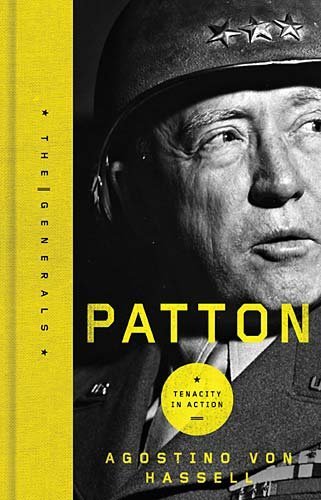
Patton: The Pursuit Of Destiny (book review)

Disclaimer: I am a huge admirer of General George Smith Patton, Jr. So it should come as no surprise that I thoroughly enjoyed Agostino Von Hassell and Ed Breslin’s biography Patton: The Pursuit Of Destiny.

It’s also no surprise that I relished reading about Patton’s military genius and his relentless preparation to be a man of destiny. What did surprise me was the candor with which the authors dealt with the shortcomings of Patton. For all of his military genius, there were areas of his life that always seemed to get the best of this general. On the battlefield, he had few equals, but away from the heat of battle, his insecurities could get the best of him. I appreciated how the authors showed Patton playing to his strengths while still struggling with his weaknesses. While many biographies show great men and women overcoming their struggles, Patton shows the general living with his struggles and still achieving greatness in spite of them.

I also learned more about Patton’s family lineage in this book that helped me understand what drove this military hero. I read about a man who was a voracious learner, highly competitive, and a man who set extraordinarily high standards for himself. His biggest weakness: he couldn’t abide those who didn’t share these same lofty goals for their own lives or profession.

If you enjoy military history, a study of a larger-than-life leadership persona, or a biography with an unflinching look at a great man’s angels and demons, you will enjoy reading Patton: The Pursuit Of Destiny.

I am a Thomas Nelson book reviewer.

A Century Turns (book review)

Some people may turn away from William Bennett’s book A Century Turns because they claim not to like history. But I have two reasons why this book is definitely worth your time: (1) Those who don’t learn the lessons of history are doomed to repeat them, and (2) This book doesn’t read like a history book.

Bill Bennett has a great talent to give us lessons from history in almost novel-like form. This narrative traces the changing tides of the United States and her relationship with her allies from the election of President George H. W. Bush through the election of President Barak Obama.

Mr. Bennett was in a unique position to see these unfolding events from the front row. In fact, in reading his book I could help but think about how Forrest Gump seemed to always show up at such pivotal and momentous times of history. So too does Bill Bennett. He has served in a variety of positions in Washington, D.C. that placed him in the right place at the right time to give his readers the “inside scoop.”

But beyond a retelling of history, Mr. Bennett captures the mood of the country through these times. He shows us just how quickly public opinion can turn. But most importantly he shows us that this great country is still made up of a government of the people, by the people, and for the people. And that is the most important history lesson of all.

I am a Thomas Nelson book reviewer.

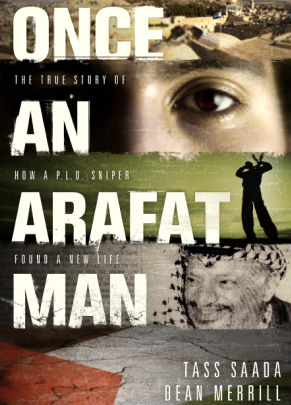
Once An Arafat Man (book review)

Tass Saada’s story reads like a screenplay for an upcoming movie! Once An Arafat Man is such a page-turner, that I could hardly put it down.

In a nutshell, Tass’s story is this: He was born in the Gaza Strip, but his family had to relocate to Saudi Arabia due to the turbulence in Gaza. The Saudi government, like many Arabic governments, talked about supporting the Palestinians, but they were more concerned about self-preservation; as a result, it was just talk and very little action. Tass became a disgruntled, disillusioned young man. As a  teenager, he had a chance to meet Yasser Arafat in Qatar and was enthralled with this dynamic Palestinian leader. So mesmerized, in fact, that Tass ran away from home to join Fatah with Arafat.

Once he was accepted into the Palestinian Liberation Organization (PLO), Tass was trained as a sniper. His mission: assassinate Jewish targets. He even served as Arafat’s personal chauffeur. But once again the unstable political and military conditions caused Fatah to pull out of Jordan and eventually Tass ended up fleeing to the United States of America.

Once in the US, he didn’t want to be forced to leave, so he married an American woman to get his green card. While working on his career, something Tass never expected happened: he became a Christian. As his friend Charlie was sharing with him from the Bible, Tass wrote:

Before I knew it, I was on my knees. I didn’t consciously decide to kneel; it just happened. I lost all awareness that Charlie was even in the room. A light came into my field of vision–a talking light….

The light said in an audible voice, “I am the way and the truth and the life. No one comes to the Father except through Me….”

In this indescribable moment, I knew something else: the triune God existed—Father, Son, and Holy Spirit. I knew that God loved me. “Oh, Jesus, come into my life!” I blurted out. “Forgive me and be my Lord and Savior!” I felt as if a heavy load went flying off my shoulders. A sense of peace and joy rushed into my heart. The presence of God was so real it seemed I could almost reach out and touch it.

Thus began a new journey for Tass, one of reconciliation. His wife and children eventually accepted Jesus Christ as their personal Savior too. But Tass’s family back in Qatar is a different story: they denounced him as an infidel

Tass felt compelled to take the good news of Jesus back to his family and to the very leader he used to work for: Yassar Arafat. The story of how God opened doors of opportunity, and provided supernatural protection, and allowed for reconciliation to occur is amazing.

Read this book. You will be blessed by this incredible story!

I’m a Tyndale book reviewer.

Old And Valuable

During my freshman year of college, I was placed as a roommate with another freshman who was a theology major. Just so we’re all clear about this: theology is the study of God. And just so we’re all crystal clear about this: the study of God is typically based on the Bible.

I can hear some of you now, “Duh! Great insight!” But hang with me for a moment.

Near the start of our first semester together my roommate came into our dorm room very upset, slammed the door shut, and threw down his backpack. When I asked what was the matter he told me he had just come from a meeting with his academic advisor and was furious at his list of required classes. When I inquired what class he wasn’t allowed to take, he said, “No, it’s not what class I can’t take; it’s what classes I have to take!”

“So what classes are you upset that you have to take?” I asked, thinking maybe something like science or phys ed.

“Old Testament,” he responded. I was speechless, but he continued, “I mean, Old Testament! C’mon, that was stuff from a long time ago. We live under the new covenant now, so the old covenant has no purpose for us anymore!”

Although this is somewhat shocking to hear from a theology major, I’m afraid a lot of people feel this way.

Did you know…

  • The Old Testament (OT) is directly quoted by the New Testament (NT) writers nearly 700 times.
  • There are thousands of references to OT people, events, or principles in the NT.
  • Of the 27 books in the NT, only six don’t have direct OT quotations. But four of those six books refer back to OT people or passages.
  • Of the 39 books in the OT, all but nine of them are quoted in the NT.
  • Jesus Himself quoted from the five books of Moses (Genesis, Exodus, Leviticus, Numbers, Deuteronomy) nearly 60 times.

I love the Old Testament! There I read some great stories and meet some very colorful personalities. But I especially love reading the OT to see what was going to happen and then reading the NT to see both what did happen and what’s still going to happen.

Those 39 books of the Old Testament may be old, but they’re so rich, and so valuable, and so enlightening to the New Testament. If you haven’t made the OT a part of your Bible reading time, I encourage you to do so.

The Old Testament is not old, as in worn out, archaic, useless. It’s old, as in priceless, valuable, foundational.