Listen to the audio-only version of this podcast by clicking on the player below, or scroll down to watch the video.
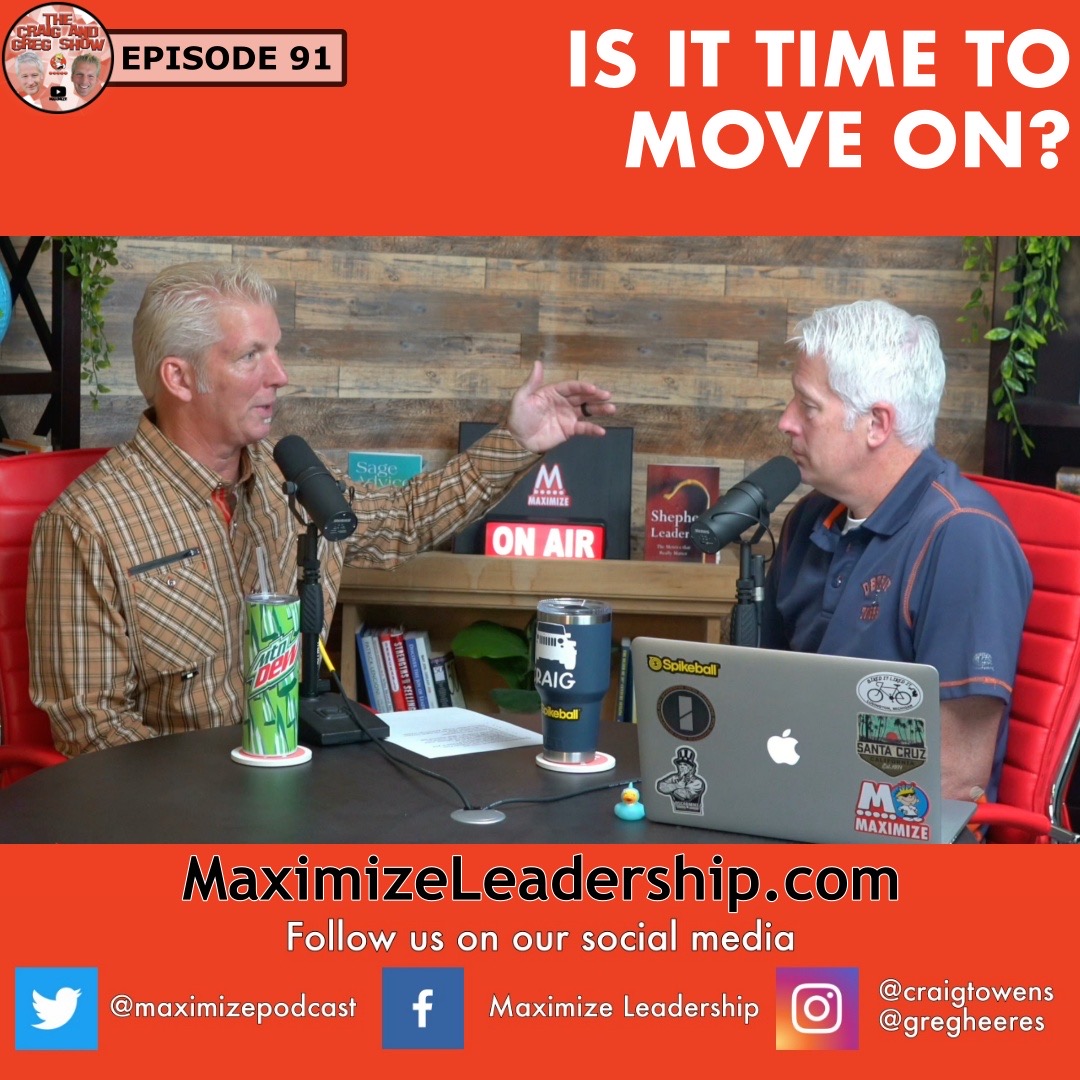
As the saying goes, all good things must come to an end. You might be motivated by a feeling of limitation where you are, excited by a new opportunity, ready to retire and soak up some sun, or many other reasons. Whatever your reasons are, Greg and I would like to give you practical advice to apply when you’re considering moving on.
[0:15] Is it time?
[1:42] Greg goes negative first! Don’t make a move because of “greener grass.”
[2:54] Some better questions to ask about moving on.
[5:30] I always asks, “Why did you start here?” before asking, “Should you leave here?”
[8:01] Greg and I wonder about the value of getting “outside advice” when considering a move.
[10:40] We need to weigh both emotion and logic when thinking about the timing of a move.
[13:26] We can have regrets about leaving and we can have regrets about staying too long. A navigator can help you think through your options.
[18:40] Sometimes an owner is not ready to sell but a leader inside is ready to buy. How do we walk through this?
[21:16] Here’s the key takeaway on the timing of moving on.
Check out this episode and subscribe on YouTube so you can watch all of the upcoming episodes. You can also listen to our podcast on Spotify and Apple.
Leaders need to give others confidence to try something new. We need to help people get moving so that we can coach what they are doing. For more great leadership insights, check out The Craig and Greg Show.
I have lots of new content every week, which you can check out on my YouTube channel.
A couple of thought-worthy quotes for pastors. First from David Mathis: “Pastors, observe that in and of itself, mocking is no clear reflection of the faithfulness or fruitfulness of preaching Christ. Wise preachers do not take mocking as an indicator of failure, nor as an indicator of success. Twice in Athens some mock Paul, which may seem like a failure compared to his homiletic triumphs elsewhere. However, others say, ‘We will hear you again.’ And then, in the end: ‘some men joined him and believed’ [Acts 17:32-34]. … How foolish it would be to distract ourselves with the mockers. Or to call special attention to the mocking as some great badge of our own faithfulness. Rather, we have the example of Paul at Mars Hill, who, so far as we can tell, wholly overlooks, with a holy disregard, these mockers and concerns himself instead with those asking honest questions.”
…and then one from John Piper: “Preaching is a happy business. Because even if the text is a hard word that devastates the hearers, the preacher connects the hard word with the gracious word and the hopeful word, and he catches them as they fall. So, in the end, all preaching is a happy business.
“A people that values its privileges above its principles soon loses both.” —Dwight D. Eisenhower
“For condemnation to work, we must say to God what the devil has said to us and believe it. If I want to stand before God with excuses that make what He said to me void, I’ll have to quote the devil to God. Does that sound like a good thing to do? God’s will for me is not to condemn me, but to liberate me from everything that holds me back from being what He created me to be through an ongoing relationship. To accomplish that, I need to do the opposite of what I used to do when I walked in condemnation. Instead of quoting to God what the devil is saying, I quote to the devil what God has said.” —Jim Wiegand, in Recruiting To Releasing
Another great story from the “Here We Stand” series of biographies of notable people during the Reformation. “An attendant asked [King Henry VIII] whom he wished to have at his bedside. The king asked for Thomas [Cranmer]. By the time Cranmer arrived, King Henry was unable to speak. Foxe tells the story. ‘Then the archbishop, exhorting him to put his trust in Christ, and to call upon His mercy, desired him though he could not speak, yet to give some token with his eyes or with his hand, that he trusted in the Lord. Then the king, holding him with his hand, did wring his hand in his as hard as he could (Foxe’s Book of Martyrs, 748).’ The scene sweetly punctuates the most important friendship in the English Reformation. Whatever King Henry believed when he squeezed Cranmer’s hand that day, God used the bond between them to break England free from Roman Catholicism and to recover the one true gospel.”
The ICR reports, “Genesis claims that people in the pre-Flood world routinely attained 900-year lifespans. The best-known example is Methuselah, who had the longest recorded lifespan of 969 years (Genesis 5:27). Skeptics dismiss these great ages as fanciful legends, but recent fossil data are providing unexpected, albeit indirect, corroboration of the Bible’s testimony.” Check out this full report.
“In my experience, each failure contains the seeds of your next success—if you are willing to learn from it.” —Paul Allen, cofounder of Microsoft
Listen to the audio-only version of this podcast by clicking on the player below, or scroll down to watch the video.
It’s good to be good, but good is never great. As leaders we have to consciously work to avoid the trap of good. Join Greg and me as we discuss how to make your good better, and your better best.
[1:09] What happens to our leadership if we become satisfied?
[2:10] Striving for perfection is also a terrible trap for leaders.
[4:12] What happens if leaders settle for merely “satisfied”?
[5:40] How to send the message to your team that we’re going to keep raising the standard.
[8:17] Some people are looking for excuses to remain complacent.
[9:59] At some point, leaders will have to take a risk to raise the standard.
[10:49] Why do people want to cut corners? How do we avoid this trap?
[13:19] How do we get motivated to go farther?
[15:45] A couple of great examples of leaders who pulled people to excel.
[17:36] We have to keep working or it’s going to be more work!
[19:10] A quote from Charles Sorenson that is insightful.
Check out this episode and subscribe on YouTube so you can watch all of the upcoming episodes. You can also listen to our podcast on Spotify and Apple.
Listen to the audio-only version of this podcast by clicking on the player below, or scroll down to watch the video.
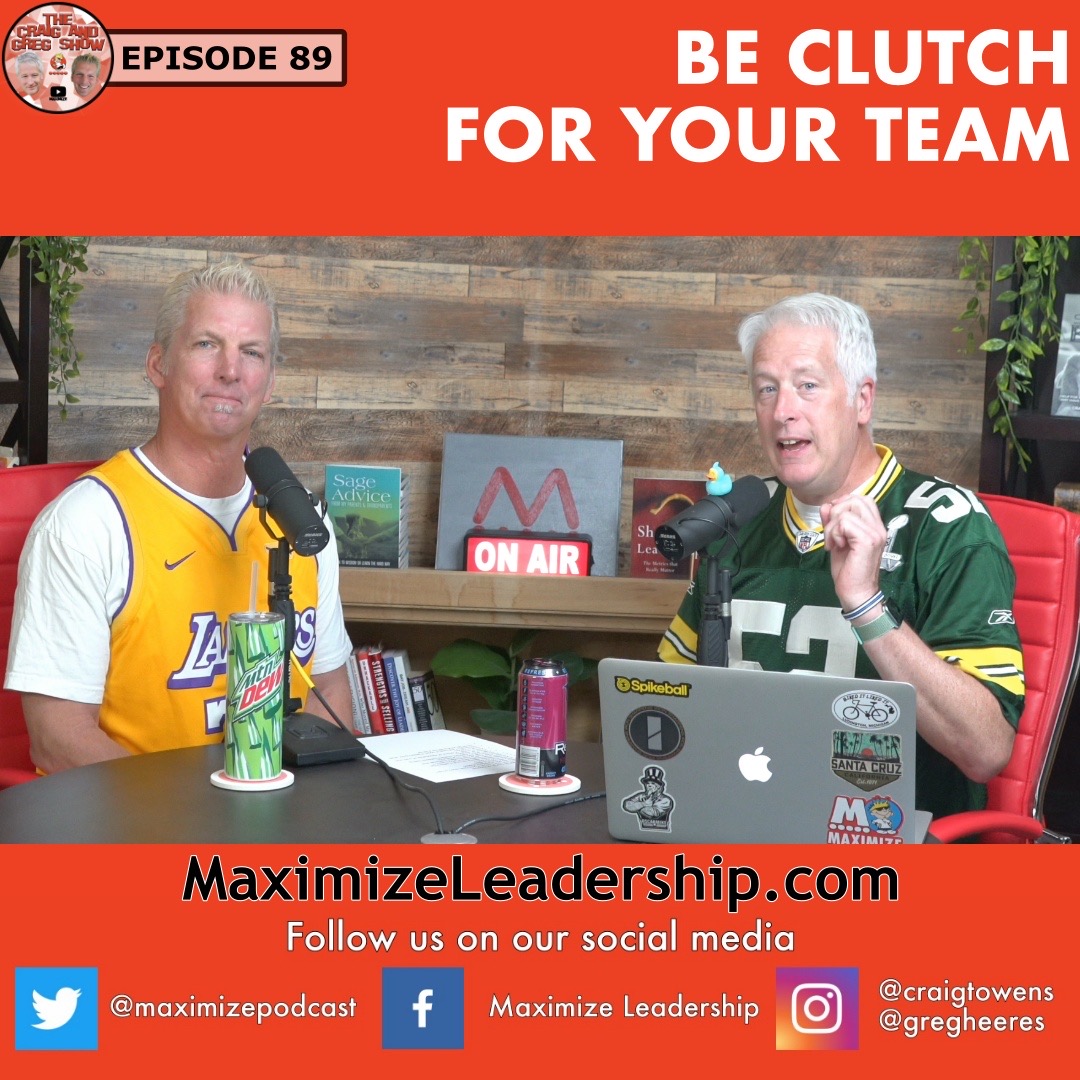
The game-winning field goal, the bottom of the ninth home run, the last-second fadeaway jumper! In sports we are quick to recognize a clutch player. You might not perform in front of millions of fans, but you can be a clutch player for your organization as well! Join Greg and me as we discuss what it means to be clutch for your team, and lay out how your leadership can help empower others to do the same.
[0:23] Some people’s clutch-ability makes them stand out from the crowd.
[2:20] A clutch person won’t always succeed, but when it matters most they’re the one you trust to deliver.
[3:20] How do people gain the confidence to be clutch?
[5:05] Greg talks about his first college football play, and how the experience helped him learn how to succeed in the long run.
[6:50] As leaders we can’t be afraid of mistakes, we need to view them as learning opportunities.
[10:55] How much can we do as leaders to help our team be clutch, and how much do they need to figure out themselves?
[13:10] Setting the right tone helps your team feel empowered to learn from their mistakes.
[15:23] We can name a lot of greats by looking back at their career, but in the moment they didn’t always feel like greats.
[16:29] As the leader, you have an extra responsibility to acknowledge your mistakes to your team.
[18:11] Why do people quit, and how can we help them stay in the game?
[22:37] Greg shares some wisdom about preparation.
[23:50] Greg tells a story about a compliment he received while coaching high school football.
Check out this episode and subscribe on YouTube so you can watch all of the upcoming episodes. You can also listen to our podcast on Spotify and Apple.
Listen to the audio-only version of this podcast by clicking on the player below, or scroll down to watch the video.
You might be checking out this episode with the hope of one day being a leader. Well, Greg and I have good news for you—you already are! Leaders are not just the person at the top, but if you have a leadership mindset you can be a leader in whatever position you currently occupy. Join us as we chat about how important it is to start being a leader before you have the “leader” title.
[0:24] What if you’re not the point leader in your organization?
[1:22] Regardless of your title or position, you are still a leader.
[3:13] Leaders—whether at the top or in the middle—need to try to raise up other leaders.
[5:29] One trait that will increase your value to the organization is cross-training.
[8:20] Another trait is curiosity that keeps you a lifelong learner.
[11:07] An example from Tom Brady about how important passion is for those who aren’t starters yet.
[13:47] Two other important traits for emerging leaders is patience and self-discipline.
[14:37] How do point leader keep their bench players engaged until there is a new leadership position available for them?
[17:07] Mentoring and coaching aren’t the same things. How do we know which one to use in our organizations?
[23:21] What you can do if you don’t have any mentors within your organization?
Check out this episode and subscribe on YouTube so you can watch all of the upcoming episodes. You can also listen to our podcast on Spotify and Apple.
Listen to the audio-only version of this podcast by clicking on the player below, or scroll down to watch the video.
In today’s episode we’re going to—IMPATIENCE! Yes, we’re talking about impatience. As a leader it can be hard to resist the temptation of impatience, but Greg and I believe that developing patience is a vital skill for leaders. In this episode we’ll explore some of the pitfalls of impatience, and share strategies for you to develop into a more thoughtful and patient leader.
[0:14] We’re looking at the leadership builder vs. killer of patience vs. impatience.
[1:41] Patience is sometimes misperceived as not being in control—like we’re simply waiting around for something to happen.
[2:27] Can patience be developed?
[3:50] Patience allows a process to mature, and helps people grow.
[7:35] Warning: patience can cross a line into procrastination.
[8:30] Leaders need to avoid the temptation of impatiently answering too quickly.
[10:50] What leadership pressures make us give in to impatience?
[12:59] Leaders can help their teammates with their own impatience by asking some thoughtful questions.
[15:28] Ego + Bad advice = Dangerous impatience
[16:40] Patience helps leaders trust both the process and the people around them.
[18:33] Leaders need to be aware of what’s happening in themselves when their patience is stretched. Patient leaders grow their leadership influence.
[22:24] Greg quizzes me about the origins of patience.
[24:45] I make a confession about my impatience in my early years.
[25:55] Greg shares an insightful quote about the value of patience.
Check out this episode and subscribe on YouTube so you can watch all of the upcoming episodes. You can also listen to our podcast on Spotify and Apple.
Listen to the podcast of this post by clicking on the player below, and you can also subscribe on Apple, Spotify, or Audible.
When people attack their leader—or when sheep bite—it hurts!
Our first best response is to acknowledge, “That hurt!” but then we need to pause. Our natural response to an attack is fight-or-flight, but healthy leaders take time to learn why that bite occurred.
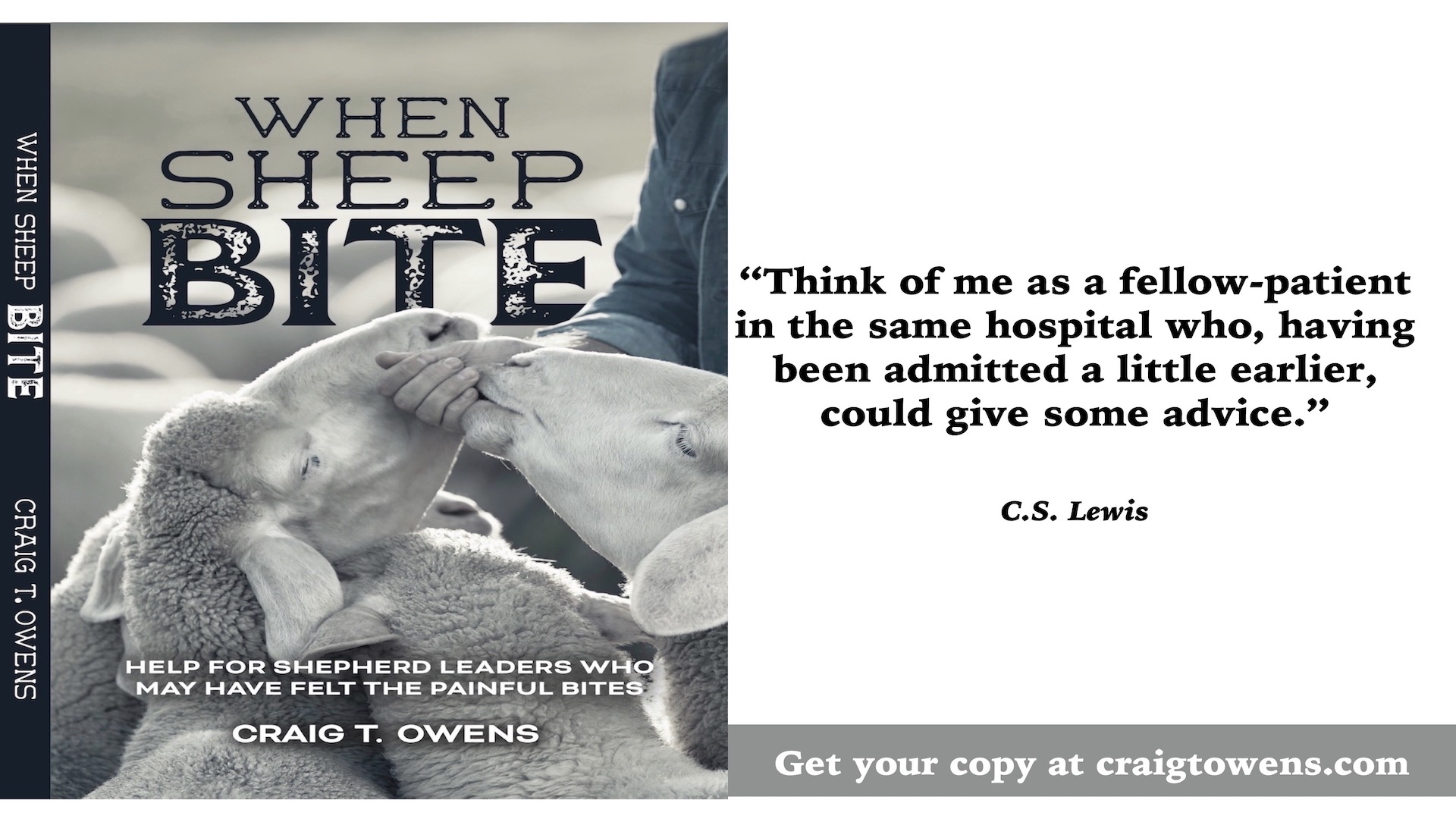
This is an excerpt from an episode of The Craig and Greg Show where Greg interviewed me about my new book When Sheep Bite.
If you would like to watch the full episode of our leadership podcast, you can find that here.
I am getting ready to facilitate a cohort for pastors who have gone through painful sheep bites—or perhaps they are feeling them right now! If you are a pastor, or if you know of a pastor who has been bitten, please check out this cohort here.
And if you would like to pick up a copy of When Sheep Bite for yourself, you can get that here.
Listen to the audio-only version of this podcast by clicking on the player below, or scroll down to watch the video.
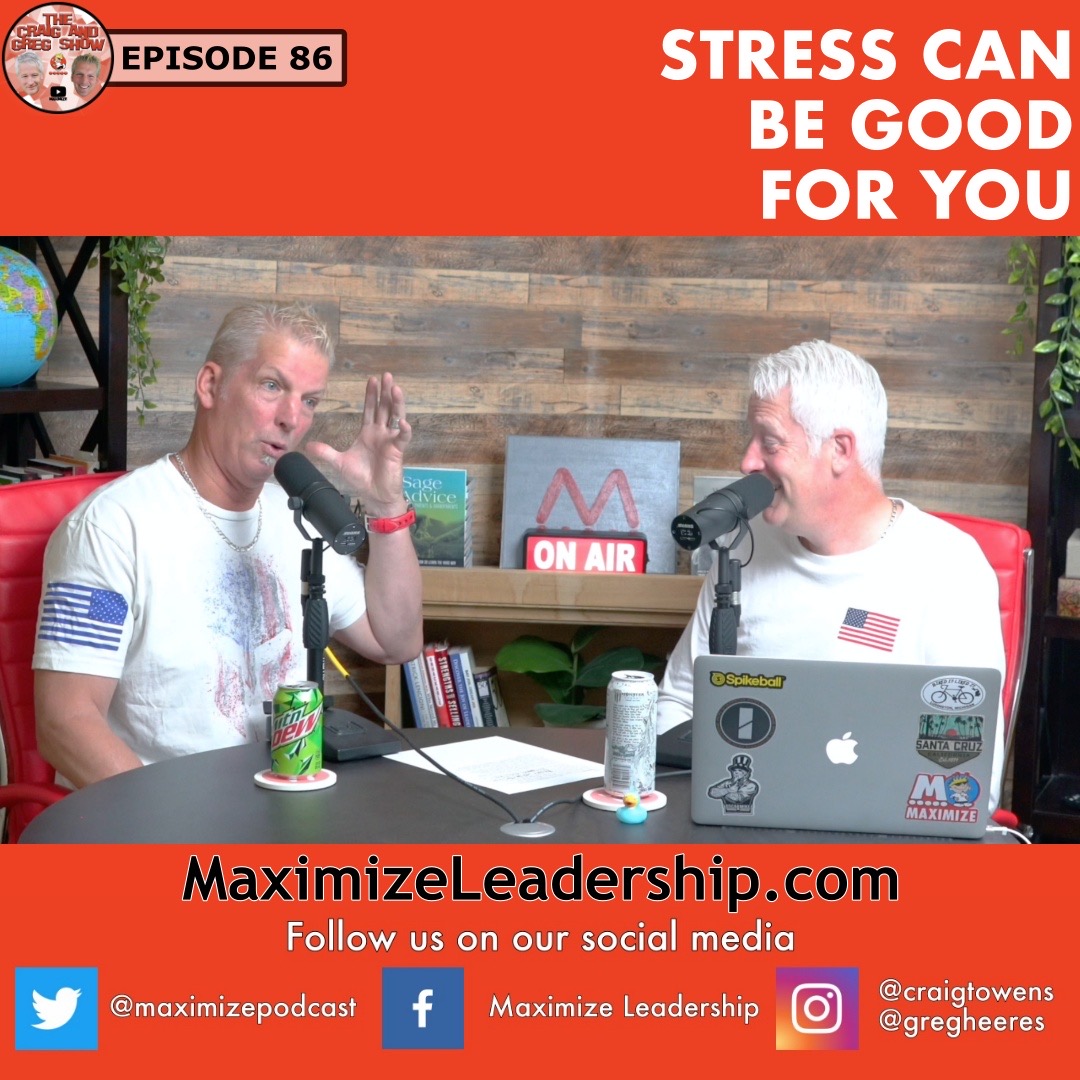
Stress might have six letters, but it seems like some leaders have a knee-jerk reaction to treat it like a four-letter word. While it might be nice to fantasize about an stress-free life, this is both entirely unrealistic and detrimental to your leadership. The truth is, a mild amount of stress can be helpful to you personally, as well as your organization as a whole. Join us as Greg and I unpack why you should embrace a bit of stress in your life.
[0:14] I have a brain block to start the show!
[0:59] Let’s define stress in a work environment, as opposed to simply work tension.
[1:51] An interesting study about allowing moderate stress to remain in the workplace.
[5:30] Mild stress is helpful for our brains.
[7:37] Stress expands and strengthens our team connections too.
[10:26] Can stress help increase someone’s work performance?
[13:01] Our physical bodies use a stress hormone called cortisol. How can leaders maximize its effects?
[14:38] Stress can help us rise to the challenge in a way that easy times can’t.
[16:02] I share an example of a teammate who grew through stress, as well as a supporting quote.
[18:40] Greg shares a negative example of an organization that became stress-free and drifted toward failure.
[19:30] When times are easy, we can begin to slide into apathy.
[22:40] Should we teach crisis leadership to our teams? If so, how should we do this?
Check out this episode and subscribe on YouTube so you can watch all of the upcoming episodes. You can also listen to our podcast on Spotify and Apple.
Listen to the audio-only version of this podcast by clicking on the player below, or scroll down to watch the video.
Empathy is an essential trait for leaders, but it’s not innate in any of us. As I joked, “behind ‘mama’ and ‘dada,’ the first word most babies learn is ‘mine.’” The skill of empathy is like a muscle, the more we practice, the stronger it gets. In this episode, Greg and I discuss why empathy is so important for leaders, and give helpful advice on how to remain proficient in your use of empathy.
[0:24] Empathy is a powerful leadership skill that underlines so many other leadership skills.
[1:08] Empathy has to be earned.
[3:07] What blocks empathy in leaders?
[4:02] When you start learning empathy it will feel awkward, but you have to stick with it.
[5:06] Empathy ≠ sympathy, but it is caring.
[7:07] How do leaders show their empathy to their teammates?
[10:10] Here is an example of how to express empathy.
[12:22] What lessons can we learn when we misfire on empathy?
[14:03] Three things Greg has worked on to enhance empathy.
[16:32] Sometimes leaders do for one team member what they cannot do for all.
[19:51] Leaders need empathetic eyes, ears, and heart. There is a huge leadership power in this.
[21:59] Greg shares an interesting study reported in Forbes.
[25:15] One of the most powerful leadership attributes is simply the leader’s availability.
Check out this episode and subscribe on YouTube so you can watch all of the upcoming episodes. You can also listen to our podcast on Spotify and Apple.
Listen to the audio-only version of this podcast by clicking on the player below, or scroll down to watch the video.
As you may have heard, I have written a new book! In this episode Greg and I sit down and chat about When Sheep Bite, and discuss how the valuable lessons it provides are critical for leaders of any organization.
[0:21] I have a confession to make…
[1:43] This book is for both business leaders and church leaders.
[3:07] Attacks usually lead to to fight-or-flight, but When Sheep Bite offers a new response.
[5:21] It’s healthy to validate our feelings when we’ve been hurt, but then good leaders go deeper.
[8:39] Empathy is health, but making excuses is not healthy.
[10:37] Watch out for the sneaky bite of flattery.
[11:26] Leaders who have been hurt have to guard against harboring that hurt.
[13:23] Leaders need to learn how to confront misbehavior correctly.
[14:46] In order for sheep to bite, and in order for the shepherd to lead, they have to be close to each other. How do both sheep and shepherds set boundaries?
[17:46] We can disagree but we cannot disrespect!
[19:49] Bitterness can rob a leader of vitality, so we have to find effective ways to heal.
[22:46] Fight-or-flight is natural, but we need to strive for the supernatural response of faithfulness to our calling.
[23:40] In many ways WSB points to what a good coach does. Contact Maximize Leadership about how our coaching huddles can help your leadership soar—get in touch with us!
Check out this episode and subscribe on YouTube so you can watch all of the upcoming episodes. You can also listen to our podcast on Spotify and Apple.



 As the saying goes, all good things must come to an end. You might be motivated by a feeling of limitation where you are, excited by a new opportunity, ready to retire and soak up some sun, or many other reasons. Whatever your reasons are, Greg and I would like to give you practical advice to apply when you’re considering moving on.





 Craig T. Owens