Conformed To His Image (book review)

Oswald Chambers challenges my thinking about the Christian walk like few other authors can. His insights are always so profound, and yet at the same time awaken me to the realization that I am the one who makes the Christian walk something complex. In Conformed To His Image, I was yet again challenged to simply follow Jesus.

Chambers brilliantly turns secular psychology upside down. He takes what psychology wants to ascribe to our minds and emotions, and brings it back to a Scriptural basis that puts these things where they are supposed to be: in the soul.

The thought of being “conformed” rubs against the human desire to be free and in charge of our own destiny. Somehow being “conformed” feels like being controlled and giving up our unique personality. So Chambers contrasts the natural human tendencies for freedom and calling our own shots with what the Bible says about surrendering to God.

Chambers presents Jesus not as some superhuman, extraordinary Man. But He shows the life of Jesus to be what we should all be able to live out daily. Jesus was perfectly conformed and submitted to the will of His Father. And, he says, if we will submit as well, the Holy Spirit will conform us into the image of Jesus.

Beware: this book is not light reading. This is a heavy-duty, confrontational book that will challenge you to submit to the Holy Spirit as perhaps you never have before in your Christian walk. However, if you are ready to take the plunge into a much deeper, more intimate relationship with your Heavenly Father, Conformed To His Image is the resource for you. 

Miserable

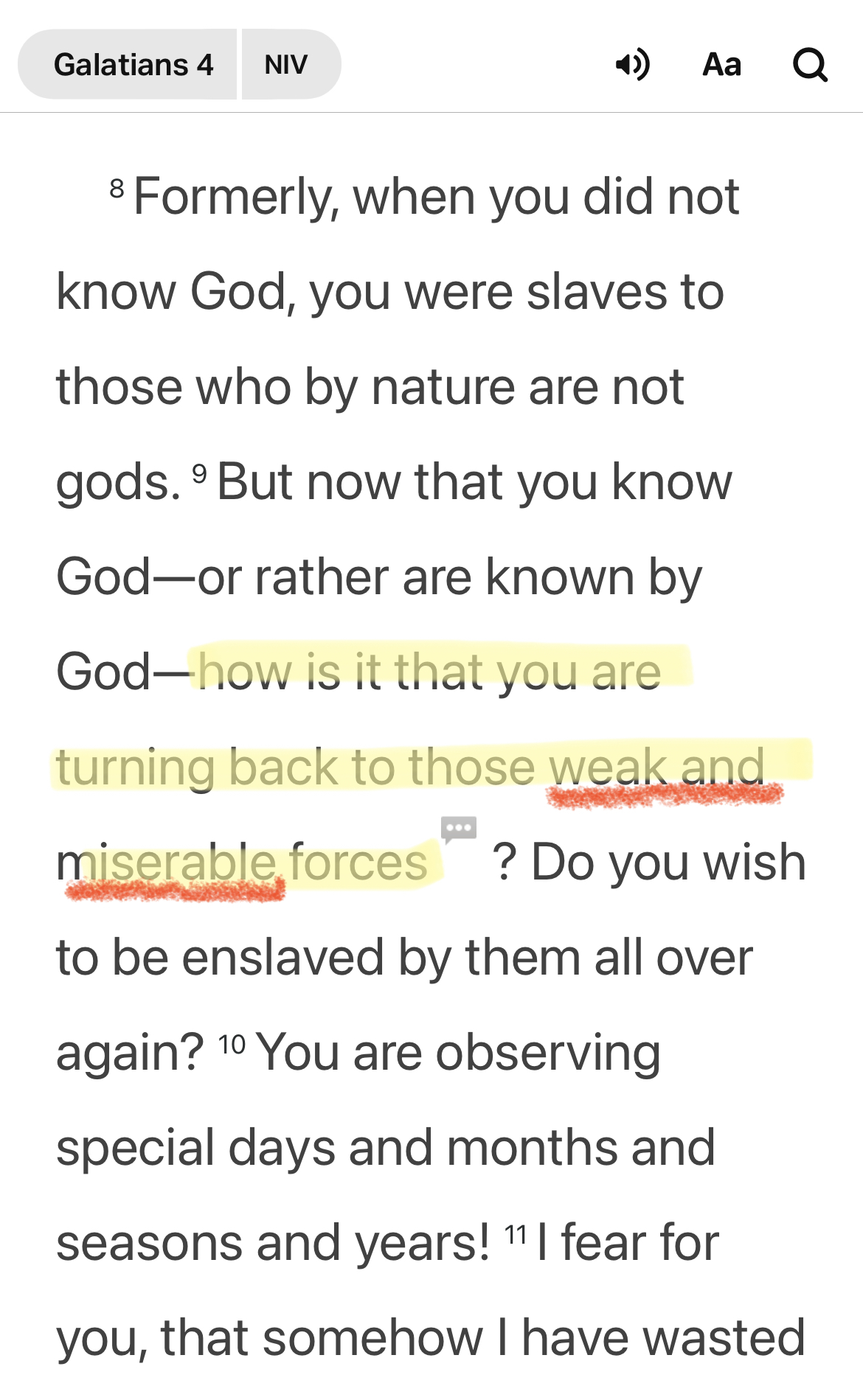
The Apostle Paul asked the Christians in Galatia an important question:

How is it that you are turning back to those weak and miserable principles? (Galatians 4:9)

The two words together in the Greek—weak and miserable—imply things that impoverish us and reduce us to lowly paupers and beggars. That’s not a pretty picture!

Look at the contrast between the princely life and the pauper’s life.

Those who follow Christ:

  • Are called sons of God (Galatians 4:6a)
  • Experience Abba Father’s favor (4:6b)
  • Are heirs to God’s Kingdom (4:7)

Those who don’t follow Christ:

  • Live as slaves (4:7)
  • Are separated from God’s favor (4:1-3)
  • Live as miserable beggars (4:9)

Why would anyone choose the miserable beggar’s life?

Here’s the principle: Everyone serves someone! I will either serve God and be called His son, or I will serve myself (my desires, my passions, my way of doing things) and be called a stranger to God.

Do I want to be in control, or do I want to let God be in control? When I try to control my own life, not only am I not in control, but I actually become a slave to my own passions. Ironic, isn’t it?

The choice is simple, but the choice must be made every day. I must choose to serve God in every moment of every day. It’s the only way to avoid the miserable life, and live the blessed life God has for me.

15 Quotes From “I Am A Follower”

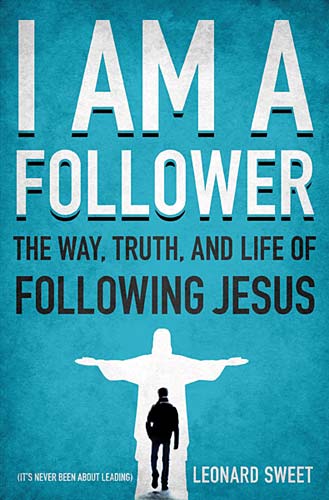
I Am A Follower by Leonard Sweet turned my leadership thoughts upside down (or is that right-side up?). I would strongly encourage you to read this book, especially if you are in church “leadership.”

It wasn’t easy to do, but here are 15 great quotes from I Am A Follower —

“The Greek noun perichoresis was the early church’s favorite word to describe the interrelationship of the holy Trinity. When the prefix peri (around) is linked with the root of the verb choreuein (to dance), a compelling metaphor is formed or  ‘choreographed’ to describe the ‘one nature in three Persons’ of God the Father, Son, and Holy Spirit. Literally they ‘dance around.’ The choreia or dance of God is the choreography of the cosmos, the interrelationship of Creator, creation, and life itself, the holy creativity of the All in All.”

“Following is the most underrated form of leadership in existence.”

“The cry for leadership is deafening amid our social disintegration, our moral disorientation. We have come to believe that we have a leadership crisis while all along we have been in a drought of discipleship. The Jesus paradox is that only Christians lead by following.”

“The church has become what [Dwight] Eisenhower predicted: a place where everyone is trying to get everyone else to do what they want done but don’t want to do themselves.”

“Leadership is a function. Followership is an identity. … Leadership is a functional position of power and authority. Followership is a relational posture of love and trust. … Being a follower is less about showing how much you know than showing humble gratitude for how much there is to be known.”

“Have we made Christianity more a moment of decision than a momentum for life? Both are important, but have we spent more time on how you become a Christian than on what it means to live as a Christian? Both are important, but have we made holiness more about a destination than a direction?” 

“But to think we can capture and tame Truth is a delusional trap. In fact, the desire for command and control above our desire to please God dams up the rivers of Living Water.”

“Christ does not ask of His followers great success or great fame or great distinction. Christ expects of His followers what He expected of Himself: simply ‘to do the will of Him Who sent Me.’”

“Never in the history of humanity has knowledge been more accessible and of such quality. But when our thirst for information, expertise, and control begins to outrun our thirst for Christ, we can easily trade the waters of the Spirit for a soda-pop substitute. When we place our faith in fillers instead of allowing the Spirit to fill us, we end up selling out not only Christ but ourselves.”

“Leadership culture is strength based. Followership culture is weakness based. …We bless others naturally through our strengths. But we bless others supernaturally through our weaknesses.”

“The disciples were instructed to feed the sheep, not lead them. Christ will lead them. Jesus is the Shepherd. We are the sheep. All of us.”

“Near the end of John’s gospel we find Jesus’ poignant words: ‘As You have sent Me into the world, so I have sent them into the world.’ Did you catch that sneaky as? Jesus’ commissioning of His disciples was simply an echo of His own commissioning.”

“The relationship between leader and follower is this: leaders are over, followers are among. We are all Jesus followers.”

“The leadership paradigm creates folk heroes. Followership creates heroes who are folk.”

“Jesus told His disciples that the sheep always know the Master’s voice. To follow Jesus is not to demand road signs but to respond to the Voice of the Spirit along the way.”

I Am A Follower (book review)

About a decade ago I was moved into a position of leadership that seemed way too big for me. So to prepare myself, I began to read all of the leadership materials I could find: Bible-based leadership, marketplace leadership, anything I could find that would help me grow as a leader. I thought I was progressing as a leader, until I read I Am A Follower by Leonard Sweet.

Just a few pages into I Am A Follower I read this: “Following is the most underrated form of leadership in existence.” And thus I was confronted by a message that seemed 180-degrees out-of-phase with what I’ve been learning for the past decade.

In pointing time and time and time again to the life of Jesus, Len Sweet makes the case that Jesus is the only Leader, and the rest of us are followers. Jesus showed us perfect leadership by being a perfect Follower. In fact, He is the perfect Follower, as no one has ever followed God as He did. Some of us may follow Christ a little sooner, or a little closer, or a little more persuasively. Those, Dr. Sweet would say, are better called “first followers.”

Dr. Sweet uses phrases like the dance of life, and the transformation of viewpoint. These are not phrases that a leader uses, but they are the paradigm of followers. Check out this quote:

“The cry for leadership is deafening amid our social disintegration, our moral disorientation. We have come to believe that we have a leadership crisis while all along we have been in a drought of discipleship. The Jesus paradox is that only Christians lead by following.” (Leonard Sweet)

This book is a prophetic word: it is calling us back to true biblical-centeredness, true Christ-likeness, true discipleship. This is a book that took me a while to read, and will take me even longer to process. It’s a paradigm-busting game-changer…

…and it’s right on target.

Go get this book today!

I am a Thomas Nelson book reviewer.

What Is “Success” For A Church?

“How’s it going,” a fellow pastor asked me. “How’s your church doing?”

If you’re a pastor, you probably get asked this often. How do you answer this question? Do you tell them what your attendance was on Sunday morning? Or about the newest program you’ve started?

When you look in the mirror and ask yourself, “How’s it going,” is your answer related to nickels and noses (offerings and attendance)? Is it how many people complimented your last sermon?

Listen to these sobering words:

Worldliness is not the trap that most endangers us as Christian workers; nor is it sin. The trap we fall into is extravagantly desiring spiritual success; that is, success measured by, and patterned after, the form set by this religious age in which we now live. 

We have a commercialized view—we count how many souls have been saved and sanctified, we thank God, and then we think everything is all right. (Oswald Chambers)

We need to be very careful about how we define “success” in a church setting. Let’s use Jesus as our example:

  • How big was His congregation? Twelve men. One betrayed Him, nine ran away when the going got tough, and one denied he even knew Him. Even after being raised from the dead (!) there were only 120 people in the upper room.
  • How much money did His church have? Not even enough to buy a gravesite for the Messiah.
  • What did people think of His sermons? Some of His sermons made people so mad they wanted to stone Him. And after one sermon the Bible says: From this time many of His disciples turned back and no longer followed Him (John 6:66).

Maybe “success” in the church is more like…

  • …people being reconciled to God. Remembering that “our work is not to save souls, but to disciple them” (Chambers).
  • …seeing disengaged people becoming actively involved in engaging others with the Gospel.
  • …“Never seek[ing] after anything other than the approval of God” (Chambers).
  • …to say with Jesus, “The Spirit of the Lord is on Me, because He has anointed Me to preach good news to the poor. He has sent Me to proclaim freedom for the prisoners and recovery of sight for the blind, to release the oppressed, to proclaim the year of the Lord’s favor” (Luke 4:18-19).

These are just some of my thoughts. What else should be on this list? How would you define “success” in the church?

I have also shared some questions that can help pastors and ministry leaders better gauge the level of effectiveness in their ministry.

UPDATE: This post was one of the seed thoughts that went into fashioning my book Shepherd Leadership: The Metrics That Really Matter.

Remaining

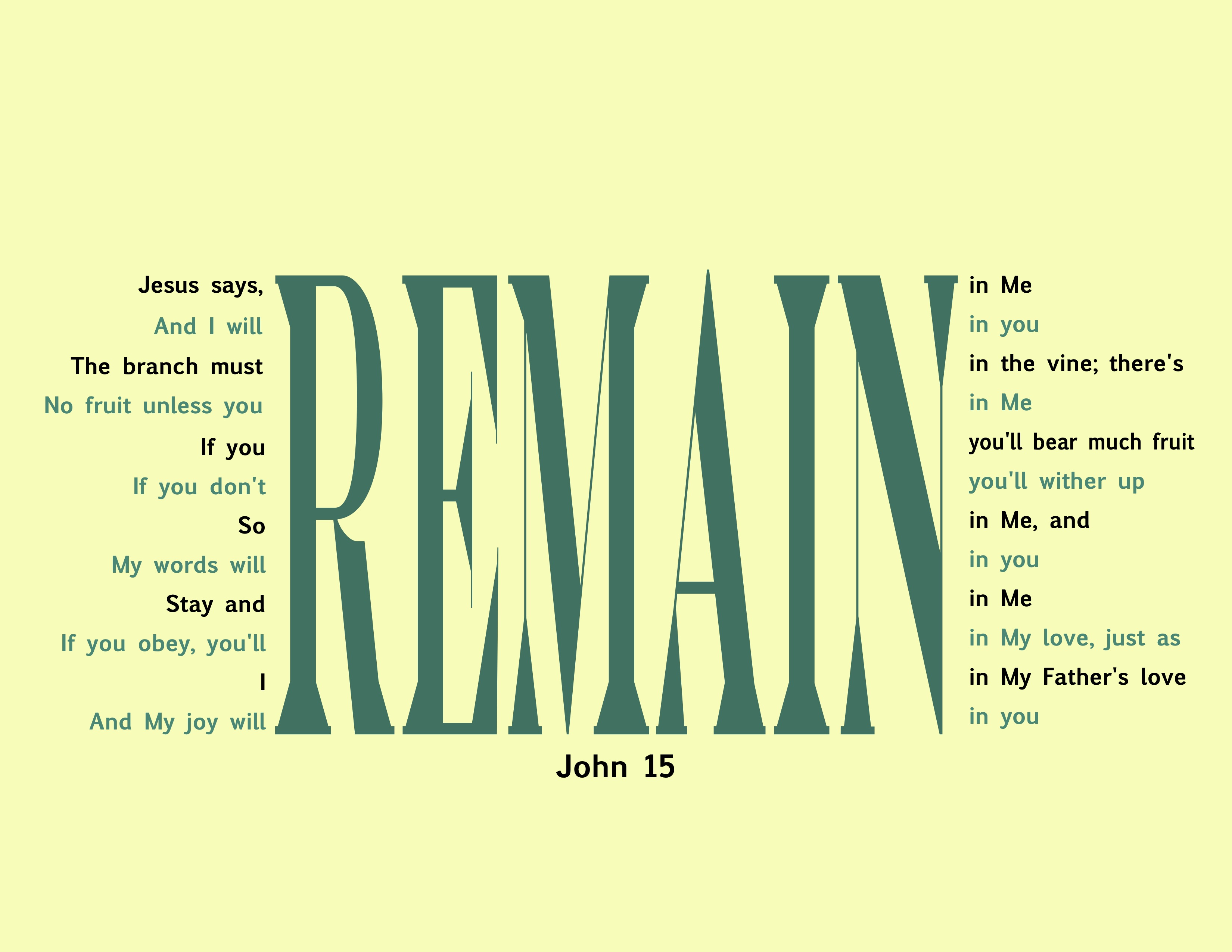
In John 15, Jesus uses a Greek word that gets translated in the English as remain fifteen times. If anyone uses a single word that many times, you know it must be important. The same Greek word is also translated in and last in this same passage. The word means:

  1. continually present (in reference to time), and
  2. not leaving a certain orientation (in reference to state or condition).

The big idea Jesus is trying to convey here is connectedness. So I’m asking myself, Is my life so connected and reliant on Christ’s life, that it is nearly impossible to perceive two? Do we look and operate like one? Is my life completely sustained by His life? When people look at me, can they tell I am remaining in Jesus?

This same Greek word is translated living in (John 14:10) when Jesus says, “It is the Father living in Me, Who is doing His work.” When we see Jesus, we see the oneness—the remaining—between Father, Son, and Spirit.

This same remaining oneness is possible for me because of the promise of a Helper. Jesus said the Counselor (the Holy Spirit) would be with you (John 14:16). This is the exact same Greek word. The word is used again in the following verse: He lives with you and will be in you.

The Holy Spirit helps me look more and more like Jesus. He helps me remain. He develops the oneness.

Oh, marvel of marvels! To be one with Jesus! To remain—to last! To have Him in me, and I in Him!

I want to remain more deeply, more “one-ly,” that God may be glorified in the lasting fruit that my remaining will allow Him to produce.

If (Blank), Then (Blank)

Listen to the podcast of this post by clicking on the player below, and you can also subscribe on AppleSpotify, or Audible.

Let me set the stage. Jesus is explaining to some of His new followers about finding their identity in God, not in a man. He says to them,

If You hold to My teaching, you are really My disciples. Then you will know the truth, and the truth will set you free. (John 8:31-32)

Notice the order of the if-then: If you hold to my teaching, then you will know the truth.

You see, later on in this discussion Jesus says, “Do you want to know why you can’t hear what I am saying? It’s because you are not listening with an ear to obey” (see vv. 43-47).

In other words, their tendency—and ours too—is to say, “If I hear truth from You, then I will obey.”

But this attitude is pragmatic—it’s like saying, “It has to ring true with what I already know.” But the problem is, Jesus’ teachings are so counter-cultural and counterintuitive that they may never ring true with what you already know.

Instead, my attitude should be, “I will obey. No matter what You say to me, I will do it. Even if it sounds uncomfortable, I will do whatever You tell me.”

If you HOLD to my teaching, then you will KNOW the truth.

God will not speak a word I can hear and understand UNLESS I am committed to obeying every word He speaks. My attitude of obedience must come before His truth will be revealed. Let’s not get this mixed up with, “If You speak the truth, then I will obey.”

►► Would you please prayerfully consider supporting this ministry? My Patreon supporters get behind-the-scenes access to exclusive materials. ◀︎◀︎

Thursdays With Oswald—Why Do I Go To God?

This is a weekly series with things I’m reading and pondering from Oswald Chambers. You can read the original seed thought here, or type “Thursdays With Oswald” in the search box to read more entries.

Why Do I Go To God?

     We have become so self-centered that we go to God only for something from Him, and not for God Himself. It is like saying, ‘No, Lord, I don’t want You; I want myself. But I do want You to clean me and fill me with Your Holy Spirit. I want to be on display in Your showcase so I can say, “This is what God has done for me.”’ Gaining heaven, being delivered from sin, and being made useful to God are things that should never even be a consideration in real surrender. Genuine total surrender is a personal sovereign preference for Jesus Christ Himself.

From My Utmost For His Highest

This quote smacked me right between the eyes: “We have become so self-centered that we go to God only for something from Him, and not for God Himself.”

This is one of those statements that caused me to put down my book, and take a hard look in my spiritual mirror. Why do I turn to God? Is it just so I can get something? When do I seek Him? Only when I’m in trouble?

The prayer that Jesus taught us to pray should be an everyday, heartfelt surrender: I surrender completely to You. Even Jesus Himself prayed: Not My will be done, but Yours.

My attitude as a disciple must be a daily decision to take my cross and follow Him.

How arrogant and self-centered of me to say, “God this is how I’m going to live today, and I want You to bless it. If things don’t go well, I will call on You for what I need.”

Instead I must pray: “Lord, I am totally surrendered to You today. Let me do only Your will. Let me walk more closely with You today. This is the only way I can be useful for You today.”

Why do I go to God: For His glory? Or for my comfort?

The Danger Of Turning Back

Jesus never hesitated to speak the truth. After one such time, a sad verse appears: From this time many of His disciples turned back and no longer followed Him. (John 6:66)

The words of Jesus are so countercultural, so counterintuitive, that they might be shocking to our human ears. We get used to thinking along certain lines, and then Jesus says, “That’s not the way. I AM the only way.”

Why do these statements ruffle us so much? I think they remind us that He is Lord, and there is no other. We like to think that we have options … we think, “Surely He means this” … we convince ourselves that there is some wiggle room. But we are wrong.

Jesus says: I AM. His way is the only way.

Some people turn back when they hear this. That’s to say, they don’t deny Jesus is Savior, but they no longer want to do the hard work of being His disciple. “Turn back” means to separate; it’s the opposite of coming alongside or following Jesus.

No longer followed” in this verse is translated “walked no more” in the King James Version. They stood still. If we choose to stand still or to turn back, we miss out. Those who turned back missed out on the miracles, on the personal conversations, on the deeper intimacy with Jesus.

Those who turn back say believing in Jesus is enough, but they think discipleship is just too hard. Can they still have salvation that leads to eternal life? Yes, but it becomes harder and harder because they want to try to pursue it on their own.

I’d rather keep on walking, keep on learning, keep on maturing, keep on following.

Thursdays With Oswald—The Intimacy Of God

This is a weekly series with things I’m reading and pondering from Oswald Chambers. You can read the original seed thought here, or type “Thursdays With Oswald” in the search box to read more entries.

The Intimacy Of God

     The 139th Psalm ought to be the personal experience of every Christian. My own introspection, or exploration of myself, will lead me astray, but when I realize not only that God knows me, but that He is the only One who does, I see the vital importance of intercessory introspection. Every man is too big for himself, thank God for everyone who realizes it and, like the Psalmist, hands himself over to be searched out by God. We only know ourselves as God searches us. ‘God knows me’ is different from ‘God is omniscient’; the latter is a mere theological statement; the former is a child of God’s most precious possession—‘O Lord, Thou hast searched me, and known me.’

From Biblical Ethics

I love the line, “We only know ourselves as God searches us.”

He knows me better than I know myself. If I ever hope to mature, I can only do so as I make this my daily prayer:

Search me, O God, and know my heart; test me and know my anxious thoughts. Point out anything in me that offends You, and lead me along the path of everlasting life. (Psalm 139:23,24)