Leaders must resist trying to rush in “to save the day.” We need to let our teammates learn how to rescue themselves through a time of productive struggle. Check out the full conversation Greg and I had in our episode “The struggle is real (but necessary).”
I have had an ongoing series of posts and videos called “Is that in the Bible?” Many times we discover that a phrase we think is biblical isn’t found in the Scripture or it is being used out of context. John Stonestreet addresses this same concern. He writes, “Selective proof-texting points to how widespread and deep biblical illiteracy is. In addition to an ignorance of the actual content of the Bible, there is ignorance about what the Bible even is, and how Christians throughout the ages have used it. It’s bad when this ignorance shows up in politics. It’s sad when it shows up in our churches and Christian subcultures.”
“Strength does not come from winning. Your struggles develop your strengths.” —Arnold Schwarzenegger
Marcus Buckingham shared something fascinating: “I studied 3000 Disney housekeepers. Eight of them told me what they loved about their work. One vacuums herself out of every room to make perfect carpet lines. Another lies on every bed to test the ceiling fan because dust falling means guests think the room is dirty. A third arranges kids’ toys in elaborate scenes—Mickey with the TV remote, Minnie with french fries. All breaking Disney’s rules. All excellent for completely different reasons. Stop building competency models for leaders. The best leaders are super different from each other. Average is homogenous. Excellence is idiosyncratic.”
Listen to the podcast of this post by clicking on the player below, and you can also subscribe on Apple, Spotify, or Audible.
Can we trust our Bibles? There are some things that skeptics point to that we need to be able to defend—even in this model prayer that we have been studying. We come to the last verse of this prayer, which many of you probably learned or heard as, “For Yours is the kingdom and the power and the glory forever. Amen.” Yet some Bibles have a footnote here that notes that this doxology is not seen in all biblical manuscripts.
We don’t have the autographs (original writings) but we have manuscripts (copied by a trained scribe from the autograph, and then copied from by yet another reliable scribe, and so forth). The oldest calfskin manuscript we have goes back to 1500 BC, and the oldest papyrus manuscript goes back to 2400 BC.
The scribes were incredibly talented and disciplined men. They became a recognized group called the Sopherim (scribes) in about 500 BC. By AD 100, the Talmudic scribes eclipsed them, and then the Masoretic scribes—the most stringent scribes of all—dominated from AD 500-900.
Let’s turn our attention first to the manuscripts that compromise what we call the Old Testament. What did Jesus—and others that lived in His time—call those 39 books of the Old Testament? They were called Scripture. Those books were not in doubt even before Jesus was on earth.
Dr. Peter Flint notes, “The biblical Dead Sea Scrolls are up to 1,250 years older than the traditional Hebrew Bible, the Masoretic text. We have been using a one-thousand-year-old manuscript to make our Bibles. We’ve now got scrolls going back to 250 BC. … Our conclusion is simply this—the scrolls confirm the accuracy of the biblical text by 99 percent.”
In the New Testament era, the disciples of Jesus went out in pairs. Their oral transmission of the news of Jesus and the quoting of Scripture was verified by their traveling partners. Even for those who happened to be by themselves (e.g. Philip in Samaria), there was always follow up by other church leaders.
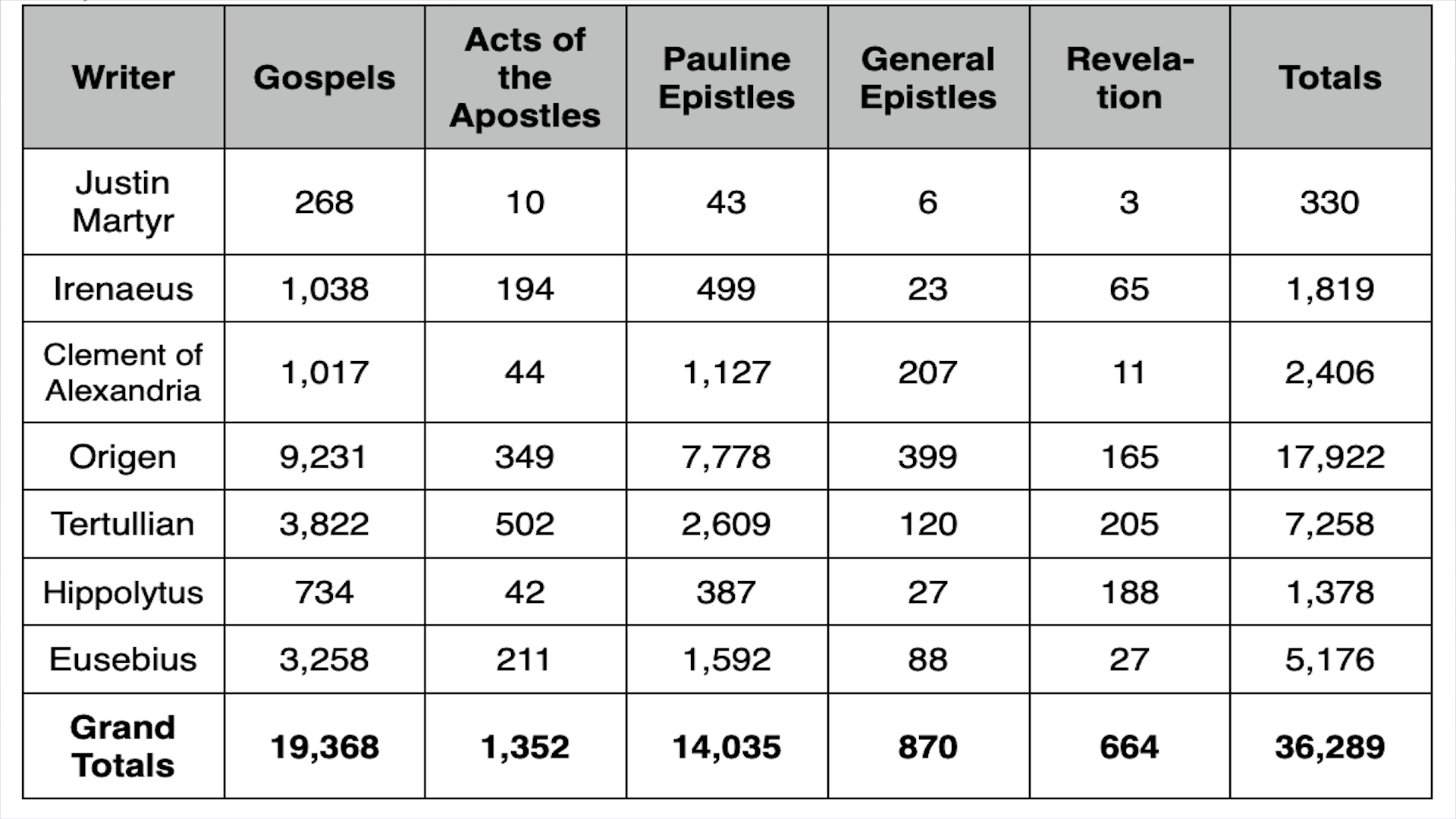
So the New Testament epistles were written to verify the spoken words—James was the earliest (probably AD 45). The number of manuscripts we have of these New Testament words are simply astounding!
After the canon of the New Testament was completed, the church fathers quoted so much of the New Testament in their letters and books that we could completely reconstruct those 27 books just from their writings.
With this many manuscripts in existence, is it likely that there would variations in manuscripts? Yes. But none of the variations ever discovered have been fundamental enough to change anything in the meaning. Josh McDowell states, “Compared with other ancient writings, the Bible has more manuscript evidence to support it than the top ten pieces of classical literature combined.”
So how do we handle these places where scholarly footnotes tell us of a discrepancy in the existing manuscripts?
Get the context—does this fit with what is happening around it?
Is there corroboration—can we cross-reference it from elsewhere in the Bible?
In the conclusion of the powerful model prayer Jesus has given us, the closing words appear to be a doxology. But I think we can trust this because for three main reasons:
This doxology seems to come full circle with how the prayer begins in: Our Father in heaven, hallowed be Your name, Your kingdom come, Your will be done, on earth as it is in heaven (vv. 9-10).
These words are found almost verbatim in the words of David: Yours, Lord, is the greatness and the power and the glory and the majesty and the splendor, for everything in heaven and earth is Yours. Yours, Lord, is the kingdom; You are exalted as head over all (1 Chronicles 29:11).
As we have noted throughout this prayer series, the focus of this prayer is two-fold: It is both an acknowledgement of the awesome, praiseworthy glory of our God, and it is a petition for our lives to be empowered to help others see our glorious God and Savior for themselves.
For these reasons, this doxology, I believe, is an indispensable part of this majestic prayer.
Let’s celebrate others 🎉 Don’t just rattle off, “How are you?” and not even listen for the answer. Let’s ask more specific, meaningful questions to help people celebrate what’s good in their lives. Check out my latest Monday Motivation video, and then please subscribe to my YouTube channel.
Check out my exclusive Patreon video teaching on this idea of the lessons that can be learned whether we are delivered from trials or whether we go through trials.
Listen to the podcast of this post by clicking on the player below, and you can also subscribe on Apple, Spotify, or Audible.
This is part 4 in our series “Is that in the Bible?”
Statement #4—Name it and claim it. Is that in the Bible? No!
But in fairness, even the proponents of this belief don’t usually say it this way. Instead they quote words from Jesus like: “I will do whatever you ask in My name” (John 14:13) or “Ask whatever you wish, and it will be given you” (John 15:7).
They really want this to be true, I think, because in their minds happy, prosperous Christians make God look good. On the other hand, struggling Christians make God look bad. There is a whole branch of theology called theodicy which literally means: “a defense of God’s goodness and omnipotence in view of the existence of evil.”
This is nothing new. Religious people have always tried to have pat answers. In the oldest book of the Bible, Job’s friends were convinced that suffering results from sin and blessing results from righteousness. And yet according to God, Job was a righteous man (Job 1:1, 8, 20-21).
At the advent of Jesus, the chief priests and scribes want the Messiah to be heroic so they modified a prophecy to make Bethlehem sound more impressive (compare Micah 5:2 with Matthew 2:6).
So it follows that this name-it-claim-it group wants God to look good because His people look good, dress well, drive nice cars, live in big homes, fly private jets, and never get sick.
But Jesus Himself told His followers to, “Sell your possessions and give to the poor” (Luke 12:33). And He said,“Blessed are you when people insult you, persecute you and falsely say all kinds of evil against you because of Me” (Matthew 5:11). And Jesus also said, “In this world you will have trouble” (John 16:33).
This is not to say that God opposes wealth: He gave wealth to His leaders, Job was doubly-wealthy after his trial, and wealthy people funded the ministry of Jesus and the early church. But this isn’t the same as pursuing—or even demanding—wealth, or of making the erroneous connection that poor people are somehow out of favor with God.
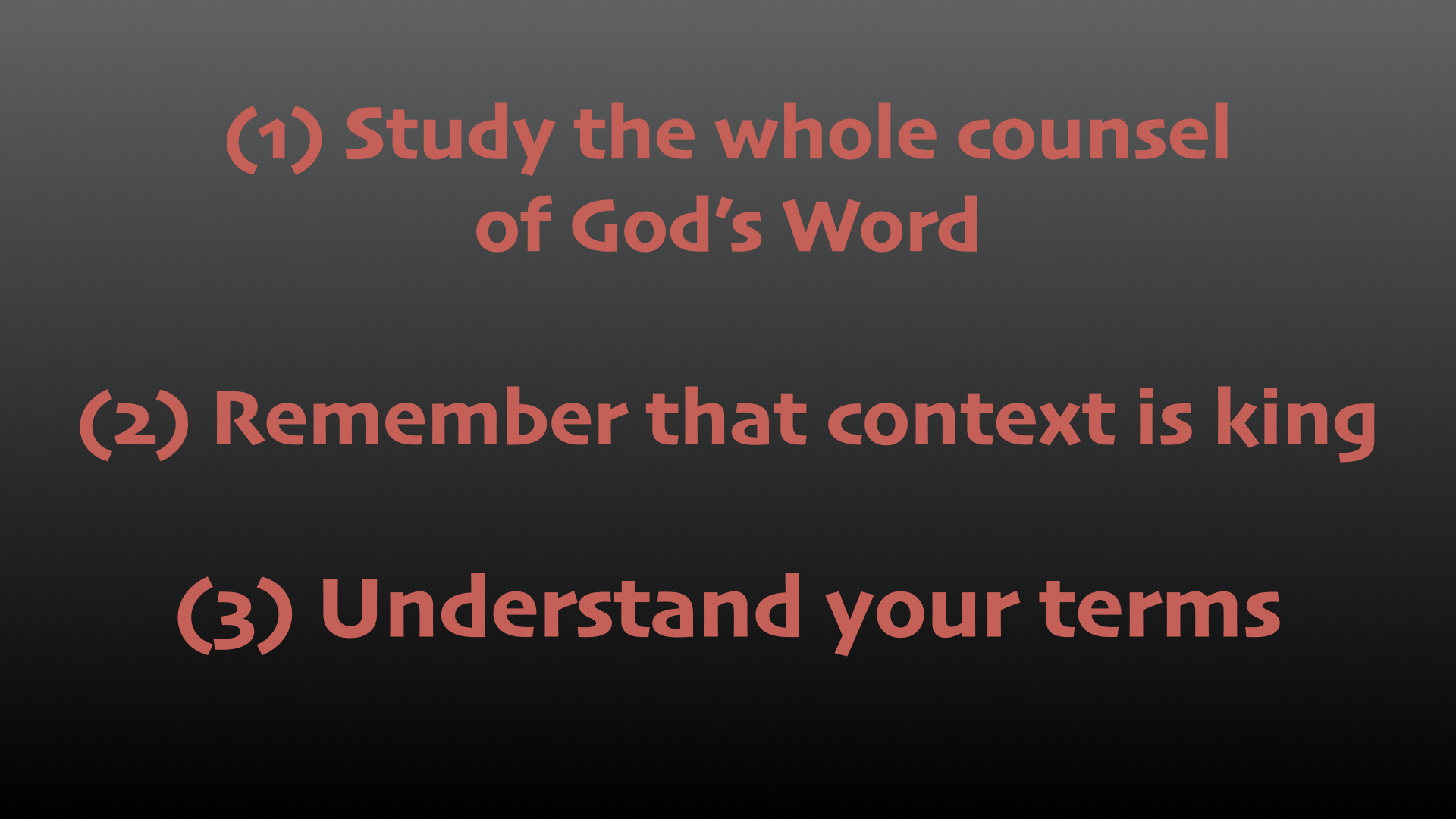
How do we avoid these errors? Here are three thoughts:
The word “eisegesis” means to read something into the Word. But that is like creating your own beliefs and then going to the Bible to find phrases that support what you already believe. On the other hand “exegesis” is to read the Bible and have it speak to us by the Holy Spirit.
Two of the phrases from Jesus that the name-it-and-claim-it folks use (John 14:13 and John 15:7) turn out to mean something entirely different than, “God will give me all of the things I demand from Him” when they are read within the context of the things Jesus was teaching at that time (see John 14:9-14 and 15:1-8).
(3) Understand your terms.
If something is biblical, that is something the Bible says yes to. Unbiblical things the Bible says no to. But non-biblical are those the Bible doesn’t explicitly address. We have to be very careful of trying to make non-biblical things sound biblical or it may lead to some unbiblical attitudes and actions.
This is exactly what the Pharisees did by giving their non-biblical traditions the weight of biblical statements, and then looking down on others in a very unbiblical way.
God is sovereign. We do not tell Him what to do. We do not demand Him to respond to our needs. We trust Him and and we abide in Him. Then in the abiding, asking and understanding and fruitfulness are as natural as a flower sprouting from a branch that is attached to the vine. We don’t name things and claim things for our personal comfort, but we desire solely for God’s glory to be seen—whether in wealth or poverty, health or sickness, peaceful times or tribulation.
Evaluating all biblical sounding statements by those three items—studying the whole counsel of God’s Word, understanding the context, and knowing our terms—will guide us from going astray.
Listen to the podcast of this post by clicking on the player below, and you can also subscribe on Apple, Spotify, or Audible.
I may have heard more confusion, bad preaching, and even heresy based on Psalm 82 than almost any other passage! Most of the confusion comes from just verses 1 and 6, but if we read the entire psalm, I think confusions are quickly cleared up.
The biggest point of confusion is the use of the word “gods.” The Hebrew language doesn’t have capital and lowercase letters like we do. So the word God (with or without a capital “G”) is the same Hebrew word—el (singular) or elohiym (plural)—which means mighty One or mighty ones. Humans can be mighty ones, but only Yahweh is the Mighty One.
Further adding to the confusion for some people is that Yahweh God is sometimes referred to in the plural in Hebrew: elohiym. This is understandable because we believe God is Three-in-One. Not three gods, but one God in three Persons.
Bible translators have to use context clues to determine whether the biblical authors are referring to Yahweh or a pretend deity. Thankfully, English Bible translators have helped us out:
when the Hebrew word is Yahweh, most Bibles print it LORD
when the Mighty One is implied in the text it’s God (with a capital “G”), and when it’s just a mighty person it’s typed god/gods (with lowercase a “g”).
the NIV translators really helped us in Psalm 82 by designating the false deities in quotation marks (“gods”), almost as if they’re saying “the so-called gods.”
When we were looking at the Selah in Psalm 81, I pointed out the importance of remembering that context is king. Clearly, from the context in Psalm 82, these are false gods (lowercase “g” and inside quotation marks).
Asaph only speaks in the first and last verses of this psalm, but notice his commentary that “God presides…He gives judgment.” As in, God gets the final and decisive word. In fact, God does the most speaking in this psalm (in verses 2-7). God indicts wicked people for…
defending the unjust
showing partiality to the wicked
knowing nothing, understandingnothing, walking around in darkness
and notes “you will die like mere men”
Now notice what the Selah pause connects. This is a pause for us to contrast two things: the righteous way and the wicked way. Or maybe we could say the contrast is between the way of the righteous Mighty One and His followers, and the way of wicked mighty ones.
The Selah really begs an important question, “How long will your pride keep you doing these wicked things?” Notice what God calls on people to do in opposition to what the wicked are doing:
the wicked defend the unjust vs. the righteous are to defend the weak and fatherless
the wicked show partiality to the wicked vs. the righteous maintain the rights of the poor and oppressed
the wicked are concerned only about themselves vs. the righteous rescue the weak and needy from the hand of the wicked
The Selah is intended to prompt us to ask ourselves: “Which are we? What am I doing or not doing?”
The word for rendering a judgment is used four times in Psalm 82:
God gives judgment on the activities of the “gods”
the wicked defend the unjust, meaning that they condone their unjust activities
the righteous defend the weak, meaning they speak up for those being oppressed by the “gods”
finally, Asaph declares in verse 8 that God renders the final and decisive judgement



 Leaders must resist trying to rush in “to save the day.” We need to let our teammates learn how to rescue themselves through a time of productive struggle. Check out the full conversation Greg and I had in our episode “The struggle is real (but necessary).”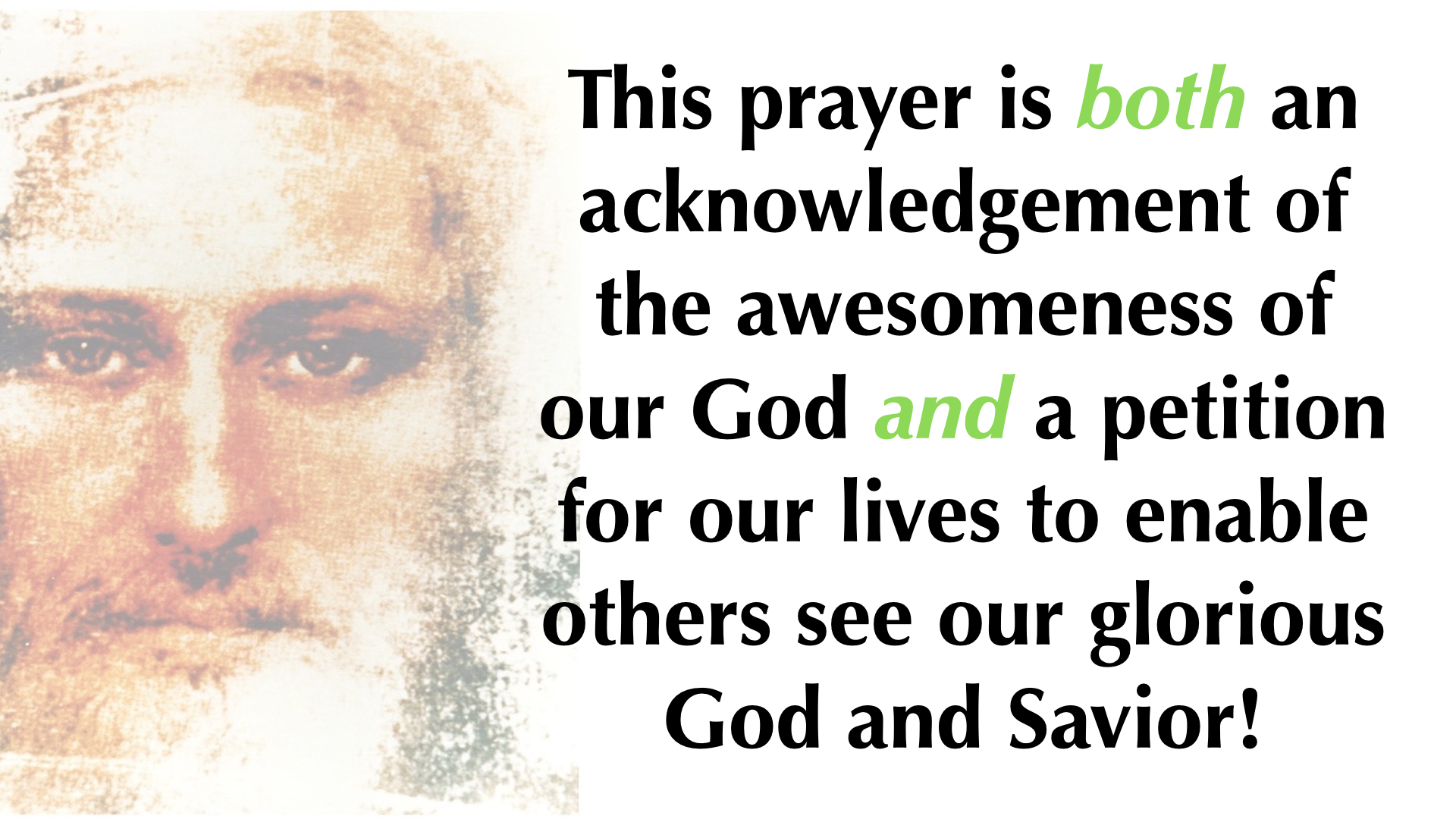



 Craig T. Owens