Codependent?

Modern psychologists have coined the term codependent to mean someone who allows their life to be controlled by another person, much like the moon controls the tides on the earth’s oceans. Almost always this relationship ends up being a lose-lose relationship: both the person being controlled and the person doing the controlling are headed the wrong way.

Codependent is not a biblical term.

But there is a concept in Scripture that is the anti-codependent. I would call it interdependent. Here’s a couple of verses to back it up…

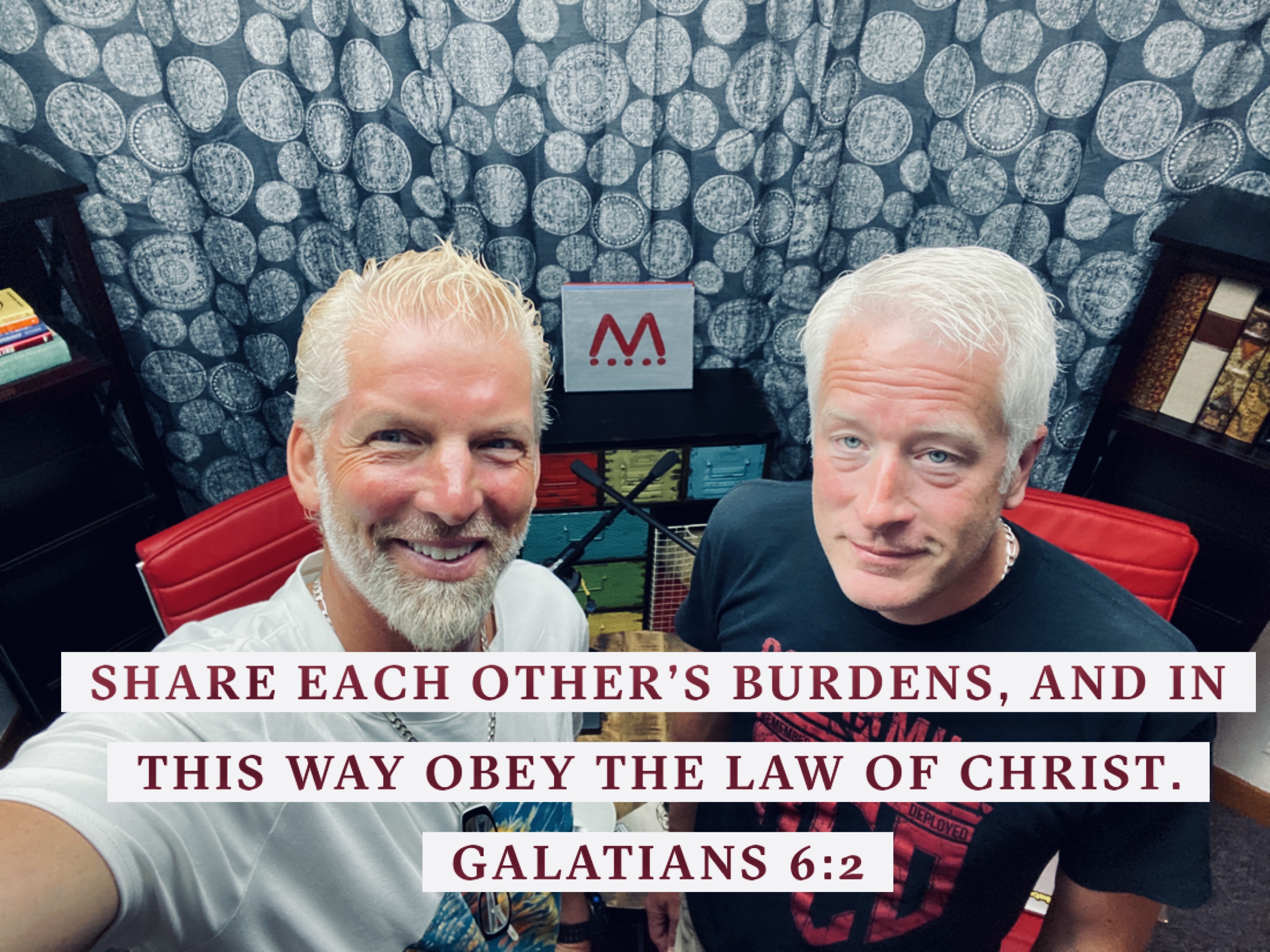
Dear brothers and sisters, if another believer is overcome by some sin, you who are godly should gently and humbly help that person back onto the right path. And be careful not to fall into the same temptation yourself. Share each other’s burdens, and in this way obey the law of Christ. (Galatians 6:1-2)

Wounds from a friend can be trusted, but an enemy multiplies kisses. (Proverbs 27:6)

It is absolutely clear that God has called you to a free life. Just make sure that you don’t use this freedom as an excuse to do whatever you want to do and destroy your freedom. Rather, use your freedom to serve one another in love; that’s how freedom grows. (Galatians 5:13)

God has given each of you a gift from His great variety of spiritual gifts. Use them well to serve one another. (1 Peter 4:10)

This isn’t excusing bad behavior, or winking at poor choices, or rescuing someone from the consequences of sin. Excusing, winking, and rescuing are symptoms of codependency.

Interdependency is saying, “I need you to be stronger—to be healthy—because I may need to lean on you someday.”

Christians try to get stronger and develop their own spiritual gifts so that they can help a friend-in-need get stronger and develop his/her spiritual gifts.

The Body of Christ needs you to be interdependent, which completely trumps codependent.
Books I Read In 2010

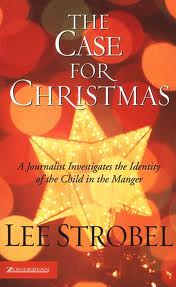
The Case For Christmas (book review)

Virgin birth? The accuracy of the biblical account? God in flesh? These are all intriguing questions that crop up especially around the Christmas season, which is why The Case For Christmas by Lee Strobel is a timely read.

Lee Strobel investigates the fantastic claims that Christians make about the birth of Jesus Christ with all of the cool-headed dispassion of a newspaper journalist. Beginning with his own skepticism about the miracle of the virgin birth of Christ, Mr. Strobel seeks out the sharpest minds who have thoroughly researched the key areas surrounding this subject. In a book that reads a little like a detective story, we get to sit in on some of the fascinating interviews Mr. Strobel conducted for this book.

Whether you are an atheist, a doubter, or a wholehearted believer, there is much to ponder in The Case For Christmas. At only 96-pages long, you can read this book prior to Christmas Day, and gain a better appreciation for the true meaning behind CHRISTmas.

Christians Are Hate-Filled Hypocrites… (book review)

…and Other Lies You’ve Been Told.

If this sounds like a provocative title, you’d be right. But Bradley R.E. Wright delivers with Christians Are Hate-Filled Hypocrites. A sociologist professor, Dr. Wright digs into the numbers behind the headlines. Of course, you’ve heard the age-old cliché: Figures never lie, but liars figure. Sometimes headline writers can take some stats to say what they want to say about Christians and the church, but Dr. Wright shines a light on these tricks.

Dr. Wright looks at some of the headline-grabbing topics like:

  • Is the church losing its young people?
  • Are evangelicals uneducated and poor?
  • Do Christians break the rules as much as non-churched people?
  • Do Christians really love others?
  • What do non-Christians think of Christians?

There are a ton of stats presented in this book. I happen to enjoy digging through the numbers, so there was just enough for me. But don’t worry, if you aren’t really a “numbers person,” there are some easy-to-read graphs and charts that make the numbers easier to digest.

My own slight hesitation with recommending this book is a slight sarcastic edge to Dr. Wright’s delivery. It’s not over-the-top, but at times I felt it was less than his best. But aside from this, I enjoyed getting a look behind the numbers.

I am a Bethany House book reviewer.

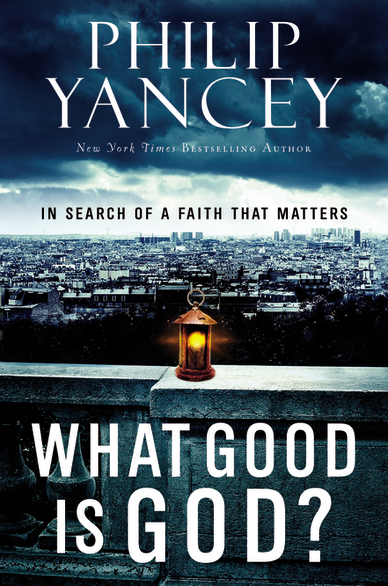
What Good Is God? (book review)

Philip Yancey always makes me think. He explores the edges of Christian faith, not content just to walk down the safe paths of well-worn, traditional preaching. Just the title of his latest book—What Good Is God?—tells you that this book will be no exception.

This book is laid out in ten sections, each with two chapters. The first chapter in each section gives you the setting, the second chapter is a speech that Yancey gave in that setting. And, wow, what tough settings they are! Every setting is one that makes you wonder, “Where was God in that?!?”

What Good Is God? will take you to settings like…

  • The campus of Virginia Tech after a gunman opened fire on faculty and students.
  • The secret house churches in Communist China.
  • The post-apartheid South Africa where wounds of hate are still healing.
  • The volatile Middle East where religious beliefs violently collide.
  • The middle of a terrorist attack in Mumbai, India.

In every section, Philip Yancey masterfully and empathetically takes us on a journey of discovery that shows that God is still God and that He is good. He does this through personal example, Biblical references, and always with a heart that seems to know his audience.

It’s a challenging read, but well worth your time.

I am a Faith Words book reviewer.

Thursdays With Oswald—God’s “Oughts”

Two of my favorite authors are C.S. Lewis and Oswald Chambers. Lewis helps me to see biblical truths in a way I’ve not seen them before. Chambers helps me live out those biblical truths differently than I’ve been living them before.

I’m working my way through the complete works of Oswald Chambers (or maybe I should say, his writings are working their way through me!), so I thought I’d share with you, my dear reader, what’s challenging me.

We’ll see how this goes, but on Thursdays, I’ll share with you something I’ve been reading and thinking about from the writings of Oswald Chambers. Sometimes I may just let the teacher speak for himself, and sometimes I may offer a thought or two of my own. As always, you are welcome to weigh in with your thoughts as well. I’m excited to share these lessons with you.

God’s “Oughts”

      Strictly speaking, there is no disobedience possible to an imperative law, the only alternative being destruction. In this sense the moral law is not imperative, because it can be disobeyed and immediate destruction does not follow. And yet the moral law never alters, however much men disobey it; it can be violated, but it never alters. Remember, at the back of all human morality stands God.

      The Ten Commandments were not given with any consideration for human ability or inability to keep them; they are the revelation of God’s demands made of men and women who had declared that if God would make His law known, they would keep it. …

      If the “Oughts” of the Old Testament were difficult to obey, Our Lord’s teaching is unfathomably more difficult. Remember, the commandments were given irrespective of human ability or inability to keep them; then when Jesus Christ came, instead of doing what we all too glibly say He did—put something easier before men, He made it a hundredfold more difficult, because He goes behind the law to the disposition.

      The purity God demands is impossible unless we can be re-made from within, and that is what Jesus Christ undertakes to do through the Atonement. … It is not a question of applying Jesus Christ’s principles to our actual life first of all, but of applying them to our relationship to Himself, then as we keep our souls open in relation to Him our conscience will decide how we are to act out of that relationship.

From Biblical Ethics

A growing relationship with Jesus = Greater sensitivity to my conscience and the Holy Spirit = Correct disposition to obey God’s laws.

A Slight Case Of The “Ites”

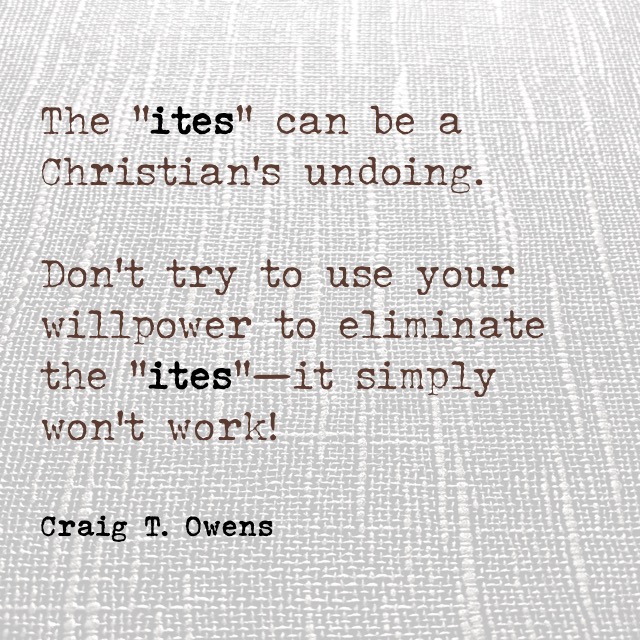
As the Israelites were attempting to settle in the Promised Land, there is a repeated phrase, “They could not drive out the ites.” (The “ites” are people like Canaanites, Hivites, Jebusites, etc.) God told them that they should completely clear the land of the ites, but they didn’t. Instead, they just subjected them to forced labor.

Oops! These small ites eventually became the downfall of Israel. The ites continued to practice their pagan worship observances, and eventually enticed the people of Israel to join them. As a result, Israel was humiliated, defeated, and carried off into captivity.

Can I make a parallel to our lives?

The Promised Land is a Christ-follower’s life in Christ. The ites are our sinful tendencies.

I know the ites are there, but it seems so difficult to remove them: the Bible uses the phrase they were determined to live in that land. So the ites are allowed to coexist, and I determine to use my willpower to make sure they stay contained.

After awhile the ites have behaved themselves. They seem harmless enough. In fact, I’ve gotten so strong, so mature, in my Christian faith, I know I’ll never give in to the pull of the ites again. I can relax a little bit now.

But the ites wait. They bide their time. They find just a crack to slowly worm their way in. Then when I am at a vulnerable time, they strike. The slave becomes the master. The ites retake possession of my life.

Willpower will not work. Only complete elimination will work.

God will help you if you will let Him.

  • What ites are you trying to hold down by sheer willpower?
  • What ites do you tolerate now that you didn’t tolerate earlier in your faith walk?
  • Do you think you are immune to some ites now that you are more mature?

The Bible’s warning is loud and clear:

These are all warning markers—danger!—in our history books, written down so that we don’t repeat their mistakes. Our positions in the story are parallel—they at the beginning, we at the end—and we are just as capable of messing it up as they were. Don’t be so naive and self-confident. You’re not exempt. You could fall flat on your face as easily as anyone else. Forget about [willpower]; it’s useless. Cultivate [God-power].

A slight case of the ites is a serious thing! Don’t let it continue!

The Christian Atheist (book review)

Every time I read a Craig Groeschel book, I know I’m going to read words that cut right across all of my excuses for not changing. And I was not disappointed to find this pattern continued with his latest book The Christian Atheist.

If the title sounds like an oxymoron (you can read the definition of this funny-sounding word here), that’s because it is. Or is it? The subtitle of the book gives the right-on-target definition of a Christian atheist: believing in God but living as if He doesn’t exist.

So every chapter is titled, “When you believe in God, but…

  • …you don’t really know Him.”
  • …you are ashamed of your past.”
  • …you aren’t sure He loves you.”
  • …you don’t think you can change.”
  • …you don’t share your faith.”
  • and many more!

It reminds me of what James wrote in his letter to the church, where he called them out for being Christian atheists: “You believe in God? Good for you! Even the demons believe in Him. But you’re not living like you believe in Him.”

Brennan Manning wrote,

“The greatest single cause of atheism in the world today are Christians who acknowledge Jesus with their lips and walk out the door and deny Him by their lifestyle. That is what an unbelieving world simply finds unbelievable.”

But Craig doesn’t just identify the symptoms, he gives his readers the prescriptions too. In easy-to-apply concepts, Craig tells those who believe in God how they can make the changes that won’t deny God by their atheistic lifestyle.

I highly recommend this book to you.

I am a Zondervan book reviewer.

The Pits

I recently finished reading two books that both have “the pits” in their title, and they both are solidly based on Scripture. But they couldn’t be more different.

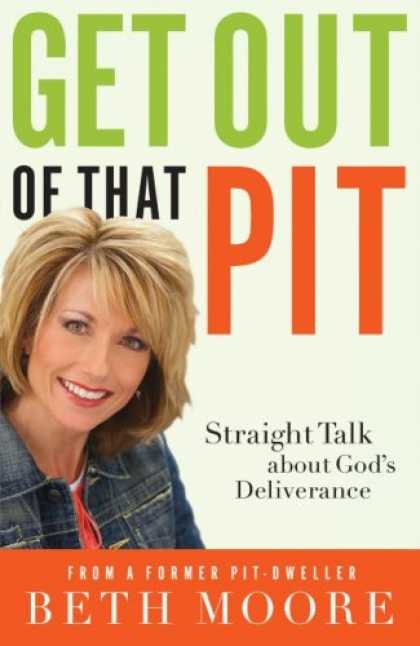
Get Out Of That Pit by Beth Moore is based on three verses in Psalm 40: I waited patiently for the LORD; He turned to me and heard my cry. He lifted me out of the slimy pit, out of the mud and mire; He set my feet on a rock and gave me a firm place to stand. He put a new song in my mouth, a hymn of praise to our God. Many will see and fear and put their trust in the LORD.

Beth’s book is all about getting out of a pit. Those places we’ve slipped into, been shoved into, or keep going back to. Those things that limit our perspective on life. Those hurts that keep us from enjoying the full life Jesus wants to give us. In a word, this book is all about deliverance from a pit.

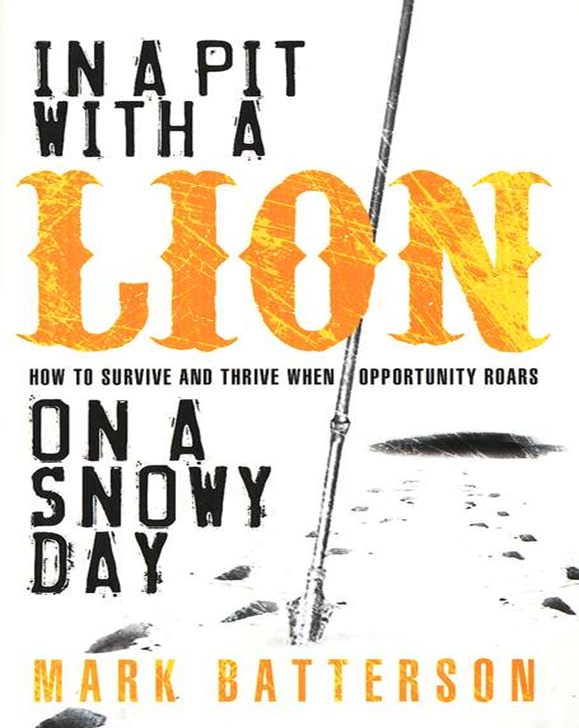
In A Pit With A Lion On A Snowy Day by Mark Batterson is based on two verses in 2 Samuel 23: Benaiah son of Jehoiada was a valiant fighter from Kabzeel, who performed great exploits. He struck down two of Moab’s best men. He also went down into a pit on a snowy day and killed a lion. And he struck down a huge Egyptian. Although the Egyptian had a spear in his hand, Benaiah went against him with a club. He snatched the spear from the Egyptian’s hand and killed him with his own spear.

Mark’s book is all about going into a pit. Benaiah was an initiator. Mark leads us through Benaiah’s life to show us that sometimes problems come as opportunities disguised as Moabite warriors or roaring lions or huge giants. And in order to live the full life God has in mind for us, we have to seize those roaring opportunities. In a word, this book is all about taking the initiative to go into a pit.

The pits can limit your life. Either you can be stuck in one, or you can be afraid to go into one. God wants you to live a victorious life. Whether you are stuck and need deliverance, or you are stuck and need initiative, these books can help awaken in you the great things God wants to do through you.

Both books have discussion questions to go along with each chapter, which makes them excellent for use as either an individual or small group study.

Ready? Go get out of that pit—or dive headlong into one—to live the full life God has for you!

(Red) & Convoy Of Hope

I love to see when individuals and businesses and organizations come together to address a pressing need. Sometimes we see it in short bursts (like tsunami or earthquake response), but once the tragedy is no longer in the headlines, people quickly forget. But the need remains.

(Red) is an ongoing project addressing the huge need of AIDS in Africa.

Convoy of Hope not only responds immediately to disasters but stays in place for the long haul to make sure that infrastructures and displaced people are reestablished.

I encourage you to buy (Red) products, follow (Red) on Twitter, Facebook, YouTube, and on their website.

You can do with same with COH: follow them on Twitter, Facebook, YouTube, and on their website.

Here’s a great (Red) video:

Christians, we need to especially be people who stay informed and get involved.