Progressing From . To ? To !

There is a progression that I believe Christians should be aware of as they lead others toward Christ.

First: .

Those who have been de-churched, or who have had a negative experience with another Christian, or who have become disenchanted with the Church, make factual statements about Christians and Church.

“The Church is….

“Christians always….

But if are truly the salt of the earth and the light of the world, we can season and shine in a way that will cause them to question their own factual statements.

Next comes: ?

“The Christian Church exists to reveal God and to utter forth His praise, to make God known to men who know Him not, that in the presence of the revelation they may be filled with awe, and wonder, and amazement—to make God known, that God shall be attractive to humanity.” —G. Morgan Campbell

This is Church?

You’re a Christian?

Which leads to: !

Jesus stated that the greatest of all commandments—indeed the fulfillment of all the commandments—was loving God with all of our heart, soul, mind, and strength and then loving others as we love ourselves. Once people see Christians as true representations of Christ … people so intent on loving God and loving others, they too will find what their hearts have been longing for.

“This is what I’ve been looking for!

“Now this is what I call a real Church!

Can I suggest an easy place to start? With your smile. Look at what Job said:

Men listened to me expectantly, waiting in silence for my counsel. After I had spoken, they spoke no more; my words fell gently on their ears. They waited for me as for showers and drank in my words as the spring rain. When I smiled at them, they scarcely believed it; the light of my face was precious to them. (Job 29:21-24)

Living in this way can move people from close-minded skeptics, to curious questioners, to enthusiastic followers of Jesus Christ. Let’s do this! 

Dichotomy & Ricky Gervais

Dichotomy is a big word that means two parts that are opposed to each other. But it also means that they were once joined together—they were once in unity. Much like the first Christians: when people looked at them they saw Jesus; when they heard them speak they heard Jesus; when they watched their lives they saw the life of Jesus.

Christ and Christian were the same unified picture.

Today this is, sadly, far from the truth. People have a lot of wonderful things to say about Jesus, and a lot of nasty things to say about Christians. An unfortunate, and unnecessary, dichotomy exists.

I read an editorial from Ricky Gervais, a self-proclaimed atheist, entitled “Why I’m A Good Christian.” You can read his full editorial in the Wall Street Journal here, but for me this was the key passage:

I am of course not a good Christian in the sense that I believe that Jesus was half man, half God, but I do believe I am a good Christian compared to a lot of Christians.

It’s not that I don’t believe that the teachings of Jesus wouldn’t make this a better world if they were followed. It’s just that they are rarely followed.

Gandhi summed it up really. He said, “I like your Christ, I do not like your Christians. Your Christians are so unlike your Christ.”

I have always felt this way, even when I believed in God, and in a weird way I feel I am still a pretty good “Christian” who doesn’t believe in God.

I think the way back from this dichotomy is two-fold:

(1) Christ-followers need to make an intentional effort to act more Christ-like.

(2) We Christians need to be more thoughtful in our responses to people like Ricky Gervais. I like the pattern Peter recommends

Honor Christ and let Him be the Lord of your life [our motivation for action]. Always be ready to give an answer when someone asks you about your hope [“hope,” not theology, not bad behavior]. Give a kind and respectful answer and keep your conscience clear [there is zero justification for a Christian to give a crass, disrespectful, or sarcastic answer]. This way you will make people ashamed for saying bad things about your good conduct as a follower of Christ [good conduct = we live, talk, and act like Jesus].

C’mon, followers of Christ, let’s close this dichotomy between us and Jesus!

Max On Life (book review)

Have you ever wanted to have a conversation with Max Lucado? Just sit with him for awhile and pick his brain? With Max On Life you can do just that!

Max On Life is a compilation of 172 questions that Max has been asked. Some of his answers come from his previously written books, some are answers formed with brand new insights, but all of the answers come from his very pastoral heart.

The book is divided into seven sections – hope, hurt, help, him/her, home, have/have-nots, and hereafter. But even more helpful is the index of topics at the back of the book, as well as a listing of all of the scriptural references Max uses throughout Max On Life. I can imagine this book staying very close at hand, because I’m going to be referring to it often.

If you are a pastor or counselor, I think you will find a lot of helpful insights in this book to pass on to others. If you have a friend with lots of questions about the Christian faith, this book would make an excellent gift. Or if you just want to be a helpful friend when others are in need, this book will help prepare you to be a blessing to them.

I am a Thomas Nelson book reviewer.

Um, That’s A Bit Awkward

Somehow I don’t think this is the most effective way to start a conversation about your faith!

Here are four thoughts I have…

Don’t compartmentalize. In other words, don’t put on your “Christian hat” to talk about your relationship with Jesus. Just be Christ-like all the time. People are looking for something real, not someone who’s playing an act.

Develop relationships first. Don’t lead with a sermon; lead with a friendship. As the saying goes, “People don’t care how much (or Who) you know, until they know how much you care.” Be a genuine friend first.

Wait until they’re ready. Jesus told stories with a deeper meaning and asked a lot of questions of people before He spoke to them directly about the kingdom of God. Don’t force people into a conversation. Keep the door open, and let them step in when they are ready.

Don’t get discouraged. Just like there are some topics you’re not ready to discuss right now, others feel the same way. So just because they say “No thanks” today doesn’t mean nothing happened. The Bible says that we are the salt of the earth and the light of the world. Salt and light are always seasoning and illuminating everywhere they go. Your life is making a difference.

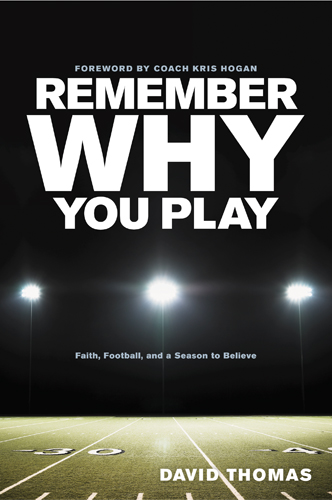
Remember Why You Play (book review)

The subtitle of Remember Why You Play by David Thomas is a bit of an understatement: Faith, Football, and a Season to Believe. It is so much more than another football book.

I picked up this book because I had heard the story about the Faith Christian Lions playing against the Gainesville State Tornadoes in 2008. Gainesville State is a maximum-security juvenile detention facility, and Faith Christian is a squeaky-clean Christian high school. Yet the Faith team and fans handled this game in an unbelievable way. Kris Hogan, Faith’s head coach, asked the Faith parents to cheer for the Gainesville players… to cheer against their own sons. These incredible families responded in the most loving, Christ-honoring way, leaving an indelible impact on the 14 Tornado players dressed for that game.

But, as David Thomas said, you have to go back to look at the Lions’ 2007 season to truly understand why a team—a whole school—would respond this way.

Kris Hogan is a highly successful coach in the state of Texas where football is king. Because of his success on the field, he has been offered positions at other schools, making a lot more money than Faith Christian can pay him. But he continues to coach at Faith because he believes that is where God has placed him. And because he believe that, he is much more than an Xs and Os football coach.

Football is simply the backdrop to the life lessons Coach Hogan is trying to teach his players. He views it as his mission to prepare these young men for life after high school, so football games and practices just become the means by which he can apply the valuable lessons.

Sports fans will definitely enjoy this book, as will any current or former football players or coaches. But I also believe parents of teenagers and even youth pastors will find a lot of life lessons in Remember Why You Play to pass on to the young men in their lives.

I am a Tyndale book reviewer.

Happy To See You

Do you like being around people? Or maybe a better question is: Do people like being around you?

In the case of Jesus, the answers are “yes” and “yes.” Check this out:

When Jesus returned to Capernaum several days later, the news spread quickly that He was back home. Soon the house where He was staying was so packed with visitors that there was no more room, even outside the door. (Mark 2:1-2)

People like being with Jesus.

They invited Him to their weddings

They invited Him to their parties

They invited Him to their dinners

And when Jesus showed up somewhere, people flocked to that house.

If you and I are Christians—followers of Jesus Christ—the same thing should be said of us: People should like having us around, and they should like being around us.

Don’t Fake It

Listen to the podcast of this post by clicking on the player below, and you can also subscribe on AppleSpotify, or Audible.

Have you ever had someone tell you, “Fake it until you make it”? In other words, you may not feel happy, but just start smiling and soon you will feel happy. Sadly, I’ve heard this type of so-called wisdom given by Christians to other Christians. Phrases like…

  • Don’t let anyone know that you feel scared, doubtful, or angry.
  • Never let ‘em see you sweat.
  • Even if you’re down, put on a happy face.

Turns out that this is not only bad advice, but harmful advice too. A study done by Michigan State University found:

     “Pretending to smile when you’re feeling bad makes you feel worse and be less productive. … [You] can’t just fake a smile and expect to feel good about it or negative feelings intensify.”

If you’re a follower of Jesus Christ, you should never fake it. Take a quick glance through the Psalms and you’ll see raw, real emotions: anger … depression … anxiety … vengeance … sadness … envy … spite … and many others. 

Here’s the deal: You may wear a {fake} smile on the outside, but God knows the {real} emotions in your heart. You’re not fooling Him. And, as it’s been revealed in this study, you’re not fooling anyone else either.

So go ahead and vent those negative emotions when you’re alone with God. Tell Him how you really feel (He already knows, but it’s good for you to hear you say it). And then let the Holy Spirit show you how to deal with those emotions in a healthy way.

Don’t bottle it up—don’t fake-it-until-you-make-it—be real and let God heal you.

UPDATE: I talk a lot about dealing with our strong, negative emotions in my book When Sheep Bite.

►► Would you please prayerfully consider supporting this ministry? My Patreon supporters get behind-the-scenes access to exclusive materials. ◀︎◀︎

Thursdays With Oswald—Broken And Crucified

This is a weekly series with things I’m reading and pondering from Oswald Chambers. You can read the original seed thought here, or type “Thursdays With Oswald” in the search box to read more entries.

Broken

       We need to remember that we cannot train ourselves to be Christians; we cannot discipline ourselves to be saints; we cannot bend ourselves to the will of God: we have to be broken to the will of God.

From Facing Reality

Crucified

       To “crucify” means to put to death, not counteract, not sit on, not whitewash, but kill. If I do not put to death the things in me which are not of God, they will put to death the things that are of God.

From Biblical Ethics

Jesus said to His disciples, “If any of you wants to be My follower, you must turn from your selfish ways, take up your cross, and follow Me. If you try to hang on to your life, you will lose it. But if you give up your life for My sake, you will save it.”

Then Jesus said, “Come to Me, all of you who are weary and carry heavy burdens, and I will give you rest. Take My yoke upon you. Let Me teach you, because I am humble and gentle at heart, and you will find rest for your souls. For My yoke is easy to bear, and the burden I give you is light.”

I’m trying to live broken and crucified. Will you join me in this daily pursuit?

Thursdays With Oswald—The Word Of God

This is a weekly series with things I’m reading and pondering from Oswald Chambers. You can read the original seed thought here, or type “Thursdays With Oswald” in the search box to read more entries.

The Word Of God

       The Bible nowhere says we have to believe it is the Word of God before we can be Christians. The Bible is not the Word of God to me unless I come at it through what Jesus Christ says, it is of no use to me unless I know Him. The key to my understanding of the Bible is not my intelligence, but my personal relationship to Jesus Christ. … You may believe the Bible is the Word of God from Genesis to Revelation and not be a Christian at all.

From Facing Reality

Do I just know the Word of God, or do I know the God of the Word? If I read and study the Bible just to gain knowledge, I will become a very religious person. But if I read the Bible to know Christ more, I will enter into a deeper relationship with Him.

…knowledge puffs up while love builds up… (1 Corinthians 8:1)

I want to read my Bible as a love letter, and fall more and more in love with the God who wrote it to me.

Codependent?

Modern psychologists have coined the term codependent to mean someone who allows their life to be controlled by another person, much like the moon controls the tides on the earth’s oceans. Almost always this relationship ends up being a lose-lose relationship: both the person being controlled and the person doing the controlling are headed the wrong way.

Codependent is not a biblical term.

But there is a concept in Scripture that is the anti-codependent. I would call it interdependent. Here’s a couple of verses to back it up…

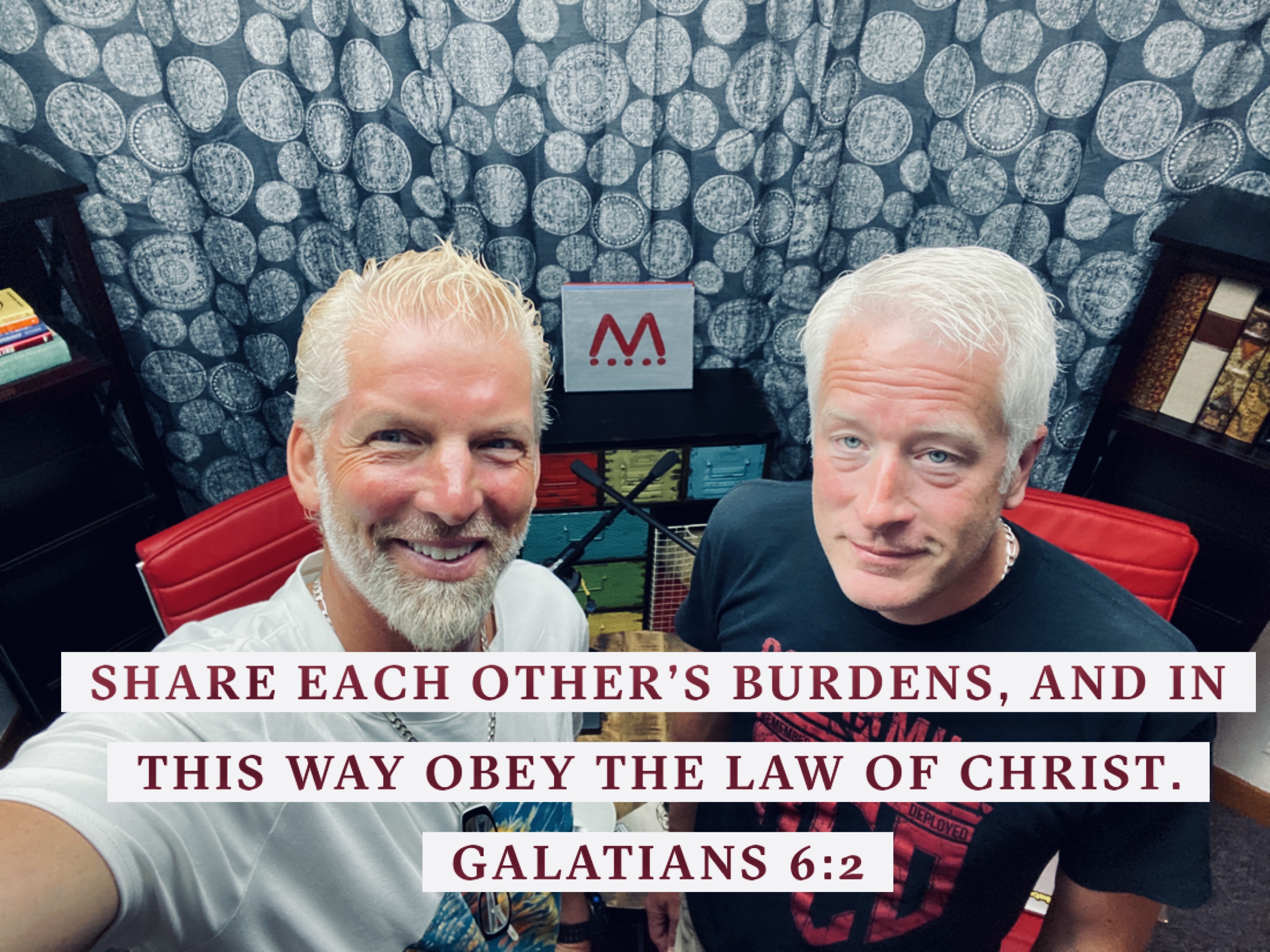
Dear brothers and sisters, if another believer is overcome by some sin, you who are godly should gently and humbly help that person back onto the right path. And be careful not to fall into the same temptation yourself. Share each other’s burdens, and in this way obey the law of Christ. (Galatians 6:1-2)

Wounds from a friend can be trusted, but an enemy multiplies kisses. (Proverbs 27:6)

It is absolutely clear that God has called you to a free life. Just make sure that you don’t use this freedom as an excuse to do whatever you want to do and destroy your freedom. Rather, use your freedom to serve one another in love; that’s how freedom grows. (Galatians 5:13)

God has given each of you a gift from His great variety of spiritual gifts. Use them well to serve one another. (1 Peter 4:10)

This isn’t excusing bad behavior, or winking at poor choices, or rescuing someone from the consequences of sin. Excusing, winking, and rescuing are symptoms of codependency.

Interdependency is saying, “I need you to be stronger—to be healthy—because I may need to lean on you someday.”

Christians try to get stronger and develop their own spiritual gifts so that they can help a friend-in-need get stronger and develop his/her spiritual gifts.

The Body of Christ needs you to be interdependent, which completely trumps codependent.