Draw The Circle (book review)

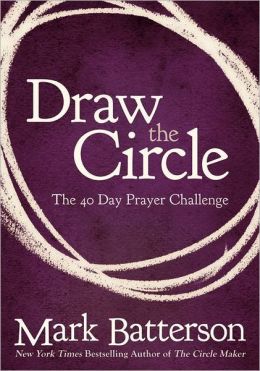
Draw The CircleA year ago I was challenged to go deeper in my prayer life by Mark Batterson’s book The Circle Maker. Now I’ve just completed a 40-day journey through Mark’s follow up book Draw The Circle and I realize how much more I still have to learn about prayer!

I love beginning each new year with a reminder on the importance and the power of prayer. For two years in a row I’ve been both challenged and encouraged by these two Mark Batterson books. Draw The Circle is intended to be read slowly, with just one prayer thought each day for 40 days. As I read each day’s entry, I was able to add another component to my prayer arsenal.

On the last page, Mark sums up the subject of prayer well when he writes—

“Prayer is the difference between appointments and divine appointments. Prayer is the difference between good ideas and God-ideas. Prayer is the difference between the favor of God and the luck of the draw. Prayer is the difference between closed doors and open doors. Prayer is the difference between possible and impossible. Prayer is the difference between the best we can do and the best God can do.” 

The Circle Maker and Draw The Circle don’t have to be read together for you to get excited about the power of prayer, but if you do read them back-to-back, it’s a powerful one-two punch! And for parents and grandparents, be sure to add Praying Circles Around Your Kids too!

Any time spent learning about prayer is an investment with huge upside potential and these books are well worth your time.

Check out some quotes from Draw The Circle here.

19 Quotes From “Who Do You Think You Are?”

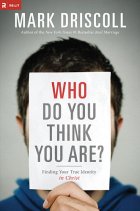
Who Do You Think You AreWho Do You Think You Are? by Mark Driscoll is an insightful journey through the book of Ephesians. You can read my full book review by clicking here. Below are some of the passages that especially stood out to me.

“This world’s fundamental problem is that we don’t understand who we truly are—children of God made in His image—and instead define ourselves by any number of things other than Jesus. Only by knowing our false identity apart from Christ in relation to our true identity in Him can we rightly deal with and overcome the issues in our lives.”

“What you do doesn’t determine who you are. Rather, who you are in Christ determines what you do.”

“Our worship never starts and stops. It’s not limited to a building in which we attend sacred meetings and sing worship songs. Rather, our entire life is devoted to pouring ourselves into someone or something. Saying it another way, we’re ‘unceasing worshippers.’ We aren’t created to worship, but rather we’re created worshipping.”

“While it’s not a sin to plan and strive for a better tomorrow, it is a sin to set one’s joy and identity on who we will be, what we will do, or what we will have tomorrow in our own efforts rather than on Christ today and who He will make us, what He will have us do, and what He will give to us tomorrow.”

“While it’s true that sin has affected the totality of our persons, including our minds, wills, and emotions, we fail to say all that the Bible does regarding our identity when we place undue focus on our depravity as fallen sinners and ignore our dignity as created image bearers and our new identity as redeemed Christian saints. While a non-Christian is totally depraved, a Christian is in Christ.”

“A saint does sin. But a Christian is one who has saint as their constant identity and sinner as their occasional activity. For the Christian, there is a vital difference between having sin and being sin.”

“Sin may explain some of your activity, but it’s not your identity. Your identity is in Christ, and because of your new identity, by God’s grace through the Holy Spirit’s power, you can change your activity. Because you are a new person positionally in Christ, you can live a new life practically by the power of the Holy Spirit. This truth is deeply helpful and vitally practical.”

“Pride is our enemy and humility is our ally. Pride compares us to other sinners; humility compares us to our sinless Savior. Pride covets the success of others; humility celebrates it. Pride is about me; humility is about Jesus and other people. Pride is about my glory; humility is about God’s glory. Pride causes separation from God; humility causes dependence on God. Pride is pregnant with all sins; humility is pregnant with all joys. Pride leads to arrogance; humility leads to confidence. Pride causes me to do things in my own strength; humility compels me to do things in God’s strength. …None of us, with the exception of Jesus Christ, can ever say we’re truly humble. Instead, all we can say is that we’re proud people pursuing humility by the grace of God.”

“In Christ, you’re graced. You’re chosen by grace, saved by grace, kept by grace, gifted by grace, empowered by grace, matured by grace, and sanctified by grace. You persevere by grace, and one day will see Jesus, the best Friend you’ve ever had, face-to-face, by grace.”

“God is as equally glorified when we praise Him for His unmediated grace as when we’re thankful for those through whom He chooses to deliver it. …We’re to thank God for being faithful to His people and to thank His people for being faithful to Him.”

“Before we can understand and embrace our identity in Christ, we must first accept our identity apart from Christ. Becoming a Christian is not merely accepting the truth about Jesus as our Savior. It’s also accepting the truth about ourselves as needy sinners.”

“Because afflictions cost us so much, they are too precious to waste. Though God may not cause your affliction, He can use your affliction for His glory, others’ good, and your growth, if you are in Christ.”

“Our God didn’t suffer so that we wouldn’t suffer. He suffered so that when we do suffer, we can become more like Him and point more people to Him.”

“Too many Christians pit knowledge against experience and the head against the heart. The truth is, both are needed to grasp God’s love. The love of God is what happens when the truth in our heads captivates the affections of our hearts, which spurs us on to grasp the love of God in our lives. …As the love of God increasingly captivates our hearts and we grasp onto his love, we’re changed and become increasingly mature in Christ because our affections determine our actions.”

“Sometimes, Christians shy away from involvement in a local church because they see faults with the church. Ironically, the fact that they see a lack may indicate that there’s a need for them and their gifts. Rather than complaining, it’s better to humbly start serving to meet a church’s needs and invite others to also help.”

“Through the power of the Holy Spirit, God helps us live holy lives and enables us to obey Him. In this way, regeneration is the opposite of religion, which tragically teaches that if you obey God, He will then love you. The exact opposite is true. Regeneration reveals that because God loves us, we can obey Him by the power of the Holy Spirit. You have new power in Christ.”

“Your Father is perfect, loving, gracious, merciful, patient, holy, helpful, and generous. The more you get to know Him through Scripture, prayer, song, service, and time with your brothers and sisters in Christ, the more you will come to love and enjoy Him. Your desires will change from sin to holiness, and you’ll increasingly want to be like your Dad. You’ll love what He loves and hate what He hates.”

“As Christians, our goal is not to merely experience behavior modification by changing how we act and react. Our primary goal is getting to know, love, and trust God as our Father.”

“The last thing the church needs is cowards that treat the Bible like an artifact more fit for a museum than a weapon for the battlefield.”

Who Do You Think You Are? (book review)

Who Do You Think You AreIf you’ve ever heard Mark Driscoll speak, you know that he pulls no punches as he unashamedly uses the Bible to address the situations we all face. Who Do You Think You Are? is no exception.

Your friends, Madison Avenue, your colleagues, even your family members are all trying to influence you. They all weigh-in on who you are, or who they think you should be. But Pastor Mark Driscoll wants to show you who the Bible says you are. So using the book of Ephesians in the Bible, Pastor Mark convincingly and lovingly will show you that you are…

  • In Christ
  • A saint
  • Blessed
  • Appreciated
  • Saved
  • Reconciled
  • Afflicted
  • Heard
  • Gifted
  • New
  • Forgiven
  • Adopted
  • Loved
  • Rewarded
  • Victorious

Pastor Mark writes in a very readable, conversational style as he uses the powerful words of Ephesians, along with some personal stories from his own life, as well as the lives of others he has known, to make sure you know how God sees you. In a world where everyone else wants to squeeze you into a different mold, how freeing it is to discover how God sees you, and to know that God loves you because you’re you!

This was a very encouraging read. I’d recommend this to anyone struggling with peer pressure or with their own self-identity. I also think this would be an excellent book to use in a small group setting, perhaps even among a recovery group.

I am a Thomas Nelson book reviewer.

I have shared some quotes from this book here.

16 Quotes From “God’s Workmanship”

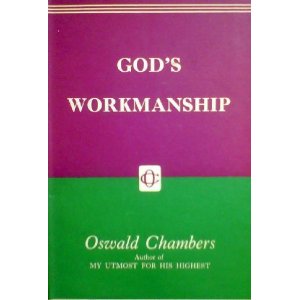
God's WorkmanshipWhere to start? It’s always hard to share a few quotes from a book that is so rich, but I hope these fews quotes will not diminish the depth of Oswald Chambers’ wisdom. These are just a very few of the outstanding quotes from God’s Workmanship (you can read my full book review by clicking here).

“Whenever I say, ‘I want to reason this thing out before I can trust,’ I will never trust. The reasoning out and the perfection of knowledge come after the response to God has been made.”

“We can never become God’s people by thinking, but we must think as God’s people. … Intellect is meant to be the handmaid of God, not the dictator to God. … We have to work out, not our redemption, but our human appreciation of our redemption. We owe it to God that we refuse to have rusty brains.”

“Separating myself from other people is the greatest means of producing deception because there is nothing to clash against me. Immediately people clash against me I know whether my beautiful thinking really expresses ‘me,’ or is a garment that disguises the real ‘me.’ If my actual life is not in agreement with my thinking the danger is that I exclude myself from actualities which bring home to me the knowledge of what I am, in spite of what I think. ‘I am a Christian worker and must put on this garb!’ That is sanctimonious jargon; the only thing that will hold me right is a personal relationship to Jesus, and that life is essentially simple, there is no break into secular and sacred, the one merges into the other, exactly as it did in the life of our Lord.”

“I want to ask a very personal question—How much do you want to be delivered from? You say, ‘I want to be delivered from wrong-doing’—then you don’t need to come to Jesus Christ. ‘I want to walk in the right way according to the judgment of men’—then you don’t need Jesus Christ. But some heart cries out—‘I want, God knows I want, that Jesus Christ should do in me all He said He would do.’ How many of us ‘want’ like that? God grant that this ‘want’ may increase until it swamps every other desire of heart and life.”

“When you are baptized with the Holy Ghost, there is only One you see, One you love, One you live for from early morning till late at night, One you die for. Every thought is gripped and held enthralled by the Master of human destiny, the Lord Jesus Christ, and the whole life is devoted to Him.”

“All that I want to possess without the power to give, is of the nature of sin. … I cannot rob God of anything, but I rob myself of God every time I stick to what I possess.”

“What kind of attitude have we got toward Jesus Christ? are we dictating to Him in pious phraseology what we intend to let Him do in us, or letting His life be manifested in our mortal flesh as we obey?” 

“‘The Truth’ is our Lord Himself; ‘the whole truth’ is the inspired Scripture interpreting the Truth to us; and ‘nothing but the truth’ is the Holy Spirit, ‘the Spirit of truth,’ efficaciously regenerating and sanctifying us, and guiding us into ‘all the truth.’”

“When I am rightly related to God, the more I love the more blessing does He pour out on other lives. The reward of love is the capacity to pour out more love all the time. … I surrender myself—not because it is bad, self is the best thing I have got, and I give it to God; then self-realization is lost in God-realization.”

“Another demand God makes of His children is that they believe not only that He is not bewildered by the confused hubbub of the nations, but that He is the abiding Factor in the hubbub.”

“God never hears prayer because a man is in earnest; He hears and answers prayer that is on the right platform—we have ‘boldness to enter into the holy place by the blood of Jesus’ (rv), and by no other way. It is not our agony and our distress, but our childlike confidence in God.”

“The evidence of the new creation in me is that I submit to God more and more easily, surrender to Him more and more readily. …God does the supernatural re-creating and the setting free of the will, I have to do the doing.”

“You can only be made a Christian by a miracle, and you can stop at any point you like. ‘I don’t intend to go through this’—and you don’t need to; but it will be a terrific awakening when you see Jesus and realize that you prevented His getting glory in your life.” 

“People say they are tired of life; no man was ever tired of life; the truth is that we are tired of being half dead while we are alive. What we need is to be transfigured by the incoming of a great and new life.”

“Resting in the Lord does not depend upon external circumstances, but on the relationship of the life of God in me to God Himself. Fussing generally ends in sin. We imagine that a little anxiety and worry is an indication of how wise we really are; it may be an indication of how wicked we really are. ‘Come unto Me,’ says Jesus, ‘and I will give you rest.’ Do Jesus Christ’s words apply to me? Does He really know my circumstances? Fretting is sinful if you are a child of God. Get back to God and tell Him with shame that you have been bolstering up that stupid soul of yours with the idea that your circumstances are too much for Him. Ask Him to forgive you and say, ‘Lord, I take Thee into my calculation as the biggest factor NOW!’”

“Have you ever realized that God challenges the saints to a tremendous conflict, the conflict of believing the Gospel in the face of an indifferent world? It is easy to say we believe in God as long as we remain in the little world we choose to live in; but get out into the great world of facts, the noisy world where people are absolutely indifferent to you, where your message is nothing more than a crazy tale belonging to a bygone age, can you believe God there?”

God’s Workmanship (book review)

God's WorkmanshipWhether in a lecture, a sermon, a book, or a magazine article, Oswald Chambers challenges me like few other authors do. God’s Workmanship is a collection of lectures and articles which were odds-and-ends until his wife compiled them just prior to her death.

Many people know Chambers through his highly popular devotional My Utmost For His Highest. In that devotional book, Chambers shares a short thought, usually centered around a single passage of Scripture. In God’s Workmanship, the feel is very much the same. Each of the nearly 50 pieces which comprise this book are based around a single verse or a short passage from the Bible, but Chambers has more “space” to elaborate on his themes than he did in his devotional book.

The topics are varied, but rich. Themes such as grace, redemption, truth, possessions, personal relationships, the Bible, personal devotions, God’s holiness, sin, blessings, and suffering are covered so succinctly, eloquently, and biblically. Next to My Utmost, God’s Workmanship is a great introduction to the breadth of Oswald Chambers’ godly wisdom.

13 Quotes From “Unstoppable”

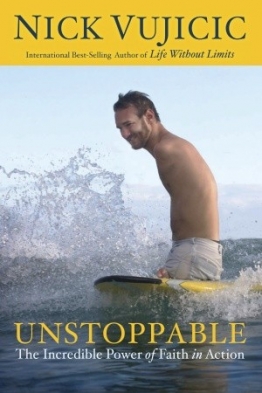
UnstoppableI found Unstoppable by Nick Vujicic to be so hope-filled and encouraging! You can read my full book review by clicking here, but these are 13 quotes from this book which really caught my attention.

“Your character is formed by the challenges you face and overcome. Your courage grows when you face your fears. Your strength and your faith are built as they are tested in your life experiences.” 

“I found that when I got rolling on something, there was a snowball effect. My momentum picked up and my problem-solving powers increased.”

“If you find yourself struggling more than usual with a challenge, my recommended recovery plan is to lean with gratitude on those who care about you, be patient with your tender feelings, do your best to understand the realities versus the emotions at play, and put your faith into action.”

“When you find yourself superstressed, highly emotional, and unable to function because of something that has occurred, it is important to separate what has happened to you from what is going on inside you.”

“An arrogant person does no ask for help and thus is helpless. An arrogant person claims to know everything and thus is clueless. A humble person attracts helpers and teachers.”

“God pays for what He orders. He would not call you into His service without providing all you need to pursue your passion and purpose.”

“One thing I would caution you about is that when you face overwhelming medical problem, you may find yourself totally caught up in dealing with it, so being ill and getting healthy again are all you think about. Professional counselors say that it is important to accept and manage your illness, but it is equally important to remember that you are still you. Don’t abandon the things you love to do or the people you love to be with because you want to focus exclusively on restoring your health. The health challenge has happened to you, but don’t let it take over your life or damage your sense of yourself and the value you bring into the world. You are more than this challenge. …Decide that no matter what happens with your body, the rest of you—your mind, spirit, and soul—will come through this restored and improved. Ask God for that gift of faith.”

“The need to control everything around us can actually be a handicap. …When we spend all our time trying to remain in control, we risk missing the blessings that may come by putting faith into action and letting go.”

“When you commit to a loving relationship with God, you surrender to His plan for your life, and suddenly the act of surrendering loses any and all negative connotations. Instead it becomes a joyous and empowering experience.”

“When you are searching for God’s will in your life, whether it’s trying to make decisions or looking for opportunities, you can’t always expect a sign from God. Those are rare and wonderful occasions. What I’ve come to look for in trying to figure out what God wants is a sense of peace.”

“You may ask, ‘What can I do?’ or ‘What do I have to give?’ The answer is, ‘Yourself.’ You and your God-given talents are the greatest gifts you can give.” 

“Too much of the world is about seeking comfort instead of providing it. We can easily get caught up in pursuing our own happiness that we miss out on one of God’s primary teachings: true happiness comes in serving Him and His children.”

“When you aren’t getting what you want, try giving it. If you can’t catch a break, why not provide one? If no one is reaching out to you, reach out to someone whose needs are greater than yours. Take the focus off your problems and help someone deal with theirs.” 

Unstoppable (book review)

UnstoppableNick Vujicic didn’t just write a book called Unstoppable, he embodies unstoppable!

If you are not familiar with Nick’s amazingly encouraging story, check out his first book called Life Without Limbs. In Unstoppable, Nick presents an uplifting follow-up for those facing some of the darkest situations of life: sickness, bullying, suicidal thoughts, purposelessness, lost love, and dead-ends.

Nick weaves together his own life story with those he has interacted with, and ties them all together with a solid strand of scriptural truth. This is not some pie-in-the-sky, three-steps-to-happiness, sappy self-help book. It rings with genuineness because Nick lives out the message of hope. Make no mistake about it, he is realistic about how dark these situations can seem, but instead of offering any get-better-quick schemes, Nick shares the hope that can only come from trusting in a loving Creator.

In the first chapter Nick writes—

“I wish I could tell people that if they love God, everything will be okay. The truth is that people still stuffer. They endure sickness, financial problems, broken relationships, and the loss of loved ones. Tragedies occur in every life, and I believe we are meant to learn from them. My hope is that when people who are in pain see that I have a joyful life, they will think, If Nick—without arms and legs—is thankful, then I will be thankful for today, and I will do my best.”

From start to finish, this book oozes with unstoppable hope and encouragement!

I am a Waterbrook book reviewer.

(I shared some quotes from this book here.)

17 Quotes From “Jesus”

Jesus A TheographyJesus: A Theography is one of those rare books that I gave a “must read” designation (you can read my full review by clicking here). It’s impossible to share with you all of the incredible thoughts that are in this book, but here are 17 of my favorite quotes from Jesus.

Unless otherwise designated, all the quotes are from Leonard Sweet and Frank Viola.

“In Jesus the promise is confirmed, the covenant is renewed, the prophesies are fulfilled, the law is vindicated, salvation is brought near, sacred history has reached its climax, the perfect sacrifice has been offered and accepted, the high priest over the household of God has taken His seat at God’s right hand, the Prophet like Moses has been raised up, the Son of David reigns, the kingdom of God has been inaugurated, the Son of Man has received dominion from the Ancient of Days, the Servant of the Lord has been smitten to death for His people’s transgressions and borne the sins of many, has accomplished the divine purpose, has seen the light after the travail of His soul, and is now exalted and made very high.” —F.F. Bruce

“Jesus is the Logos. He is the Word, or the self-utterance, of God. So when God speaks, it is Christ who is being spoken about. When God breathes, it is Christ who is being imparted. The Spirit of God’s breath (the words ‘Spirit’ and ‘breath’ are the same in both Hebrew and Greek). The Second Testament tells us clearly that the Holy Spirit’s job is to reveal, magnify, and glorify Christ, Thus, because the Bible is inspired, it all speaks of Jesus. Again, Jesus Christ is the subject of all Scripture.” [The authors refer to the two sections of the Bible as the First and Second Testaments, in place of the usual designations of Old and New Testaments]

“Every word of the God-breathed character of Scripture is meaningless if Holy Scripture is not understood as the witness concerning Christ.” —G.C. Berkouwer 

“Your salvation was established, completed, and sealed before creation itself. Your Lord wrapped it up, won it, and came out victorious before anything ever went wrong.”

“What did He finish? He finished the old creation and the Fall. He finished sin. He finished a fallen world system. He finished the enmity of the Law. He finished satan. He finished the flesh. He put you to death and finished you completely. The person you were in Adam was terminated, swallowed up in death. And then He finished His greatest enemy, the child of sin itself, death. If that isn’t enough, He did something else beyond the rest: He raised you up in resurrection and glorified you.

“In Genesis 2:15, God commanded Adam to cultivate and keep the garden. The Hebrew word for cultivate is abad, and the Hebrew word for keep is shamar. These same Hebrew words are used to describe how the priests cared for the tabernacle of Moses. (The tabernacle was a precursor to the temple of Solomon.) The priests were to cultivate (abad) and keep (shamar) the tabernacle. In addition, we are told that God walked in the garden (Hebrew, hawlak) during the cool of the day. God also walked (hawlak) in the midst of the temple. The meaning is clear. The garden was a temple for God. Like the temple, the garden was the joining together of God’s space and man’s space—the intersection of the heavenly realm and the earthly realm. For this reason, Isaiah called it ‘the garden of the Lord,’ and Ezekiel called it ‘the garden of God.’ …Jesus Christ is the reality of the temple. (In the Greek, John 1:14 says Jesus ‘tabernacled among us.’) He is also the reality of the garden. He is the real Tree of Life and a flowing river. In Christ, God’s space and man’s space are joined together.”

“There are 184 verses in the birth narratives of the Second Testament. These 184 verses presuppose or repeat the words of 170 verses from eighteen verses of the First Testament.” 

“Jesus is the three shepherds: the good shepherd, the great shepherd, and the Chief Shepherd. Jesus presented Himself as both sheep and shepherd, the good shepherd who lays down His life for the sheep. …Jesus died on the cross at the ninth hour (about three o’clock in the afternoon) when the Passover lamb would be sacrificed in the temple. Christ, the Paschal Lamb, was slain to atone for the sins of humanity and to open the gate of the true temple that promises God’s salvation for all people.”

“In the Second Testament, as the sacrificial sign of the new covenant, Jesus Himself becomes the sin offering of humanity. In fact, Jesus’ very words on the cross, ‘It is finished!’ (‘Kalah’), are the words used by a priest at the conclusion of the sacrificial offering in the temple. In the ancient days, when the Jewish priest had killed the last lamb of the Passover, he uttered the Hebrew word Kalah, ‘It is finished.’” 

“At His birth, Jesus received the myrrh. At His death, He rejected it. Jesus’ earthly ministry centered on alleviating human suffering. He was the personification of myrrh. In His crucifixion, however, He was bearing the full brunt of human pain, suffering, and agony on the cross. He bore our shame and sorrows. So He rejected the myrrh and the wine that came with it. Jesus took the full dose of suffering for sin on the cross so we wouldn’t have to. And He rejected the myrrh so we would be able to receive it.”

“When in a garden relationship with God, humanity had no need of the Torah, for we had the Tree of Life. The Torah was the Tree of Life reborn, and Jesus was the Torah reborn.”

“We need the whole Jesus. The complete Jesus. Everything He said. Every detail of what He did.” —Eugene Peterson

“The temptation of Jesus was a playback of two episodes in the First Testament. First, it’s a replay of the first temptation in the garden of Eden. John tells us that the three enemies of the Christian are ‘the lust of the flesh, the lust of the eyes, and the pride of life.’ Each of these temptations was in play in the temptation of Adam and Eve in the garden:

    • The fruit was ‘good for food’ = the lust of the flesh. 
    • The fruit was ‘pleasant to the eyes’ = the lust of the eyes. 
    • The fruit was ‘desirable to make one wise’ = the pride of life. 

“…The temptations that satan leveled at Jesus in the wilderness struck the same three chords. Here is the ordered presented in Luke 4 (paraphrased):

    • ‘Turn these stones to bread’ = the lust of the flesh. 
    • ‘I will give you the kingdom of the world and their glory’ = the lust of the eyes. 
    • ‘Cast yourself down from here and angels will protect you’ = the pride of life.” 

“The Second Covenant knows the First Covenant: the Second Testament quotes from the First Testament more than 320 times, and that does not include times when biblical writers, searching for the scriptural reference, were reduced to admitting that ‘somewhere’ it reads thus and so.”

“Theology is nothing more than the Holy Spirit making His way through our brains, as the Scriptures make their way through our hearts.” 

“In biblical prophesy, the coming of Jesus is viewed as one event separated by parentheses that stretch from the ascension to His royal appearing at the end of the age. We are now living in the parentheses, wherein we look back to His first coming and anticipate His second coming. Put another way, the kingdom has come and will come. Jesus’ first coming inaugurated the kingdom of God; His second coming will consummate it. So the coming of the Messiah is one event separated by two moments: Bethlehem and the end of the age.”

“As followers of Jesus, we have a task before us. That task is to work for the kingdom. To continue the ministry of Jesus in the power of the Holy Spirit… to bear witness to the sovereign lordship of Christ… to embody the message that Jesus is both Lord and Savior, not just of our personal lives but of the entire world. And to find creative ways to manifest that kingdom where we live and travel.” 

From Azusa To Africa To The Nations (book review)

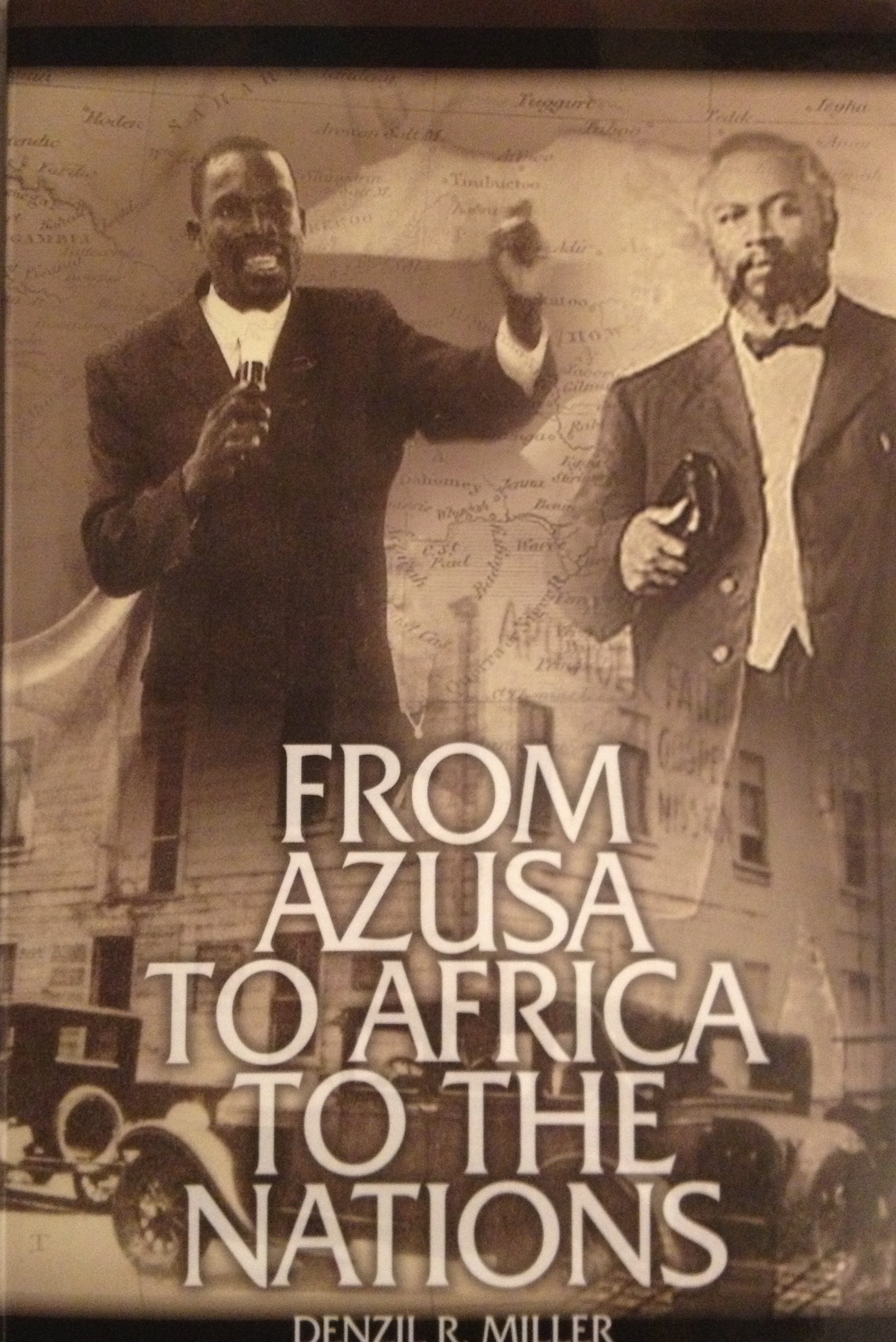
AzusaMost people are familiar with George Santayana’s powerful reminder: “Those who do not learn from history are doomed to repeat it.” This is why I love reading books of history. Denzil R. Miller has given us a powerful lesson of the history of the Pentecostal church in From Azusa To Africa To The Nations.

Denzil, a missionary in Africa, had a very specific motivation for writing this book: To remind African Christians how the full gospel message came to them, and how they should be responding to it. But I found that this book is a great reminder for all who call themselves Pentecostal.

From Azusa re-tells the story of the Pentecostal reawakening in the early days of the 1900s in a small church in Los Angeles pastored by William Seymour. From that small church, a worldwide revival to the fullness of the operation of the Holy Spirit began. It was a call to return to biblical roots; a call back to the message of Jesus, “You will receive power to be My witnesses after the Holy Spirit comes upon you” (Acts 1:8).

Denzil Miller aims to call the African churches back to their Pentecostal roots, but this is a call for all Pentecostals, regardless of the continent on which they live. This is a short, but powerful book, that I encourage you to check out.

Jesus: A Theography (book review)

Jesus A TheographyVery rarely do I say what I’m going to say about Jesus: A Theography by Leonard Sweet and Frank Viola: This is a must-read!

Jesus does such an amazing job of showing Christ in all His fullness throughout the entire Bible, that I cannot recommend it highly enough. It’s a weighty read covering a weighty subject. At over 300 pages of text, 20+ pages of quotes from imminent theologians, and nearly 100 pages of end notes, this book gives you so much to contemplate. As much as I enjoy speed reading my books, this was a book that I had to read and digest slowly, as there was so much to process in each paragraph.

Far too many people think Jesus “showed up” in the New Testament. But Leonard Sweet and Frank Viola do a masterful job of weaving together the Old and New Testament texts (or, as the authors call them, the First and Second Testaments), to show Christ in all His fullness. If you are among those who have only seen Jesus in the New/Second Testament, you are about to have your paradigm totally rocked!

Let me restate my opening paragraph again—If you want to know more about Jesus Christ, Jesus: A Theography is a must-read!

I am a Thomas Nelson book reviewer.

Check out some quotes from this book here.