Pouring Holy Water On Strange Fire (book review)

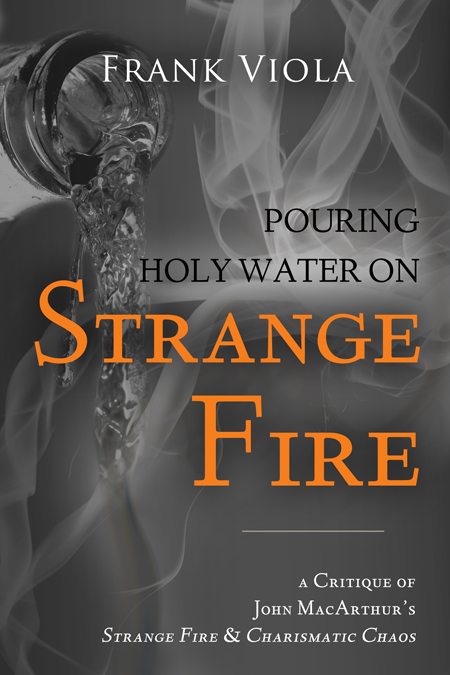
Pouring Holy Water On Strange FireI fully admit that I’m a little biased on this one. After all, what would you expect from a fourth generation Pentecostal? But even with that disclaimer, I thought Frank Viola did a masterful job in his critique called Pouring Holy Water On Strange Fire.

Viola’s book is a critique of John MacArthur’s book Strange Fire, in which MacArthur attempts to make the case that the way Pentecostals and Charismatics advocate and practice their faith is unscriptural. MacArthur would fall into the camp of the cessationists, who claim that all of the operational gifts of the Holy Spirit enumerated in the New Testament ceased when the apostles died, or when the canon of Scripture was closed. I’ve always found this a strained argument at best, or as Mark Driscoll says, one needs to do “exegetical origami” to reach the cessationists’ conclusion.

Frank Viola systematically critiques Strange Fire thought-by-thought, section-by-section. He does so fairly and academically, using respected Bible commentators, the writings of Church fathers, logic, personal examples, as well as other respected contemporary voices who express similar concerns against MacArthur’s arguments.

This is a good book for any student of the Bible to read. It’s not a lengthy tome, so you will not get bogged down in reams of academia, but you will be able to weigh the evidence that both cessationists and Pentecostals use. You can download the ebook version by clicking here.

6 Quotes From “The Purpose Of Christmas”

The Purpose Of ChristmasI mentioned in my book review of Rick Warren’s The Purpose Of Christmas that this might be a good book to help families recalibrate the meaning of Christmas each year. As you can see from the quotes I highlighted, this book doesn’t talk directly about Christmas trees, or gifts, or mistletoe, or carols. Rather it goes to the heart of the matter: Why did Jesus need to be born in a stable in Bethlehem? He was born for our salvation, and our reconciliation with God and our fellowman.

“Your capacity for enjoyment is evidence of God’s love for you.”

“No one wants what’s best for you more than God. No one knows better what will make you truly happy!”

“Our natural inclination is to want our own way instead of God’s way. This tendency to make wrong choices instead of right ones is called sin. The middle letter of sin is I, and whenever I place myself at the center of my life, I sin. It is any attitude or action that denies God His rightful place as first in my life.”

“Guilt is the mental price we pay for violating our God-given consciences.”

“I asked Peter Drucker, ‘How did you come to accept Jesus Christ as your Savior?’ He thought about it for a few seconds, then replied, ‘The day that I finally understood grace, I realized I was never going to get a better deal than that!’”

“Reconciliation focuses on the relationship, while resolution focuses on the problem. Always focus on reconciliation first.”

The Purpose Of Christmas (book review)

The Purpose Of ChristmasAre retailers and Christians the only ones who think Christmas is a big deal? Why is it so important? Just in time for this year’s Advent celebration, Rick Warren reminds us of The Purpose Of Christmas.

In his typical style of helping folks clearly understand the meaning of things that sometimes we overlook or take for granted, Pastor Rick shows us that Christmas is a time for celebration, a time for salvation, and a time for reconciliation.

Blending together passages of Scripture throughout all of the Bible—not just the passages we usually associate with the birth of Christ—Pastor Rick powerfully illustrates why we needed God to send His One and Only Son to earth to rescue us. And also why we need to celebrate His birth correctly at this time each year.

This book is an easy-to-read, easy-to-understand recalibration of the meaning of Christmas. For anyone who has ever felt that the retailers are dominating the Christmas season, this is a welcome book to help you return to the foundational truths. It might be a good book for you to pull out each Christmas and read aloud with your family.

11 Quotes From “God’s Favorite Place On Earth”

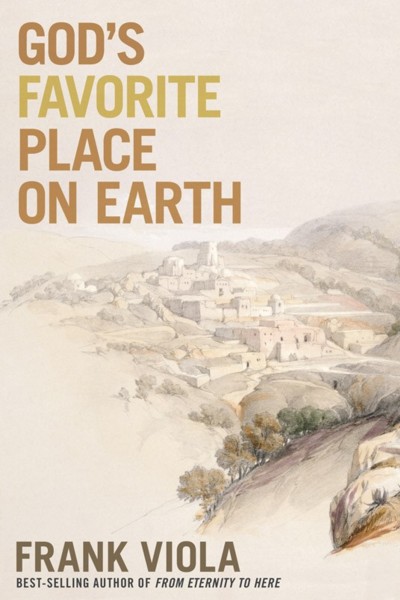
God's Favorite Place On EarthI loved this book! Please read my full book review of God’s Favorite Place On Earth by Frank Viola by clicking here, but my one-word review is: Wow!

Here are a few quotes that especially caught my attention—

“Jesus talked a lot about losing, taking up our cross, denying ourselves, and laying down our lives. These are the fruits of brokenness before God. It’s not hard to spot a Christian in ministry who isn’t broken. Unbroken people don’t know how to lay their lives down and lose. They only know how to try to win. If they’re criticized they retaliate. If they’re attacked, they return fire. If misunderstood, they defend in anger. They are capable of doing all sorts of damage to others in order to save their own ministries and keep their reputations. 

“On the contrary, people who have been broken by the hand of God know how to turn the other cheek. They know how to go the second mile. They know how to give their coats when asked for their shirts. They know how to speak well of those who misrepresent them. They know how to return good for evil. They know how to lose. And in so doing, they exhibit the Spirit of the Lamb and allow God to win.” 

“All service must flow out of a razor-sharp desire to please God rather than a desire to get noticed by others. If it does not, it will lead to either complaint or criticism.”

“As high as God is going to elevate you is as deep as He digs to lay the foundation. Sometimes the brightest light comes from the darkest places. And what doesn’t destroy you ends up defining you in some significant way.”

“Suffering is worldwide and neck deep. But for the Christian, suffering has a special purpose. It’s the chiseling of God designed to transform you into the image of His Son.”

“A Spirit-led man or woman is someone who has faced tragedy, faced loss, looked unbearable and exquisite pain in the face … and has stood his or her ground. With their garments still smoking, these men and women have said before God, mortals, and angels: ‘It is well with my soul. God’s enemy has thrown his best at me, and I’m still here. I’m still on the Rock. I’ve not sunk. I’m still standing. I’ve not been destroyed, and I’ve not gone under. I will continue to follow my Lord, come hell or high water, He is still on the throne!’”

“Christ saves as the Son of God, but He feels as the Son of man.”

“Faith often takes a nosedive when we are on the brink of tragedy. At such times, we forget the Lord’s words. Sometimes confessions and creeds, as important as they are, are not enough to move God to act. Only falling at His feel and weeping will suffice.

“Every crisis in our lives is an opportunity to broaden, deepen, and heighten our revelation of Christ.”

“Basing your faith on God’s performance—what you think He should do according to what you’ve been taught about His promises—is a profound mistake. … Thus the only solid basis for unwavering faith and an unshakable devotion is to believe that God is … and that He does ‘all things well,’ no matter what takes place.”

“Christians aren’t saved from troubles or delivered from problems. We have been given an ascendant life to rise above them.”

“Sharing what one has with others is what keeps our hearts detached from earthly treasures.”

God’s Favorite Place On Earth (book review)

God's Favorite Place On EarthGod’s Favorite Place On Earth by Frank Viola is one of those rare books that I could hardly put down! This is easily one of the most interesting looks at the earthly life of Jesus Christ that I have read in quite awhile.

This book focuses on the visits that Jesus made to the village of Bethany, and the family that lived there with whom Jesus spent considerable time. In fact, some of the most loved stories from Christ’s public ministry took place in Bethany; specifically, the raising of Lazarus from the dead, and the pre-crucifixion anointing of Jesus by Mary.

God’s Favorite Place On Earth doesn’t fit neatly into one literary genre. Each visit Jesus made to Bethany is told in first-person narrative form through the eyes of Lazarus. Although none of his words are recorded in Scripture, the way he “speaks” in this book makes the scriptural text come alive in a very tangible way.

After Lazarus tells his story, Frank Viola then steps in to help us apply that visit of Jesus to our lives. He makes the connection between the historical village of Bethany, and our hearts becoming a modern-day, present-tense Bethany for Jesus to visit and to minister.

So the book was simultaneously enlightening, inspiring, and immediately applicable. To help further the conversation, there are some great discussion questions included at the back of the book.

For a unique look at the ministry of Christ both in historical Israel and in your life in present-day, I believe you too will thoroughly enjoy this book!

Note: I happily reviewed this book at the request of the author.

12 Quotes From “10 People Every Christian Should Know”

10 People Every Christian Should KnowWarren Wiersbe’s book 10 People Every Christian Should Know was filled with lots of quotes by and about the notable historical figures he covered in his book. You can read my book review by clicking here, but these are some of the quotes I highlighted while I was reading.

“You have been asked to take notice of the sayings of dying men—this is mine: that a life spent in the service of God and communion with Him is the most pleasant life that anyone can live in this world.” —Matthew Henry, on his deathbed 

“I am greatly persuaded that the generality of preachers talk of an unknown, unfelt Christ. And the reason why congregations have been so dead is because dead men preach to them.” —George Whitefield

“To quicken the conscience by the holiness of God, to feed the mind with the truth of God, to purge the imagination by the beauty of God, to open up the heart to the love of God, to devote the will to the purpose of God.” —William Temple, giving his definition of worship

“There are men called by God to preach on the issues of the hour, and we need their ministry. But for permanent strengthening of the church, we also need preachers who will dig again the old wells and lead us intelligently down the old paths and who, renouncing cheap pulpit rhetoric, will focus the white light of revelation on the human heart and examine us in that light.” —Warren Wiersbe

“Want of trust is at the root of almost all our sins and all our weaknesses, and how shall we escape it but by looking to Him and observing His faithfulness. The man who holds God’s faithfulness will not be foolhardy or reckless, but he will be ready for every emergency.” —J. Hudson Taylor

“I’d rather be able to pray than to be a great preacher. Jesus Christ never taught His disciples how to preach, but only how to pray.” —D.L. Moody

“The work will never go deeper than we have gone ourselves” —Amy Carmichael

“My Vow: Whatsoever Thou sayest unto me, by Thy grace I will do it.
My Constraint: Thy love, O Christ, my Lord.
My Confidence: Thou art able to keep that which I have committed unto thee.
My Joy: To do Thy will, O God.
My Discipline: That which I would not choose, but which Thy love appoints.
My Prayer: Conform my will to Thine.
My Motto: Love to live—live to love.
My Portion: The Lord is the portion of mine inheritance.” —Amy Carmichael

“You can be much more for Him than ever you know by just being yourself and relying on Him…. Keep praying and playing and being yourself.” —Oswald Chambers 

“You can never give another person that which you have found, but you can make him homesick for what you have.” —Oswald Chambers

“Stop having a measuring rod for other people. There is always one fact more in every man’s case about which we know nothing.” —Oswald Chambers

“The best book is not one that informs merely, but one that stirs the reader up to inform himself.” —A.W. Tozer

10 People Every Christian Should Know (book review)

10 People Every Christian Should Know10 People Every Christian Should Know is a quick survey of notable Christian movers and shakers from the 1600s through the 1960s. Warren Wiersbe gives us a quick overview of their lives, attempting to whet our appetites to learn more about them.

By no means are these in-depth biographies, but rather short biographical sketches of their lives. Rev. Wiersbe quotes from other biographies and works written by the person being studied to give us insight into why they belong on this “Top 10” list. Each chapter contains Rev. Wiersbe’s recommendations about which books to read by or about that person to go deeper in your study of their life and beliefs.

I don’t have any arguments with the list of distinguished people who made this list, and I found the book recommendations in each chapter helpful, as well as the extensive list of reference books and biographies at the end of the book. The only thing I found slightly off-putting was Rev. Wiersbe’s commentaries into why the spiritual experiences of some of the subjects weren’t what they were portrayed to be. It would have been far better for him to simply say, “Here’s what happened, and here’s where you can read more.” Other than that, I would recommend this book as a great starting point for anyone who loves studying history as much as I do.

By the way, the Top 10 people covered in this book are:

  • Matthew Henry—Bible commentator
  • Jonathan Edwards—pastor
  • John Henry Cardinal Newman—pastor
  • J.B. Lightfoot—Bible translator
  • J. Hudson Taylor—missionary
  • Charles H. Spurgeon—pastor
  • Dwight L. Moody—pastor
  • Amy Carmichael—missionary
  • Oswald Chambers—professor
  • A.W. Tozer—pastor

If Thou Wilt Be Perfect (book review)

If Thou Wilt Be PerfectOswald Chambers points out something very interesting in his book If Thou Wilt Be Perfect: discipleship with Jesus is optional.

Chambers writes: “Whenever our Lord speaks of discipleship He prefaces what He says with an ‘IF.’ ‘If any man come after Me….’” So this book focuses on the IFs of discipleship, reminding us that is optional for us to step into this deeper relationship with Jesus.

Each chapter was originally a lecture that Chambers gave at the Bible Training College in 1912, and they clearly reveal the mindset that drives him. Most of the chapters/lectures are entitled “The Philosophy Of …” so you will gain a deeper insight into how Oswald Chambers reads the Bible and applies the truths there to the Christian walk.

As I have said before, there are few authors who challenge me to go deeper in Christ than Oswald Chambers. All of the chapters are meaty, but well worth your time and attention.

21 Quotes From “Sometimes You Win, Sometimes You Learn”

Sometimes You WinAs I mentioned in my book review (which you can read by clicking here), John Maxwell always expands my horizons with his writings. I appreciate his ability to use his own life experiences as well as historical and contemporary examples and writings. So some of my favorite quotes from Sometimes You Win, Sometimes You Learn are from Dr. Maxwell, and some are from others that he quotes. Enjoy!

“I sometimes react to making a mistake as if I have betrayed myself. My fear of making a mistake seems to be based on the hidden assumption that I am potentially perfect and that if I can just be very careful, I will not fall from heaven. But a mistake is a declaration of the way I am, a jolt to the way I intend, a reminder that I am not dealing with facts. When I have listened to my mistakes, I have grown.” —Hugh Prather

“Those who profit from adversity possess a spirit of humility and are therefore inclined to make the necessary changes needed to learn from their mistakes, failures, and losses. … When we are focused too much on ourselves, we lose perspective. Humility allows us to regain perspective and see the big picture. … Humility allows us to let go of perfection and keep trying.” —John Maxwell

“Most people spend their entire lives in a fantasy Island called ‘Someday I’ll.’” —Denis Waitley 

“An idealist believes the short-run doesn’t count. A cynic believes the long run doesn’t matter. A realist believes that what is done or left undone in the short-run determines the long run.” —Sydney J. Harris

“Those things that hurt, instruct.” —Benjamin Franklin

“You can’t grow and learn if your focus is on finding someone else to blame instead of looking at your own shortcomings.” —John Maxwell

“The highest reward for our toil is not what we get for it but what we become by it. … Mistakes are not failures. They are proof that we are making an effort. When we understand that, we can more easily move out of our comfort zone, try something new, and improve. … Improvement demands a commitment to grow long after the mood in which it was made has passed.” —John Maxwell 

“Success in most things comes not from some gigantic stroke of fate, but from simple, incremental progress.” —Andrew Wood

“The main trouble with despair is that it is self-fulfilling. People who fear the worst tend to invite it. Heads that are down can’t scan the horizon for new openings. Bursts of energy do not spring from a spirit of defeat. Ultimately, helplessness leads to hopelessness.” —Norman Cousins

“Positive thinking must be followed by positive doing.” —John Maxwell

“When you are influential and highly respected, people tend to tell you what you want to hear, not what you need to hear. They are seeking your approval, or they flatter you. Unfortunately, this creates a gap between what you hear and reality. If you find yourself in that situation, you will need to work extra hard to get the people close to you to speak honestly into your life. And you will have to become highly intentional in observing and listening.” —John Maxwell 

“Wisdom is the reward you get for a lifetime of listening when you would have preferred to talk.” —Doug Larson

“Circumstances are the rulers of the weak; but they are the instruments of the wise.” —Samuel Lover 

“Mistakes are painful when they happen, but years later a collection of mistakes is what is called experience.” —Denis Waitley

“Ninety percent of those who fail are not actually defeated; they simply quit. … As you face bad experiences, it’s important for you to remember that you can rarely see the benefits while you’re in the midst of them. You usually gain perspective on the other side of it.” —John Maxwell 

“Most people would rather change their circumstances to improve their lives when instead they need to change themselves to improve their circumstances. They put in just enough effort to distance themselves from their problems without ever trying to go after the root, which can often be found in themselves. Because they don’t try to change the source of their problems, their problems keep coming back at them.” —John Maxwell

“To grow, you must be willing to let your present and future be totally unlike your past. Your history is not your destiny.” —Alan Cohen

“If I had my life to live over again, I’d make the same mistakes, only sooner.” —Tallulah Bankhead

“Maturity is doing what you are supposed to be doing, when you’re supposed to be doing it, no matter how you feel.” —Dom Capers 

“Have you not succeeded? Continue! Have you succeeded? Continue!” —Fridtjof Nansen, Nobel Peace Prize winner

“How we think when we lose determines how long it will be until we win.” —G.K. Chesterton

Sometimes You Win—Sometimes You Learn (book review)

Sometimes You WinIf you’re like me, you grew up being able to quickly finish the phrase, “Sometimes you win, sometimes you… lose.” But John Maxwell gives us a far better way to finish this well-worn phrase in his latest book Sometimes You Win—Sometimes You Learn: Life’s Greatest Lessons Are Learned From Our Losses.

As in his other books, Dr. Maxwell shares very candidly about his own missteps, and the lessons he learned from them. He also brings in the insight from other friends and authors who have also learned the value of making mistakes and learning the hard lessons from them.

What always amazes about John Maxwell’s writing is the depth of insight. On the surface you would think there wouldn’t be much to say about learning from our losses except another well-worn cliche, “If at first you don’t succeed, try, try again.” But that try-again spirit is only one part of the learning process. John shows us the value of:

  • Humility
  • Reality
  • Responsibility
  • Improvement
  • Hope
  • Teachability
  • Adversity
  • Problems
  • Bad experiences
  • Change

Following through on all of these aspects leads to the most important step in the learning process: Maturity.

The insight, historical stories, personal anecdotes, and wisdom of other been-there-done-that people are woven together with John’s unique teaching style to give us a book that is highly beneficial. I’d especially recommend this book to parents, coaches and mentors.

I am a Center Street book reviewer.