The Philosophy Of Sin (book review)

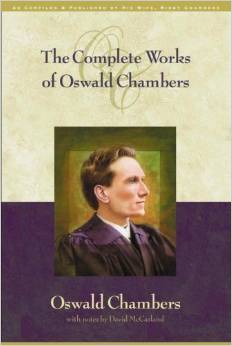
The Complete Works Of Oswald ChambersIt’s not often that philosophy and theology appear in the same sentence, let alone in the same book! But a special mind like Oswald Chambers is one who can masterfully pull that off, and he does so in his book The Philosophy Of Sin.

Chambers describes sin and salvation from sin like this: “Sin is the radical twist with a supernatural originator, and salvation is a radical readjustment with a supernatural Originator.” Philosophy is the science of getting to the root of the matter, applying all the wisdom we can muster. As you might image, in this book Chambers digs deeper than most theologians do, and thinks wider than most philosophers do.

Chambers takes a graduate-level look at topics like sin, redemption, salvation, judgment, backsliding, temptation, conscience, and humanity. This book is a real paradigm-expander and shouldn’t be read by anyone who is looking for some “light” reading. You will need to have your Bible open as you read this book, because Chambers will shine a light on biblical passages probably unlike anyone else has. But, wow!, what a payoff you will have from working through this weighty book!

If you are a seasoned Christian who is ready for a mental challenge, The Philosophy Of Sin is for you.

11 More Quotes From “Culture”

cultureA.W. Tozer wrote almost 50 years ago, but his words to the church still ring true today. Check out my review of Culture, and then enjoy some additional quotes from this book.

“To preserve life the physician and the druggist use words of fixed meaning common to both. How much more should the pulpit and the pew have a clear understanding about the words of eternal life. The modern effort to popularize the Christian faith has been extremely damaging to that faith. The purpose has been to simplify truth for the masses by using the language of the masses instead of the language of the church. It has not succeeded, but has added to rather than diminished religious confusion.”

“The hope of the church yet lies in the purity of her theology, that is, her beliefs about God and man and the relation to each other. These beliefs have been revealed to her by the inspiration of the Holy Spirit in the sacred Scriptures. Everything there is clear-cut and accurate. We dare not be less than accurate in our treatment of anything so precious.”

“I think we make two mistakes in our attitude toward our Christian leaders, one is not being sufficiently grateful to them and the other in following them too slavishly.”

“Today we evangelicals are showing signs that we are becoming too rich and too prominent for our own good. With a curious disregard for the lessons of history we are busy fighting for recognition by the world and acceptance by society.”

“That terrible zone of confusion so evident in the whole life of the Christian community could be cleared up in one day if the followers of Christ would begin to follow Christ instead of each other.”

“The difficulty we modern Christians face is not misunderstanding the Bible, but persuading our untamed hearts to accept its plain instructions.”

“Our churches these days are filled (or one-quarter filled) with a soft breed of Christian that must be fed on a diet of harmless fun to keep them interested. About theology they know little. Scarcely any of them have read even one of the great Christian classics, but most of them are familiar with religious fiction and spine-tingling films. No wonder their moral and spiritual constitution is so frail.”

“To accept the call of Christ changes the returning sinner indeed, but it does not change the world. The wind still blows toward hell, and the man who is walking in the opposite direction will have the wind in his face. And we had better take this into account when we ponder on spiritual things.”

“Christianity’s scramble for popularity today is an unconscious acknowledgment of spiritual decline.”

“The desire to stand well with our fellow man is a natural one, and quite harmless up to a point, but when that desire becomes so all-consuming that we cannot be happy apart from the praises of man, it is no longer harmless, it is sinful in itself and injurious in its effects.”

“A Christian’s standing before God does not depend upon his standing before men. A high reputation does not make a man dearer to God, nor does the tongue of the slanderer influence God’s attitude toward His people in anyway.”

To read some additional quotes I shared from Culture, click here. You may also follow me on Twitter and Tumblr to read quotes which I share daily from Tozer and other notable thinkers.

Archeological Study Bible (book review—part 2)

Archeological Study BibleI wrote a review on the Archeological Study Bible when I was roughly halfway through the Bible, but as I have now finished, I thought another review was in order.

Zondervan did an amazing job on this project! I love reading the Bible, and I love studying history, and this study Bible helped me to do both of those things without getting lost on too many “rabbit trails.” Some study Bibles I have read require a lot of page flipping to follow a thought or do a little research. But the ABS kept the historical articles, maps, and graphics close at hand to the biblical text I was reading, so page flipping was kept to a minimum.

At over 2300 pages, there is so much history that came alive as I read through the Bible. I also read through the Bible in chronological order, so I really felt like the ABS was helping me move seamlessly along the timeline of history.

Purchasing this Bible gives you access to an online gallery of many of the photos and other study materials. I also purchased the Kindle version of this Bible, to make searching for content much easier.

If you are looking for a fresh way to study the history surrounding the Scripture, I highly recommend the Archeological Study Bible to you.

John Bunyan On The Relationship Between Church And State

Of Antichrist And His RuinJohn Bunyan, as Charles Spurgeon said, was so steeped in Scripture, that he practically bled Bible! In his book Of Antichrist And His Ruin, Bunyan pointed out how God would use earthly governments to bring about the demise of Antichrist. In addition, Bunyan also shared these insights on how the Church should treat the governments of Earth.

“Take heed in laying the cause of your troubles in the badness of the temper of governors. … God is the chief, and has the hearts of all, even of the worst of men, in His hand. Good tempered men have sometimes brought trouble; and bad tempered man have sometimes brought enlargement to the churches of God: Saul brought enlargement (1 Samuel 14:28). David brought trouble (2 Samuel 12:10).) Ahab brought enlargement (1 Kings 21:29). Jehoshaphat and Hezekiah did both sometimes bring trouble (2 Chronicles 19:2; 20:35; 32:25). Therefore, the good or bad tempers of men sway nothing with God in this matter; they are the sins or repentances of His people, that make the church either happy or miserable upon earth.”

“The church therefore, as a church, must use such weapons as are proper to her as such; and the magistrate, as a magistrate, must use such weapons as are proper to him as such. … She [the church] may, and ought, with her faith and prayer, and holy life, to second this work of kings (Ezra 1:2, 3). When the king’s laws, and the law of their God, did at any time come in competition, they would indeed adhere to, and do the law of their God; yet with that tenderness to the king, his crown and dignity, that they could at all times appeal to the righteous God about it (Daniel 6:22). Nor did they lose by doing so; yea, they prospered; for by this means Mordecai was made a great man, and a savior of his people (Esther 2:21-23). By this means also was Daniel made a great man, and helpful to his brethren (Daniel 5:29).”

“Pray for kings to the God of heaven, Who has the hearts of kings in His hand: and do it ‘without wrath and doubting’; without wrath because thy self is not perfect; and without doubting because God governeth them, and has promised to bring down Antichrist by them. Pray for the long life of the king. Pray that God would always give wisdom and judgment to the king. Pray that God would discover all plots and conspiracies against his person and government. Pray also that God would make him able to drive away all evil and evil men from his presence….”

To read more quotes from this book, please click here. And to check out my review of this book, please click here.

Think On These Things (book review)

think-on-these-thingsWhat we think about all day long determines not only the kind of day we are going to have, but the kind of life we are going to live, as well as the legacy that we will leave behind. It would make sense, then, to make sure to think the right thoughts. A great book to help you develop right thinking patterns is Think On These Things by John Maxwell.

I have read numerous John Maxwell books, but only recently have I read his very first book. Unlike many of his later books, Think On These Things doesn’t have as many quotes from other authors and notable characters of history. In this book we get John Maxwell’s original thoughts. And they’re very good!

The chapters are shorter and easy to digest, but they are packed with easy-to-apply principles to help you change your thought patterns. Having read Dr. Maxwell’s books which were published in subsequent years, it’s easy to see that he’s been practicing what he’s been preaching!

If you feel your personal growth has been in a rut, or if you’re ready to launch out into bigger things, the thought-seeds in this book may be just the thing the doctor ordered!

8 Quotes From “Culture”

cultureIn Culture, you will find a collection of chapters from various A.W. Tozer books all addressing the theme of how a Christian should behave in worldly culture. If you are concerned about influencing the culture for Christ (instead of being influenced by it), I urge you to read my review of this book, and then pick up a copy for yourself. Below are a few quotes from Culture that caught my attention.

“The sacred-secular antithesis has no foundation in the New Testament. … The Lord Jesus Christ Himself is our perfect example, and He knew no divided life. In the presence of His Father He lived on earth without strain from babyhood to His death on the Cross. God accepted the offering of His total life, and made no distinction between act and act. ‘I do always those things that please Him,’ was His brief summary of His own life as it related to the Father (John 8:29). As He moved among men, He was poised and restful.”

“A Christian is now living according to the will of God as he understands it from the written Word. Of such a one it may be said that every act of his life is or can be as truly sacred as prayer or baptism or the Lord’s Supper. To say this is not to bring all acts down to one dead level; it is rather to lift every act up into a living kingdom and turn the whole life into a sacrament.”

“Keep reminding God in our times of private prayer that we mean every act for His glory; then supplement those times by a thousand thought-prayers as we go about the job of living. Let us practice the fine art of making every work a priestly ministration. Let us believe that God is in all our simple deeds and learn to find Him there.”

“You cannot get miracles as you would get a chemical reaction. You cannot get a miracle as you get a wonderful act on stage by a magician. God does not sell Himself into the hands of religious magicians. I do not believe in that kind of miracles. I believe in the kind of miracles that God gives to His people who live so close to Him that answers to prayer are common and these miracles are not uncommon.”

“Our trouble is not that we refuse to believe right doctrine, but we refuse to practice it. We have the peculiar contradiction of believing the right thing and living the wrong way.”

“It seems that the average person spends more time and intellectual labor each year filling out income tax forms then he or she spends in a lifetime trying to learn from the Scriptures and from the light of the Spirit what the church is and what he or she ought to do about it.”

“I would also have in our body the power of the Spirit of Christ. I have said that the average gospel church could get along without the Holy Spirit—and many do. We are praying for revival. What is revival? It is when the Holy Spirit takes over the work that is His, instead of being pushed aside into the benediction. He now becomes the Chief Executive of the church, running it. ‘But ye shall receive power, after that the Holy Ghost is come upon you’ (Acts 1:8). That means that the Spirit of Heaven should come to a company on earth with His all-prevailing gifts, power, and grace, with His life, His illumination, and His discernment. This is not fanaticism; this is not any weird religion. This is just what the Bible teaches.”

“Did you read the Bible or watch TV more this week? Think of the time you have spent. How many half-hour periods did you spend with your Bible, and how many did you spend with amusements? We do not take our faith seriously enough.”

I will be sharing other quotes from Culture soon. If you will enter your email address in the “Subscribe” box to on the right side of the page, you will be notified as soon as new quotes are posted. You can also read Tozer’s quotes from this book, as well as other empowering quotes that I share daily in Twitter and Tumblr.

Culture (book review)

cultureThe dictionary defines culture as “a particular stage of civilization.” In other words, culture is constantly being molded by those who are exercising influence on it at a particular moment. What about Christians? How are they supposed to influence culture? That is a subject that can be so perfectly addressed by A.W. Tozer in a collection of insights in the book with the apropos title Culture.

A.W. Tozer was a man ahead of his time. Although born in 1897, he had a God-given knack for reading the current culture, ascertaining how the church was influencing or being influenced by civilization, and making accurate predictions of what was coming next. This amazing foresight was on display throughout his long and extensive preaching and writing ministry.

Culture is a collection of chapters from more than a dozen of his books. Time and time again you will read how accurately he read the trends in civilization and warned the church how she should respond. Today we have the advantage of looking around us to see how many of his unheeded warnings have come to make up our current culture.

I love the sub-title for this book: Living as Citizens of Heaven on Earth. Although Tozer is no longer with us, his wise words still are. And it’s still not too late for the church to heed his words and make the changes he outlined. Anyone who believes that Christians can still make a difference in our culture will enjoy reading Culture.

I am a Moody Press book reviewer.

7 Quotes From “The Beauty Of Intolerance”

Beauty Of IntoleranceTolerance and intolerance are definitely the buzzwords of today’s culture. But depending upon whom you’re asking, the definition of these words may be dramatically different. This is where Josh McDowell and Sean McDowell’s book The Beauty Of Intolerance can help. Please be sure to check out my book review here, and then check out some of the quotes from this very important book below.

“It’s natural—and if done properly, even healthy—for the people of each new generation to establish a unique identity apart from their parents. Yet what we are experiencing today is far from the typical generation gap. We are seeing a cultural shift that is separating Christian parents from their children perhaps unlike anything seen before.”

“Your narrative about truth is probably based on your understanding of the Bible. Whether they realize it or not, our young people today largely derive their narrative about truth from a culture that says moral truth is found within the individual. These two narratives can be expressed in terms of the biblical narrative about truth and the cultural narrative about truth. When our young people accept the cultural narrative, it becomes the lens by which they interpret relationships and much of the world around them.”

“If each person is a valid, independent source of applied truth, then there can be no basis for external disapproval. There is no overarching standard by which to apply judgment. That means tolerance as the culture defines it is the only appropriate response to each individual’s moral choices. That kind of tolerance—what we will call cultural tolerance—propagates the notion that all moral truth is equal. From that perspective it only seems right to respect, accept, and approve of diverse views and the behavior of others, since doing otherwise would be intolerant and judgmental. … But what many of today’s young people don’t understand is that they have unwittingly bought into cultural tolerance, which is a faulty narrative about moral truth that fundamentally changes the traditional meaning of words like tolerance, acceptance, respect, and the like. They tend to think that they have the right to determine what is right and wrong for themselves.”

“God is not only the standard of what is true—He is truth—but He is also the perfect standard for tolerance. That is, He is the standard for tolerance in the original and traditional meaning of the word—a tolerance that loves us without approving of our sinful condition. Both truth and traditional tolerance reside in the character of God, and they are inseparable.”

“While the Incarnation is the personification of love and acceptance, God’s disdain for sin reflects His holy intolerance. What sin did to humans broke His heart. Separated from God, the human race wallowed in greed, lust, jealousy, hatred, and conflict. Human sin has rippled down from one generation to another with the same tragic results: pain and suffering, heartache and ruin, destruction and death. God’s hatred of evil and injustice—of everything that hurts us—prompted Him to be radically intolerant of sin and its devastating effects on His creation. His amazing love for us prompted Him to do something to save us from it. That something cost Him the death of His only Son, but He considered you and me worth it. God’s intolerance is an amazing and beautiful thing.”

“Moral truth isn’t simply an abstract concept; it originates in a Person who is the original and standard for morality. Jesus said, ‘I am the way, the truth, and the life’ (John 14:6). Moral truth ultimately finds its source in a ‘Who,’ not merely in a ‘what.’ In other words, moral claims are true if they correspond to the character of God—Who is the objective source for morality. God is the source of all moral truth.”

“The reason we think there are such concepts as ‘fair’ and ‘unfair’ is because our Maker is a just God and we have been made in His image (Genesis 1:27). The reason love is a virtue and hatred a vice is because the God of relationships who formed us is a God of love. The reason honesty is right and deceit is wrong is because God is true. The reason fidelity in marriage is honorable and infidelity is not is because God is faithful. The reason chastity is moral and promiscuity is immoral is because God is pure. … All truth claims cannot be equal because Jesus didn’t claim to be ‘a’ truth—one among viable others. His claim was exclusive.”

I will be posting more quotes from The Beauty Of Intolerance in the near future. If you would like to be notified when these quotes appear, please enter your email address in the form on the right to subscribe.

Also check out quotes from this and other books that I share daily on Twitter and Tumblr.

The Beauty Of Intolerance (book review)

Beauty Of IntoleranceOur current culture sets tolerance as a high virtue, so those who exhibit the greatest levels of tolerance are upheld as the model for everyone else. On the other hand, intolerance is an ugly label for anyone to have. So what do you think when you hear that Josh and Sean McDowell have teamed-up to write a book called The Beauty Of Intolerance?

Many times there is a generational clash of worldviews: today’s grandparents and parents tend to hold to viewpoints which many of today’s youth find intolerant, mean, or even bigoted. Does that mean that the older generations are unenlightened, and the younger generations have seen the light? Or does it mean that the younger generations are rebelling, while the older generations are holding the line? Josh and Sean have become the “translators” between these two starkly-different worldviews.

It starts, the McDowells say, with an understanding of the word “tolerance.” It turns out that the this word has taken on a new meaning with younger generations, but that doesn’t mean that the younger generations don’t value what the older generations do. For example, consider a t-shirt that Josh McDowell designed. The front of the shirt says, “Intolerance is a beautiful idea.” But the back of the shirt clarifies this statement by reminding us:

  • Mother Teresa was intolerant of poverty.
  • Bono was intolerant of AIDS.
    Nelson Mandela was intolerant of apartheid.
  • Martin Luther King was intolerant of racism.
  • Jesus was intolerant of bigotry.

It turns out it’s not just the word “tolerance” that needs a tune-up, but also words like “respect,” “dignity,” “acceptance,” “morality” and “truth.” Fortunately for us, The Beauty Of Intolerance leads us through a modern-day understanding of all these terms.

Using true-to-life dialogue between parents and children, Josh and Sean help both generations see how intolerance really is a beautiful thing. The McDowells guide us through conversations we might encounter at home, in school, in the government, at church, and in day-to-day living. They give us the tools necessary to help everyone see that intolerance can be a beautiful thing!

For anyone who wants to speak the truth lovingly and convincingly across generational lines, The Beauty Of Intolerance is a must-read book.

I am a Shiloh Run Press book reviewer.

9 More Quotes From “Today’s Moment Of Truth”

Today's Moment Of TruthToday’s Moment Of Truth by Lee Strobel and Mark Mittelberg is so chockfull of helpful truths that I couldn’t possibly have shared all of the passages I highlighted. Here are a few more quotes I wanted to share with you:

“Jesus said, ‘Do not believe Me unless I do the works of My father. But if I do them, even though you do not believe Me, believe the works, that you may know and understand that the Father is in Me, and I in the Father’ (John 10:37-38). And Jesus did the miraculous works He referred to. Even the Pharisee Nicodemus conceded, ‘Rabbi, we know that You are a teacher who has come from God. For no one could perform the signs You are doing if God were not with Him’ (John 3:2).

“We can see such confirmation repeatedly in the lives of Jesus and the biblical prophets. But it never happened in the life of Mohammad, the founder of Islam. Mohammad believed Jesus was a prophet who performed miracles, including raising the dead. Muslims also believe Moses and Elijah performed miracles.

“However, according to the Qur’an, when unbelievers challenged Mohammad to perform a miracle, he refused. He merely said they should read a chapter in the Qur’an (Surah 2:118; 3:181-184; 4:153; 6:8, nine, 37).

“So, unlike Jesus, Mohammad never did miracles. It wasn’t until approximately 150 to 200 years after Mohammad’s death that some of his followers begin to come up with stories of miracles and ascribe them to him.” —Lee Strobel & Mark Mittelberg 

“There are two major competing worldviews to Christian theism—atheism and pantheism…. The problem with atheism is that, with its denial of God’s existence, there’s a loss of any ultimate moral basis by which to declare something good or evil. So atheists are left without any objective standard by which to judge something as being right or wrong. Instead, they’re left with mere preferences. I have mine. You have yours. Rape and murder may not be my cup of tea, but they maybe somebody else’s. And who are we to say that what others choose to do is wrong? [We are] not saying an atheist cannot live a moral life; we are saying that an atheist cannot define what morality is. ….

“If everything is part of god [as in pantheism], then what we call evil is actually part of that god as well. … This is the very god, or ultimate reality, that Eastern philosophy says we’re supposed to strive to become more like and eventually to become one with. This presents a tremendous problem: we’re supposed to join with the very entity that contains evil within itself!” —Lee Strobel & Mark Mittelberg

“Revering Christ as Lord and being prepared to defend our faith are ongoing processes in the Christian life. … It’s interesting that in the original Greek, the word Peter used for answer is apologia [1 Peter 3:15], from which we get our word apologetics. It literally means we are to be ready to give a speech of defense—a well-thought-out account of why our faith in Christ makes sense. … With God’s help we can present information that will remove intellectual barriers, helping people move one step closer to faith in Christ.” —Lee Strobel & Mark Mittelberg

“In 2 Chronicles 7, God says if Israel’s sin reaches a certain level, He’ll destroy the temple, exile the people, and leave them in a state of judgment. Sure enough, this comes to pass. The prophet Daniel prays in Daniel 9 that God would have mercy. God gives him a revelation about the temple being rebuilt. Before this new temple is destroyed, Daniel is told, several things are going to take place, including the bringing of everlasting atonement—the final dealing with sin.

“The prophet Haggai says the glory of the second temple will be greater than the glory of the first temple. God will fill the second temple with His glory. Then the prophet Malachi says the Lord will come to His temple. He uses a Hebrew term that always refers to God Himself: the Lord—He will come to that temple.

“Keep in mind the second temple was destroyed in AD 70. Atonement for sin had to be made and the divine visitation had to take place before the second temple was destroyed.

“So … if it’s not Yeshua, the Jewish name for Jesus, then throw out the Bible, because nobody except Him accomplished what needed to be done prior to AD 70. What divine visitation did take place if not for Yeshua? When else did God visit the second temple in a personal way? How else was the glory of the second temple greater than the first?

“Either the Messiah came two thousand years ago, or the prophets were wrong and we can discard the Bible. But they weren’t wrong. Yeshua is the Messiah—or nobody is.” —Michael Brown, a messianic Jew

“Even nonreligious people live in the trust that their nonreligious beliefs are accurate and that they won’t someday face a thoroughly religious Maker who actually did issue a list of guidelines and requirements that they failed to pay attention to.” —Mark Mittelberg 

“There can be no doubt that archaeology has confirmed the substantial historicity of Old Testament tradition.” —William F. Albright

“The noted Roman historian Collin J. Hemer, in The Book Of Acts In The Setting Of Hellenistic History, shows how archaeology has confirmed not dozens, but hundreds and hundreds of details from the biblical account of the early church. Even small details have been corroborated, like which way the wind blows, how deep the water is a certain distance from the shore, what kind of disease a particular island had, the names of local officials, and so forth.

“Now, Acts was authored by the historian Luke. Hemer gives more than a dozen reasons why Acts had to have been written before AD 62, or about thirty years after Jesus’ crucifixion. Even earlier, Luke wrote the Gospel of Luke, which is substantially the same as the other biblical accounts of Jesus’ life.

“So here you have an impeccable historian, who has been proven right in hundreds of details and never proven wrong, and it’s written within one generation while eyewitnesses were still alive and could have disputed it if it were exaggerated or false.” —Norman Geisler 

“No Book of Mormon cities have ever been located, no Book of Mormon person, place, nation, or name has ever been found, no Book of Mormon artifacts, no Book of Mormon scriptures, no Book of Mormon inscriptions,…nothing which demonstrates the Book of Mormon is anything other than myth or invention has ever been found.” —John Ankernerg and John Weldon

“Jesus did exist, whether we like it or not.” —Bart Ehrman, an agnostic

If you would like to read the first set or quotes from this book, please click here.

You can check out my review of Today’s Moment Of Truth here.

And to read some of the other quotes I’ll be sharing from this book, be sure to follow me on Tumblr and Twitter.