How John Newton Found God

“It took John Newton to write the hymn Amazing Grace. ‘Let me not fail to praise that grace that could pardon,’ he said, ‘such sins as mine.’

“Newton had gone to sea at age 11, apprenticed on his father’s ship. He spent his teen years learning to be profane, irreligious, and indulgent. Female slaves being transported from Africa were at Newton’s disposal, and even seasoned sailors were alarmed at his corruption. Newton’s life angered his father and disgusted his friends, and he was finally pressed into service for the British Navy. He deserted, but was arrested, stripped, and flogged. He became the property of a slave trader in Sierra Leone, who gave him to his sadistic mistress. John became a loathsome toy she tormented for over a year. He finally boarded ship for Britain.

“On March 9, as he carelessly read a Christian book to pass the time, the thought came to him, ‘What if these things are true?’ He snapped the book closed and shook off the question. ‘I went to bed in my usual indifference, but was awakened by a violent sea which broke on us. Much of it came down below and filled the cabin where I lay. This alarm was followed by a cry that the ship was going down. We had immediate recourse to the pumps, but the water increased against all our efforts. Almost every passing wave broke over my head. I expected that every time the vessel descended into the sea, she would rise no more. I dreaded death now, and my heart foreboded the worst, if the Scriptures, which I had long since opposed, were true.’

“The vessel survived the March 10, 1748, storm, and Newton began earnestly studying the Bible. He embraced Christ and eventually entered the ministry, becoming one of England’s best-loved preachers and a leader in the fight against slavery. He once recalled, ‘That tenth of March is a day much remembered by me; and I have never suffered it to pass unnoticed since the year 1748—the Lord came from on high and delivered me out of deep waters.’” —from On This Day

Shade Of His Hand (book review)

Most of Oswald Chambers’ books weren’t originally in book form, but were given as lectures or sermons which were recorded in shorthand by his wife. Shade Of His Hand contains the last messages given by Oswald Chambers before his death. It’s a series of lectures on each chapter of the book of Ecclesiastes.

For many people (even seasoned Christians) the message in Ecclesiastes in a challenging one. Solomon is the wisest man who ever lived, yet in this book of the Bible he records his observations of the world in what seems to be a very “non-Christian” (to use a New Testament term) sort of way. Then along comes Oswald Chambers with insight into this book unlike anything you’ve seen before!

One of Chambers’ longtime friends was David Lambert. Commenting on Shade Of His Hand, Lambert wrote, “Oswald Chambers interprets [Ecclesiastes’] message as being—Life is not worth living apart from Redemption. … Life apart from Redeeming Love is full of sin and sorrow, guile and cruelty, callous selfishness and numbing despair. This book takes full account of all that. It anticipates many of the problems facing the young life of today, and brings to their solution the one and only key, the realization of the Lord Jesus Christ in every relationship of life.”

Indeed, Chambers doesn’t flinch one bit in addressing the complex issues Solomon brings up, and he does so in a way that is easy to grasp for all of us. I read each chapter of Ecclesiastes before each chapter in this book, and then I re-read the same chapter in Ecclesiastes again afterwards. Wow, what a transformation in my understanding of the biblical text!

If you would like to gain some life-changing insight on this valuable book of biblical wisdom, I urge you to check out Shade Of His Hand.

10 Quotes From “Cherish”

As I said in my book review of Gary Thomas’s Cherish, this is a must-read for married couples, those about to be married, and those who counsel married couples. Please check out my review, and then enjoy a few quotes from this book.

“Learning to truly cherish each other turns marriage from an obligation into a delight. It lifts marriage above a commitment to a precious priority.”

“In one sense, love is the nurturing aspect of marriage, while cherish is the ‘tasting’ aspect of marriage. Love meets the need; cherish tickles the tongue.”

“If you want to be fully satisfied in your marriage, if you want your wife to feel cherished, then mentally treat your wife like Eve. Let her be, in your mind, in that way, the only woman in the world. Say with King Solomon, ‘My dove, my perfect one, is the only one’ (Song of Songs 6:9 ESV).” 

“You’ve already made your choice. In your ideal world, you have no intention of ever starting over with someone else, so why not put your energy into and your focus on guarding that choice, building on the strengths of that choice, and making yourself ever more grateful that you made that choice?”

“At some point, if you want marital happiness, if you want to learn how to cherish a real man instead of longing for an imaginary composite, some ‘Frankenstein’ husband who somehow has it all, then you have to own your choice and even learn to cherish your choice. ‘My vineyard, my very own, is for myself’ (Song of Songs 8:12 NRSV).”

“The call to cherish isn’t to appreciate being pleasured by your spouse but to take pleasure in the pleasure of your spouse.”

“If we want to cherish our spouses, we must learn to take an active interest in what interests them.”

“Cherishing is expressed, or it’s not. Intimacy is built, or it is assaulted, even in the most mundane marital conversations.”

“The act of consistently noticing and honoring our spouses cultivates and maintains a certain kind of relationship, and it shapes our hearts. Noticing and honoring sustain the force and power of cherishing. When we stop noticing and stop honoring our spouses in the little things, the relationship starves.”

“Active cherishing—noticing and then expressing the excellence you see—is a way to shape our attitudes and to generate feelings of closeness and well-being. When we do what the Bible tells us to do, we will be doubly blessed—our spouses will be happier, increasing the joy in our marriages, and we’ll become happier psychologically as well. Cherishing our spouses literally makes us feel better. So cherishing means waging war on contempt and going on the offense with gratitude.”

I will be sharing more quotes from Cherish soon. If you’d like to be notified when these quotes are posted, simply enter your email address in the field in the right column and click “Sign me up!” You may also want to follow me on Twitter and Tumblr for other quality quotes I post every day.

Cherish (book review)

Gary Thomas notes something rather peculiar: Many wedding vows contain the promise “to love and cherish” our spouse, and many pastors spend quite a bit of time promoting love, but often the concept of cherishing our spouse gets overlooked. Gary is out to correct that in his aptly-titled book Cherish.

Learning the value of cherishing our spouse pays enormous benefits. In fact, near the beginning of the book Gary says, “Cultivating a cherishing attitude toward your spouse will elevate your marriage relationally, emotionally, spiritually, and even physically.” That sounds to me like something we would all want in our marriages!

So Gary begins unpacking and defining the idea of marriage in practical terms that any married person (or soon to be married person) can grasp. He uses examples from the first marriage in history between Adam and Eve, shows some of the principles Solomon outlines in his Song of Songs, shines a light on the many passages in the New Testament that address marriage, and even shows the ultimate picture of Jesus cherishing His bride. Throughout all of these, Gary gives us modern-day examples from couples he has known and counseled, and even lessons learned from his own marriage.

Each chapter concludes with some bullet points summarizing the main themes, and some questions to help couples grow in their cherishing of one another.

If you are married, about to be married, or a pastor or counselor who works with married couples, Cherish is a book you need to read and be ready to share with others. Such an outstanding read!

I am a Zondervan book reviewer.

The Christian Book Of Mystical Verse (book review)

Sometimes you can judge a book by its cover. In this case, the writings A.W. Tozer collected between the covers of this book is exactly what the title says—The Christian Book Of Mystical Verse: A collection of poems, hymns, and prayers.

A.W. Tozer was a first-class scholar, but he didn’t stop with mere head knowledge. He loved plunging deep into the spiritual realms to let God touch his heart, mind and emotions. So we find among his extensive library, collections of poems and mystical writings to enliven the heart and mind.

Don’t get thrown by that word “mystical.” Tozer himself describes it this way—

The word ‘mystic’ as it occurs in the title of this book refers to that personal spiritual experience common to the saints of Bible times and well known to multitudes of persons in the post-biblical era. I refer to the evangelical mystic who has been brought by the gospel into intimate fellowship with the Godhead. His theology is no less and no more than is taught in the Christian Scriptures. … He differs from the ordinary orthodox Christian only because he experiences his faith down in the depths of his sentient being while the other does not. He exists in a world of spiritual reality. 

I have a natural bent to be more left-brained, logical, and fact-seeking. Years ago I discovered that poetry and other “mystical” writings unlocked my right-brain hemisphere with all its emotion and passion, and made the left-brained stuff so much more real. The collection of writings in this book “scratches an itch” unlike any academic book ever can.

Should you read The Christian Book Of Mystical Verse? I think so. Tozer said, “This is a book for the worshiper rather than for the student.” So if you are longing to worship God more deeply, this is a great book to dive into deeply.

I am a Moody Publisher book reviewer.

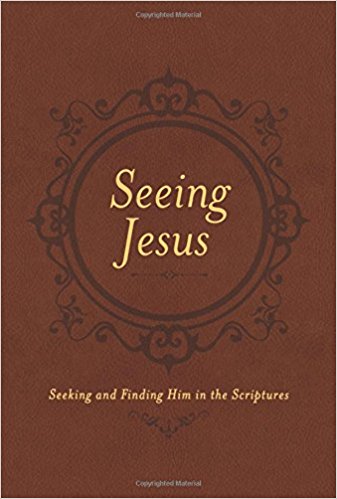
9 Quotes From “Seeing Jesus”

Nancy Guthrie marvelously shows us how Jesus links the Old Testament prophesies with His New Testament activities. This book makes the Old Testament come alive! Check out my full book review by clicking here, and then enjoy a few quotes from this book.

“satan’s power is wielded in the world in the form of death. What gives him that power is sin and the estrangement from God it brings. But on the Cross, Jesus did what was necessary for sinners to be reconciled with God. The devil thought he was defeating Christ, but in reality Christ was reconciling us to God, defeating the devil, and delivering us out of his clutches.”

“It has always been God’s way to use the weak, the foolish, the imperfect—even the shamefully sinful but ultimately repentant—in His redemptive plan. It is His glory to do so, and will be into eternity.”

“God has always wanted His people to know Him—not in a generic or shallow way, but personally, as He truly is. So He revealed Himself in a progressive way, not only through His name, but also through His glorious presence that dwelt in the Temple, through the Law, and through His mighty deeds on behalf of His people. But these revelations all led up to a definitive revelation in the Person of Jesus.”

“Our security in Christ frees us to enjoy His Sabbath rest. Christ fills our hearts with the same love He has for His Father so that we can honor our parents. Christ fills us with His very own faithfulness so that we can live in sexual purity. He convinces us of all that is ours in Him eternally so that we can stop coveting the things other people have that will not last beyond this life. As we refuse to allow anything else to be a god to us; we honor His name, His day, and our parents; as we value life; as we live in sexual purity and fidelity; as we nurture contentment and integrity, we’re not being merely legalistic. The grace of God is at work in our lives, making us holy and happy in God.”

“Jesus was less interested in explaining Himself to Nicodemus than in offering Himself to Nicodemus. … Jesus wanted Nicodemus to understand that we, too, have been bitten—not by a poisonous snake, but by the poison of sin. We, too, need a cure or we face certain death. And just as God provided the cure to His people in the desert, so has He provided a cure to us. But to experience healing requires something of us. We have to look to Jesus.”

“Jesus came into the world to make God knowable so that we can truly love Him with all our hearts, souls, and minds.”

“Jesus came the first time to offer forgiveness rather than bring down fire. He came down the first time to experience the fiery judgment of God in the place of guilty sinners. But the day is coming when Jesus will ‘come with His mighty angels, in flaming fire, bringing judgment on those who don’t know God and those who refuse to obey the Good News of our Lord Jesus’ (2 Thessalonians 1:7-8).”

“Whereas Proverbs describes a way of wisdom that leads to life and to God, Jesus defined that way in much more personal terms. He said, ‘I am the way, the truth, and the life. No one can come to the Father except through Me’ (John 14:6). The decision, as Jesus made clear, is not merely a matter of behavior or companions, but a choice about how we respond to Him, whether or not we will choose Him as our path, our life.”

“The people of Israel had the law; they knew what God wanted from them and for them. But they didn’t have the power or strength to obey. They knew what to do, but they didn’t have the ‘want-to’ to live as God commanded and to love Him as He desired. God’s commands in the covenant of the law were just a list of external rules. …

“In the new covenant, God’s law would be written on the hearts of His people rather than on stone tablets. He would put His Spirit inside His people. In this way, He would give them a love for His will and His ways, and a hatred of sin. His people would finally be able to love His will and walk in His ways because they would want to.”

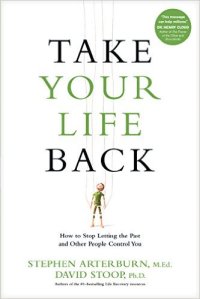
9 Quotes From “Take Your Life Back”

take-your-life-backStephen Arterburn and David Stoop have given us a great resource if we are struggling to free ourselves from the wounds that are trapping us in a reactive life. I truly believe Take Your Life Back will start many people on a journey of healing. Check out my full book review by clicking here, and then check out a few quotes from this helpful book.

“When we’re constantly looking at what’s happening with other people and measuring our satisfaction based on how fairly we feel we’ve been treated, we are forever at the mercy of what is going on over there. We’ve wired ourselves to react to whatever scale of comparison we’ve established.”

“The real self, quite simply, is the self that God sees. He sees it all, with all its flaws. He does not approve of or endorse everything He sees, but He loves the person He sees. He does not see an idealized self, free of sin. He sees the real self—sinful, doubtful, and flawed—and yet He accepts the reality of it and loves us in spite of it all.”

“Our reactions to pain and our adaptations to it are unique to ourselves; we are not all the same. But we have several things in common: In one way or another, we have turned our back on reality, and we have allowed all, or portions, of our lives to be controlled by another person, a destructive pattern, or unrealistic expectations. We live on the edge of almost. We are almost breaking free, or we are almost free. We are almost fed up or almost ready to take our lives back.” 

“Denial keeps us from addressing the things we can change, causing us to think that our inability to change everything means we can’t change anything. … Because we either don’t or won’t see how far we are from living the life that God intends for us, we stay in our denial and wait for the magic cure that never materializes. But when we admit that we’re in denial, and when we are willing to break through it, we can begin to move into recovery.”

“When we talk about the elephant in the room, we have a way of describing it as a small rodent. Our internal application for minimizing language automatically converts words like pain into irritation; devastating into difficult; abusive into insensitive; and horrific into unpleasant. Our self-talk is unrealistic, so whenever we communicate with someone else, we present our overwhelming problems as manageable situations that we have completely under control. Because we don’t acknowledge the full scope and intensity of our struggles, we don’t act in realistic ways to free ourselves and take our lives back. We minimize in order to give ourselves permission to do little or nothing to change.”

“Toxic shame undermines our will and our power to stand up for ourselves. … Toxic shame carves out a new normal for those who partake of its poisonous fruit. Rather than seeing themselves as human beings who have made a few mistakes—maybe even some really big mistakes—people who are saturated with toxic shame see their failures as an objective expression of who they are. Before long, they don’t even try to avoid future mistakes. They don’t learn from their errors because they don’t think they can, or need to, learn anything. Repeated mistakes are simply a self-fulfilling prophecy that their shame as written for them. …

“Toxic shame…blinds us to wisdom and insight. It prevents us from cleaning up after ourselves. We start to live in the debris of past mistakes, and that leads us to more debris-producing decisions. We fill our lives with problem after problem because we don’t think we can do any better.”

“There is such a thing as good shame. A better term for it might be godly sorrow. …

“Godly sorrow is a warning sign that we are on the wrong path and need to make some adjustments. Any mistakes we make are not seen as the inevitable result of who we are but as stark reminders that—because of who we are, created in the image of God—we can do better. We are genuinely sorry that we fell short, hurt ourselves or other people, or simply created a lot of hassle that has kept us from living in the good things that God has for us. However, our defective behavior is rightly seen as separate from our identity. Making a mistake doesn’t mean that we are a mistake; it’s simply evidence that we are like every other human being—completely capable of many things, including mistakes. …

“Godly sorrow is a prompt from God, and from a well-developed conscience, that we need something more to achieve all that we want to accomplish. We respond to healthy shame with the desire to get better or do better….”

“Tough love says that I will choose to not give you what you want if it prevents you from attaining what you need.”

“Taking your life back is not just about deciding to defend yourself. It is about finding and removing roadblocks, sinkholes, and dead ends that have disconnected you from other people and stopped your journey from going forward together.”

Take Your Life Back (book review)

take-your-life-backStephen Arterburn and David Stoop say it’s quite simple—you are either living a reactive life or a responsive life. One keeps us trapped by our past or other people, and one sets us free to live life to the fullest. Arterburn and Stoop want you to Take Your Life Back.

Arterburn and Stoop vividly describe the childhood wounds and experiences that can lead to so many of us burying our real selves and living out of a reactive, false self that we believe others want to see. Then, using the imagery from the story of the Prodigal Son, they talk about how the younger son came home to address his concerns, and how the elder brother who never left home also had to come to grips with his woundedness.

To some extent or another, we all carry some sort of woundedness in our hearts—someone abused us, or let us down, or led us to believe that we weren’t valuable. The question now is: “Do I know my wound? Am I willing to admit to my wound? Am I willing to take the necessary steps toward healing and freedom?” Far too many people hide their wound and end up living restricted, reactive lives. But Arterburn and Stoop want to help lead you to confront your wound and take the necessary steps to live a free, responsive life.

Whether you have a wound in your life that you need to address, or you know someone close to you struggling with their woundedness, Take Your Life Back will be an invaluable resource. Stop letting your past or other people control and limit you, take your life back to live the abundant life God wants you to live!

I am a Tyndale book reviewer.

Brady Vs. Manning (book review)

brady-vs-manningTom Brady and Peyton Manning are two quarterbacks who have raised the standard for how NFL quarterbacks are to be measured. Any football fan has undoubtedly seen them play, but Gary Myers shares what went into making these men the phenomenal players they are. Brady vs. Manning—The untold story of the rivalry that transformed the NFL is a fascinating read!

Everyone loves to cheer for their home team’s quarterback, but even “homers” will admit (sometimes reluctantly) that Tom Brady and Peyton Manning stand apart from the crowd. Their accomplishments on the field are well-known, but it’s what took place behind the scenes and out of sight from the cameras that contributed to making these two fierce rivals the extraordinary players they are.

A debate often rages whether a leader in a particular field was born to greatness, or whether he made himself great. The answer is not either-or but both-and. As Gary Myers digs into Brady and Manning’s past we see several factors converging: genes, family environment, talent, a little bit of luck, and a whole lot of hard work and perseverance.

Many times Myers’ story shows how the lives of Brady and Manning intersected—sometimes they knew it, and sometimes they didn’t. But many of the chapters zoom in on the individual quarterbacks in various aspects of their development. We get to see the support from their families, the impact of their decision on where to go to college, how the NFL draft could have played out differently for both of them, the advantages and disadvantages of various coaches and teammates, and (of course) their fierce head-to-head rivalry.

One of the cool things for me was the respect and friendship these two highly competitive athletes have for each other. There were also several other moments that made me realize how special these two men have been for the NFL, and what a privilege it’s been for me to watch them compete on such a high level. After reading this book, I have even great respect for these two premier quarterbacks.

Any sports fan will thoroughly enjoy Brady vs. Manning!

I am a Three Rivers Press book reviewer.

11 Quotes From “Your Next 24 Hours”

your-next-24-hoursHal Donaldson makes the case that a revolution of kindness can be started by what you do in the next 24 hours. It’s a great book! Check out my review of Your Next 24 Hours by clicking here, and then enjoy some of these quotes that I found enlightening.

“Think of your heart as a bank vault that’s packed with the currency of love and kindness. When that currency is hoarded—it is wasted. But when it is invested in the lives of others, it pays great dividends. With each disbursement, you give others strength, hope, and value.”

“You have a unique capacity to bring hope and beauty to the world. Don’t waste your precious energy using the wrong ruler. Granted, not everyone will acknowledge your unique gifts. But don’t allow how others see you to dictate how you see yourself. The words they use to describe you don’t define you. You can’t control how they respond to you, but you can influence what they have to respond to.”

“If all you possess are two hands, collect trash along the way. If all you own is a smile, use it to befriend someone who is lonely. If all you have is an umbrella, share it with someone who is quivering in the rain. If all you have is a kind word, encourage those who think the world is against them. To the lonely, rain-soaked, and downtrodden, your resourcefulness is their miracle.” 

“If enough families are built on a foundation of kindness, communities will see crime rates fall, domestic disputes decline, suicides drop, teen pregnancies wane, and cases of child abuse fade.”

“Whenever you see injustice, it’s safer to ignore it and do nothing. When you raise your voice in defense of others, you put yourself at risk. Retreating will protect you temporarily, but that approach only perpetuates more injustice and suffering. Don’t allow the threat of retaliation to make you a spectator.”

“From a heart of kindness, will you stand and say, ‘There are no second class citizens—nor should anyone be made to feel like one. Every life is precious to God and must be treasured, because “injustice anywhere is a threat to justice everywhere”?’ Remember, your voice is a vote for justice; your silence may be interpreted as a vote for injustice.”

“To offer the right prescription of hope and encouragement, you need to be emotionally and spiritually prepared.” 

“No life experience should be wasted, because crises teach patience, empathy, and perseverance.”

“Make it your goal to do more for your friends and family members than they do for you. When they are facing hardship, make an effort to be by their side. They may not know how to ask for help, so don’t be afraid to be proactive.” 

“Occasional kindness has limited power. But relentless kindness has the power to restore, inspire, rescue, and unite.”

“Your acts of kindness are an outward expression of the love and happiness that are in your heart.” 

I’ll be sharing more quotes from this wonderful book soon. To be notified right away when these quotes are posted, enter your email address to subscribe. Also be sure to follow me on Twitter and Tumblr, where I share quotes from Hal Donaldson and other thought-provoking people every day.