12 Huge Mistakes Parents Can Avoid (YouVersion reading plan review)

Tim Elmore has fantastic insights for those who work with today’s youth. Whether you are a parent, a teacher, a youth pastor, or a coach, you are always guaranteed some great content when you study what Dr. Elmore presents. 

YouVersion has a reading plan based on Tim Elmore’s book 12 Huge Mistakes Parents Can Avoid. The reading plan has three advantages over the book—(1) Daily Scripture readings which augment the material covered each day; (2) A video message from Dr. Elmore explaining how we can avoid these mistakes; and (3) A place to have an honest dialogue with another parent/coach/teacher, if you are doing this reading plan as a shared plan. 

There is also one huge advantage the book has over the reading plan—lots more content, including warning signs, and ideas for recovering from past mistakes. 

So the real winning combination is not either-or, but both-and. You should both read the book (you can check out my review by clicking here) and do the YouVersion reading plan along with another adult or two (or three or four…). 

Don’t get blindsided by these 12 mistakes. After all, they are all avoidable and correctable! 

(You can also check out some quotes I shared from the book by clicking here.)

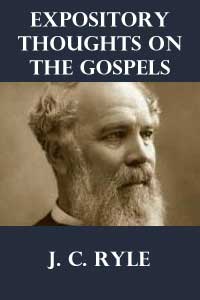
Expository Thoughts On The Gospels (book review)

J.C. Ryle was an Evangelical Anglican bishop who lived in England in the latter half of the 19th century. When Ryle’s words—written over 100 years ago—still resound with truth today, I would call that “a classic”! That is exactly what we find in his Expository Thoughts On The Gospels. 

The Gospels obviously focus on the life and teaching of Jesus Christ. Ryle takes how Jesus lived and taught and pulls out of them practical applications for Christians in his day, which still have perfect application for Christians today. I think what keeps his words so relevant is how closely he sticks with the biblical texts, seldom straying into his own opinion, but simply saying to us, “Did you see that?” 

His thoughts are presented to us section-by-section, not verse-by-verse as many biblical commentators do. This method has two distinct advantages for us: (1) It’s easier to get a “big picture” view of what Jesus was doing and teaching, and (2) It’s more manageable to use this book as a complement to a personal or group Bible study. 

In fact, Ryle himself suggested that the design of his commentary was with family devotions in mind. Purposely, he doesn’t delve into deep doctrine so that the youngest or most novice of Christians can gain much insight. But don’t confuse that statement with this being “light reading.” On the contrary, even the most tenured Christian will find ample thoughts to challenge his mind. 

I highly recommend this series of commentaries to those who want a deeper Bible study time.  

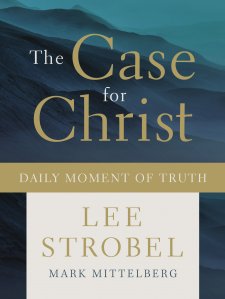
The Case For Christ Daily Moment Of Truth (book review)

This is a fantastic study guide from Lee Strobel and Mark Mittelberg. It was originally published with the title Today’s Moment Of Truth. 

Most Christians will tell you they love God “with all my heart.” That’s a good start, but according to Jesus, there needs to be more. Jesus told us to love God with all our heart, soul, mind, and strength. It’s especially these last two areas that concerned Strobel and Mittelberg enough to put together a wonderful book: The Case For Christ Daily Moment Of Truth.

Strobel and Mittelberg were concerned (and rightly so) that Christians were engaging their heart and soul in their Christian witness, but not developing their mind and strength to the same extent. As a result, when someone challenges them to explain why they believe what they believe, many Christians struggle to answer convincingly.

Lee Strobel and Mark Mittelberg are both top-notch Christian apologists. They don’t just present solid evidence for the Christian faith, but they do so in a winsome, inoffensive way. And through 180 different lessons, they train all who read The Case For Christ Daily Moment Of Truth to do the same.

Each day you will read a quote from a notable atheist or Christian skeptic, and then be trained in solid apologetics to refute their claims. You will be given Scripture verses, proofs from all disciplines of science, and some good old-fashioned common sense. This book will expand your spiritual muscles and your mental muscles. Each day’s reading will only take a couple of minutes, but you will be well-prepared for any challenges to your faith. A must-read for all Christians!

I am a Zondervan book reviewer.

The Strenuous Life (book review)

I just finished reading Theodore Roosevelt’s Autobiography, so it was quite fascinating to read some of the speeches he was giving during the same periods he covered in his memoirs. TR practiced what he preached, and one of his consistent messages is that anything worthwhile is worth the strenuous effort it takes to get it. This collection of speeches is called The Strenuous Life. 

TR himself described the strenuous life like this: 

“The doctrine of the strenuous life, the life of toil and effort, of labor and strife: to preach that highest form of success which comes, not to the man who desires mere easy peace, but to the man who does not shrink from danger, from hardship, or from bitter toil, and who out of these wins the splendid ultimate triumph. … A life of slothful ease, a life of that peace which springs merely from lack either of desire or of power to strive after great things, is as little worthy of a nation as of an individual.” 

In The Strenuous Life, you will read the consistent message TR delivered to a wide variety of people—from the rough-and-tumble outdoorsmen and women, to the diplomats attending a World’s Fair, to business people—nothing of lasting value ever came to those who sat around and waited for it to come to them. The strenuous life is one of initiative, of hard work, of sacrifice, of perseverance, and ultimately a life rewarded by self-satisfaction in a job well done. 

This book is inspiring as a stand-alone read, but I highly recommend you read it in conjunction with TR’s Autobiography, as it adds an extra level of insight to both works. 

Theodore Roosevelt: An Autobiography (book review)

Without a doubt, Theodore Roosevelt is one of my all-time favorite US Presidents. Not only for the policies he enacted, but for the large life he led—frontiersman, commissioner of police, governor, Vice President, President, explorer, Nobel Peace Prize laureate. This man did it all, and wrote about it in a very straightforward style in Theodore Roosevelt: An Autobiography. 

In telling his life’s story, Theodore Roosevelt (TR) compiles each chapter around a “role” in his life. For instance, a chapter on his childhood, one on his time in the American frontier, one on his work as police commissioner in New York City, and so forth. Not only does he tell what he did, but he explains why he did it and the lessons he learned along the way. 

Other people played important roles in his life, and TR was quick to recognize competent and loyal people, make them his friends for life, and then put them in positions where they could do the most good for the most people. I have a hunch that this was started by the way his father raised him. Very early in the book, TR writes about his father—

“My father, Theodore Roosevelt, was the best man I ever knew. He combined strength and courage with gentleness, tenderness, and great unselfishness. He would not tolerate in us children selfishness or cruelty, idleness, cowardice, or untruthfulness. As we grew older he made us understand that the same standard of clean living was demanded for the boys as for the girls; that what was wrong in a woman could not be right in a man. … I never knew anyone who got greater joy out of living than did my father, or anyone who more whole-heartedly performed every duty.” 

TR truly lived an oversized life and left an indelible stamp on the American landscape that can still be seen and felt today. This is truly an enjoyable book to read! 

Notes On Jeremiah (book review)

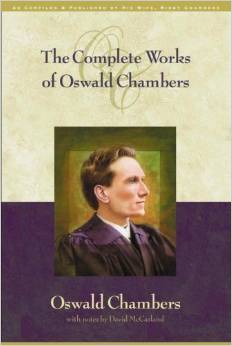
Oswald Chambers always gives me unique perspectives on passages of Scripture—even ones that I thought I already knew quite well. He does this again as he dives deep into one of the major prophets in his book Notes On Jeremiah.

These Notes are really his lecture notes from his classes at the Bible Training Institute. Once again, these classes were cut short by the outbreak of The Great War (what we now call World War I), so we only have his brilliant insights through Jeremiah chapter 29. 

Chambers himself noted, “The conception of these studies is that man must look higher for the source of life and salvation than the experience of life. … Jesus Christ is the only One Who can throw light on the prophecies of Isaiah, and He is the only One Who throws any kind of light on the acute suffering and amazing misery of this prophet [Jeremiah].” 

Indeed, many of Chambers’ lectures start with “the experience of life” that most of us have had (or are having at present), and then he tries to take us both higher and deeper. Using Jeremiah’s prophesies like a searchlight, Chambers shows how these Old Testament words find their ultimate relevance and fulfillment in the dazzling Advent of Jesus Christ. 

Jeremiah was prophesying in the darkest days of Judah, just before the city was overthrown by the Babylonians. In the face of this darkness, Jeremiah shines out a light of Ultimate Hope. This is a valuable resource for Christians today who are living in sin-darkened days.

If you are looking for a great companion resource for your Bible reading time in Jeremiah, please add Notes On Jeremiah to your library. 

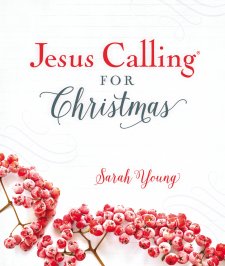
Jesus Calling For Christmas (book review)

I love how Sarah Young turns Scripture into Jesus addressing us in the first-Person! As we are approaching the Christmas season when we celebrate Christ’s First Advent on Earth, Sarah has used her God-given talent to tell us what Jesus Himself says about His Advent, and what the joyful implications are for us today, in her newest book Jesus Calling For Christmas. 

Most people usually think of Christmas as a time of joy, peace, and celebration. But this season should carry even greater meaning for Christians who know that we are celebrating Joy and Peace personified in Jesus Christ. So Sarah, reminding us of what Jesus would say, tells us, “In the midst of this busy Advent season, keep bringing your focus back to My holy Presence. Remember that Immanuel has come, and rejoice!” 

This book is easily readable around a family dinner table, or as a bedtime reading with children. The Christmas scenery captured in this book is beautiful, the words of Jesus are easy to understand, and the corresponding Scriptures make it easy to see how Christ’s arrival on Earth fulfilled all that was prophesied about Him. 

Children already seem to have a wide-eyed wonder about Christmas time, and adults would do well to learn from them. In fact, Sarah writes Jesus saying, “Gaze at the Glory of My birth, just as the shepherds did, and respond with childlike wonder.”

Children of all ages—even the “grownup” ones!—can experience Christ’s Advent in a whole new way by reading Jesus Calling For Christmas together this season. 

I am a Thomas Nelson book reviewer. 

Love Like That (book review)

Over the years, I have gleaned so many helpful relationship lessons from Dr. Les Parrott so I was excited when I heard about Love Like That. But what Dr. Parrott taught in this book was completely unexpected—how to love like Jesus loves. 

The title of the book is taken from The Message paraphrase of a verse in the Bible: Observe how Christ loved us. His love was not cautious but extravagant. He didn’t love in order to get something from us but to give everything of Himself to us. LOVE LIKE THAT (Ephesians 5:2).

Wow! Love like Jesus? How can we do that? Let me jump to the end of the book first. If you’re like me, sometimes you think the meat of the book is in the chapters and there is little value in a conclusion or appendix, but that is definitely not the case in Love Like That. In these two valuable sections, Dr. Parrott answers the question more specifically for us: HOW can I love like Jesus? 

The five main chapters of the book identify five ways Jesus loved. Each chapter has a definition of that trait, a self-test on how you currently measure up (which you can also take online), an example of how Jesus loved like that, the hindrances that keep us from loving like that, and how to overcome those hindrances. 

This book opened my eyes—and my heart—to how I can do a much, much better job of loving like Jesus loves. The way Dr. Parrott presents this information makes it seem like something even I can do. For the sake of others in your life, please read Love Like That.

I am a Thomas Nelson book reviewer. 

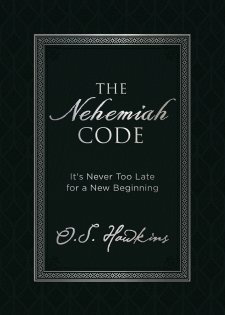
The Nehemiah Code (book review)

I love studying biblical leadership principles, the people who follow or violate those principles, the outcomes of their decisions, and the lessons that we can apply today from those stories. Probably everyone has had something fall apart in their lives that needed to be rebuilt. If so, you will love the biblical leadership principles that O.S. Hawkins reveals in The Nehemiah Code. 

Nehemiah comes on the scene after the Jewish people have been in exile for 70 years, but they are now allowed to return to their homeland. However, there’s an embarrassing problem: the walls around Jerusalem are in utter disrepair and the city gates have been burned away to ash. The returning exiles are wringing their hands over this sorry state of affairs for a long time until a rebuilding leader named Nehemiah comes on the scene. 

O.S. Hawkins shares the leadership principles Nehemiah employs to get the walls rebuilt and the gates rehung—a massive project that he was able to accomplish in just 52 days! But the powerful thing about the way Rev. Hawkins shares these principles is that they are all applicable to rebuilding projects we face today. 

Maybe you don’t have city walls to rebuild, but perhaps your marriage has crumbled, or your status at work has fallen apart, or you’ve done damage to your integrity. Whatever rebuilding project you need to undertake, you will find principles in The Nehemiah Project that you will be able to put into practice today! As Rev. Hawkins says over and over: It’s never too late for a new beginning. 

Whether you have a rebuilding project of your own, you would like to come alongside a friend who is rebuilding something in their own life, or you are simply a God-honoring leader that wants to expand your leadership capacity, this book will help you soar. 

I am a Thomas Nelson book reviewer. 

Developing The Leader Within You 2.0 (book review)

I not only read John Maxwell’s Developing The Leader Within You for myself many years ago, but I have used the content from this book in numerous teaching settings. When I heard that a 25th-anniversary edition of the book was being published, I originally thought of young people to whom I could introduce this helpful book. 

But I was totally blown away to discover that although Dr. Maxwell had promised his publisher that he would revise 15 percent of the book, he actually revised 89 percent of the book! So not only am I excited to get this book in front of people who haven’t read it previously, I’m also encouraging those who read the first edition to get a copy of Developing The Leader Within You 2.0.

In leadership it’s quite simple—you cannot teach accurately what you haven’t internalized yourself, or else risk being called a hypocrite. So any leadership teaching must start with the leader being educated and expanded as a leader himself or herself. I can think of no better resource on the market than this book. 

In typical fashion, Dr. Maxwell masterfully weaves together leadership principles, supporting quotes, transparently personal stories of how he has—sometimes painfully—learned the principles he is teaching, historical and contemporary examples of those who followed or violated these principles, and up-to-date findings from researchers and other front-lines leaders. 

Bottom line: this is a book that is loaded with content but is also very easy to read and apply. At the end of each chapter, you will find some very helpful application ideas for each of the ten principles Dr. Maxwell presents in this book. 

If you’ve already read 1.0, I encourage you to get a copy of 2.0. John Maxwell has learned so much since the first edition and he liberally shares it with us here. 

And if you’re an emerging leader, or simply want to take your leadership to a higher level, this is an excellent foundational book for you to digest and apply.