Two Helpful Questions

Some people tell me that they don’t read the Bible for themselves because they don’t understand parts of what they read, or they don’t know what to do with the parts they do understand.

To which I reply, “That’s understandable.”

The Bible is filled with timeless principles given to us by an Eternal God. The principles may be timeless, but their application is not universal. For example, God’s timeless principle of, say, honoring your parents may be applied one way by someone living in the 12th century B.C. and applied completely differently by someone living today.

Same principle. Different application.

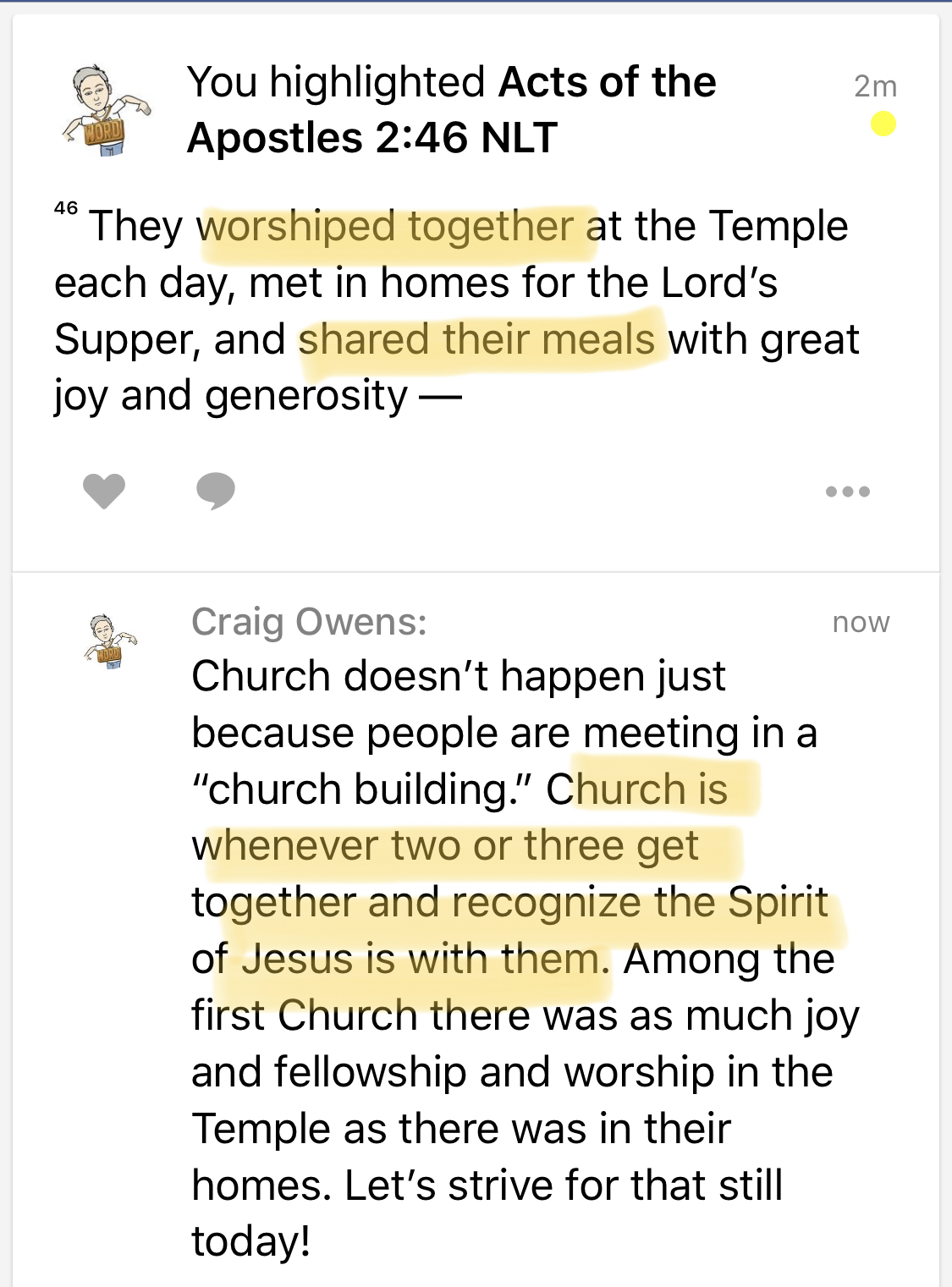
This is easy to say, but much harder to put into action. But I believe it is imperative that we continue to read God’s timeless principles in His Word and find daily application for our lives. So I’d like to suggest two questions to help you in this pursuit. They are the same two questions that people asked the day of Peter’s first sermon after the birth of the Christian church. Try these the next time you read your Bible:

  • What does this mean? (Acts 2:12)
  • What should I do? (Acts 2:37)

Don’t avoid reading the Bible. And don’t approach the Bible the way Søren Kierkegaard said some people do: “Many read the Bible the way a mouse tries to remove the cheese from a trap: trying not to get caught.”

I’m still learning too. Two things that help me immensely: (1) Pray before I read my Bible, asking the Holy Spirit to illuminate His inspired Word, and (2) Talk with other wise friends about the application questions I have.

If you have some strategies that are working for you, please share them in the comments below.

An Obvious Investment

It’s one of the most obvious investment considerations of all time: Where am I going to get the best return on my investment?

Let’s take a little quiz on your investing savvy. If I gave you some money to invest, and you had to invest it all in just one of these two companies, which would you choose:

  • Company A which has only had one profitable year in the past decade.
  • Company B which has been profitable for nine of the past 10 years.

There’s really not much to consider here, is there? Even the most novice of investors is going to pick Company B.

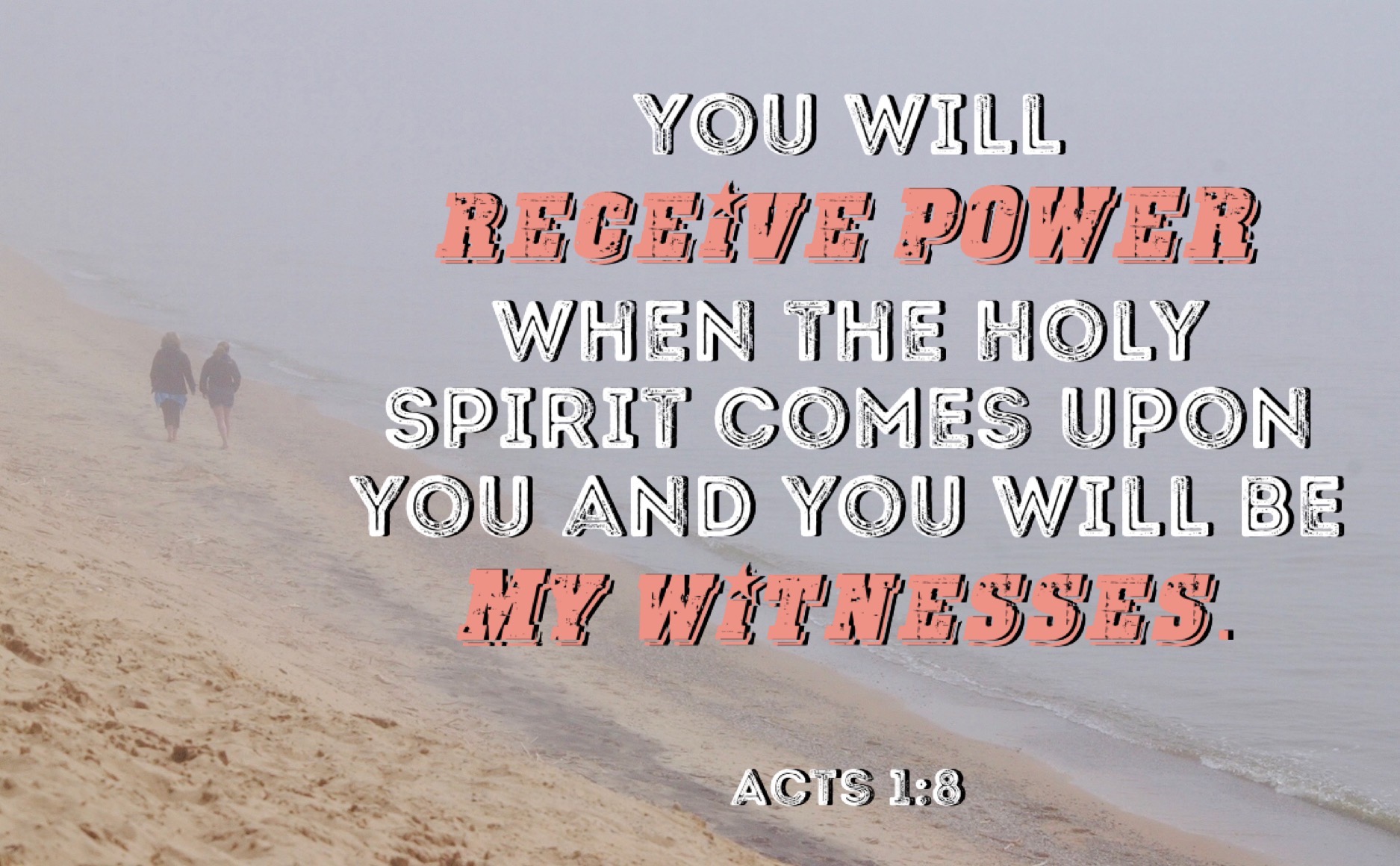
Project A18In our World Changers group, we have been heartstorming about our role in missions. We’re getting ready to launch Project A1:8. Jesus told His followers to be empowered by the Holy Spirit to be witnesses in Jerusalem, Judea, Samaria, and the ends of the earth. In other words, to use the Holy Spirit’s power to make wise investments in people. One of the wisest investments we can make is where the return on investment potential is the highest… sort of like investing in Company B.
How about this profit potential: 90% of people who accept Jesus as their personal Savior do so before the age of 18. Investing in young people is like investing in Company B that was profitable in nine of the previous 10 years. So that’s what we’ve chosen as our Jerusalem.

It was awesome to see our group of World Changers come alive as one idea after another began to bounce around the room about making the investment into kids.

I’m excited to see the return on investment God will give us!

Your Mission Field

Be honest: when you think of “mission field” what are the first images that come to your mind? Africa? India? Primitive living conditions? Non-English speaking people? I think that’s what most people think of. To tell the truth, that’s what I used to envision.

But notice what Jesus said to His followers just before He ascended into heaven:

But you will receive power when the Holy Spirit comes on you; and you will be My witnesses in Jerusalem, and in all Judea and Samaria, and to the ends of the earth.

The first mission field Jesus directed His followers to was Jerusalem. This was their “home town.” Maybe not the city they grew up in, but it was where Jesus conducted much of His public ministry; a place that His followers were intimately familiar with; the city where they currently lived.

  • They knew the language.
  • They knew the customs.
  • They knew the layout of the city.
  • They knew the elected officials.
  • They knew the religious officials.
  • They knew the local merchants.
  • They knew where the synagogues and schools were.
  • They knew this town.

Jesus didn’t call them first to someplace totally outside of their comfort zone. He called them to begin in their immediate surroundings.

Ponder this: you live in your “Jerusalem” and Jesus has called you to look at your city as your mission field. Your job … your school … your neighborhood … your barbershop … your local restaurants … these are all your mission field.

Don’t misunderstand: Missions is a worldwide endeavor, but don’t miss the point that your hometown is just as much a mission field as the other side of the globe is. 

Strive to always be missionary-minded. Ask the Holy Spirit to empower you, and then go be an effective missionary in your Jerusalem first, and then allow God to expand your missions involvement to the ends of the earth.

Still Learning

I live by the axiom, “If you’re through learning, you’re through.” So I try to learn something new every day.

I just finished a class called New Testament Survey: a quick overview of the 27 books that compromise the New Testament of the Bible. Here’s a couple of interesting factoids I picked up from my studies:

  • The earliest-written book was James. Interesting, because at one point James thought Jesus (his half-brother) was nuts.
  • Only Matthew uses the term kingdom of heaven; all of the other writers use kingdom of God.
  • Mark uses the word immediately more times than anyone else. Perhaps because his source (Peter) was always doing things so quickly… sort of a ready, FIRE!, aim kinda guy.
  • Luke wrote what is called “the global gospel” for everyone, so he included 45 teachings/events that no one else records.
  • John doesn’t record any of Jesus’ parables.
  • John uses the word believe nearly 100 times— way more than any other writer.
  • Luke talks about the Holy Spirit nearly 60 times in the 28 chapters of Acts.
  • Romans is the longest of Paul’s epistles with 7101 words; Philemon is the shortest with just 355 words.
  • With the exception of the pastoral epistles (1 Timothy, 2 Timothy, Titus) Paul’s letters are arranged in the Bible from longest to shortest.
  • In 1 & 2 Thessalonians (only 136 verses) Paul refers to God, Christ, the Holy Spirit, or a combination thereof more than 150 times.
  • Paul gives Timothy seven word pictures to describe the kind of pastor he should be: son, soldier, athlete, farmer, workman, instrument, and servant.
  • Hebrews is called “the book of better things” so better is used 13 times. This word is used only six times in the remaining 26 books of the New Testament.
  • James wrote 108 verses but issues 50+ direct commands.
  • In John’s three short epistles he uses the word know 33 times, and the word dear ten times.

Keep on learning! There’s a lot of good stuff out there. What have you learned lately?

God’s Originality

Have you ever noticed all of the different ways that God reveals Himself to people? He is original with every original person.

I love looking at the Aha! moments that people have. You know, the moments when the light comes on and they understand Who God is to them?

  • When Jethro heard how God delivered Moses and the Israelites from Egypt he said, “Now I know that the true God is greater than all other gods.”
  • When Elijah raised a dead boy back to life the boy’s mother said, “Now I know that you are a man of God and that you only speak His words.”
  • When Naaman was healed of leprosy he said to Elisha, “Now I know that there is only one true God.”
  • When David recalled all the ways God has delivered him from certain disaster he sang, “Now I know that the Lord saves His anointed.”
  • When Peter was delivered from prison by an angel he said, “Now I know that God did this.”

(check out the references for these examples by clicking here)

God reveals Himself uniquely to everyone because we’re all unique originals.

“Let God be as original with other people as He is with you.” —Oswald Chambers

Here’s the problem with God’s originality: We try to make our unique experience with God a universal experience for everyone else. We think that because He did it such-and-such a way for us that everyone ought to experience it the same way.

Wrong!

Think about the deliverance from lions in the Bible. In Samson’s case, God gave him supernatural strength to kill a lion with his bare hands; Benaiah went into a pit to kill a lion with his club; Daniel never even touched the lions, and they couldn’t touch him either.

Imagine if Samson was there with Benaiah: “Hey, brother, if you’re going to go after that lion, just wait on God to give you supernatural strength. If you really had faith, you would lose that club!”

Imagine if Benaiah and Samson were giving lion-killing advice to Daniel: “My friend,” Benaiah might say, “Please use my club.” And Samson would interrupt, “How many times do I have to tell you? No clubs!” Yet in Daniel’s case, God wanted the lions alive.

Perhaps you had your “Now I know” moment after a prolonged struggle in a particular area. Your tendency would be to tell others, “Get on your knees and pray and pray and pray. Pray really hard! It might take years, but God will eventually help you breakthrough.” Perhaps God wants to deliver someone else instantly.

Perhaps your “Now I know moment” came while reading from the King James Version of the Bible. Your tendency is going to be to hand out KJVs to everyone. Perhaps God is going to speak to someone through the New Century Version.

Let God be original with you. Let Him uniquely work with others too. Don’t make your “Now I know” experience the theology which rules everyone around you.

I’m so glad God is unique with every unique individual because each of us is a one-of-a-kind original!

League Of Extraordinary Christians

Good friends of ours, Jeff & Becky Kennedy, were at church this morning. Jeff brought us a challenging word entitled “The League Of Extraordinary Christians.”

I love the narrative in Acts 4:13: When they saw the courage of Peter and John and realized that they were unschooled, ordinary men, they were astonished and they took note that these men had been with Jesus. Peter and John were ordinary men who walked with Jesus.

By ourselves, we are ordinary; Jesus is the extra.

Extra Time With Jesus + Ordinary Me =
Extraordinary Christian

Ordinary people don’t change their worlds. Ordinary churches don’t attract hungry, hurting people.

But extraordinary people and extraordinary churches are world changers!

I desire for 2009 to be an extraordinary year. I desire that people take note that I have been with Jesus.

Are you ready to spend that extra time with Jesus? Are you ready to be extraordinary this year?