Open Door

Listen to the podcast of this post by clicking on the player below, and you can also subscribe on Apple or Spotify.

The phrase open door shows up several times in the New Testament, and it shows up quite a bit in the present-day vocabulary of many Christians too. But I’m not sure we mean the same thing.

I hear Christians saying things like, “I’m praying for God to open a door for a new job,” or “I’m waiting to see what door God will open for my schooling,” or something to that effect. In other words, the open door seems to be for our personal benefit.

The apostle Paul said this:

A great door for effective work has opened to me, and there are many who oppose me (1 Corinthians 16:9).

Let’s get one thing clear: God opens doors (we don’t), and our job is to obediently walk through those open doors (God won’t shove us through them).

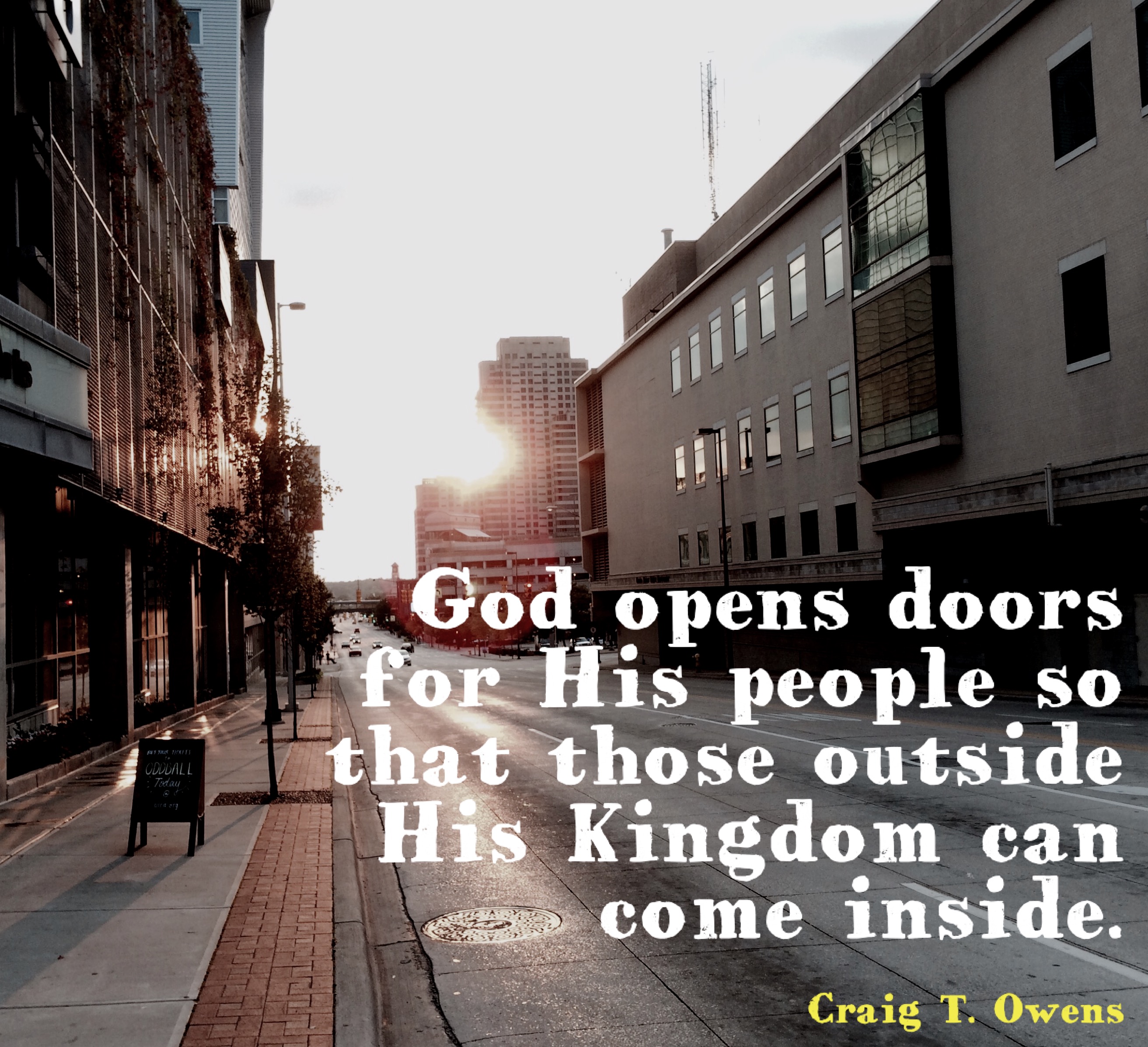
Paul knew that the open door was not for his benefit, but for the benefit of those who were presently outside of the Kingdom of God. God opens doors for His people so that those outside His Kingdom can come inside (see Acts 14:27; 2 Corinthians 2:12; Colossians 4:3).

It might look like God opened a door by providing a job, but that job is His means to help you invite others into His Kingdom. The open door (the job, in this case) isn’t primarily for you; it’s for you to invite others in.

That’s why when God opens doors there will be many who oppose you. They are not really opposing you, but they are opposing the opportunity for the kingdom of darkness to be robbed and the Kingdom of God to be enriched.

So when you pray for open doors, remember:

  • When God opens a door, it’s mainly for the benefit of those outside the Kingdom of Heaven
  • You will be opposed by the kingdom of darkness

If you’re ready for both of those, then by all means pray for open doors!

►► Would you please prayerfully consider supporting this ministry? ◀︎◀︎

My Prayer

I want people to say this after every encounter with me: Everyone was gripped with great wonder and awe, and they praised God, exclaiming, “We have seen amazing things today!” (Luke 5:26)

Why not?

Why do I think this should be something just in the past? Didn’t Jesus say…

I tell you the truth, anyone who believes in Me will do the same works I have done, and even greater works, because I am going to be with the Father. You can ask for anything in My name, and I will do it, so that the Son can bring glory to the Father. Yes, ask Me for anything in My name, and I will do it! (John 14:12-14)

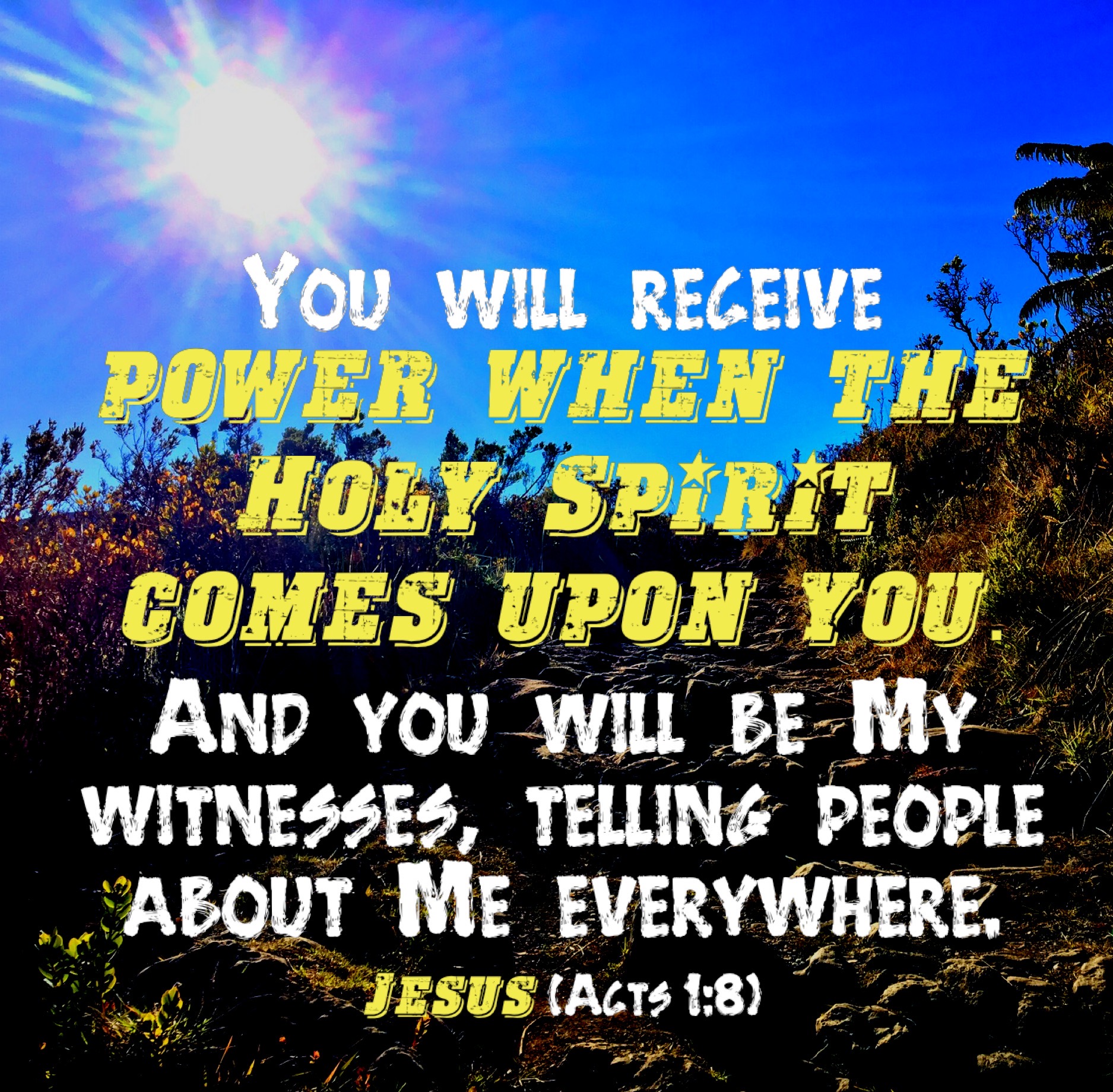
Jesus continues in John 14 to talk about the help the Holy Spirit would bring us. And in Acts 1:8 Jesus tells us that the Holy Spirit is the source of power for being living witnesses.

Oh, how I want the Spirit’s presence!

To be filled.

To be changed.

To be fruitful.

To be a witness.

To bring glory to God!

Let it be: Everyone was gripped with great wonder and awe, and they praised God, exclaiming, “We have seen amazing things today!”

That’s my prayer.

Immersed

What happens when we truly let the Holy Spirit have His way in our lives?

Could we experience today the things that are recorded in the Book of Acts?

Is it possible that God wants to do so much more through our lives than we are allowing Him to do now?

That last question, I believe is the most important one. One of the apostle Paul’s prayers went like this:

And I pray that you, being rooted and established in love, may have power, together with all the saints, to grasp how wide and long and high and deep is the love of Christ, and to know this love that surpasses knowledge — that you may be filled to the measure of all the fullness of God. Now to Him who is able to do immeasurably more than all we ask or imagine, according to His power that is at work within us, to Him be glory in the church and in Christ Jesus throughout all generations, for ever and ever! Amen. (Ephesians 3:17-21)

This is an expansive prayer … a mind-blowing prayer … a prayer that is asking God to go beyond our ability to contain all that He has for us.

The only way we can get to this place (and I want all of us to get to this place) is if we let go. In other words, if we will let the Holy Spirit totally immerse us in His presence, if we will not try to box Him up, or shut Him out of any area of our lives.

We’ll be learning more about Immersed this Sunday at Calvary Assembly of God. If you’ve missed any of the messages in this series, you can check them out here:

Always Be The Majority

In Acts 27, Paul is on his way to Rome to stand trial before Caesar. The weather has hindered them, so they are currently behind schedule. As they are docked at a town called Lasea, Paul advises the ship’s crew that they should stay right where they are.

But then comes this key phrase: “The majority decided that we should sail on” (Acts 27:12).

The majority in this case includes the sailing experts: the sailors, the ship captain, and even the ship’s owner. Julius, the centurion in charge of Paul, even sided with the majority.

But the majority was wrong.

As the ship is being ripped apart and driven way off course by a fierce storm, this majority even begins to give up on living through this nightmare.

But one man—Paul—with a word from God and “faith in God that it will happen just as He told me” (v. 25), became the most influential voice. From this point on, everyone listened to Paul: the sailors, the captain, the centurion.

One man + Faith in God’s Word = A Majority

Are you in a storm?

Is the majority telling you what you should do?

What has God said to you? Have you heard His Word?

Once you hear from God, cling to that Word in faith, and you will be the influential majority.

Not Playing It Safe

Listen to the podcast of this post by clicking on the player below, and you can also subscribe on AppleSpotify, or Audible.

Sometimes I like to think about counterfactual history. That means thinking about the “What ifs” of historical events. What if George Washington had been killed in battle? What if a congressman had voted a different way? And so on.

Here’s one I was thinking about as I read the Book of Acts: What if Paul had prayed, “God, keep me safe”?

Over the last few chapters of Acts, Paul has the opportunity to share the gospel with…

  • the Jewish Sanhedrin
  • Claudius Lysias, a Roman garrison commander
  • two Roman governors (Felix and Festus)
  • Ananias, the high priest in Israel
  • Tertullus, a noted attorney
  • King Agrippa and his wife Bernice
  • a Roman centurion named Julius
  • Publius, the chief Roman official on Malta
  • the leading Jews in Rome
  • and the Roman Caesar

That’s quite an impressive list! But here’s the deal: Paul only got to speak to these high-ranking and influential people because he was a prisoner.

Paul could have prayed for a “safe life.” He could have run away. He could have disobeyed. Instead, he was willing to let God use him anytime, anyplace, anyway.

Isn’t that really the opening line of the Lord’s Prayer? Your Kingdom come, Your will be done.

Is that what I really want?

Or do I want to play it safe?

Phillips Brooks had another thought about how we should pray:

“Do not pray for easy lives; pray to be stronger men. Do not pray for tasks equal to your powers; pray for powers equal to your tasks. Then the doing of your work shall be no miracle; but you shall be a miracle.”

I don’t want to play it safe. I want to be strong enough, obedient enough, and willing enough to let God use me anytime, anyplace, anyway. I hope you will join me in that prayer.

►► Would you please prayerfully consider supporting this ministry? My Patreon supporters get behind-the-scenes access to exclusive materials. ◀︎◀︎

United Redux

What a fantastic day we had yesterday! All of the churches in Cedar Springs joined together in a united worship service—which was very appropriately named UNITED.

In the book of Acts there is a great word that characterizes the first Church: together.

They all joined together constantly in prayer (1:14)

They were all together in one place (2:1)

All the believers were together and had everything in common (2:44)

Every day they continued to meet together (2:46)

They raised their voices together in prayer to God (4:24)

They gathered the church together and reported all that God had done (14:27)

We came together to break bread (20:7)

I love the fact that the other pastors in the Cedar Springs Ministerial Association want to work together. We realize that it will take our combined efforts to make a significant impact in our community for the Kingdom of Heaven.

Our annual UNITED service is a visible reminder of what’s going on year-round in Cedar Springs. We are together to bring glory to Christ.

What’s Your Take On “Church”?

Here’s what I want to see…

From the book of Acts:

All the believers devoted themselves to the apostles’ teaching, and to fellowship, and to sharing in meals (including the Lord’s Supper), and to prayer. A deep sense of awe came over them all, and the apostles performed many miraculous signs and wonders. And all the believers met together in one place and shared everything they had. They sold their property and possessions and shared the money with those in need. They worshiped together at the Temple each day, met in homes for the Lord’s Supper, and shared their meals with great joy and generosity—all the while praising God and enjoying the goodwill of all the people. And each day the Lord added to their fellowship those who were being saved. (Acts 2:42-47, New Living Translation)

Here’s how N.T. Wright puts it:

“The life of believers, individually and collectively, is intended to incarnate the biblical reality of human dignity. The church is called to be an alternative society, living in contrasting style in the midst of the world. Its members are, in God’s design, not self-promoting, as the world is; they are not competitive, as the world is; they do not advance at the expense of others, as the world does; they do not take advantage of the weakness of others, as the world does. They love one another and do good to and for one another. Failing that, there is no compelling reason for the world to pay attention. Which is to say that the only means by which Christians can commend a truly godly vision of human rights is to incarnate them in their individual and collective lives, to announce God’s actions and intentions that constitute the Gospel, and to act justly in the name of God.”

And Rubel Shelly’s take:

“It is a mistake of monumental proportions to think that the priestly ministry of the church is a Sunday-focused event. It is the whole life of the whole church that is our living-body sacrifice to the Lord. Sunday praise is to be joined with Tuesday work and Thursday golf, Wednesday family life and Saturday yard work. Everything in the life of a Christian is to be seamless in terms of its appropriateness for displaying the excellence of God’s heart and character.”

What’s your take?

The Right Person For The Job

Employers and pastors both have the important task of putting people into positions of responsibility. Employers do so to make their businesses more profitable; pastors do so to expand the Kingdom of God.

But employers do something that pastors often miss: They hire the right person for the job.

Check out this verse:

Kenaniah the head Levite was in charge of the singing; that was his responsibility because he was skillful at it.

Simply put: Kenaniah was in charge of the singing because he could sing; he could carry a tune; he had skill; his singing was pleasant to the worshippers in the tabernacle. This word skillful also implies that he knew how to teach others too.

You give someone the job because they are skillful at it. Not because their feelings would be hurt if you gave the job to someone else, not because you hope giving them the job will boost their self-esteem. This is just as true in the church as it is in the business world.

The way I read the Bible, everyone has a talent. One of the roles of a shepherd leader is to find the right place for every person’s talent. Pastors do a disservice to both the individual and to the whole church body when they give someone a job for which they do not have the God-given talent.

Engaging Culture

I read something very interesting: Next to Christmas, more money is spent on Halloween than on any other holiday event. Halloween?!? Wow! We’re in the midst of planning our church’s role on Halloween night, so I’ve been thinking quite a bit about engaging our culture.

It’s better to light a candle than to curse the darkness.

So here’s how I think followers of Jesus Christ should light a candle to engage culture:

(1) Have the right motivation. In Jesus’ inaugural sermon, He said He was coming to preach the Good News about God’s love. He purposely left out the part of Isaiah’s prophesy that talked about God’s coming judgment. There will be a time for that, but for now, our motivation should be to make known the favor of the Lord.

(2) Get out of your box. If you only hang around with Christians, your ability to effectively engage culture will be diminished. If you never get around others, it’s sort of like salt that sits in the saltshaker too long. Paul told the Athenians that he had been walking around their city looking at their culture.

(3) Listen. As Paul talked to the Athenians, he quoted their poets to them. He knew what they were listening to because he was listening too. What are people watching on TV? What movies are they talking about? What music are they listening to? You can find the key to their heart by knowing something about what interests them.

(4) Collaborate. There are lots of other faith-based organizations, non-government organizations, and churches that are already active in your community. Join forces with them.

(5) Just be there. Go to local restaurants, cheer on the local sports teams, join a rec league team, attend the city council meetings, volunteer at a shelter or food pantry. Just be there! After a while, people will begin to ask you why you are so involved, and you’ll have a great platform to speak to them.

It started when God said, “Light up the darkness!” and our lives filled up with light as we saw and understood God in the face of Christ, all bright and beautiful.

Are you engaging your culture? It’s time to go shine!

Outlive Your Life (book review)

When I hear “Max Lucado has a new book coming out,” I’m like a kid waiting for Christmas! And just like those kids on Christmas morning, when I received Outlive Your Life, I tore into this book, and scarcely put it down until I devoured it.

I love the concept: The impact your life makes can live on far after your physical life has ended here. To make his case, Max uses the example of Jesus’ first disciples whose dedication to spreading the Gospel of Jesus Christ has far outlived their first-century lives. Specifically, Max uses the first twelve chapters of Acts as the disciples begin this work right after Jesus has ascended back into heaven.

Max uses examples from 33 AD to show us a 2010 AD life application. What the original disciples did then, we 21st-century disciples can do now. As always, Max digs such timely truths out of the Scripture that makes it seem so relevant for today. For right now!

At the back of the book is a discussion and action guide which opens with the words, “Max wants you to do more than read about the book of Acts. He wants you to live out the twenty-ninth chapter, writing the story of the church for your generation.” I found both the discussion questions and action ideas personally challenging, and great conversation-starts for a small group or a Bible study.

It’s almost automatic that I give Max Lucado’s books an unreserved five-out-of-five stars, and this book is no exception. You’ll find so much in this book to apply to your life, your church, your ministry. And here’s another bonus: Max Lucado is giving 100% of his royalties to charities such as World Vision who are helping to make a life-changing difference in our world.

I am a Thomas Nelson book reviewer.