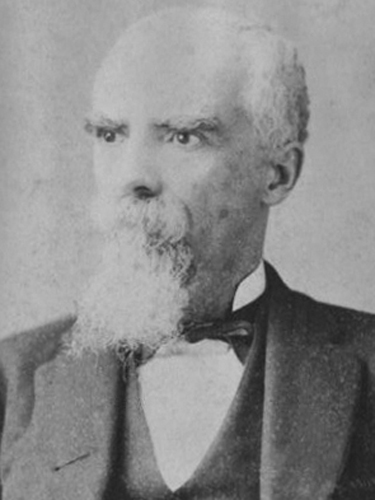
Saint Augustine And My Prezi

Several people have asked for some of the materials I shared this morning in our final installment of the P119 Spiritual Workout series.

Two quotes from Augustine—

“You stir us up to take delight in Your praise.”

“O Lord, my God, tell me what You are to me. Say to my soul, I am your salvation. Say it so that I can hear it. My heart is listening, Lord; open the ears of my heart and say to my soul, You are my salvation. Let me run toward this Voice and seize hold of You.”

And the link to the Prezi we used this morning can be found by clicking here.

I absolutely loved diving into Psalm 119 with my church! It’s a fascinating chapter, that I hope everyone will continue to use as their spiritual workout.

7 Quotes On The Spiritual Life From “The Book Of Man”

I really enjoyed reading The Book Of Man by William J. Bennett (you can read my book review here). The topics were very broad, so I’ll be sharing some of my favorite quotes on the different sections in this book over the next few days.

Here are seven quotes on man’s spiritual life…

I asked God for strength, that I might achieve;

I was made weak, that I might learn to humbly obey.

I asked for health, that I might do greater things;

I was given infirmity, that I might do better things.

I asked for riches, that I might be happy;

I was given poverty, that I might be wise.

I asked for power, that I might have the praise of men;

I was given weakness, that I might feel the need of God.

I asked for all things that I might enjoy life;

I was given life, that I might enjoy all things.

I got nothing I asked for but everything I had hoped for.

Almost despite myself, my unspoken prayers were answered.

I am, among men, most richly blessed. —Anonymous

“The time has come to turn to God and reassert our trust in Him for the healing of America. … Our country is in need of and ready for a spiritual renewal.” —Ronald Reagan

“What can be more excellent than prayer; what is more profitable to our life; what sweeter to our souls; what more sublime, in the course of our whole life, than the practice of prayer!” —Augustine

“Thou awakest us to delight in Thy praise; for Thou madest us for Thyself, and our heart is restless, until it repose in Thee.” —Augustine

“O gracious and Holy Father, give us wisdom to perceive Thee, intelligence to understand Thee, diligence to seek Thee, patience to wait for Thee, eyes to behold Thee, a heart to meditate upon Thee, and a life to proclaim Thee; through the power of the Spirit of Jesus Christ our Lord, amen.” —Saint Benedict of Nursia

“No human creature can believe, how powerful prayer is, and what it is able to effect, but only those that have learned it by experience.” —Martin Luther

“There are some men, who know a thousand other people, but who do not know their own selves; the greatest stranger to them, in the whole world, is their own heart. They have never looked into it, never talked with it, never examined it, never questioned it. They follow its evil devices, but they scarcely know that they have a heart, they so seldom look into it.” —Charles Spurgeon

Thursdays With Oswald—Jesus Can Satisfy

This is a weekly series with things I’m reading and pondering from Oswald Chambers. You can read the original seed thought here, or type “Thursdays With Oswald” in the search box to read more entries.

Jesus Can Satisfy 

     [There] are indications from innumerable passages in God’s Book which prove that this complex soul which we have been examining can be satisfied and placed in perfect harmony with itself and with God in its present existence. The thought that a human soul can fulfill the predestined purpose of God is a great one. The human soul, however, can also be stagnated by ignorance. In the beginning, we do not know the capabilities of our souls and are content to be ignorant; but when we come under the conviction of sin, we begin to understand the awful, unfathomable depths of our nature and the claim of Jesus Christ that He can satisfy this abyss. Every man who knows what his soul is capable of, knows its possibilities and terrors, but knows also the salvation of God, will bear equal testimony with the written Word of God that Jesus Christ can satisfy the living soul. 

From Biblical Psychology

I think Chambers explains why some people don’t read the Bible regularly. Because when we read the Word, the Holy Spirit does show us the abyss between where we are and where God wants our souls to be. Then we are convicted and restless. And, as Augustine said, “Our souls are restless until they find their rest in You.”

But with that realization of the separation—the abyss—also comes the recognition that Jesus paid the price for our atonement (our at one-ment). Our souls can find their full satisfaction here and now if we will just turn from the thoughts and practices that are separating us from God.

Don’t wait for the “sweet by and by” to find satisfaction with God:

  1. Read the Word
  2. Let the Holy Spirit convict you of the abyss in your soul
  3. Obey the Spirit’s prompting so you can repent
  4. Experience the at one-ment with God that Jesus paid for!

Plant The God Seed

Have you ever been disappointed because you had a dream that died? How do we justify this with the biblical definition of faith which says, “faith is being sure of what we hope for”?

It’s just this:

  • If God takes away a dream, it’s because the dream was too small.
  • God wants us to be more focused on the Dream Giver than we are on the dream.

So sometimes God asks us to let a dream die.

Think of a watermelon seed. It’s not very big, sort of dull in color, and it’s only a single seed. To plant the seed, means you have to take your hands off it: the seed is now out of your sight and out of your control. But it is there—dead in the ground—that a miracle happens!

A single watermelon seed grows 200,000 times its own weight! A colorless seed produces the vibrant greens and pinks of a mature watermelon. And that single seed produces 100+ seeds.

Has God given you a dream? Has He asked you to give up that dream? Then plant that seed! When you do, the results will be more than you can imagine.

“Faith is to believe what we do not see; and the reward of faith is to see what we believe.” —Augustine

These are some of my notes from part 3 of my See The Invisible series at Calvary Assembly of God. I would love to have you join me when we continue this series on September 4.

Thursdays With Oswald—Stay Away From Controversies

This is a weekly series with things I’m reading and pondering from Oswald Chambers. You can read the original seed thought here, or type “Thursdays With Oswald” in the search box to read more entries.

Stay Away From Controversies

     That is the danger of putting theology first; it leads a man to tell a lie in order to be consistent with his point of view. …In a theological dispute the theologian is apt to put his point of view in the place of God. … Only one man in a thousand can maintain his spiritual life and controvert; he may increase his intellectual vim, but he does not increase his spiritual grasp of things. Dr. Alexander Whyte put this better than any other when he said:

     “…Eschew controversy, my brethren, as you would eschew the entrance to hell itself. Let them have it their way; let them talk; let them write; let them correct you; let them traduce you; let them judge and condemn you; let them slay you. Rather let the truth of God suffer itself, than that love suffer. You do not have enough of the divine nature in you to be a controversialist.”

From Baffled To Fight Better

Augustine prayed: “Heal me of this lust of mine of always vindicating myself.”

When David was attacked he prayed: “I cry out to God Most High, to God, who vindicates me” (Psalm 57:2).

Who cares what others say? Who cares if you “lose” the argument? What does God say? Let Him—and Him alone—vindicate you.

From The Library Of A.W. Tozer (book review)

From The Library Of A.W. Tozer is an incredible gift from James Stuart Bell to not only fans of A.W. Tozer, but anyone who loves the spiritual classics.

A.W. Tozer was a prolific and influential author in the Pentecostal evangelical circles beginning in the 1960s, but his writings are still influencing thousands today. In reading Tozer, it is obvious that the Scripture is his first and foremost text, but it is equally as obvious that Tozer was a well-read student of the classics. In this compilation, James Stuart Bell gives us access to Tozer’s library. We can read for ourselves the writings that influenced the fertile and productive mind of Aiden Wilson Tozer.

Nicely arranged in eight broad sections, you will read the profound thoughts of Augustine, John Bunyan, Martin Luther, William Law, Charles Spurgeon, Dwight Moody, A.B. Simpson, and G. Morgan Campbell, to name just a few of my favorites. This is a book that you will not only pick up often, but one that will whet your appetite to read more of these classic works yourself.

A wonderful read!

I am a Bethany House book reviewer.

Pray First, Then Preach

As I have mentioned in earlier posts, not only is this a week of prayer for our church, but I have also declared 2011 to be The Year Of Answered Prayer. As a result, I’m reading and studying more about prayer, and praying more too.

This post is mostly for my fellow pastors.

Pastors, I came across two quotes this morning to which we should pay careful attention. The first is from Augustine’s On Christian Teaching, and the second is from E.M. Bounds’ Power Through Prayer.

“He should be in no doubt that any ability he has and however much he has derives more from his devotion to prayer than his dedication to oratory; and so, by praying for himself and for those he is about to address, he must become a man of prayer before becoming a man of words. As the hour of his address approaches, before he opens his thrusting lips he should lift his thirsting soul to God so that he may utter what he has drunk in and pour out what has filled him.” —Augustine

The character of our praying will determine the character of our preaching. Light praying will make light preaching. … The preacher must be preeminently a man of prayer. His heart must graduate in the school of prayer. In the school of prayer only can the heart learn to preach.” —E.M. Bounds

Before you prepare it, pray it.

Before you preach it, pray it.

After you preach it, pray it some more.

Pastors, let’s be men and women of prayer before we’re men and women of words.

Challenging Concepts

Part two of our Spiritual Self-Defense series went well last night. Considering this was a difficult concept to wrap our finite, human brains around, I felt that everyone was tuned in. Trying to wrestle with the concepts of God as omnipresent, the unique Three-in-One arrangement of the Trinity, or Jesus as fully God and fully Man are not easy. But it is so important to keep learning and keep growing in our understanding of who God is.

Some people bail out too quickly. “It’s too hard,” they complain, and then walk away. But we have to keep stretching.

A couple of thoughts I’m pondering today:

“If you believe what you like in the gospels, and reject what you don’t like, it is not the gospel you believe, but yourself.” —Augustine

“It seems that when we encounter a hard truth about God, we either bend our understanding to Him or bend Him to our understanding.” —Chris Tomlinson

I want to believe the Bible more, so I’m asking the Holy Spirit to continue to bend me and shape me to the deeper truths about God.

It’s A Love-Hate Thing

Are there things you love to do, but hate to do at the same time?

Ah, yes, that wonderful love-hate relationship. I spent most of the first part of this week in a love-hate thing, and I discovered yet again that love outweighs hate. To rediscover this, all I had to do was agree to walk through a funeral with a grieving family again.

I hate seeing families grieving. I love being able to share hope with them.

I hate how drained I feel after funerals. I love seeing the flicker of encouragement glow in others.

I hate tearful goodbyes. I love the knowledge of joyful reunions.

I hate preparing funeral messages that remind people of eternity. I love sharing that Jesus is the Promise of an eternity in heaven.

I hate having every eye in the room on me. I love seeing God speak His truth through me.

Yup, it’s true: walking through a funeral with a grieving family is—hands down—something that so drains me physically, emotionally, mentally, and spiritually more than anything else I do. But I wouldn’t trade this privilege to step into hurting people’s lives for anything. Yes, love triumphs over hate!

Justifying Myself

One of my favorite prayers is recorded in Psalm 139. It is such an intimate prayer of how well God knows us. I‘m frequently struck by the two thoughts that seem to contradict themselves in the opening and closing verses.

David begins his prayer, “O Lord, You have searched me and You know me. … You perceive my thoughts from afar.” But then he ends his prayer with these words, “Search me, O God, and know my heart; test me and know my anxious thoughts. See if there is any offensive way in me, and lead me in the way everlasting.”

Now why would David ask God to search his heart and his thoughts after he said God had already searched him? I think it‘s because our natural tendency is to justify ourselves. It goes like this: God searches us → He shows us things that need to be changed → We justify why we don‘t need to change those things → We try to forget what God had pointed out to us and move on.

When the Holy Spirit points out an anxious thought or an offensive way, our natural response is to quickly say, “Yes, but…

  • …I know I shouldn‘t have said that to her, but you don‘t know how she pushes my buttons!”
  • …I know it‘s wrong of me to desire that, but having it won‘t really hurt anything.”
  • …I know I should make that change in my behavior, but it‘s just not realistic in my current situation.”
  • …I know I should have talked to him about Christ, but it wasn‘t the right time.”
  • …I know my I‘ve been battling anxiety over this, but I‘m scared to make any changes because things might get worse!”

I echo Augustine‘s prayer: “O Lord, deliver me from this lust of always vindicating myself.”

David sets an example for me that I‘m trying to make a consistent practice in my life: Regularly allowing the Holy Spirit to search me for any anxious thoughts or offensive ways, and then addressing those without trying to justify or vindicate myself (no “yes-but‘s”). Because if I justify myself, I‘m really saying I know better than God what’s best for my life.

And all the while, God is simply trying to lead me in the way everlasting. He‘s trying to occupy more of my life with His presence.

If thou couldst empty all thyself of self.
Like to a shell dishabited,
Then might He find thee on the Ocean shelf,
And say, “This is not dead,”
And fill thee with Himself instead.
But thou art all replete with very thou,
And hast such shrewd activity,
That, when He comes, He says, “This is enow
Unto itself—‘Twere better let it be:
It is so small and full, there is no room for Me.“ —T.E. Brown

Are you making room for Him today? Or are you justifying the anxious thoughts and offensive ways the Holy Spirit is trying to reveal to you?