One Of The Most Unusual Stories

There is one of the most unusual stories inserted in Genesis 38. I say “inserted” because it almost seems out of place. In chapter 37, Joseph’s brothers have just sold him into slavery and convinced their Dad that a wild animal killed him. In chapter 39, we pick up Joseph’s story again as he arrives in Egypt.

Genesis 38 has a story that doesn’t fit in Joseph’s story. It’s sort of a giant parenthesis. Not only that, it’s a story of mistake after error after mess up after bad judgment after more mistakes.

Judah, an older brother of Joseph, came up with the idea of selling him instead of killing him. Perhaps being around his co-conspirators was too difficult for him, so Judah left town.

  • Mistake #1: not dealing with his guilt and sin, but running away from it.

Judah married a Canaanite woman.

  • Mistake #2: inter-marrying with a non-God-fearing culture.

Judah gave his son Er in marriage to Tamar.

  • Mistake #3: allowing his son to inter-marry with the Canaanites too.

Er sinned. The Bible doesn’t say what it was, but it was so offensive that God put him to death.

  • Mistake #4: sin against God.

Onan (Judah’s second son) sinned. He had a familial responsibility to his brother and sister-in-law’s family line, but he snubbed them both.

  • Mistake #5: more sin against God.
  • Mistake #6: disregard for family.

Judah promised Shelah (his third son) to Tamar. But he procrastinated in following through on that because he thought Tamar was a black widow.

  • Mistake #7: deception.

Tamar disguised herself as a prostitute and waited along the road for Judah.

  • Mistake #8: more deception.

Judah slept with his daughter-in-law Tamar (yuck!), thinking she was a prostitute.

  • Mistake #9: fornication.
  • Mistake #10: incest.

Tamar became pregnant, and Judah wanted to have her publically punished for her infidelity.

  • Mistake #11: hypocrisy.

That’s a whole lot of sin and error and lapses in judgment and mistakes for just one family. What a mess this family had become! So, why in the world is this story inserted here? Because Tamar had twins: Perez and Zerah. In listing the royal, kingly genealogy of Jesus, Matthew writes

A record of the genealogy of Jesus Christ the son of David, the son of Abraham:
Abraham was the father of Isaac, Isaac the father of Jacob, Jacob the father of Judah and his brothers, Judah the father of Perez and Zerah, whose mother was Tamar.

Perez is listed in the genealogy of Jesus. God took all of those mistakes and made something great come from it!

It doesn’t matter how many mistakes you’ve made. It doesn’t matter how many times you think you’ve blown it. It doesn’t matter how many lapses in judgment you’ve had. God still has a plan for you. He wants to do something great through you. Will you let Him?
Land Of Combustion

Guest Author: Dick Brogden

Wilson is a Southern Sudanese Christian who heads the bio water filter project in Eastern Sudan. Made from local materials (cement, gravel, sand) these three-foot-high filters can provide clean water to whole families. In the last two years, Wilson has made and placed over 600 filters, primarily in Muslim homes. This service has opened the door for him to share his faith in Jesus.

A few weeks ago, a Muslim family approached Wilson with a problem. Their home was full of demonic activity. Furniture would be moved around in the night, items in the house would spontaneously combust, the bursting flames destroying many family possessions.

The Muslim family consulted a Muslim Sheikh who demanded $10,000 to exorcise the house. He came, did his Islamic chants, and left a Koran for the family to use to ward off the evil. That night, the Koran burst into flames and was destroyed. In desperation, the family turned to Wilson.

Wilson turned them to Jesus. He explained that protection follows Lordship and that the family had to repent of sin and turn to Jesus as Savior in order to be under His covering. Not rushing things, he took adequate time to walk the family through what it meant to be a sinner and for Jesus to be the only Savior. The family openly confessed their sin, repented, and invited Jesus to be Lord and Savior. Only then did Wilson walk through the house praying over every room.

When Wilson left, he gave the family a Bible. “Oh no,” they said, “We do not want this to burst into flames as well.” Wilson gently told them that this was the real Word of God, and that as the house now was under the protection of Jesus all would be well.

The next morning the new believers called Wilson. “This is great!” they said. “No demons, and nothing has happened to the Bible.”

Water and Fire. What a great combination.

Dick Brogden and his family have served as missionaries in Sudan for 14 years.

The Barbarian Way (book review)

With so many to follow or listen to, Erwin McManus is one of the select few pastors I tune into on a regular basis. I was never really sure what it is about Erwin that so resonates with me until I read The Barbarian Way. Now I have a reason for what I’ve always felt: I’m a barbarian too.

Religion bores me.

Religious people are de-motivating.

Denominations spend too much time with the already-churched.

Civilized Christianity is unremarkable.

Keying in on the life of John The Baptizer, Erwin takes an entirely different tact. John was so out of the religious mainstream: a long-haired, weird dresser who lived in the wilderness, eating locusts and honey, and preaching about Jesus. And, by the way, his ministry drew both the seeker and the civilized God-follower.

The seekers were both fascinated and motivated by John’s message. The religious were repulsed at the barbarity of John’s call to repentance. It was the same with Jesus’ ministry: the seekers were energized and liberated by Christ’s words; the religious were incensed.

What about me? Are my message and lifestyle barbaric enough to resonate with those seeking a relationship with Christ? Does it draw them into that relationship? Or do I live so tamed and civilized that only the religious people like my lifestyle?

Here’s how Erwin puts it:

“Civility focuses our energy on all the wrong places. We spend our lives emphasizing our personal development and spiritual well-being. We build churches that become nothing more than hiding places for the faithful while pretending that our actions are for the good of the world. … It may seem counterintuitive, but the more civilized we seem to become, the more detached from the pain of others we end up finding ourselves. The most civilized churches have really no practical concern for people outside their congregations. The brokenness of a lost and unbelieving world is not enough to inspire the painful changes necessary to make the church relevant to the world in which we live.”

I love the barbarian way of living. The Barbarian Way simply put words to what my heart was already crying out.

I am a Thomas Nelson book reviewer.

It’s The Little Things

Valentine’s Day on Sunday—that just seems to fit! What a great day to love God and love others.

Betsy and I had a small gift for everyone this morning. A homemade cookie to say, “We love you.”

I’m wondering why we have to wait for “special” days to express our love. Isn’t that something we could do EVERY day?

Hmmm, year-round Valentines? I like it!

Look Alikes

Christmas In February

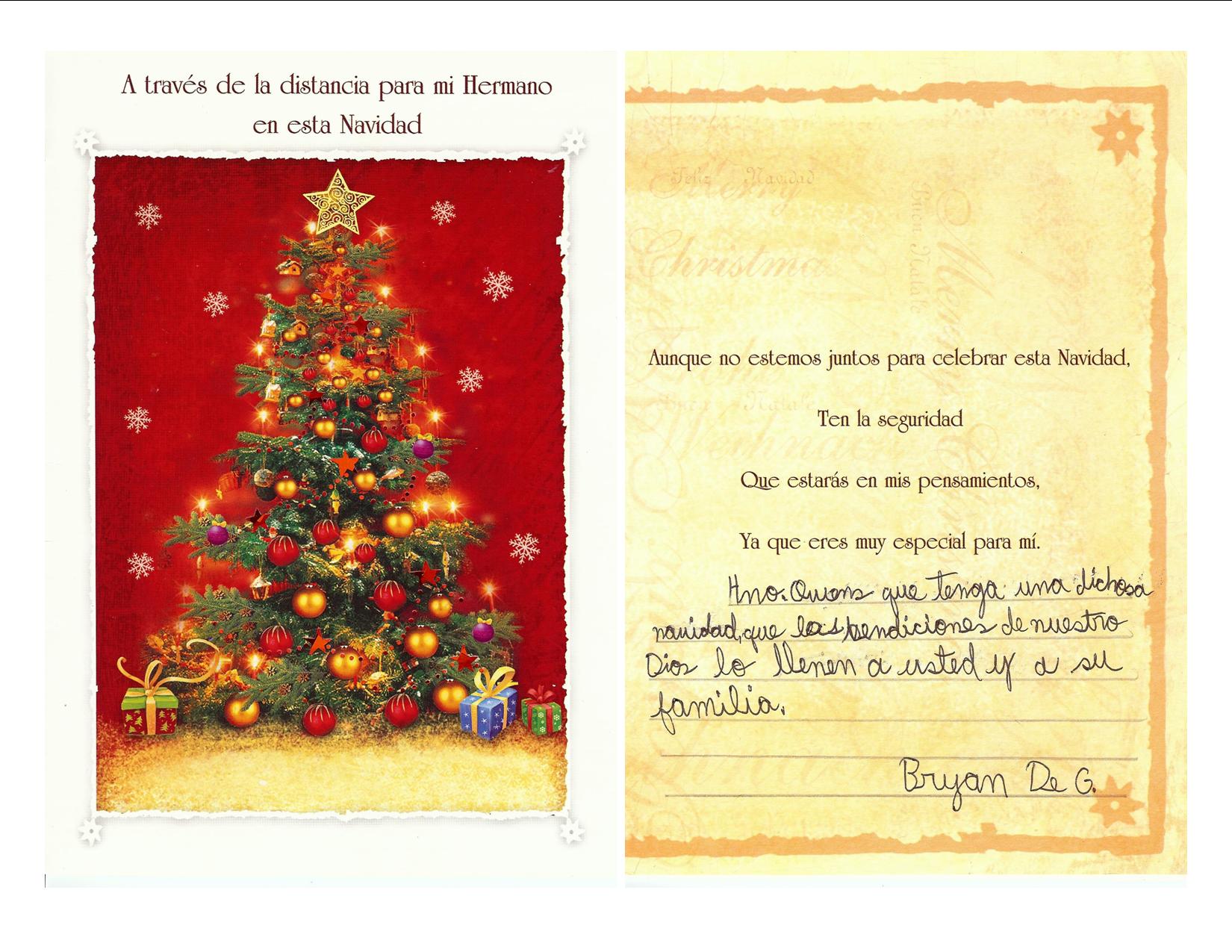
I shared with you in an earlier post that our family had taken on the sponsorship of Bryan DeGracia through Latin America Child Care. We were all very excited to be able to expand our family this way.

We received a nice surprise in the mail: a Christmas card from Bryan! We were told it would take a little time for our first correspondence with Bryan to begin. Now that it has we’re looking forward to getting to know him better.

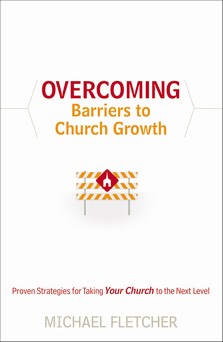
Overcoming Barriers To Church Growth (book review)

Hold on a second. I’m sure when you saw the title of Michael Fletcher’s book—Overcoming Barriers To Church Growththere were two thoughts that could have immediately popped in your mind: (1) “I’m not a pastor, so this book’s not for me”; or (2) “I am a pastor, but no one’s going to tell me how to grow my church.”

If you thought either of those things and didn’t explore this book any further, you’d really be robbing yourself.

In the case of the first objection (“I’m not a pastor”), Fletcher does a good job in making the case that church life is a team sport. The pastor cannot grow the church; the elders cannot grow the church; the attendees cannot grow the church. At least, not by themselves. Everyone needs to be involved for the church to be healthy.

In the case of the second objection (“No one’s going to tell me how to grow my church”), I would lovingly point out, “God opposes the proud, but gives grace to the humble.” Pastor Fletcher’s humble goal in writing this book was to help churches grow beyond the two natural barriers that every church will face. You’d be wise to let his hindsight be your foresight.

I found myself immediately drawn into this book. Michael’s writing style is very conversational and easy-flowing. And the concepts are uncomplicated and lend themselves to being quickly applied. The more I read the more excited I became about the potential in our church.

If you are a part of a church—pastor, elder, or attendee—you and your church will benefit from reading this book. Remember the church is a Body, so we all have our part to play in it. Arming yourself with the principles in this book will help you to play your part even better.

I’m a Bethany House book reviewer.

He Gave His Own Blood

I just read an amazing story about a West Michigan doctor working in Haiti. You can read the full article here, but let me highlight one section:

At a small health clinic east of capital city Port-Au-Prince, a teenage boy with a broken pelvis was dying from loss of blood.

West Michigan orthopedic surgeon Gregory Golladay sized up the options, then acted.

“He was the same blood type as me. He had a hemoglobin level of 5. You don’t have that and live long. His heart rate was 150. His blood pressure was 80 and going south. He was going to die.”

“I gave as much as I could into an IV bag and he lived,” recalled Golladay, 39, who is among a rotating group of physicians from Orthopedic Associates of Michigan offering critically needed medical care in Haiti.

“It is indescribable really. To see him survive was a very emotional experience. We said we were brothers and I believe it.”

Sounds just like Jesus, doesn’t it?

We were dying. Crushed by sin. There wasn’t much time left. Then Jesus came to earth to die on a Cross for you and me. He gave us His blood so that we could live:

For God so loved the world that He gave His one and only Son. That whoever would believe on Him should not die but have everlasting life. (John 3:16)

And now, when we accept what Jesus did for us, we are His brothers and sisters:

God decided in advance to adopt us into His own family by bringing us to Himself through Jesus Christ. This is what He wanted to do, and it gave Him great pleasure. (Ephesians 1:5)

Digging & Drinking

On Sunday we had our annual business meeting at Calvary Assembly of God. The actual business part was minimal. The more exciting things included hearing how God had blessed us last year, and looking forward to the greater things we can do for Him this year.

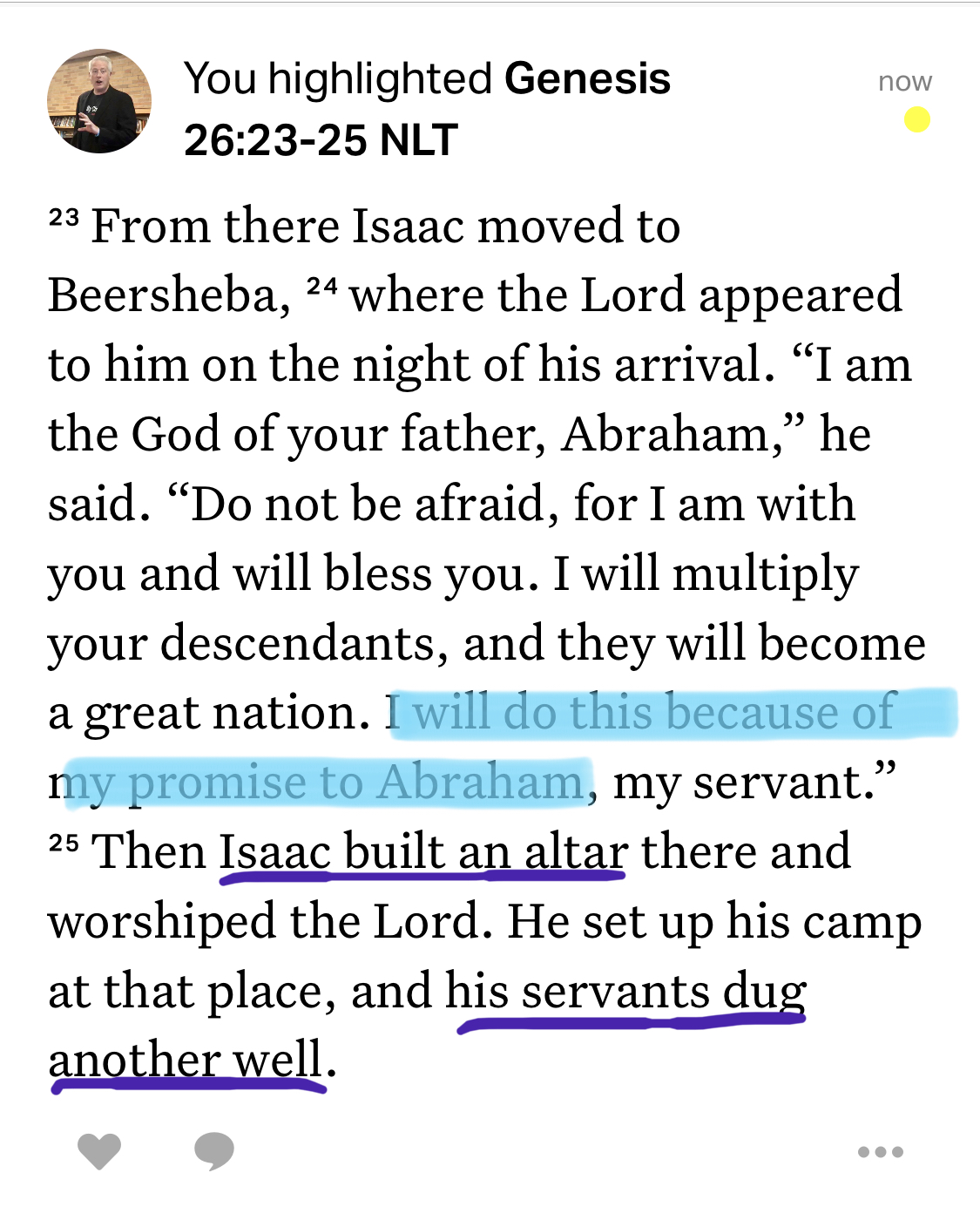
I shared a story from Genesis 26 about Isaac. This story just keeps rolling around in my mind.

Initially, God blessed Isaac just because he was Abraham’s son. God said, “Abraham obeyed me. He did everything I asked him to do, so I blessed him.” Then God challenged Isaac: “I am willing to bless you with even more if you, too, will follow Me.”

It’s interesting to note what Isaac did first. He reopened all of the old wells his father had dug, and he gave them the same name Abraham had given them…

…he honored the heritage of his father.

Honoring those who have gone before us is so important. But it’s not enough.

If Isaac was going to experience more of God’s blessings, he couldn’t be satisfied with just drinking from the old wells. Don’t get me wrong: it was good of him to reopen those wells…

…but if that’s all he did, he would have just maintained the status quo.

Isaac had to dig new wells. It didn’t start so well. The first two wells he tried to dig on his own led to quarrels with his neighbors…

…the enemy doesn’t fight against those who maintain the status quo.

…the enemy only quarrels with us when we try to dig new wells.

Isaac kept at it, and his third attempt was successful. Here’s the payoff:

…we can honor our heritage by reopening the old wells and drinking from them.

AND we can continue to dig new wells so that we can minister to more people.

It’s not EITHER-OR. It’s BOTH-AND.

I’m trying to maintain that balance…

…re-digging the old and drinking the new.

…looking back and looking forward.

…honoring our heritage and leaving a new legacy.

…digging and drinking.

Rats In My Cellar

We started our Love To The Fourth Power series yesterday morning, looking at what it means to Love God with all your heart… and to love your neighbor the same way. As usual, I’m speaking more to myself than I am to our congregation. During my study time, the Holy Spirit usually does a number on me!

So here’s the recap from yesterday:

  • Loving actions are fine, but loving REactions are more important.
  • The way I REact may say more about my love-with-all-my-heart level than the way I act.
  • In order to know if my REaction is compassion, I have to take the time to reflect on my REactions.

I love this picturesque quote from C.S. Lewis:

“When I come to my evening prayers and try to reckon up the sins of the day, nine times out of ten the most obvious one is some sin against charity; I have sulked or snapped or sneered or snubbed or stormed. And the excuse that immediately springs to mind is that the provocation was so sudden or unexpected. I was caught off my guard, I had not time to collect myself…. Surely what a man does when he is taken off guard is the best evidence of what sort of man he is. Surely what pops out before the man has time to put on a disguise is the truth. If there are rats in the cellar you are most likely to see them if you go in very suddenly. But the suddenness did not create the rats; it only prevents them from hiding. In the same way, the suddenness of the provocation does not make me an ill-tempered man: it only shows what an ill-tempered man I am….”

I’m working on looking for the rats in my cellar without making any excuses for how they got there. I just want the Holy Spirit to reveal them and help me eliminate them.

I want my REaction to be compassion all the time.