We went big for our Resurrection Sunday celebration. Instead of our usual format, we had two services, we provided breakfast for everyone, and we wrote and presented an original Easter drama. It was a stretch for us. Going big means:
More nights and weekends spent writing and rehearsing.
Recruiting more nursery workers.
Asking those nursery workers to give up being in the service to minister to our kids.
Spending Saturday setting up tables and chairs.
Spending money on food that we wouldn’t normally spend.
Asking our music team to come earlier and stay later.
Speaking twice.
But it was so worth it! At the end of the morning, 18 people invited Jesus into their life!
Since Jesus gave His life for these folks, I think it is a small sacrifice for us to give the money and time and effort that we gave.
I’m so proud of my cast and crew, and kitchen workers, and worship team members, and nursery workers. Not to mention all of our church members who invited family and friends to come to our Easter breakfast drama this morning.
Comfort, comfort My people, says your God. Speak tenderly to Jerusalem, and proclaim to her that her hard service has been completed, that her sin has been paid for, that she has received from the Lord’s hand double for all her sins.
That seems unfair! We receive double (!) for our sins! Here’s a brief video where I explain what this means culturally –
Only when invoices were paid-in-full did they get doubled-up.
The Bible tells us that we’ve all sinned, and that the invoice or penalty for our sin is death. We have the IOUs of sin nailed to the door of our heart where God says “You owe Me your life!” But we cannot pay this debt by ourselves.
But Jesus can. And Jesus did! Check this out –
He personally carried our sins in His body on the Cross…. (1 Peter 2:24, NLT)
Having cancelled and blotted out and wiped away the handwriting of the note with its legal decrees and demands which was in force and stood against us. This He set aside and cleared completely out of our way by nailing it to His Cross. (Colossians 2:14, AMP)
That’s what is good about Good Friday. Jesus knew that taking our sins on His body, and then allowing His body to be nailed to the Cross, would double-up and nail-down our sin once and for all!
When Jesus said, “It is finished!” He was really saying, “It is was paid-in-full!”
How many times have you heard someone say you, “Let me give you a piece of advice”? Ah, yes, everyone has some advice to share. Everyone has an opinion. Everyone wants to give you a piece of their mind. Everyone is an expert in an area where they think you’re deficient.
I remember going through comment cards at the end of a long week of youth camp. I’d read one card that would say the food was excellent. Just a couple of cards later some “expert” would share how terrible the food was. One would say they loved the evangelist, another would give their “advice” on where the evangelist missed it.
Whom should I listen to? Who should get my ear?
In William Shakespeare’s Hamlet, Polonius gives this counsel to Laertes “Give every man thine ear, but few thy voice: Take each man’s censure, but reserve thy judgment.”
Nice prose, but how do we live it out?
I like the example I see from a man named Jethro in the Bible. Jethro is Moses’ father-in-law, and he really only appears on the scene in just one chapter (Exodus 18), but his method of giving advice should be a model for us all.
Credentials—Jethro was a God-fearing man. If you are a follower of Jesus Christ, weigh carefully the advice given to you by those who don’t have the same biblical foundation.
Relationship—Jethro had a personal relationship with Moses, he wasn’t just a business acquaintance. That means Jethro had a vested interest in Moses’ success or failure.
Firsthand—Jethro heard about what was happening, but he came to see it for himself. Beware of those “experts” who only have secondhand information about you or your situation.
Up-Close—Jethro spent an entire day right by Moses’ side just watching and listening. He saw what was going on from the front row.
Questions—Jethro led with questions, not with advice. Before giving Moses his opinion, Jethro asked clarifying questions.
Wisdom—Only after all of this did Jethro give his opinion to Moses. The words that he shared were then received by Moses as God-given wisdom.
Your counselors shouldearn the right to be heard. Just because someone has an opinion doesn’t make him an expert. And just because someone has been-there-done-that doesn’t mean that her way should be your way.
Screen out the clamoring voices by making sure they have credentials, a relationship with you, firsthand experience, and godly wisdom.
I’m challenged by this quote from Rick Warren: “God develops the fruit of the Spirit in your life by allowing you to experience circumstances in which you’re tempted to express the exact opposite quality!”
In school, your teacher had to test you to see if you knew the material. She probably didn’t want to give you the test, but she had to. It would be unkind of her to promote you to the next level of learning if you weren’t prepared for it.
God does the same thing. He tests us on what we’ve learned in order to take us to the next level of fruitfulness. Many times these tests tempt us, as Rick Warren said, to do the opposite of what we’ve learned. But if we don’t pass the test, God cannot promote us.
As the Israelites began their journey out of Egypt, twice in the first few days of their freedom the Bible says God tested them.
God tested their thirst to see if they would trust Him to provide.
God tested their hunger to see if they would still trust Him even after they were full.
God loves you so much that He wants to keep promoting you. He wants to see more and more fruitfulness coming from your life. That means He has to keep preparing you for the next test, and then administering that test. Don’t run away from His testing.
Right now you are in one of three places:
The Holy Spirit is preparing you for a test;
God is giving you a test; or
You just completed a test.
Listen to the voice of the Holy Spirit, your Divine Tutor. He will remind you of everything you have learned and help you ace that test!
Now if you’ll excuse me, I have to get back to studying for my next test…
Listen to the podcast of this post by clicking on the player below, and you can also subscribe on Apple, Spotify, or Audible.
I read a verse in the Bible that I think may have been the origin of the cliché: “We are between a rock and a hard place.”
Tell the Israelites to turn back and encamp near Pi Hahiroth, between Migdol and the sea. They are to encamp by the sea, directly opposite Baal Zephon. (Exodus 14:2)
Well, except the Israelites would have said, “Remember that time we were stuck between Migdol and the sea?”
The cliché implies that neither of my options are very pleasant. In fact, it really doesn’t matter whether I choose the rock or the hard place, there is going to be some pain involved in my choice. One way looks bad, and the other way looks just as bad.
Ever been there?
The rock and the hard place the Israelites found themselves between was the onrushing, ticked-off, fearsome Egyptian army and the un-crossable Red Sea. ″Let’s see, would I rather have death by the sword or death by drowning?″
Between a rock and a hard place for sure!
But it gets even worse when the Israelites stopped to think, “How did we end up here? Oh, yeah, God told us to encamp here!”
Sometimes I end up between a rock and a hard place—an angry army and an uncrossable ocean—because of my own stupid choices. I can accept that. But it’s a little harder to accept my predicament when I realize that God put me here.
Why would God do this to the Israelites? Why would He do it to me? Here’s what God said:
But I will gain glory for Myself through Pharaoh and all his army, and the Egyptians will know that I am the LORD. (v. 4)
Is this a scary place to be? Yep! In fact, the Bible says the Israelites were terrified!
But here’s the really great news: When I realize that God has put me between a rock and a hard place, stay calm! Because He brought me here, He is going to do the heavy lifting.
The Lord Himself will fight for you. Just stay calm.
God shattered the rock by wiping out the onrushing Egyptian army.
God made the hard place smooth by parting the waters of the ocean.
God was glorified and all people knew He was God.
Are you in a tough spot? Are you between a rock and a hard place? Do you feel like God put you there? If so, it’s time to stay calm. He’s in control. If He put you there, let Him fight the battle for you. Let God be glorified in smashing your rock and making your hard place smooth.
My favorite weekend of the year is here! I love remembering what Christ did on Calvary, and then celebrating His resurrection. Please make plans to join us for two special services this weekend—
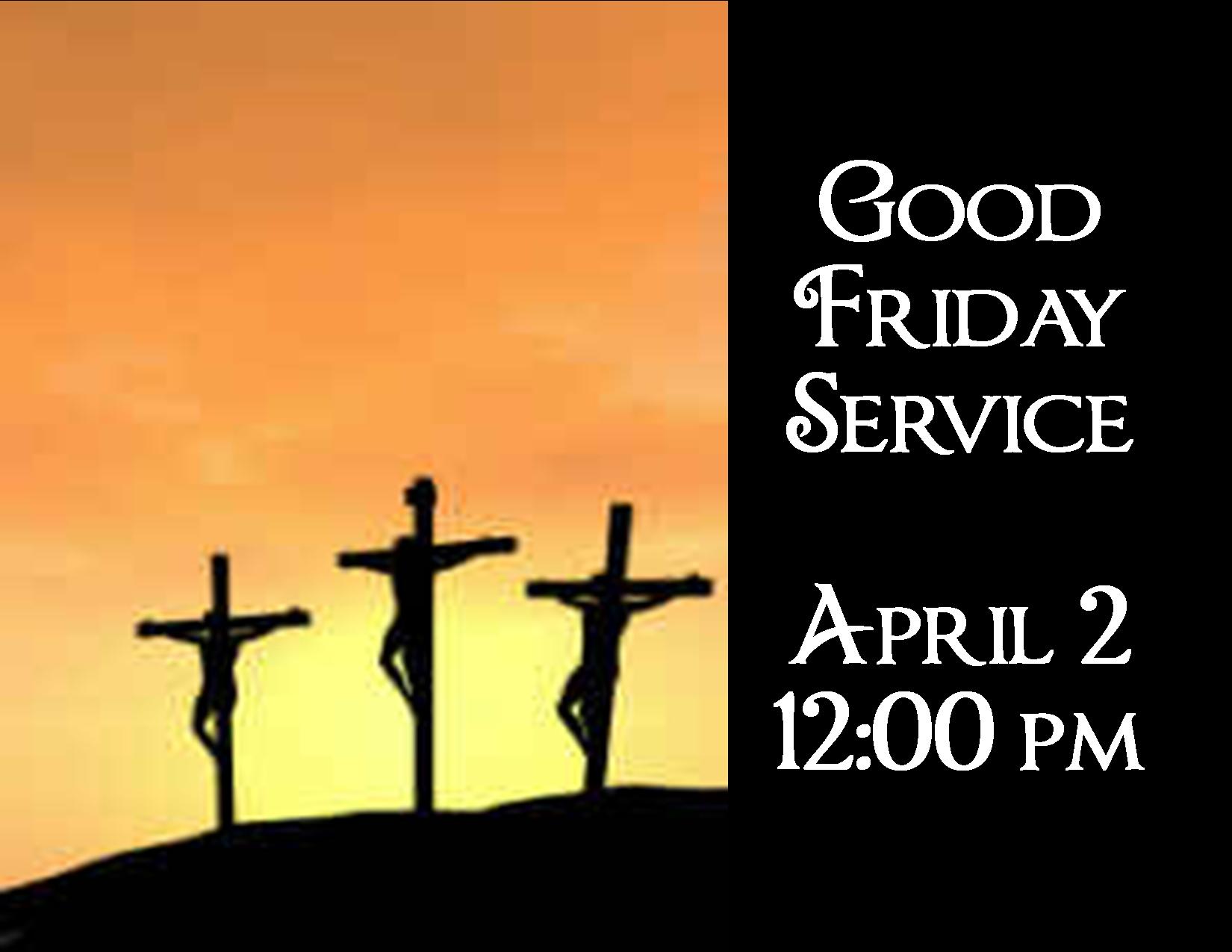
Good Friday Service at noon on Friday, April 2. We’ll reflect on the meaning of the Cross, especially focusing on exactly what was nailed to that old rugged Cross.
Conspiracy! An Easter Breakfast Drama at 9am and 11am on Sunday, April 4. Join us for breakfast, an original Easter drama, uplifting music, and a look at what really makes our hearts feel alive.
Looking forward to celebrating with you this weekend.
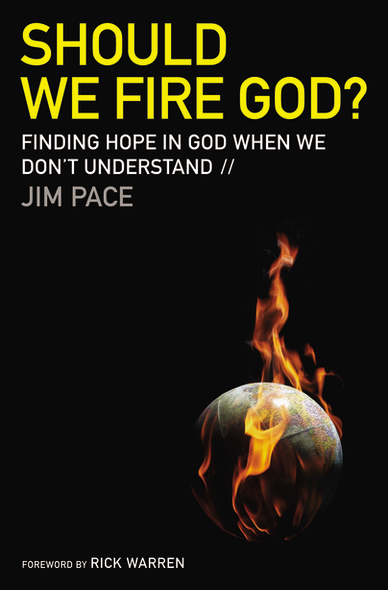
Probably like me, the first thing that caught your eye was the title. Jim Pace didn’t entitle his book Should We Fire God? just to be provocative. It’s a legitimate question. In fact, it’s a question that so many have wrestled with for centuries: How can God allow bad things to happen?
It’s one thing when we in America are asking this question about the genocide in Darfur, or the earthquake in Haiti, or a famine in the Middle East. But what about when it hits so much closer to home?
Jim Price was pastoring at Virginia Tech University, when on April 16, 2007, a lone gunman opened fire on the campus killing over 30 people, including himself. Immediately Jim was forced face-to-face with this age-old question: How could this happen?
Some thought, “If God couldn’t keep us safe, perhaps He’s not up to the job. Should we fire God?”
Carefully, honestly, loving, Jim addresses this question. For him, this is not some theoretic exercise. It’s personal. The emotion comes through raw and real. After weighing all the evidence and considering all of the possibilities, Jim reaches the conclusion that…. Well, you’ll have to read Should We Fire God? for yourself and come up with your own conclusion.
If you’ve ever faced heartache, if you’ve ever wondered how God could allow something tragic to happen, if you’ve ever wrestled with the thought of firing God, you will find some great thinking material in this book.
As readers of this blog know, I love to read. But hands-down, no-comparison, head-and-shoulders above any other book, my favorite book is the Bible.
One of the best apps I have added to my iPhone is YouVersion. I love being able to read the Scripture in different translations, but I especially love the daily reading plans. There are lots to choose from. Currently I am reading through the wisdom and insight of the “Psalms & Proverbs” reading plan.
Good news… even without an iPhone or other smart phone, you can still access YouVersion via your computer.
Better news… if you have a smart phone, your computer access and phone access are synced.
Best news… YouVersion is free! Thanks to the incredible folks at Lifechurch.tv who have made this available to anyone anywhere.
Go ahead, dive right into the Bible. Once you start reading it, I’m sure it will become your favorite book too.
Here’s an odd one. The Israelites had been slaves in Egypt for a long, long time. God does these miraculous things, culminating in the death of every firstborn child in Egypt who’s not in a house covered by lamb’s blood. Pharaoh has finally had enough, “Quick!” he shouts, “Get out of here now! Leave this country!”
So the Israelites pack up as quickly as they can to leave before Pharaoh changes his mind. And then this odd statement appears, “Moses took the bones of Joseph with him.”
Seriously? Bones? We’re kinda in a rush here!
Well, they’re not just any bones. It’s not like they’re just loose bones lying around. They’re in a mummy case.
Yeah, and…?
They were the bones of Joseph. The one who foresaw the coming famine. The one whom Pharaoh put as second-in-command to make preparations for the famine. The one who saved the Israelites from starvation. That Joseph. Just before he died he made his family take an oath that when they left Egypt, they would take his bones with them (Genesis 50:25-26).
They took the oath. And for the next 430 years someone had to watch over the bones. Through about twelve generations, from father to son, from son to grandson, from grandson to great-grandson, the oath was passed: “Guard these bones. When we leave, the bones go with us.”
So when they left Egypt, Moses took the bones with him. But then the Israelites sinned and had to wander in the wilderness for another 40 years. Another whole generation died, and still the oath was passed: “Guard these bones.”
The Israelites finally re-entered their home land, but had to defeat their enemies that had taken possession of their land while they were in Egypt. For about 30 years the Israelites fought. And still the oath was passed: “Guard these bones.”
Finally as a postscript to Joshua’s account we see Joseph’s bones being buried in Shechem, nearly 500 years after Joseph died!
For 500 years they kept the oath; they guarded the bones.
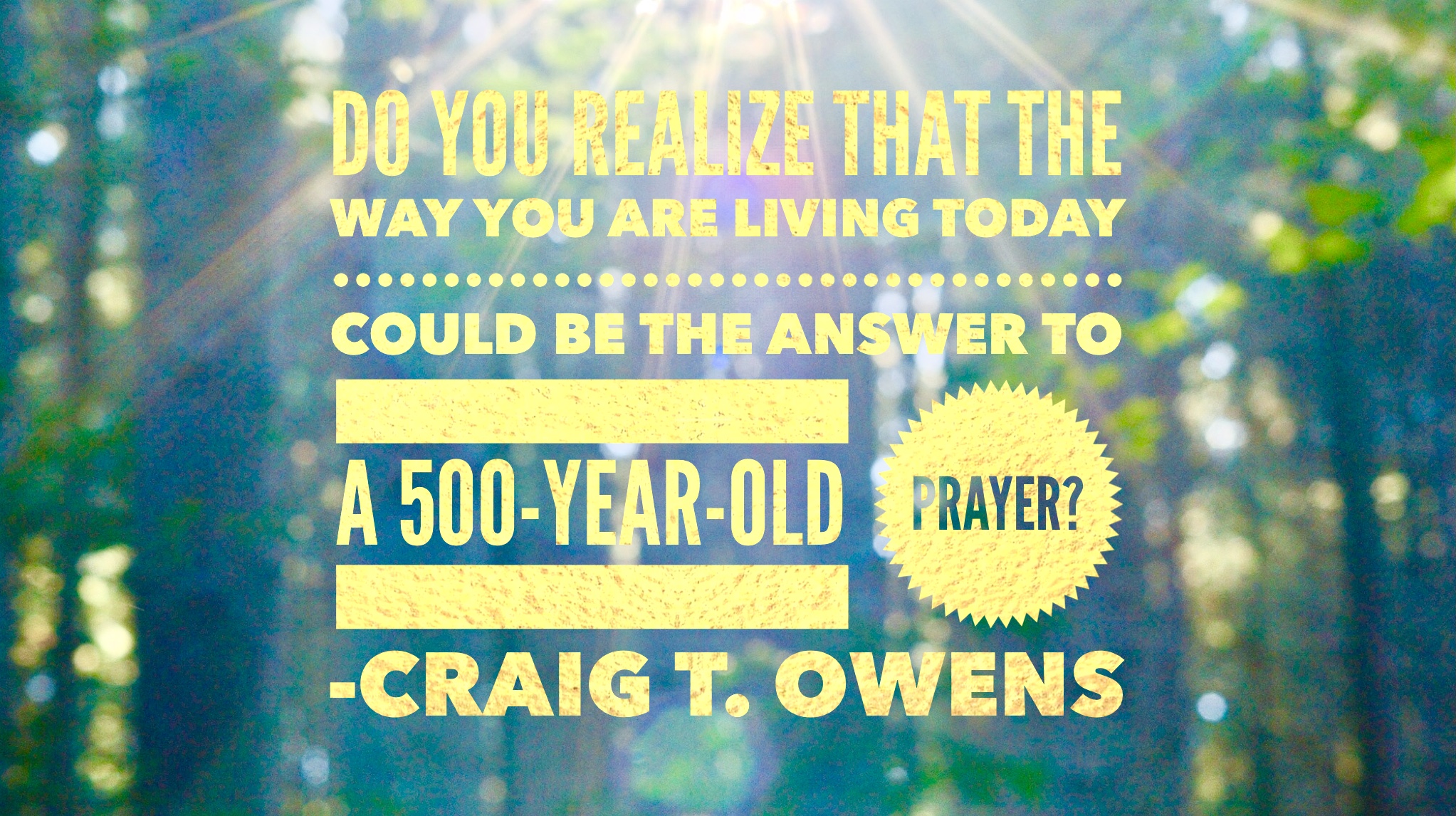
Do you realize thatthe way you are living today could be the answer to a 500-year-old prayer? Just like the Israelites who kept their eyes on God, you and I must live today with a purpose and with a mission. When we live godly lives, we are guarding the bones of prayers that were prayed, the bones of petitions that were made, the bones of oaths that were requested and honored.
What are you doing today to guard the bones of your ancestor’s prayers?
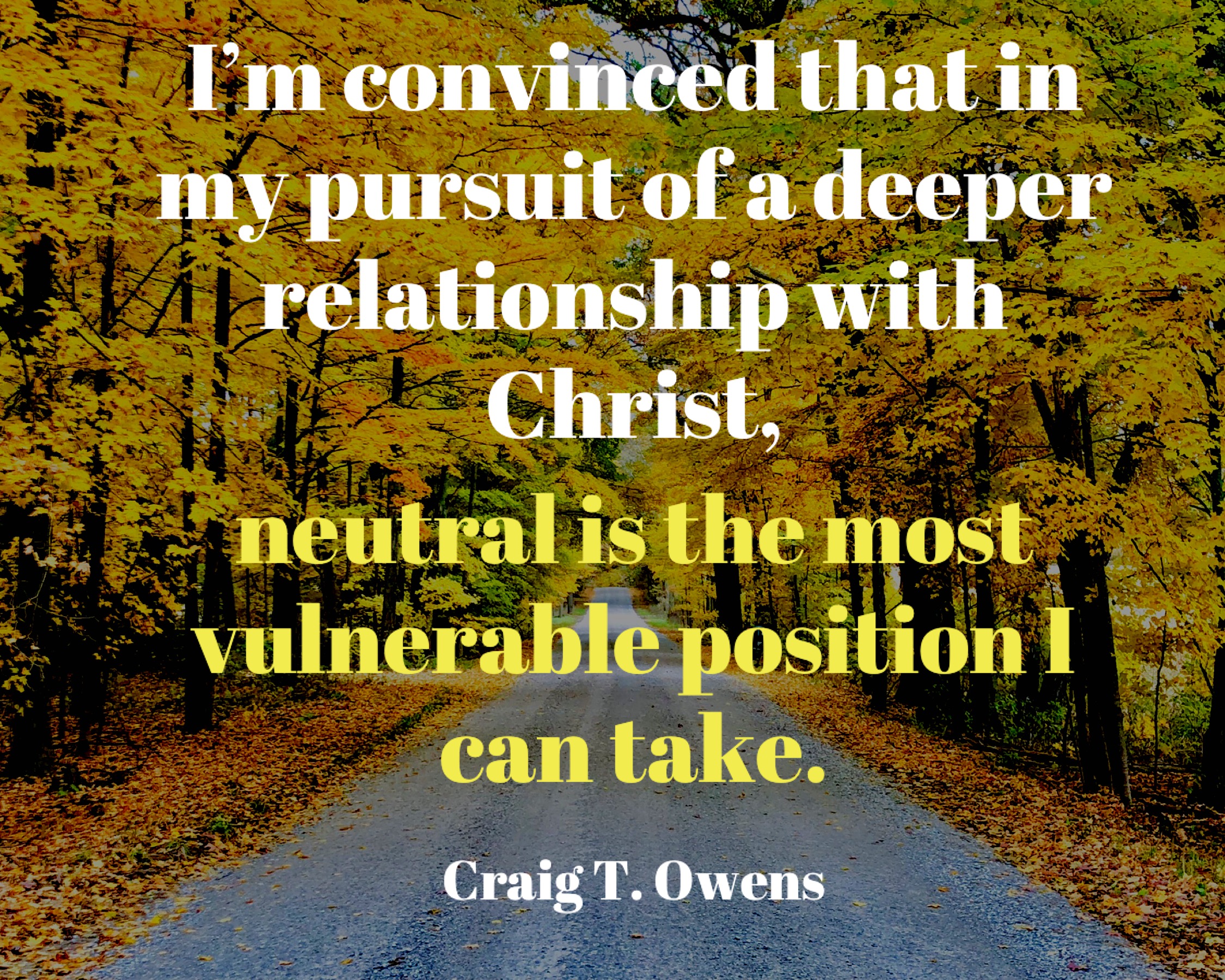
I’m convinced that in my pursuit of a deeper relationship with Christ, neutral is the most vulnerable position I can take.
I can pursue God with all I’ve got. Every day I can learn a little more what it means to love God with all my heart, with all my soul, with all my mind, and with all my strength.
Or I can make a decision that I’ve gone as far as I can in my relationship with Jesus. I can say, “I’m not willing to be stretched any further. I’m comfortable with where I am.” But when I get into this neutral position, I’m more likely to slide away from God than I am to move closer to Him. It’s hard to even stay where I was. Check this out:
BLESSED—HAPPY, fortunate, prosperous, and enviable—is the man who walks and lives not in the counsel of the ungodly—following their advice, their plans and purposes—norstands submissive and inactive in the path where sinners walk, nor sits down to relax and rest where the scornful and the mockers gather.
It’s when I become inactive that I am vulnerable to ungodly counsel.
It’s when I sit down to relax that I can easily slip into the cynical banter of the scornful.
If I want to avoid the downward slide away from God, I can’t just sit still. I’ve got to be actively, passionately, wholeheartedly moving toward Him. Solomon wrote:
Make your ear attentive to skillful and godly Wisdom and incline and direct your heart and mind to understanding—applying all your powers to the quest for it.
Don’t just sit there! Keep on moving closer and closer to Jesus every day.



 We went big for our Resurrection Sunday celebration. Instead of our usual format, we had two services, we provided breakfast for everyone, and we wrote and presented an original Easter drama. It was a stretch for us. Going big means:







 Craig T. Owens