I Want To Be Fascinated

If we are going to stick with anything for the long haul, we have to be fascinated by it. As soon as it becomes boring, humdrum, or monotonous, the downward spiral leading to us throwing in the towel is almost inevitable.

It looks like this:

Inattention → Fizzled passion → Lack of discipline → Quitting

This is bad enough for a diet, exercise routine, or any other healthy pursuit. But it becomes even more painful when this downward cycle occurs in our spiritual life. In that case, the “quitting” is called by another name: Sin.

In Psalm 119, the Beth section (verses 9-16) opens with two contrasting thoughts:

  • How can a young man keep his way pure? By LIVING according to Your Word.
  • I seek You with all my heart; do not let me STRAY from Your commands.

Stray is a passive word. No real attention or foresight is required to wander or meander around. On the other hand, living is an active word. In the Hebrew, this word carries the idea of keeping careful watch; protecting; carefully tending.

So the question that leads to my success is this: What fascinates me? What dominates my thoughts? What motivates me?

The answer to these questions will determine my stick-to-itiveness.

The remaining verses in this section show the upward spiral away from sin if we will keep careful watch over how closely we stick to God’s Word.

  • Living = guarding (v. 9)
  • Seek You with all my heart (v. 10) … Yearning (in the Amplified Bible)
  • Hidden Your Word (v. 11) … Treasured (in the Complete Jewish Bible)
  • → Personal praise (v. 12)
  • With my lips… (v. 13) = verbal, public praise
  • Rejoice (v. 14) … as in more than in any kind of wealth (in the CJB)
  • Meditate (v. 15) = constant companion
  • Delight (v. 16)

When we delight in God’s Word, the cycle is started over again—I will not neglect Your Word—but now with a renewed and intensified PASSION!

I want God’s Word to dominate my thoughts, and its principles to captivate me. I want to be fascinated by my relationship with Jesus Christ that comes through the revelation of the Bible to my heart.

There is no other way to live!

If you have missed any of the messages in our P119 series, you can access them all by clicking here.

Savoring It

For those of you who asked, here is the quote I shared this morning from John Piper—

“If you don’t read the Word and memorize the Word and meditate on the Word daily and delight in the Word and savor it and have your mind and emotions shaped by the Word, you will be a weak Christian at best. You will be fragile and easily deceived and easily paralyzed by trouble and stuck in many mediocre ruts. But if you read the Word and memorize important parts of it and meditate on it and savor it and steep your mind in it, then you will be like a strong tree planted by streams of water that brings forth fruit. Your leaf won’t wither in the drought and you will be productive in your life for Christ.”

Heaven Is Rejoicing!

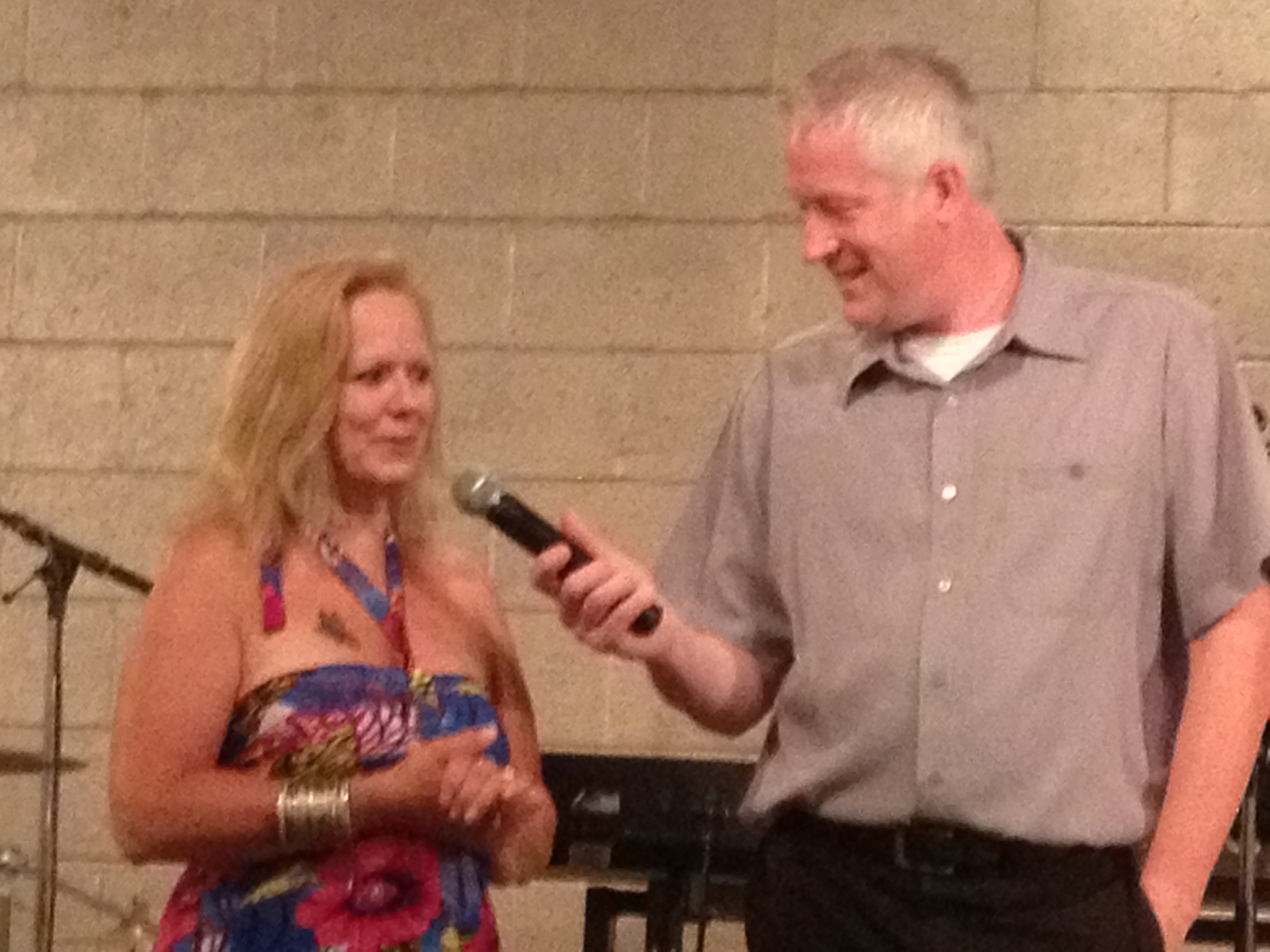
One of my all-time favorite things to do as a pastor is water baptism. I love hearing the stories of lives that have been completely transformed by Jesus Christ! This morning the Calvary Assembly of God family celebrated with Crystal as she made her public declaration that she is totally sold-out for God!

Artificial Maturity—How To NOT Break Up With Your Girlfriend

Gentle Correction

As a parent (and a pastor), delivering correction is one of my least favorite things to do. But it must be done.

The apostle Paul seemed to feel the same way. We get some insight into his heart in his letter to the Corinthians, where he reminds them of why he had to write such a stern letter of correction.

For I wrote to you out of great distress and anguish of heart and with many tears, not to grieve you but to let you know the depth of my love for you. (2 Corinthians 2:4)

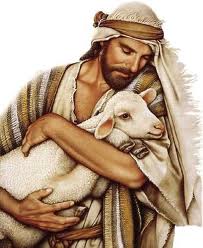
The loving shepherd’s heart longs for the advancement, the betterment, of all the sheep under his care. He is hurt when his sheep are wounded. His approach to discipline is always gentle; not weak, but strength lovingly applied.

The loving shepherd looks at his own life first, before correcting the sheep, to address anything he may have done or failed to do which caused the sheep to stray.

The loving shepherd knows that discipline may be painful for a moment, but it is to bring greater life. Just as a parent will allow a child to suffer the momentary pain of an immunization injection, to spare that child the unbearable pain of a disease later on.

And the loving shepherd always approaches a time of correction with “confidence in all of you, that you would all share my joy” (v. 3). The shepherd doesn’t view them as “dumb sheep” that cannot improve; rather, he is confident and assured that they will receive loving correction and make the change that leads to joy for all.

UPDATE: If you want to dive deeper into the ideas of being a shepherd leader, please check out my book Shepherd Leadership: The Metrics That Really Matter.

Artificial Maturity—How To NOT Get A Job

Thursdays With Oswald—Examination

This is a weekly series with things I’m reading and pondering from Oswald Chambers. You can read the original seed thought here, or type “Thursdays With Oswald” in the search box to read more entries.

Examination 

     Sin destroys the power of the soul to know its sin, punishment brings awakening, self-examination brings chastisement and saves the soul from sleeping sickness, and brings it into a healthy satisfaction. 

From Biblical Psychology

There’s so much to unpack in this single sentence…

  • We are very good at self-medicating away any pain (even spiritual pain), so that we never address the source of the pain (Ephesians 4:18).
  • I can be “sin sick” and not even know it because I’m not allowing the Holy Spirit to examine me (1 Corinthians 10:12).
  • The pain of punishment and chastisement is for my eternal benefit (Hebrews 12:5-11).

What do I need to do? Invite the examination of the Spirit:

Search me, O God, and know my heart; test me and know my anxious thoughts. Point out anything in me that offends You, and lead me along the path of everlasting life. (Psalm 139:23-24)

So let a person examine himself first, and then he may eat of the bread and drink from the cup; for a person who eats and drinks without recognizing the body eats and drinks judgment upon himself. This is why many among you are weak and sick, and some have died! If we would examine ourselves, we would not come under judgment. But when we are judged by the Lord, we are being disciplined, so that we will not be condemned along with the world. (1 Corinthians 11:28-32)

10 Quotes From “Artificial Maturity”

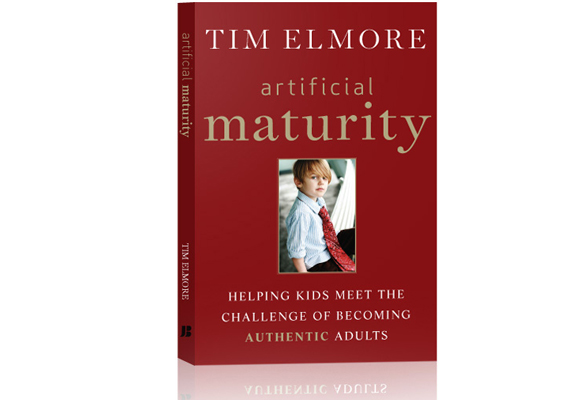
The other day when I posted my review of Artificial Maturity by Dr. Tim Elmore, I said that for anyone working with children, tweens, teens, or young adults this book is a must-read. I don’t say that about very many books, but it is definitely true of this one (you can read my full review here).

Let me share with you ten of my favorite quotes from this book. Unless otherwise noted, all of the quotes are from Dr. Elmore…

“In short, the artificial maturity dilemma can be described this way: (1) Children are overexposed to information, far earlier than they’re ready. (2) Children are underexposed to real-life experiences far later than they’re ready.”

“Steps to take to build authentic maturity:

  1. Provide autonomy and responsibility simultaneously.
  2. Provide information and accountability simultaneously.
  3. Provide experiences to accompany their technology-savvy lifestyles.
  4. Provide community service opportunities to balance their self-service time.”

“For the most part, adults have failed to build true ‘life skills’ in kids. We haven’t helped them self-regulate and make decisions about concerns that matter. Students’ busy schedules often aren’t all that meaningful, and young people spiral downward into despair over relatively trivial issues. Their days are full of artificial activities with artificial consequences, resulting in artificial maturity. The stress is real, but it is often over things that don’t really matter, and it isn’t building mature people.”

“We must be parents, not pals. We must be coaches, not coddlers. And we must lead them, not just lecture them.”

“Analysts say there are increasing signs that a lack of independence fuels stress, anxiety, and depression among young people. …Kids’ early lives today are too full of information and structure, and too empty of innocence and the freedom to play and explore. But by adolescence, it’s almost the opposite. It’s as though they experience a flip-flop. Their lives are too full of freedom, and too empty of accountability.”

“This appears to be a paradoxical trend—[adolescents] expressing a decline in readiness to actually ‘be’ adults that is proportionate to their desire to leave home. …They want to be consumers but not necessarily contributors. …Our job is to prepare the child for the path, not the path for the child.”

“The fact is, kids—all kids—need adults to lead them well. In our mad obsession to remain cool and on the cutting edge of everything, adults have surrendered what may be their most important responsibility: to provide role models to the next generation. We might win at the game of being liked, but we lose at the game of leading well.”

“For our teens, we’ve defined nurturance largely in terms of the things we can do for them, the stuff we can buy them, and the experiences and opportunities we can provide. In reality, what most teens need is neither more stuff, nor more lessons, nor do most teens even need more tender, loving care or quality time. While young children need a great deal of parental nurturance in the form or direct assistance geared toward meeting their needs, adolescents need something different. Unlike children, teens’ bodies and brains most need us to nurture and develop capacities to function on their own in this world. This means expecting things of them, not just giving things to them.” —Drs. Joseph & Claudia Worrell

“Five parental decisions:

  • Decide that you will build a bridge of relationship that can bear the weight of hard truth.
  • Decide that it’s more important for you to have their respect than for them to like you.
  • Decide that it’s more important for you to pass on essential values than to just have fun.
  • Decide that it’s more important for them to be ready for the future than to be comfortable.
  • Decide to pass on the principles (values) you wish you’d known earlier in life.”

“As adults, we have done a poor job in getting this generation of kids ready for life. If they flounder, it is because we’ve focused on preparing the path for the children instead of the children for the path. I believe in this next generation. These kids are great, and they’re capable of much more than we’ve expected. We have not led them well. We’ve allowed them to mature artificially by default. We’re protected them instead of preparing them for life as adults. It’s time we get them ready to lead the way into the future.”

If You’re Going To Do It, Then Do It

Have you ever watched someone attempt something they really didn’t want to do? Like when a parent asks a child to pull weeds in the garden—they go grumbling, dragging their feet, finding excuses to delay starting, pull a couple of weeds, and then complain about the heat. Is it any wonder that the job takes twice as long and is completed half as well as it should have been?!?

Solomon wrote this:

Whatever your hand finds to do, do it with all your might… (Ecclesiastes 9:10).

In other words, it’s like my Mom used to always remind me: If anything’s worth doing, it’s worth doing well!

Don’t go halfway. Put all you’ve got into it and get it done. And done well.

I think Solomon (and my Mom) would have loved Seth Godin’s blog post called Outsmart

Outsmart

or…

Outlead

Outcare

Outmaneuver

Outinvest

Outlisten

Outconnect

Outgive

Outlearn

Outwork

Outspend

Outrespect

Outinnovate

Outrisk

Outpersevere

Outinspect

Outproduce

Outrisk

Outlove…

In my opinion, no one should work harder, more enthusiastically, better, smarter, and more lovingly than one who calls themselves a follower of Jesus Christ. Check out my ongoing series of posts on godly leadership.

Open Door

Listen to the podcast of this post by clicking on the player below, and you can also subscribe on Apple or Spotify.

The phrase open door shows up several times in the New Testament, and it shows up quite a bit in the present-day vocabulary of many Christians too. But I’m not sure we mean the same thing.

I hear Christians saying things like, “I’m praying for God to open a door for a new job,” or “I’m waiting to see what door God will open for my schooling,” or something to that effect. In other words, the open door seems to be for our personal benefit.

The apostle Paul said this:

A great door for effective work has opened to me, and there are many who oppose me (1 Corinthians 16:9).

Let’s get one thing clear: God opens doors (we don’t), and our job is to obediently walk through those open doors (God won’t shove us through them).

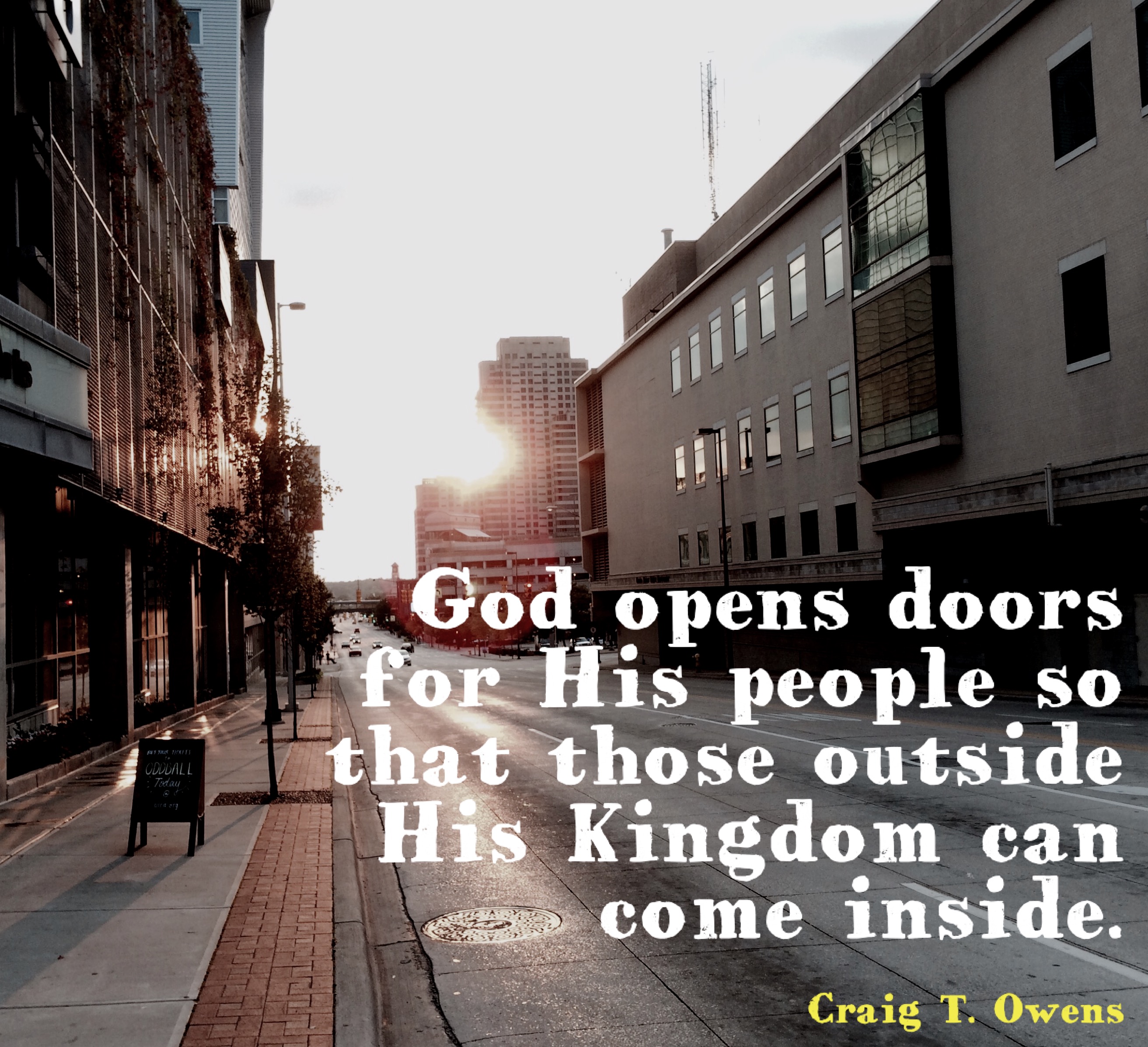
Paul knew that the open door was not for his benefit, but for the benefit of those who were presently outside of the Kingdom of God. God opens doors for His people so that those outside His Kingdom can come inside (see Acts 14:27; 2 Corinthians 2:12; Colossians 4:3).

It might look like God opened a door by providing a job, but that job is His means to help you invite others into His Kingdom. The open door (the job, in this case) isn’t primarily for you; it’s for you to invite others in.

That’s why when God opens doors there will be many who oppose you. They are not really opposing you, but they are opposing the opportunity for the kingdom of darkness to be robbed and the Kingdom of God to be enriched.

So when you pray for open doors, remember:

  • When God opens a door, it’s mainly for the benefit of those outside the Kingdom of Heaven
  • You will be opposed by the kingdom of darkness

If you’re ready for both of those, then by all means pray for open doors!

►► Would you please prayerfully consider supporting this ministry? ◀︎◀︎