Keep Up Your Spiritual Health

In Workmen Of God, we have a collection of lectures Oswald Chambers delivered to those “reliable men” and women (see 2 Timothy 2:2) who were either already working in pastoral ministry or preparing to do so. Chambers talks to pastors about their work among those entrenched in their unbelief, those who are skeptical, those who are backslidden, those who are hypocrites, and those who have sick souls. He especially challenges pastors on how to minister to themselves so that they are prepared to minister to any soul in which God brings them in contact.

It’s in that light that I think this passage is so vital for anyone involved in Christian ministry—

“So remember, it is absolutely necessary to be like the cedars of Lebanon. Do you know the characteristic of a Lebanon tree? The cedars of Lebanon have such extraordinary power of life that instead of nourishing the parasites it kills them, the life within is so strong and so robust that instead of feeding the parasites it chokes them off. God grant that we may be so filled with His life, may flourish as the cedars of Lebanon, so that He can trust us down in all the dark, difficult places amongst the souls of our brother men and be able to pour His tremendous health and power through us. … 

“Do you remember, then, that it is necessary for the worker to be healthy, and beware of this mistake, that by working for God amongst men, you develop your own Christian life; you do not unless your Christian life is there first. It is so obvious that it needs to be said over again—you cannot develop your own Christian life unless it is there. The advice given that if you work for God you develop your own life often means that if you work for God you get right yourself; you do not, you have to be right with God first.” 

Pastors and other Christian workers, remember that you cannot give to others what you do not have yourself. You MUST make regular time to abide with Jesus, not for sermon preparation, but for your own robust spiritual health. 

Although written over 100 years ago, this book is still a treasure-trove for anyone in church ministry today!

The Core Curriculum Of The Spirit

“The Law of God teaches us how to love Him and our neighbors (Matthew 22:34-40). The Law of God is critical for seeking the Kingdom of God (Matthew 5:17-19). The Law of God liberates us from the blinding and binding power of sin (James 2:8-13). The Law of God marks the path of love that Jesus walked, and that all must walk who would follow Him (1 John 2:1-6; 5:1-3). The Law of God provided the framework within which the apostles ordered their churches (cf. 1 Corinthians 5, 9; James 2:5; 1 John 5). The Law of God is the core curriculum of the Spirit, as He brings us into the presence of God’s glory and transforms us into the image of Jesus Christ (Ezekiel 36:26-27; 2 Corinthians 3:12-18). Neglecting the Law of God is a major cause for the decline of true and selfless love in the world; it licenses the progress of evil; and it threatens to render the prayers of Law-neglecting believers an ‘abomination’ or, we might say, ‘a dead and a useless thing’ (Matthew 24:12; Proverbs 28:4, 9). 

[all Scriptures from the above paragraph are here]

“It’s no wonder the psalmist, echoing Moses, insisted that the righteous person, the one who embodies the goodness of God in all his ways, meditates on the Law of God day and night, hides it in his heart and embodies it in all his ways (Psalm 119:9-11; Deuteronomy 6:1-9), keeps it diligently, delights in and loves it, and hastens to make sure his feet follow in its path (cf. Psalm 1; Psalm 119:4, 5, 35, 59, 60, 97). 

[all Scriptures from the above paragraph are here]

“If you are missing the Law of God in your relationship with Jesus, you are depriving yourself of a most important resource for bringing the goodness of God to light in the land of the living. The good works outlined in the Law of God are those ‘ordained of old’ which God intends us to do in all our ways (Ephesians 2:10). Yes, understanding the Law can be difficult. But we can learn from the prophets, Jesus, and the apostles how to read, study, and meditate in this most important corpus of Biblical literature, and thus we can discover the true freedom for goodness and love that God has prepared for us.” —T.M. Moore 

Two Great Lies

“By two great lies was man led away from God. By the same two lies has the estrangement been kept up. On these two lies the world has been feeding ever since the Fall. Their fruit has been woe and death—‘Ye shall not die’ and ‘Ye shall be as gods.’ …

“The world’s history is the same. Our race has been eating the fruit of lies [Hosea 10:13]; not simply of sin, but of lies. The sorrows, sighs, tears, pains of our race are the fruit of lies—the original lie of Paradise, and a thousand such since then. …

“The two original satanic lies are continually coming up, and along with them myriads of others, all leading us astray. Each day brings forth the lie, the fruit, the eating thereof. satan, or the world, or the flesh, or a friend, or a book, or a scene whispers the lie; it is fair and specious, we believe it; it brings forth fruit, we eat of it, and the end is bitterness and disappointment. We feed on lies. … We persuade ourselves that this world is good, and pleasant, and excellent, so we pursue it in preference to the world to come. …

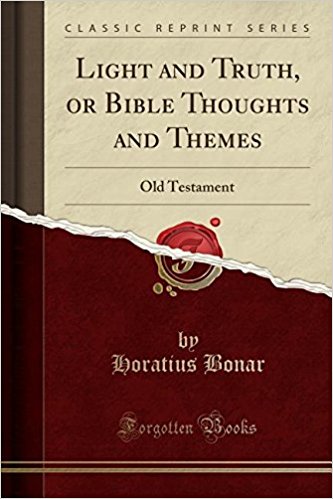
“Jesus says, ‘Yes, ye shall not surely die, but that deliverance shall not be in the way you think. Death is the wages of sin, yet I bring life to the sinner, everlasting life, life through the belief of the Truth, even as death came through the belief of a lie. Yes, ye shall be as gods, but not in your way. I will make you partakers if the divine nature, not by eating the forbidden tree, but by eating of Me.’” —Horatius Bonar, in Light and Truth: The Old Testament

The Ultimate De-Stress Practice

We all experience a certain amount of stress in our daily activities. Our body helps us meet the demands of each day by releasing a hormone called cortisol. Here’s how cortisol helps us— 

  • manages how our body uses carbohydrates, fats, proteins 
  • keeps inflammation down 
  • regulates blood pressure 
  • controls the sleep/wake cycle 
  • boosts energy  

Cortisol is naturally flushed out of our body each day by exercise and rest. 

But what happens if we don’t have the proper exercise and rest? In that case, cortisol can become a cruel double-edged sword leading to things like unhealthy weight loss or gain, inflammation (and the accompanying aches and pains), elevated blood pressure, difficulty sleeping at night, and difficulty staying awake during the day. 

As a result, we start to turn every molehill into a mountain, and we tend to the extremes of avoidance (flight) or argumentation (fight). 

Cortisol is naturally flushed from our bodies by a healthy on-and-off rhythm. God built this into His Creation by giving us daily rhythms of day and night, work and rest, and by giving us a weekly Sabbath to rest and reflect. 

We don’t need just a Sabbath day (although that is important and God-honoring), but we need to engage in sabbathing. Look how Jesus did this: 

  • up early to pray before a busy day 
  • a nap in the afternoon when He was tired 
  • a snack along the road when He was hungry 
  • an extended getaway time with His friends 
  • time alone with God after a long day of ministry (see Mark 1:35, 6:30-32; Matthew 8:24; 12:1; 15:21) ** 

In Psalm 61, notice how David’s stress is building: he says, “my heart is overwhelmed” (v. 2). He needed a Sabbath pause (a Selah) to look back on how God had helped him in the past. When we are over-stressed, we seldom Selah to look back because we are so focused on NOW. But a time of sabbathing will allow us to reflect and celebrate yesterday’s blessings and provisions so that we have “strength for today and bright hope for tomorrow.” 

David concludes his prayer by building a proper God-honoring rhythm into his life—So I will sing praise to Your name FOREVER, that I may DAILY perform my vows. The sabbathing kept David eternity-focused which gave him the daily strength he needed. 

Beware of the warning signs that you need a sabbathing pause: turning every molehill into a mountain, avoiding problems, frequently arguing with others, constantly feeling fatigued. Allow these signs to turn you to this Psalm, and turn this Psalm into your prayer. 

**To learn more details of how Jesus practiced this principle of sabbathing, check out this post.

If you have missed any of the other posts in our Selah series, you can access the list by clicking here. 

Poetry Saturday—Out Of Touch With Your Lord

Only a smile, yes, only a smile,
That a woman o’er burdened with grief
Expected from you; ‘twould have given relief
For her heart ache sore the while;
But weary and cheerless she went away,
Because as it happened, that very day
You were “out of touch“ with your Lord.

Only a word, yes, only a word,
That the Spirit’s small voice whispered, “Speak”;
But the worker passed onward, unblessed and weak,
Whom you were meant to have stirred
To courage, devotion and love anew,
Because when the message came to you,
You were “out of touch“ with your Lord.

Only a note, yes, only a note,
From a friend in a distant land;
The Spirit said, “Write,” but then you had planned
Some different work, and you thought
It mattered little, you did not know
‘Twould have saved a soul from sin and woe;
You were “out of touch“ with your Lord.

Only a song, yes, only a song,
That the Spirit said, “Sing tonight—
Thy voice is thy Master’s by purchased right“;
But you thought, “Mid this motley throng
I care not to sing of the City of Gold,”
And the heart that your words might have reached grew cold;
You were “out of touch“ with your Lord.

Only a day, yes, only a day!
But, oh, can you guess, my friend,
Where the influence reaches, and where it will end
Of the hours that you frittered away?
The Master’s command is, “Abide in Me,”
And fruitless and vain will your service be,
If “out of touch“ with your Lord. —Jean H. Watson