Light The Night

There are so many encouragements that Scripture gives us to make a difference in our world:

  • Jesus tells us to be salt that seasons and light that brightens (Matthew 5:13-14).
  • Let your light so shine before men, that they may see your good deeds and praise your Father in Heaven (Matthew 5:16).
  • Shine like stars in the universe as you hold out the word of life (Philippians 2:15-16).
  • So whether you eat or drink or whatever you do, do it all for the glory of God (1 Corinthians 10:31).

We should look for opportunities to do shine every day. But sometimes there are even more appropriate times to do so. One such time is Halloween … Hallow’s Eve … Reformation Day. October 31 used to be a day that glorified God. Now, sadly, it has become a day to glorify anything but God.

So Calvary Assembly of God will be lighting the night again this Halloween. We will put on the best, brightest, friendliest carnival of the evening right on Main Street in Cedar Springs! We have a prayer team going out 24 hours before this event to pray for protection and favor, and to pray for open doors through which the light of Jesus will shine on October 31.

Here’s how you can help:

  • Pray. Start now and pray through October 31.
  • Bring some candy to the church through October 28.
  • Come pray with us at 5pm on October 30.
  • Signup as a volunteer to shine with us from 4-8pm on October 31.

We’re believing the light of Jesus will be seen as we Light The Night!

How To Earn R-E-S-P-E-C-T

Here’s how the apostle Paul said it…

Make it your goal to live a quiet life, minding your own business and working with your hands, just as we instructed you before. Then people who are not Christians will respect the way you live, and you will not need to depend on others. (1 Thessalonians 4:11-12)

Pretty straightforward, isn’t it? To live a life that those who are not Christians will respect:

  • Live with the right ambition. The Greek word for ambition means hard work that brings honor.
  • Mind your own business.
  • Do your own work to provide for yourself.
  • Repeat it again tomorrow.

I want to live a life that glorifies God and earns the respect of others. This seems like a pretty doable list.

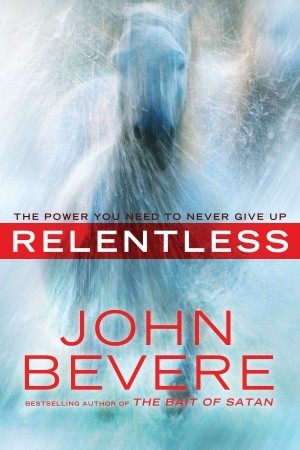
Relentless (book review)

I had heard so much about John Bevere, and I had even heard him speak a few times, so when Relentless hit my desk, I dove right in. Sadly, I was disappointed.

The subtitle was intriguing—the power you need to never give up—because I see too many people start well, but not finish well. But I had a hard time connecting what I was reading in this book with the concept of persevering through trials to finish well. The most often used encouragement for the reader to finish well was a story of how John Bevere finished well. That’s not enough for me.

I think what most disturbed me about Relentless was the incomplete (and sometimes inaccurate) teaching points. John uses multiple translations to try to make his points. I don’t have a problem with this per se, as many times this helps to draw a truth out. But what turned me off was the incomplete quoting of so many Scriptures: just a phrase from one translation, and then a word from another, and so on. Sometimes these partial phrases come dangerously close to misrepresenting what the full counsel of Scripture teaches.

I usually gauge the helpfulness or applicability of a book on the number of passages I highlight. Disappointingly, there were very few of these in Relentless.

I am a Waterbrook book reviewer.

Sola Scriptura

Of all the other sola statements that came out of the Reformation, sola scriptura has to be one of the most foundational. Without a firm understanding of the truthfulness of God’s Word, all other doctrinal statements are without authority. Sola scriptura means that we use the Bible as our authoritative guide for everything in our lives.

Jesus confronted the religious leaders for their misuse and abuse of Scripture. The Sadducees had a tendency to ignore the parts of Scripture which didn’t fit their “theology.” The Pharisees, on the other hand, would over-exaggerate some Scriptures which would leave other passages dwarfed or forgotten.

In Matthew 23, Jesus took on both of these incorrect approaches. What I love is that Jesus didn’t share His opinion, He didn’t argue with them, He didn’t try to convince them to accept His viewpoint. Jesus just took them back to Scripture.

  • You are in error because you do not know the Scriptures or the power of God (23:29).
  • Have you not read what God said to you (23:31).
  • David, speaking by the Spirt…says(22:43).

When Jesus said, “You are in error,” the verb tense is the passive voice. This means it was something done to them, not something they did. These religious leaders were not purposely straying from Scripture, but by listening to men instead of God they allowed themselves to be lead astray.

That’s why this insight from Luke is so powerful:

Now the Bereans were of more noble character than the Thessalonians, for they received the message with great eagerness and examined the Scriptures every day to see if what Paul said was true. (Acts 17:11)

This is great counsel for all of us. We should all listen to pastors and teachers, or read authors, through the filter of Scripture. We need to make sure we aren’t passively straying, and we do this by examining the Scripture.

If you have missed any of the messages in this series, you can find them all here.

Why I Didn’t Participate In Pulpit Freedom Sunday

In order to challenge the IRS regulation that non-profit 501(c)3 organizations (such as a church) not endorse a political candidate, a group called Pulpit Freedom encouraged pastors to publicly endorse a candidate in their Sunday sermons.

This is what I shared with my congregation this morning. We are not participating in the “pulpit freedom Sunday” for the following reasons—

  1. The IRS 501(c)3 regulations are not immoral. The Bill of Rights states that “Congress shall make no law respecting an establishment of religion, or prohibiting the free exercise thereof.” I don’t believe this is happening.
  2. The church should be apolitical. We don’t see any biblical writers endorsing candidates. Individuals serve in political office, and Paul often greets them. He never tells those individuals to leave their political posts, but neither does he instruct Christians on who they should support/endorse for an office.
  3. If I did what this group is asking, I feel I would doing it to make a statement, but not necessarily a statement that pleases or honors God. “For we speak as messengers approved by God to be entrusted with the Good News. Our purpose is to please God, not people. He alone examines the motives of our hearts” (1 Thessalonians 2:4). My statements must please God and not violate my conscience.
  4. I trust your intelligence. My role as a pastor is to equip people to know and apply biblical principles to every aspect of their lives; including how they make decisions to vote. My role as your pastor is not to tell you who to vote for.

Neglect Of Our Gift

Pastors, I’m challenged by these words from Charles Bridges—

It is indeed a ‘neglect of the gift of God that is in us,’ to trifle either in the study or in the pulpit. God will bless our endeavors—not our idleness. Our Master, and our people for our Master’s sake, have a just claim to our best time and talents, our most matured thoughts, and most careful studies. To venture upon this infinite work of God with slender furniture, proves a guilty unconcern to our high responsibility.

Idleness is not just laziness (although it can be that too). Think of your car when it’s idling: perhaps it’s not in gear, or maybe your foot is still on the brake. In either case, the car is not moving along to its full potential.

It’s the same for us. If we’re not moving along to our full potential as pastors, we’re idling. And that, in the words of Charles Bridges, is a neglect of the gift of God that is in us.

How might you and I be idling?

  • Not spending enough time in prayer? If we’re not praying, we’re operating in our own strength, not in God’s strength.
  • Hunting for a text to share, instead of seeking the mind of the Lord and letting Him reveal the text we should share?
  • Taking on too many projects?
  • Not delegating?
  • Not organizing or planning ahead?
  • Not taking care of our physical health, so we’re battling staying alert or staying healthy?
  • Not spending enough time in personal devotions, so our “tank” is nearly dry?

Those are just a few thoughts that came to my mind. The Holy Spirit can reveal where you may be idling and possibly neglecting such a precious gift, if you will ask Him.

Let’s always be men and women who live up to the full potential of what God has called us to. I’m praying for you!

Thursdays With Oswald—Prayerful Havoc

This is a weekly series with things I’m reading and pondering from Oswald Chambers. You can read the original seed thought here, or type “Thursdays With Oswald” in the search box to read more entries.

Prayerful Havoc

     There are supernatural powers and agencies of which we are unconscious which, unless we are garrisoned by God, can play with us like toys whenever they choose. The New Testament continually impresses this on us. “For we wrestle not against flesh and blood, but against principalities, against powers, against the rules of the darkness of this world, against spiritual wickedness in high places” (Ephesians 6:12). All that is outside the realm of our consciousness. 

     If we only look for results in the earthlies when we pray, we are ill-taught. A praying saint performs far more havoc amongst the unseen forces of darkness than we have the slightest notion of. “The effectual fervent prayer of a righteous man availeth much.” We have not the remotest conception of what is done by our prayers, nor have we the right to try and examine and understand it; all we know is that Jesus Christ laid all stress on prayer. “And greater works than these shall he do; because I go unto My Father. And whatsoever ye shall ask in My name, that will I do [John 14:12].” 

From Biblical Psychology (emphasis added)

What an amazing reminder! Prayer is doing havoc in the spiritual realm, but much of that realm is outside of my conscious awareness.

Prayer accomplishes much. I may not see it in the earthlies each time I pray, but I must remain confident that my prayers are always heard and always make an impact.

Don’t let the lack of “visible” results keep you from praying. You may not see with your natural eyes what is happening when you do pray, but you can be assured that nothing at all will happen if you don’t pray!

Remember: “A praying saint performs far more havoc amongst the unseen forces of darkness than we have the slightest notion of.”

Sola

On October 31, 1517, a sea change in world history was begun. On that day Martin Luther nailed his 95 theses to the door of a church, challenging the traditions of organized religion which he believed had strayed far from the instructions in the Bible.

The Reformation had been launched.

I truly believe that we all must be students of history, partly because all of his story is His Story. When we study history, we can see how God is working out His Story.

Second, we also need to know our history because as George Santayana rightly said, “Those who do not learn from history are doomed to repeat it.”

A third reason to (re)learn the thoughts brought out during the Reformation is for doctrinal strength. It’s important to know not only what why believe but why we believe it. And there are some valuable doctrinal truths in the history of the Reformation.

Finally, I believe an important part of learning is unlearning. Sometimes we accept something just because it’s been handed down to us. That is in large part what Luther and other reformers were challenging, and calling us to unlearn tradition and relearn what the Bible has to say.

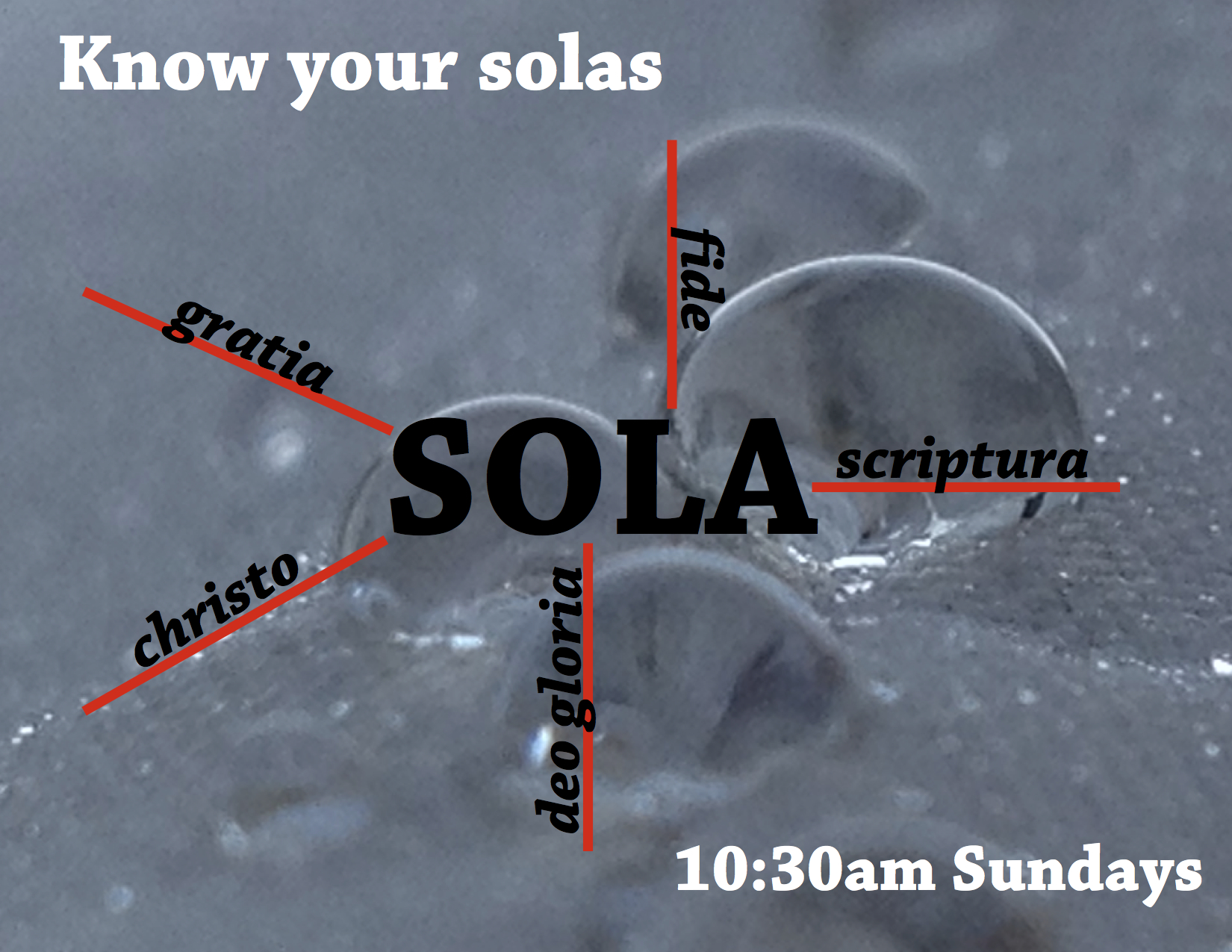
So beginning this Sunday we will be walking through the five Sola doctrinal statements the reformers taught. I am really looking forward to relearning and unlearning, and just outright learning the biblical truths of the five solas.

I hope you can join me at Calvary Assembly of God.

Here are the topics we covered in this series:

I Have Arrived!

Listen to the podcast of this post by clicking on the player below, and you can also subscribe on AppleSpotify, or Audible.

Do you remember when you got your first job that came with your name on a business card? What about when you were promoted to an office with your name on the door? Even better: what if you became so influential that your name is now on the stationary, or even becomes a part of the organization’s official name?!?

Look at you! You’ve arrived!

At least that’s how a lot of people see it. The more their name is plastered all over something, the more powerful they feel.

On Sunday evenings our Next Level Bible study is looking at the Book of James. In the first week of our study, we barely got past the first word: James. Who was this guy that has his name attached to a book in the Bible?

  • James was the half-brother of Jesus. In fact, since his name is listed first, he probably was the next oldest sibling after Jesus. Isn’t this the carpenter’s Son? Isn’t His mother’s name Mary, and aren’t His brothers James, Joseph, Simon and Judas? (Matthew 13:55).
  • Since Joseph (the earthly father of Jesus) is not mentioned again in the New Testament, many feel he died while Jesus was a teenager. As a result, after Jesus began His public ministry, the head-of-the-household responsibilities would have passed to James.
  • James met with Jesus one-on-one after His resurrection. Then [Jesus] appeared to James, then to all the apostles (1 Corinthians 15:7).
  • James was recognized by others as the leader of the Church in Jerusalem. James, Peter and John, those reputed to be pillars… (Galatians 2:9). He was also the chairman of the Council in Acts 15, and his decision was the final decision at that meeting.

From all appearances, it looks as though James has arrived! He’s got his name in all the right places, and is one of the most influential people in the early Church.

Yet look at how James referred to himself: James, a servant of God and of the Lord Jesus Christ (James 1:1).

If James thought he had “arrived,” it was only to arrive as a servant. His name may have been on the business card, or the church door, or the church letterhead. But he was only there to serve!

History gives us two other names for this great man: James The Just and Old Camel Knees (because of how much time he spent kneeling in prayer, and kneeling in service to Jesus and His followers).

If I ever “arrive,” I pray that like James I’ve only arrived to serve!

►► Would you please prayerfully consider supporting this ministry? My Patreon supporters get behind-the-scenes access to exclusive materials. ◀︎◀︎

Full

These are my unedited notes in my personal journal after reading…

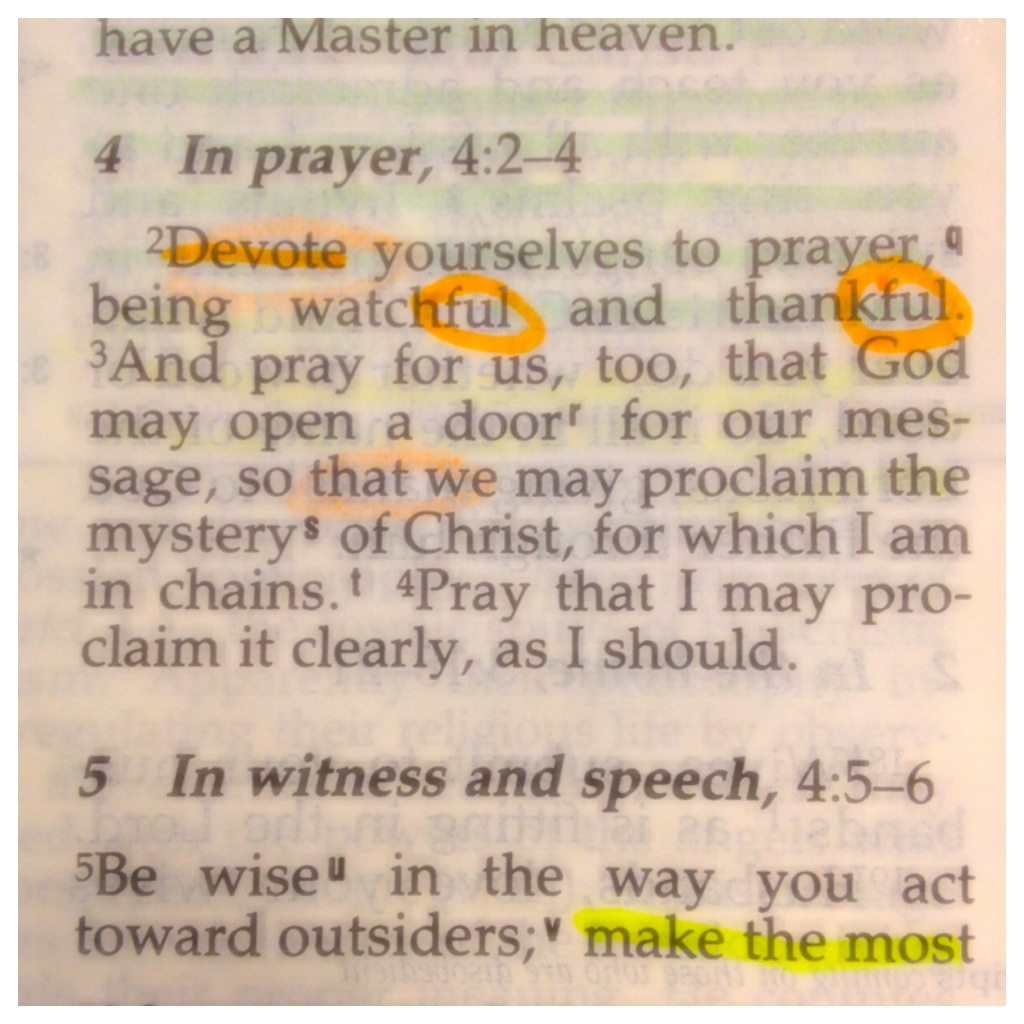
Devote yourselves to prayer, being watchful and thankful. And pray for us, too, that God may open a door for our message, so that we may proclaim the mystery of Christ, for which I am in chains. Pray that I may proclaim it clearly, as I should. Be wise in the way you act toward outsiders; make the most of every opportunity. Let your conversation be always full of grace, seasoned with salt, so that you may know how to answer everyone. (Colossians 4:2-6)

Wisdom = sophia → heavenly wisdom that is earthly practical. I use this wisdom to “let my conversation be always full of grace, seasoned with salt, so that I may know how to answer everyone” (v. 6).

Every opportunity … always full of grace … answer everyone

How do I stay “salty” and graceful?

Grace-full comes from being prayer-full, watch-full, and thank-full (v. 2). And these come from being devoted to those things. I am not grace-full by accident; it is the fruit of prayer-fullness, watch-fullness, and thank-fullness. I don’t accidentally pray, watch, and give thanks; those come because I am devoted to them.

Or rather, devoted to the One who is eternally grace-filled. The One who is supremely worthy to be worshiped, and adored, and served, and glorified. I worship Him and glorify Him best when I tell others about Him. After all, I don’t glorify and promote anything in which I’m only casually interested. My devotion to God spills out in my devotion to prayer, watching, and thanking. And this develops the fruit of grace-fullness, which draws others to God.

O Lord, may I be utterly FULL of You!